


The American hog-nosed skunk leaves a light footprint in Arizona’s open databases: 388 records in all, 288 of them iNaturalist photos. For a big, unmistakable skunk that is a fair showing, and it clusters exactly where you would expect. NatureServe rates the species S3, vulnerable, in Arizona, a reflection of its narrow foothold at the northwestern rim of a range that runs south into Mexico.
Sky-island skunk of the southeast
Records are most frequent in the southeastern sky-island and grassland counties of Cochise, Pima, and Santa Cruz. There, oak-juniper woodland, mesquite brush, and rocky canyon bottoms come together. Northern and western Arizona have fewer records, including one from the Grand Canyon. The species favors broken, rocky middle elevations rather than open desert flats or dense high-elevation forest.
A rooting skunk and a monsoon rhythm
Rather than raid trash like a striped skunk, this one shoves its long, nearly bald snout through soil for beetles, grubs, and scorpions, leaving small overturned patches and flipped rocks as sign. Reports climb sharply through late summer, cresting after the monsoon rains soften the ground and flush out insect prey and the year’s pups begin moving on their own. Sightings turn up at all hours, but the record thickens well after dark, when the skunk is out working its rooting circuit and least likely to be seen by anything but a trail camera.
Common questions
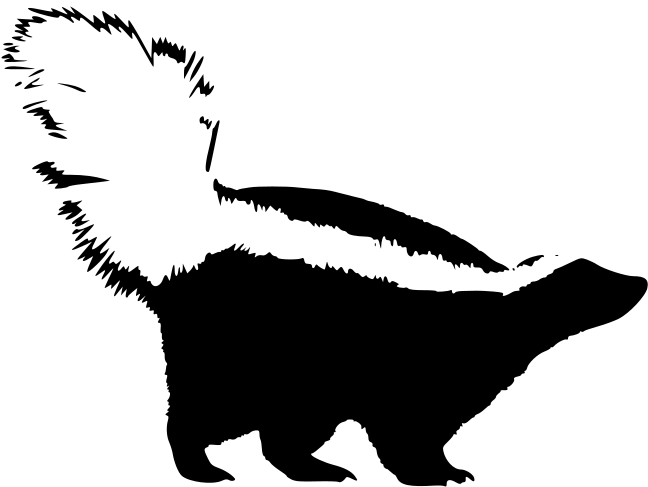
How do I know it is a hog-nosed skunk? One unbroken band of white covers the whole back, with no white dot between the eyes and no black line splitting it into two stripes. The long, pig-like snout, held to the ground and used for rooting, settles the rest.
 Full species profile




