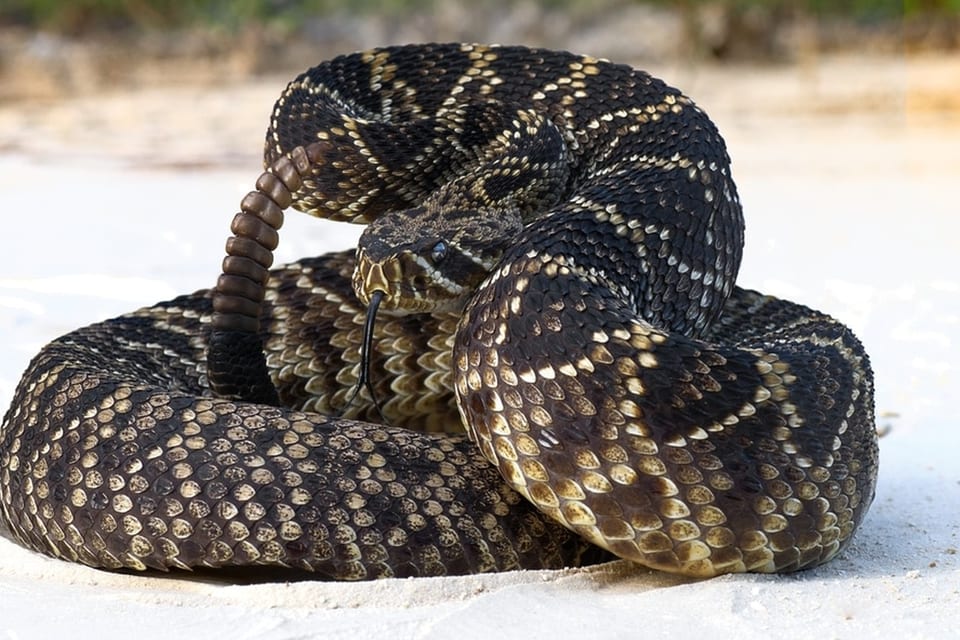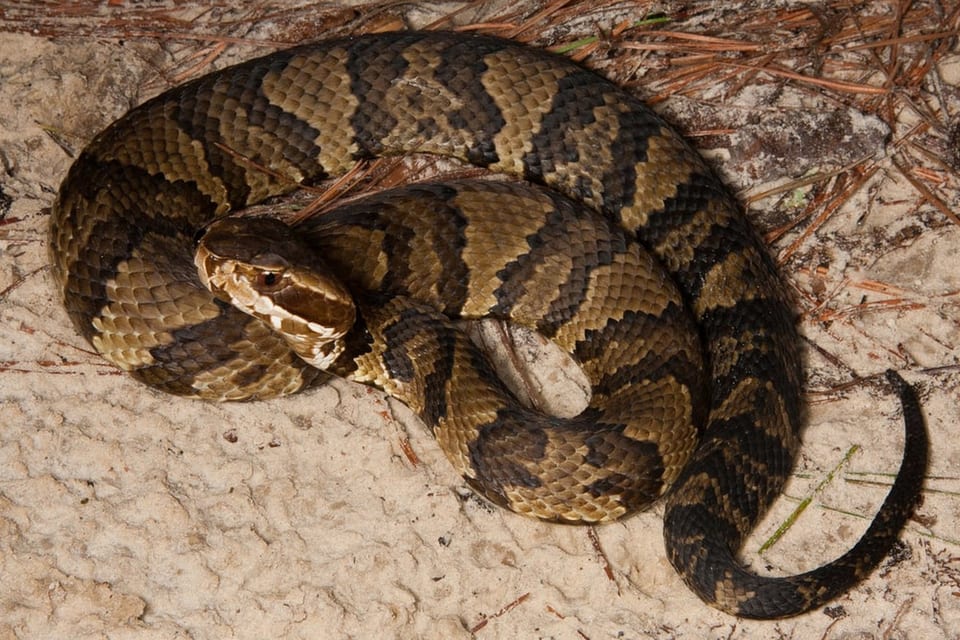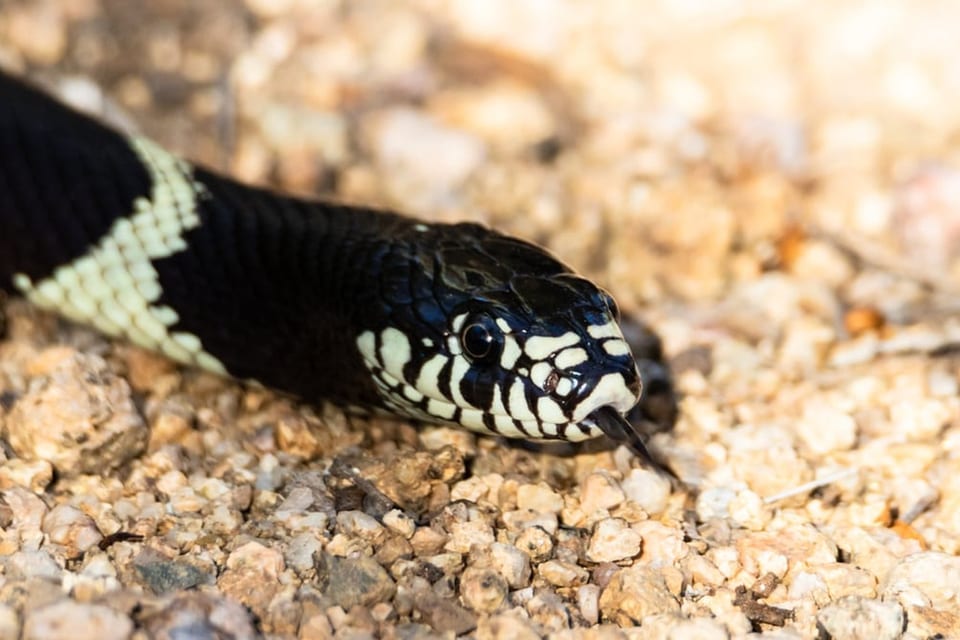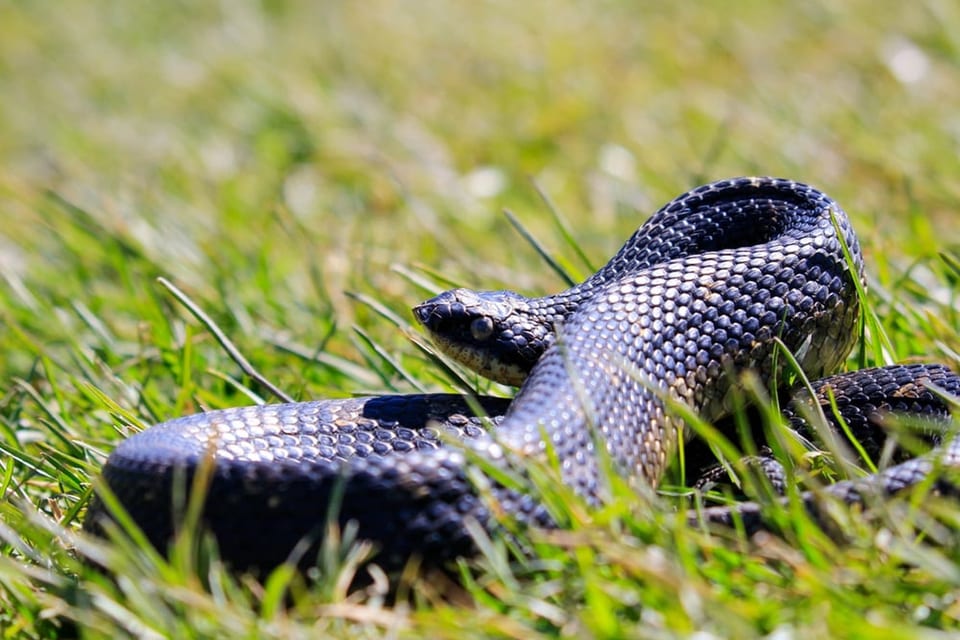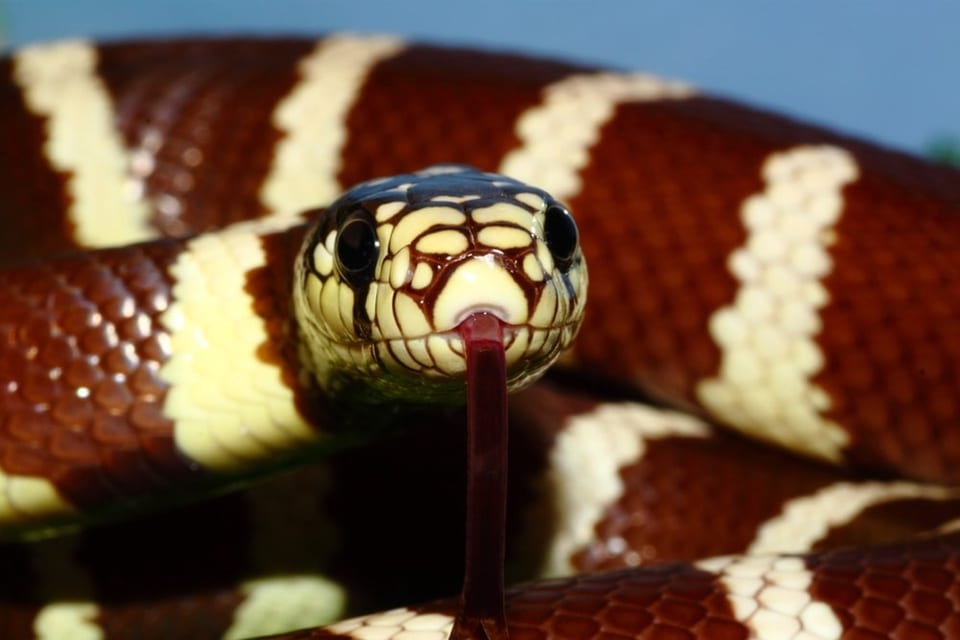
California’s snake list is a map of the state itself. Desert basins hold sidewinders, glossy snakes, shovel-nosed snakes, and lyresnakes, while the Coast Ranges and Sierra foothills add gartersnakes, kingsnakes, racers, and boas.
Wetlands and streams bring another set of species into the picture, including giant gartersnakes in the Central Valley and several aquatic or semiaquatic gartersnakes along the coast and north-state drainages.
That mix gives California everything from tiny threadsnakes and sand specialists to bright kingsnakes, mountain boas, and several rattlesnakes. The profiles below keep those habitat groups in view as you move through the list.
Venomous snakes in California
California’s venomous snakes in this guide are rattlesnakes. Range does much of the sorting: deserts, rocky foothills, coastal ranges, and high mountains do not point to the same species.
1. Mohave Rattlesnake
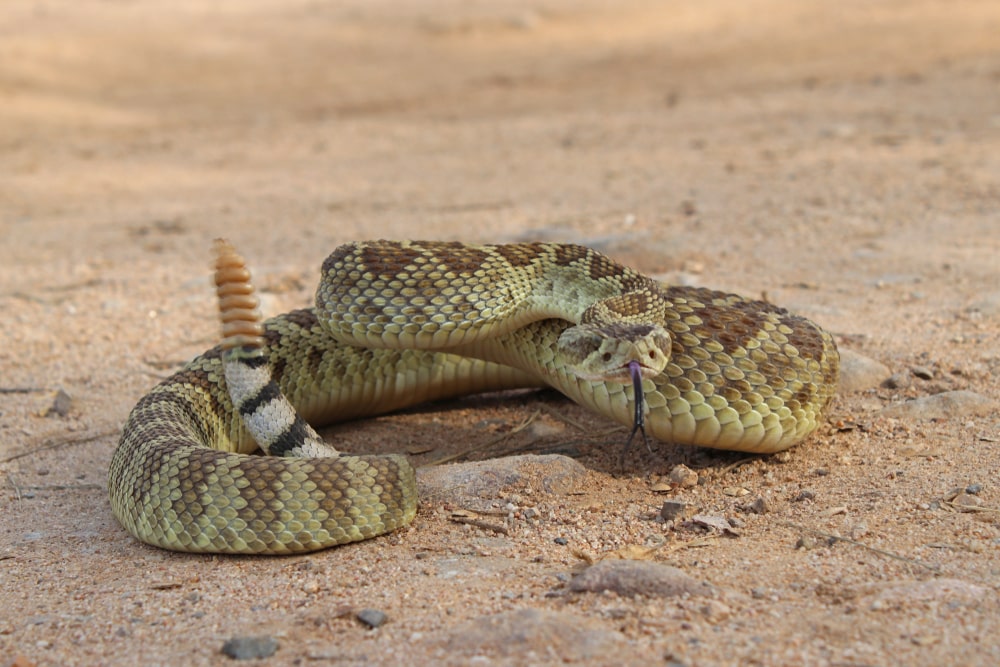
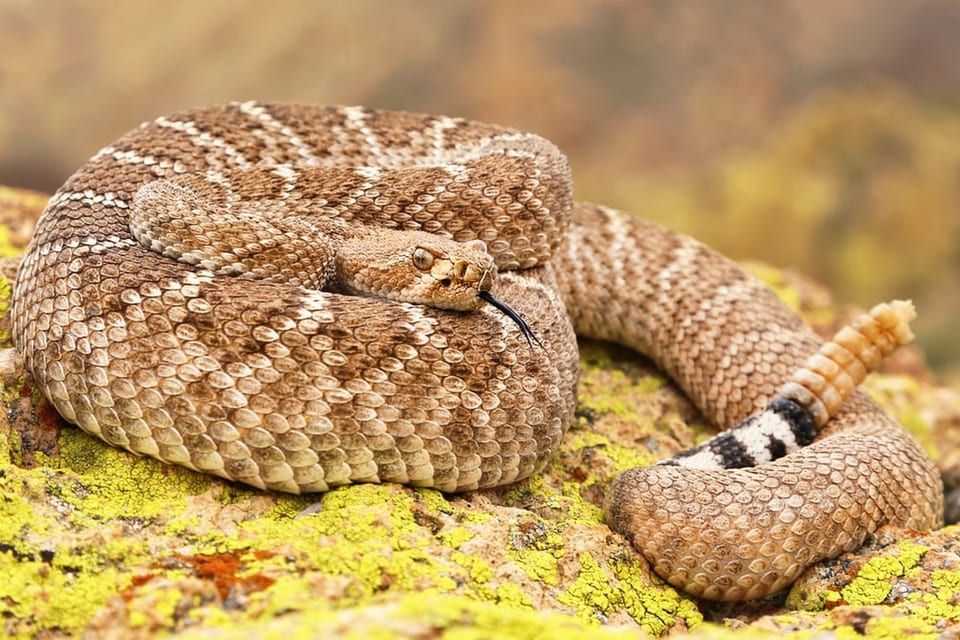
Mohave Rattlesnake (Crotalus scutulatus) is a desert rattlesnake of open flats, rocky slopes, and brushy washes. Adults are usually 2-5 feet, with a heavy triangular head and keeled scales that give the body a matte, rough look.
The tail matters on this one. Look for the rattle or button first, then check the setting: dry, open country with room for a long, low snake to disappear into grass, creosote, or broken rock.
| Key detail | What to look for |
|---|---|
| Adult size | usually 2-5 feet |
| Fast ID cue | keeled scales, heat-sensing pit, heavy head, and a rattle or button on the tail |
| Typical California habitat | desert flats, rocky slopes, grasslands, brush country, canyon edges, and open woodland |
| California range | best narrowed with county-level range maps |
| Bite / venom note | Venomous rattlesnake; serious bite risk, use range to separate species |
2. Panamint Rattlesnake
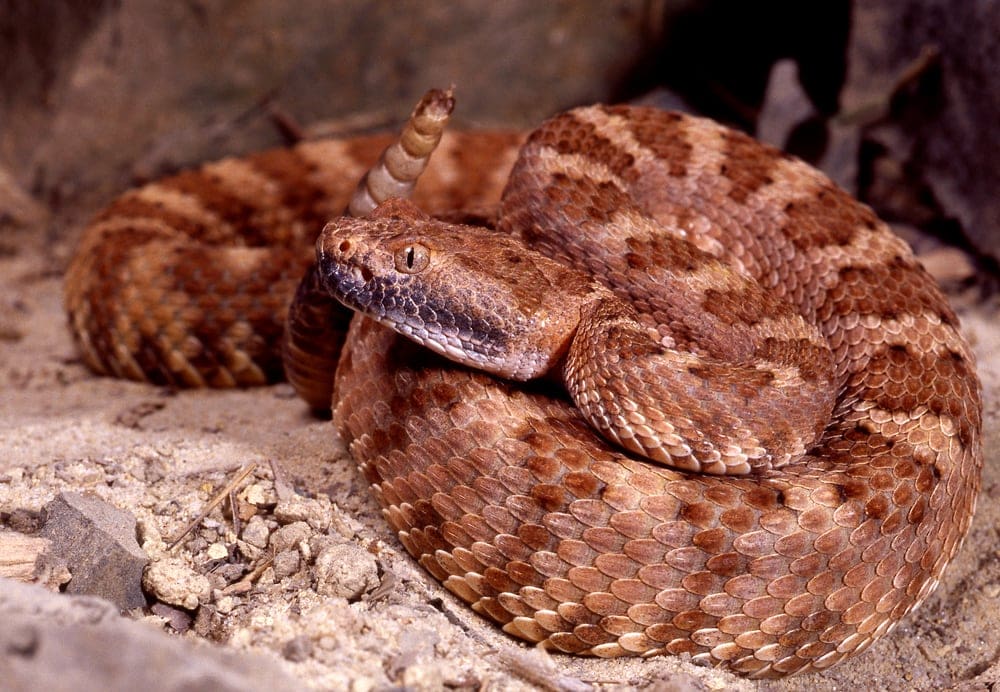
Panamint Rattlesnake (Crotalus stephensi) belongs with the rocky desert rattlesnakes rather than the wetland or forest species. It is typically 2-5 feet long, heavy-bodied, and built for rough canyon edges, talus, and dry slopes.
Use the whole rattlesnake package for the first pass: keeled scales, broad head, heat-sensing pits, and a rattle or tail button. The Panamint angle comes from place as much as pattern, especially in desert mountain country.
| Key detail | What to look for |
|---|---|
| Adult size | usually 2-5 feet |
| Fast ID cue | keeled scales, heat-sensing pit, heavy head, and a rattle or button on the tail |
| Typical California habitat | desert flats, rocky slopes, grasslands, brush country, canyon edges, and open woodland |
| California range | best narrowed with county-level range maps |
| Bite / venom note | Venomous rattlesnake; serious bite risk, use range to separate species |
3. Red Diamond Rattlesnake
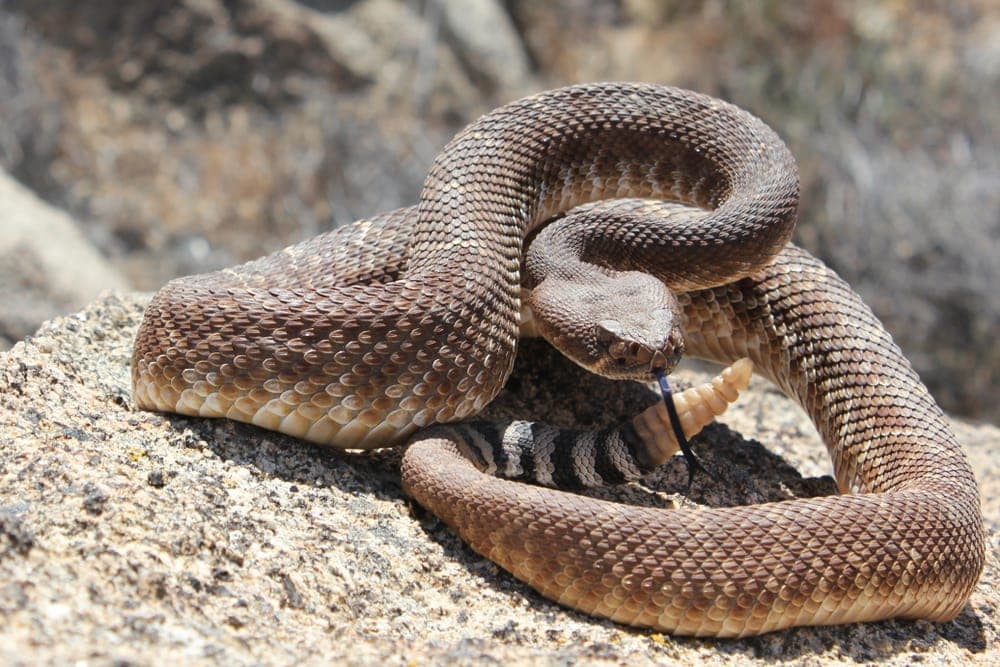
Red Diamond Rattlesnake (Crotalus ruber) is the reddish, large-bodied diamondback to keep in mind in southern dry country. Adults are usually 2-5 feet and can look bulkier than the slimmer desert snakes around them.
The back pattern should read as a row of diamonds or broad blotches, not narrow stripes. Pair that with a rattled tail, a heat-sensing pit, and dry scrub, rocky slopes, or open woodland before calling it.
| Key detail | What to look for |
|---|---|
| Adult size | usually 2-5 feet |
| Fast ID cue | keeled scales, heat-sensing pit, heavy head, and a rattle or button on the tail |
| Typical California habitat | desert flats, rocky slopes, grasslands, brush country, canyon edges, and open woodland |
| California range | mostly southern and desert California |
| Bite / venom note | Venomous diamondback; large-bodied rattlesnake, serious bite risk |
4. Sidewinder
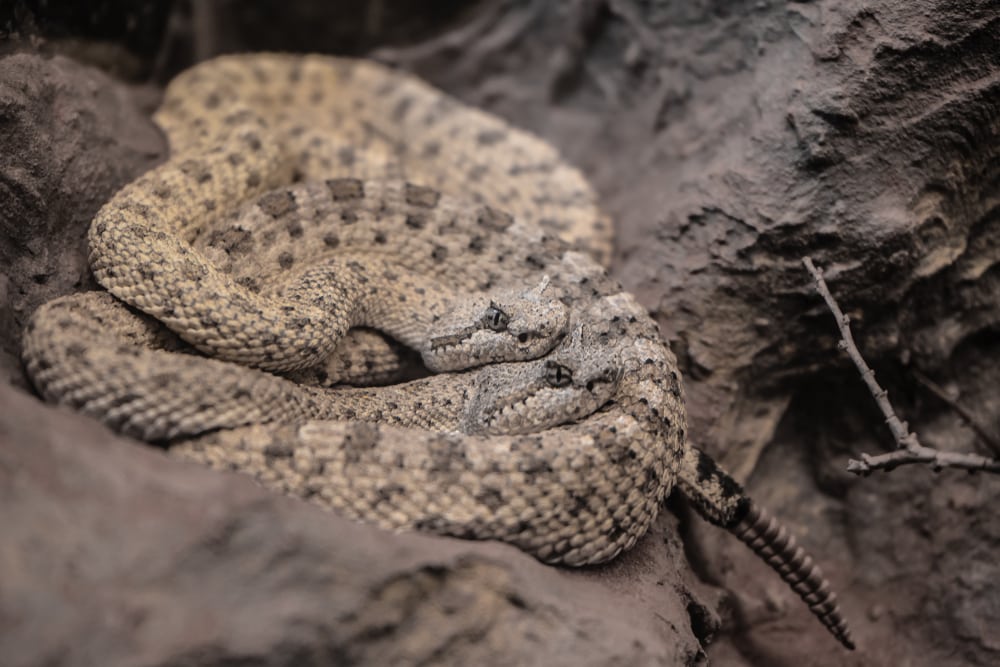
Sidewinder (Crotalus cerastes) is the sand specialist of the rattlesnake group. It is usually a compact 2-5 feet, with the small horn-like scales above the eyes that give the face a distinctive raised-brow look.
Loose sand is the giveaway. A sidewinder often leaves diagonal, J-shaped tracks across dunes or sandy washes, a clue that separates it from heavier rattlesnakes using rockier ground.
| Key detail | What to look for |
|---|---|
| Adult size | usually 2-5 feet |
| Fast ID cue | horn-like scales above the eyes and sidewinding tracks in loose sand |
| Typical California habitat | desert flats, rocky slopes, grasslands, brush country, canyon edges, and open woodland |
| California range | mostly southern and desert California |
| Bite / venom note | Venomous desert rattlesnake; small-bodied, serious bite risk |
5. Southwestern Speckled Rattlesnake
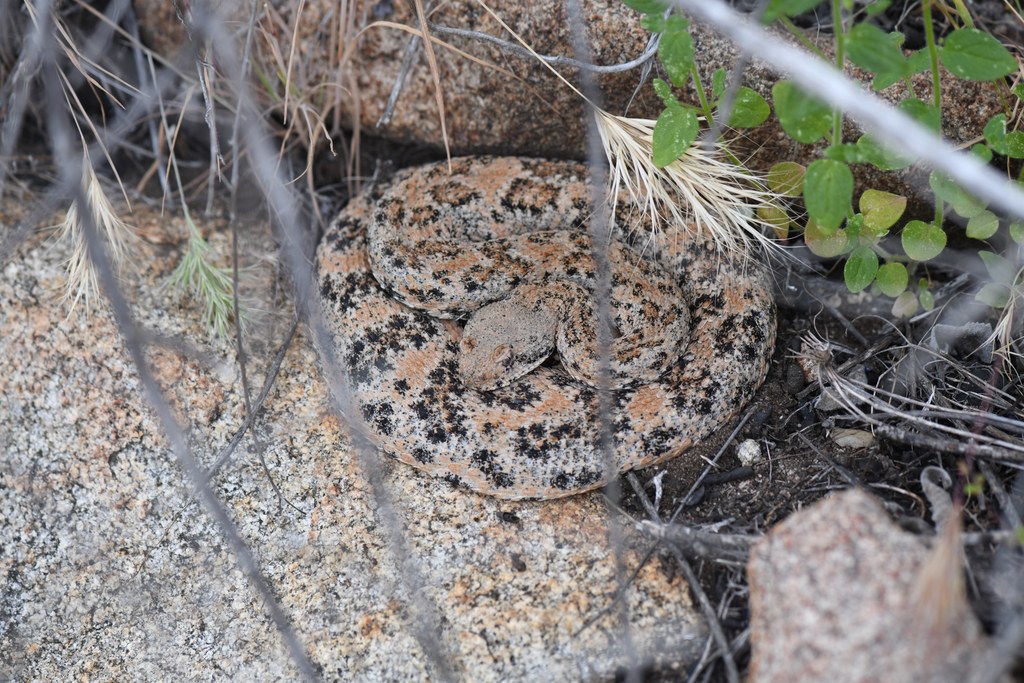
Southwestern Speckled Rattlesnake (Crotalus pyrrhus) is a rocky-desert rattlesnake whose pattern often seems broken into fine speckles instead of clean bands. Adults usually fall in the 2-5 foot range.
This is one to judge against the background. On pale granite, volcanic rock, or canyon rubble, the speckled body can blend in remarkably well, so lean on the broad head, facial pit, keeled scales, and rattled tail.
| Key detail | What to look for |
|---|---|
| Adult size | usually 2-5 feet |
| Fast ID cue | keeled scales, heat-sensing pit, heavy head, and a rattle or button on the tail |
| Typical California habitat | desert flats, rocky slopes, grasslands, brush country, canyon edges, and open woodland |
| California range | mostly southern and desert California |
| Bite / venom note | Venomous rattlesnake; serious bite risk, use range to separate species |
6. Western Diamond-backed Rattlesnake
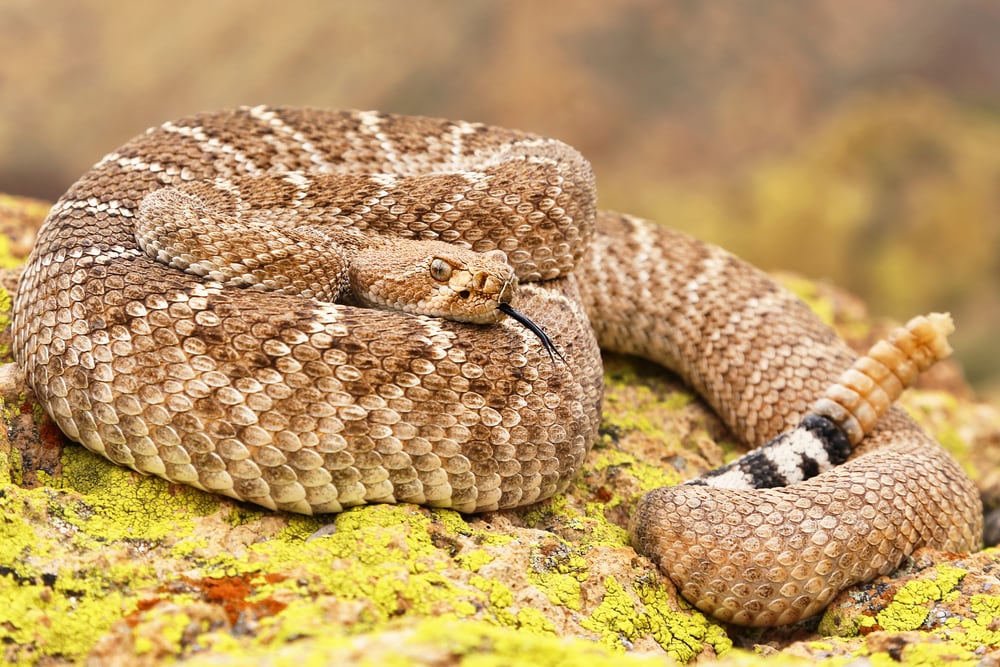
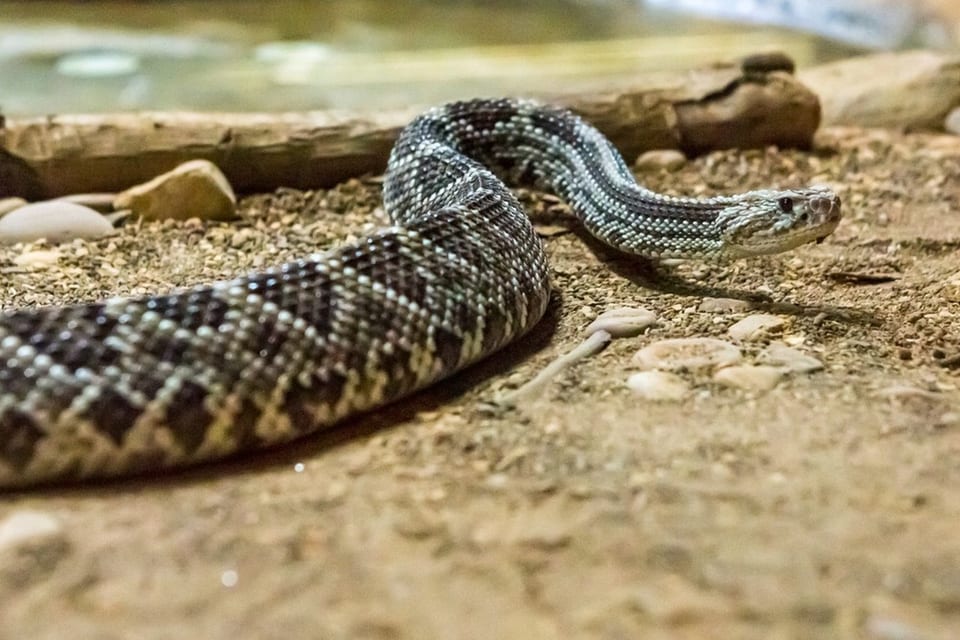
Western Diamond-backed Rattlesnake (Crotalus atrox) is the bold diamondback of arid, open country. Adults are usually 2-5 feet, heavy through the body, and marked with diamond-shaped blotches down the back.
The tail is often the cleanest clue: look for strong black-and-white banding just before the rattle. If the snake lacks that banded tail or the setting is coastal, forested, or high mountain, check the other rattlesnakes first.
| Key detail | What to look for |
|---|---|
| Adult size | usually 2-5 feet |
| Fast ID cue | diamond-shaped back blotches and bold black-and-white tail bands before the rattle |
| Typical California habitat | desert flats, rocky slopes, grasslands, brush country, canyon edges, and open woodland |
| California range | best narrowed with county-level range maps |
| Bite / venom note | Venomous diamondback; large-bodied rattlesnake, serious bite risk |
7. Western Rattlesnake
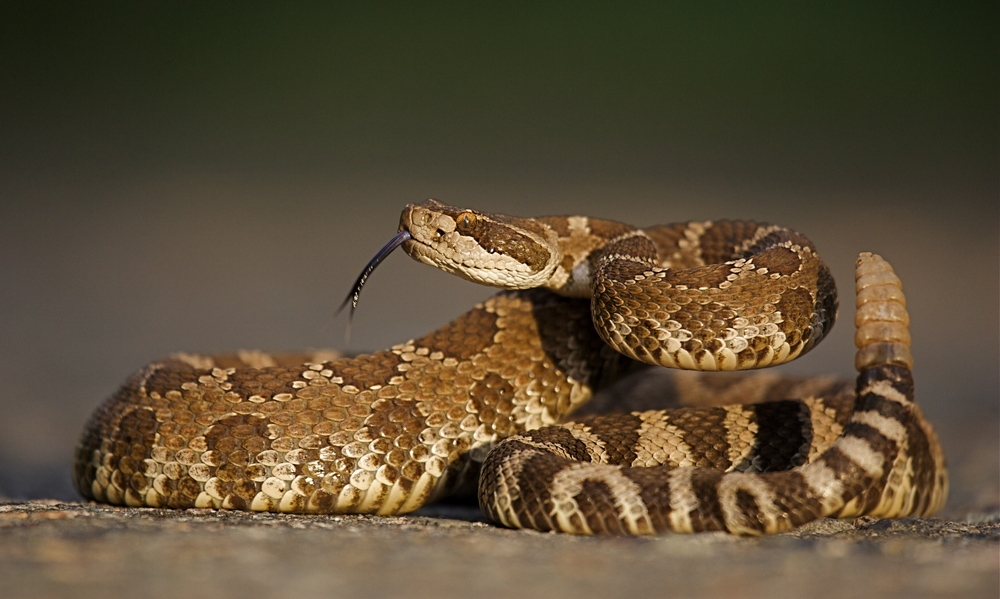
Western Rattlesnake (Crotalus oreganus) is the rattlesnake most worth comparing in cooler coastal, northern, foothill, and mountain settings. Adults are usually 2-5 feet and can vary a lot in color.
Do not try to identify it from color alone. Confirm the rattle, facial pit, heavy head, and keeled scales, then weigh the habitat: grasslands, oak edges, rocky slopes, open woodland, and mountain foothills all fit better than loose desert sand.
| Key detail | What to look for |
|---|---|
| Adult size | usually 2-5 feet |
| Fast ID cue | keeled scales, heat-sensing pit, heavy head, and a rattle or button on the tail |
| Typical California habitat | desert flats, rocky slopes, grasslands, brush country, canyon edges, and open woodland |
| California range | cooler northern, mountain, or coastal parts of the state |
| Bite / venom note | Venomous rattlesnake; serious bite risk, use range to separate species |
Nonvenomous snakes in California
Most California snakes are nonvenomous. The hard part is not danger, it is range: desert specialists, wetland gartersnakes, mountain boas, and backyard kingsnakes can all look plausible until you place them on the map.
Boas and desert constrictors
8. Northern Rosy Boa
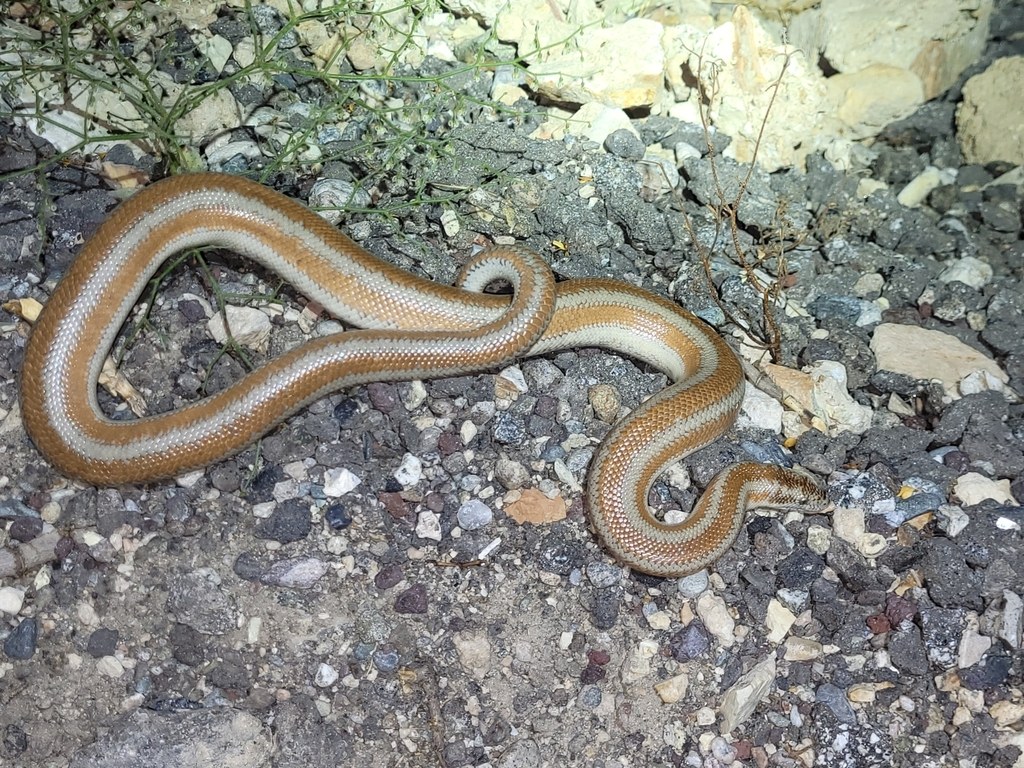
Northern Rosy Boa (Lichanura orcutti) is a slow, thick-bodied boa of dry canyons and rocky slopes. Adults are often 1-4 feet, with smooth skin, a blunt tail, and a calm, deliberate way of moving.
Look for lengthwise striping or muted rosy tones rather than bands. A boa tucked under rock, in a wash, or along dry chaparral edges points more strongly this way than a fast snake crossing open ground.
| Key detail | What to look for |
|---|---|
| Adult size | often 1-4 feet |
| Fast ID cue | thick smooth body, blunt tail, and slow movement around rocks or washes |
| Typical California habitat | rocky canyons, desert slopes, chaparral, washes, and loose cover in dry country |
| California range | best narrowed with county-level range maps |
| Bite / venom note | Nonvenomous boa; thick body, slow rocky-habitat snake |
9. Rubber Boa
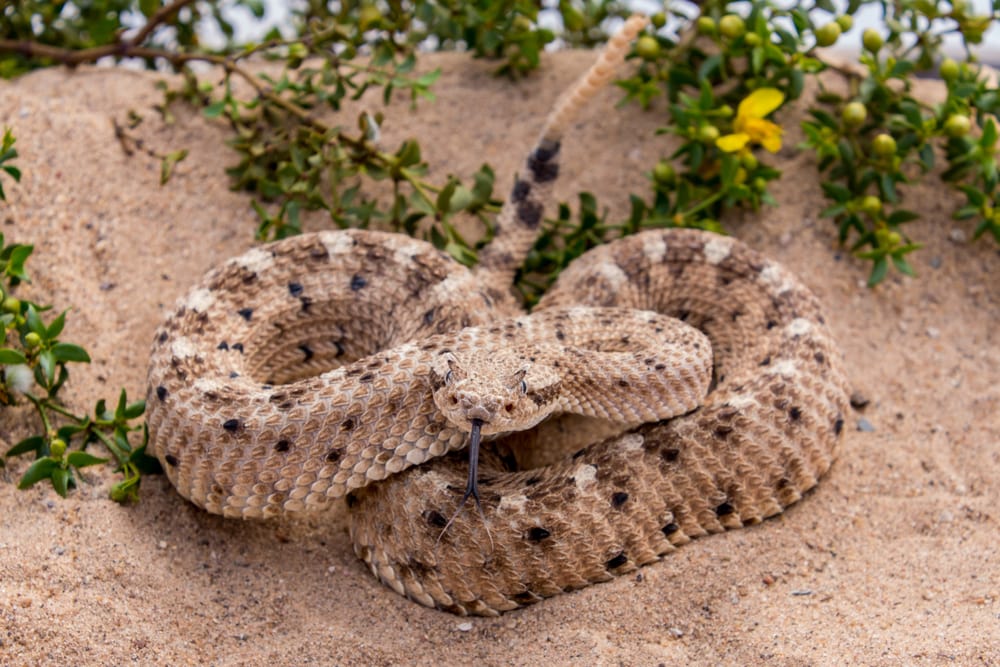
Rubber Boa (Charina bottae) is the cool-country boa, usually found in northern, mountain, or coastal habitats rather than hot desert flats. Adults are often 1-4 feet, plain colored, and almost rubbery in texture.
Both ends look blunt, which can make a quick glimpse confusing. Check under logs, rocks, and damp cover in forest or foothill settings, where this slow snake is more plausible than a rosy boa.
| Key detail | What to look for |
|---|---|
| Adult size | often 1-4 feet |
| Fast ID cue | thick smooth body, blunt tail, and slow movement around rocks or washes |
| Typical California habitat | rocky canyons, desert slopes, chaparral, washes, and loose cover in dry country |
| California range | cooler northern, mountain, or coastal parts of the state |
| Bite / venom note | Nonvenomous boa; thick body, slow rocky-habitat snake |
10. Three-lined Boa
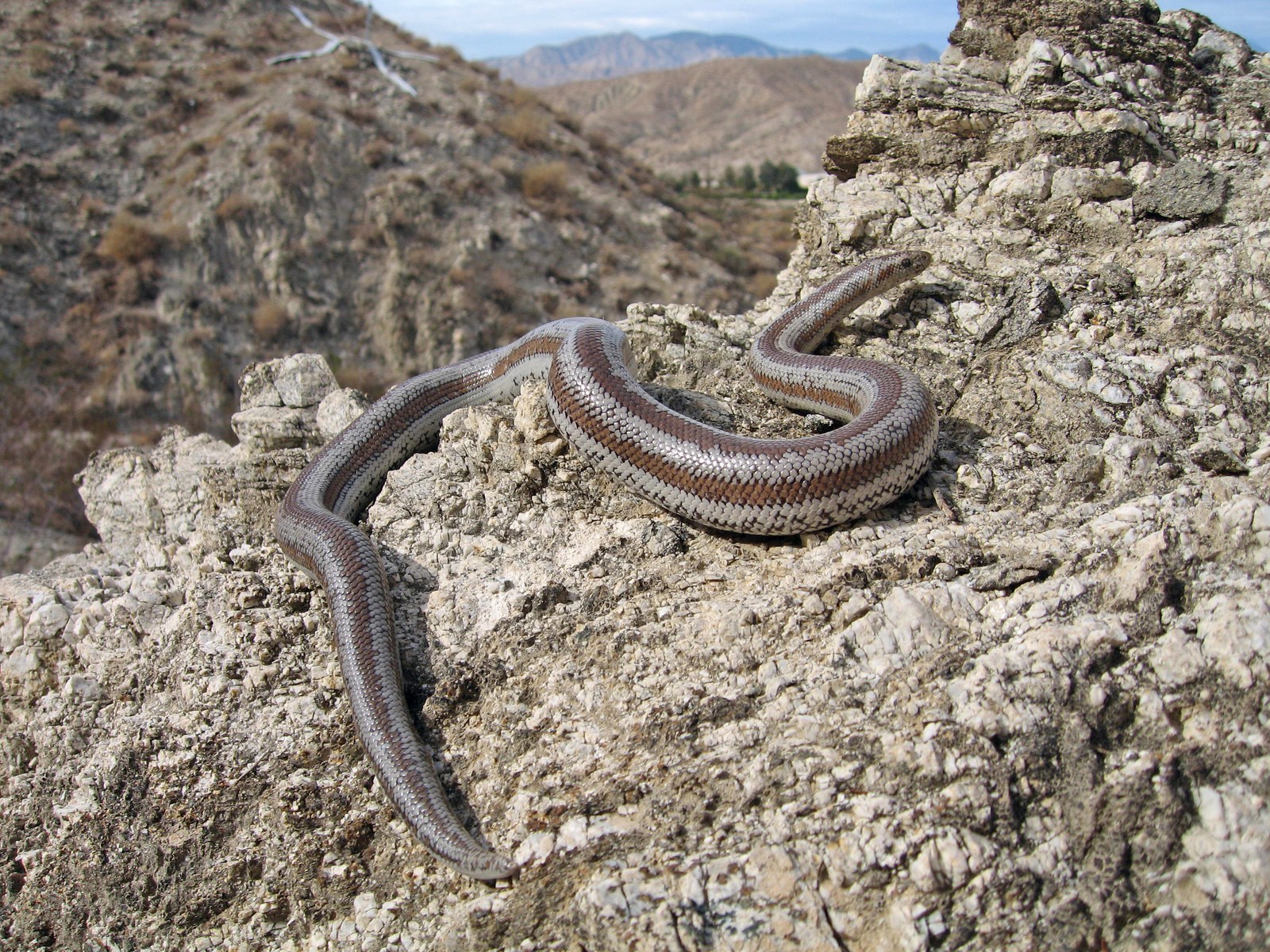
Three-lined Boa (Lichanura trivirgata) is a rosy boa with the name giving away the main field mark. Adults are often 1-4 feet, stout, smooth, and marked by lengthwise stripes rather than crossbands.
Expect a slow snake around rocky canyons, desert slopes, washes, and dry chaparral cover. If the animal is racing across a road with a whip-like tail, it belongs somewhere else in this guide.
| Key detail | What to look for |
|---|---|
| Adult size | often 1-4 feet |
| Fast ID cue | thick smooth body, blunt tail, and slow movement around rocks or washes |
| Typical California habitat | rocky canyons, desert slopes, chaparral, washes, and loose cover in dry country |
| California range | best narrowed with county-level range maps |
| Bite / venom note | Nonvenomous boa; thick body, slow rocky-habitat snake |
Racers, kingsnakes, ratsnakes, and other large hunters
11. Baja California Coachwhip
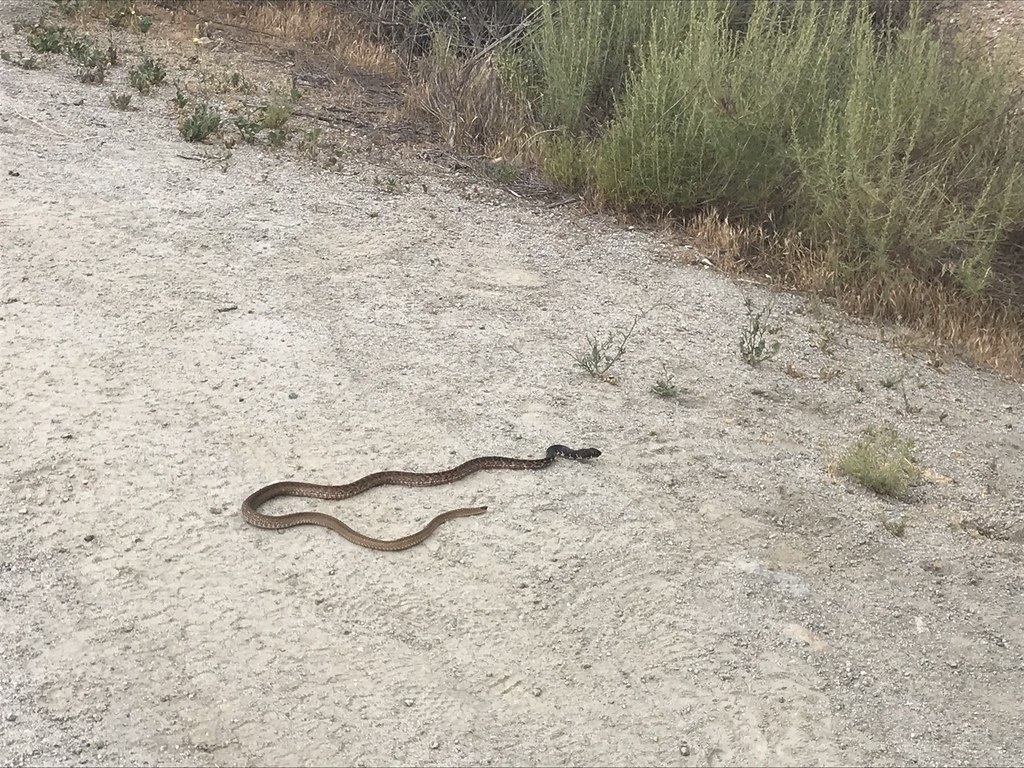
Baja California Coachwhip (Masticophis fuliginosus) is a long, alert coachwhip type tied to open scrub and dry edge habitat. Adults are often 3-7 feet, with large eyes, a narrow head, and a long tapering tail.
This is a daylight snake built for speed. A brief view may be nothing more than a dark, slim body sliding through brush or across a sandy wash, so habitat and range matter as much as the exact shade.
| Key detail | What to look for |
|---|---|
| Adult size | often 3-7 feet |
| Fast ID cue | large eyes, slim body, fast daytime movement, and a long tapering tail |
| Typical California habitat | open scrub, grasslands, dry woods, sandy washes, roadsides, and sunny field edges |
| California range | best narrowed with county-level range maps |
| Bite / venom note | Nonvenomous fast hunter; long tail and large eyes |
12. Baja California Ratsnake
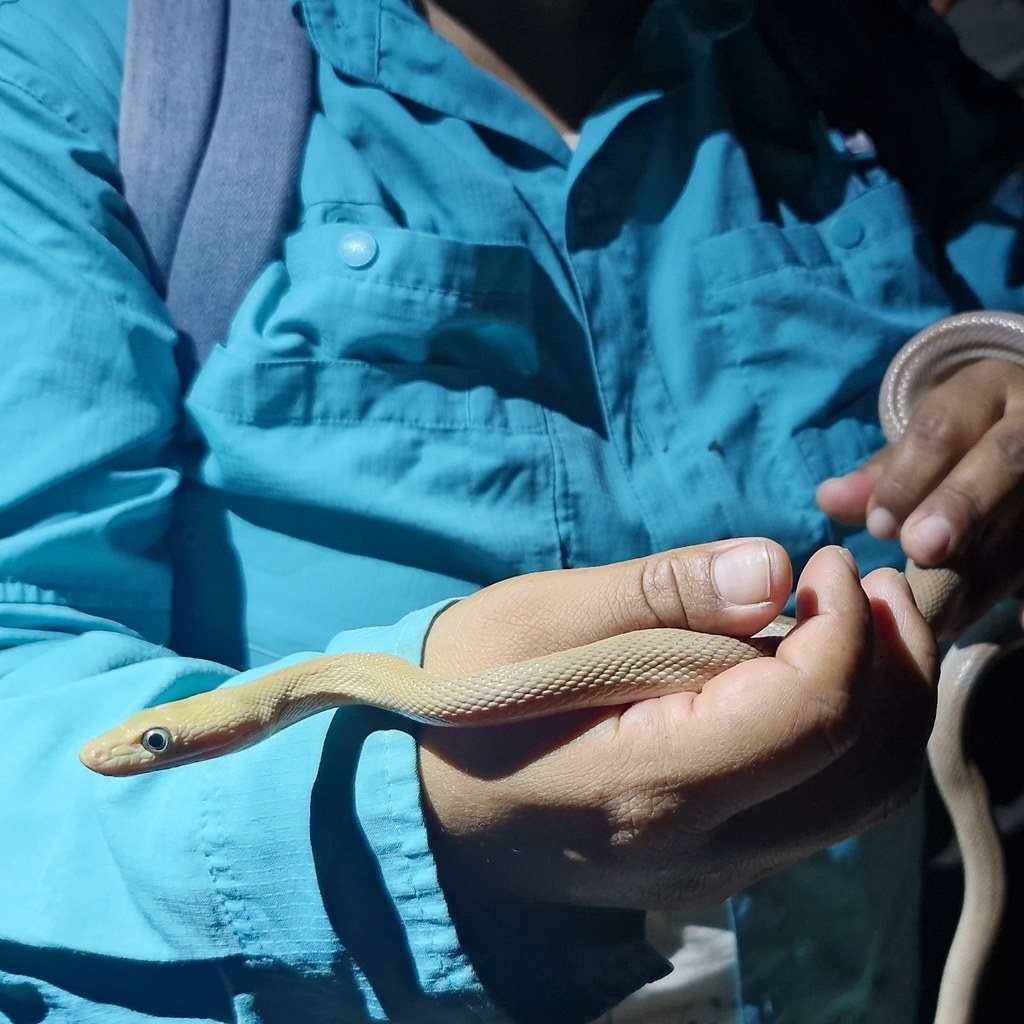
Baja California Ratsnake (Bogertophis rosaliae) is a slender climber to compare in rocky edges, trees, barns, and canyon country. Adults are often 3-7 feet and look much lighter-built than gophersnakes.
Focus on the climbing shape: narrow body, patterned back, and a head that does not have a rattlesnake’s heavy triangular look. Edges with cover, old structures, or woody vegetation fit better than open wet meadows.
| Key detail | What to look for |
|---|---|
| Adult size | often 3-7 feet |
| Fast ID cue | slender climbing body, patterned back, and frequent use of barns, trees, and edges |
| Typical California habitat | woodlands, farms, rocky edges, pine-oak forests, field borders, and old buildings near cover |
| California range | best narrowed with county-level range maps |
| Bite / venom note | Nonvenomous climber; common around trees, barns, and edges |
13. California Black-headed Snake
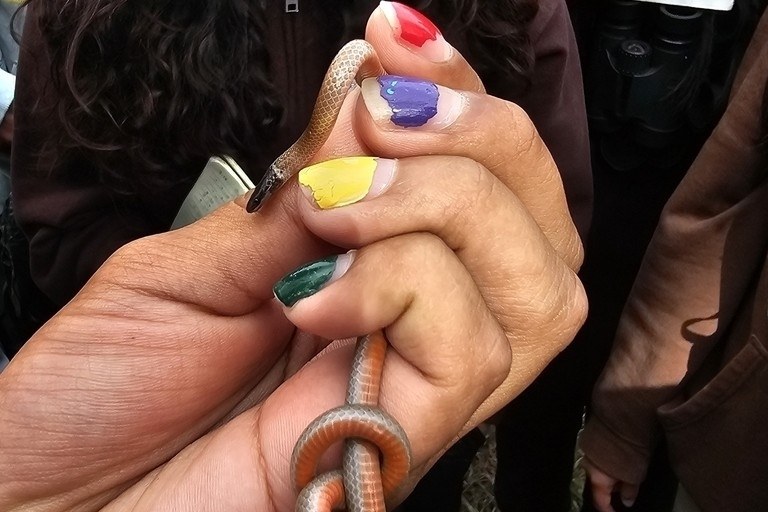
California Black-headed Snake (Tantilla planiceps) is a small, secretive snake with a dark head set off from a paler body. Adults are usually 10-24 inches, and many sightings happen when someone lifts cover.
Think leaf litter, loose soil, rotting logs, compost, damp gardens, and shaded edges. A single color mark is not enough for these little snakes, so county and habitat help separate it from other black-headed species.
| Key detail | What to look for |
|---|---|
| Adult size | usually 10-24 inches |
| Fast ID cue | Overall build, pattern, habitat, and mapped range matter more than one color mark |
| Typical California habitat | loose soil, leaf litter, rotting logs, compost, damp gardens, and shaded woodland edges |
| California range | best narrowed with county-level range maps |
| Bite / venom note | Nonvenomous tiny snake; usually under soil, logs, or leaf litter |
14. California Kingsnake
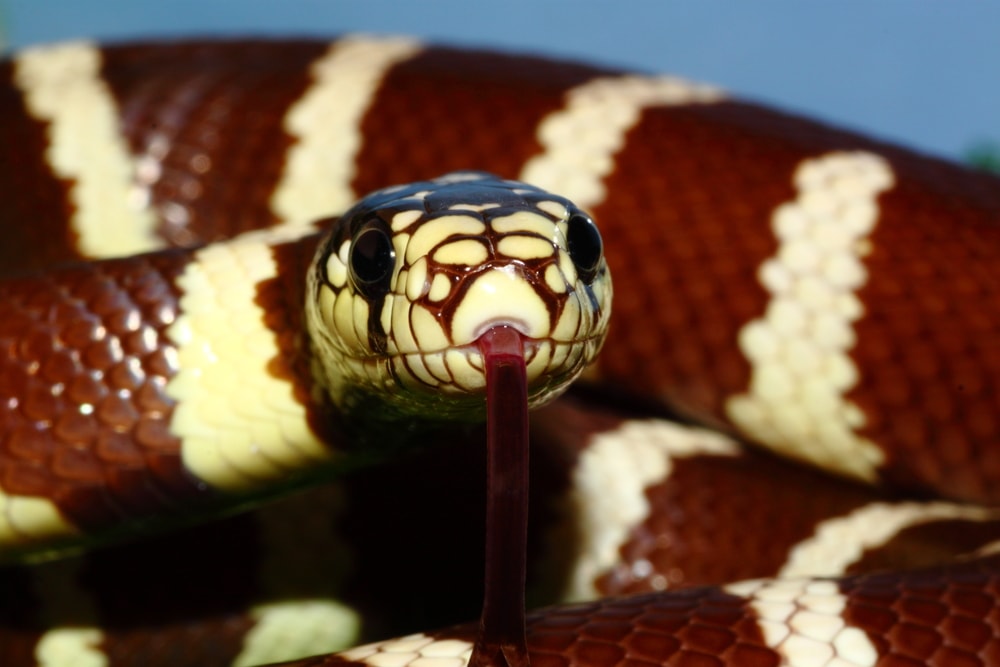
California Kingsnake (Lampropeltis californiae) is the familiar glossy constrictor with bold bands, stripes, or blotches. Adults are often 1-4 feet and can turn up around farms, rocky edges, open woodland, and backyard cover.
The shine is part of the ID. Smooth scales, a strong but not bulky body, and crisp black-and-white or brown-and-cream patterning separate it from rougher gophersnakes and rattlesnakes.
| Key detail | What to look for |
|---|---|
| Adult size | often 1-4 feet |
| Fast ID cue | smooth glossy scales, bold bands or blotches, and a strong constrictor build |
| Typical California habitat | woodlands, farms, rocky edges, pine-oak forests, field borders, and old buildings near cover |
| California range | best narrowed with county-level range maps |
| Bite / venom note | Nonvenomous constrictor; bold bands or blotches can confuse IDs |
15. California Lyresnake
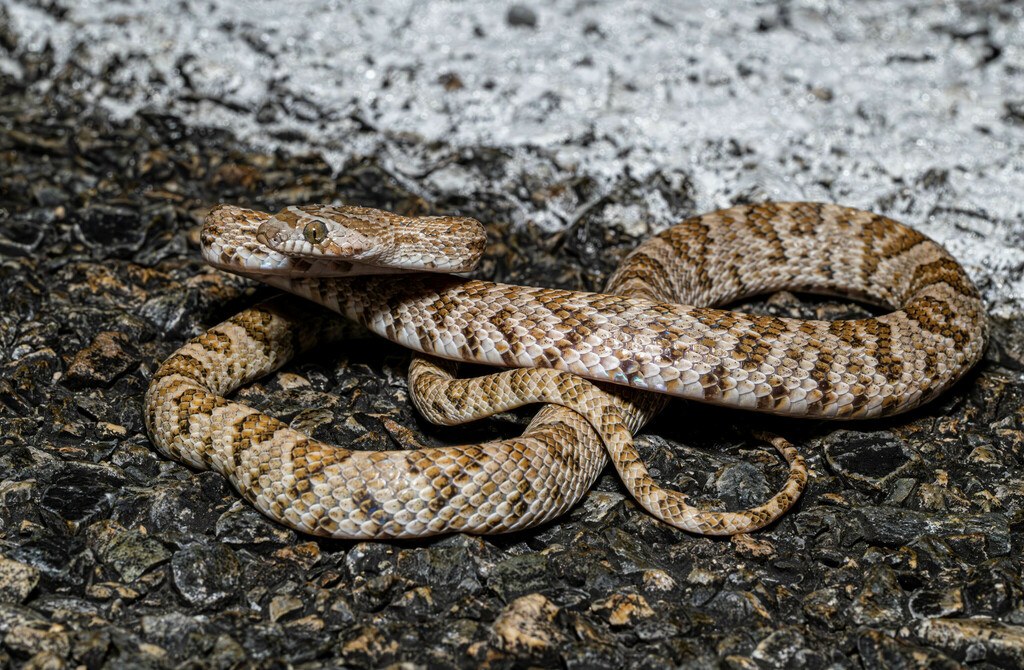
California Lyresnake (Trimorphodon lyrophanes) is a slender, blotched snake of rocky southern habitats. Adults are often 1-4 feet, with a narrow neck and markings that can look busy against canyon rock.
The face and setting do much of the work. Look for a lyre-like mark on the head when visible, then compare the sighting with rocky edges, desert slopes, and brushy canyon cover.
| Key detail | What to look for |
|---|---|
| Adult size | often 1-4 feet |
| Fast ID cue | Overall build, pattern, habitat, and mapped range matter more than one color mark |
| Typical California habitat | forests, grasslands, wetlands, rocky edges, and nearby cover |
| California range | mostly southern and desert California |
| Bite / venom note | Nonvenomous; compare range, body shape, and pattern |
16. California Mountain Kingsnake
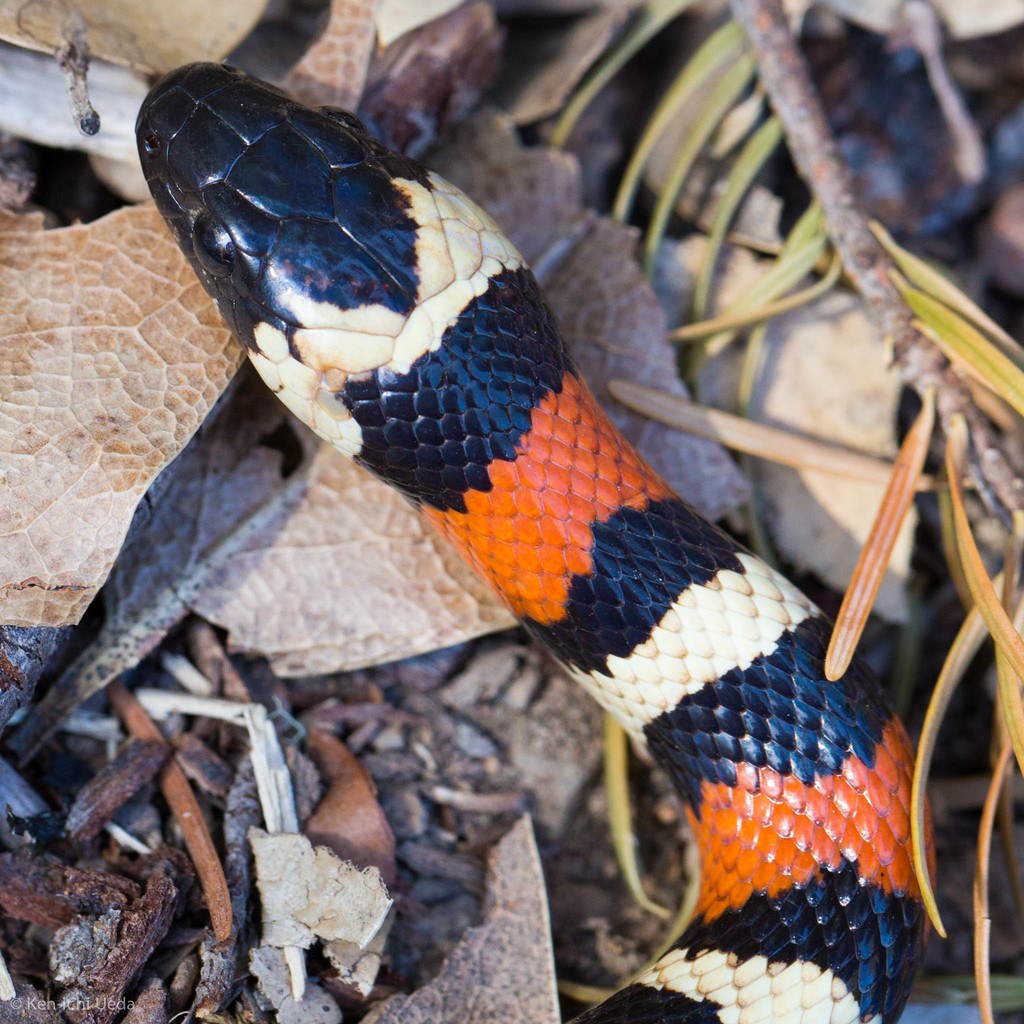
California Mountain Kingsnake (Lampropeltis zonata) is the high-color kingsnake of wooded mountains and foothills. Adults are often 1-4 feet, with clean red, black, and pale bands wrapped around a smooth, glossy body.
Place matters. A banded kingsnake under logs, rocks, or forest-edge cover in mountain country fits this profile far better than a lowland yard snake with the classic kingsnake chain pattern.
| Key detail | What to look for |
|---|---|
| Adult size | often 1-4 feet |
| Fast ID cue | smooth glossy scales, bold bands or blotches, and a strong constrictor build |
| Typical California habitat | woodlands, farms, rocky edges, pine-oak forests, field borders, and old buildings near cover |
| California range | best narrowed with county-level range maps |
| Bite / venom note | Nonvenomous constrictor; bold bands or blotches can confuse IDs |
17. Common Coachwhip
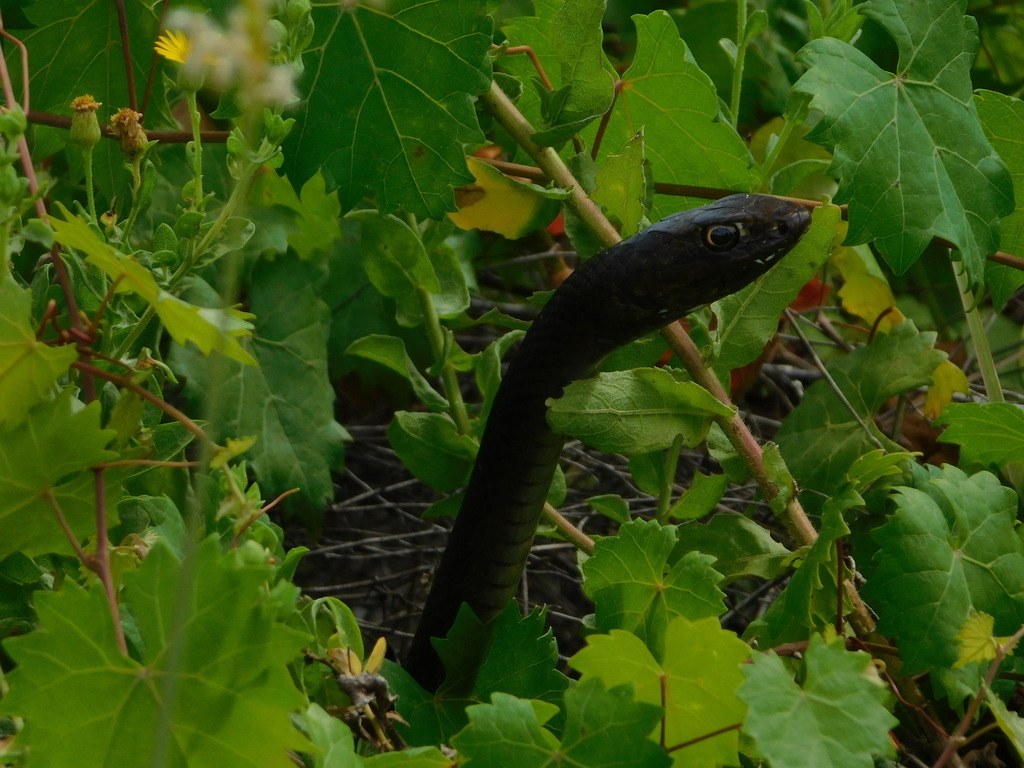
Common Coachwhip (Masticophis flagellum) is a long, fast daytime hunter of open scrub, dry woodland, sandy washes, and sunny field edges. Adults are often 3-7 feet.
The overall impression is speed and length. Big eyes, a slim body, and a whip-thin tail are better clues than color, which can change by age and region.
| Key detail | What to look for |
|---|---|
| Adult size | often 3-7 feet |
| Fast ID cue | large eyes, slim body, fast daytime movement, and a long tapering tail |
| Typical California habitat | open scrub, grasslands, dry woods, sandy washes, roadsides, and sunny field edges |
| California range | best narrowed with county-level range maps |
| Bite / venom note | Nonvenomous fast hunter; long tail and large eyes |
18. Common Glossy Snake
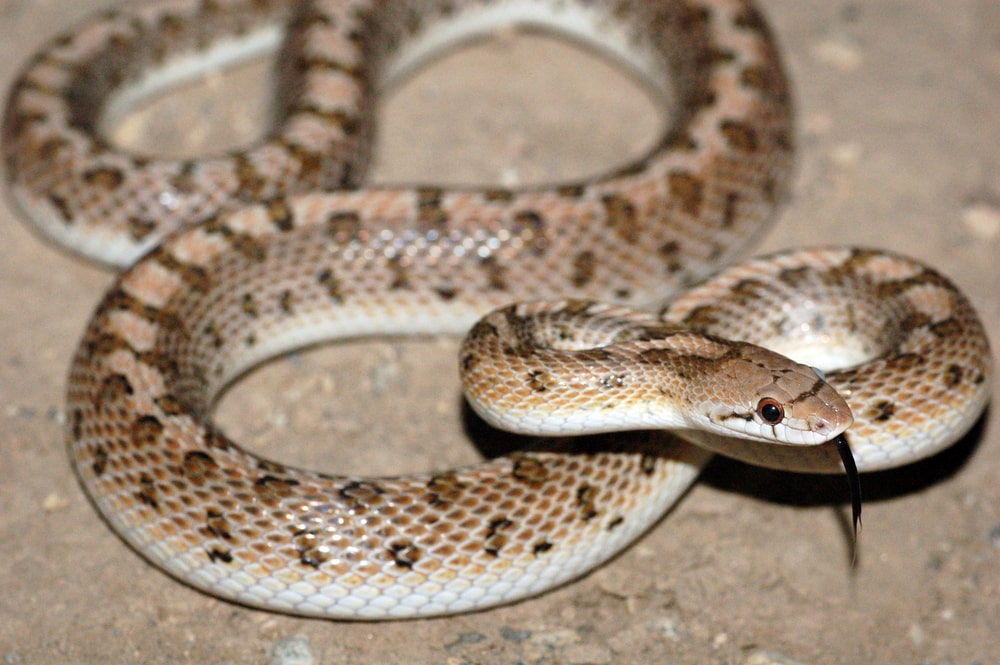
Common Glossy Snake (Arizona elegans) is smooth, pale, and polished-looking, often with soft blotches rather than harsh bands. Adults are often 1-4 feet.
Loose soil, sandy flats, grassland edges, and dry rocky cover are good places to weigh this ID. The glossy finish and gentle contrast help separate it from rougher, heavier gophersnakes.
| Key detail | What to look for |
|---|---|
| Adult size | often 1-4 feet |
| Fast ID cue | Overall build, pattern, habitat, and mapped range matter more than one color mark |
| Typical California habitat | forests, grasslands, wetlands, rocky edges, and nearby cover |
| California range | best narrowed with county-level range maps |
| Bite / venom note | Nonvenomous; compare range, body shape, and pattern |
19. Gophersnake
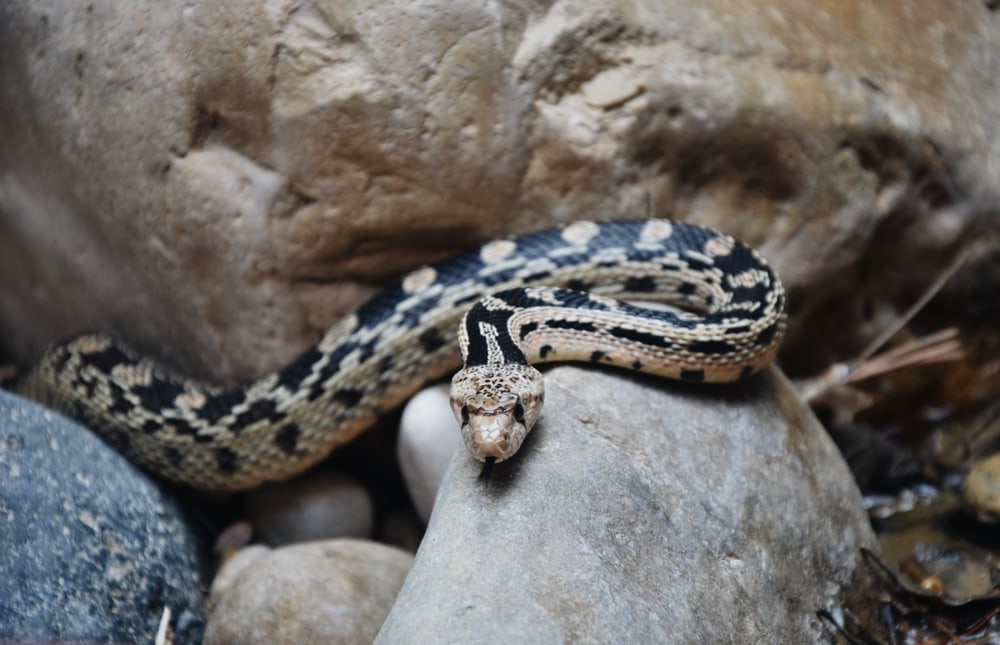
Gophersnake (Pituophis catenifer) is one of the large, nonvenomous snakes people most often mistake for a rattlesnake. Adults are often 3-7 feet, with a blotched body and a strong, muscular build.
Check the tail and face before the pattern fools you. A gophersnake has round pupils, no facial pit, and no rattle, though it may flatten, hiss, or vibrate its tail when startled.
| Key detail | What to look for |
|---|---|
| Adult size | often 3-7 feet |
| Fast ID cue | Overall build, pattern, habitat, and mapped range matter more than one color mark |
| Typical California habitat | forests, grasslands, wetlands, rocky edges, and nearby cover |
| California range | best narrowed with county-level range maps |
| Bite / venom note | Nonvenomous; compare range, body shape, and pattern |
20. Long-nosed Snake
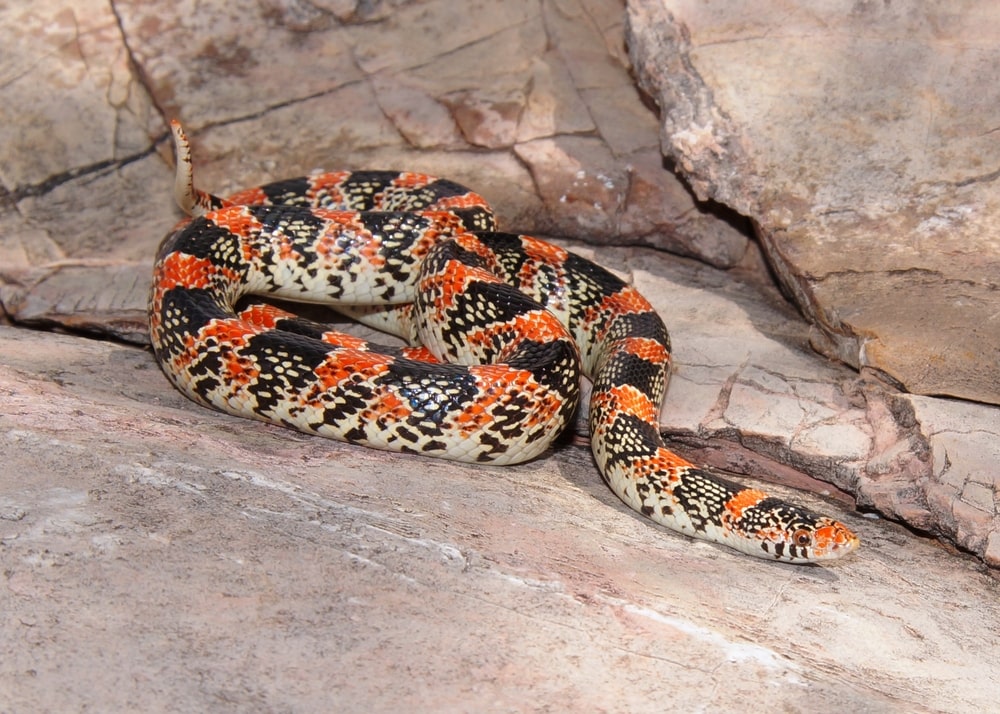
Long-nosed Snake (Rhinocheilus lecontei) is a slender desert and grassland snake with red, black, and pale banding. Adults are often 1-4 feet.
The pointed-looking snout and clean, high-contrast pattern are useful, but the exact color layout can vary. Dry open ground, rocky edges, and sandy washes are better context than wet meadows or forest litter.
| Key detail | What to look for |
|---|---|
| Adult size | often 1-4 feet |
| Fast ID cue | Overall build, pattern, habitat, and mapped range matter more than one color mark |
| Typical California habitat | forests, grasslands, wetlands, rocky edges, and nearby cover |
| California range | best narrowed with county-level range maps |
| Bite / venom note | Nonvenomous; compare range, body shape, and pattern |
21. Mohave Shovel-nosed Snake
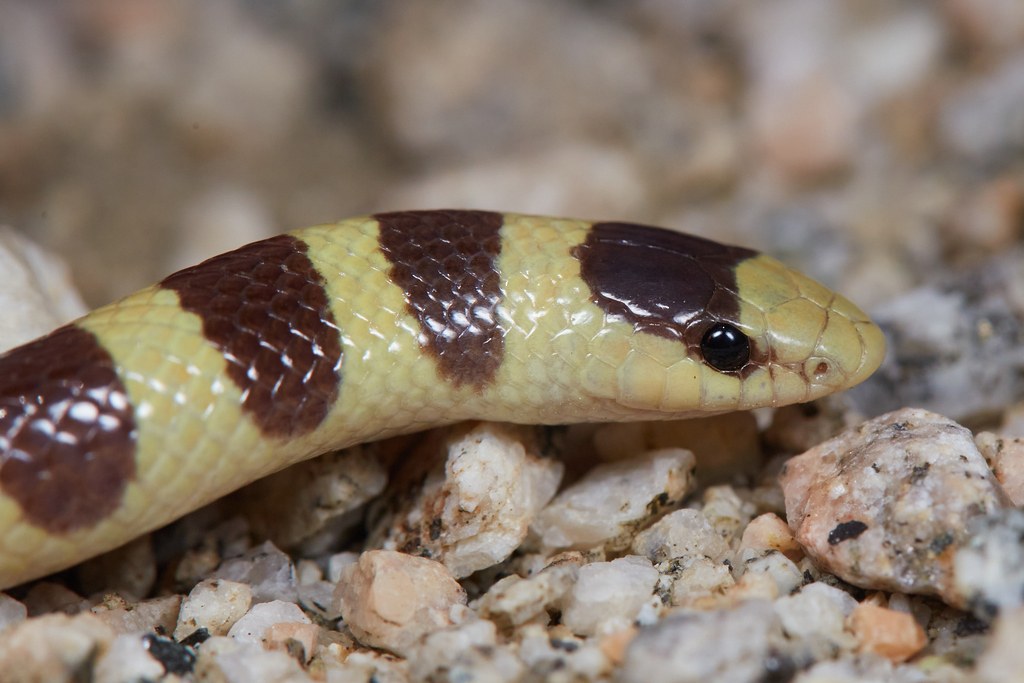
Mohave Shovel-nosed Snake (Sonora occipitalis) is a small desert snake shaped for loose sand. Adults are often 1-4 feet, though many look delicate compared with racers, kingsnakes, and gophersnakes.
Look for a pale body with narrow bands and a flattened, shovel-like snout. Sandy flats, washes, and open desert ground make this ID much more likely than woodland or wetland cover.
| Key detail | What to look for |
|---|---|
| Adult size | often 1-4 feet |
| Fast ID cue | Overall build, pattern, habitat, and mapped range matter more than one color mark |
| Typical California habitat | forests, grasslands, wetlands, rocky edges, and nearby cover |
| California range | mostly southern and desert California |
| Bite / venom note | Nonvenomous; compare range, body shape, and pattern |
22. North American Racer
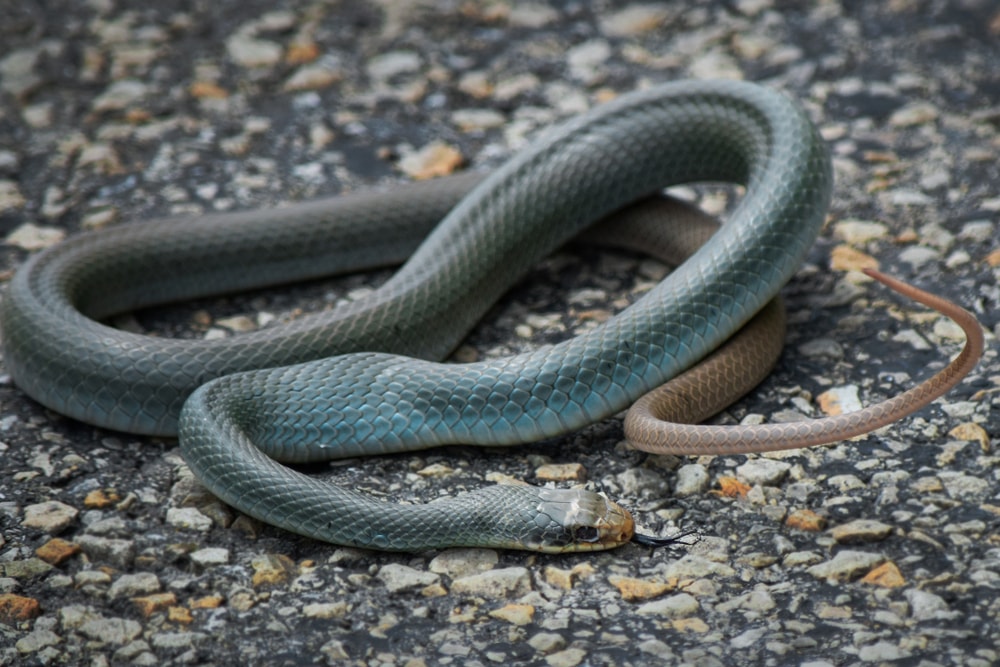
North American Racer (Coluber constrictor) is a slim, big-eyed snake built for quick daylight movement. Adults are often 3-7 feet and can look almost whiplike when stretched out.
The name is not subtle. If a long snake vanishes across grass, open scrub, a road edge, or dry woodland border before you can study the pattern, racer should stay high on the list.
| Key detail | What to look for |
|---|---|
| Adult size | often 3-7 feet |
| Fast ID cue | large eyes, slim body, fast daytime movement, and a long tapering tail |
| Typical California habitat | open scrub, grasslands, dry woods, sandy washes, roadsides, and sunny field edges |
| California range | best narrowed with county-level range maps |
| Bite / venom note | Nonvenomous fast hunter; long tail and large eyes |
23. Sonoran Lyresnake
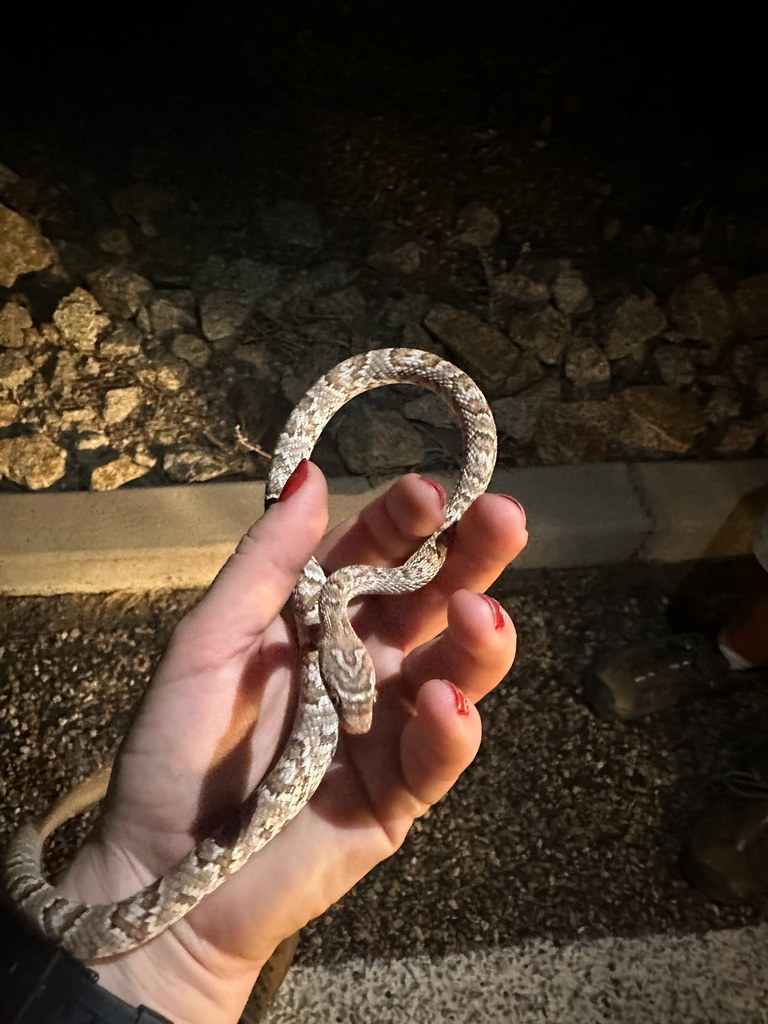
Sonoran Lyresnake (Trimorphodon lambda) is a southern desert lyresnake with saddle-like blotches and a narrow, alert head. Adults are often 1-4 feet.
Rocky slopes, canyon walls, and brushy desert edges are the right context. If you can see the head, look for the lyre-shaped marking that gives the group its name.
| Key detail | What to look for |
|---|---|
| Adult size | often 1-4 feet |
| Fast ID cue | Overall build, pattern, habitat, and mapped range matter more than one color mark |
| Typical California habitat | forests, grasslands, wetlands, rocky edges, and nearby cover |
| California range | mostly southern and desert California |
| Bite / venom note | Nonvenomous; compare range, body shape, and pattern |
24. Southwestern Black-headed Snake
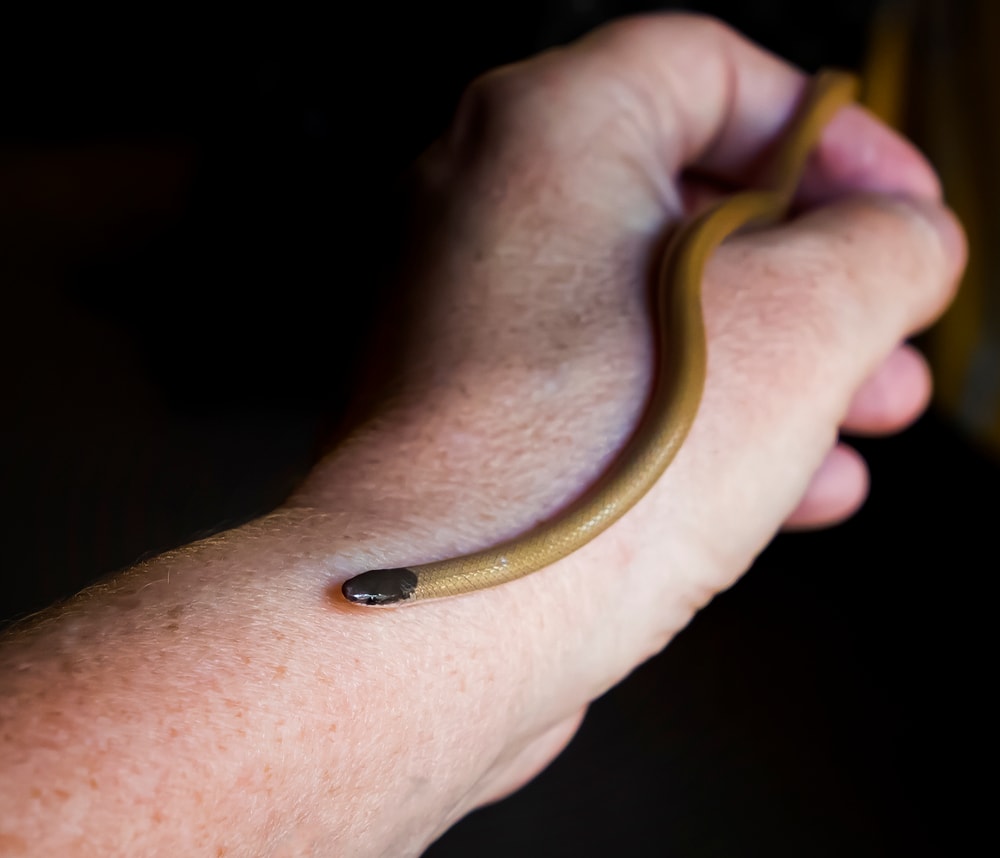
Southwestern Black-headed Snake (Tantilla hobartsmithi) is another small, cover-loving snake with a dark head and a much plainer body. Adults are usually 10-24 inches.
It is the kind of snake found by moving a board, rock, or damp leaf litter, not by scanning open trails. County, elevation, and nearby habitat are important because several tiny black-headed snakes can look similar at first glance.
| Key detail | What to look for |
|---|---|
| Adult size | usually 10-24 inches |
| Fast ID cue | Overall build, pattern, habitat, and mapped range matter more than one color mark |
| Typical California habitat | loose soil, leaf litter, rotting logs, compost, damp gardens, and shaded woodland edges |
| California range | best narrowed with county-level range maps |
| Bite / venom note | Nonvenomous tiny snake; usually under soil, logs, or leaf litter |
25. Spotted Leaf-nosed Snake
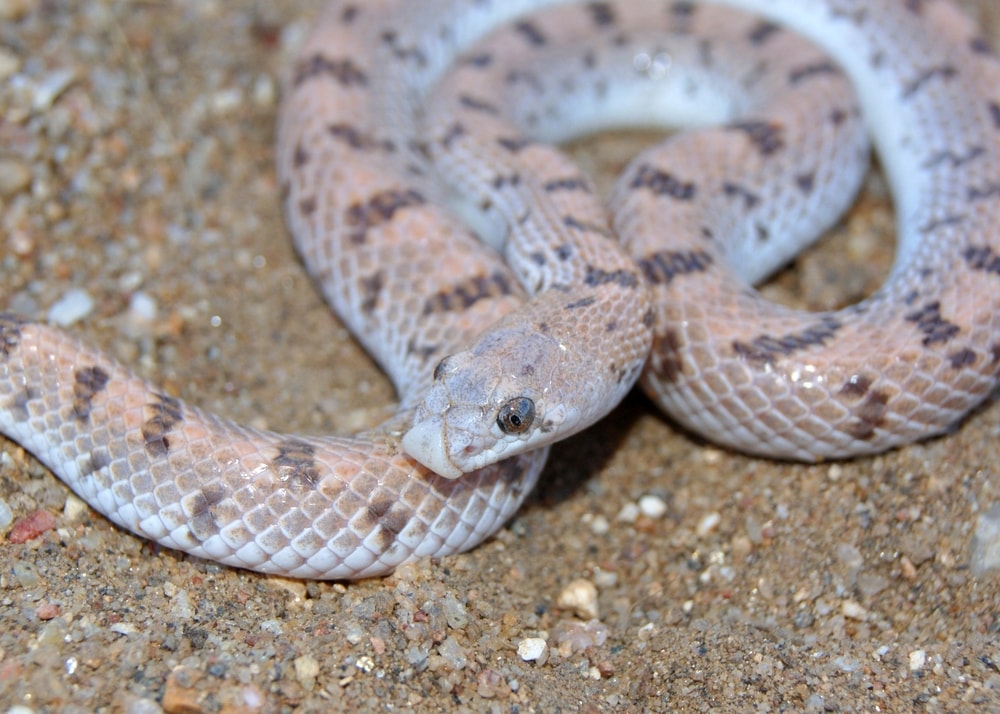
Spotted Leaf-nosed Snake (Phyllorhynchus decurtatus) is a small desert snake with a pale body, dark saddles or spots, and the flattened nose scale hinted at by its name. Adults are often 1-4 feet.
Dry sandy habitat is the key setting. On open desert flats or washes, that leaf-like snout and soft blotched pattern help separate it from shovel-nosed snakes and young long-nosed snakes.
| Key detail | What to look for |
|---|---|
| Adult size | often 1-4 feet |
| Fast ID cue | Overall build, pattern, habitat, and mapped range matter more than one color mark |
| Typical California habitat | forests, grasslands, wetlands, rocky edges, and nearby cover |
| California range | mostly southern and desert California |
| Bite / venom note | Nonvenomous; compare range, body shape, and pattern |
26. Striped Racer
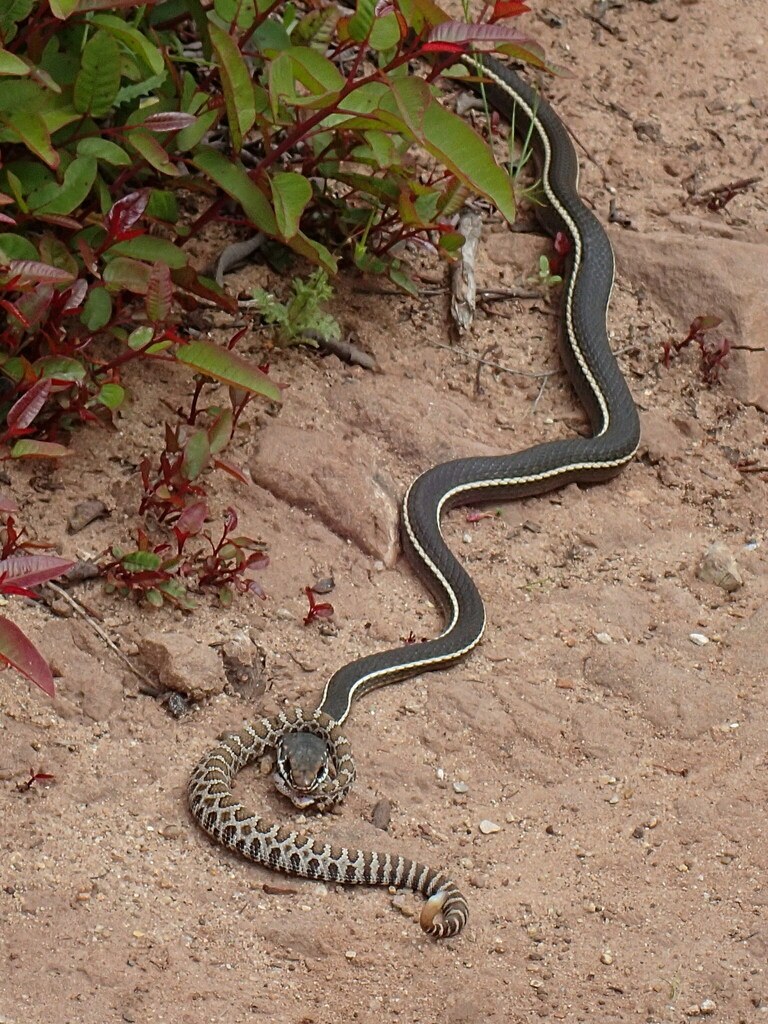
Striped Racer (Masticophis lateralis) is a long, quick snake with bold lengthwise striping. Adults are often 3-7 feet, slim through the body, and active by day.
Chaparral, grassland edges, dry woods, and sunny roadsides are good context. The clean side stripes and large eyes are often easier to catch than the exact body color as the snake moves away.
| Key detail | What to look for |
|---|---|
| Adult size | often 3-7 feet |
| Fast ID cue | large eyes, slim body, fast daytime movement, and a long tapering tail |
| Typical California habitat | open scrub, grasslands, dry woods, sandy washes, roadsides, and sunny field edges |
| California range | best narrowed with county-level range maps |
| Bite / venom note | Nonvenomous fast hunter; long tail and large eyes |
27. Striped Whipsnake
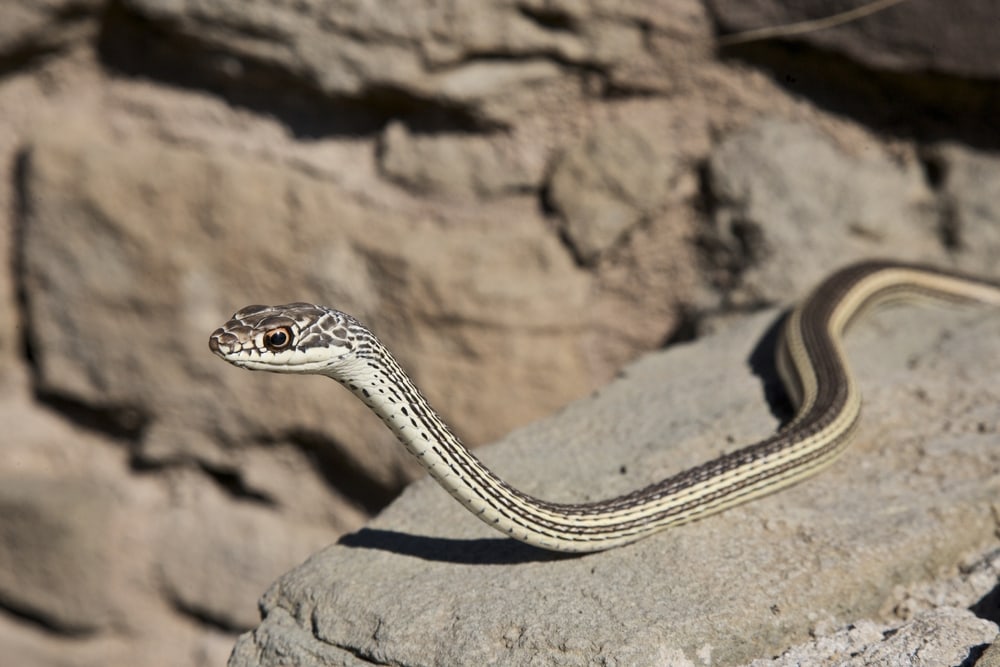
Striped Whipsnake (Masticophis taeniatus) is another lean, fast-moving hunter, usually 1-4 feet in this guide’s size range. Pale lengthwise stripes run along a narrow body and tapering tail.
Open scrub, rocky sage, dry grassland, and sunny field edges all fit. The whipsnake feel comes from the whole animal: alert head, big eyes, and a body that seems too quick to study for long.
| Key detail | What to look for |
|---|---|
| Adult size | often 1-4 feet |
| Fast ID cue | large eyes, slim body, fast daytime movement, and a long tapering tail |
| Typical California habitat | open scrub, grasslands, dry woods, sandy washes, roadsides, and sunny field edges |
| California range | best narrowed with county-level range maps |
| Bite / venom note | Nonvenomous fast hunter; long tail and large eyes |
28. Tricolor Shovel-nosed Snake
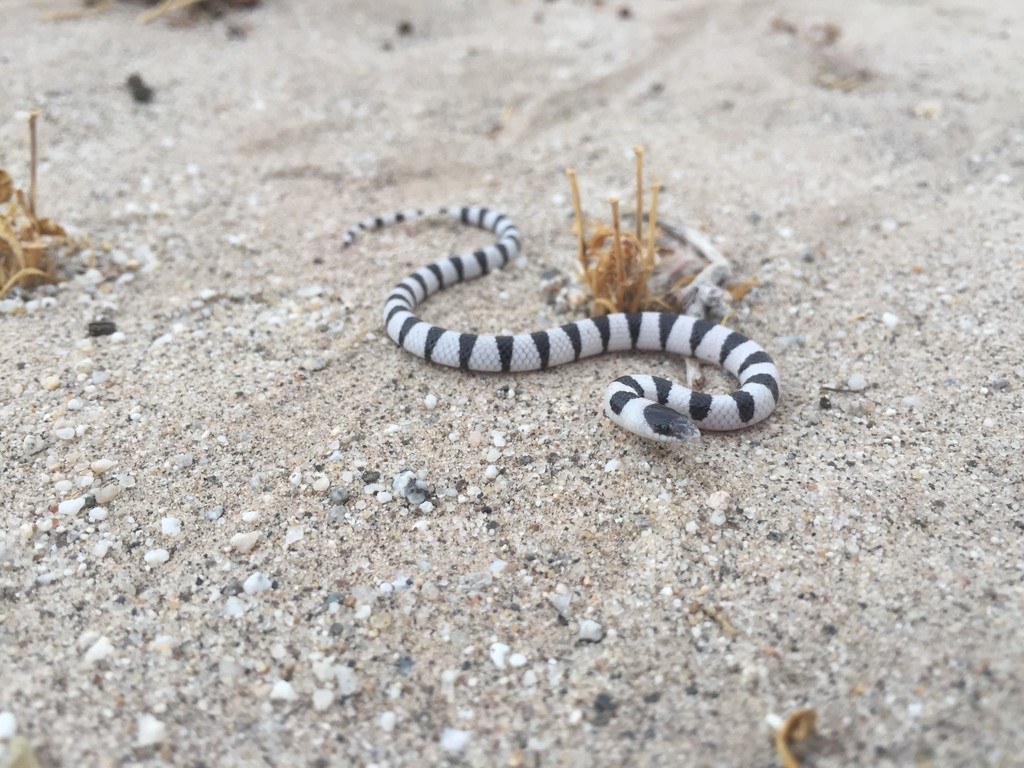
Tricolor Shovel-nosed Snake (Sonora annulata) is a small banded desert snake with red, black, and pale color blocks. Adults are often 1-4 feet, with a smooth body and a sand-adapted snout.
Do not let the bright pattern alone make the ID. Loose sand, desert flats, and washes are the supporting clues, especially when comparing it with long-nosed snakes or other banded desert species.
| Key detail | What to look for |
|---|---|
| Adult size | often 1-4 feet |
| Fast ID cue | Overall build, pattern, habitat, and mapped range matter more than one color mark |
| Typical California habitat | forests, grasslands, wetlands, rocky edges, and nearby cover |
| California range | mostly southern and desert California |
| Bite / venom note | Nonvenomous; compare range, body shape, and pattern |
29. Western Groundsnake
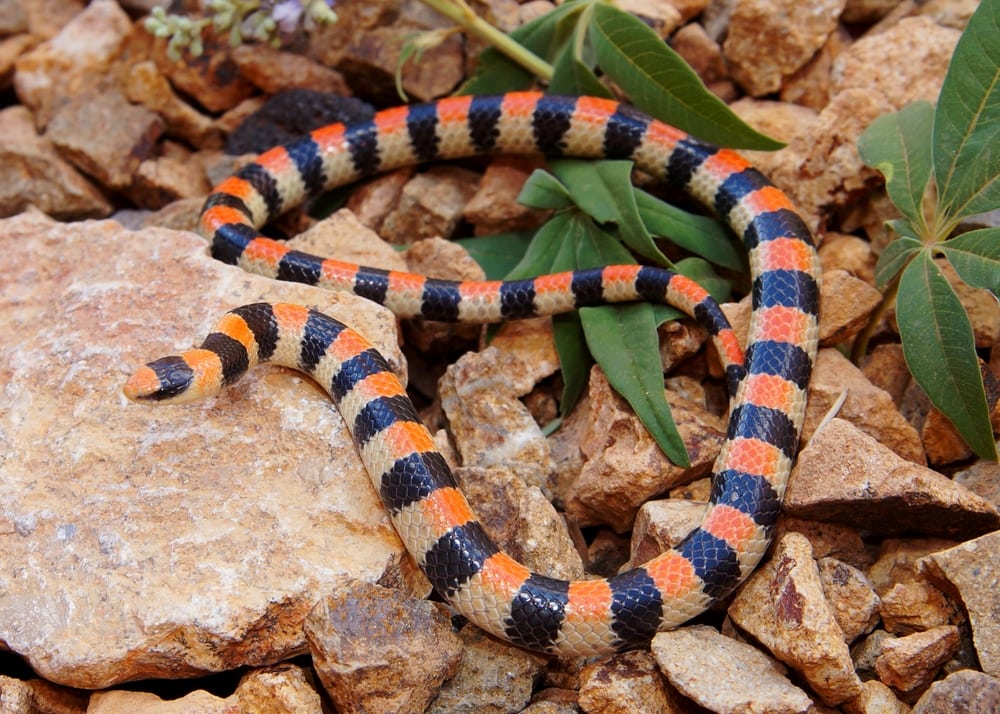
Western Groundsnake (Sonora semiannulata) is a small snake of dry ground, flat rocks, and low cover. Adults are often 1-4 feet, though many are on the smaller side.
Color can vary from plain to banded, which is why habitat and county matter. A small snake tucked under a rock in open scrub or grassland fits better than a wetland gartersnake or forest litter specialist.
| Key detail | What to look for |
|---|---|
| Adult size | often 1-4 feet |
| Fast ID cue | Overall build, pattern, habitat, and mapped range matter more than one color mark |
| Typical California habitat | open scrub, grasslands, dry woods, sandy washes, roadsides, and sunny field edges |
| California range | best narrowed with county-level range maps |
| Bite / venom note | Nonvenomous; compare range, body shape, and pattern |
30. Western Patch-nosed Snake
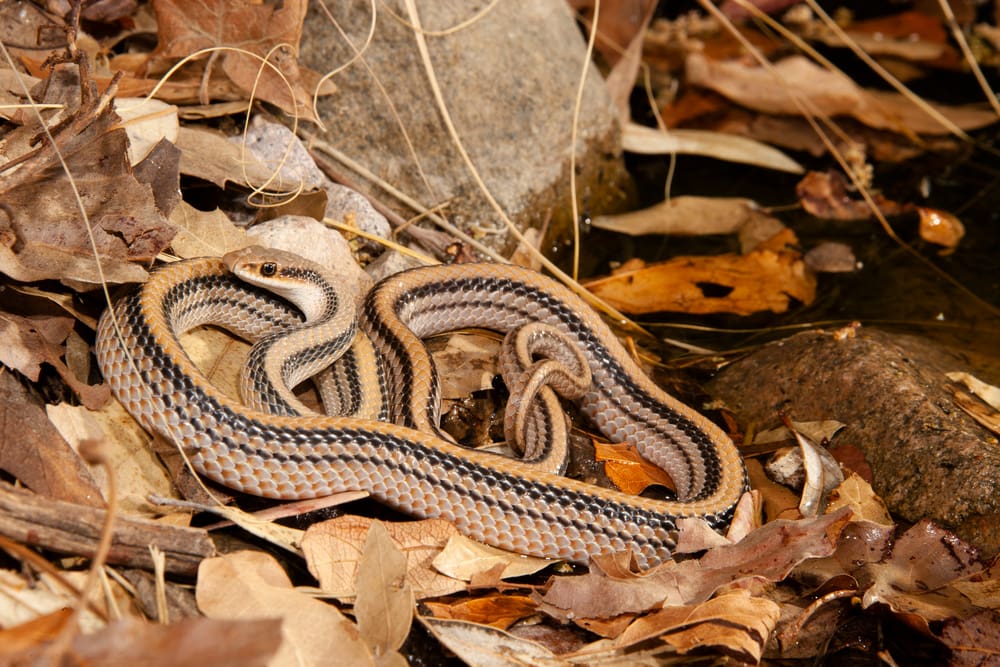
Western Patch-nosed Snake (Salvadora hexalepis) is a slender, active snake with a noticeably enlarged nose scale. Adults are often 1-4 feet.
Look for a long body, alert movement, and open dry habitat: scrub, grassland, sandy washes, roadsides, and sunny edges. The patch-like snout is the detail to confirm when the snake pauses long enough.
| Key detail | What to look for |
|---|---|
| Adult size | often 1-4 feet |
| Fast ID cue | Overall build, pattern, habitat, and mapped range matter more than one color mark |
| Typical California habitat | open scrub, grasslands, dry woods, sandy washes, roadsides, and sunny field edges |
| California range | best narrowed with county-level range maps |
| Bite / venom note | Nonvenomous; compare range, body shape, and pattern |
Small woodland snakes, hognoses, and secretive hunters
31. Coast Nightsnake
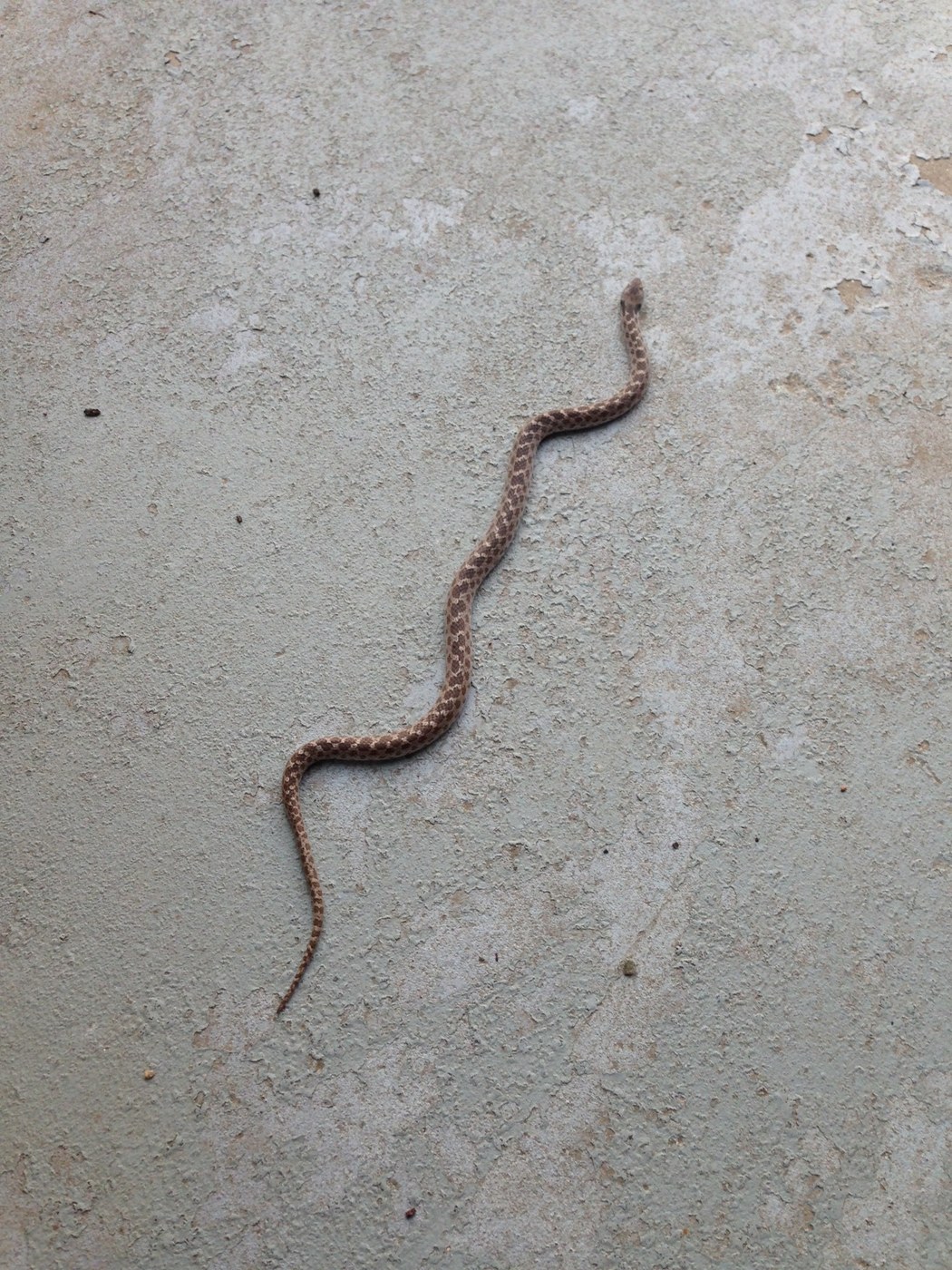
Coast Nightsnake (Hypsiglena ochrorhyncha) is a small, blotched snake that usually stays hidden by day. Adults are usually 10-24 inches.
Rocky edges, brushy slopes, grassland margins, and other cover-rich spots are the right setting. A nightsnake ID works best when the pattern, vertical-looking pupils, small size, and local range all line up.
| Key detail | What to look for |
|---|---|
| Adult size | usually 10-24 inches |
| Fast ID cue | Overall build, pattern, habitat, and mapped range matter more than one color mark |
| Typical California habitat | forests, grasslands, wetlands, rocky edges, and nearby cover |
| California range | best narrowed with county-level range maps |
| Bite / venom note | Nonvenomous; compare range, body shape, and pattern |
32. Common Sharp-tailed Snake
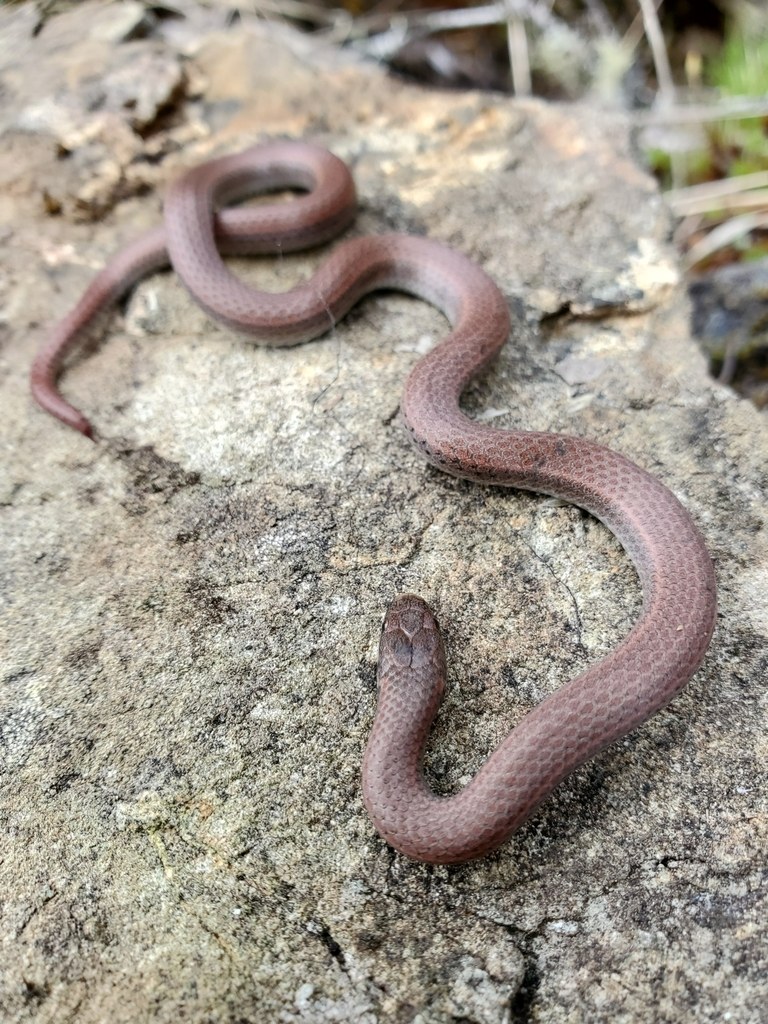
Common Sharp-tailed Snake (Contia tenuis) is a damp-cover snake, often found under logs, rocks, and leaf litter. Adults are often 1-4 feet in the broad guide range, but many look quite small and slender.
The tail tip is the named clue. If you can see the tiny spine-like point at the end, plus a moist woodland or garden-edge setting, sharp-tailed snake becomes a strong possibility.
| Key detail | What to look for |
|---|---|
| Adult size | often 1-4 feet |
| Fast ID cue | Overall build, pattern, habitat, and mapped range matter more than one color mark |
| Typical California habitat | forests, grasslands, wetlands, rocky edges, and nearby cover |
| California range | best narrowed with county-level range maps |
| Bite / venom note | Nonvenomous; compare range, body shape, and pattern |
33. Desert Nightsnake
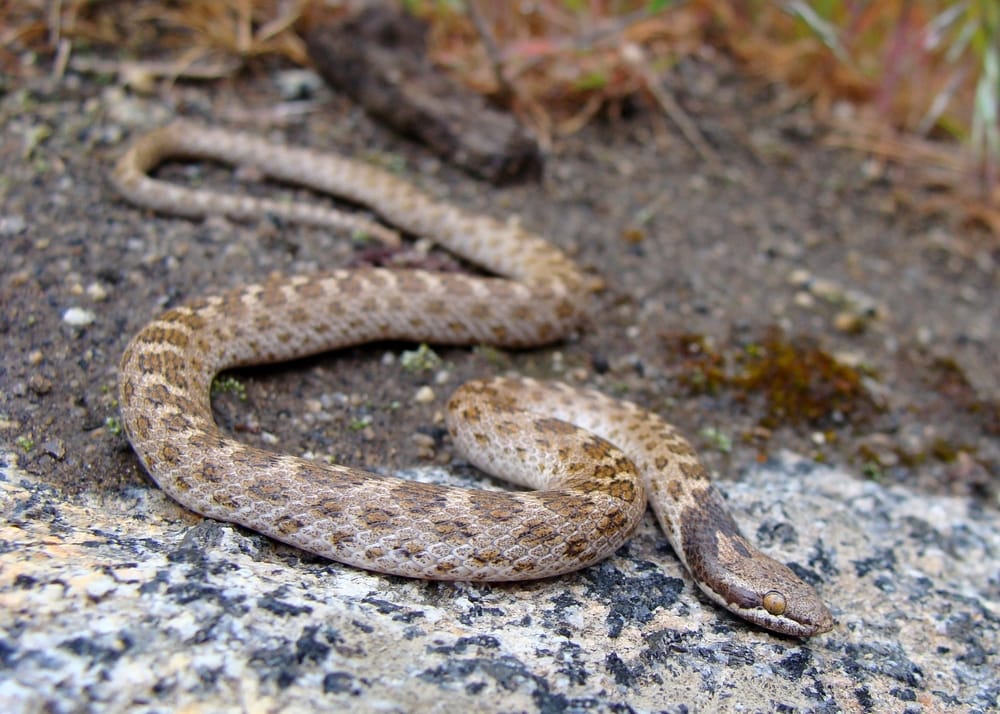
Desert Nightsnake (Hypsiglena chlorophaea) is the dry-country counterpart in the nightsnake group. Adults are usually 10-24 inches, with a slim body and blotched pattern.
Expect it around rocks, washes, grassland edges, and desert cover rather than wet meadows. A night sighting of a small, patterned snake with a narrow head is a better fit than a daytime racer or gartersnake.
| Key detail | What to look for |
|---|---|
| Adult size | usually 10-24 inches |
| Fast ID cue | Overall build, pattern, habitat, and mapped range matter more than one color mark |
| Typical California habitat | forests, grasslands, wetlands, rocky edges, and nearby cover |
| California range | best narrowed with county-level range maps |
| Bite / venom note | Nonvenomous; compare range, body shape, and pattern |
34. Forest Sharp-tailed Snake
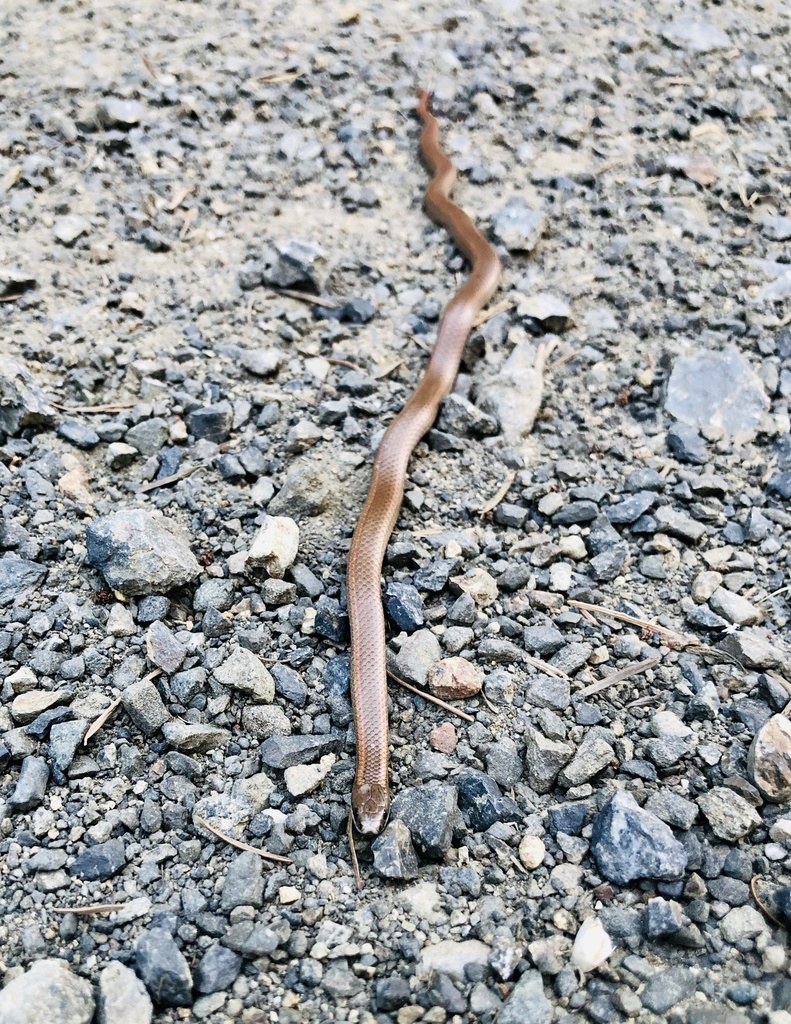
Forest Sharp-tailed Snake (Contia longicauda) points toward cool, moist forest cover. Adults are often 1-4 feet in this guide’s range, with a slender body and the sharp tail tip shared by the group.
Think shaded logs, damp leaf litter, and forest edges. When the setting is dry desert or open scrub, another small snake is usually a better match.
| Key detail | What to look for |
|---|---|
| Adult size | often 1-4 feet |
| Fast ID cue | Overall build, pattern, habitat, and mapped range matter more than one color mark |
| Typical California habitat | forests, grasslands, wetlands, rocky edges, and nearby cover |
| California range | best narrowed with county-level range maps |
| Bite / venom note | Nonvenomous; compare range, body shape, and pattern |
35. Ring-necked Snake
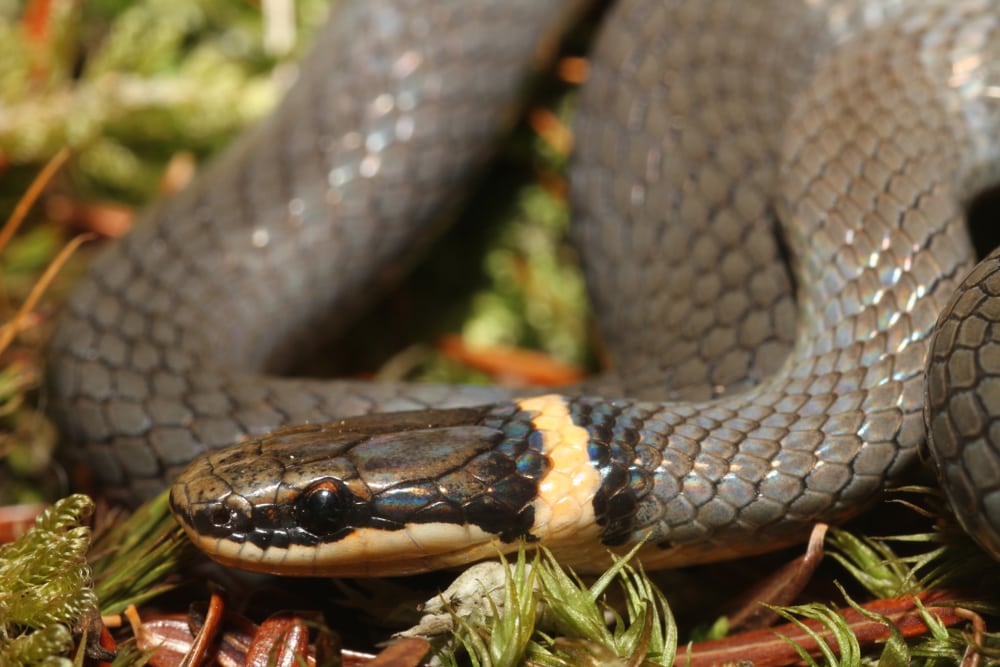
Ring-necked Snake (Diadophis punctatus) is one of the easiest small snakes to recognize when the neck ring shows. Adults are usually 10-24 inches, dark above, with a pale ring and a yellow to orange belly.
It favors cool, damp cover: leaf litter, rotting logs, shaded gardens, and woodland edges. The bright belly may flash only briefly, so the narrow neck ring is often the field mark you get.
| Key detail | What to look for |
|---|---|
| Adult size | usually 10-24 inches |
| Fast ID cue | dark back, light neck ring, and bright yellow to orange belly |
| Typical California habitat | loose soil, leaf litter, rotting logs, compost, damp gardens, and shaded woodland edges |
| California range | cooler northern, mountain, or coastal parts of the state |
| Bite / venom note | Nonvenomous; compare range, body shape, and pattern |
Watersnakes, gartersnakes, ribbonsnakes, and wetland species
36. Aquatic Gartersnake
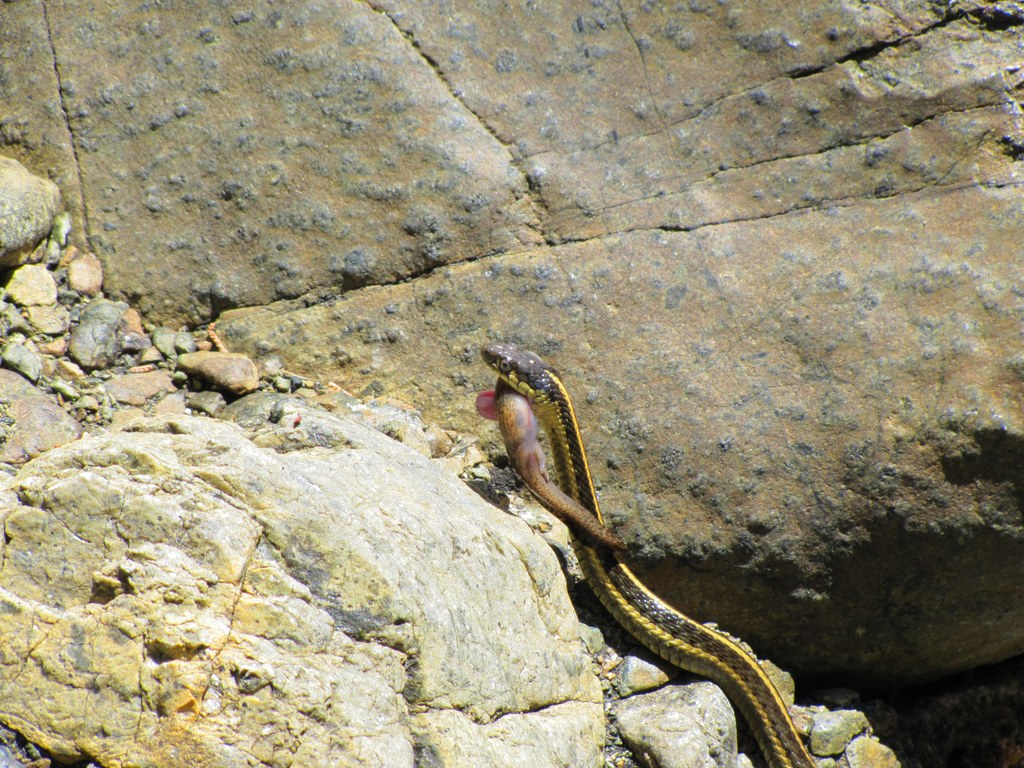
Aquatic Gartersnake (Thamnophis atratus) is a streamside gartersnake, usually seen near water rather than far out in dry uplands. Adults are usually 18-48 inches.
Look for a slim striped body moving through wet grass, along pond margins, or beside rocky stream edges. Habitat is especially helpful because several gartersnakes share the same basic stripe-and-checker look.
| Key detail | What to look for |
|---|---|
| Adult size | usually 18-48 inches |
| Fast ID cue | long stripes, slim build, and frequent use of wet grass or stream edges |
| Typical California habitat | wet meadows, pond margins, stream edges, grasslands, and backyard edges near cover |
| California range | best narrowed with county-level range maps |
| Bite / venom note | Nonvenomous striped snake; often near wet grass or streams |
37. Checkered Gartersnake
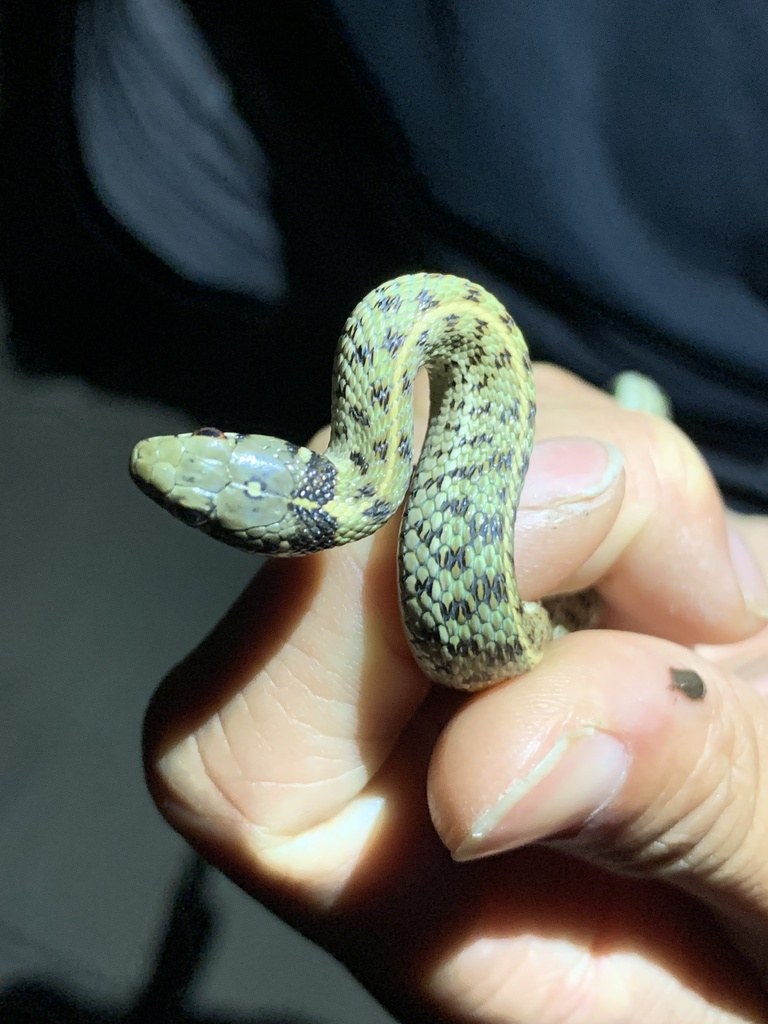
Checkered Gartersnake (Thamnophis marcianus) is a striped gartersnake with a clear checkered pattern along the sides. Adults are usually 18-48 inches.
It is most convincing near water or damp grass in otherwise open country. When the side pattern breaks into neat dark squares, compare this one before assuming every striped snake is a common gartersnake.
| Key detail | What to look for |
|---|---|
| Adult size | usually 18-48 inches |
| Fast ID cue | long stripes, slim build, and frequent use of wet grass or stream edges |
| Typical California habitat | wet meadows, pond margins, stream edges, grasslands, and backyard edges near cover |
| California range | best narrowed with county-level range maps |
| Bite / venom note | Nonvenomous striped snake; often near wet grass or streams |
38. Common Gartersnake
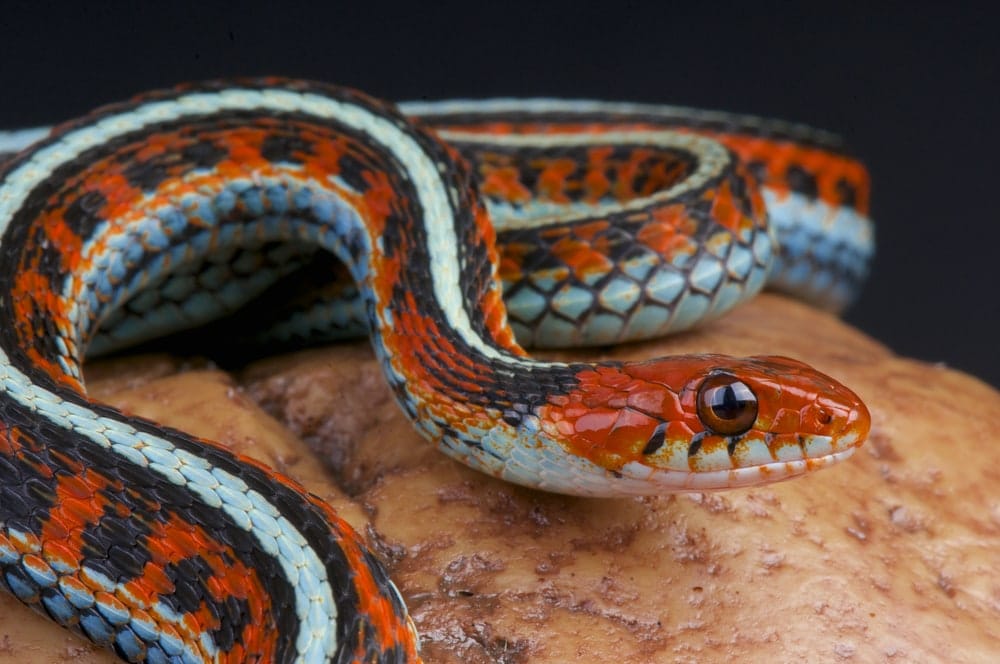
Common Gartersnake (Thamnophis sirtalis) is the broad, variable gartersnake option. Adults are usually 18-48 inches, and color can shift from muted stripes to much brighter local forms.
Start with the basics: lengthwise stripes, a slim body, and frequent use of wet grass, pond edges, yards, and stream corridors. Local range and pattern details finish the ID.
| Key detail | What to look for |
|---|---|
| Adult size | usually 18-48 inches |
| Fast ID cue | long stripes, slim build, and frequent use of wet grass or stream edges |
| Typical California habitat | wet meadows, pond margins, stream edges, grasslands, and backyard edges near cover |
| California range | best narrowed with county-level range maps |
| Bite / venom note | Nonvenomous striped snake; often near wet grass or streams |
39. Common Watersnake
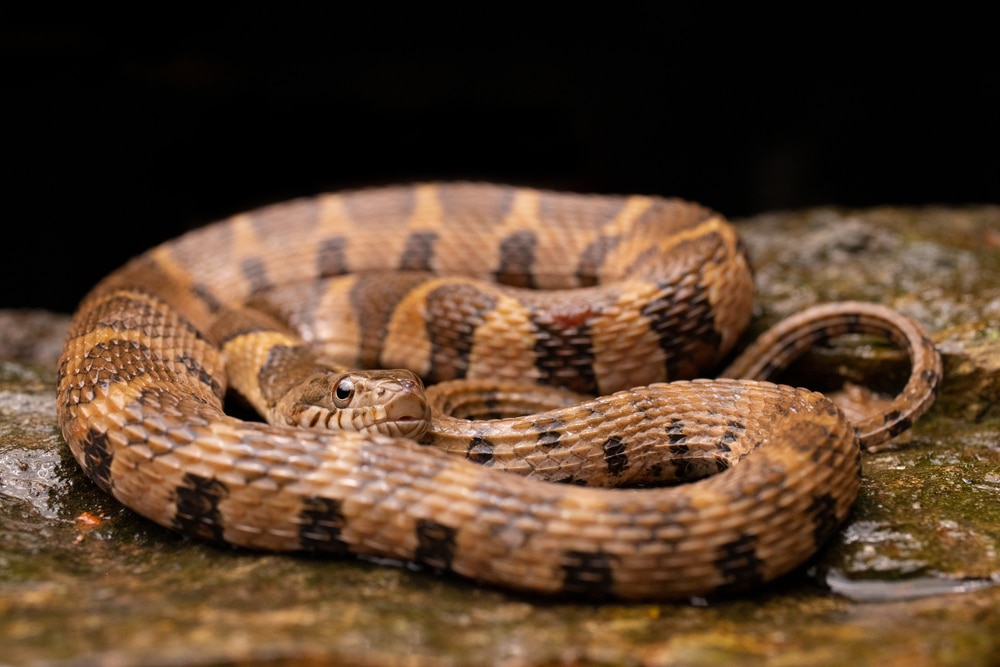
Common Watersnake (Nerodia sipedon) is a heavy-bodied watersnake to compare only where records support it. Adults are usually 18-48 inches and stay closely tied to ponds, marshes, rivers, and other wet edges.
The head lacks a rattlesnake’s facial pit, the pupils are round, and there is no rattle. Around water, the chunky body and banded or blotched pattern can still confuse people at a glance.
| Key detail | What to look for |
|---|---|
| Adult size | usually 18-48 inches |
| Fast ID cue | body found close to water, round pupils, and no rattle or facial pit |
| Typical California habitat | swamps, marshes, ponds, cypress sloughs, river edges, and other wet habitats |
| California range | best narrowed with county-level range maps |
| Bite / venom note | Nonvenomous watersnake; common cottonmouth lookalike near water |
40. Giant Gartersnake
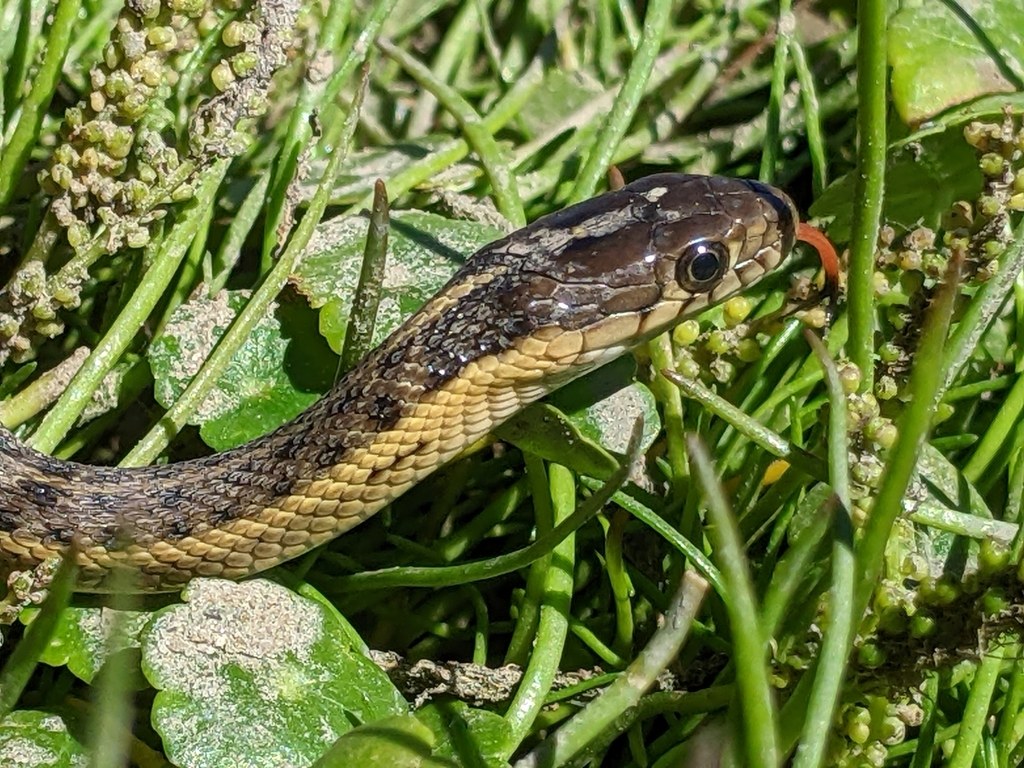
Giant Gartersnake (Thamnophis gigas) is the big Central Valley wetland gartersnake, associated with managed marshes, canals, and other lowland water. Adults are usually 18-48 inches.
Look for a striped snake using dense wet vegetation rather than dry scrub or rocky slopes. The Central Valley setting is the main filter before color or stripe width gets much weight.
| Key detail | What to look for |
|---|---|
| Adult size | usually 18-48 inches |
| Fast ID cue | long stripes, slim build, and frequent use of wet grass or stream edges |
| Typical California habitat | wet meadows, pond margins, stream edges, grasslands, and backyard edges near cover |
| California range | Central Valley wetlands and managed marshes |
| Bite / venom note | Nonvenomous striped snake; often near wet grass or streams |
41. Northwestern Gartersnake
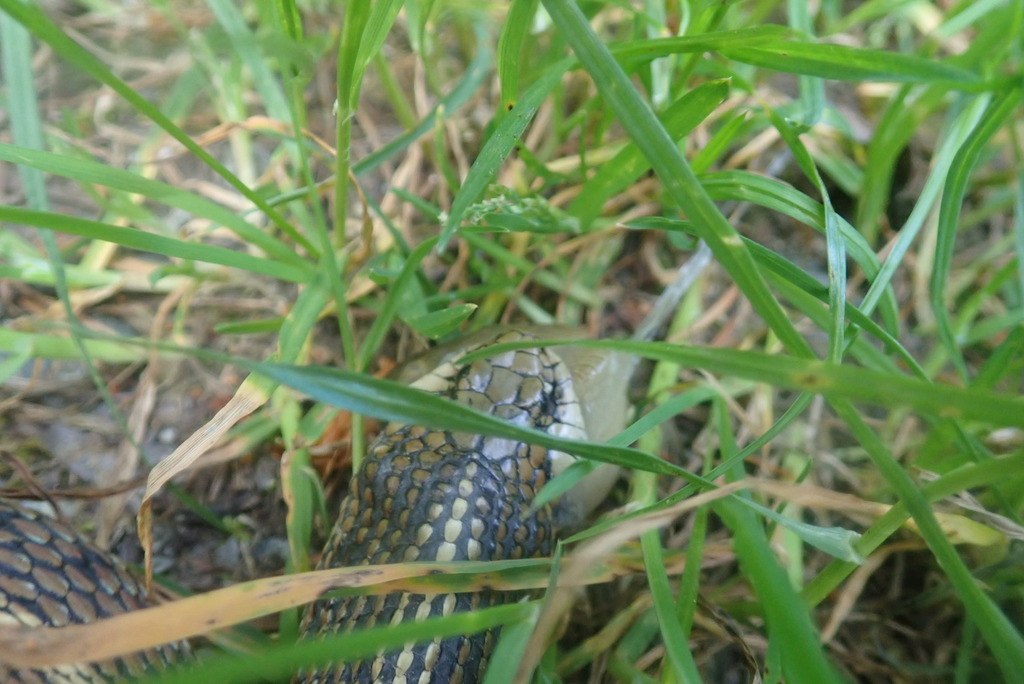
Northwestern Gartersnake (Thamnophis ordinoides) is a far-northwest gartersnake, generally smaller and more variable than the name “gartersnake” might suggest. Adults are usually 18-48 inches.
Search the photo for a slim striped body in wet grass, meadow edges, or cover near water. The far northwestern range note is important because similar gartersnakes occupy other parts of the state.
| Key detail | What to look for |
|---|---|
| Adult size | usually 18-48 inches |
| Fast ID cue | long stripes, slim build, and frequent use of wet grass or stream edges |
| Typical California habitat | wet meadows, pond margins, stream edges, grasslands, and backyard edges near cover |
| California range | far northwestern California |
| Bite / venom note | Nonvenomous striped snake; often near wet grass or streams |
42. Sierra Gartersnake
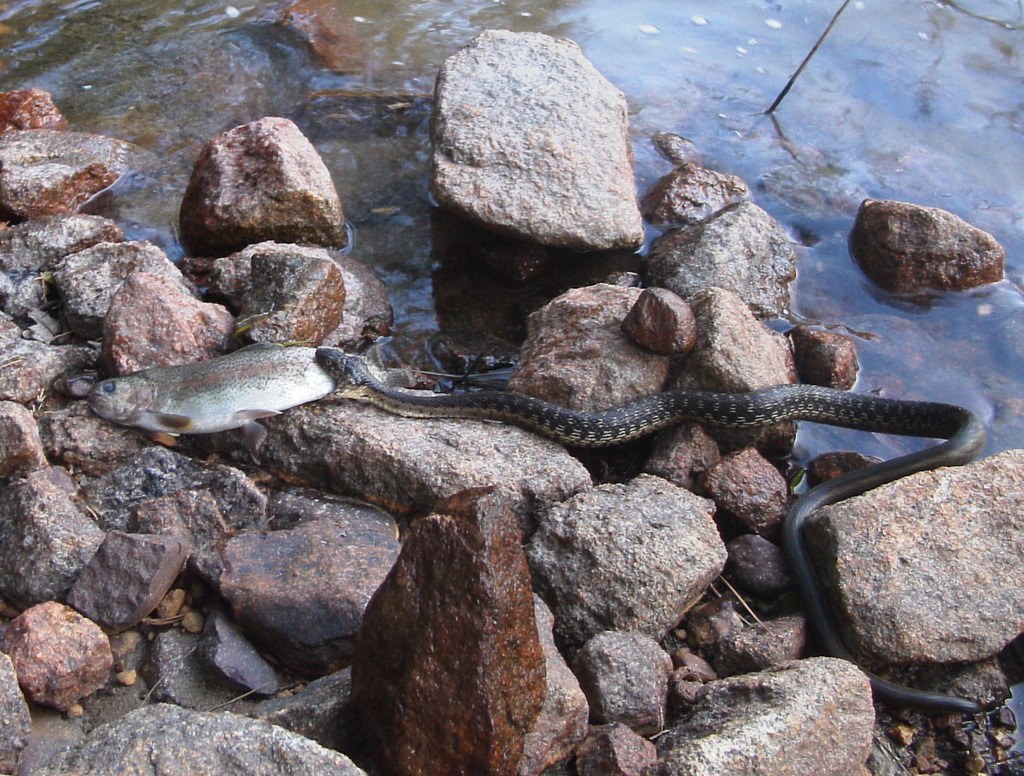
Sierra Gartersnake (Thamnophis couchii) is a mountain and foothill gartersnake tied strongly to streams, wet meadows, and pond margins. Adults are usually 18-48 inches.
A striped snake beside cold moving water in the Sierra region fits this profile better than a dry-country racer or patch-nosed snake. Check habitat first, then refine by stripe pattern and local range.
| Key detail | What to look for |
|---|---|
| Adult size | usually 18-48 inches |
| Fast ID cue | long stripes, slim build, and frequent use of wet grass or stream edges |
| Typical California habitat | wet meadows, pond margins, stream edges, grasslands, and backyard edges near cover |
| California range | best narrowed with county-level range maps |
| Bite / venom note | Nonvenomous striped snake; often near wet grass or streams |
43. Southern Watersnake
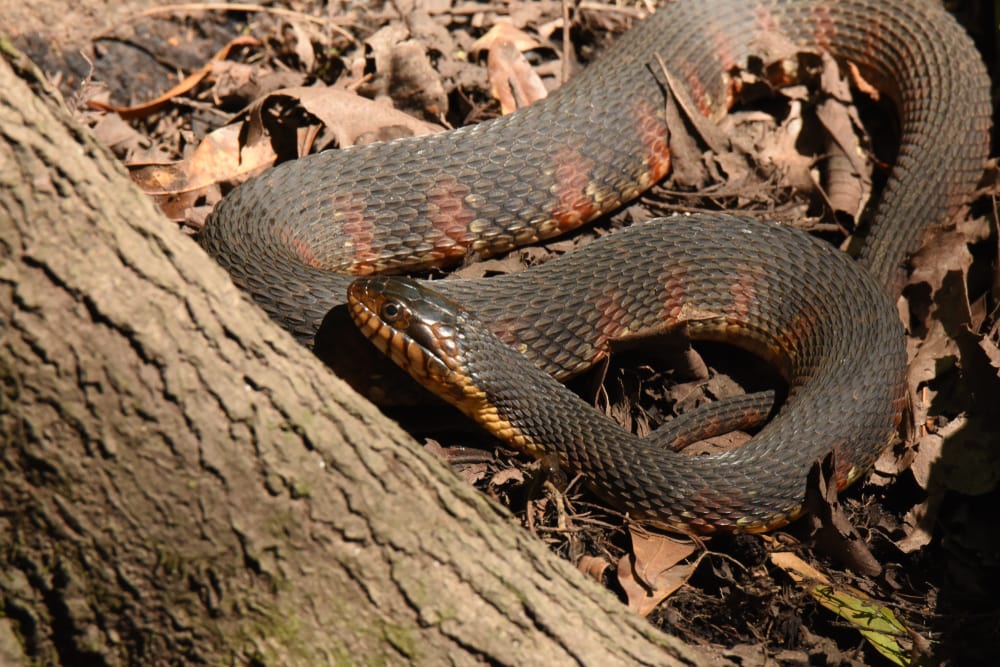
Southern Watersnake (Nerodia fasciata) is a banded watersnake to compare where local records support it. Adults are usually 18-48 inches and stay near ponds, marshes, sloughs, ditches, and river edges.
The useful clues are practical: close to water, round pupils, no rattle, and no facial pit. A clear banded body in wet habitat points this way, but range should be checked before settling on the name.
| Key detail | What to look for |
|---|---|
| Adult size | usually 18-48 inches |
| Fast ID cue | body found close to water, round pupils, and no rattle or facial pit |
| Typical California habitat | swamps, marshes, ponds, cypress sloughs, river edges, and other wet habitats |
| California range | best narrowed with county-level range maps |
| Bite / venom note | Nonvenomous watersnake; common cottonmouth lookalike near water |
44. Terrestrial Gartersnake
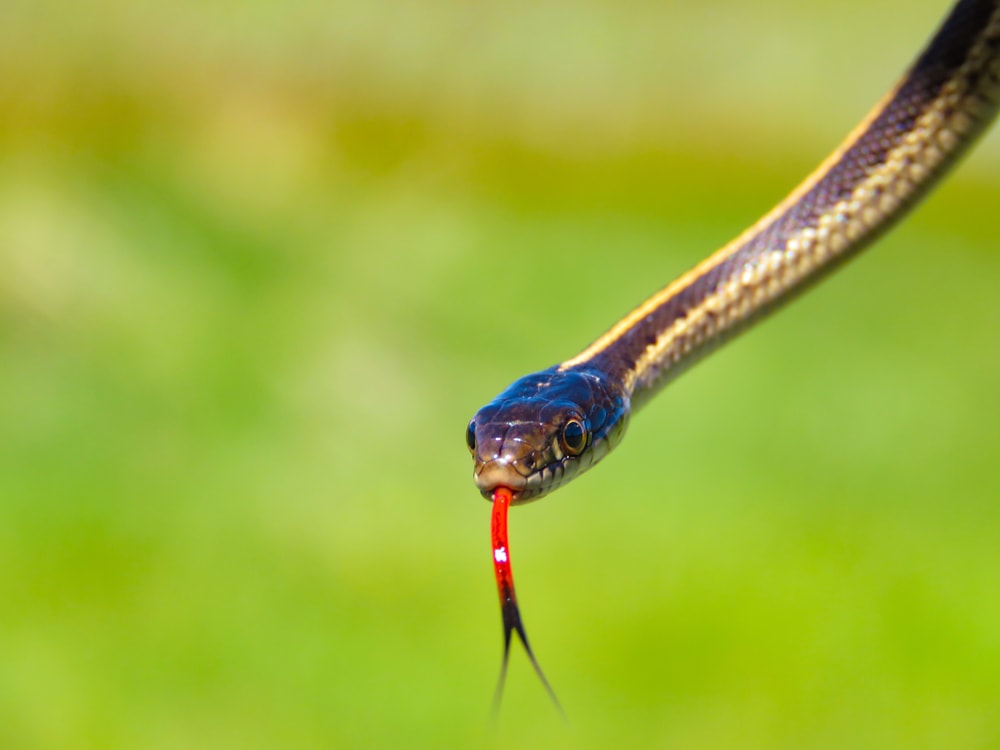
Terrestrial Gartersnake (Thamnophis elegans) is variable, but it usually keeps the long striped gartersnake shape. Adults are usually 18-48 inches.
Despite the name, it can show up around wet meadows, pond margins, grasslands, and backyard edges near cover. Use the setting and local range to separate it from aquatic and common gartersnakes.
| Key detail | What to look for |
|---|---|
| Adult size | usually 18-48 inches |
| Fast ID cue | long stripes, slim build, and frequent use of wet grass or stream edges |
| Typical California habitat | wet meadows, pond margins, stream edges, grasslands, and backyard edges near cover |
| California range | best narrowed with county-level range maps |
| Bite / venom note | Nonvenomous striped snake; often near wet grass or streams |
45. Two-striped Gartersnake
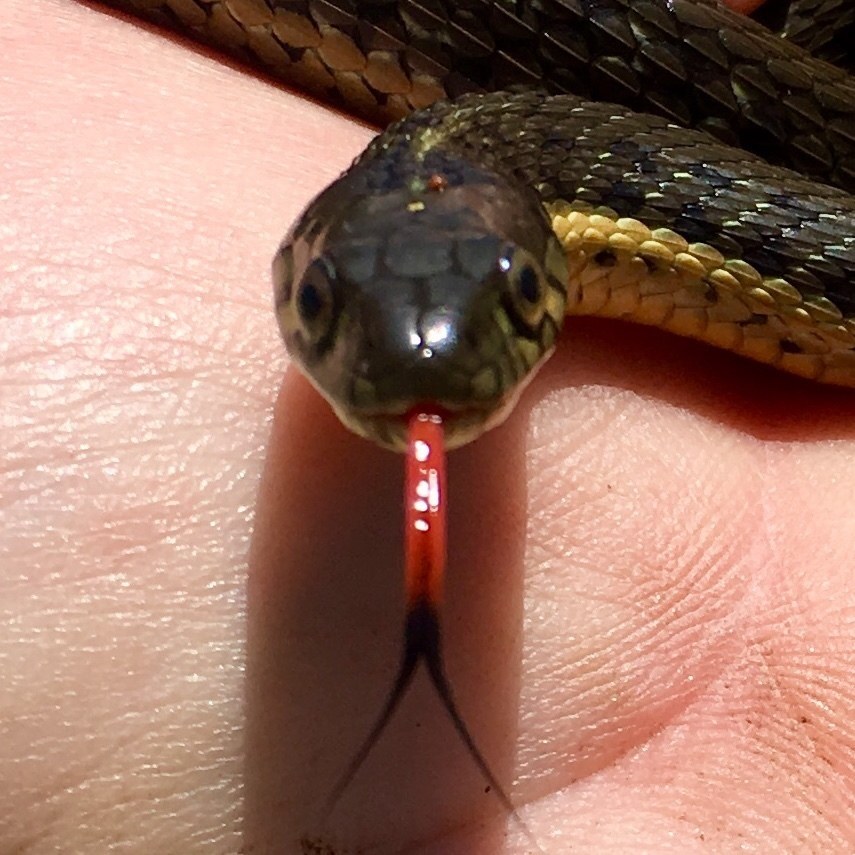
Two-striped Gartersnake (Thamnophis hammondii) is a stream-edge gartersnake with the name’s pale stripes doing much of the visual work. Adults are usually 18-48 inches.
Look along creeks, wet grass, pond margins, and other damp edges. A cleanly striped snake that keeps close to water is a stronger fit than one found far out in dry open scrub.
| Key detail | What to look for |
|---|---|
| Adult size | usually 18-48 inches |
| Fast ID cue | long stripes, slim build, and frequent use of wet grass or stream edges |
| Typical California habitat | wet meadows, pond margins, stream edges, grasslands, and backyard edges near cover |
| California range | best narrowed with county-level range maps |
| Bite / venom note | Nonvenomous striped snake; often near wet grass or streams |
Threadsnakes and other tiny burrowers
46. Western Threadsnake
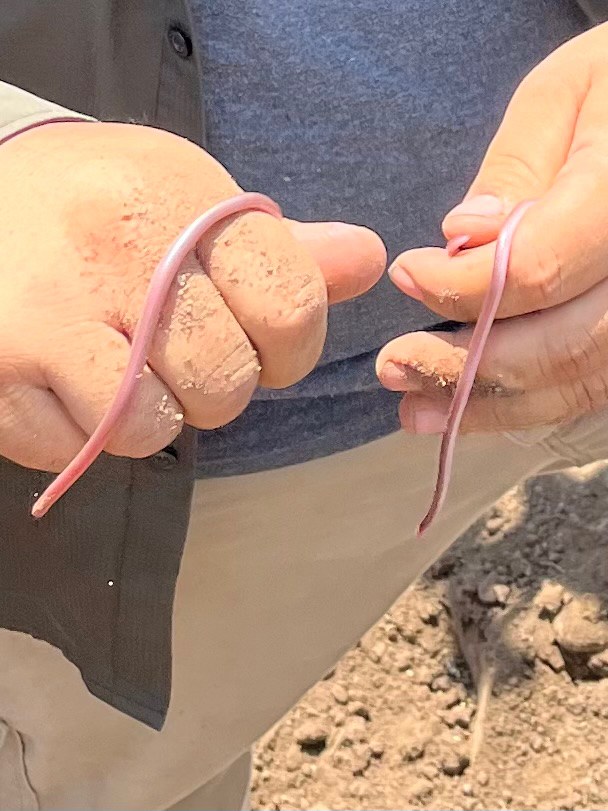
Western Threadsnake (Rena humilis) is tiny, glossy, and wormlike, usually just 4-12 inches long. It belongs with the hidden desert and southern burrowers, not the open-trail snakes.
Look under rocks, logs, loose soil, or damp cover where ants and termites are common. The blunt ends and polished body make it look more like a strange earthworm than a typical snake.
| Key detail | What to look for |
|---|---|
| Adult size | usually 4-12 inches |
| Fast ID cue | small wormlike body, hidden life under soil or logs, and smooth glossy scales |
| Typical California habitat | loose soil, leaf litter, rotting logs, compost, damp gardens, and shaded woodland edges |
| California range | mostly southern and desert California |
| Bite / venom note | Nonvenomous tiny snake; usually under soil, logs, or leaf litter |
Blind snakes and other tiny burrowers
47. Brahminy Blindsnake
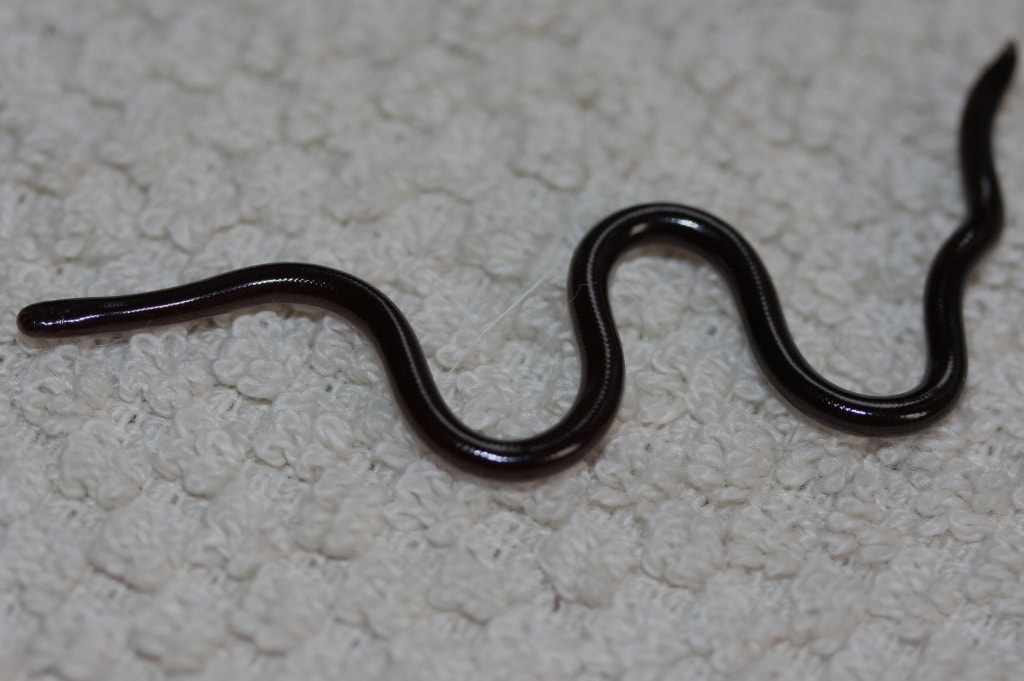
Brahminy Blindsnake (Indotyphlops braminus) is a tiny introduced blindsnake often moved around with soil and nursery plants. Adults are usually 4-12 inches and look dark, glossy, and wormlike.
Garden beds, flower pots, compost, and loose damp soil are the places to think about this one. The eyes are reduced, the head is blunt, and the whole animal is built for life underground.
| Key detail | What to look for |
|---|---|
| Adult size | usually 4-12 inches |
| Fast ID cue | small wormlike body, hidden life under soil or logs, and smooth glossy scales |
| Typical California habitat | loose soil, leaf litter, rotting logs, compost, damp gardens, and shaded woodland edges |
| California range | best narrowed with county-level range maps |
| Bite / venom note | Nonvenomous tiny snake; usually under soil, logs, or leaf litter |
Quick identification tips
In California, elevation and county often matter as much as color. Desert rattlesnakes, coastal gartersnakes, mountain boas, and Central Valley wetland snakes rarely give you the same shortlist.
If the photo is unclear, identify the habitat first: sand, chaparral, oak woodland, marsh, rock, meadow, or backyard edge. A cautious range check prevents many lookalike mistakes.
FAQ
How many snake types are in California?
This guide profiles 47 California snakes from current herpetology references. Agency pages and field guides may use different counts when they group subspecies, older names, or rare records differently.
Which California snakes are venomous?
The venomous species are listed first in this guide. They include Mohave Rattlesnake, Panamint Rattlesnake, Red Diamond Rattlesnake, Sidewinder, Southwestern Speckled Rattlesnake, Western Diamond-backed Rattlesnake, Western Rattlesnake. Compare range, habitat, and field marks before choosing a species.
Are watersnakes in California cottonmouths?
No. Several harmless watersnakes live near the same wetlands as cottonmouths. Look at range, body shape, head posture, pattern, and behavior before deciding.
What should I do if I find a snake in my yard in California?
Most yard snakes are passing through for cover, water, or prey. If a snake is inside a building or cannot leave on its own, contact a local wildlife professional.
What details help identify a snake from a photo?
Useful details include county, habitat, body length, dorsal pattern, head shape, tail shape, stripes or bands, and whether the photo was taken near water, rocks, logs, or open ground.