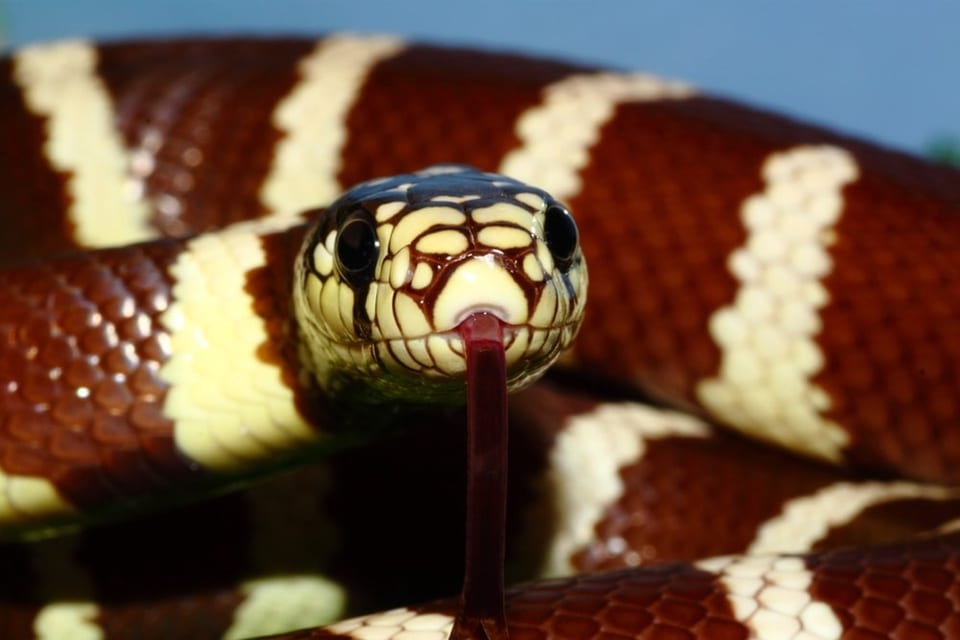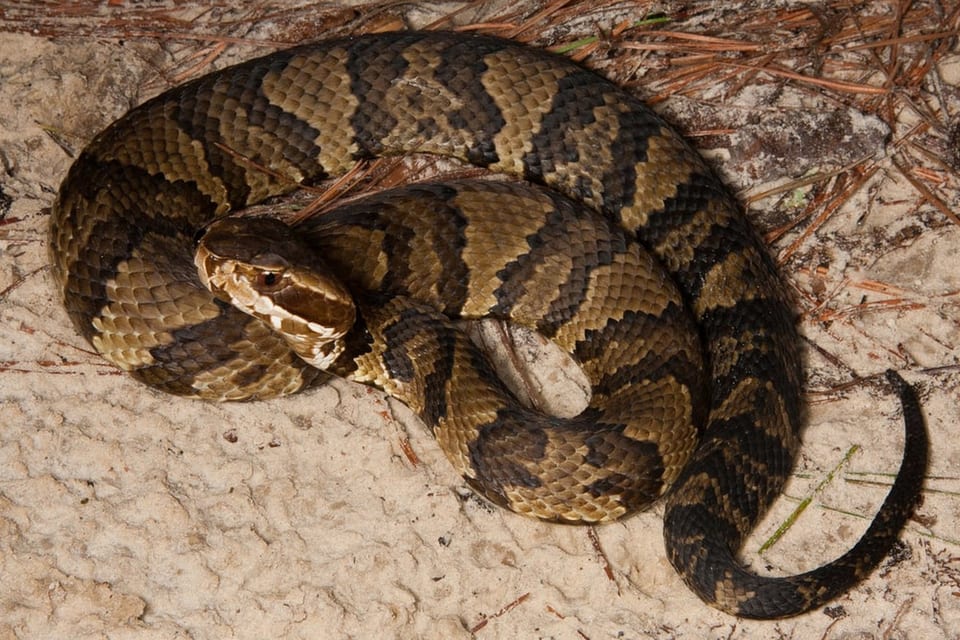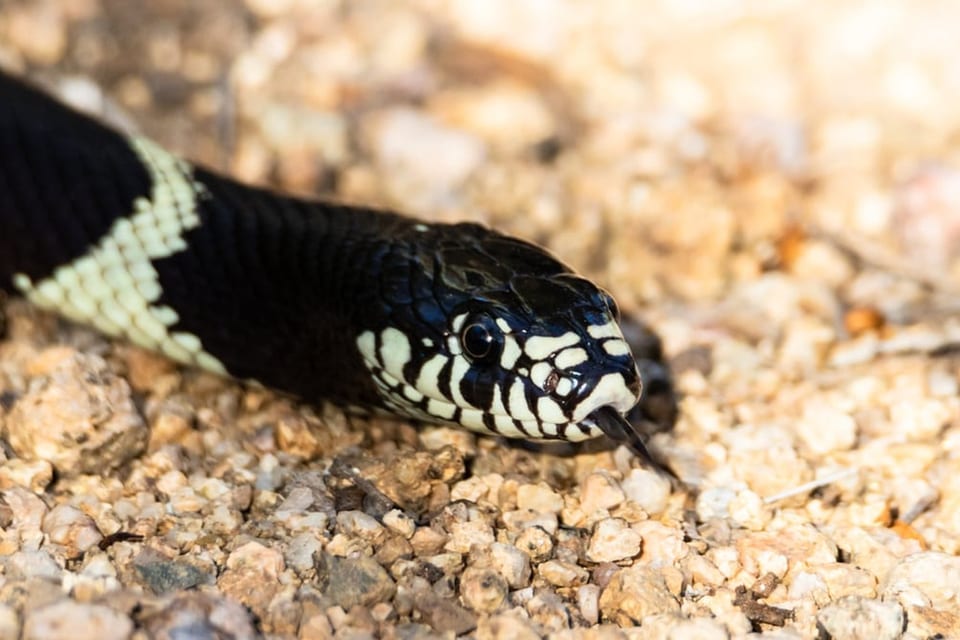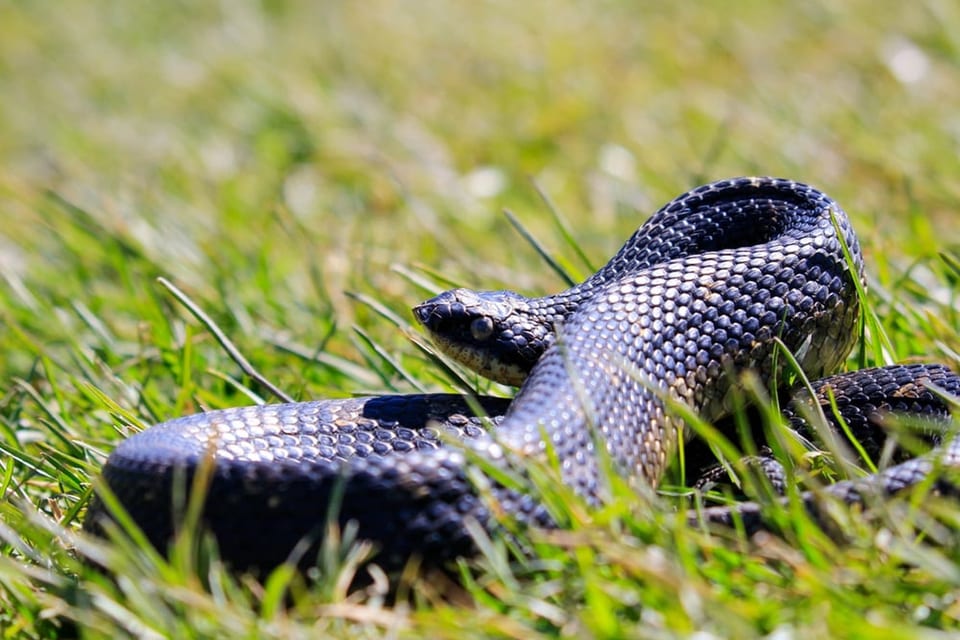
Alabama is a humid Southeast snake state with a northern mountain edge, Black Belt prairie, longleaf pine country, broad river systems, and Gulf Coast marsh. Its snake list changes with that landscape.
Upland woods are where copperheads, timber rattlesnakes, ratsnakes, and kingsnakes become likely. Swamps, ponds, and floodplains shift the cast toward cottonmouths, watersnakes, mud snakes, ribbonsnakes, and crayfish specialists.
The full list includes heavy-bodied pit vipers, one secretive coral snake, large constrictors, bright green vine hunters, and small leaf-litter snakes that spend much of their lives under cover.
Venomous snakes in Alabama
Alabama’s venomous snakes are not one lookalike group. Copperheads blend into leaf litter, cottonmouths stay close to wetlands, coral snakes are secretive, and rattlesnakes range from pine flats to rocky uplands.
1. Eastern Copperhead
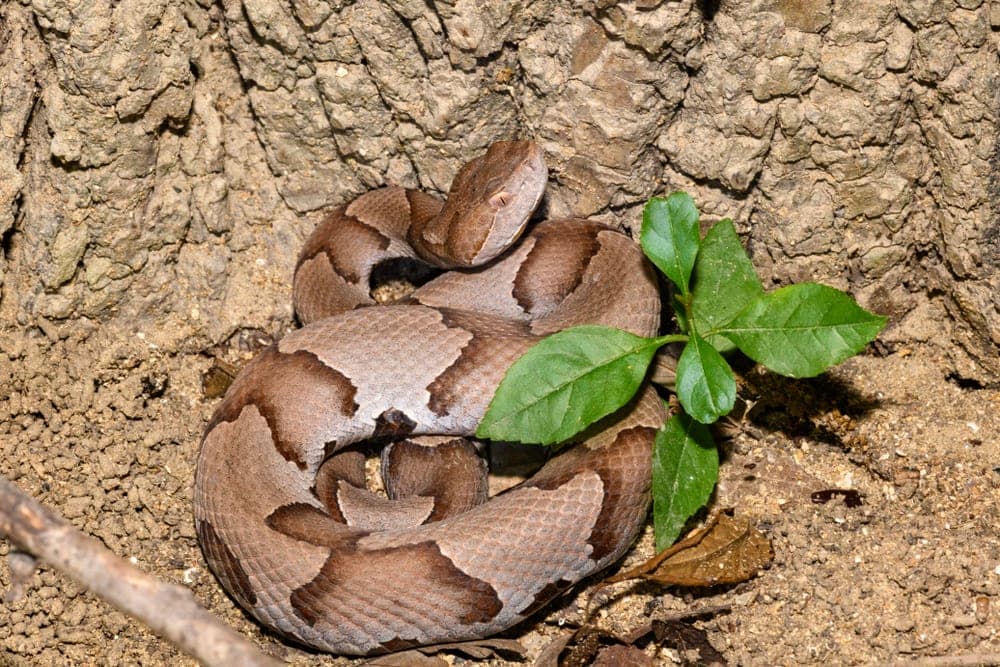
Eastern Copperhead (Agkistrodon contortrix) is the coppery leaf-litter pit viper of Alabama woods and edge habitat, most often tied to hardwood slopes, rocky ravines, and brushy field margins. Adults are usually 24-36 inches, but the thick build makes even a coiled one look substantial.
The hourglass bands are the best clue: narrow across the spine, wider down the sides, and broken by a copper-colored head. That pattern can vanish in dry leaves, which is exactly where this snake is hardest to see.
| Key detail | What to look for |
|---|---|
| Adult size | usually 24-36 inches |
| Fast ID cue | coppery head, heavy body, and hourglass crossbands that narrow along the spine |
| Typical Alabama habitat | leaf-littered hardwood forests, rocky slopes, wooded ravines, and brushy field edges |
| Alabama range | common through wooded uplands, rocky ravines, and brushy edges statewide |
| Bite / venom note | Venomous pit viper; camouflaged leaf-litter snake, serious bite risk |
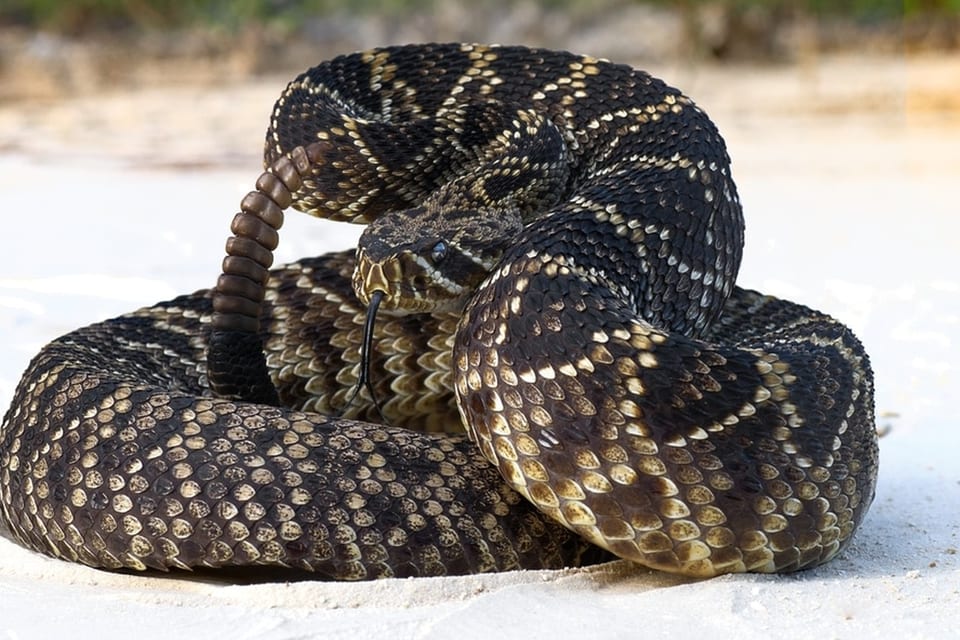
2. Eastern Diamond-backed Rattlesnake
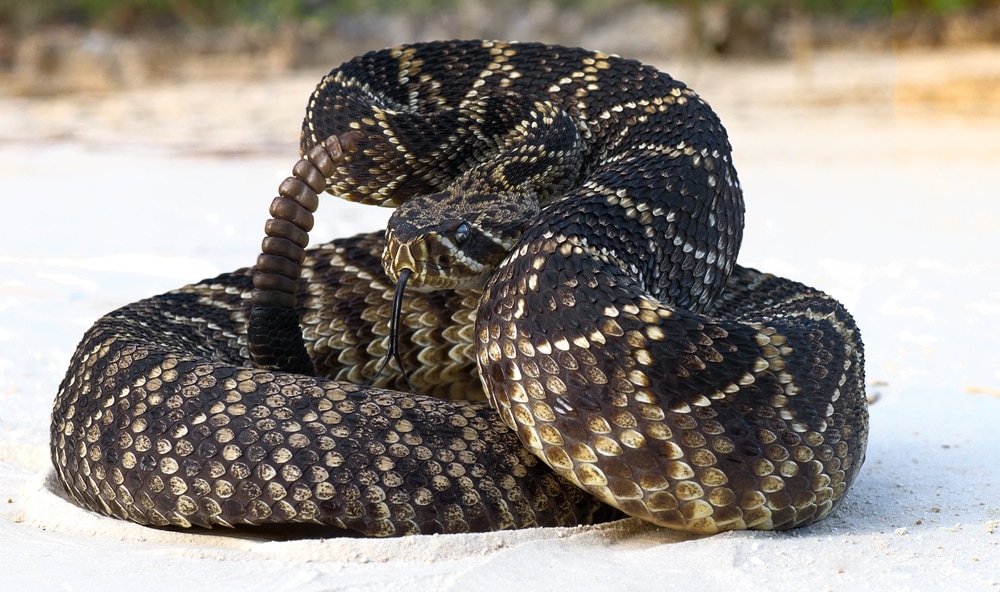
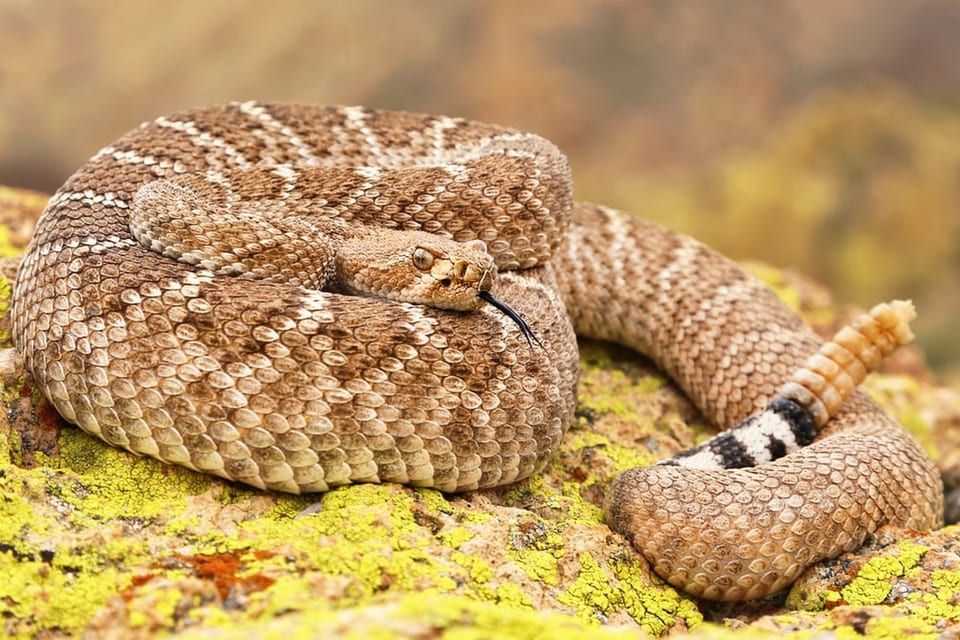
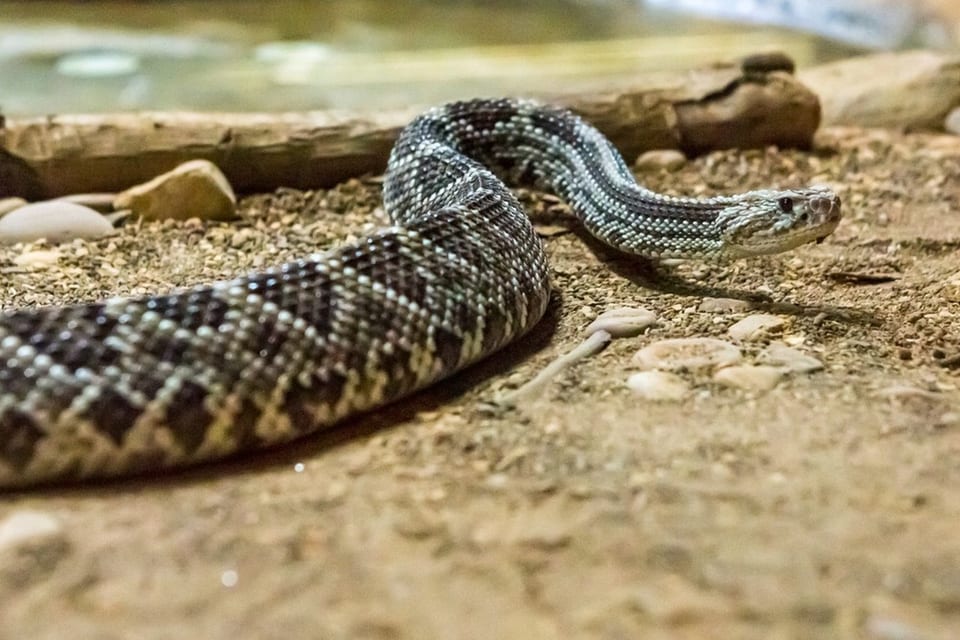
Eastern Diamond-backed Rattlesnake (Crotalus adamanteus) is the big diamondback of the southern Coastal Plain, a heavy rattlesnake associated with pine woods, grassy openings, and dry upland edges. Adults are often 2-5 feet, with a broad body that looks powerful even before the rattle is visible.
Look for dark diamonds outlined in pale scales along the back. In open pine country or sandy edges, that diamond pattern and the loud tail rattle separate it from the slimmer racers and ratsnakes in the same region.
| Key detail | What to look for |
|---|---|
| Adult size | usually 2-5 feet |
| Fast ID cue | large body, dark diamonds outlined in pale scales, and a loud rattle |
| Typical Alabama habitat | longleaf pine sandhills, pine flatwoods, scrubby openings, dry fields, and sandy upland edges |
| Alabama range | localized in the southern Coastal Plain, especially open pine country |
| Bite / venom note | Venomous diamondback; large-bodied rattlesnake, serious bite risk |
3. Florida Cottonmouth
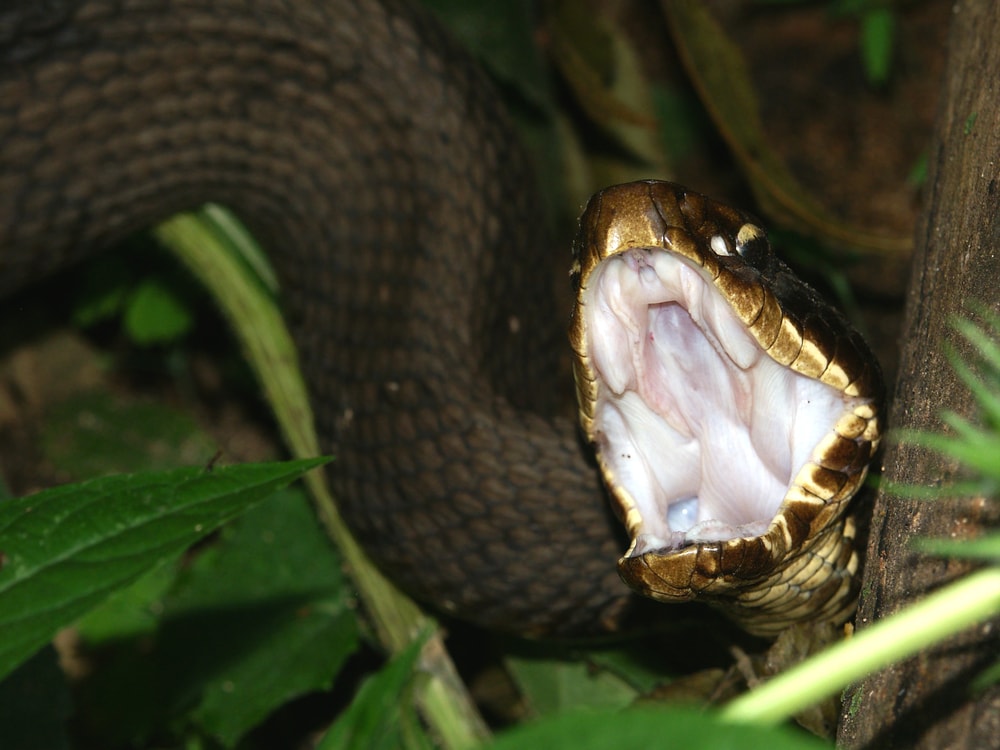
Florida Cottonmouth (Agkistrodon conanti) is a southern Alabama wetland pit viper, most likely around swamps, marshes, cypress sloughs, pond margins, and slow river edges. Adults are usually 30-48 inches and carry much more body mass than most harmless watersnakes nearby.
A blocky head, heavy dark body, and the pale mouth display are the classic cottonmouth clues. Habitat matters too: this is a snake of wet ground and still water, not dry field edges far from cover.
| Key detail | What to look for |
|---|---|
| Adult size | usually 30-48 inches |
| Fast ID cue | heavy dark body near water, blocky head, and white mouth display when defensive |
| Typical Alabama habitat | cypress sloughs, Gulf Coast marshes, swamp margins, ponds, and slow blackwater streams |
| Alabama range | southern Coastal Plain wetlands and Gulf Coast drainage systems |
| Bite / venom note | Venomous wetland pit viper; heavy body, serious bite risk |
4. Northern Cottonmouth
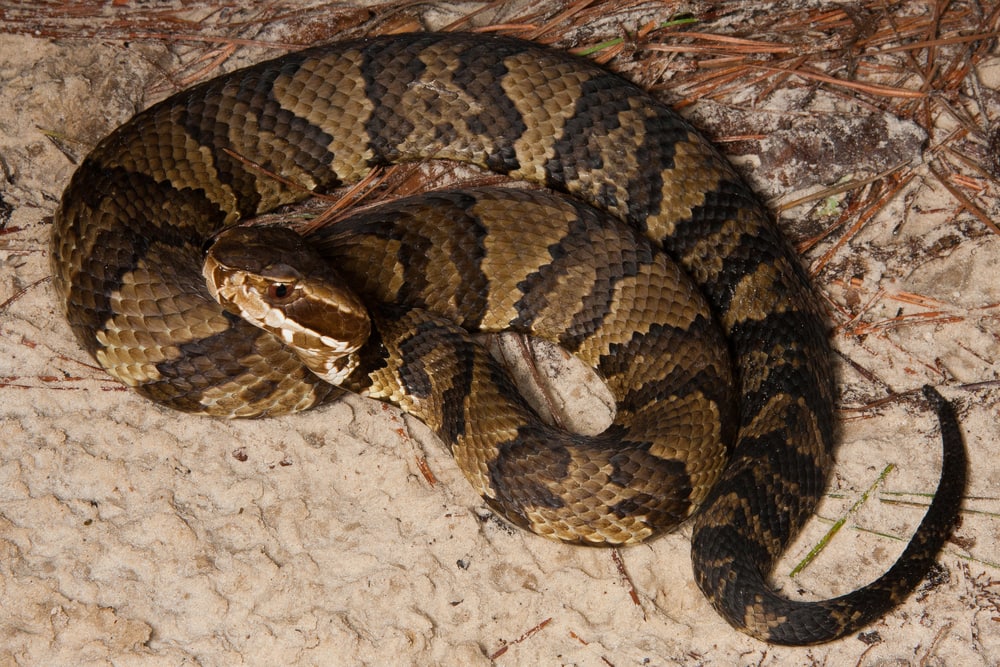
Northern Cottonmouth (Agkistrodon piscivorus) fills the cottonmouth role in much of Alabama’s interior wetland country, from floodplain woods to pond edges and cypress-lined sloughs. Adults are usually 30-48 inches, thick-bodied, and often darker than the banded watersnakes that share the waterline.
Start with shape before color. A cottonmouth has a blocky head, a heavy body, and a defensive white-mouth display; harmless watersnakes tend to look longer, slimmer, and more patterned when seen well.
| Key detail | What to look for |
|---|---|
| Adult size | usually 30-48 inches |
| Fast ID cue | heavy dark body near water, blocky head, and white mouth display when defensive |
| Typical Alabama habitat | interior floodplain woods, cypress sloughs, pond edges, creek bottoms, and marshy backwaters |
| Alabama range | interior and northern wetland systems, especially river floodplains and sloughs |
| Bite / venom note | Venomous wetland pit viper; heavy body, serious bite risk |
5. Pygmy Rattlesnake
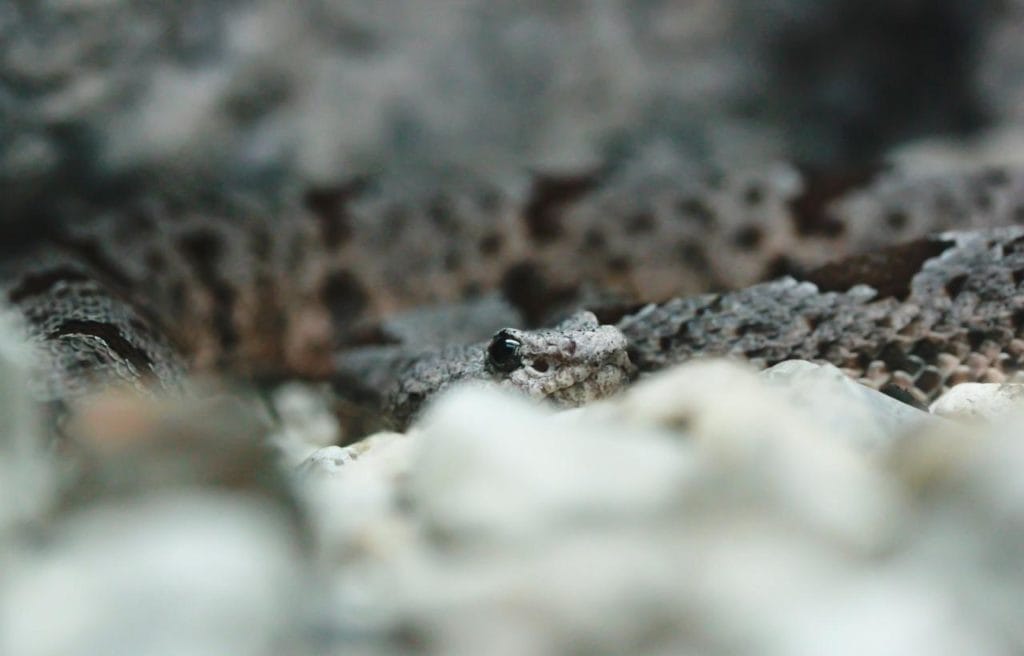
Pygmy Rattlesnake (Sistrurus miliarius) is the small rattler to keep in mind around pine woods, dry upland edges, grassy openings, and forest margins. It usually stays in the 15-30 inch range, and its rattle can be so small that it is easy to miss.
The pattern is compact and busy: dark dorsal spots, a low heavy body, and a tiny rattle at the end of the tail. It does not need open rock or desert habitat; brushy Southeast cover suits it just fine.
| Key detail | What to look for |
|---|---|
| Adult size | usually 15-30 inches |
| Fast ID cue | small rattlesnake with dark dorsal spots and a tiny rattle |
| Typical Alabama habitat | pine flatwoods, sandy upland edges, grassy openings, dry hammocks, and brushy forest margins |
| Alabama range | scattered mainly in Coastal Plain pine and sandy edge habitats |
| Bite / venom note | Venomous small rattlesnake; tiny rattle, serious bite risk |
6. Timber Rattlesnake
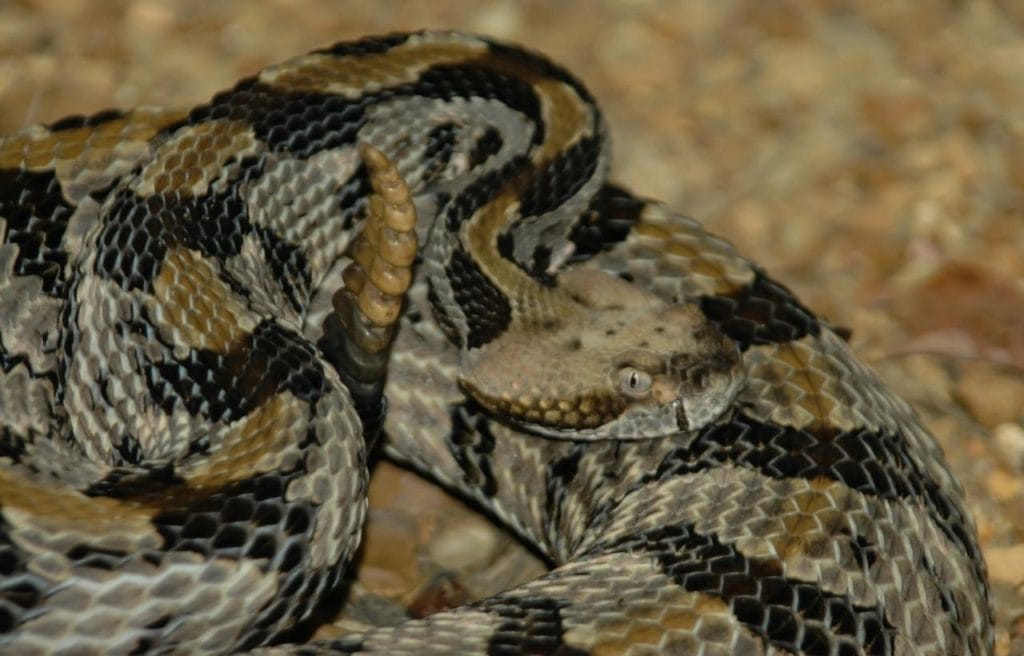
Timber Rattlesnake (Crotalus horridus) is the heavy-bodied rattlesnake of wooded ridges, rocky slopes, pine woods, and dry upland edges. Adults are often 2-5 feet and can look almost black toward the tail.
Dark chevrons or crossbands are the usual field mark, especially when paired with the dark tail and broad head. Around hardwood slopes and brushy timber edges, it is a very different animal from the long, slim racers and ratsnakes.
| Key detail | What to look for |
|---|---|
| Adult size | usually 2-5 feet |
| Fast ID cue | heavy body, dark chevrons or crossbands, and a dark tail |
| Typical Alabama habitat | wooded ridges, hardwood slopes, rocky hillsides, pine-oak woods, and brushy timber edges |
| Alabama range | widespread in wooded uplands and ridge country, especially away from open marshes |
| Bite / venom note | Venomous timber rattlesnake; heavy-bodied pit viper, serious bite risk |
7. Harlequin Coralsnake
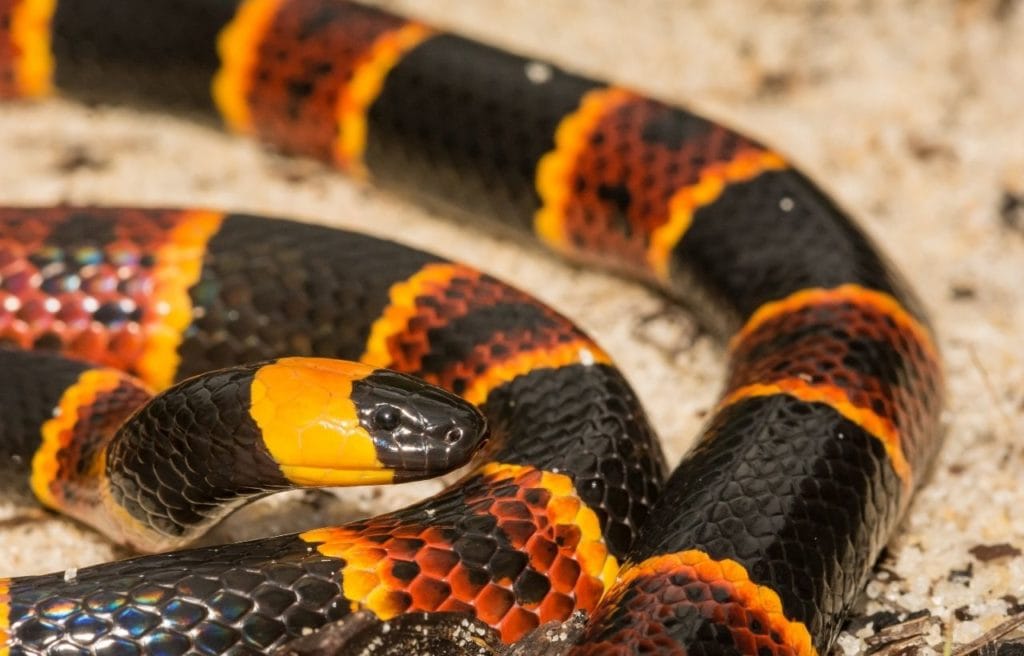
Harlequin Coralsnake (Micrurus fulvius) is the secretive coral snake of sandy woods, pine flatwoods, brushy hammocks, and hidden leaf-litter cover. Adults are usually 20-30 inches, small-headed, and much less often seen than the louder-looking color pattern suggests.
The rings matter: red, yellow or cream, and black wrap the body in a clean banded pattern. This is a venomous snake, but most encounters are brief glimpses under cover rather than open-trail standoffs.
| Key detail | What to look for |
|---|---|
| Adult size | usually 20-30 inches |
| Fast ID cue | red, yellow or cream, and black rings plus a small head and secretive behavior |
| Typical Alabama habitat | pine flatwoods, sandy woods, brushy hammocks, and hidden leaf-litter cover |
| Alabama range | southern Coastal Plain, sandy pine woods, and brushy lowland edges |
| Bite / venom note | Venomous coral snake; potent venom, secretive and rarely seen |
Nonvenomous snakes in Alabama
Most Alabama snakes are nonvenomous, including many species that get mistaken for copperheads or cottonmouths. Range, water access, body shape, and pattern usually separate them better than fear does.
Racers, kingsnakes, ratsnakes, and other large hunters
8. Central Ratsnake
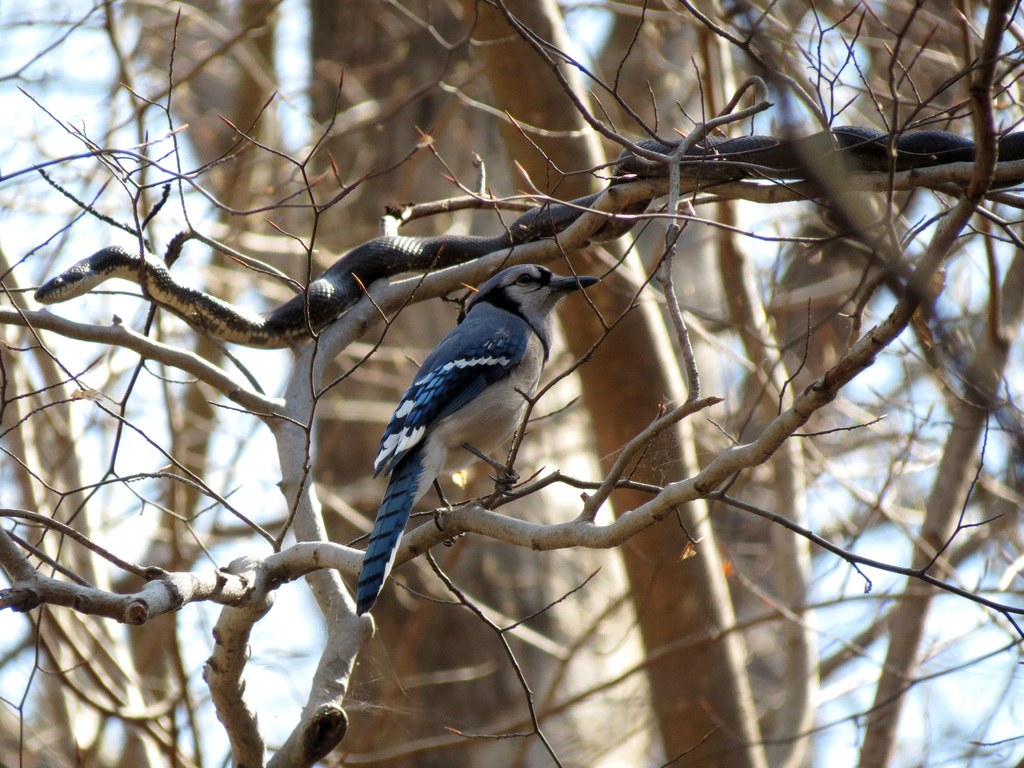
Central Ratsnake (Pantherophis alleghaniensis) is one of the big climbers in wooded Alabama, common around trees, barns, rocky edges, field borders, and old buildings with cover nearby. Adults often reach 3-7 feet, but the build stays more athletic than bulky.
The body is long and slender, with a patterned back and a habit of going vertical. If a large snake is stretched along rafters, climbing bark, or moving through a brushy fencerow, ratsnake belongs high on the list.
| Key detail | What to look for |
|---|---|
| Adult size | often 3-7 feet |
| Fast ID cue | slender climbing body, patterned back, and frequent use of barns, trees, and edges |
| Typical Alabama habitat | hardwood forests, rocky bluffs, farm edges, barns, sheds, tree lines, and brushy fencerows |
| Alabama range | northern and central Alabama woodlands, farms, and settled edges |
| Bite / venom note | Nonvenomous climber; common around trees, barns, and edges |
9. Common Coachwhip
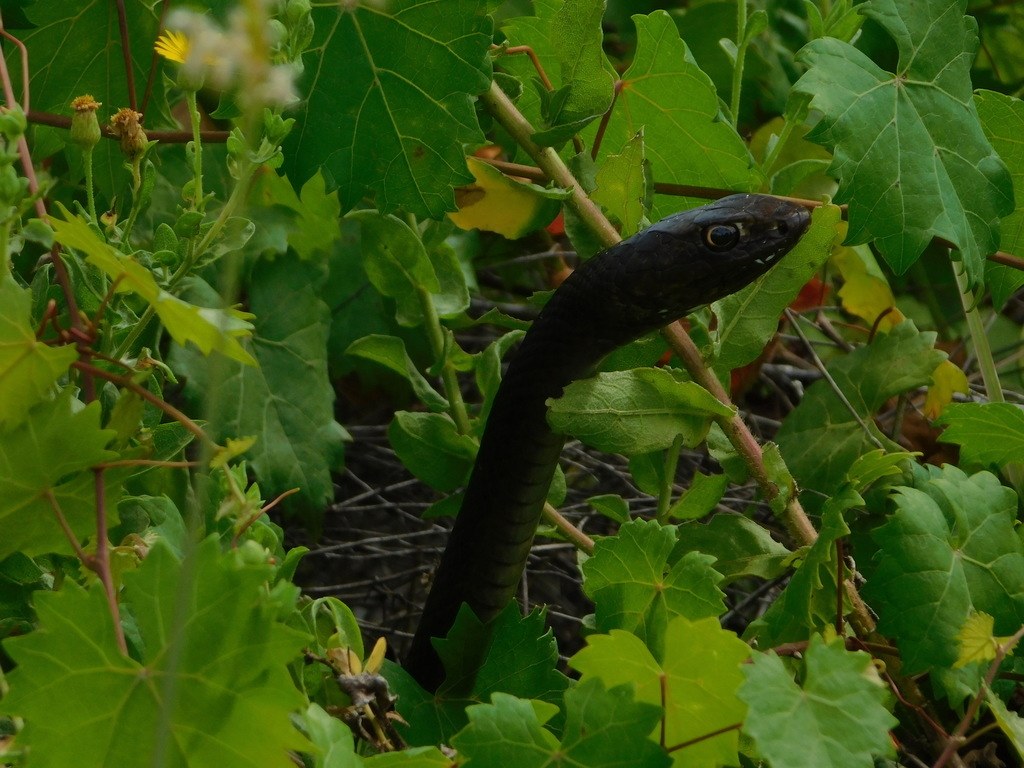
Common Coachwhip (Masticophis flagellum) is built for open, sunny country: sandy pine uplands, dry woods, scrubby roadsides, grasslands, and field edges. Adults can be long, often 3-7 feet, with a tapering tail that gives the species its whip-like look.
Large eyes and fast daytime movement are the giveaway. A coachwhip usually looks alert and stretched out rather than heavy or coiled, and it is much more at home in open ground than in deep swamp cover.
| Key detail | What to look for |
|---|---|
| Adult size | often 3-7 feet |
| Fast ID cue | large eyes, slim body, fast daytime movement, and a long tapering tail |
| Typical Alabama habitat | dry pine uplands, sandy roadsides, scrubby fields, open woods, and sunlit grass edges |
| Alabama range | sandy Coastal Plain and open pine-edge habitats |
| Bite / venom note | Nonvenomous fast hunter; long tail and large eyes |
10. Common Scarletsnake
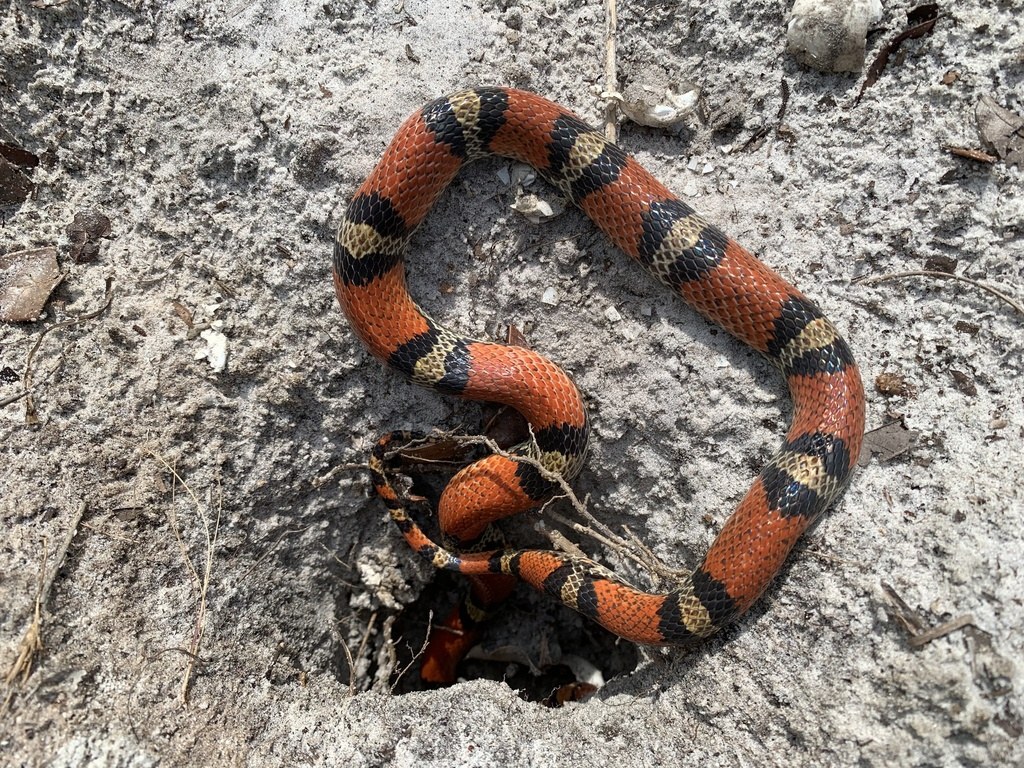
Common Scarletsnake (Cemophora coccinea) is a small, secretive snake of loose soil, woodland edges, and sandy cover, not a big open-air hunter. The red blotches bordered in black on a pale body can look dramatic, but the snake itself is usually easy to overlook.
Color alone can mislead because several Southeast snakes wear red, black, and pale bands or blotches. For this one, look for a small glossy body, a pointed-looking snout, and a setting with logs, leaf litter, or loose sandy soil.
| Key detail | What to look for |
|---|---|
| Adult size | small, slender-bodied snake |
| Fast ID cue | red blotches bordered in black on a pale body, plus a small pointed-looking snout |
| Typical Alabama habitat | loose sandy soil, pine-oak woods, dry woodland edges, leaf litter, and logs |
| Alabama range | scattered where loose soil, cover, and reptile eggs or small prey line up |
| Bite / venom note | Nonvenomous small snake; red blotches can suggest coral-snake lookalikes |
11. Eastern Indigo Snake
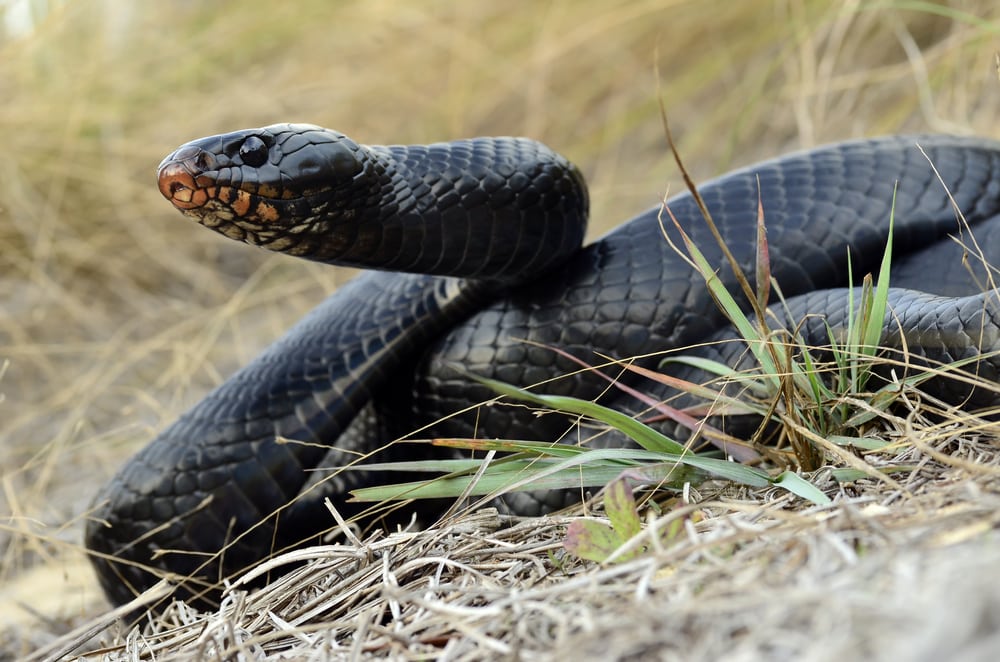
Eastern Indigo Snake (Drymarchon couperi) is the huge glossy black snake tied to longleaf pine country, dry open woods, wetland edges, and other connected cover in the lower Southeast. Adults are often 3-7 feet, and the smooth dark body gives it a different look from patterned ratsnakes or racers.
The best field clue is the plain blue-black sheen, sometimes with a warmer chin or throat. Any possible Alabama indigo deserves a careful range and habitat check because this is not a casual backyard snake in most places.
| Key detail | What to look for |
|---|---|
| Adult size | often 3-7 feet |
| Fast ID cue | large glossy blue-black body, smooth build, and sometimes a warmer chin or throat |
| Typical Alabama habitat | longleaf pine sandhills, tortoise-burrow country, wetland edges, and connected open-woods cover |
| Alabama range | very local in southern longleaf pine landscapes and nearby wetland edges |
| Bite / venom note | Nonvenomous large snake; glossy dark body and longleaf-pine habitat are key clues |
12. Eastern Milksnake
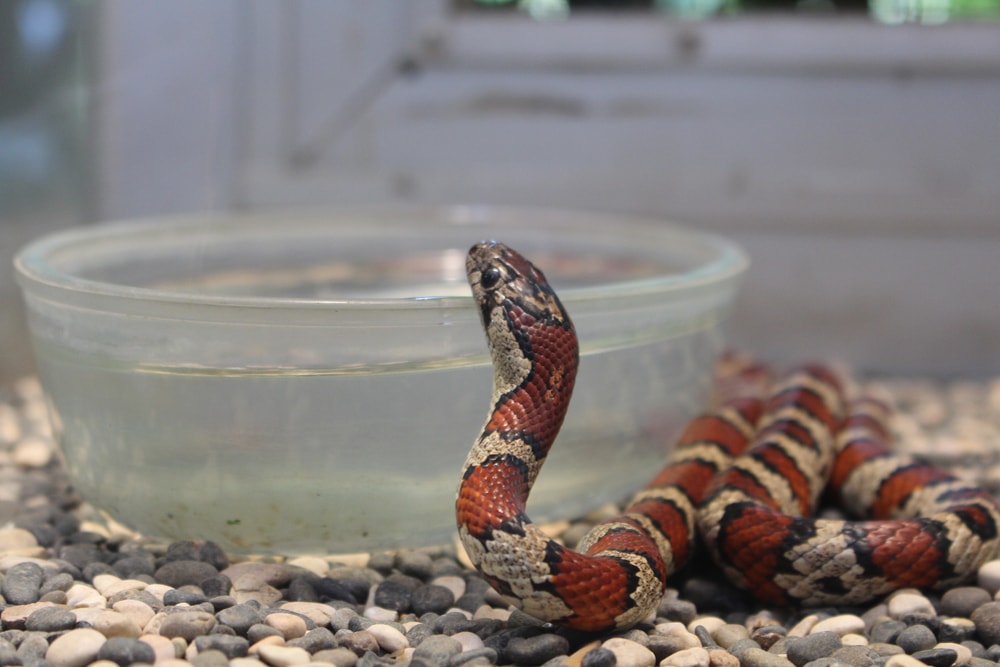
Eastern Milksnake (Lampropeltis triangulum) is a glossy constrictor of woodlands, rocky edges, farms, pine-oak woods, and old buildings with cover nearby. Adults are often 1-4 feet, and they spend plenty of time out of sight under boards, stones, logs, and debris.
The bold bands or blotches are the first thing most people notice. Pair that pattern with smooth scales and a strong but not bulky body, then use the surrounding habitat to separate it from scarletsnakes and young ratsnakes.
| Key detail | What to look for |
|---|---|
| Adult size | often 1-4 feet |
| Fast ID cue | smooth glossy scales, bold bands or blotches, and a strong constrictor build |
| Typical Alabama habitat | rocky woods, forest edges, pasture margins, barns, stone piles, and old boards |
| Alabama range | mostly northern and upland Alabama, especially rocky farms and woodlots |
| Bite / venom note | Nonvenomous constrictor; bold bands or blotches can confuse IDs |
13. Eastern Pinesnake
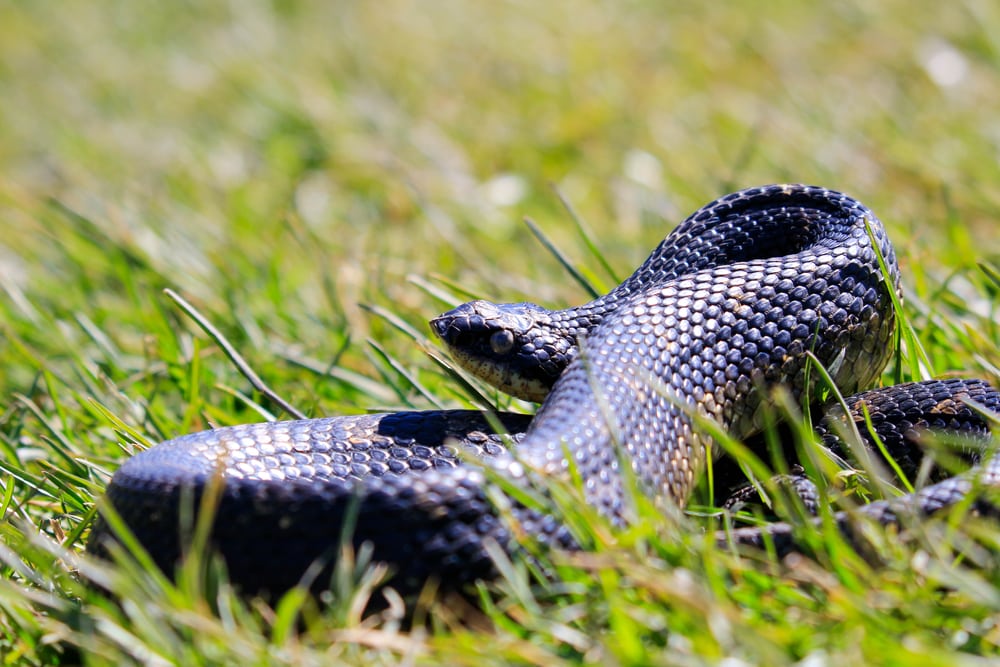
Eastern Pinesnake (Pituophis melanoleucus) is a large sandy-woods snake of pine savannas, dry uplands, and old burrow systems. The best Alabama settings are remnant longleaf pine landscapes and other open pine country, not wetland margins.
Look for a pale, sturdy body with dark blotches and a head that seems heavier than a ratsnake’s. A pinesnake on open sand or in pine straw has a very different feel from the glossy kingsnakes and fast racers nearby.
| Key detail | What to look for |
|---|---|
| Adult size | often 3-7 feet |
| Fast ID cue | large pale body with dark blotches, sturdy head, and sandy pine habitat |
| Typical Alabama habitat | sandy pine woods, open pine savannas, dry uplands, and old pocket-gopher or rodent burrows |
| Alabama range | localized in sandy pine uplands and remnant longleaf landscapes |
| Bite / venom note | Nonvenomous pine snake; large blotched body and sandy habitat help separate it |
14. North American Racer
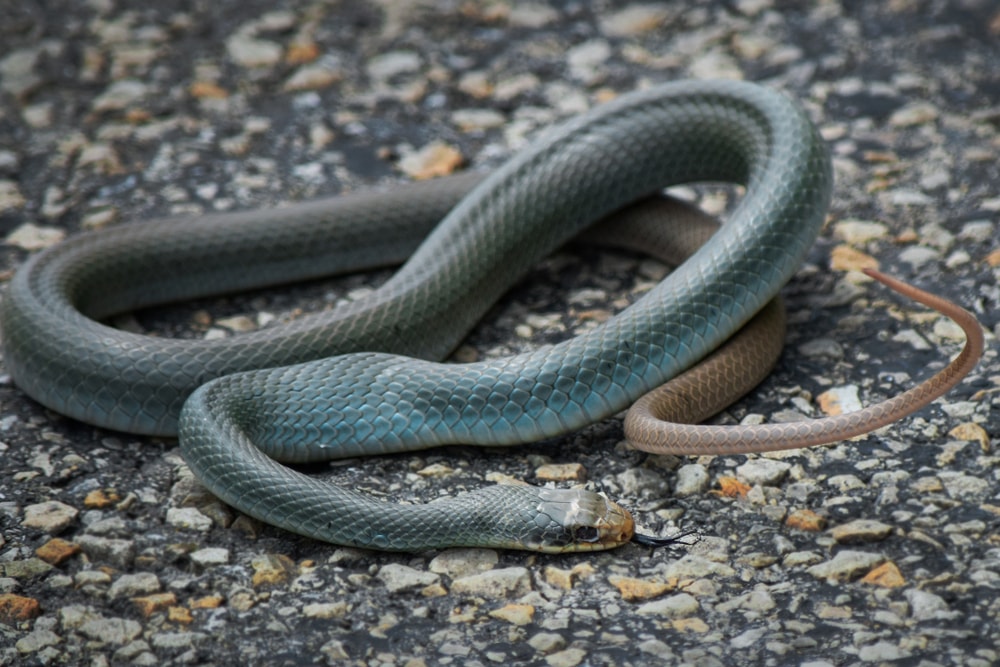
North American Racer (Coluber constrictor) is the long, alert daytime snake that shoots across roadsides, field edges, open scrub, and dry woods. Adults are often 3-7 feet, but the body stays slim, with large eyes and a long tapering tail.
Movement is part of the ID. Racers usually look awake and ready to bolt, and a clean look at the slender build separates them from young ratsnakes, coachwhips, and heavier kingsnakes.
| Key detail | What to look for |
|---|---|
| Adult size | often 3-7 feet |
| Fast ID cue | large eyes, slim body, fast daytime movement, and a long tapering tail |
| Typical Alabama habitat | open scrub, grasslands, dry woods, sandy washes, roadsides, and sunny field edges |
| Alabama range | common in sunny roadsides, fields, open woods, and edge habitat statewide |
| Bite / venom note | Nonvenomous fast hunter; long tail and large eyes |
15. Northern Mole Kingsnake
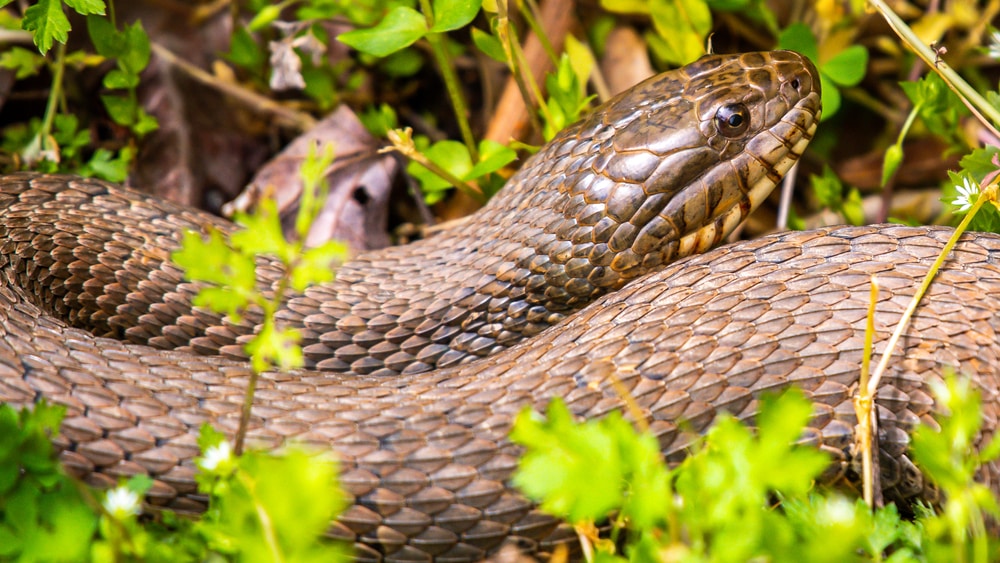
Northern Mole Kingsnake (Lampropeltis rhombomaculata) is a secretive kingsnake of farms, woodlots, rocky edges, pine-oak forests, and field borders. Adults are often 1-4 feet, with smooth glossy scales and a constrictor’s sturdy build.
The blotched pattern can be subtle, especially on older or darker animals. Habitat and body shape help more than one color mark, because this snake is often seen partly hidden under cover or moving through thick edge habitat.
| Key detail | What to look for |
|---|---|
| Adult size | often 1-4 feet |
| Fast ID cue | reddish-brown to tan blotched body, smooth scales, and secretive life in fields or loose soil |
| Typical Alabama habitat | pastures, old fields, open woodlots, cultivated edges, rocky margins, and loose soil |
| Alabama range | mainly northern and central open-field and woodland-edge habitats |
| Bite / venom note | Nonvenomous kingsnake; secretive field snake often found under cover |
16. Northern Rough Greensnake
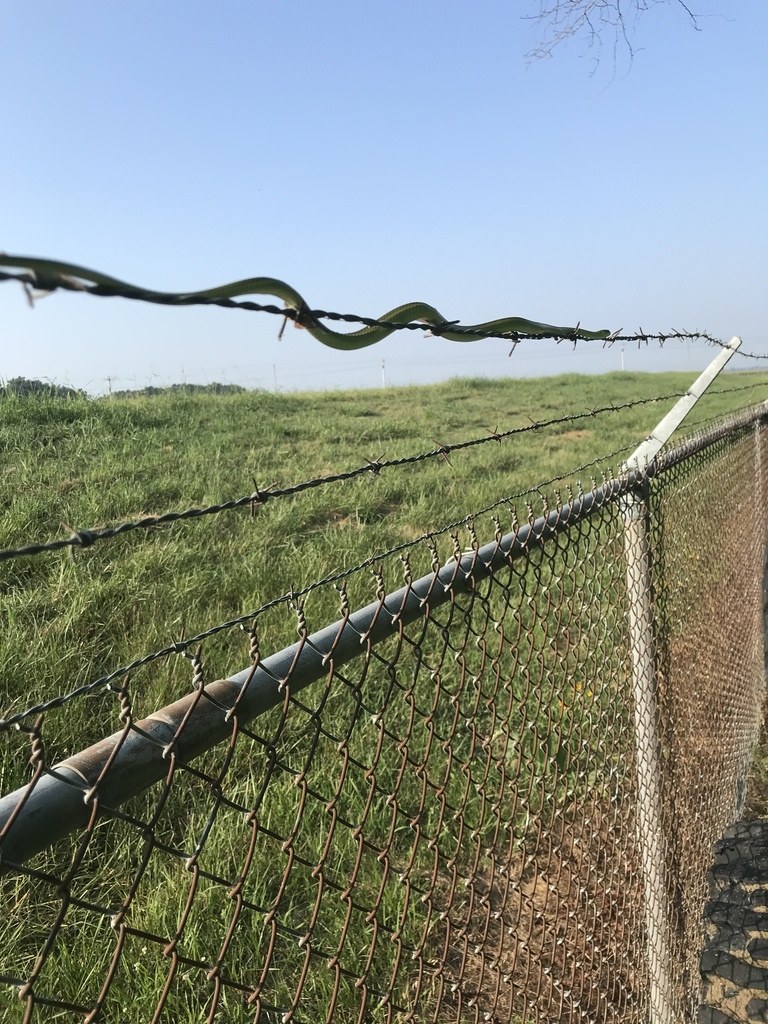
Northern Rough Greensnake (Opheodrys aestivus) is the bright green climber in shrubs, vines, wet meadows, brushy stream edges, and low vegetation. Adults are often 1-4 feet, but the body is thin enough to blend into stems and leaves.
The color is almost too clean: green above, pale below, with a light, vine-like shape. A greensnake found waist-high in brush or draped through streamside vegetation is usually easier to place than one photographed in a hand.
| Key detail | What to look for |
|---|---|
| Adult size | often 1-4 feet |
| Fast ID cue | bright green body, white or pale belly, and climbing behavior in low vegetation |
| Typical Alabama habitat | shrubs, vines, brushy stream edges, wet meadows, and low vegetation |
| Alabama range | brushy stream corridors, vine tangles, wet edges, and leafy yards statewide |
| Bite / venom note | Nonvenomous slender green snake; usually in shrubs or vines |
17. Prairie Kingsnake
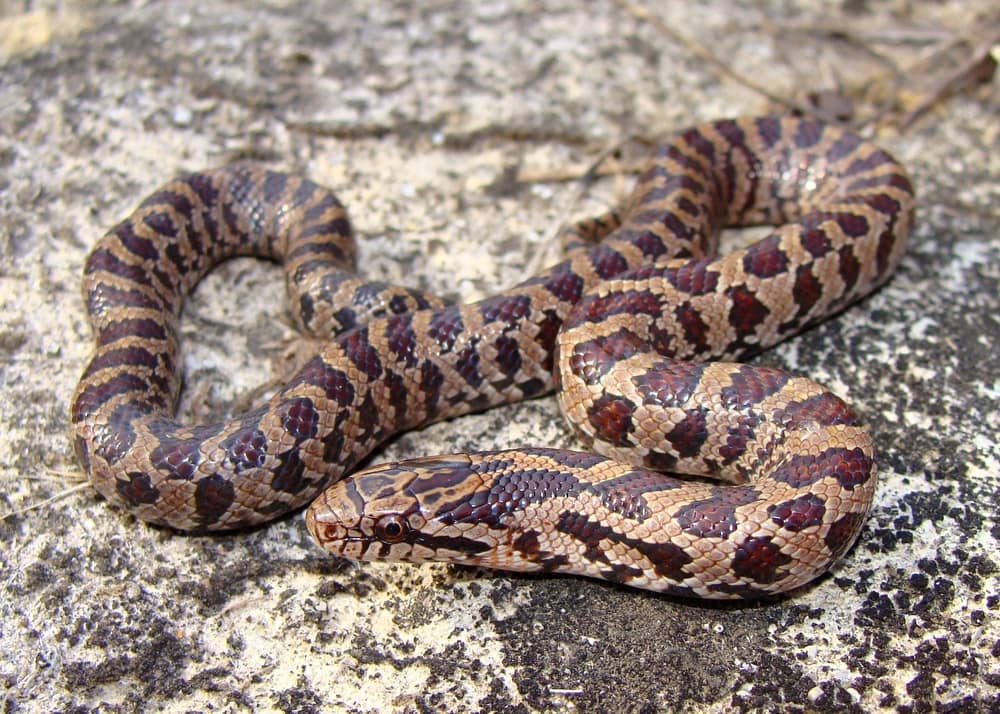
Prairie Kingsnake (Lampropeltis calligaster) is a smooth-scaled constrictor of open woods, farms, field borders, rocky edges, and pine-oak habitat. Adults are often 1-4 feet and tend to look sturdier than the small scarlet and crowned snakes.
The pattern is usually muted blotches rather than bright rings. If the snake is glossy, muscular, and moving through pasture edge or open woodland cover, prairie kingsnake is worth comparing with mole and speckled kingsnakes.
| Key detail | What to look for |
|---|---|
| Adult size | often 1-4 feet |
| Fast ID cue | muted brown or gray blotches, smooth scales, and a sturdy body in open fields |
| Typical Alabama habitat | Black Belt prairie remnants, pastures, open woods, hay fields, and farm-edge cover |
| Alabama range | open prairie, pasture, and woodland-edge habitats, especially central and northern areas |
| Bite / venom note | Nonvenomous kingsnake; muted blotches and open-field habitat are useful clues |
18. Red Cornsnake
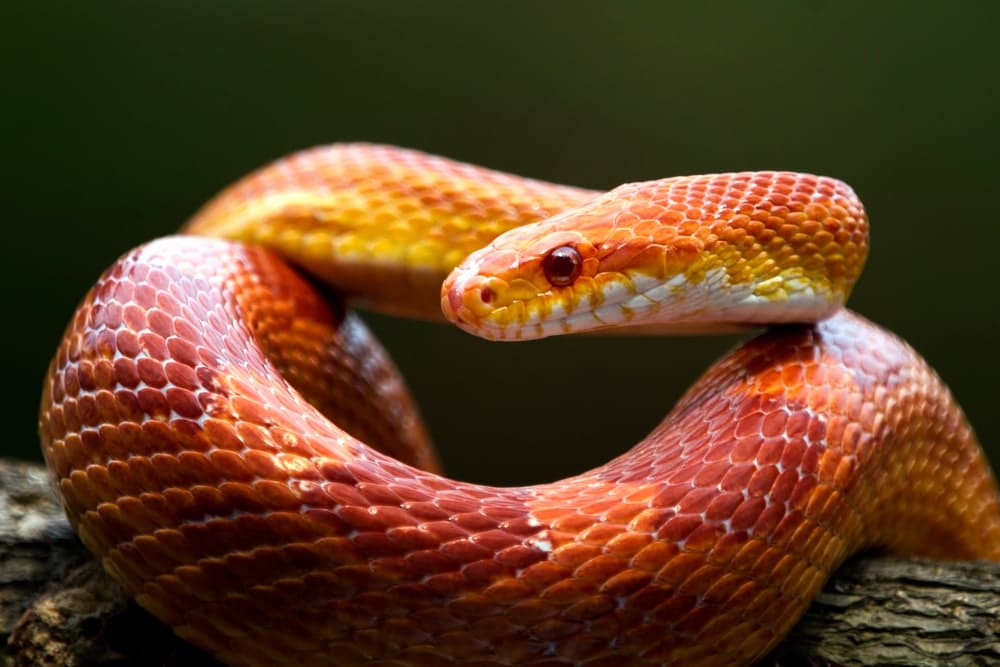
Red Cornsnake (Pantherophis guttatus) is the familiar orange to reddish ratsnake of woodlands, farms, barns, trees, and field edges. Adults are often 1-4 feet, although a stretched-out cornsnake can seem longer when it is climbing.
The slender body and patterned back are the main clues. Around old buildings or tree lines, its climbing habit helps separate it from ground-hugging kingsnakes with bolder bands or blotches.
| Key detail | What to look for |
|---|---|
| Adult size | often 1-4 feet |
| Fast ID cue | slender climbing body, patterned back, and frequent use of barns, trees, and edges |
| Typical Alabama habitat | pine-oak woods, farm edges, barns, sheds, tree lines, brush piles, and old buildings |
| Alabama range | wooded edges, farms, and old-building habitat across much of the state |
| Bite / venom note | Nonvenomous climber; common around trees, barns, and edges |
19. Scarlet Kingsnake
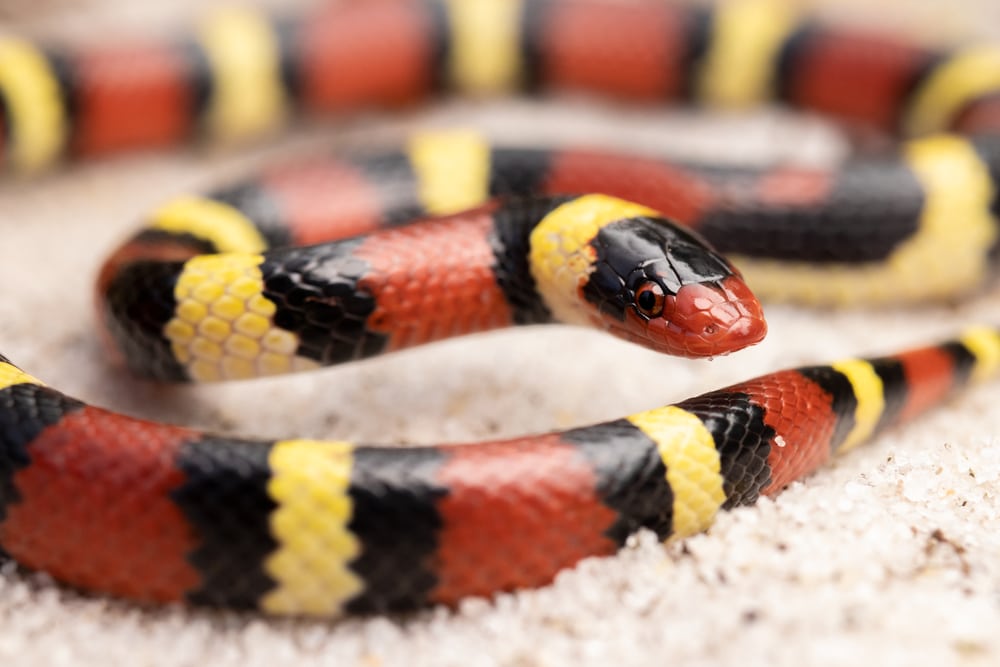
Scarlet Kingsnake (Lampropeltis elapsoides) is a small glossy kingsnake with red, black, and yellow or cream bands, usually found under cover in wooded edges, pine-oak forests, and old debris near shelter. Adults are often 1-4 feet, though many look quite small in the field.
The color pattern invites coral-snake confusion, but body shape and habitat help. Scarlet kingsnakes are nonvenomous constrictors with a small head, smooth scales, and a habit of staying tucked into cover.
| Key detail | What to look for |
|---|---|
| Adult size | often 1-4 feet |
| Fast ID cue | red, black, and yellow or cream bands on a small glossy body |
| Typical Alabama habitat | sandy pine woods, hardwood hammocks, rotting logs, bark slabs, and debris with cover |
| Alabama range | mostly Coastal Plain and sandy woodland habitats, scattered where cover is right |
| Bite / venom note | Nonvenomous kingsnake; coral-snake colors on a small secretive constrictor |
20. Southeastern Crowned Snake
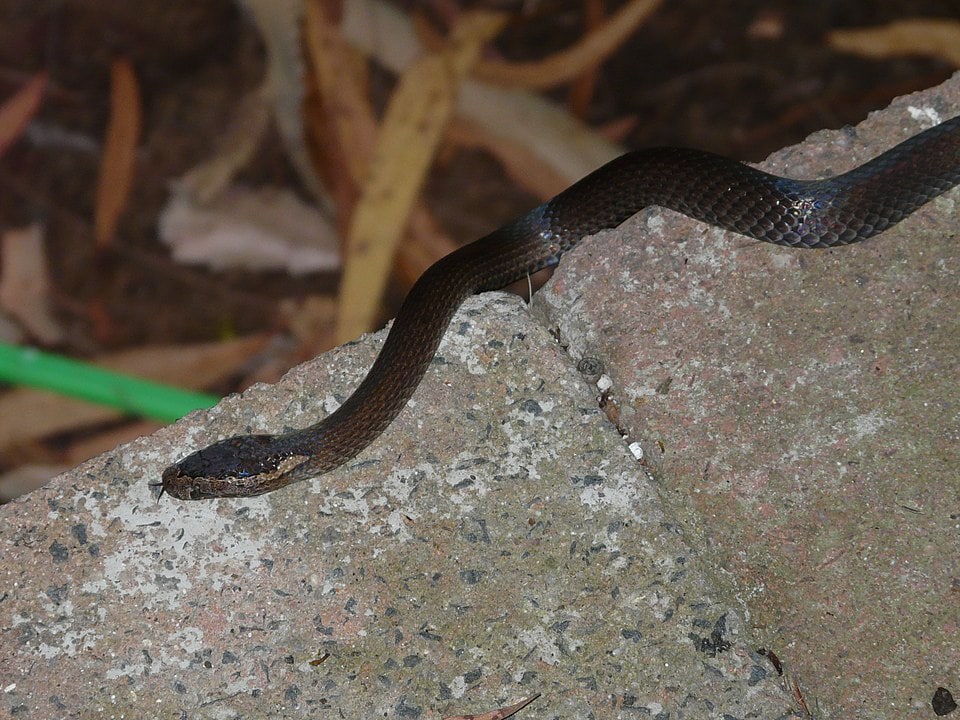
Southeastern Crowned Snake (Tantilla coronata) is a tiny leaf-litter snake of loose soil, rotting logs, damp gardens, shaded woodland edges, and other quiet cover. Adults are usually only 7-16 inches, so many sightings happen when someone lifts a board, pot, or log.
Look for a small tan to brown body with a darker head or crown-like marking. It is not a watersnake or young copperhead; the scale, hidden habits, and soil-level habitat tell the story.
| Key detail | What to look for |
|---|---|
| Adult size | usually 7-16 inches |
| Fast ID cue | tiny tan-brown body with darker head or crown-like marking |
| Typical Alabama habitat | dry pine-oak woods, sandy slopes, leaf litter, loose soil, rotting logs, and shaded gardens |
| Alabama range | dry woodland pockets and sandy or rocky edges across much of the state |
| Bite / venom note | Nonvenomous tiny leaf-litter snake; usually under soil, logs, or debris |
21. Speckled Kingsnake
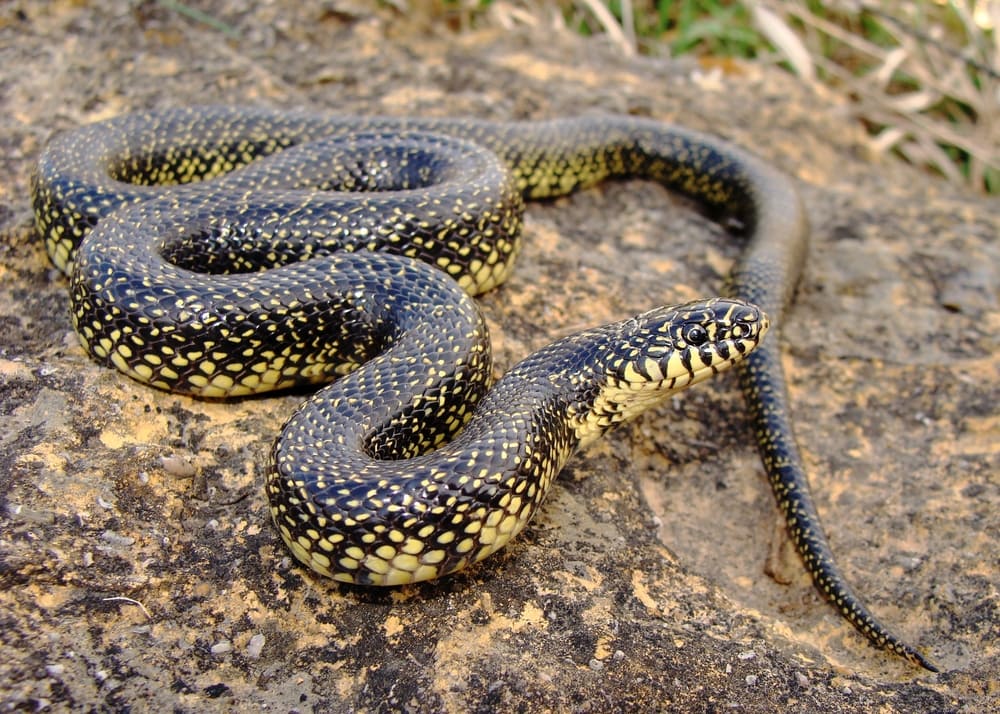
Speckled Kingsnake (Lampropeltis holbrooki) is a glossy black or dark kingsnake sprinkled with pale flecks, often found around woodlands, farms, rocky edges, pine-oak forests, and field borders. Adults are often 1-4 feet and built like compact constrictors.
The speckling breaks up the body outline, especially in dappled grass or leaf litter. A smooth, muscular snake with a salt-and-pepper look is a much better match here than a racer or ratsnake.
| Key detail | What to look for |
|---|---|
| Adult size | often 1-4 feet |
| Fast ID cue | dark body dusted with pale speckles, smooth scales, and a muscular kingsnake build |
| Typical Alabama habitat | bottomland edges, prairie margins, farms, brushy fields, ditches, and open woods |
| Alabama range | western and central lowlands, prairie edges, farms, and bottomland margins |
| Bite / venom note | Nonvenomous kingsnake; salt-and-pepper pattern separates it from racers |
22. Yellow Ratsnake
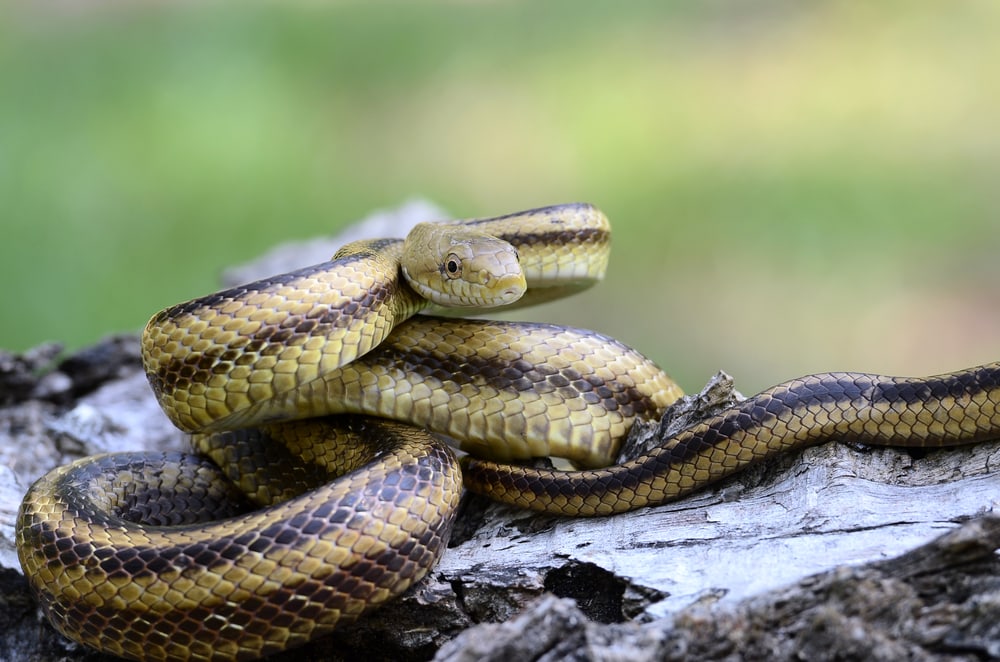
Yellow Ratsnake (Pantherophis quadrivittatus) is a long climbing ratsnake associated with wooded edges, barns, trees, old buildings, and field borders. Adults often reach 3-7 feet, and the length can surprise people when one is stretched along a limb or rafter.
Use the slender build, patterned or striped back, and climbing behavior together. A yellow ratsnake is usually seen using structure, whether that structure is bark, a fence, rafters, or brush.
| Key detail | What to look for |
|---|---|
| Adult size | often 3-7 feet |
| Fast ID cue | slender climbing body, patterned back, and frequent use of barns, trees, and edges |
| Typical Alabama habitat | southern hardwood hammocks, pine edges, barns, sheds, tree lines, and brushy yards |
| Alabama range | mainly lower Coastal Plain and Gulf Coast woodlands and settled edges |
| Bite / venom note | Nonvenomous climber; common around trees, barns, and edges |
Small woodland snakes, hognoses, and secretive hunters
23. Common Wormsnake
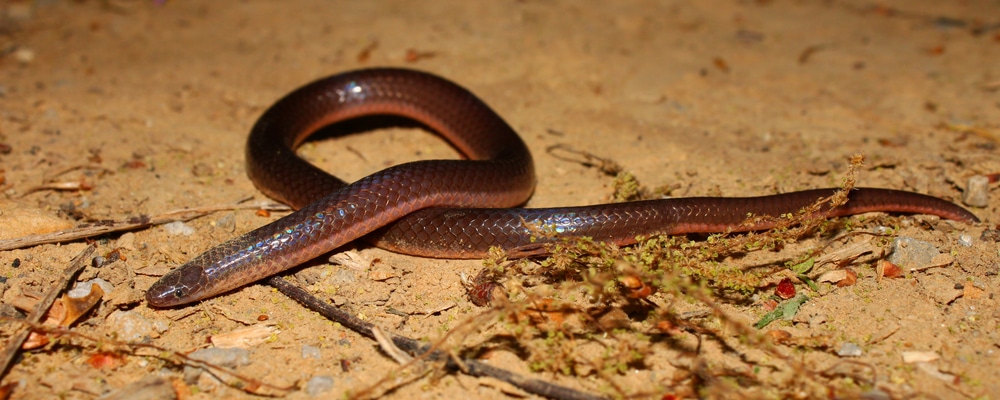
Common Wormsnake (Carphophis amoenus) is a small, smooth snake of damp leaf litter, loose soil, compost, rotting logs, and shaded woodland edges. Adults are usually 7-16 inches and can look more like a glossy earthworm than a typical snake at first glance.
The blunt, wormlike body and hidden habits are the giveaway. If the snake appears under a log or in garden soil and never shows a bold head or broad body, wormsnake is the better lane.
| Key detail | What to look for |
|---|---|
| Adult size | usually 7-16 inches |
| Fast ID cue | small wormlike body, hidden life under soil or logs, and smooth glossy scales |
| Typical Alabama habitat | loose soil, leaf litter, rotting logs, compost, damp gardens, and shaded woodland edges |
| Alabama range | moist forests, shaded yards, and loose-soil edges across much of the state |
| Bite / venom note | Nonvenomous tiny snake; usually under soil, logs, or leaf litter |
24. Eastern Hog-nosed Snake
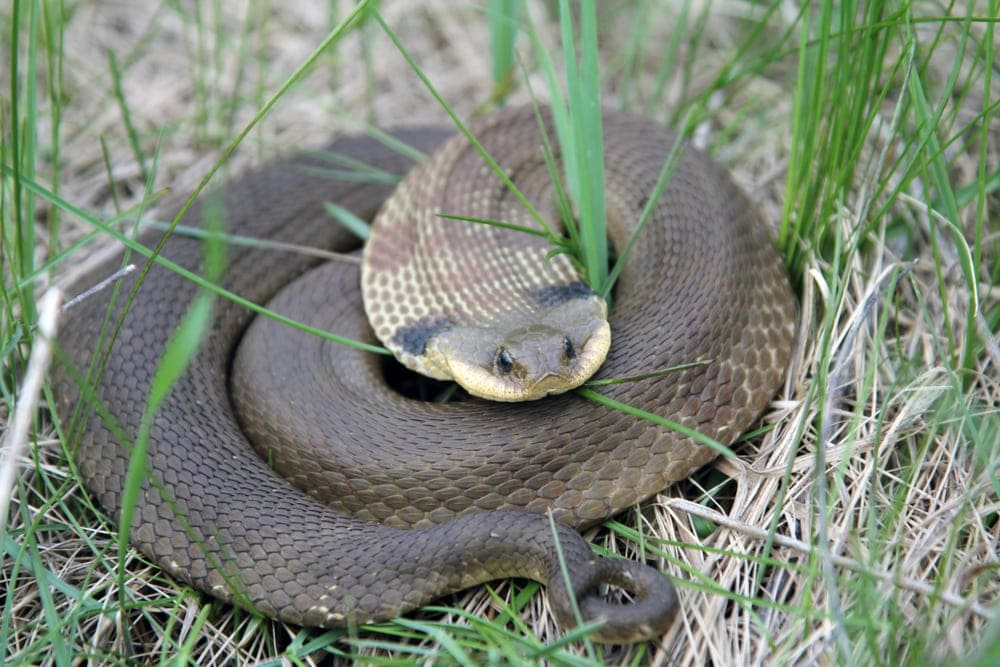
Eastern Hog-nosed Snake (Heterodon platirhinos) is the sandy-soil hognose with an upturned snout, wide defensive neck display, and a strong tie to toad-rich edges. Pine woods, open hardwood margins, old fields, and dry sandy roadsides are the right places to expect it.
The nose is the first clue, followed by the broad, flattened display when it feels pressed. The body is much chunkier than a racer and less glossy than a kingsnake, with habitat doing a lot of the ID work.
| Key detail | What to look for |
|---|---|
| Adult size | often 1-4 feet |
| Fast ID cue | upturned snout, wide defensive neck display, and sandy habitat |
| Typical Alabama habitat | sandy soils, pine woods, open woodlands, fields, and toad-rich edges |
| Alabama range | sandy pine woods, old fields, and dry open woodland edges statewide where toads are common |
| Bite / venom note | Nonvenomous toad hunter; upturned snout and defensive display |
25. Pine Woods Littersnake
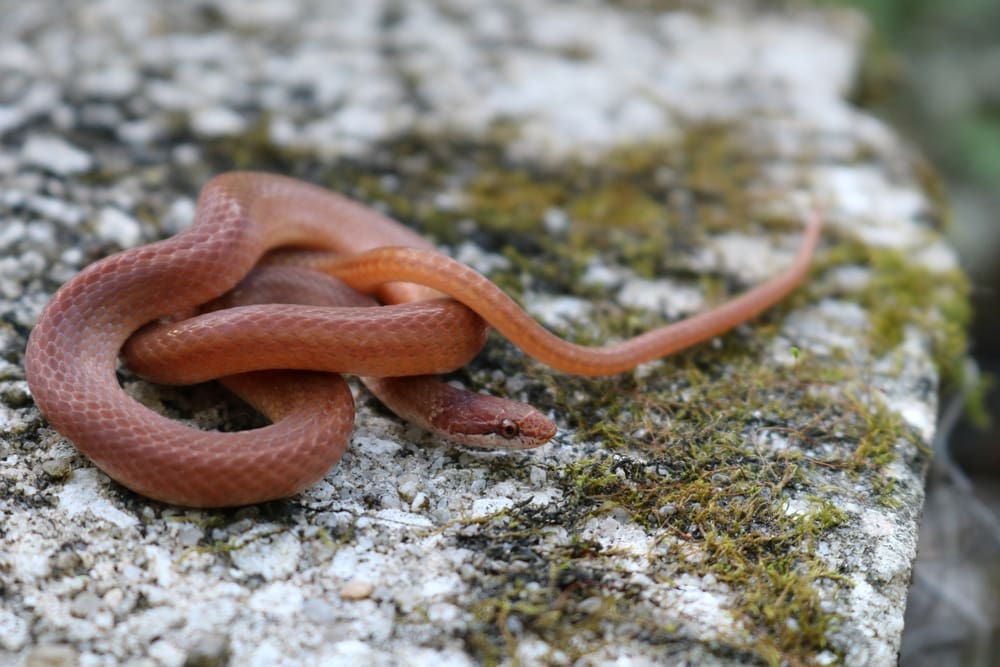
Pine Woods Littersnake (Rhadinaea flavilata) is a small pine-woods snake of leaf litter, sandy pine stands, open savannas, dry uplands, and old burrow country. It is easy to miss because the whole animal is built for staying low and hidden.
Look for a slender tan to reddish-brown body with a subtle head and eye-line pattern rather than a big, boldly marked snake. Pine straw, loose bark, and sandy cover are better clues than size.
| Key detail | What to look for |
|---|---|
| Adult size | small leaf-litter snake |
| Fast ID cue | small tan to reddish-brown body with subtle head and eye-line markings |
| Typical Alabama habitat | sandy pine woods, open pine savannas, dry uplands, and old pocket-gopher or rodent burrows |
| Alabama range | southern Coastal Plain pine litter, sandy flatwoods, and longleaf edges |
| Bite / venom note | Nonvenomous pine-woods litter snake; small and secretive under cover |
26. Rainbow Snake
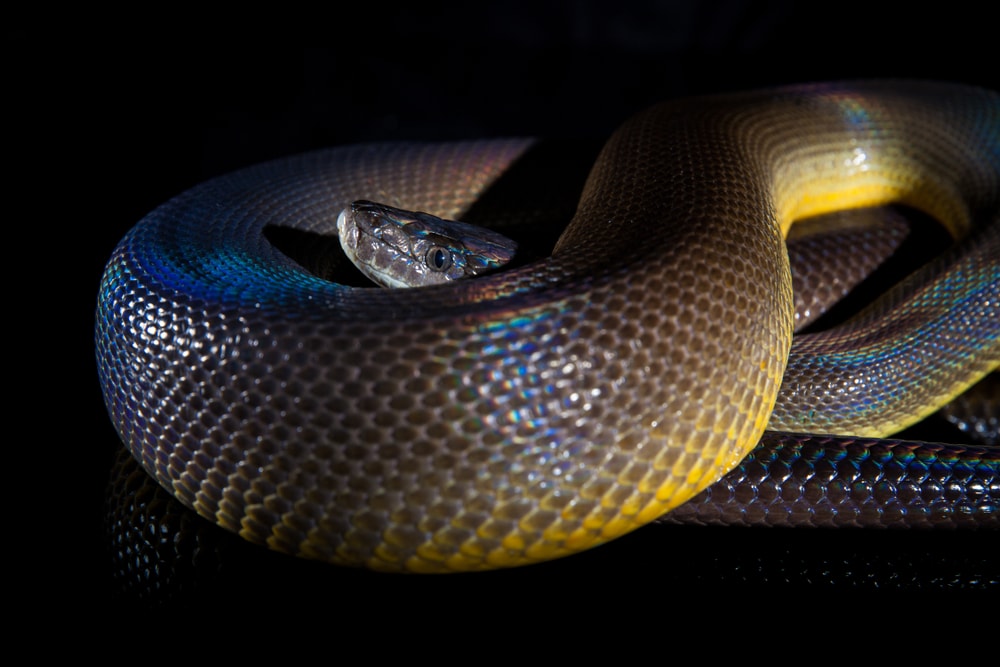
Rainbow Snake (Farancia erytrogramma) is a glossy swamp snake of cypress sloughs, marshes, river edges, ponds, and other slow wet habitats. The dark back and red or pink belly markings make it one of the more distinctive wetland snakes when seen well.
This is not a dry-upland snake. A rainbow snake belongs around soft mud, still water, and heavy vegetation, where its shine and bright underside can flash briefly before it disappears back into cover.
| Key detail | What to look for |
|---|---|
| Adult size | often 1-4 feet |
| Fast ID cue | shiny dark body with red or pink belly markings near swampy water |
| Typical Alabama habitat | blackwater swamps, cypress sloughs, marshy river edges, eel-rich backwaters, and soft mud |
| Alabama range | Coastal Plain wetlands, especially slow blackwater and floodplain systems |
| Bite / venom note | Nonvenomous swamp hunter; glossy body and red belly marks |
27. Red-bellied Mudsnake
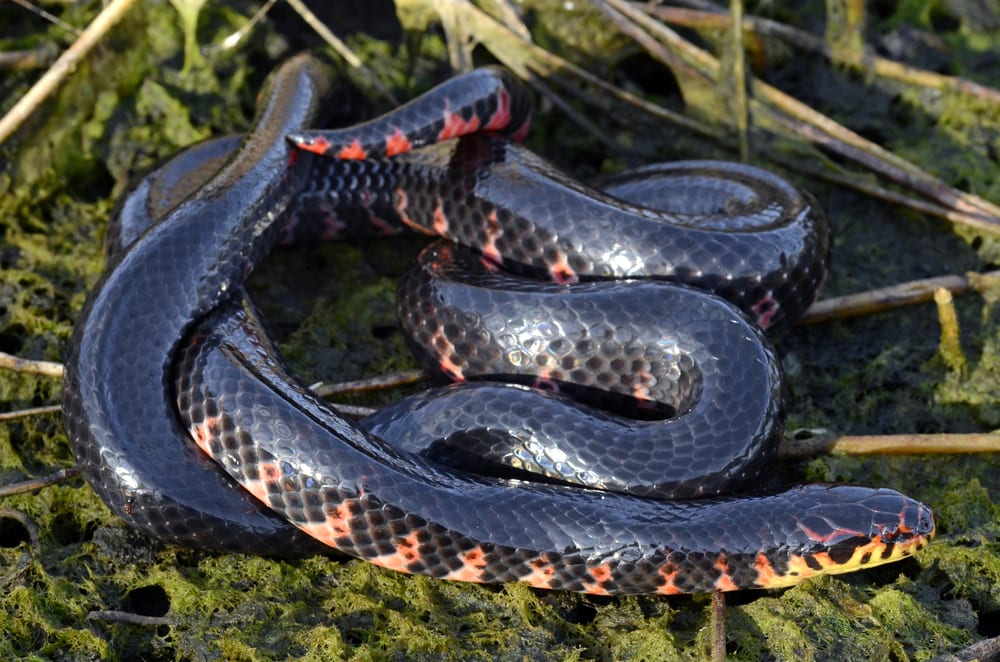
Red-bellied Mudsnake (Farancia abacura) is another glossy Farancia snake of swamps, marshes, cypress sloughs, and slow river edges. It is a heavy wetland snake, not one of the tiny red-bellied woodland species despite the similar common-name wording.
The dark upper body and red or pink belly markings are the point of comparison. In muddy, vegetated wetlands, that shine and belly color separate it from most Nerodia watersnakes and small leaf-litter snakes.
| Key detail | What to look for |
|---|---|
| Adult size | large, heavy-bodied swamp snake |
| Fast ID cue | shiny dark body with red or pink belly markings near swampy water |
| Typical Alabama habitat | cypress swamps, marshes, sluggish river edges, muddy backwaters, and dense wetland vegetation |
| Alabama range | Coastal Plain swamps, floodplains, and sluggish lowland waterways |
| Bite / venom note | Nonvenomous swamp hunter; glossy body and red belly marks |
28. Ring-necked Snake
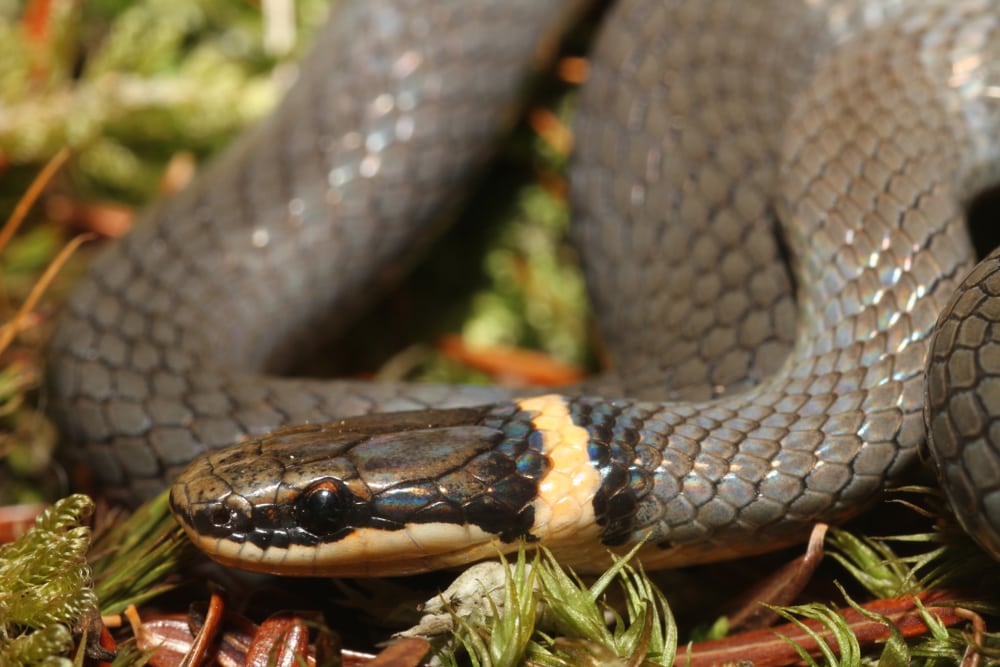
Ring-necked Snake (Diadophis punctatus) is a small woodland snake that hides under logs, bark, loose soil, compost, and damp leaf litter. Adults are usually 10-24 inches, with a dark back that can look plain until the snake twists.
The neck ring and bright yellow to orange belly are the quick clues. A ring-necked snake often appears during cleanup or log-turning rather than out in the open, so a partial view is common.
| Key detail | What to look for |
|---|---|
| Adult size | usually 10-24 inches |
| Fast ID cue | dark back, light neck ring, and bright yellow to orange belly |
| Typical Alabama habitat | loose soil, leaf litter, rotting logs, compost, damp gardens, and shaded woodland edges |
| Alabama range | wooded slopes, damp leaf litter, gardens, and log-strewn edges statewide |
| Bite / venom note | Nonvenomous small woodland snake; bright belly shows when it curls |
29. Southern Hog-nosed Snake
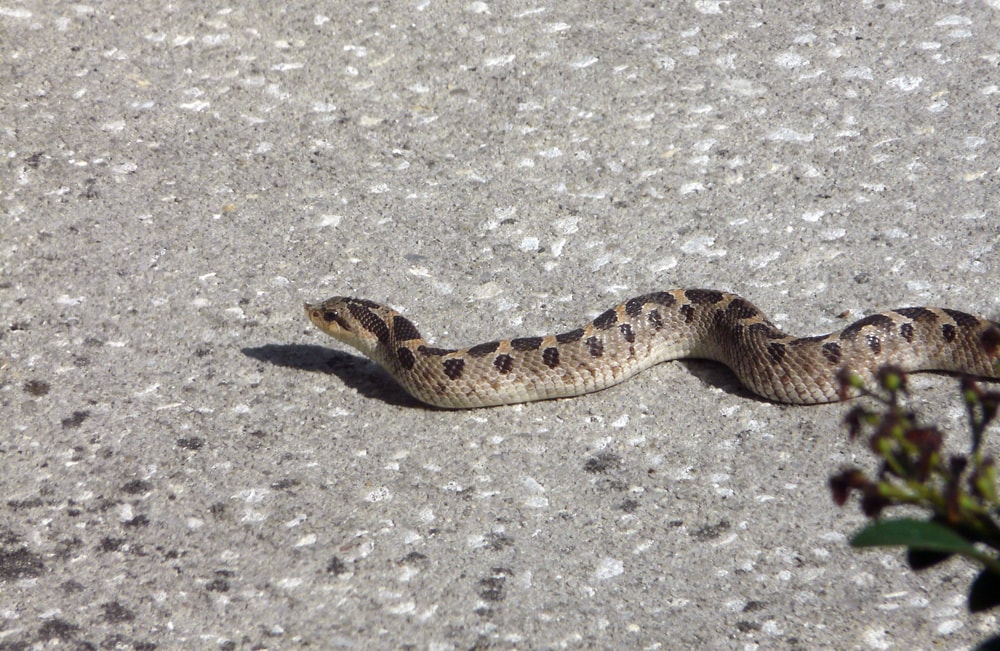
Southern Hog-nosed Snake (Heterodon simus) is the sand-country hognose, tied to pine woods, open woodlands, dry sandy soils, and fields with toads nearby. Adults are often 1-4 feet, but the species usually feels compact next to racers or ratsnakes.
The upturned snout and dramatic neck-flattening display are classic hognose traits. In sandy pine habitat, those clues help separate it from the broader mix of small brown and blotched snakes.
| Key detail | What to look for |
|---|---|
| Adult size | often 1-4 feet |
| Fast ID cue | upturned snout, wide defensive neck display, and sandy habitat |
| Typical Alabama habitat | sandy soils, pine woods, open woodlands, fields, and toad-rich edges |
| Alabama range | very local in sandy Coastal Plain and longleaf pine habitats |
| Bite / venom note | Nonvenomous toad hunter; upturned snout and defensive display |
Watersnakes, gartersnakes, ribbonsnakes, and wetland species
30. Black Swampsnake
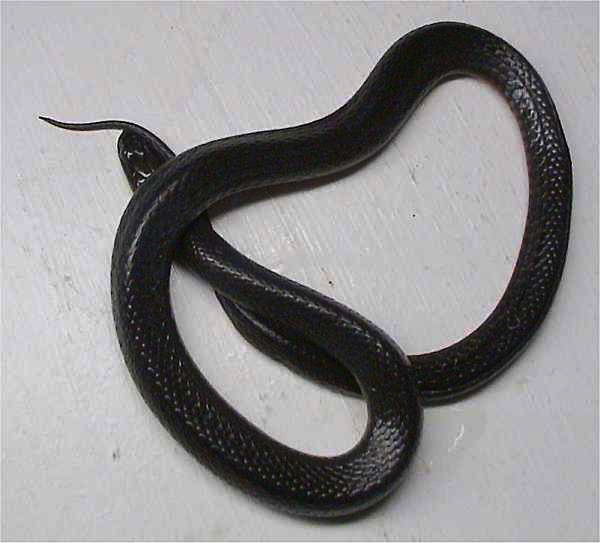
Black Swampsnake (Seminatrix pygaea) is a small glossy snake of swamps, marshes, cypress sloughs, pond edges, and quiet backwaters. The dark back and reddish belly are better clues than forcing it into the large watersnake lookalike group.
Expect it close to wet vegetation and shallow water. It lacks a rattle or facial pit, and its smoother, smaller build separates it from cottonmouths and the heavier Nerodia watersnakes nearby.
| Key detail | What to look for |
|---|---|
| Adult size | small glossy aquatic snake |
| Fast ID cue | glossy black back, reddish belly, and close tie to swamp vegetation |
| Typical Alabama habitat | cypress sloughs, marsh vegetation, shallow ponds, blackwater edges, and quiet backwaters |
| Alabama range | low Coastal Plain wetlands and vegetated backwaters |
| Bite / venom note | Nonvenomous swamp snake; small glossy body near shallow water |
31. Brown Watersnake
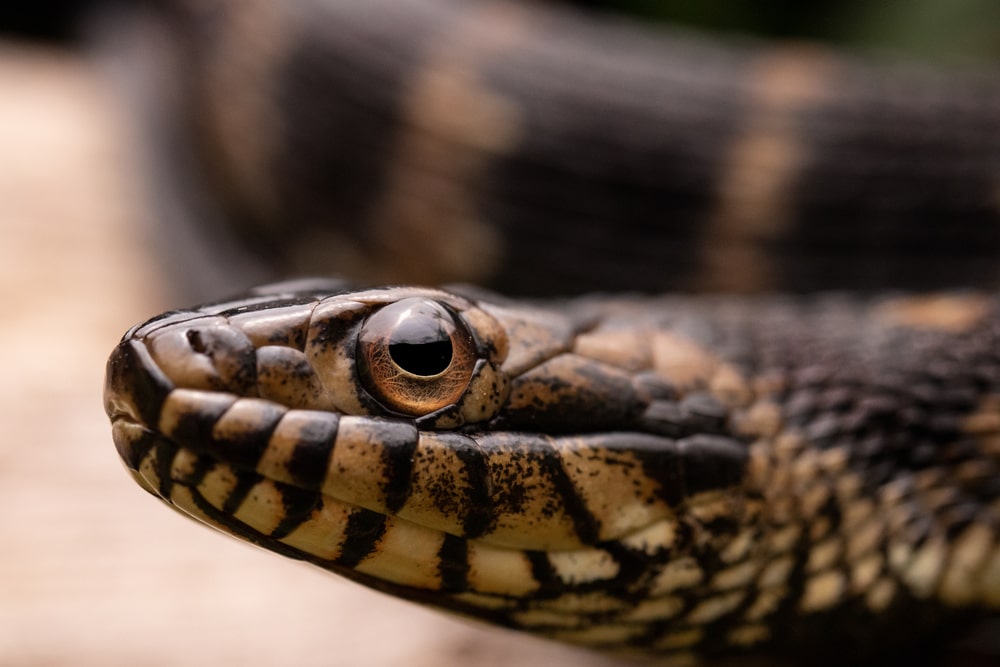
Brown Watersnake (Nerodia taxispilota) is a large, heavy Nerodia watersnake of river edges, sloughs, ponds, and swamp margins. It is one of the harmless species most likely to be mistaken for a cottonmouth because it can look thick-bodied near water.
Look for brown blotches or bands, round pupils, and a body often seen basking on limbs or banks over water. Habitat alone is not enough here; use the pattern and head shape too.
| Key detail | What to look for |
|---|---|
| Adult size | large, heavy-bodied watersnake |
| Fast ID cue | heavy brown body with dark blotches, often basking on limbs or banks over water |
| Typical Alabama habitat | large rivers, oxbows, cypress-lined sloughs, overhanging limbs, banks, and swamp margins |
| Alabama range | major river systems, sloughs, ponds, and swamp margins in the Coastal Plain and interior lowlands |
| Bite / venom note | Nonvenomous watersnake; common cottonmouth lookalike near water |
32. Common Gartersnake
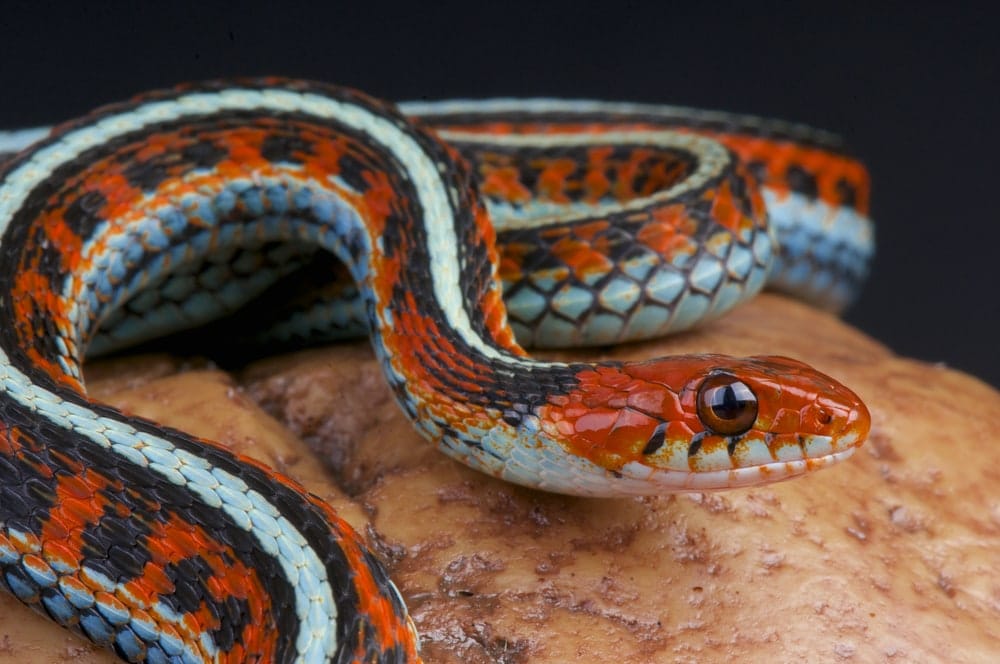
Common Gartersnake (Thamnophis sirtalis) is the striped snake of wet meadows, stream edges, pond margins, grasslands, and damp backyard cover. It is usually slender and medium-sized, with a cleaner line pattern than most watersnakes.
The long stripes do most of the work. A gartersnake near wet grass or a ditch edge should look narrow, active, and linear, not heavy and blotched like a cottonmouth lookalike.
| Key detail | What to look for |
|---|---|
| Adult size | slender medium-sized striped snake |
| Fast ID cue | long stripes, slim build, and frequent use of wet grass or stream edges |
| Typical Alabama habitat | wet meadows, pond margins, stream edges, grasslands, and backyard edges near cover |
| Alabama range | wet grass, stream edges, pond margins, ditches, and damp yards statewide |
| Bite / venom note | Nonvenomous striped snake; often near wet grass or streams |
33. Common Watersnake
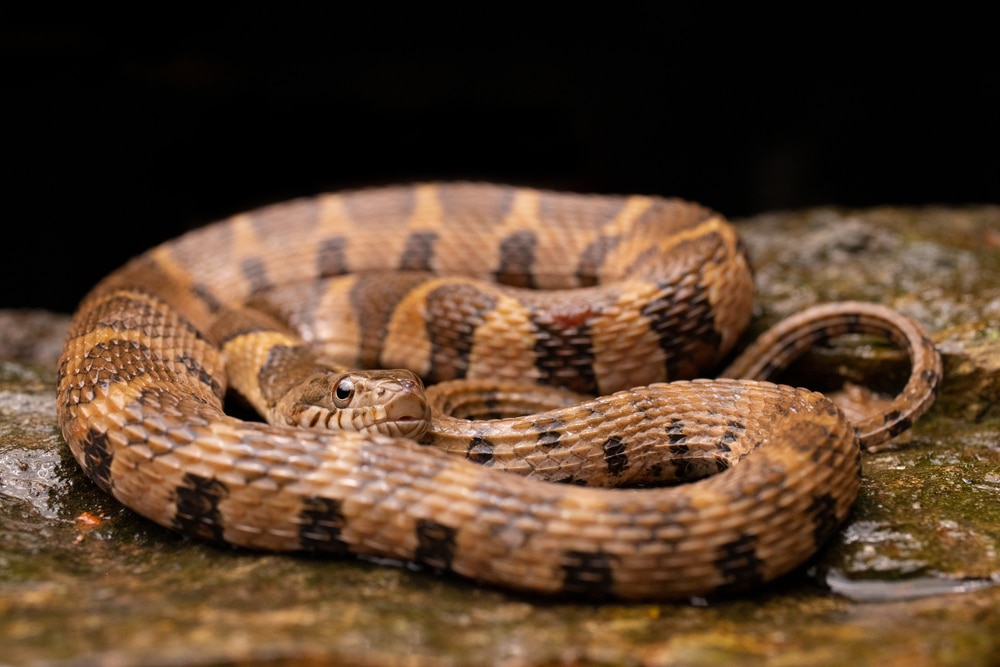
Common Watersnake (Nerodia sipedon) is a nonvenomous Nerodia watersnake found around ponds, streams, marshes, river edges, and other wet cover. Adults can look sturdy, which is why quick cottonmouth calls often go wrong.
Use the round pupils, lack of a facial pit, and banded or blotched body pattern together. A common watersnake is usually tied right to the waterline, basking, swimming, or slipping through shoreline vegetation.
| Key detail | What to look for |
|---|---|
| Adult size | medium to large watersnake |
| Fast ID cue | banded or blotched body near water, round pupils, and no rattle or facial pit |
| Typical Alabama habitat | rocky streams, ponds, marsh edges, riverbanks, basking logs, and shoreline vegetation |
| Alabama range | northern and central waterways, ponds, marshes, and stream edges |
| Bite / venom note | Nonvenomous watersnake; common cottonmouth lookalike near water |
34. Dekay’s Brownsnake
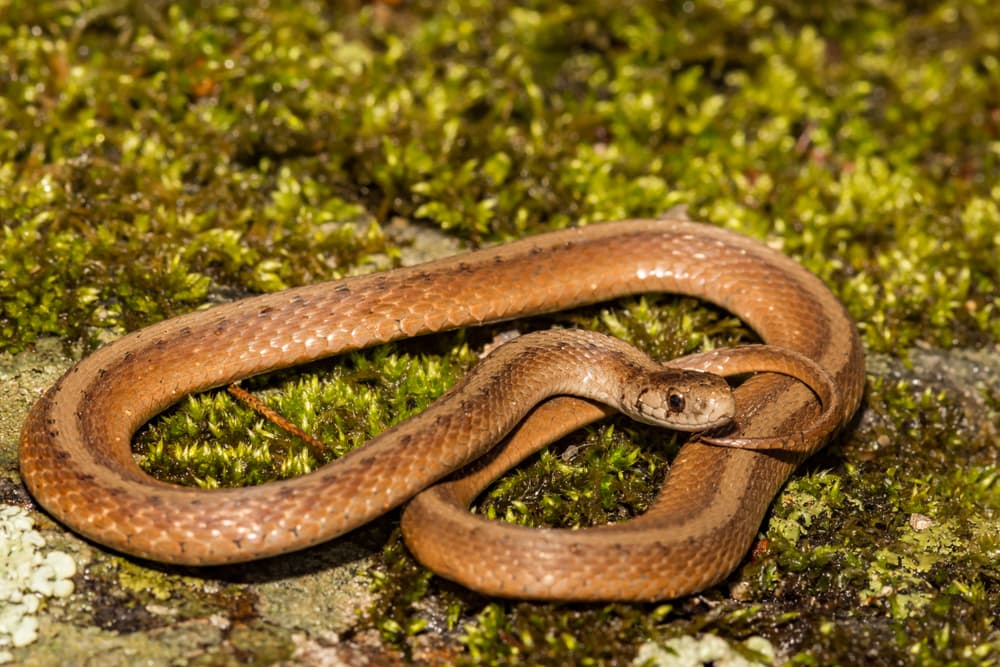
Dekay’s Brownsnake (Storeria dekayi) is a small brown snake of loose soil, damp gardens, leaf litter, rotting logs, compost, and shaded edges. Adults are usually 7-16 inches, so it often appears during yard work rather than a hike.
The best clues are modest: a small brown or gray-brown body, a faint pale stripe, and small dark spots along the back. It is nonvenomous and much smaller than the copperheads people sometimes worry about in leaf litter.
| Key detail | What to look for |
|---|---|
| Adult size | usually 7-16 inches |
| Fast ID cue | small brown or gray-brown body with faint pale stripe and small dark spots |
| Typical Alabama habitat | loose soil, leaf litter, rotting logs, compost, damp gardens, and shaded woodland edges |
| Alabama range | damp yards, gardens, leaf litter, and shaded edge habitat statewide |
| Bite / venom note | Nonvenomous tiny brownsnake; common under damp cover |
35. Diamond-backed Watersnake
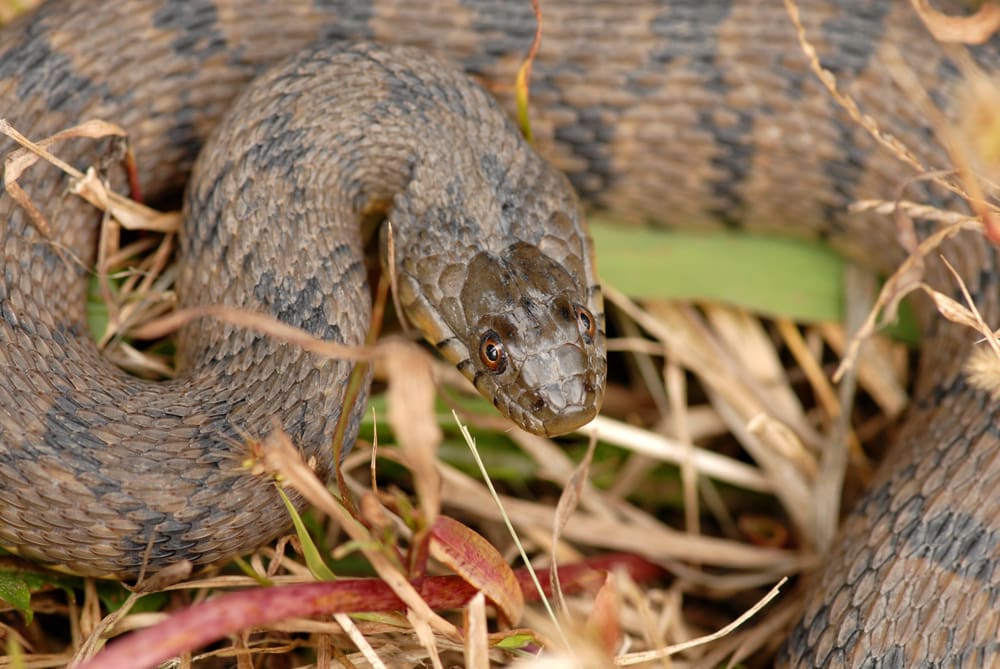
Diamond-backed Watersnake (Nerodia rhombifer) is a heavy watersnake of swamps, slow rivers, ponds, marshes, and cypress sloughs. The name fits: the back often shows a netlike diamond pattern that breaks up the body in reflected water and shade.
Round pupils and the lack of a facial pit help keep it out of the cottonmouth category. A large Nerodia coiled near a riverbank can look intimidating, but the diamond pattern is the better field mark.
| Key detail | What to look for |
|---|---|
| Adult size | large, heavy-bodied watersnake |
| Fast ID cue | heavy body with netlike diamond pattern near slow water |
| Typical Alabama habitat | large rivers, oxbows, cypress sloughs, ponds, backwater lakes, and slow marshy edges |
| Alabama range | Tennessee, Tombigbee, Alabama, and other slow river and backwater systems |
| Bite / venom note | Nonvenomous watersnake; common cottonmouth lookalike near water |
36. Eastern Ribbonsnake
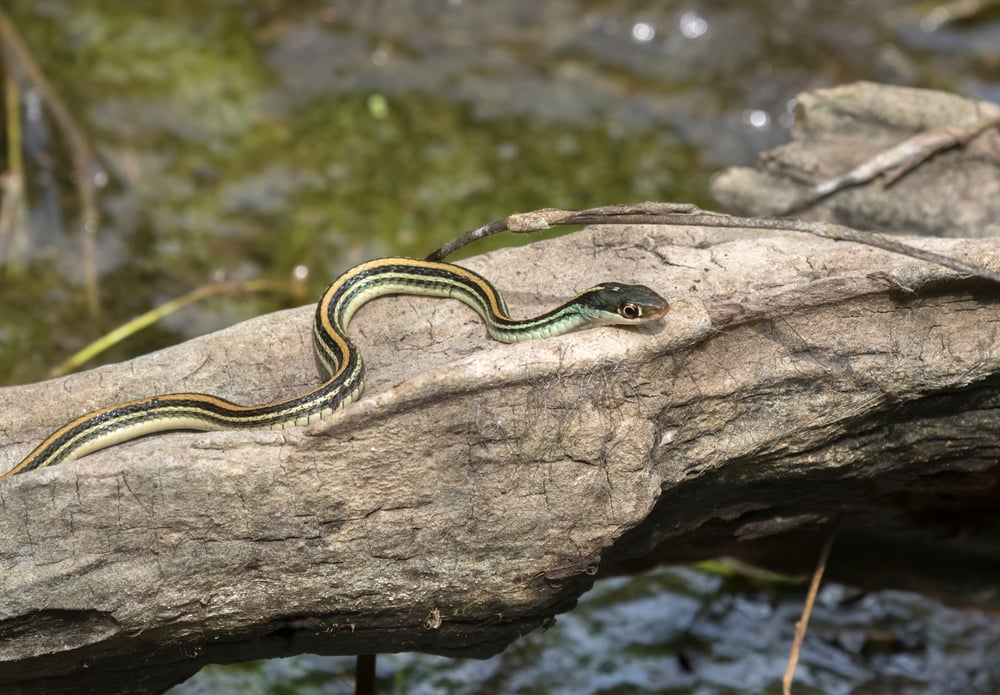
Eastern Ribbonsnake (Thamnophis saurita) is a very slender striped snake of wet meadows, pond margins, stream edges, grasslands, and damp backyard cover. Adults are usually medium-sized, but the long tail makes the animal look even more stretched out.
The clean side stripes and delicate build separate it from heavier watersnakes. A ribbonsnake often threads through grass at the water’s edge rather than sitting thick-bodied on an open bank.
| Key detail | What to look for |
|---|---|
| Adult size | slender medium-sized striped snake |
| Fast ID cue | long stripes, slim build, and frequent use of wet grass or stream edges |
| Typical Alabama habitat | wet meadows, pond margins, stream edges, grasslands, and backyard edges near cover |
| Alabama range | marsh grass, pond margins, wet meadows, ditches, and streamside vegetation statewide |
| Bite / venom note | Nonvenomous striped snake; often near wet grass or streams |
37. Florida Green Watersnake
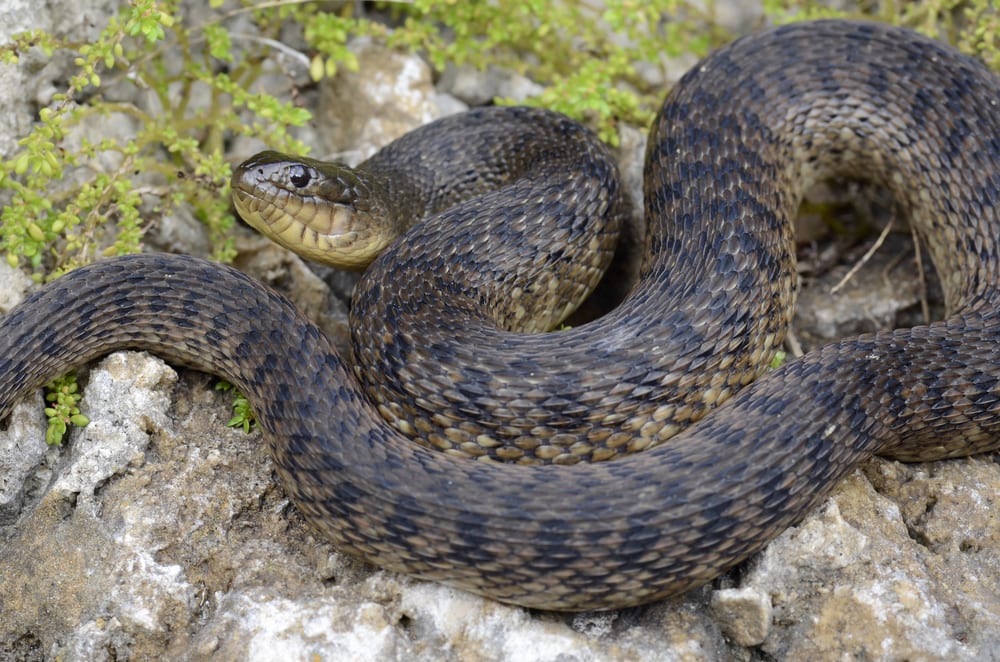
Florida Green Watersnake (Nerodia floridana) is a large greenish watersnake of marshes, ponds, cypress sloughs, river edges, and other slow wet habitats. It can look plain compared with banded watersnakes, which makes body shape and habitat especially useful.
Look for an olive to green-brown body, round pupils, and no rattle or facial pit. In quiet wetland water, this species can be easy to miss until it moves through floating vegetation.
| Key detail | What to look for |
|---|---|
| Adult size | large greenish watersnake |
| Fast ID cue | olive to green-brown body near quiet wetlands, round pupils, and no facial pit |
| Typical Alabama habitat | large marshes, cypress ponds, floating vegetation, sloughs, and quiet river backwaters |
| Alabama range | southern Coastal Plain marshes, ponds, cypress sloughs, and river edges |
| Bite / venom note | Nonvenomous watersnake; common cottonmouth lookalike near water |
38. Glossy Swampsnake
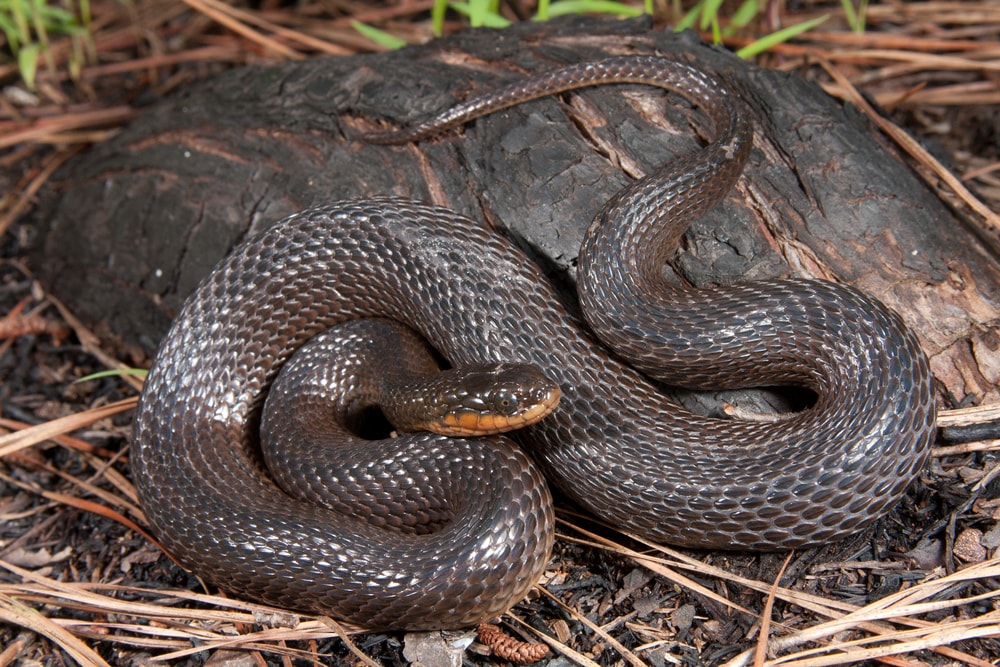
Glossy Swampsnake (Liodytes rigida) is a glossy aquatic snake of swamps, sloughs, marshes, and vegetated backwaters. It belongs with the low wetland species rather than the upland leaf-litter snakes.
The body is smooth-looking and dark enough to blend with wet vegetation and mud. Use the wet habitat, smaller aquatic build, round pupils, and lack of a facial pit instead of relying on one color mark.
| Key detail | What to look for |
|---|---|
| Adult size | small to medium glossy aquatic snake |
| Fast ID cue | glossy dark aquatic body in swamp vegetation, with round pupils and no facial pit |
| Typical Alabama habitat | vegetated swamps, sloughs, marshy ditches, shallow backwaters, and muddy wetland edges |
| Alabama range | Coastal Plain swamps, marshes, and low floodplain backwaters |
| Bite / venom note | Nonvenomous swampsnake; glossy body in wet vegetation |
39. Mississippi Green Watersnake
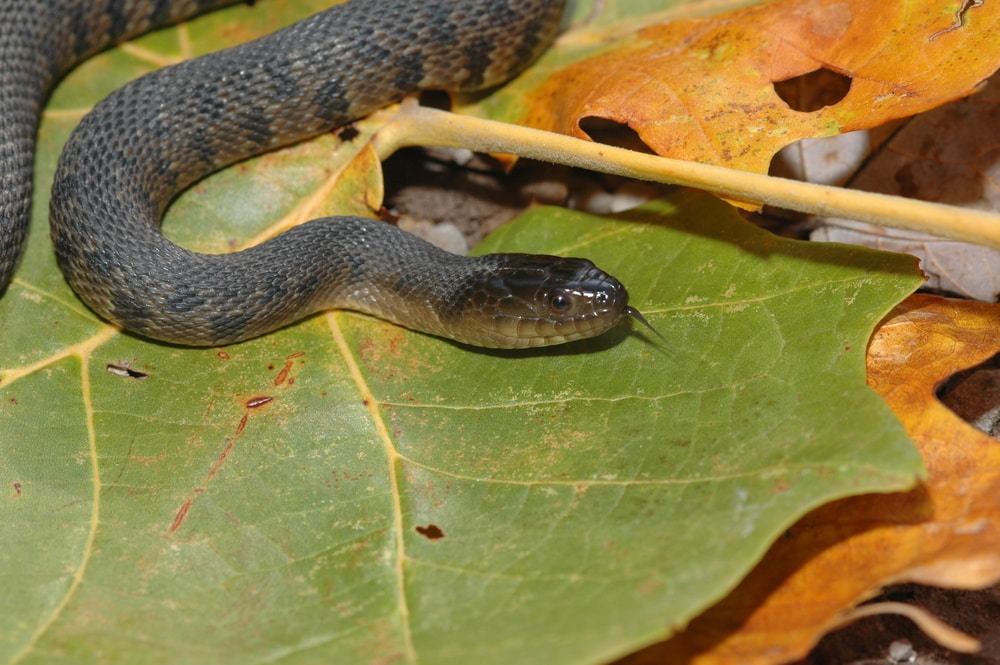
Mississippi Green Watersnake (Nerodia cyclopion) is a greenish Nerodia watersnake of floodplain sloughs, marshy river edges, ponds, and swamp margins. The pattern can be muted, so a quick photo may show little more than a dark olive body near water.
Round pupils, no facial pit, and the wetland setting keep it in the harmless watersnake group. Compare it carefully with Florida Green Watersnake and Plain-bellied Watersnake when the view is brief.
| Key detail | What to look for |
|---|---|
| Adult size | medium to large greenish watersnake |
| Fast ID cue | greenish-brown body near floodplain water, round pupils, and no facial pit |
| Typical Alabama habitat | floodplain sloughs, marshy river edges, oxbows, ponds, and swamp margins |
| Alabama range | western and southern floodplain sloughs, marshy rivers, ponds, and swamp margins |
| Bite / venom note | Nonvenomous watersnake; common cottonmouth lookalike near water |
40. Plain-bellied Watersnake
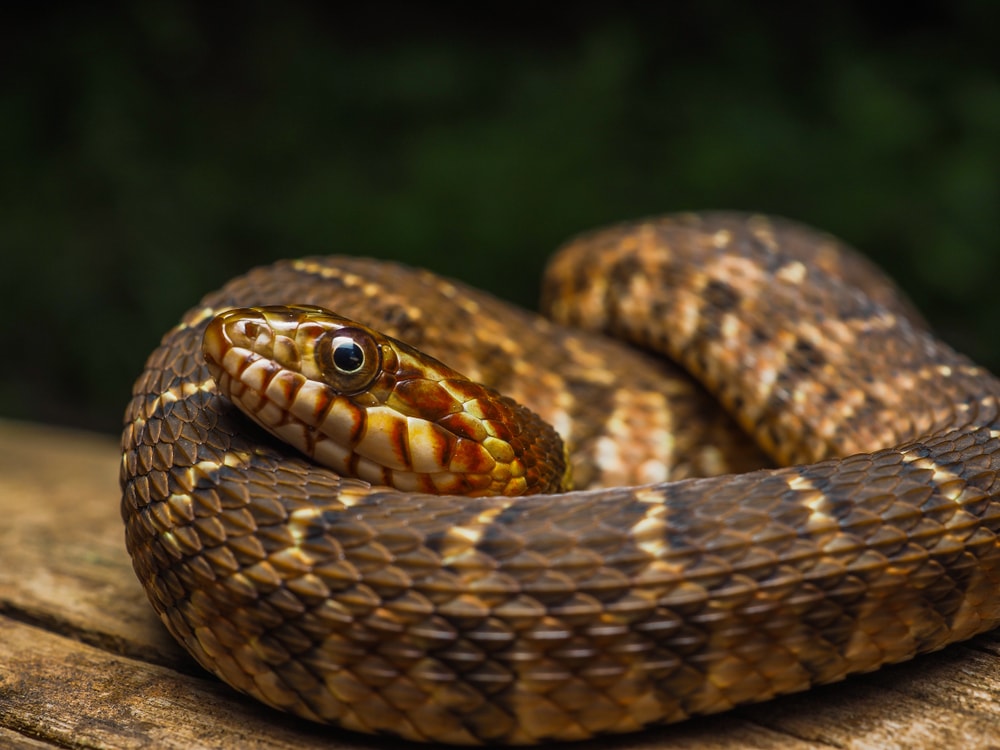
Plain-bellied Watersnake (Nerodia erythrogaster) is a sturdy watersnake of swamps, ponds, cypress sloughs, marshes, and river edges. The back can be dark or plain, but the belly is usually cleaner and less patterned than on many other watersnakes.
This species often basks or moves along the waterline and may travel away from water more than expected. Round pupils and the absence of a facial pit separate it from cottonmouths when the view is good.
| Key detail | What to look for |
|---|---|
| Adult size | medium to large watersnake |
| Fast ID cue | dark back with cleaner plain belly, round pupils, and no facial pit |
| Typical Alabama habitat | ponds, swamps, marshes, cypress sloughs, river edges, and damp woods near water |
| Alabama range | lowland swamps, ponds, sloughs, marshes, and river edges across much of the state |
| Bite / venom note | Nonvenomous watersnake; common cottonmouth lookalike near water |
41. Queensnake
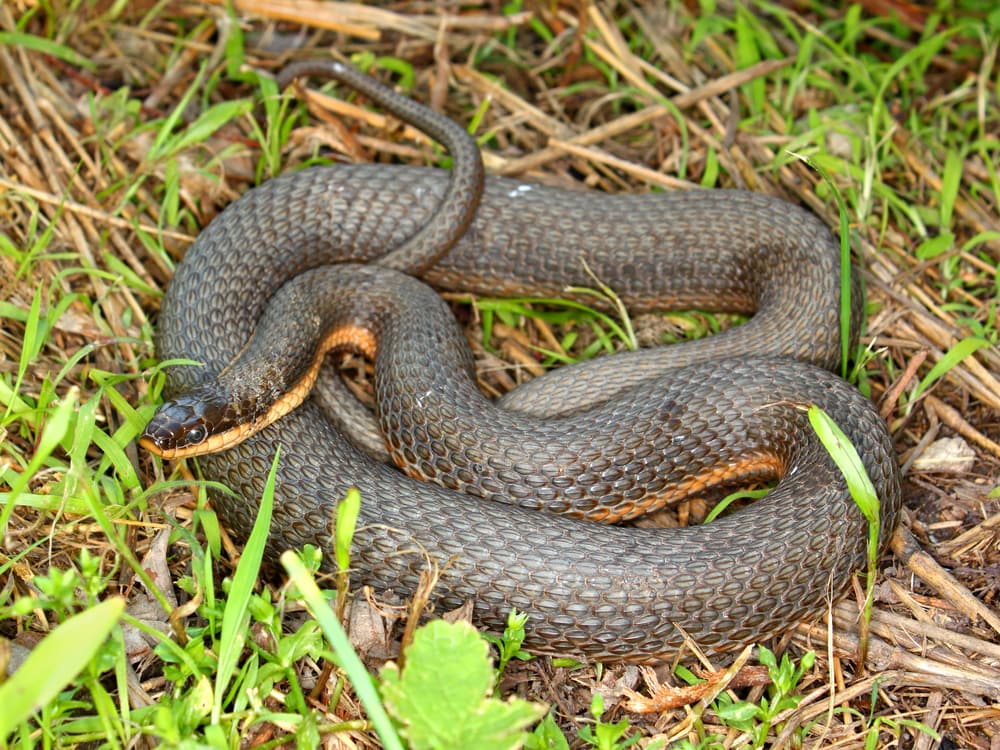
Queensnake (Regina septemvittata) is a slender waterside snake associated with streams, creek margins, and wet edges where crayfish and cover are available. It is not the heavy, blotched type of watersnake that usually causes cottonmouth confusion.
Look for a narrow body, pale side stripes, and a head that looks small compared with the bulkier Nerodia species. A queensnake usually feels more like a striped stream snake than a swamp-bank bruiser.
| Key detail | What to look for |
|---|---|
| Adult size | slender small to medium stream snake |
| Fast ID cue | narrow body with pale side stripes, usually near stream or creek margins |
| Typical Alabama habitat | streams, creek margins, wet edges, and nearby cover |
| Alabama range | clear streams and creek edges, especially in northern and central hill country |
| Bite / venom note | Nonvenomous stream snake; slender body and pale side stripes |
42. Red-bellied Snake
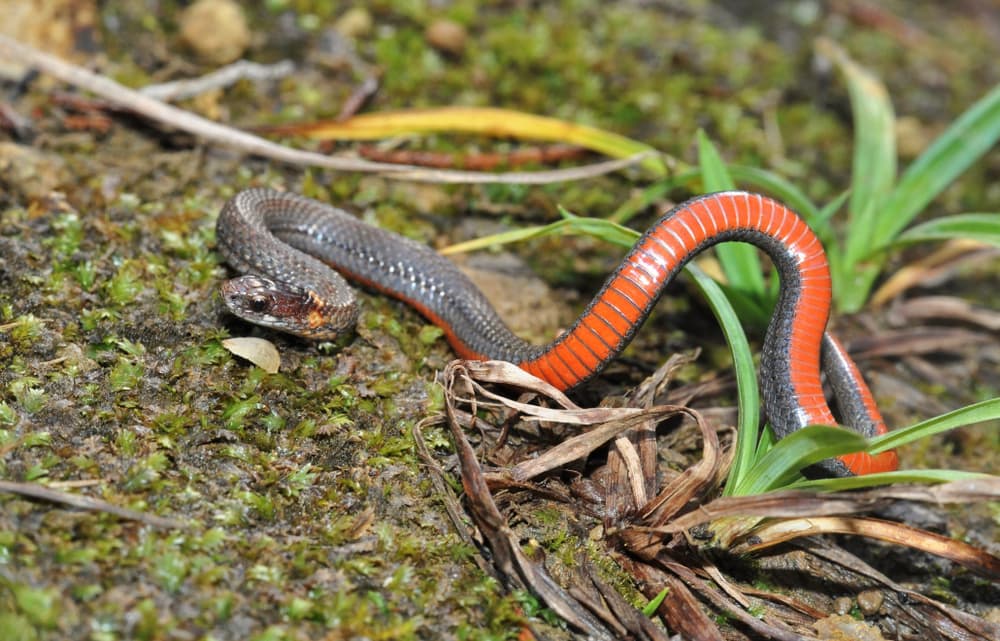
Red-bellied Snake (Storeria occipitomaculata) is a tiny woodland and edge snake, often tucked under logs, leaf litter, rocks, or damp debris. Adults are usually 7-16 inches, and the back may look plain brown, gray, or chestnut at first.
The belly is the reveal: red to orange, sometimes vivid when the snake curls or flips. Around moist forest edges and gardens, it is best compared with brownsnakes and earthsnakes, not watersnakes.
| Key detail | What to look for |
|---|---|
| Adult size | usually 7-16 inches |
| Fast ID cue | small brown or gray back with red to orange belly |
| Typical Alabama habitat | moist forest edges, gardens, leaf litter, and damp cover |
| Alabama range | cool moist woodland edges, gardens, and leaf-litter pockets, especially in upland areas |
| Bite / venom note | Nonvenomous tiny snake; bright belly shows when it curls |
43. Rough Earthsnake
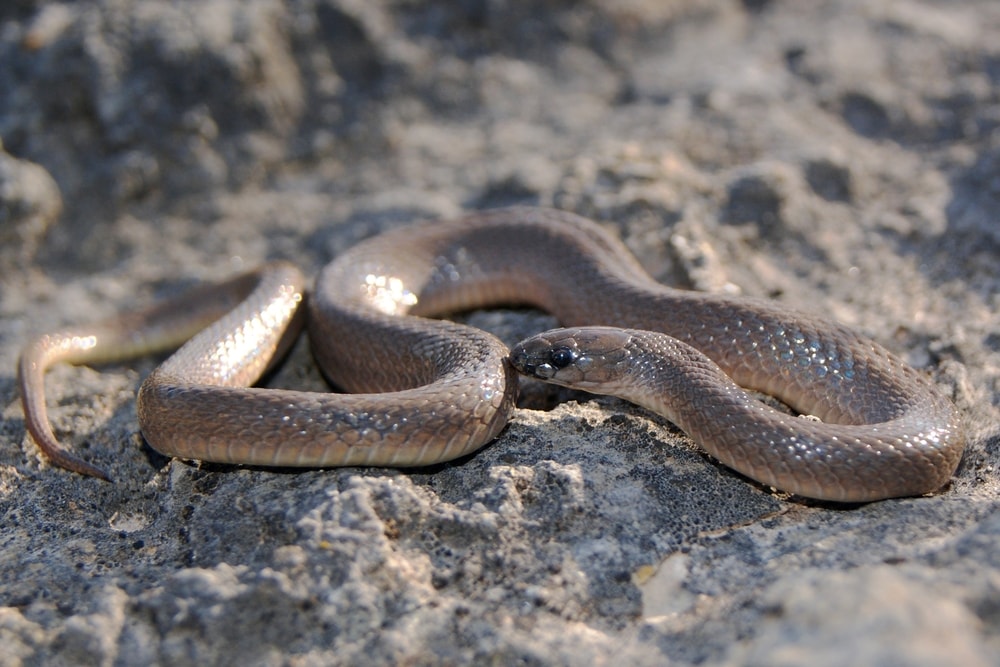
Rough Earthsnake (Virginia striatula) is a small soil snake of loose leaf litter, rotting logs, damp gardens, compost, and shaded woodland edges. Adults are usually 7-16 inches and spend much of their time below the surface or under cover.
The wormlike body, earth-tone color, and hidden habits do most of the ID work. If the snake is tiny, plain, and found in soft soil rather than near open water, rough earthsnake is a sensible comparison.
| Key detail | What to look for |
|---|---|
| Adult size | usually 7-16 inches |
| Fast ID cue | small wormlike body, hidden life under soil or logs, and smooth glossy scales |
| Typical Alabama habitat | loose soil, pine and hardwood leaf litter, rotting logs, damp gardens, compost, and shaded edges |
| Alabama range | southern and central woodland edges where soft soil and cover are present |
| Bite / venom note | Nonvenomous tiny snake; usually under soil, logs, or leaf litter |
44. Saltmarsh Snake
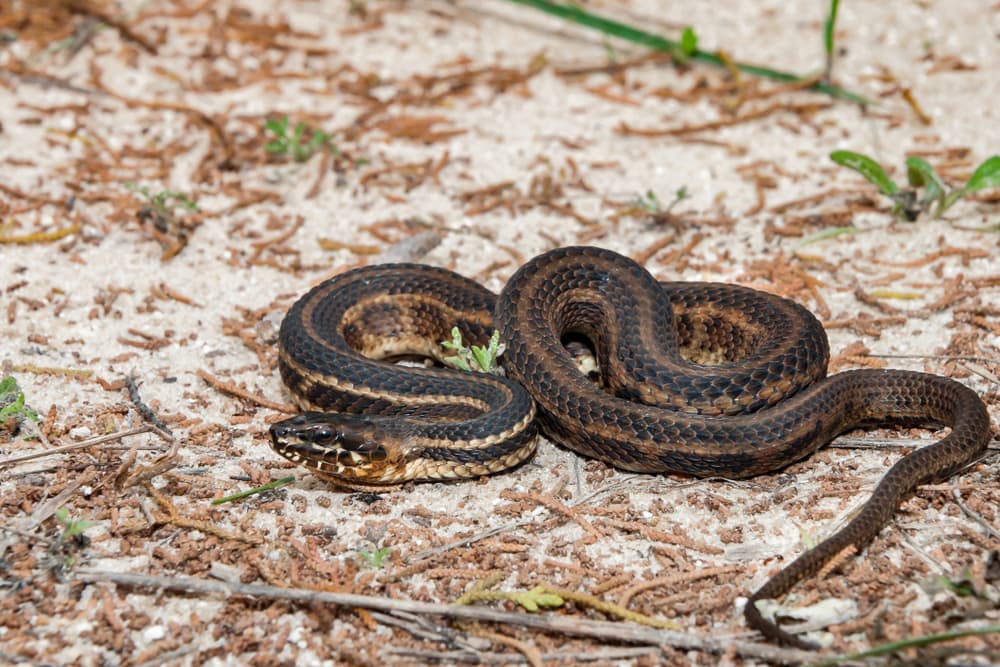
Saltmarsh Snake (Nerodia clarkii) is the coastal marsh Nerodia, tied to brackish marsh edges, tidal creeks, and Gulf Coast wetlands. Adults are often 1-4 feet, with muted stripes or bands that can look different from one marsh to the next.
Habitat is the strongest clue. A watersnake in tidal grass or brackish creek cover belongs in a different comparison set than an inland pond snake or a dry-woods brownsnake.
| Key detail | What to look for |
|---|---|
| Adult size | medium coastal watersnake |
| Fast ID cue | muted stripes or bands in brackish marsh and tidal creek habitat |
| Typical Alabama habitat | brackish marsh edges, tidal creeks, and coastal wetlands |
| Alabama range | coastal brackish marshes and Gulf Coast wetlands |
| Bite / venom note | Nonvenomous coastal watersnake; brackish marsh habitat is the key clue |
45. Smooth Earthsnake
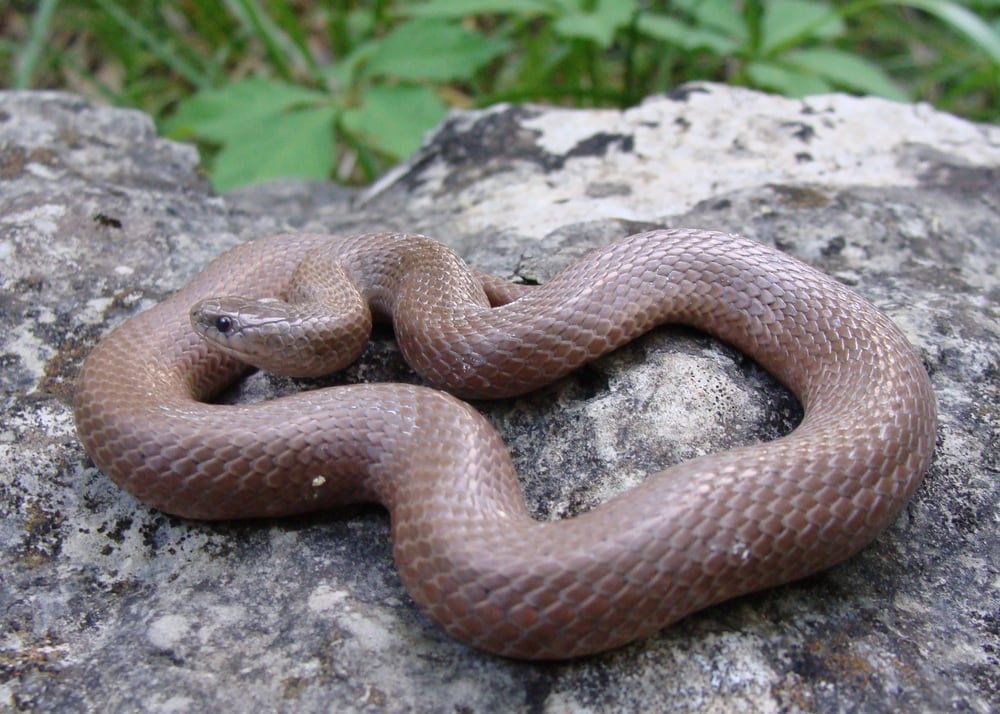
Smooth Earthsnake (Virginia valeriae) is a small brown soil snake of loose leaf litter, damp gardens, rotting logs, compost, and shaded woodland edges. Adults are usually 7-16 inches, and most encounters are with a snake uncovered rather than cruising in the open.
The smooth, plain look is the clue. Compared with rough earthsnake, the ID often comes down to scale texture, location, and a close look at the head and body, so habitat notes matter.
| Key detail | What to look for |
|---|---|
| Adult size | usually 7-16 inches |
| Fast ID cue | small wormlike body, hidden life under soil or logs, and smooth glossy scales |
| Typical Alabama habitat | loose soil, leaf litter, rotting logs, compost, damp gardens, and shaded woodland edges |
| Alabama range | northern and central moist woodlands, gardens, and shaded soil cover |
| Bite / venom note | Nonvenomous tiny snake; usually under soil, logs, or leaf litter |
46. Southern Watersnake
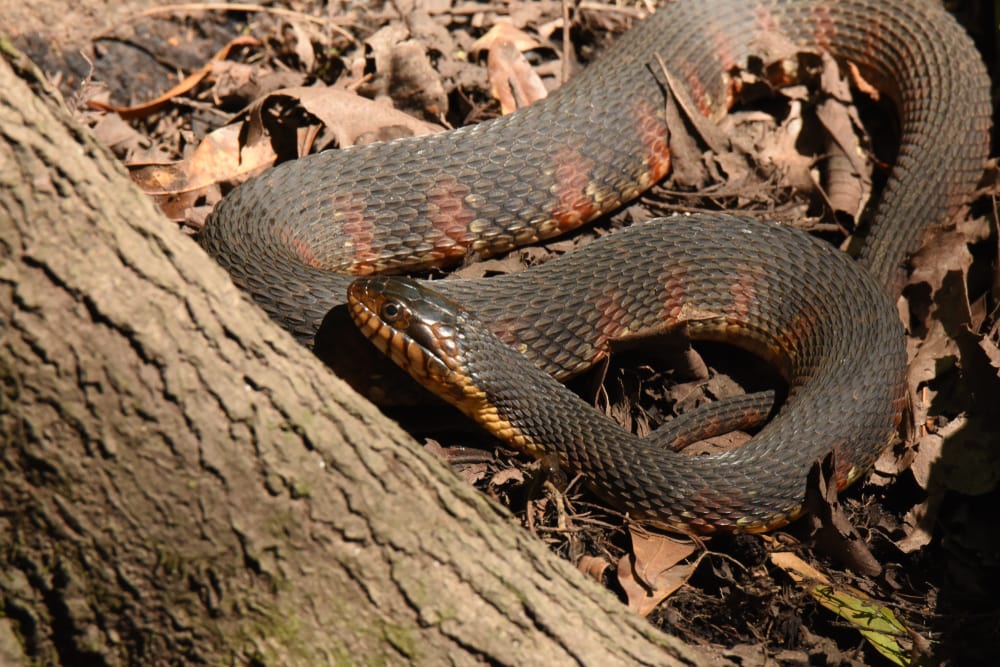
Southern Watersnake (Nerodia fasciata) is the banded watersnake of swamps, marshes, river edges, ponds, cypress sloughs, and wet shoreline cover. It is a common cottonmouth lookalike because it often appears in the same watery places.
The bands, round pupils, and lack of a facial pit are the useful marks. A Southern Watersnake can look stout when coiled, but it is still a nonvenomous Nerodia rather than a pit viper.
| Key detail | What to look for |
|---|---|
| Adult size | medium to large banded watersnake |
| Fast ID cue | banded body near water, round pupils, and no rattle or facial pit |
| Typical Alabama habitat | swamps, bayous, ponds, cypress sloughs, marsh edges, and slow vegetated shorelines |
| Alabama range | southern and Coastal Plain swamps, sloughs, ponds, marshes, and river edges |
| Bite / venom note | Nonvenomous watersnake; common cottonmouth lookalike near water |
Quick identification tips
Start by separating wetland snakes from upland snakes before comparing colors. Cottonmouths and many harmless watersnakes overlap near water, while copperheads are more often a leaf-litter and edge snake.
A clear photo of the whole body helps more than a close-up of the head. Pattern shape, body thickness, tail, and the place where the snake was found usually tell the better story.
FAQ
How many snake types are in Alabama?
This guide profiles 46 Alabama snakes from current herpetology references. Agency pages and field guides may use different counts when they group subspecies, older names, or rare records differently.
Which Alabama snakes are venomous?
The venomous species are listed first in this guide. They include Eastern Copperhead, Eastern Diamond-backed Rattlesnake, Florida Cottonmouth, Northern Cottonmouth, Pygmy Rattlesnake, Timber Rattlesnake, Harlequin Coralsnake. Compare range, habitat, and field marks before choosing a species.
Are watersnakes in Alabama cottonmouths?
No. Several harmless watersnakes live near the same wetlands as cottonmouths. Look at range, body shape, head posture, pattern, and behavior before deciding.
What should I do if I find a snake in my yard in Alabama?
Most yard snakes are passing through for cover, water, or prey. If a snake is inside a building or cannot leave on its own, contact a local wildlife professional.
What details help identify a snake from a photo?
Useful details include county, habitat, body length, dorsal pattern, head shape, tail shape, stripes or bands, and whether the photo was taken near water, rocks, logs, or open ground.