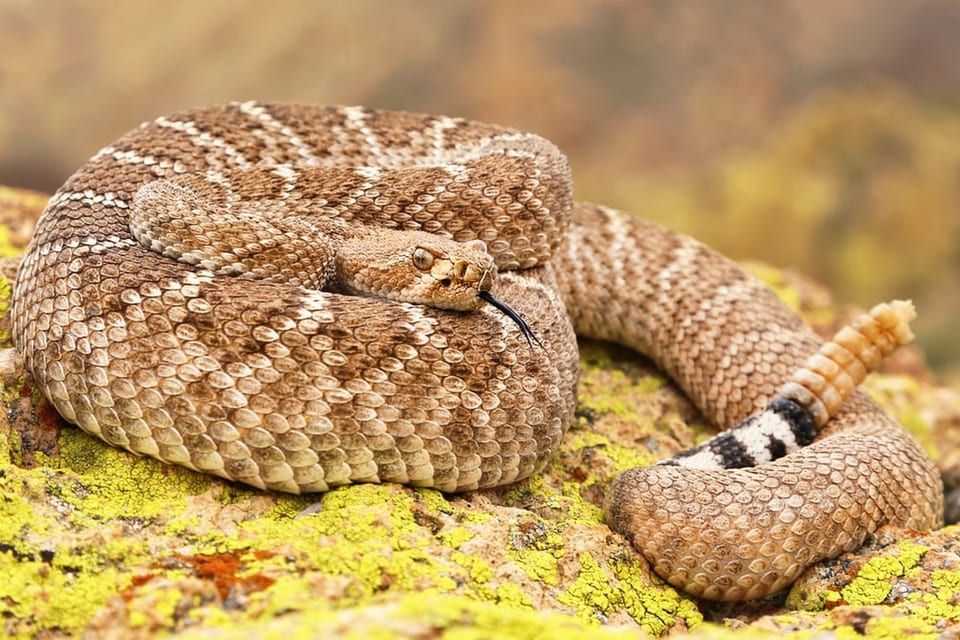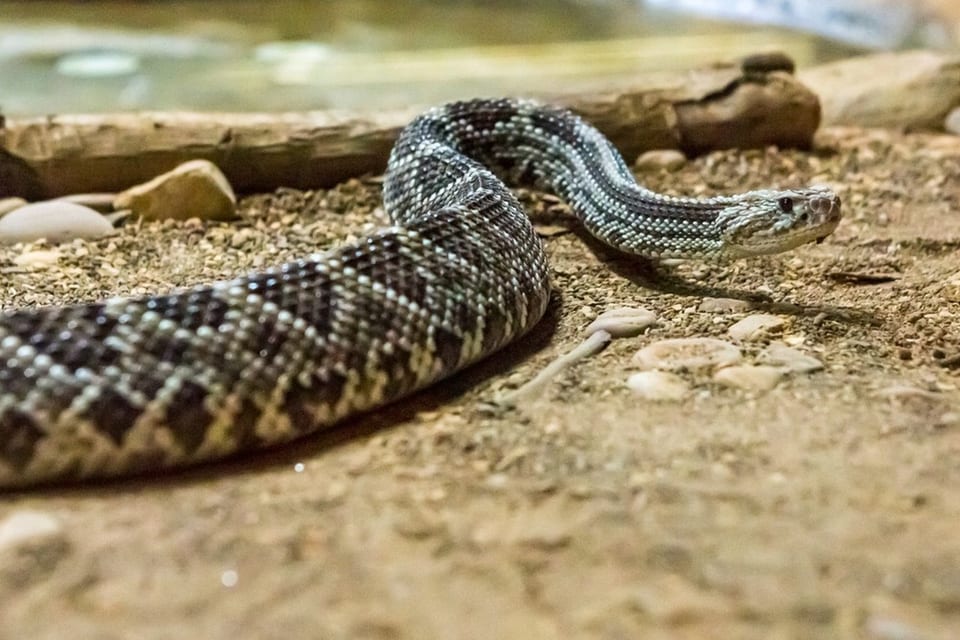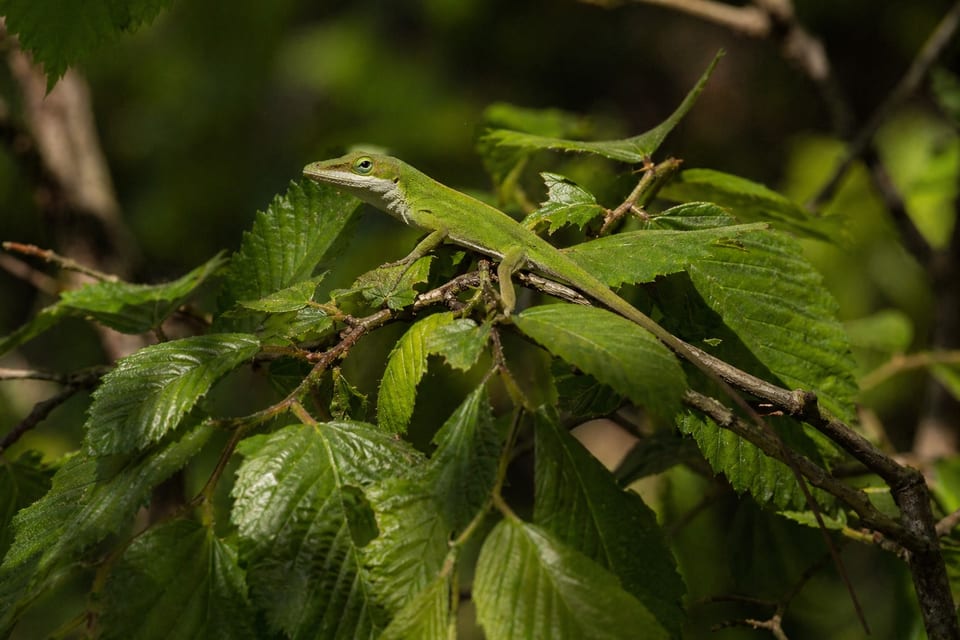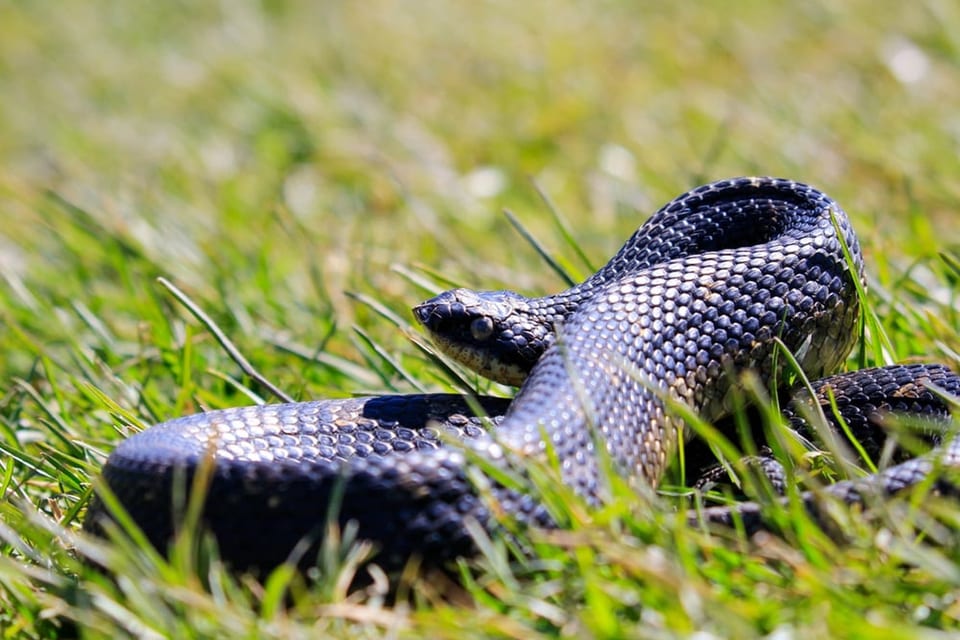
North Carolina runs from Blue Ridge coves to barrier-island marsh, and its snakes follow that gradient. Mountain forests, Piedmont creeks, Sandhills pine, pocosins, farms, and blackwater swamps all add different species.
Copperheads and timber rattlesnakes are part of the upland picture, while cottonmouths, mud snakes, ribbonsnakes, and many watersnakes belong more to the Coastal Plain and wetland edges.
The rest of the roster ranges from big ratsnakes and kingsnakes to hognoses, racers, rough greensnakes, tiny earthsnakes, and other woodland species that are easy to overlook.
Venomous snakes in North Carolina
North Carolina’s venomous species sort best by region first: mountains and Piedmont for many copperhead and timber rattlesnake encounters, Coastal Plain wetlands for cottonmouths and eastern diamondbacks, and sandy southern habitats for coral snake records.
1. Eastern Copperhead
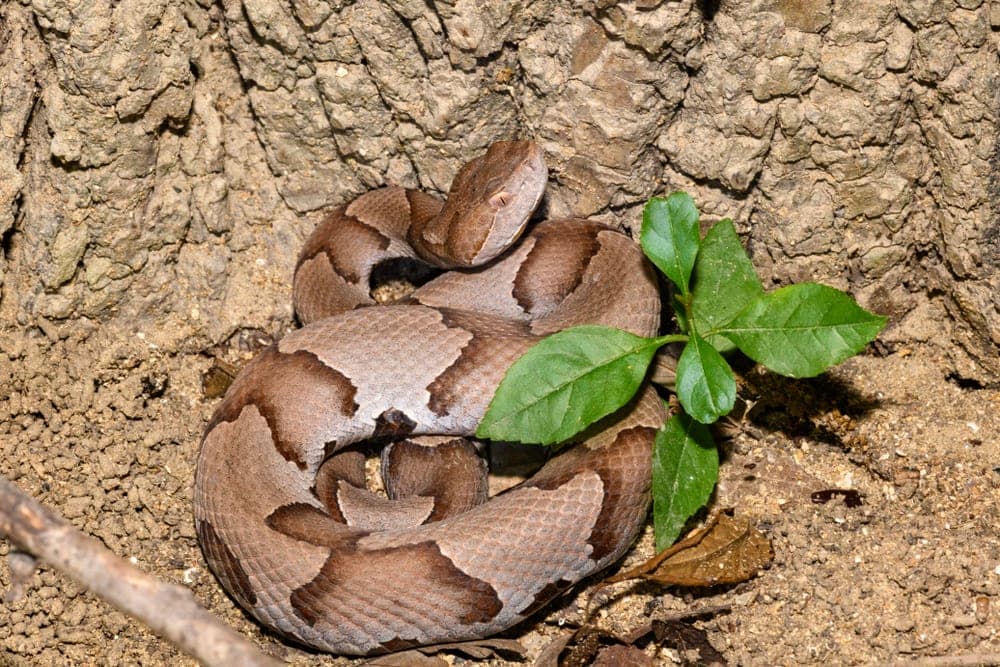
Eastern Copperhead (Agkistrodon contortrix) is the venomous snake many people in the state are most likely to notice because its leaf-brown bands disappear in hardwood litter. Adults are heavy-bodied pit vipers, usually 24-36 inches long, with a coppery head and hourglass bands pinched along the spine.
Habitat matters as much as color here. Copperheads use wooded slopes, rocky ravines, brushy field edges, and suburban woodlots, so the same pattern that stands out on a path can vanish a few feet away under oak leaves.
| Key detail | What to look for |
|---|---|
| Adult size | usually 24-36 inches |
| Fast ID cue | coppery head, heavy body, hourglass bands pinched along the spine |
| Typical North Carolina habitat | leaf-littered hardwood forests, rocky slopes, wooded ravines, and brushy field edges |
| North Carolina range | widespread in wooded and edge habitats from mountains through Coastal Plain |
| Bite / venom note | Venomous pit viper; camouflaged leaf-litter snake, serious bite risk |
2. Eastern Diamond-backed Rattlesnake
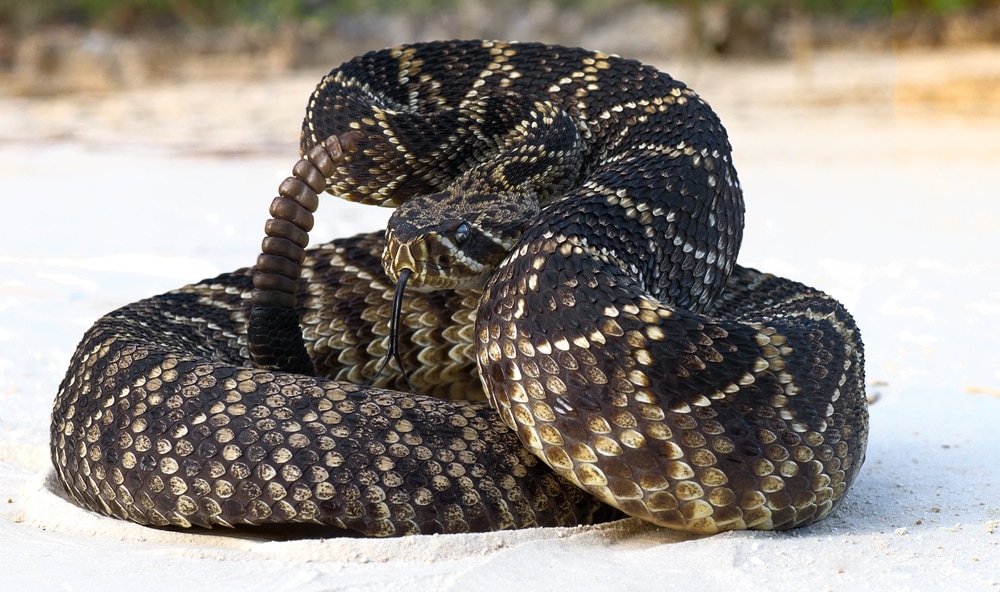
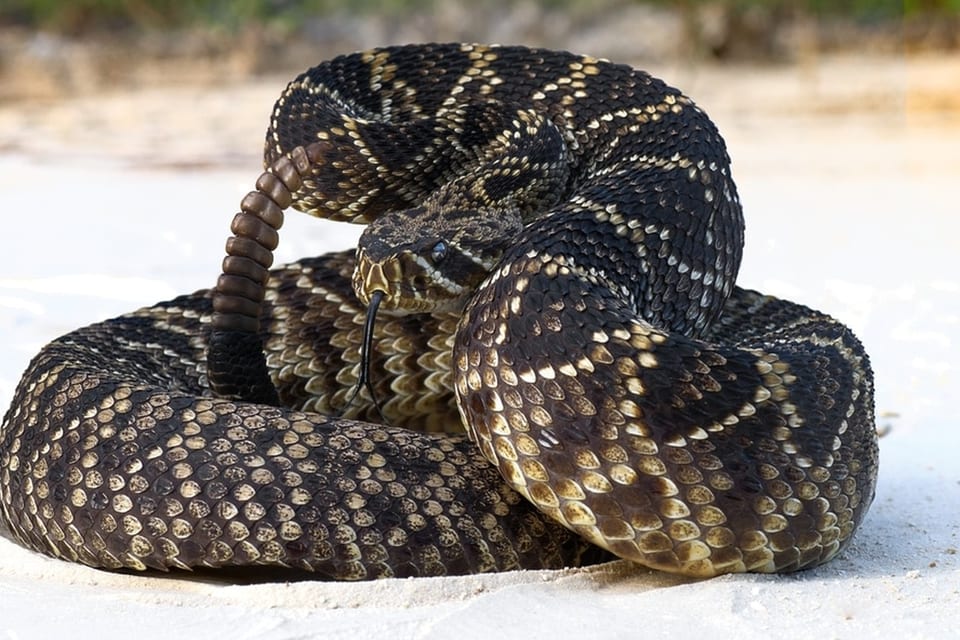
Eastern Diamond-backed Rattlesnake (Crotalus adamanteus) is a Coastal Plain rattlesnake tied to open pine country, pocosin edges, and dry sandy uplands. A big adult looks unmistakably stout, with dark diamonds bordered by pale scales and a rattle that is much louder than its rough camouflage suggests.
This is not a mountain or backyard generalist in this guide. Treat a diamondback record as a southeastern lowland possibility, then check for the large head, bold diamond pattern, and the dry pine or savanna setting around it.
| Key detail | What to look for |
|---|---|
| Adult size | usually 3-5 feet, sometimes longer |
| Fast ID cue | very large rattlesnake with pale-edged dark diamonds and a loud rattle |
| Typical North Carolina habitat | longleaf pine woods, pine savannas, dry sandy uplands, and pocosin edges |
| North Carolina range | southeastern Coastal Plain stronghold in open pine and lowland habitats |
| Bite / venom note | Venomous diamondback; large-bodied rattlesnake, serious bite risk |
3. Northern Cottonmouth
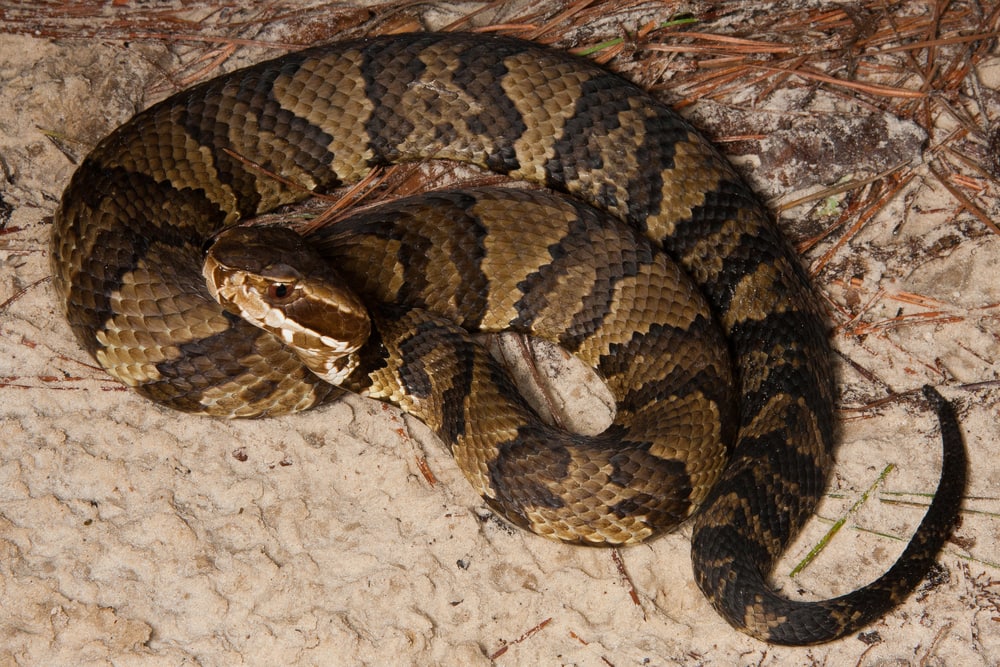
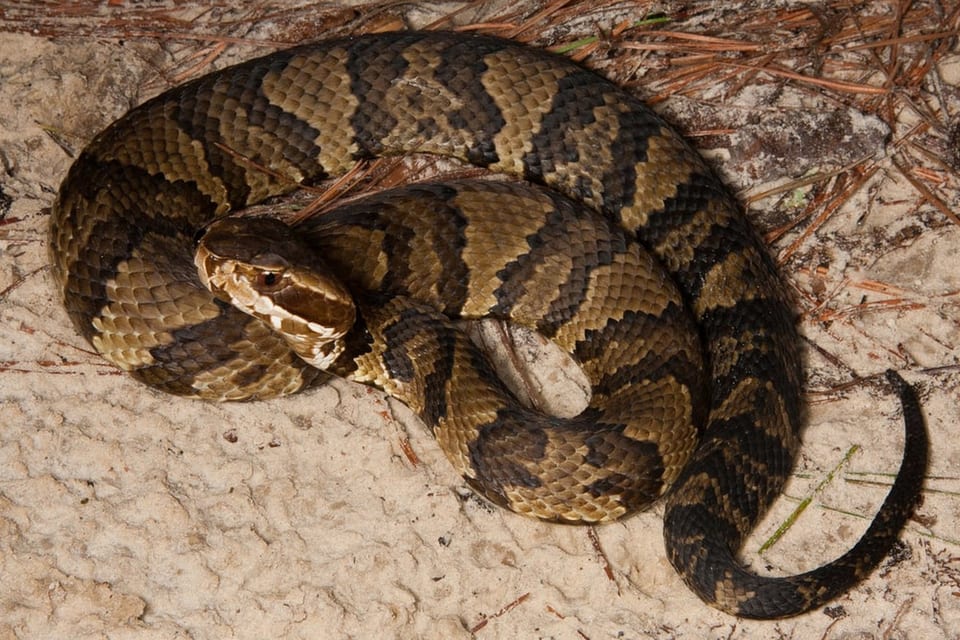
Northern Cottonmouth (Agkistrodon piscivorus) belongs to swamp edges, sloughs, marshes, ponds, and slow river margins more than dry uplands. Adults are thick-bodied pit vipers, often dark olive, brown, or nearly black, and many show a blocky head with a pale line along the upper lip.
The classic white mouth display is a defensive flash, not a feature you should need to see for an ID. A cottonmouth is better narrowed by its heavy build, facial pit, keeled body scales, and the Coastal Plain wetland setting.
| Key detail | What to look for |
|---|---|
| Adult size | usually 30-48 inches |
| Fast ID cue | heavy dark body near water, blocky head, facial pit, and white mouth display if defensive |
| Typical North Carolina habitat | swamps, marshes, ponds, cypress sloughs, river edges, and other wet habitats |
| North Carolina range | mainly Coastal Plain wetlands, river floodplains, and swamp margins |
| Bite / venom note | Venomous wetland pit viper; heavy body, serious bite risk |
4. Pygmy Rattlesnake
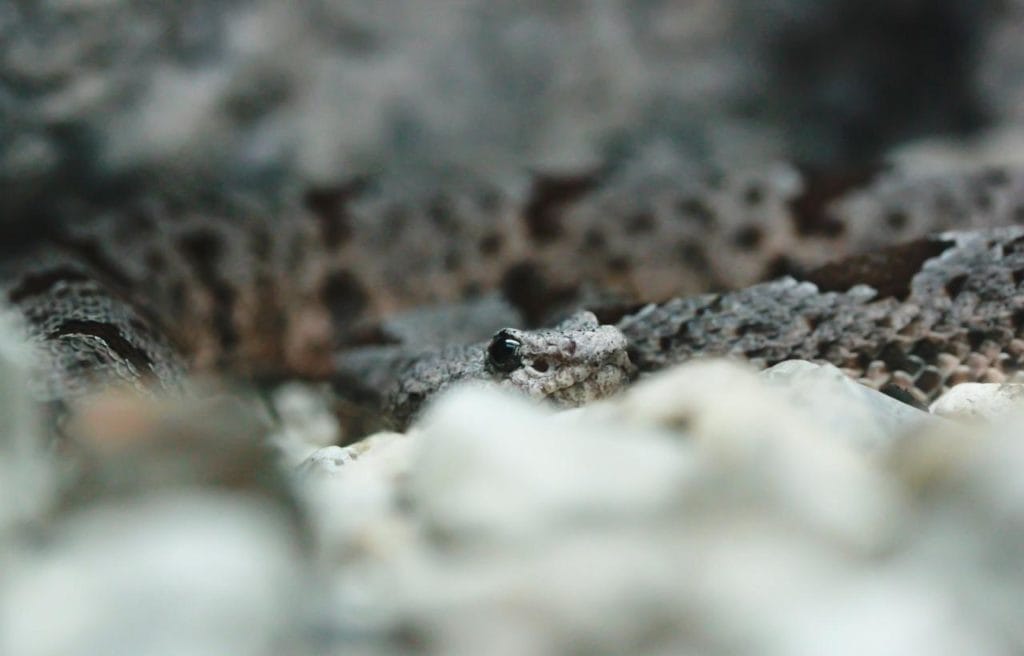
Pygmy Rattlesnake (Sistrurus miliarius) is the small rattlesnake of pine flatwoods, Sandhills edges, damp savannas, and other open Coastal Plain habitats. Most adults are only 15-30 inches, so the body looks compact rather than massive.
The pattern is usually easier to see than the rattle: dark blotches or spots over a gray to reddish background, often with a rusty stripe along the back. The tiny rattle can sound more like an insect buzz than the dry clatter people expect from larger rattlesnakes.
| Key detail | What to look for |
|---|---|
| Adult size | usually 15-30 inches |
| Fast ID cue | small rattlesnake with dark blotches, rusty midline stripe, and tiny rattle |
| Typical North Carolina habitat | pine flatwoods, damp savannas, Sandhills edges, and open wetland margins |
| North Carolina range | mostly Coastal Plain and Sandhills habitats |
| Bite / venom note | Venomous small rattlesnake; tiny rattle, serious bite risk |
5. Timber Rattlesnake
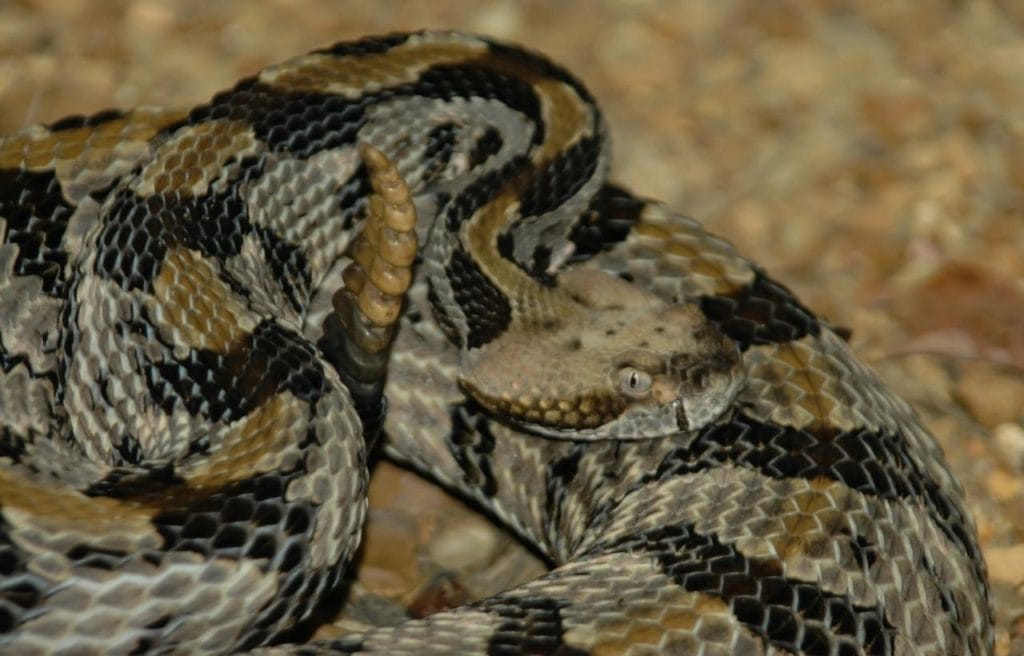
Timber Rattlesnake (Crotalus horridus) is the large rattlesnake of wooded mountains, Piedmont hills, rocky slopes, and some pine uplands. Adults are heavy, commonly 3-5 feet long, with dark crossbands or chevrons and a dark tail ending in a rattle.
The pattern changes with region and age, so one color is not enough for a clean ID. A timber rattlesnake usually announces itself through a combination of mass, banding, dark tail, and a dry forest or rocky edge setting.
| Key detail | What to look for |
|---|---|
| Adult size | usually 3-5 feet |
| Fast ID cue | heavy body, dark chevrons or crossbands, dark tail, and rattle |
| Typical North Carolina habitat | hardwood forests, rocky slopes, pine uplands, and wooded ridges |
| North Carolina range | mountains, Piedmont, and scattered Coastal Plain pine habitats |
| Bite / venom note | Venomous timber rattlesnake; heavy-bodied pit viper, serious bite risk |
6. Harlequin Coralsnake
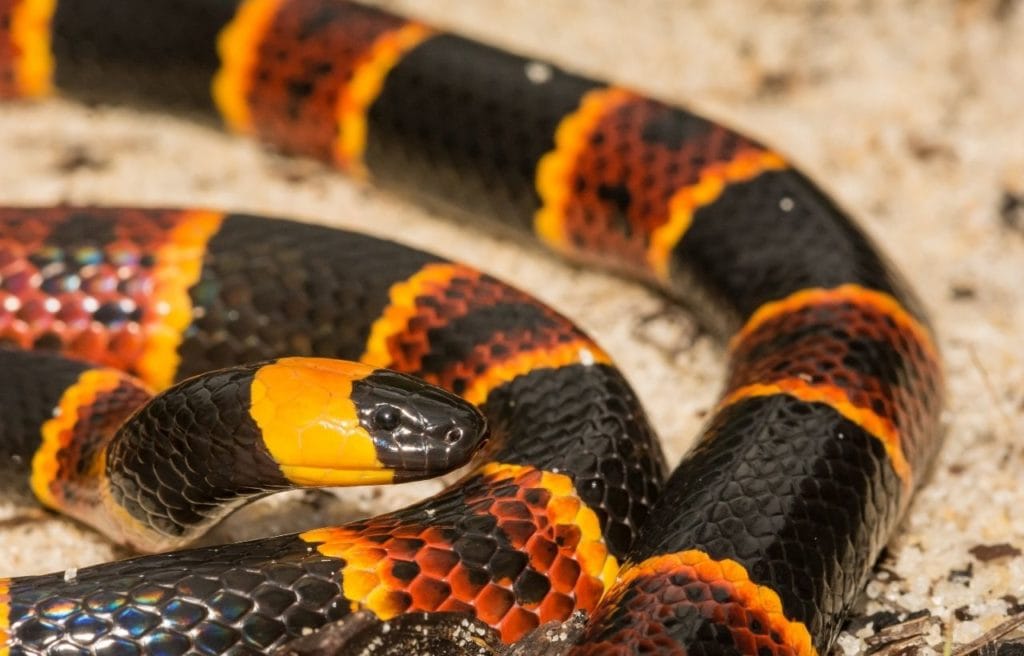
Harlequin Coralsnake (Micrurus fulvius) is a secretive sandy-soil snake of the southern Coastal Plain and Sandhills, not an animal most people stumble across often. Adults are slender, usually 20-30 inches, with complete rings of red, yellow or cream, and black.
The small head and blunt tail make it look less viper-like than copperheads or rattlesnakes. In this guide, habitat helps narrow the ID: pine flatwoods, sandy woods, hammocks, and leaf litter where a coral snake can stay hidden.
| Key detail | What to look for |
|---|---|
| Adult size | usually 20-30 inches |
| Fast ID cue | complete red, yellow or cream, and black rings on a slender body |
| Typical North Carolina habitat | sandy pine flatwoods, dry woods, brushy hammocks, and leaf litter |
| North Carolina range | southern Coastal Plain and Sandhills records |
| Bite / venom note | Venomous coral snake; potent venom, secretive and rarely seen |
Nonvenomous snakes in North Carolina
Most North Carolina snakes are nonvenomous. The common ID traps are harmless watersnakes near cottonmouth habitat, ratsnakes or kingsnakes around buildings, and small woodland snakes that vanish under leaf litter.
Racers, kingsnakes, ratsnakes, and other large hunters
7. Common Coachwhip
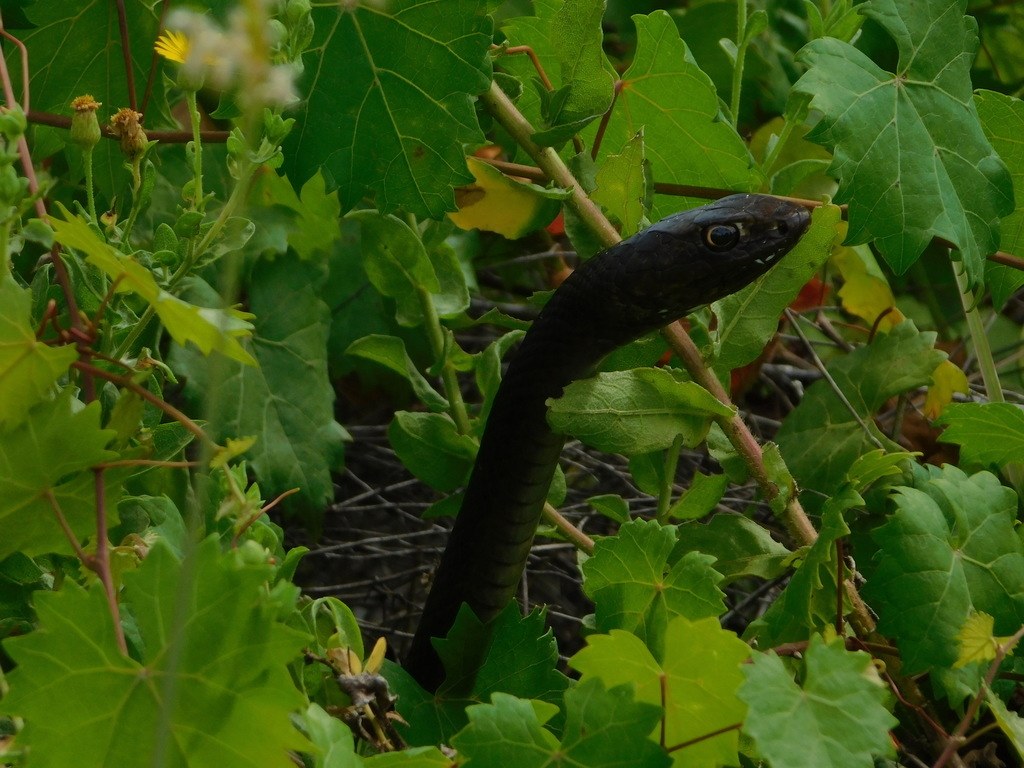
Common Coachwhip (Masticophis flagellum) is built for speed: long, thin, big-eyed, and active in daylight across dry open ground. In the state, it fits best with sandy pine uplands, scrubby edges, roadsides, and remnant longleaf pine landscapes.
A full-grown coachwhip can stretch 3-7 feet, but it never has the heavy look of a ratsnake or rattlesnake. The long tapering tail, alert head, and whip-like body are the useful cues when one races across a sunny track.
| Key detail | What to look for |
|---|---|
| Adult size | often 3-7 feet |
| Fast ID cue | large eyes, very slim body, fast daytime movement, and long tapering tail |
| Typical North Carolina habitat | sandy pine uplands, open scrub, dry woods, roadsides, and sunny field edges |
| North Carolina range | Sandhills and Coastal Plain open pine landscapes |
| Bite / venom note | Nonvenomous fast hunter; long tail and large eyes |
8. Common Scarletsnake
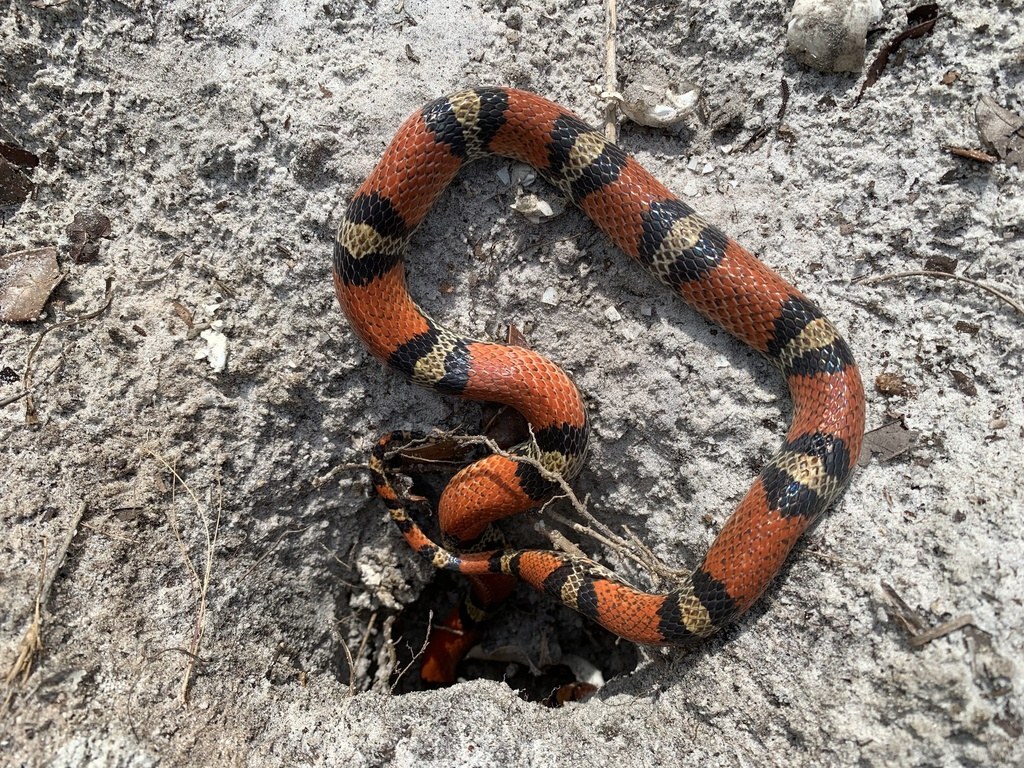
Common Scarletsnake (Cemophora coccinea) is a small burrower of sandy woods, pine-oak edges, and loose soil. Its red saddles, black borders, pale belly, and pointed snout make it easy to confuse with scarlet kingsnakes at a glance.
The belly is the giveaway when visible: scarletsnakes have a plain whitish underside rather than complete rings around the body. Most are under 2 feet, and many are found under cover or moving at night after warm rain.
| Key detail | What to look for |
|---|---|
| Adult size | usually 14-26 inches |
| Fast ID cue | red saddles with black borders, pale belly, and pointed snout |
| Typical North Carolina habitat | sandy woods, pine-oak forests, loose soil, field borders, and old cover boards |
| North Carolina range | mainly Coastal Plain and Piedmont sandy or wooded sites |
| Bite / venom note | Nonvenomous small burrower; scarlet kingsnake lookalike |
9. Eastern Kingsnake
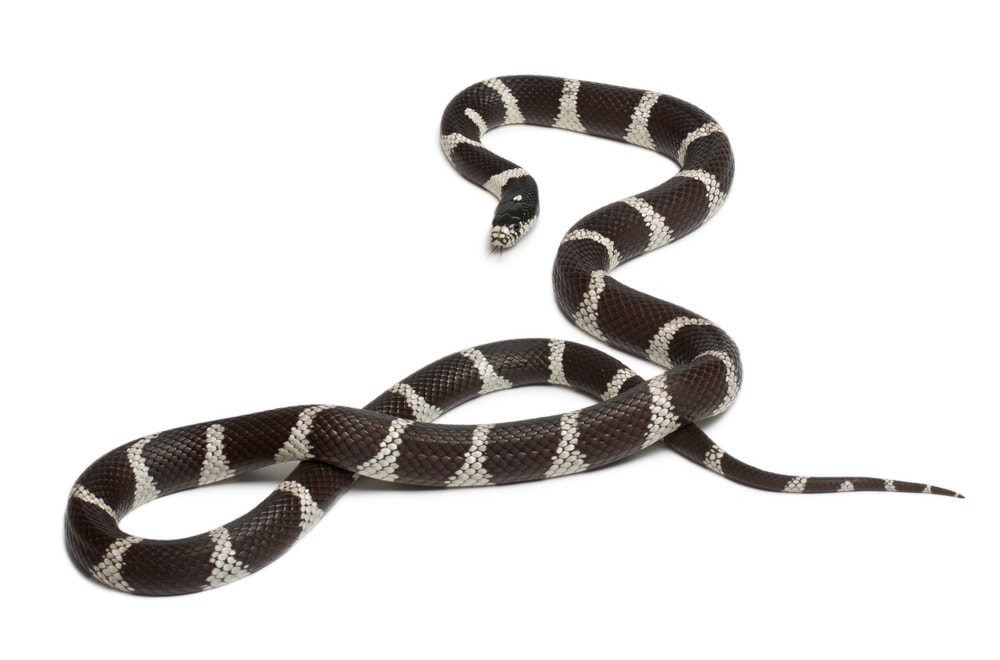
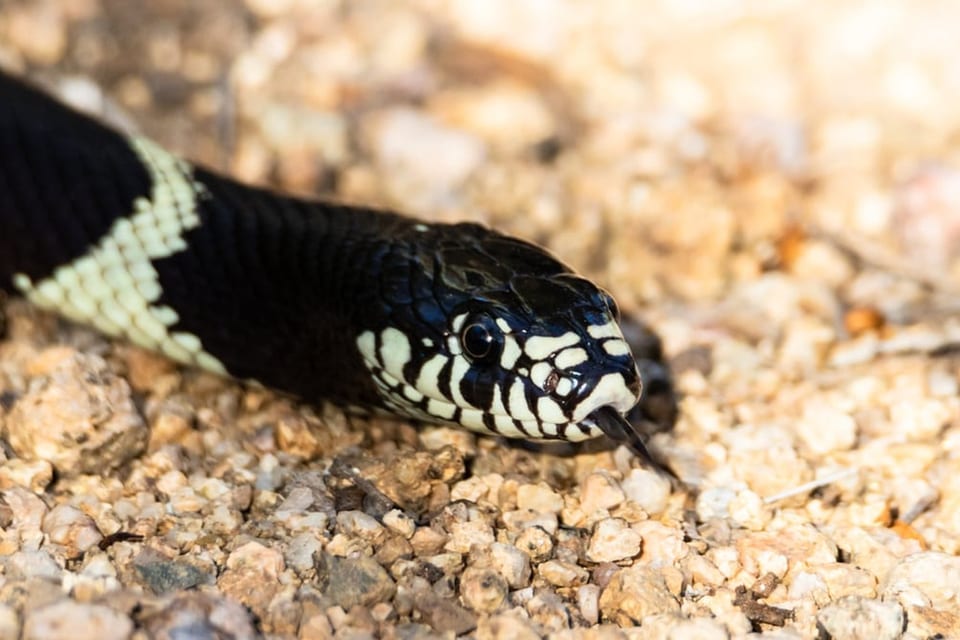
Eastern Kingsnake (Lampropeltis getula) is a glossy, muscular constrictor that turns up around forests, farms, wetland edges, and old building sites. The pattern is usually a dark body crossed by white or yellow chain-like bands, though the exact banding can vary.
This snake has a stronger, smoother look than milksnakes or scarletsnakes. If the animal is stout, shiny, and banded in a wooded or edge habitat, eastern kingsnake should be high on the list.
| Key detail | What to look for |
|---|---|
| Adult size | often 3-5 feet |
| Fast ID cue | glossy dark body with white or yellow chain-like bands |
| Typical North Carolina habitat | woodlands, farms, wetland edges, field borders, and old buildings near cover |
| North Carolina range | widespread through much of the state in wooded and edge habitats |
| Bite / venom note | Nonvenomous constrictor; bold bands or blotches can confuse IDs |
10. Eastern Milksnake
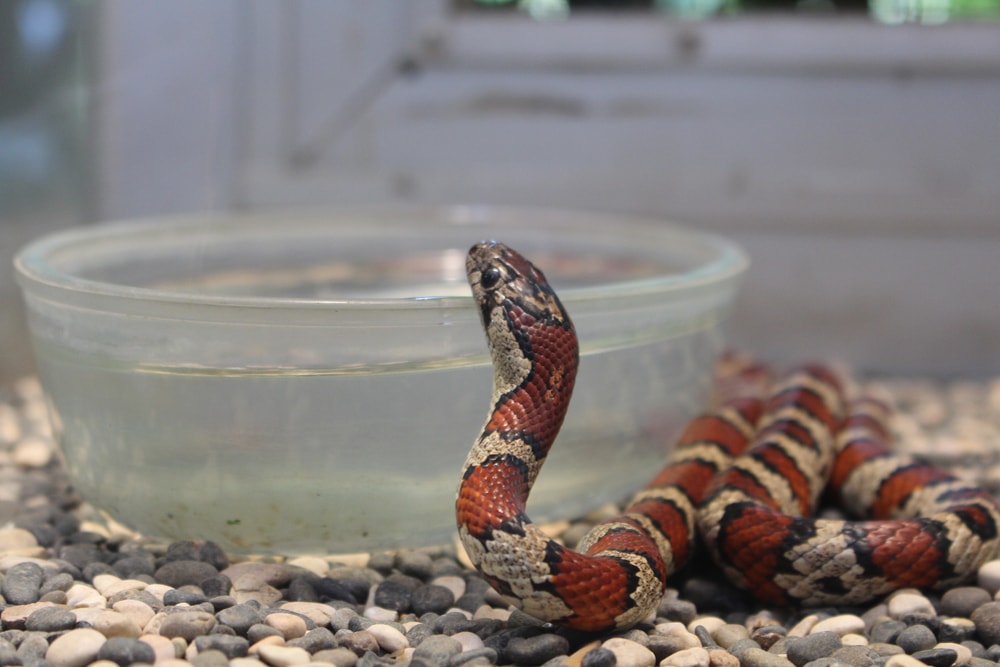
Eastern Milksnake (Lampropeltis triangulum) is a cool-woods and farm-edge kingsnake often found around stone walls, old barns, rocky slopes, and wooded fields. Adults are modest-sized constrictors, usually 2-3 feet long, with reddish brown blotches on a gray or tan background.
The blotches, pale base color, and checkerboard belly separate it from the glossy black-and-white look of many eastern kingsnakes. It is also more tied to upland cover than to open wetland edges.
| Key detail | What to look for |
|---|---|
| Adult size | usually 2-3 feet |
| Fast ID cue | gray or tan body with reddish brown blotches and checkered belly |
| Typical North Carolina habitat | rocky woods, farms, stone walls, field edges, and old buildings |
| North Carolina range | mostly mountains and Piedmont, plus scattered upland sites farther east |
| Bite / venom note | Nonvenomous constrictor; often mistaken for other blotched snakes |
11. Eastern Pinesnake
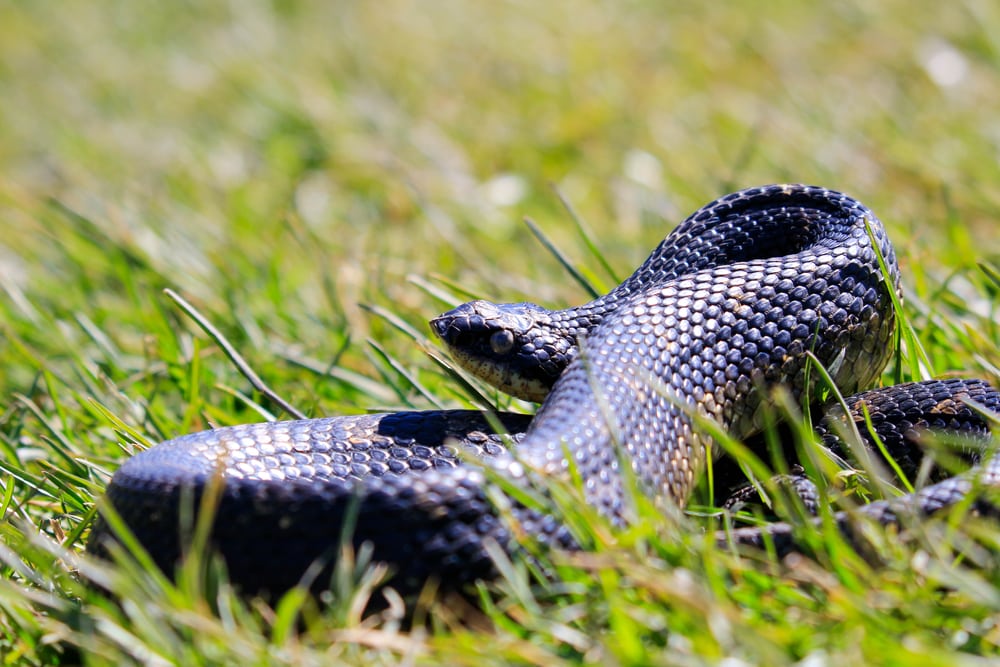
Eastern Pinesnake (Pituophis melanoleucus) is one of the big sandy-upland snakes, using longleaf pine woods, open savannas, and dry soils with mammal burrows. Adults can be thick and impressive, often 4-6 feet, with a pale body and dark blotches that get heavier toward the tail.
The head is not blocky like a pit viper’s, and the body often looks pale, clean, and high-contrast. In the field, a pine setting with loose soil is as important as the blotched pattern.
| Key detail | What to look for |
|---|---|
| Adult size | often 4-6 feet |
| Fast ID cue | pale body with dark blotches, pointed snout, and strong build |
| Typical North Carolina habitat | sandy pine woods, open pine savannas, dry uplands, and old mammal burrows |
| North Carolina range | Sandhills and Coastal Plain longleaf pine uplands |
| Bite / venom note | Nonvenomous; large burrowing pine snake |
12. North American Racer
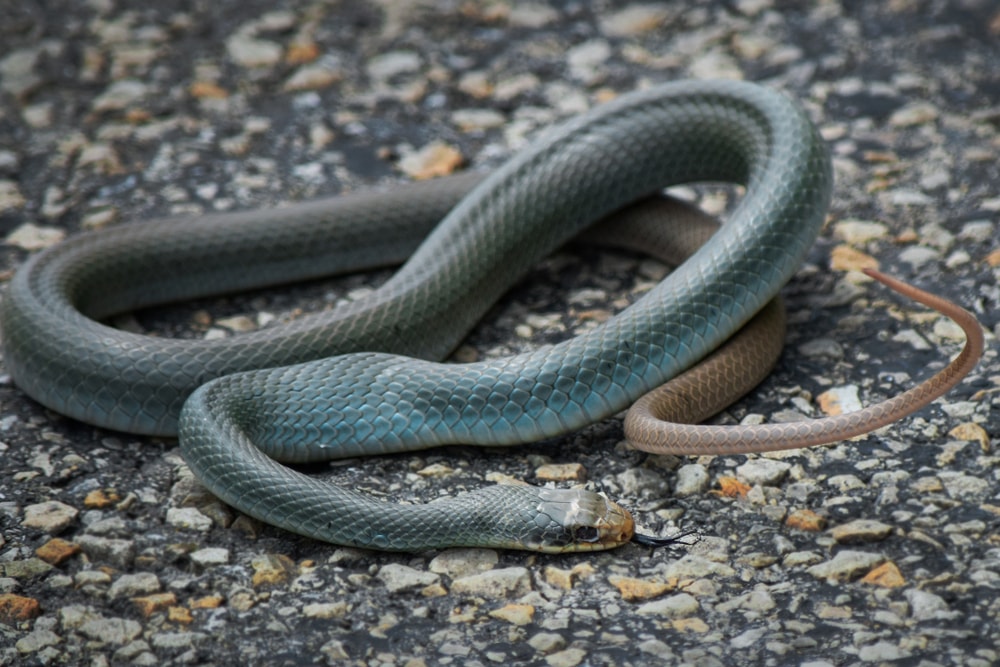
North American Racer (Coluber constrictor) is the slim, fast black snake of sunny edges, fields, open woods, roadsides, and thickets. Adults commonly reach 3-5 feet but stay narrow, with large eyes and a long tail.
The name fits. Racers often lift the front of the body to look around and then vanish quickly through grass or brush, which helps separate them from heavier ratsnakes and kingsnakes.
| Key detail | What to look for |
|---|---|
| Adult size | often 3-5 feet |
| Fast ID cue | large eyes, slim black body, fast daytime movement, and long tail |
| Typical North Carolina habitat | open woods, fields, scrub, roadsides, and sunny brushy edges |
| North Carolina range | widespread in open and edge habitats across the state |
| Bite / venom note | Nonvenomous fast hunter; long tail and large eyes |
13. Northern Mole Kingsnake
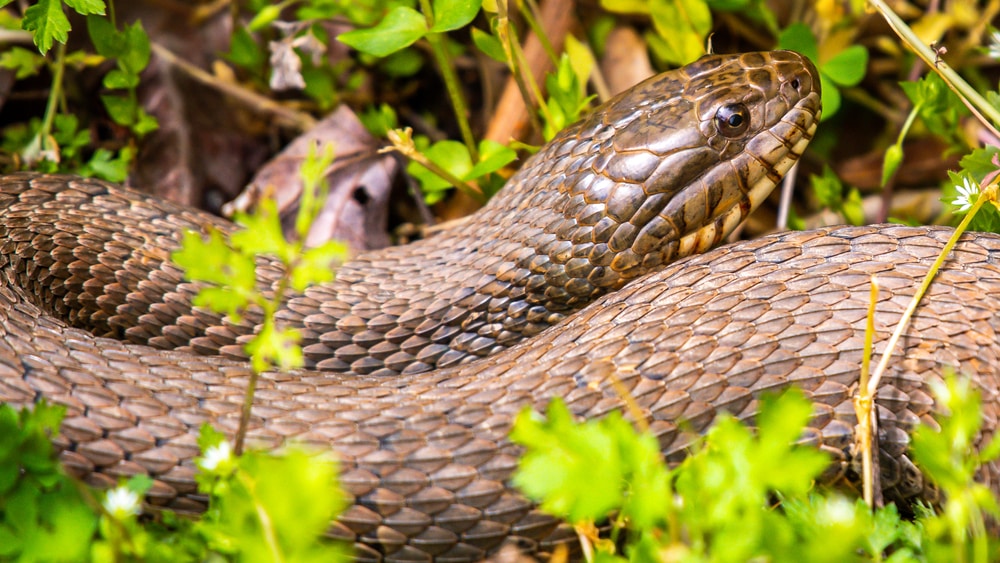
Northern Mole Kingsnake (Lampropeltis rhombomaculata) is a secretive constrictor of fields, farms, open woods, and loose soils. Young snakes show reddish brown blotches, while older adults can fade into a plainer tan or brown animal.
Because it spends so much time under cover, the setting often tells you as much as the pattern. A modest, smooth-scaled kingsnake from a Piedmont or Coastal Plain field edge is a better fit than one found climbing high in a barn or tree.
| Key detail | What to look for |
|---|---|
| Adult size | usually 2-3 feet |
| Fast ID cue | smooth tan or brown body with faded reddish blotches |
| Typical North Carolina habitat | fields, farms, loose soil, open woods, and field borders |
| North Carolina range | Piedmont and Coastal Plain field and woodland edges |
| Bite / venom note | Nonvenomous constrictor; subdued blotches can confuse IDs |
14. Northern Rough Greensnake
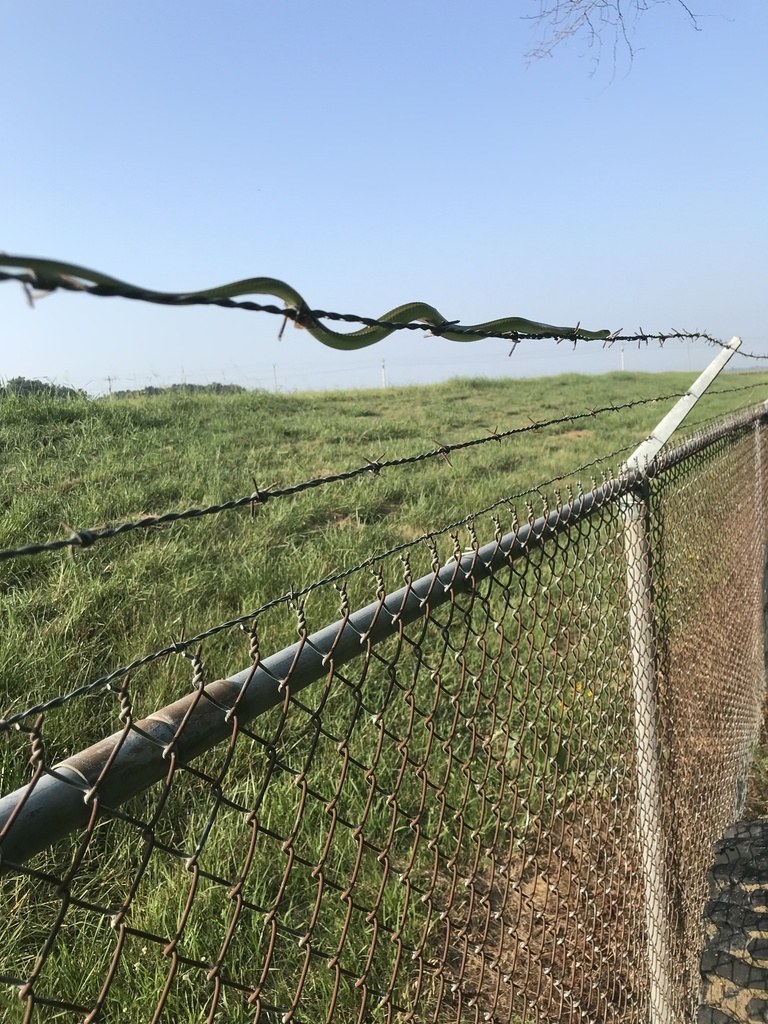
Northern Rough Greensnake (Opheodrys aestivus) is the bright green thread in shrubs, vines, streamside tangles, and wet meadow edges. Adults are slender and lightweight, with a pale belly and keeled scales that give the body a faintly rough texture.
Look up as well as down for this one. It hunts insects in low vegetation, so a green snake stretched through blackberry, vines, or brush near water is a much better match than one crossing open bare ground.
| Key detail | What to look for |
|---|---|
| Adult size | usually 22-32 inches |
| Fast ID cue | bright green body, pale belly, keeled scales, and climbing behavior |
| Typical North Carolina habitat | shrubs, vines, brushy stream edges, wet meadows, and low vegetation |
| North Carolina range | widespread where brushy wet edges and low vegetation persist |
| Bite / venom note | Nonvenomous slender green snake; usually in shrubs or vines |
15. Red Cornsnake
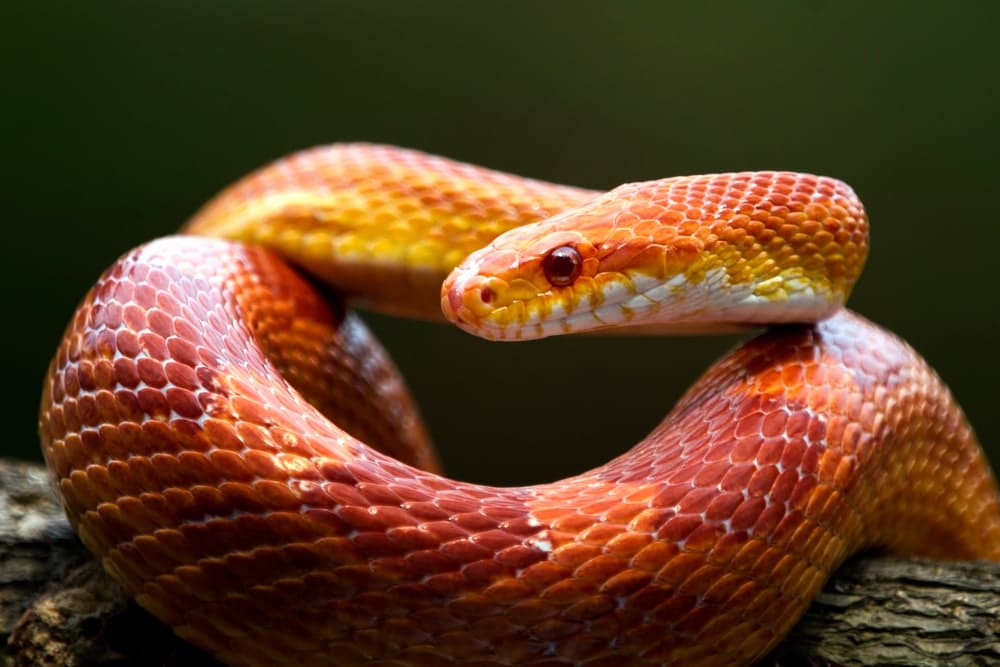
Red Cornsnake (Pantherophis guttatus) is a patterned climber of pine-oak woods, field borders, barns, and tree lines. Adults are usually 2-4 feet, with orange to reddish blotches, a spear-like head mark, and a checkered belly.
It is one of the snakes most likely to be noticed around buildings because it follows mice and other small prey into human edges. The slim climbing build separates it from heavier kingsnakes, even when both show bold blotches.
| Key detail | What to look for |
|---|---|
| Adult size | usually 2-4 feet |
| Fast ID cue | orange or reddish blotches, spear-shaped head mark, and checkered belly |
| Typical North Carolina habitat | pine-oak woods, farms, barns, tree lines, and field borders |
| North Carolina range | common in Coastal Plain and Piedmont, scattered in upland wooded edges |
| Bite / venom note | Nonvenomous climber; common around trees, barns, and edges |
16. Scarlet Kingsnake
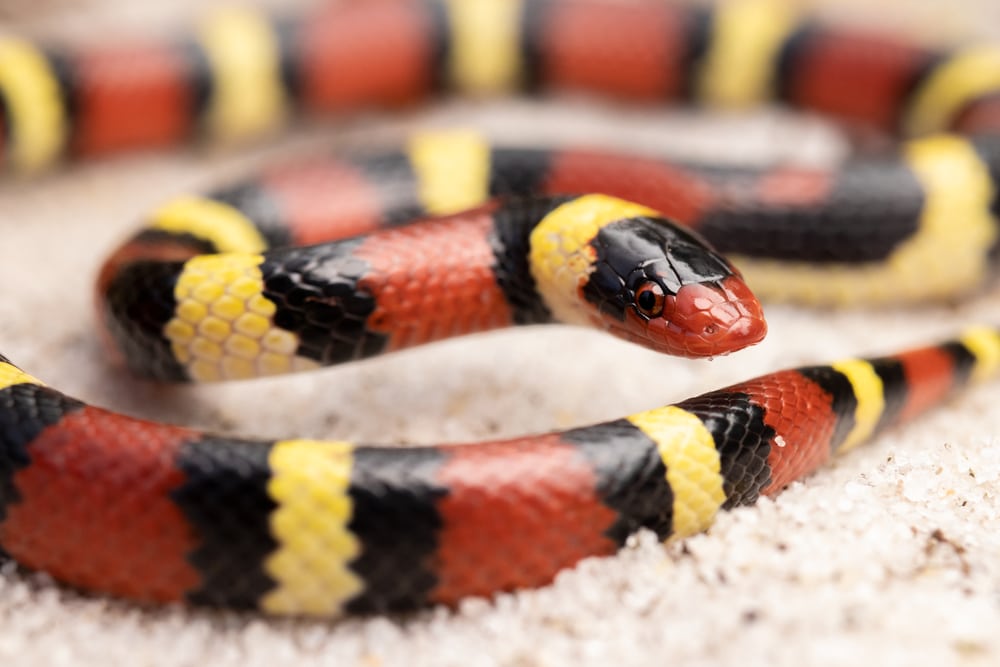
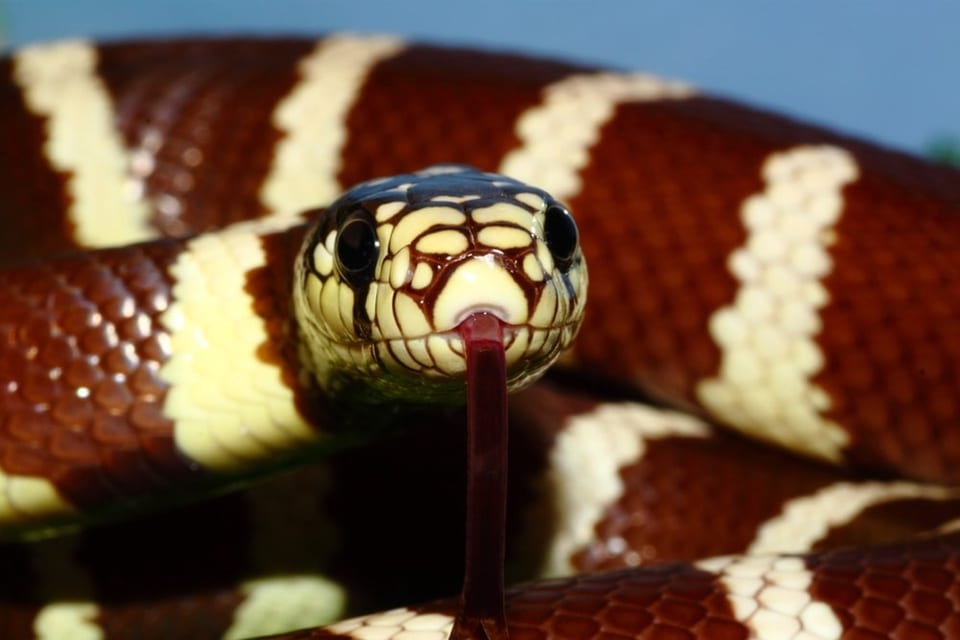
Scarlet Kingsnake (Lampropeltis elapsoides) is a small, glossy, banded kingsnake of sandy woods, pine-oak leaf litter, and rotten logs. The red, black, and yellow or white rings can make it look dramatic, but adults are usually much smaller than people expect.
The rings are complete around the body, unlike the saddle pattern of a scarletsnake. It is also a secretive cover snake, so a quick glimpse under bark or leaf litter fits better than an animal basking in the open all afternoon.
| Key detail | What to look for |
|---|---|
| Adult size | usually 14-20 inches |
| Fast ID cue | complete red, black, and yellow or white rings on a glossy small body |
| Typical North Carolina habitat | sandy woods, pine-oak leaf litter, rotten logs, and bark piles |
| North Carolina range | mostly Coastal Plain and Piedmont sandy woods |
| Bite / venom note | Nonvenomous small constrictor; coral snake mimic |
17. Southeastern Crowned Snake
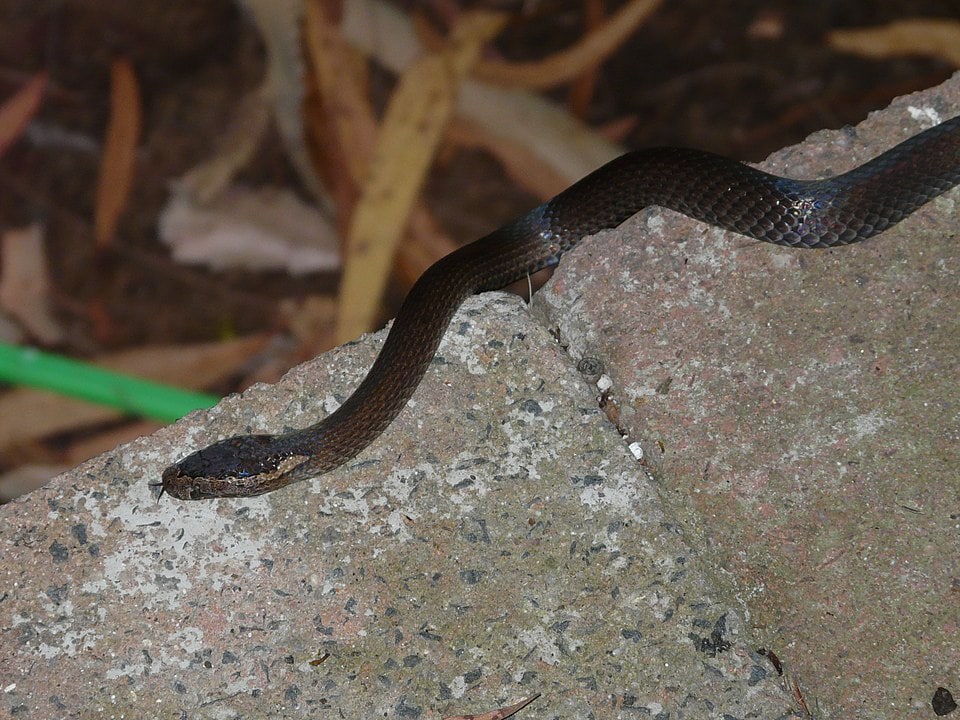
Southeastern Crowned Snake (Tantilla coronata) is a tiny woodland snake with a tan or gray body and a dark head cap. Most adults are only 7-10 inches, which is why they are more often uncovered under logs, stones, or leaf litter than spotted crossing a trail.
The black cap and pale neck band are more helpful than body color. Dry wooded slopes, shaded edges, loose soil, and rotting wood are the places to expect this little centipede hunter.
| Key detail | What to look for |
|---|---|
| Adult size | usually 7-10 inches |
| Fast ID cue | tan or gray body with black head cap and pale neck band |
| Typical North Carolina habitat | dry woods, loose soil, leaf litter, rotting logs, and shaded edges |
| North Carolina range | central and eastern wooded habitats, especially dry leaf litter sites |
| Bite / venom note | Nonvenomous tiny snake; usually under soil, logs, or leaf litter |
18. Yellow Ratsnake
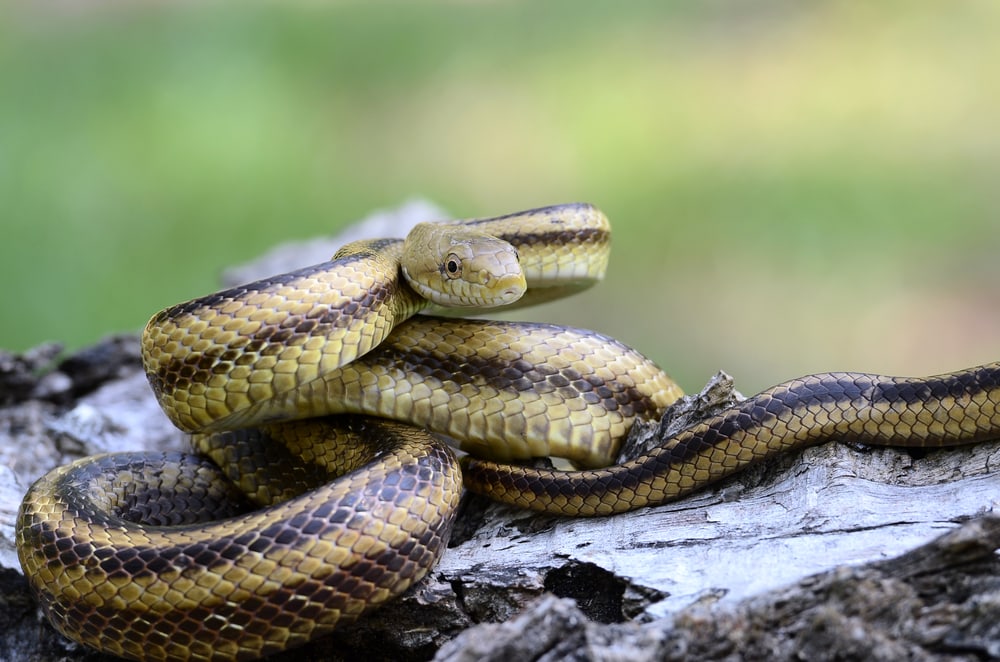
Yellow Ratsnake (Pantherophis quadrivittatus) is a long climbing ratsnake associated with coastal and lowland woods, farms, marsh edges, and old structures. Adults often reach 3-6 feet, with a yellow, olive, or brownish body marked by dark lengthwise stripes.
It can turn up on fences, rafters, tree trunks, and brush piles while hunting rodents and birds. The length, climbing habit, and striped body separate it from the stockier kingsnakes in the same general habitats.
| Key detail | What to look for |
|---|---|
| Adult size | often 3-6 feet |
| Fast ID cue | long climbing body with yellow or olive color and dark lengthwise stripes |
| Typical North Carolina habitat | lowland woods, farms, marsh edges, trees, barns, and brush piles |
| North Carolina range | mainly eastern and coastal plain lowlands |
| Bite / venom note | Nonvenomous climber; common around trees, barns, and edges |
Small woodland snakes, hognoses, and secretive hunters
19. Common Wormsnake
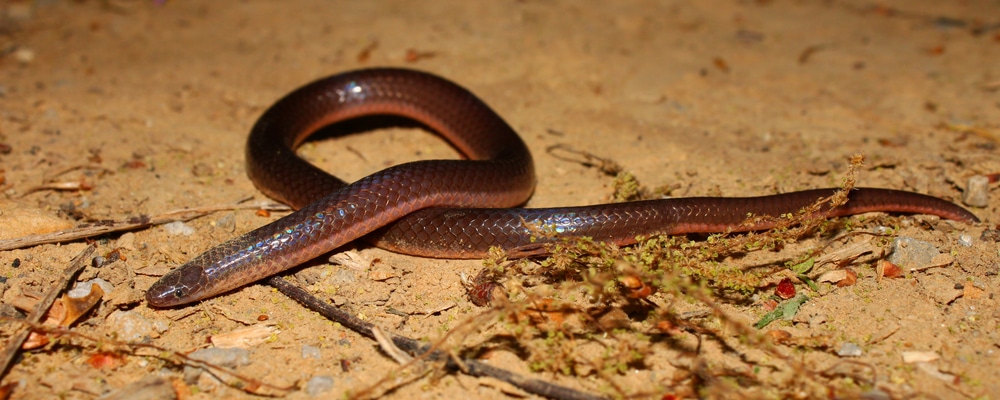
Common Wormsnake (Carphophis amoenus) is almost exactly what the name promises: small, glossy, and usually hidden in damp soil or under logs. Adults are often 7-13 inches, with a brown back, pinkish belly, and a pointed tail tip.
This is a leaf-litter snake, not a basking fence-line snake. Moist hardwood woods, shaded gardens, compost, and rotting logs are the right places to find one, especially after rain softens the ground.
| Key detail | What to look for |
|---|---|
| Adult size | usually 7-13 inches |
| Fast ID cue | small glossy brown body, pink belly, and pointed tail tip |
| Typical North Carolina habitat | moist hardwood leaf litter, loose soil, logs, compost, and shaded gardens |
| North Carolina range | widespread in moist wooded habitats across the state |
| Bite / venom note | Nonvenomous tiny snake; usually under soil, logs, or leaf litter |
20. Eastern Hog-nosed Snake
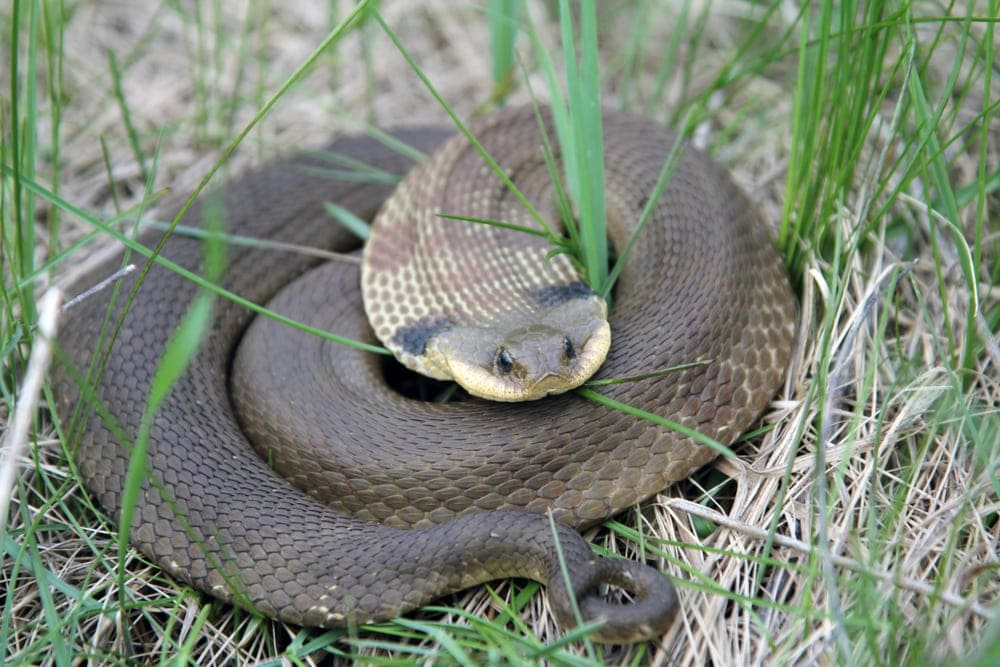
Eastern Hog-nosed Snake (Heterodon platirhinos) is a toad hunter with an upturned snout and a talent for theatrics. Adults are usually 20-33 inches, but the color can range from boldly blotched to nearly plain.
Sandy soils, pine woods, open fields, and toad-rich edges are the best habitat clues. When alarmed, this snake may flatten its neck like a cobra, hiss, or roll over, a display that often causes more confusion than the pattern itself.
| Key detail | What to look for |
|---|---|
| Adult size | usually 20-33 inches |
| Fast ID cue | upturned snout, blotched or plain body, and neck-flattening display |
| Typical North Carolina habitat | sandy soils, pine woods, open woodlands, fields, and toad-rich edges |
| North Carolina range | broadly distributed in sandy or open habitats |
| Bite / venom note | Nonvenomous toad hunter; upturned snout and defensive display |
21. Pine Woods Littersnake
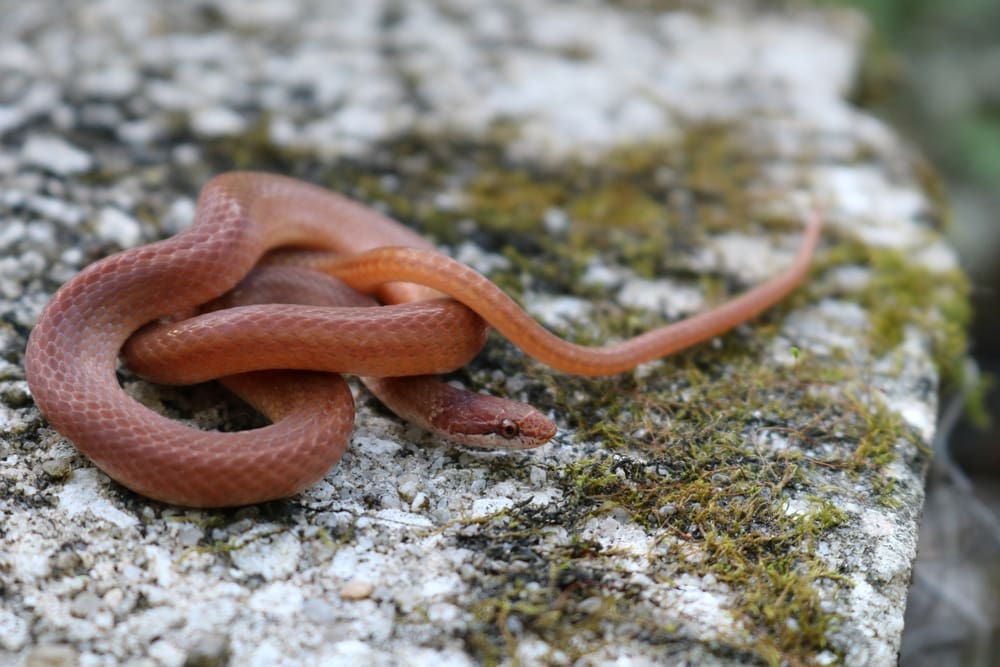
Pine Woods Littersnake (Rhadinaea flavilata) is a small, slender snake of damp leaf litter in pine woods, flatwoods, and sandy Coastal Plain forests. Adults are usually only 8-13 inches, not the long open-country hunter its name might suggest.
The body is brownish to yellowish with a pale lip and a dark stripe through the eye. Think low, moist cover under pine needles and logs, not exposed roadsides or dry rocky slopes.
| Key detail | What to look for |
|---|---|
| Adult size | usually 8-13 inches |
| Fast ID cue | small brownish body, pale lip, dark eye stripe, and leaf-litter habits |
| Typical North Carolina habitat | pine flatwoods, damp pine litter, sandy woods, and rotting logs |
| North Carolina range | Coastal Plain pine woods and flatwoods |
| Bite / venom note | Nonvenomous tiny pine-litter snake |
22. Rainbow Snake
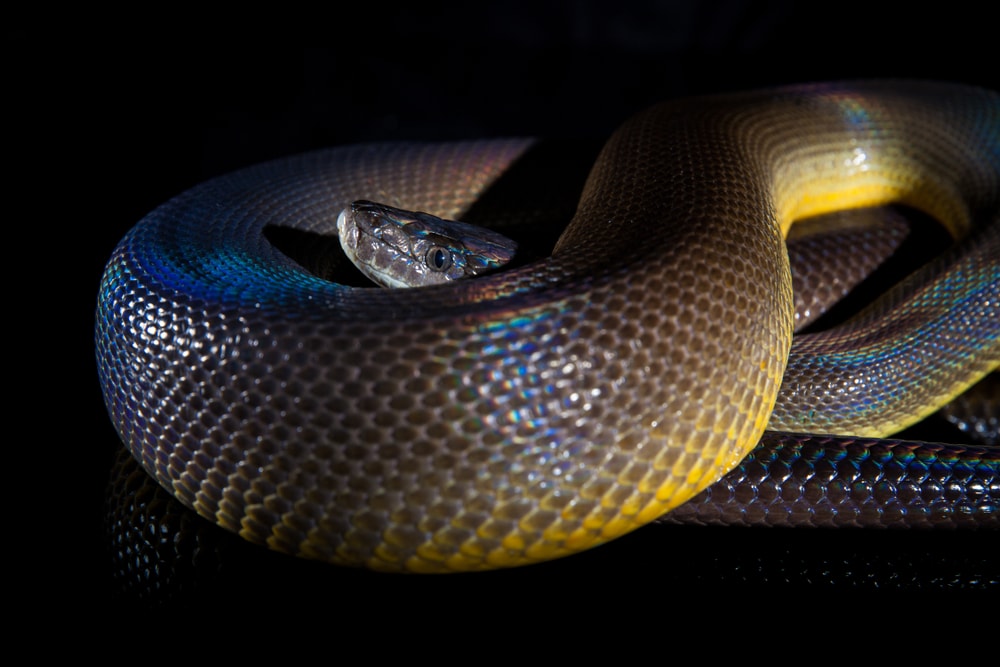
Rainbow Snake (Farancia erytrogramma) is a glossy wetland snake with black or blue-black above and red or pink striping and belly color below. Adults can be large, often 3-5 feet, but they are so aquatic and secretive that many people never see one.
Coastal Plain swamps, blackwater streams, marshes, and eel-rich wetlands are the right context. The smooth shine and red underside separate it from the rougher, blotched watersnakes that bask openly near the same water.
| Key detail | What to look for |
|---|---|
| Adult size | often 3-5 feet |
| Fast ID cue | glossy dark body with red or pink belly stripes |
| Typical North Carolina habitat | blackwater swamps, marshes, slow streams, and eel-rich wetlands |
| North Carolina range | Coastal Plain wetlands and river floodplains |
| Bite / venom note | Nonvenomous swamp hunter; glossy body and red belly marks |
23. Red-bellied Mudsnake
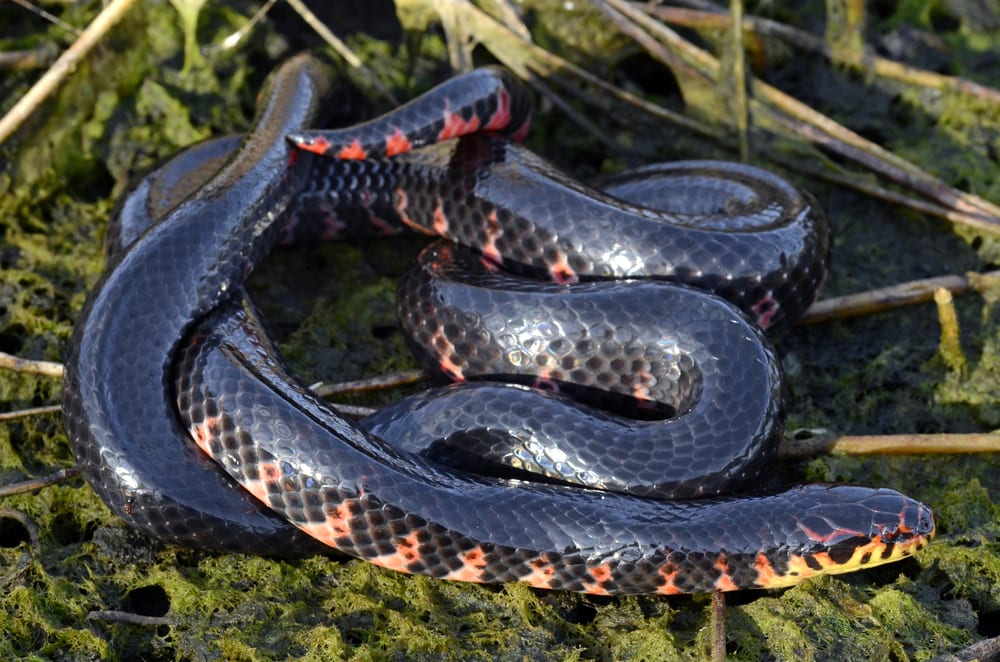
Red-bellied Mudsnake (Farancia abacura) is another big, glossy swamp snake, black above and strongly red or pink below. Adults are often 3-5 feet and have a short, pointed tail.
It spends much of its time in blackwater swamps, marshes, cypress sloughs, and muddy wetland edges. Compared with a rainbow snake, the mudsnake looks heavier and simpler: dark back, red belly, little surface basking, and a very aquatic life.
| Key detail | What to look for |
|---|---|
| Adult size | often 3-5 feet |
| Fast ID cue | glossy black back, red belly, and short pointed tail |
| Typical North Carolina habitat | cypress swamps, marshes, muddy sloughs, and blackwater wetland edges |
| North Carolina range | Coastal Plain wetlands and floodplain swamps |
| Bite / venom note | Nonvenomous swamp hunter; glossy body and red belly marks |
24. Ring-necked Snake
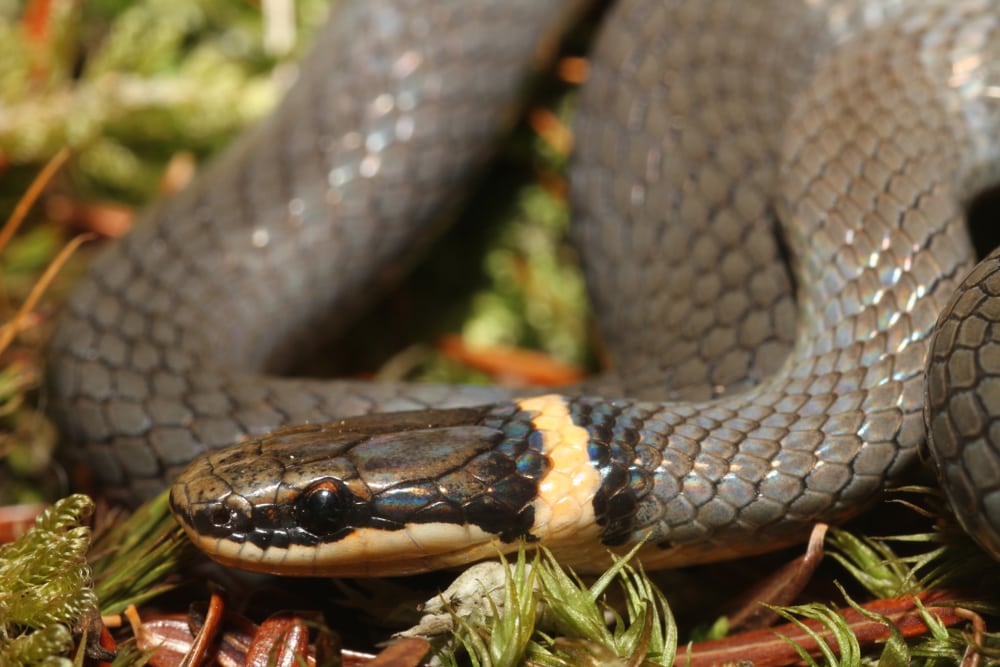
Ring-necked Snake (Diadophis punctatus) is a small woodland snake with a dark back, a pale neck ring, and a yellow to orange belly. Adults are usually 10-15 inches and spend much of their time under logs, stones, bark, or leaf litter.
The neck ring can be narrow or partly broken, so the belly color matters too. Moist forest edges, shaded gardens, and rotting wood are better clues than open water or high grass.
| Key detail | What to look for |
|---|---|
| Adult size | usually 10-15 inches |
| Fast ID cue | dark back, pale neck ring, and yellow to orange belly |
| Typical North Carolina habitat | leaf litter, logs, stones, bark, shaded gardens, and damp woods |
| North Carolina range | widespread in moist woods and edge habitats |
| Bite / venom note | Nonvenomous small woodland snake; bright belly when exposed |
25. Southern Hog-nosed Snake
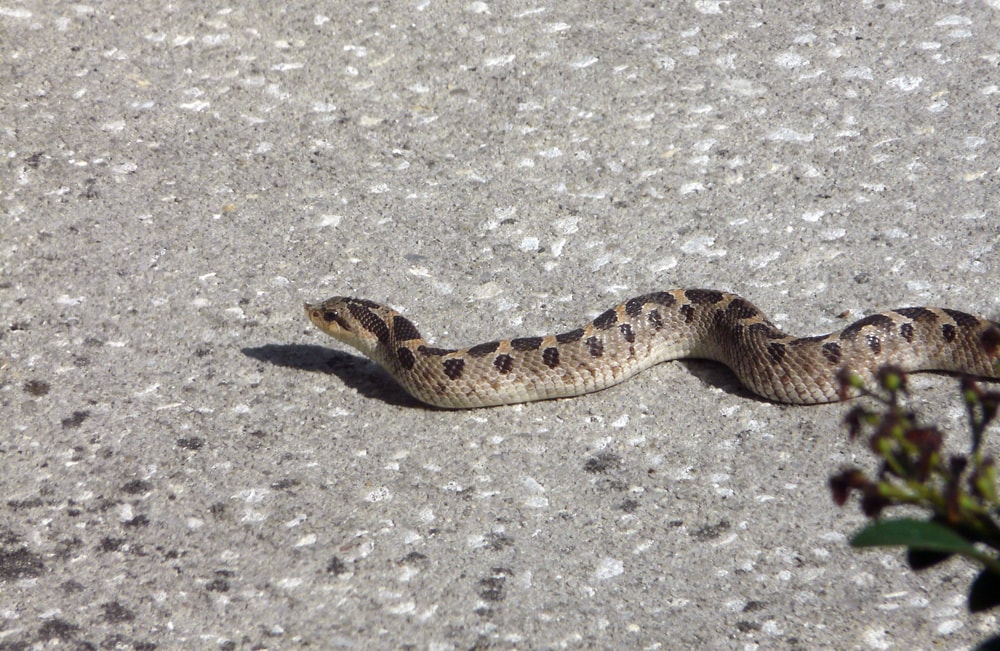
Southern Hog-nosed Snake (Heterodon simus) is a smaller, sandier relative of the eastern hog-nosed snake. It is most associated with dry longleaf pine, turkey oak, sandy fields, and other open Coastal Plain or Sandhills habitats.
The sharply upturned snout, stout body, and series of dark blotches are the main cues. Compared with eastern hog-nosed snakes, southern hog-nosed snakes are generally smaller and more tied to dry sandy ground.
| Key detail | What to look for |
|---|---|
| Adult size | usually 14-24 inches |
| Fast ID cue | sharply upturned snout, stout blotched body, and sandy habitat |
| Typical North Carolina habitat | dry longleaf pine, turkey oak, sandy fields, and open Coastal Plain woods |
| North Carolina range | Sandhills and Coastal Plain sandy uplands |
| Bite / venom note | Nonvenomous toad hunter; upturned snout and defensive display |
Watersnakes, gartersnakes, ribbonsnakes, and wetland species
26. Black Swampsnake
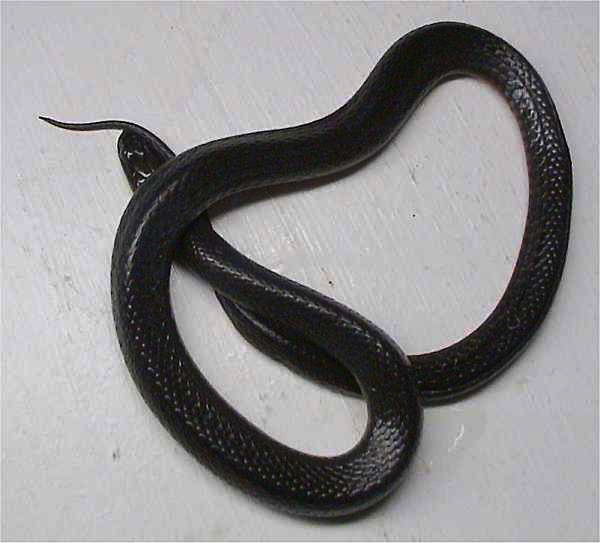
Black Swampsnake (Seminatrix pygaea) is a small aquatic snake with a glossy black back and a red or reddish belly. Adults are usually 10-20 inches, and the body looks smooth and neat rather than banded.
The name is a good habitat hint. Look for this species in Coastal Plain swamps, marshes, ditches, cypress sloughs, and thick vegetation at the water’s edge, where it hunts small aquatic prey.
| Key detail | What to look for |
|---|---|
| Adult size | usually 10-20 inches |
| Fast ID cue | glossy black back, red belly, and small aquatic body |
| Typical North Carolina habitat | Coastal Plain swamps, marshes, ditches, cypress sloughs, and vegetated water edges |
| North Carolina range | Coastal Plain wetlands |
| Bite / venom note | Nonvenomous aquatic snake; small and glossy, not a cottonmouth |
27. Brown Watersnake
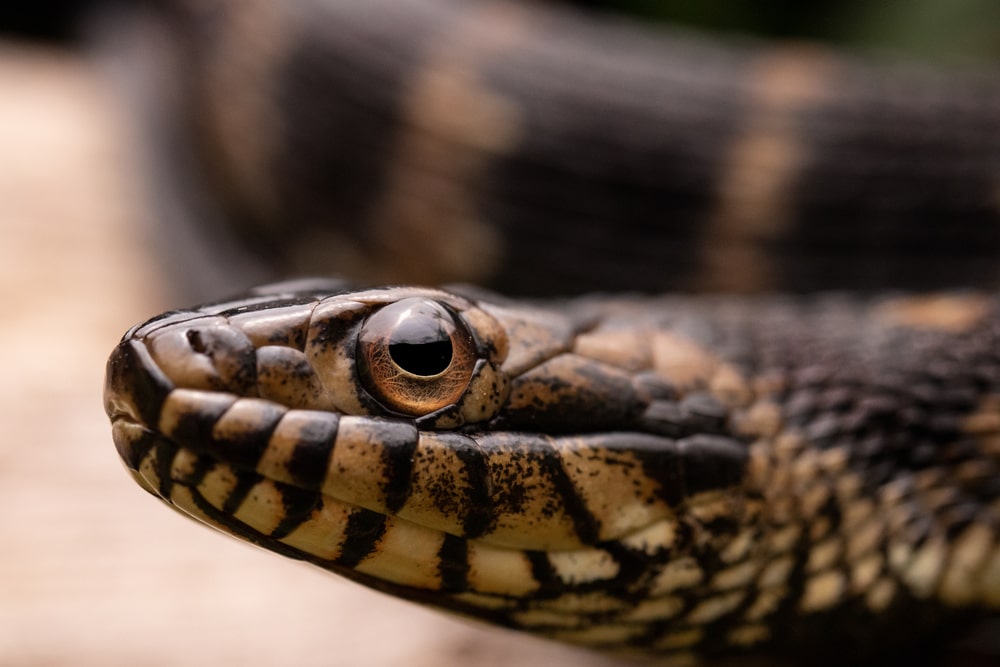
Brown Watersnake (Nerodia taxispilota) is a large, heavy Nerodia often seen around rivers, cypress-lined water, and overhanging branches. Adults commonly run 30-60 inches, with square brown blotches down the back and sides.
This species can look bulky enough to confuse people near cottonmouth habitat, but it lacks a facial pit and rattle. The round pupils, patterned body, and habit of basking on limbs over water are better clues.
| Key detail | What to look for |
|---|---|
| Adult size | usually 30-60 inches |
| Fast ID cue | large watersnake with square brown blotches and basking limbs over water |
| Typical North Carolina habitat | rivers, cypress swamps, reservoirs, and overhanging branches near water |
| North Carolina range | eastern and central rivers and swampy waterways |
| Bite / venom note | Nonvenomous watersnake; bulky cottonmouth lookalike near water |
28. Common Gartersnake
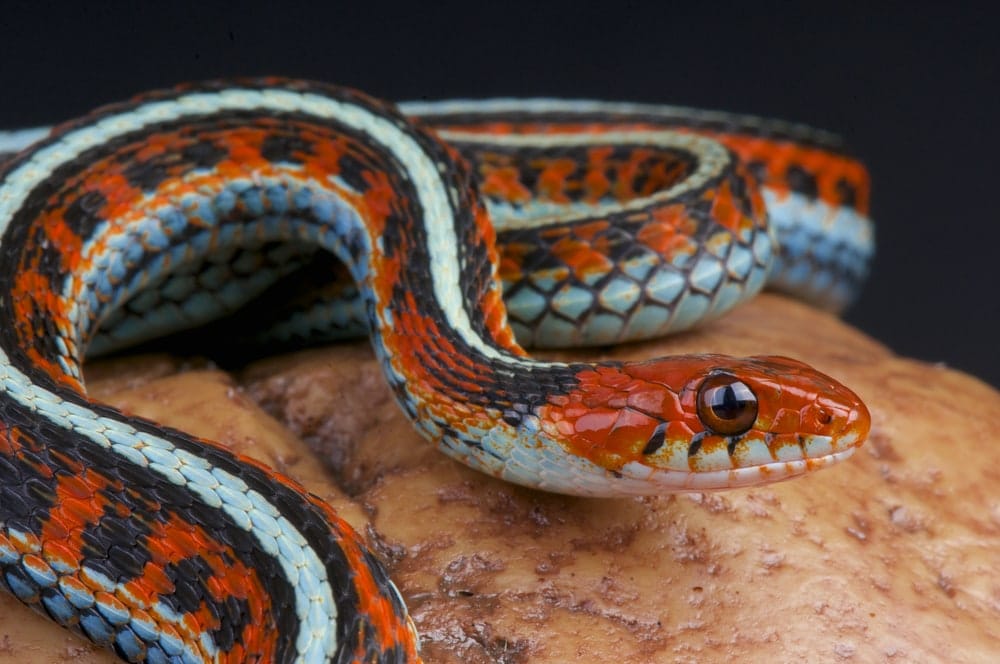
Common Gartersnake (Thamnophis sirtalis) is the familiar striped snake of lawns, wet meadows, pond margins, stream edges, and brushy backyards. Adults are usually 18-30 inches, with a center stripe and two side stripes that may be yellow, tan, or greenish.
It handles a wider mix of habitats than the more water-tied ribbonsnake. A gartersnake usually looks a little sturdier, with a shorter tail and a less needle-thin body.
| Key detail | What to look for |
|---|---|
| Adult size | usually 18-30 inches |
| Fast ID cue | three lengthwise stripes, sturdy slim body, and shorter tail than ribbonsnake |
| Typical North Carolina habitat | lawns, wet meadows, pond margins, stream edges, and brushy backyards |
| North Carolina range | widespread across the state near moist cover |
| Bite / venom note | Nonvenomous striped snake; often near wet grass or streams |
29. Common Watersnake
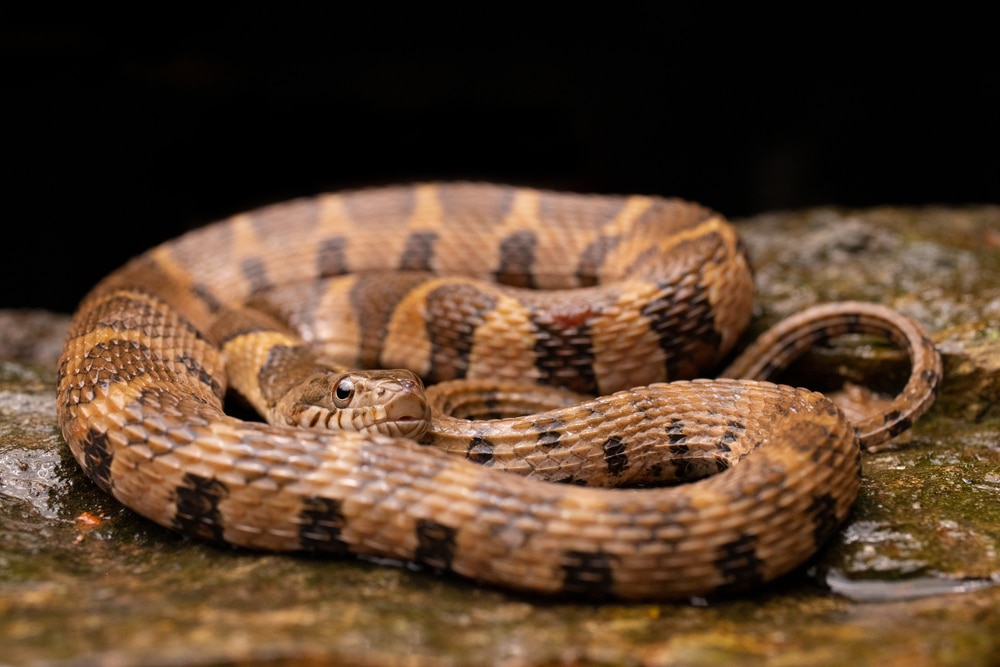
Common Watersnake (Nerodia sipedon) is the robust watersnake of ponds, creeks, rivers, reservoirs, and rocky shorelines. Adults are usually 24-42 inches, with dark crossbands or blotches that can fade as the snake ages.
Around water, this is one of the main cottonmouth lookalikes. Round pupils, a banded or blotched body, and a habit of basking on rocks or banks help separate it from the heavier wetland pit viper.
| Key detail | What to look for |
|---|---|
| Adult size | usually 24-42 inches |
| Fast ID cue | banded or blotched watersnake with round pupils and keeled scales |
| Typical North Carolina habitat | ponds, creeks, rivers, reservoirs, rocky banks, and wetland edges |
| North Carolina range | widespread around permanent water |
| Bite / venom note | Nonvenomous watersnake; common cottonmouth lookalike near water |
30. Dekay’s Brownsnake
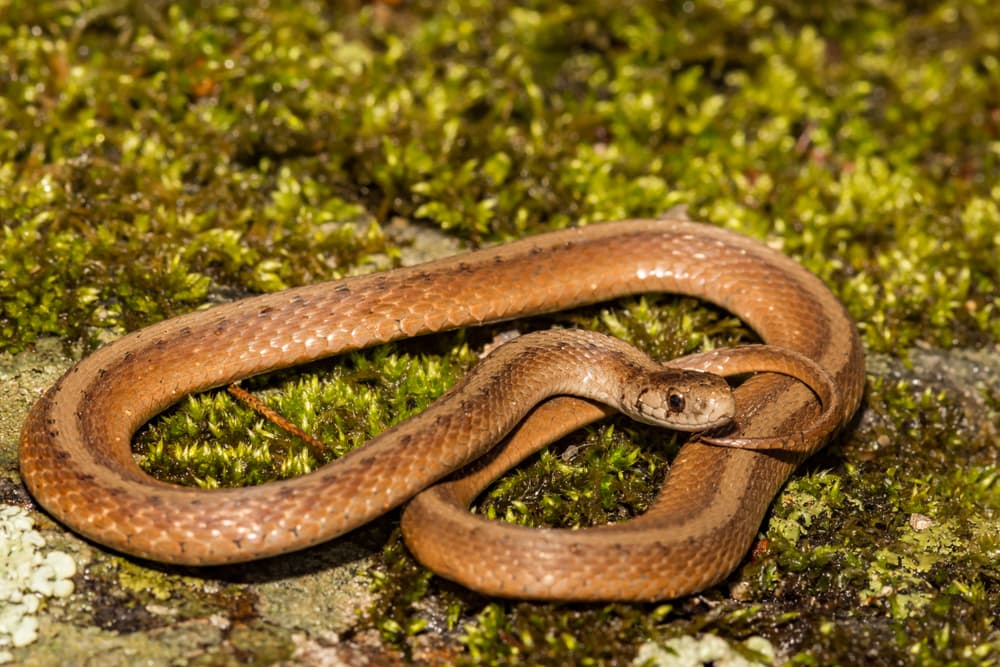
Dekay’s Brownsnake (Storeria dekayi) is a small brown snake often found under boards, mulch, stones, and leaf litter in yards as well as woods. Adults are usually 9-13 inches, with a faint light stripe and paired dark spots along the back.
This is a slug and earthworm hunter, so damp cover is the main clue. The plain brown body, small head, and calm, ground-level habits distinguish it from juvenile racers or gartersnakes.
| Key detail | What to look for |
|---|---|
| Adult size | usually 9-13 inches |
| Fast ID cue | small brown body with faint stripe and paired dark spots |
| Typical North Carolina habitat | mulch, boards, stones, leaf litter, damp gardens, and woodland edges |
| North Carolina range | widespread in yards, woods, and moist cover |
| Bite / venom note | Nonvenomous tiny snake; usually under soil, logs, or leaf litter |
31. Eastern Ribbonsnake
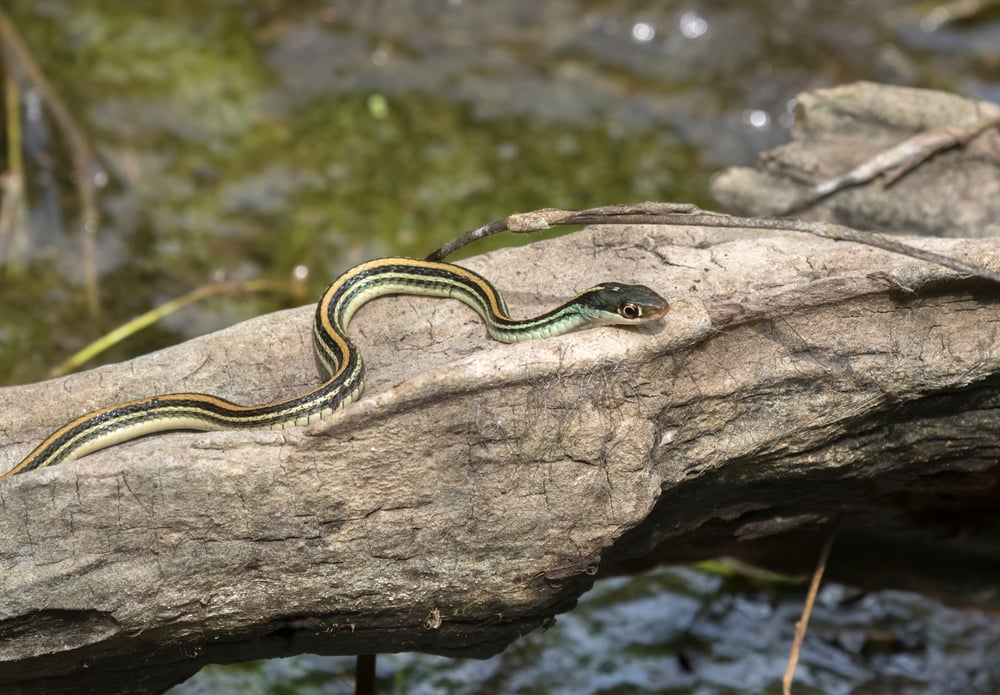
Eastern Ribbonsnake (Thamnophis saurita) is the long-tailed, extra-slender cousin of the gartersnake. It favors wet meadows, pond edges, marsh borders, and grassy stream margins where frogs and small aquatic prey are close.
The stripes are crisp, the body is narrow, and a pale mark in front of the eye is a useful detail. Compared with a common gartersnake, a ribbonsnake looks more stretched out, especially through the tail.
| Key detail | What to look for |
|---|---|
| Adult size | usually 18-30 inches |
| Fast ID cue | very slender striped body, long tail, and pale spot before the eye |
| Typical North Carolina habitat | wet meadows, marsh borders, pond edges, and grassy stream margins |
| North Carolina range | broadly distributed near wetlands and streamside grass |
| Bite / venom note | Nonvenomous striped snake; often near wet grass or streams |
32. Glossy Swampsnake
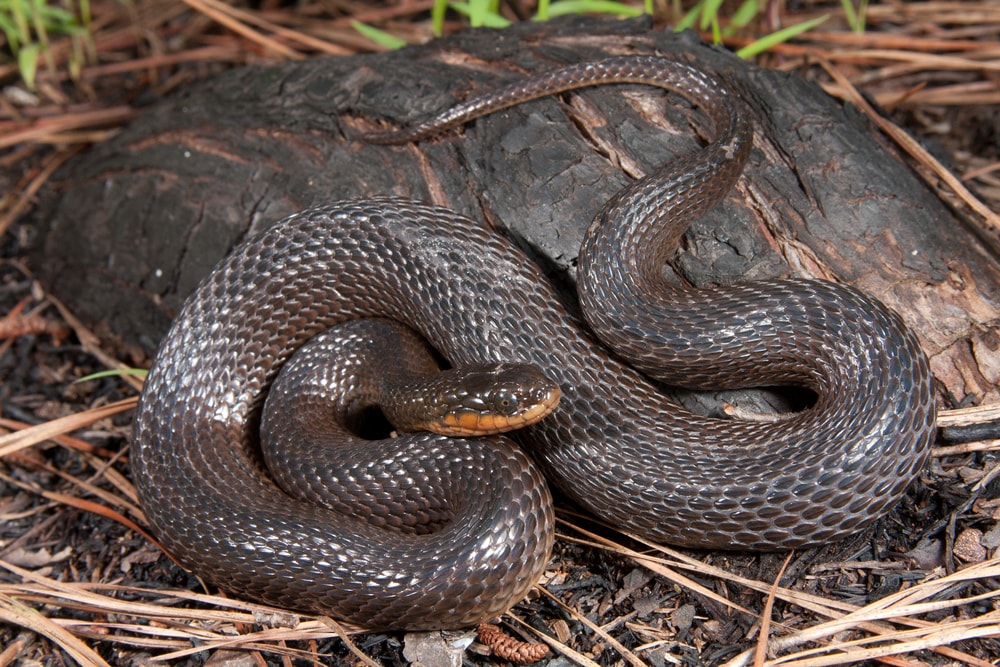
Glossy Swampsnake (Liodytes rigida) is a secretive Coastal Plain wetland snake, glossy brown to olive above with a lighter belly. Adults are usually 14-24 inches and are more likely in swampy cover than on open banks.
Crayfish and thick aquatic vegetation are good context for this species. It lacks the bold bands of many Nerodia watersnakes, so a plain, shiny wetland snake in a cypress slough or marsh edge deserves a closer look.
| Key detail | What to look for |
|---|---|
| Adult size | usually 14-24 inches |
| Fast ID cue | plain glossy brown or olive wetland snake with lighter belly |
| Typical North Carolina habitat | Coastal Plain swamps, marshes, cypress sloughs, and aquatic vegetation |
| North Carolina range | Coastal Plain wetlands and blackwater systems |
| Bite / venom note | Nonvenomous swamp snake; secretive crayfish hunter |
33. Plain-bellied Watersnake
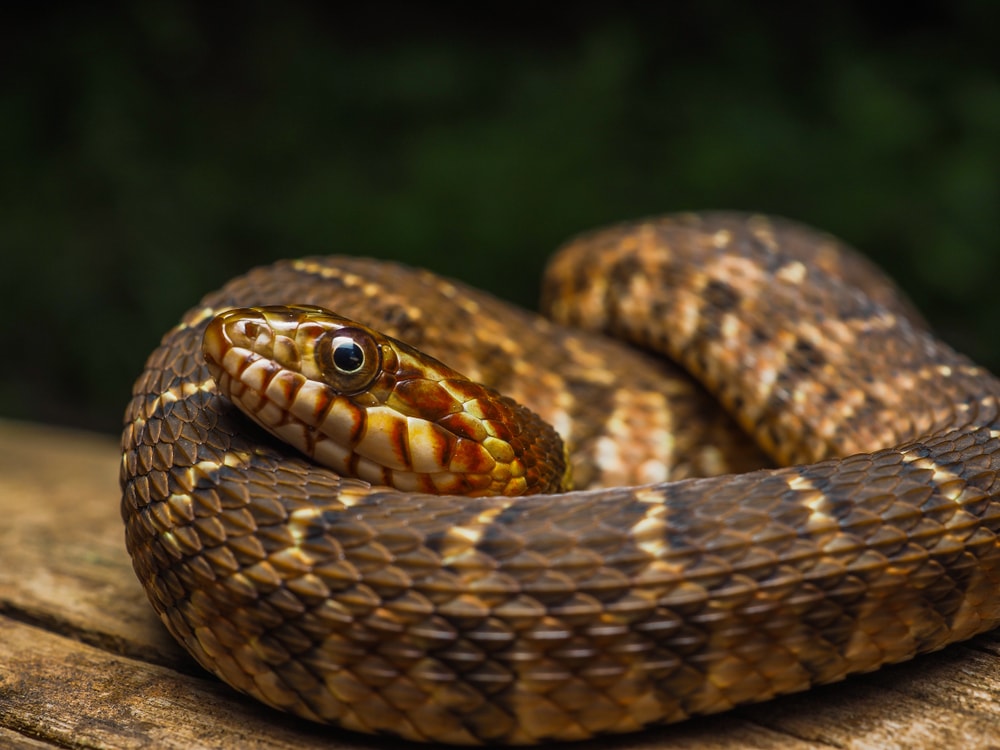
Plain-bellied Watersnake (Nerodia erythrogaster) is a thick watersnake with a dark back and an unmarked belly that may be yellow, orange, or reddish. Adults are usually 24-40 inches.
It uses swamps, ponds, rivers, and wetland edges but may travel farther from water than many other watersnakes. The plain belly, round pupils, and lack of a facial pit help separate it from cottonmouths in the same lowland habitats.
| Key detail | What to look for |
|---|---|
| Adult size | usually 24-40 inches |
| Fast ID cue | dark back with plain yellow, orange, or reddish belly |
| Typical North Carolina habitat | swamps, ponds, rivers, floodplains, and wetland edges |
| North Carolina range | lowland waters across the Coastal Plain and Piedmont |
| Bite / venom note | Nonvenomous watersnake; common cottonmouth lookalike near water |
34. Queensnake
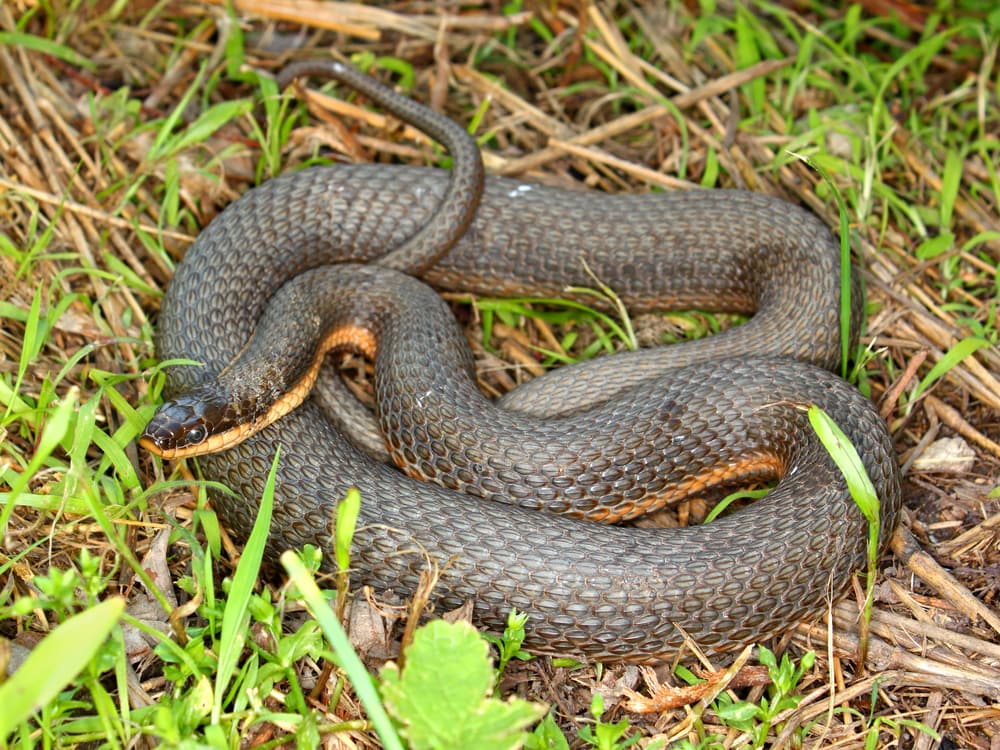
Queensnake (Regina septemvittata) is a slender stream snake tied closely to crayfish. It favors clean, rocky creeks and rivers, especially in the Piedmont and mountains, rather than stagnant swamp water.
Adults are usually 15-24 inches, olive to brown above, with pale side stripes and a yellowish belly marked by darker lines. If the water has flat rocks and crayfish molts, queensnake becomes a much stronger possibility.
| Key detail | What to look for |
|---|---|
| Adult size | usually 15-24 inches |
| Fast ID cue | slender brown or olive stream snake with pale stripes and lined belly |
| Typical North Carolina habitat | clean rocky creeks, rivers, riffles, and crayfish-rich streams |
| North Carolina range | mainly Piedmont and mountain streams |
| Bite / venom note | Nonvenomous stream snake; closely tied to crayfish |
35. Red-bellied Snake
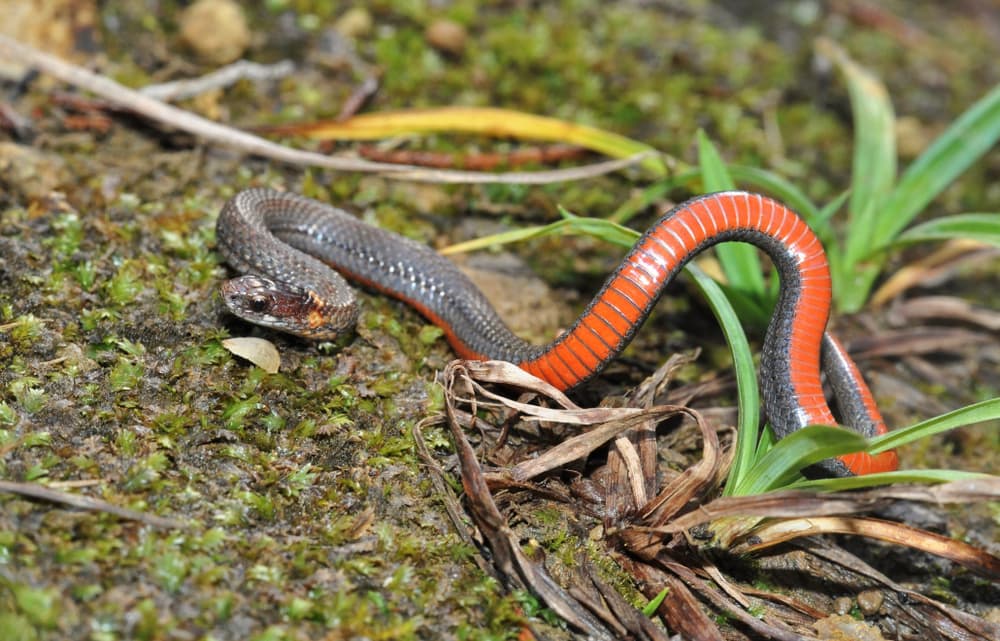
Red-bellied Snake (Storeria occipitomaculata) is a tiny woodland snake with a gray, brown, or chestnut back and a bright red, orange, or pinkish belly. Adults are usually 8-12 inches and hide under damp cover.
It overlaps in size and habits with brownsnakes and earthsnakes, so the belly color is the cleanest clue when visible. Moist woods, grassy edges, mossy logs, and shaded garden cover all fit this species.
| Key detail | What to look for |
|---|---|
| Adult size | usually 8-12 inches |
| Fast ID cue | tiny gray or brown body with red, orange, or pink belly |
| Typical North Carolina habitat | moist woods, grassy edges, mossy logs, leaf litter, and shaded gardens |
| North Carolina range | widespread in damp wooded and grassy cover |
| Bite / venom note | Nonvenomous tiny snake; usually under soil, logs, or leaf litter |
36. Rough Earthsnake
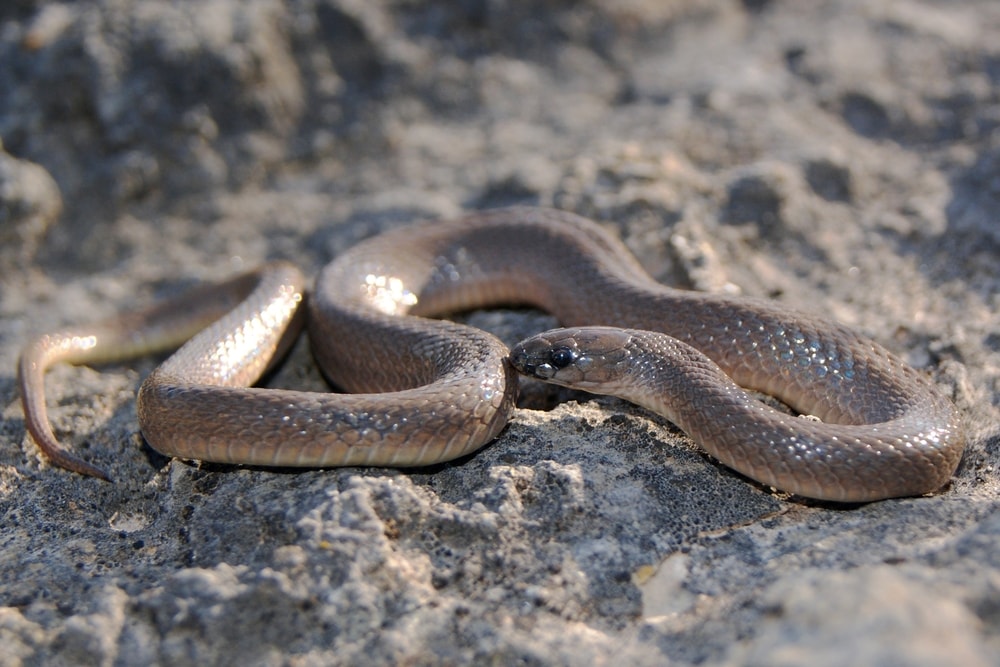
Rough Earthsnake (Virginia striatula) is a small gray-brown snake of loose soil, leaf litter, gardens, and shaded woodland edges. Adults are usually 7-10 inches and spend much of their time below cover.
The keeled scales give it a slightly rougher texture than the smooth earthsnake. It has a small head, plain body, and earthworm-like habits, so habitat and scale texture do most of the ID work.
| Key detail | What to look for |
|---|---|
| Adult size | usually 7-10 inches |
| Fast ID cue | small plain gray-brown body with keeled scales |
| Typical North Carolina habitat | loose soil, leaf litter, rotting logs, gardens, and shaded woodland edges |
| North Carolina range | mostly Piedmont and Coastal Plain ground cover |
| Bite / venom note | Nonvenomous tiny snake; usually under soil, logs, or leaf litter |
37. Smooth Earthsnake
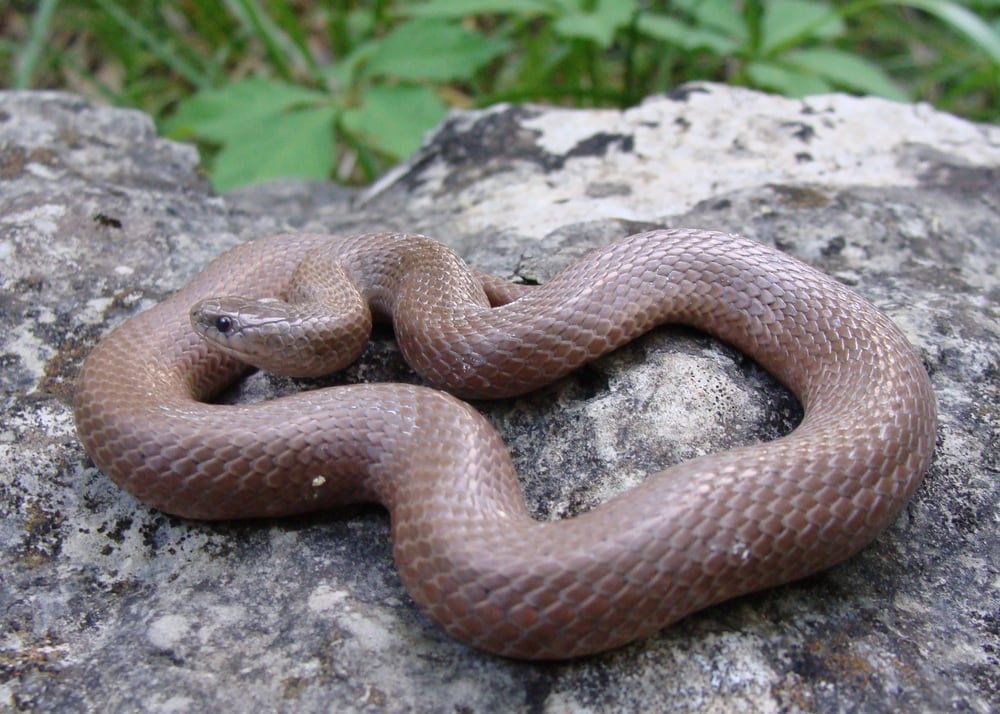
Smooth Earthsnake (Virginia valeriae) is another small brown or gray ground snake, usually 7-10 inches long. It uses wooded slopes, leaf litter, rotting logs, and other damp cover where soft-bodied prey are easy to find.
The smooth-looking scales are the point of comparison with rough earthsnakes. A plain little earthsnake without a bright belly or neck ring fits this species better than ring-necked or red-bellied snakes.
| Key detail | What to look for |
|---|---|
| Adult size | usually 7-10 inches |
| Fast ID cue | small plain brown or gray body with smooth-looking scales |
| Typical North Carolina habitat | wooded slopes, loose soil, leaf litter, rotting logs, and damp cover |
| North Carolina range | widespread in wooded ground cover, especially Piedmont and mountains |
| Bite / venom note | Nonvenomous tiny snake; usually under soil, logs, or leaf litter |
38. Southern Watersnake
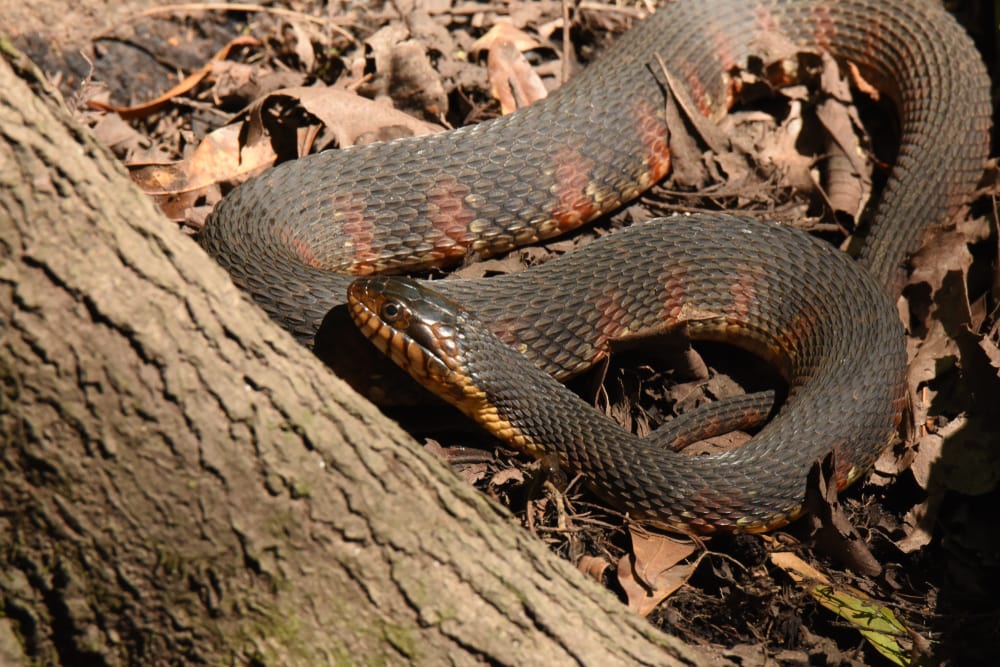
Southern Watersnake (Nerodia fasciata) is the banded watersnake of swamps, marshes, ditches, ponds, and slow Coastal Plain water. Adults are usually 24-42 inches, with dark crossbands that can look bold on young snakes and muddy on older ones.
It belongs in the same broad lookalike group as common and brown watersnakes, not with rattlesnakes or coralsnakes. Round pupils, heavy banding, and a low wetland setting are the useful cues.
| Key detail | What to look for |
|---|---|
| Adult size | usually 24-42 inches |
| Fast ID cue | dark crossbands, round pupils, and heavy watersnake build |
| Typical North Carolina habitat | swamps, marshes, ditches, ponds, and slow Coastal Plain water |
| North Carolina range | Coastal Plain wetlands and slow lowland waterways |
| Bite / venom note | Nonvenomous banded watersnake; common cottonmouth lookalike near water |
Quick identification tips
The mountains, Piedmont, Sandhills, and coast each remove some options and add others. Start there before deciding between similar watersnakes, ratsnakes, or hognoses.
Do not lean on a single folk rule. Young snakes can look different from adults, and several harmless species flatten, coil, or strike when they feel trapped.
FAQ
How many snake types are in North Carolina?
This guide profiles 38 North Carolina snakes from current herpetology references. Agency pages and field guides may use different counts when they group subspecies, older names, or rare records differently.
Which North Carolina snakes are venomous?
The venomous species are listed first in this guide. They include Eastern Copperhead, Eastern Diamond-backed Rattlesnake, Northern Cottonmouth, Pygmy Rattlesnake, Timber Rattlesnake, Harlequin Coralsnake. Compare range, habitat, and field marks before choosing a species.
Are watersnakes in North Carolina cottonmouths?
No. Several harmless watersnakes live near the same wetlands as cottonmouths. Look at range, body shape, head posture, pattern, and behavior before deciding.
What should I do if I find a snake in my yard in North Carolina?
Most yard snakes are passing through for cover, water, or prey. If a snake is inside a building or cannot leave on its own, contact a local wildlife professional.
What details help identify a snake from a photo?
Useful details include county, habitat, body length, dorsal pattern, head shape, tail shape, stripes or bands, and whether the photo was taken near water, rocks, logs, or open ground.