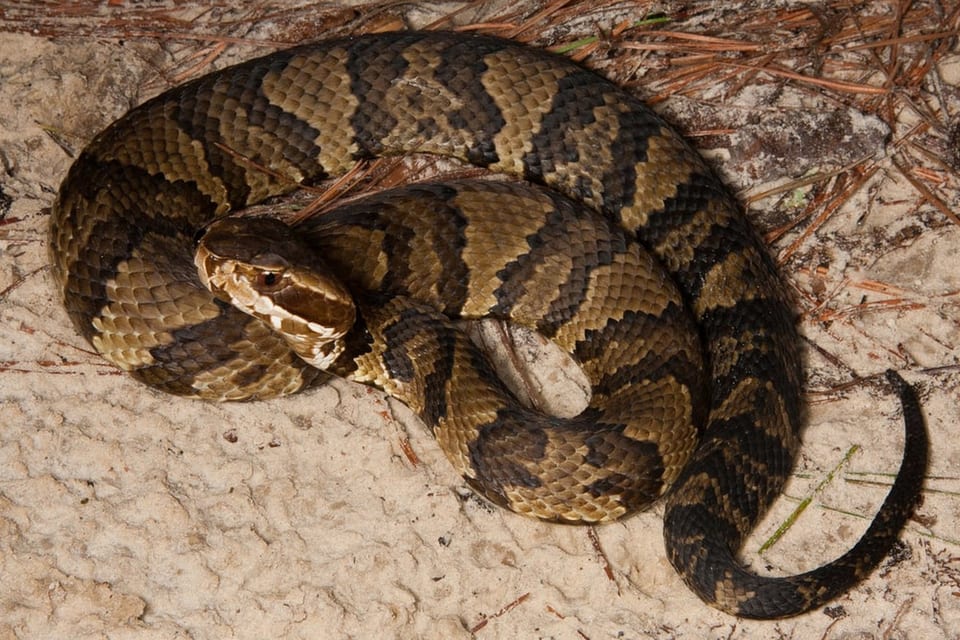
Louisiana’s snake list is tied to water, but not only water. Bayous, cypress-tupelo swamps, bottomland hardwoods, pine savannas, coastal marshes, prairies, and Red River sandhills each support a different mix.
Cottonmouths and watersnakes dominate many wetland questions, but the state also has copperheads, coral snakes, rattlesnakes, mud snakes, crayfish snakes, kingsnakes, ratsnakes, racers, and gartersnakes.
That means a Louisiana snake can be a heavy wetland pit viper, a glossy swamp hunter, a pine-country constrictor, or a small ground snake hiding in damp leaf litter.
Venomous snakes in Louisiana
Louisiana’s venomous group is strongly shaped by water and lowland cover. Cottonmouths are the wetland specialist, while copperheads, coral snakes, and rattlesnakes fill different pine, hardwood, and prairie edges.
1. Eastern Copperhead
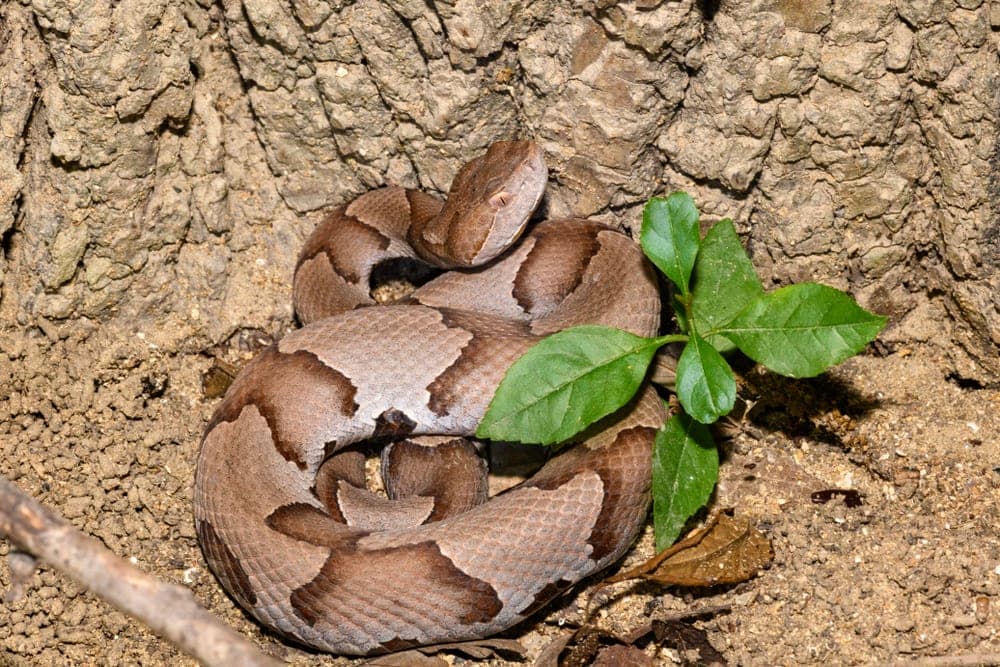
Eastern Copperhead (Agkistrodon contortrix) is the coppery leaf-litter viper of hardwood draws, wooded ravines, rocky slopes, and brushy field edges. Adults usually run 24-36 inches, with a stout body and a head color that can disappear against dry oak and gum leaves.
The hourglass bands do the best ID work. They are narrow over the spine and wider down the sides, unlike the rounder blotches on many harmless young ratsnakes, watersnakes, and hognoses using the same shaded cover.
| Key detail | What to look for |
|---|---|
| Adult size | usually 24-36 inches |
| Fast ID cue | coppery head, heavy body, and hourglass bands that pinch over the spine |
| Typical Louisiana habitat | hardwood ravines, rocky wooded slopes, brushy edges, and leaf-littered forest floor |
| Louisiana range | forested and edge habitats across much of the state |
| Bite / venom note | Venomous pit viper; leaf-litter camouflage creates easy lookalike confusion |
2. Eastern Diamond-backed Rattlesnake
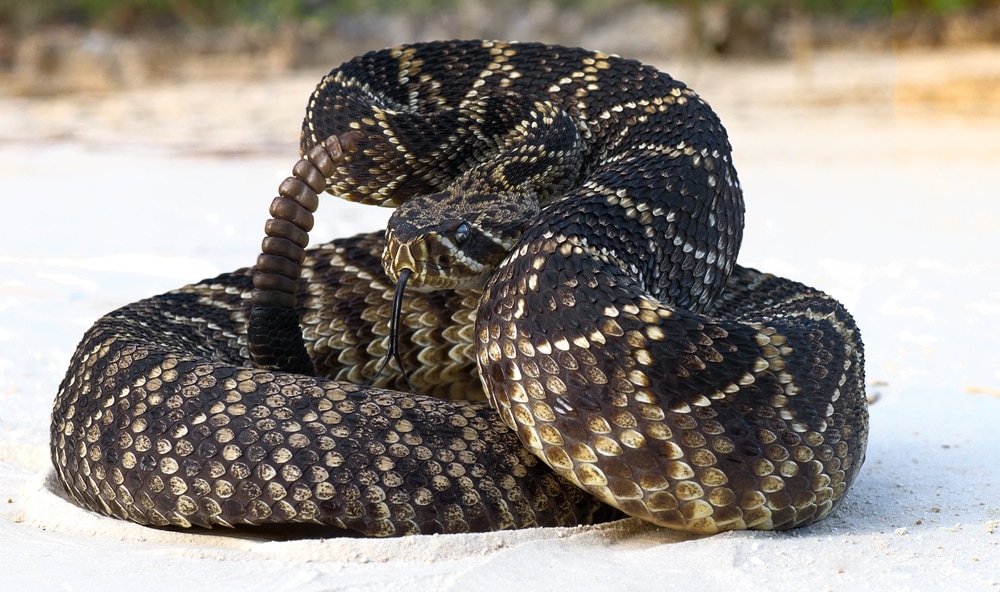
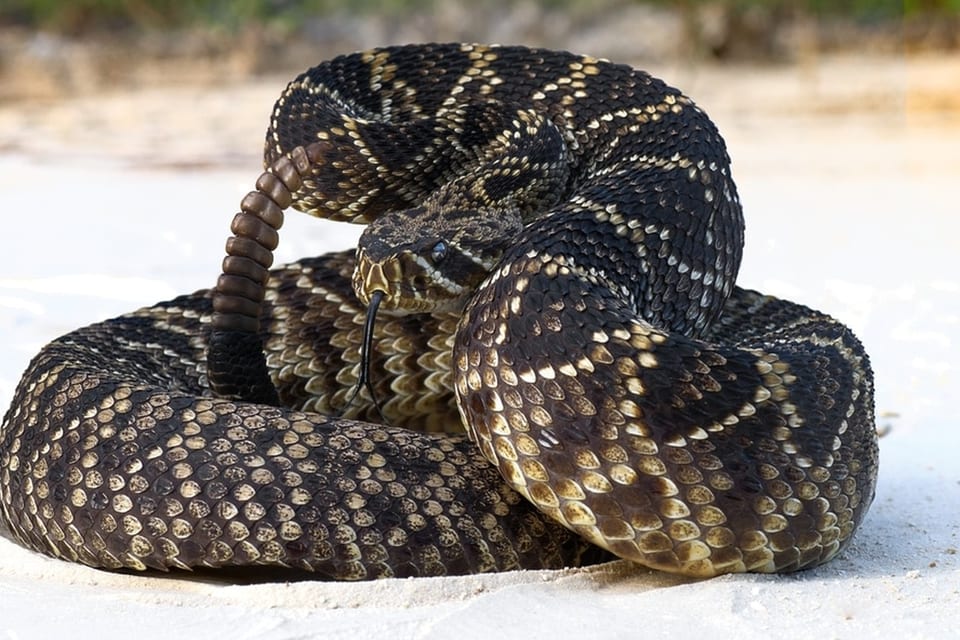
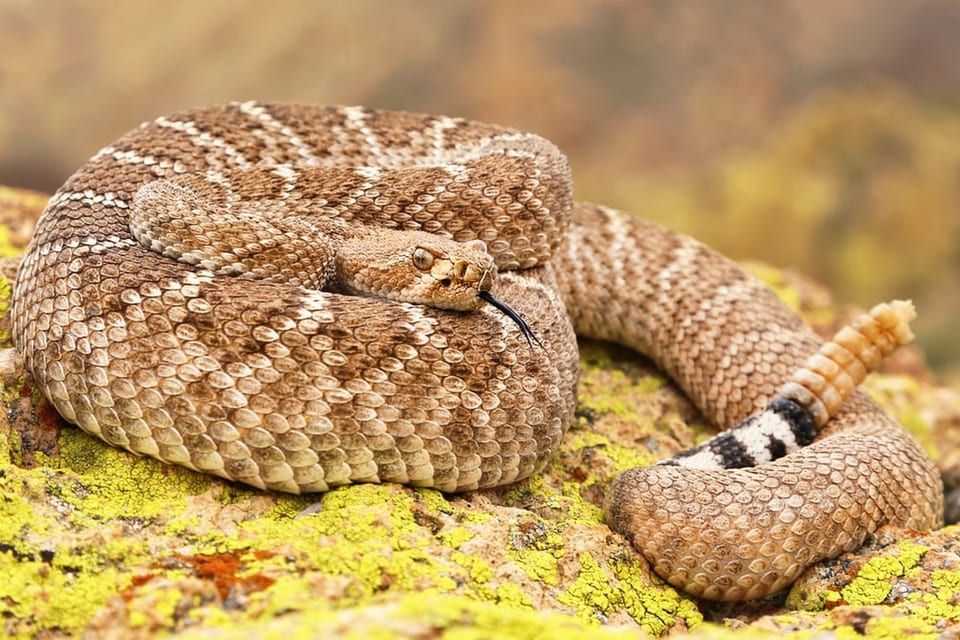
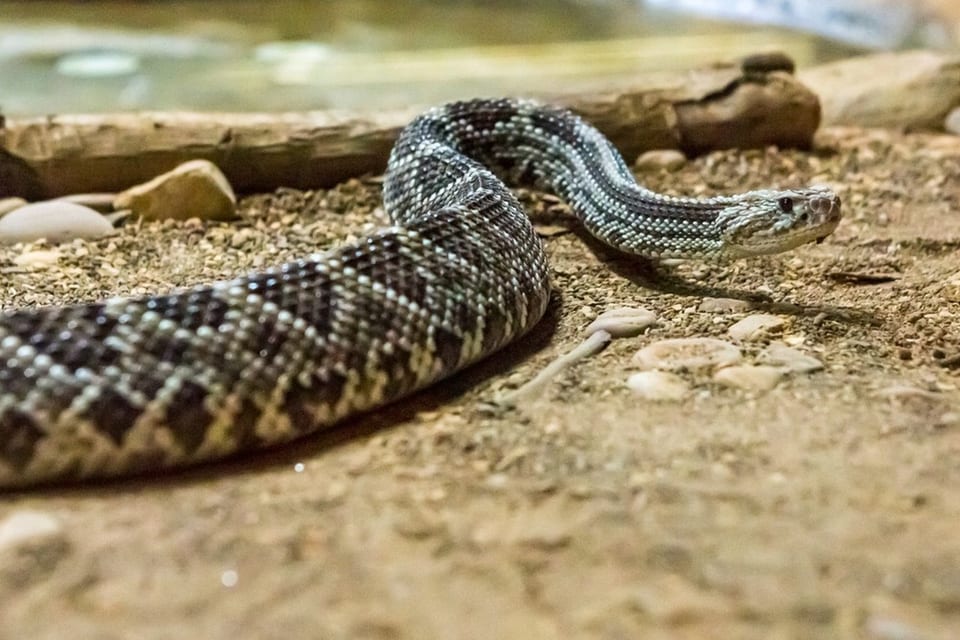
Eastern Diamond-backed Rattlesnake (Crotalus adamanteus) is the heavyweight rattlesnake of dry pine and coastal-plain country. Adults are usually 2-5 feet here, thick through the body, and far more massive than racers or ratsnakes sharing open upland edges.
Look for the chain of dark diamonds outlined in pale scales, plus the big triangular head and rattle. It belongs in dry pine woods, grasslands, and upland edges, not as the first explanation for every large snake beside a bayou.
| Key detail | What to look for |
|---|---|
| Adult size | usually 2-5 feet |
| Fast ID cue | large rattlesnake with dark diamonds outlined in pale scales |
| Typical Louisiana habitat | dry pine woods, grasslands, scrubby uplands, and sandy coastal-plain edges |
| Louisiana range | local dry pine and coastal-plain records; verify current parish records |
| Bite / venom note | Venomous diamondback; very large rattlesnake with serious bite risk |
3. Northern Cottonmouth
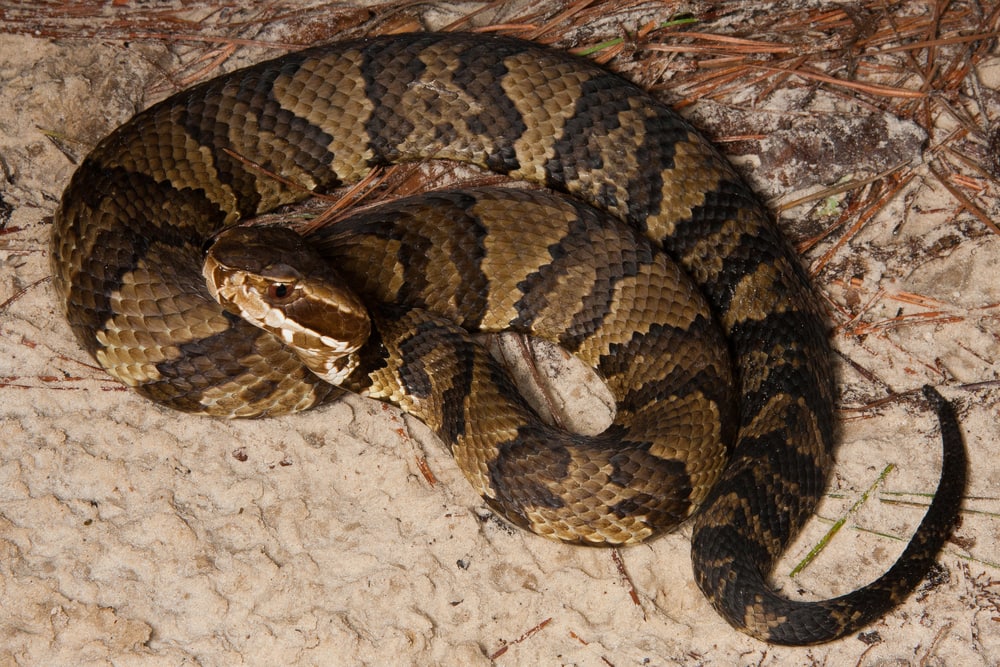
Northern Cottonmouth (Agkistrodon piscivorus) is the thick wetland pit viper of cypress sloughs, marshes, ponds, bayous, and river edges. Adults usually measure 30-48 inches and often look heavy for their length, especially beside slimmer Nerodia watersnakes.
A blocky head, dark body, facial pit, and white mouth display are the classic field marks. Cottonmouths can swim and bask near the same logs as harmless watersnakes, so head structure and body build matter as much as the watery setting.
| Key detail | What to look for |
|---|---|
| Adult size | usually 30-48 inches |
| Fast ID cue | heavy dark body near water, blocky head, facial pit, and white mouth display |
| Typical Louisiana habitat | cypress sloughs, marshes, ponds, bayous, swamp edges, and river margins |
| Louisiana range | lowland wetlands, bayous, marshes, and floodplains across the state |
| Bite / venom note | Venomous wetland pit viper; common watersnake lookalike questions happen near water |
4. Pygmy Rattlesnake
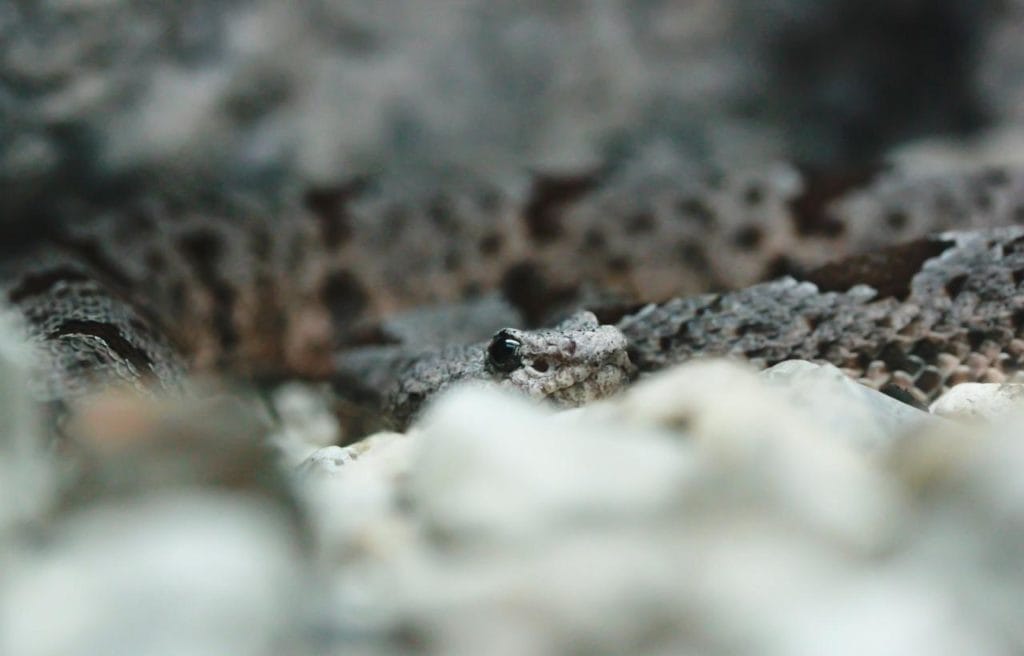
Pygmy Rattlesnake (Sistrurus miliarius) is a small rattlesnake that can vanish into pine straw, grass clumps, and dry woodland edge. Adults are usually 15-30 inches, with a low, compact build rather than the bulk of a timber rattlesnake.
Its pattern is a row of dark dorsal spots, often with a faint rusty midline, and the rattle is tiny enough to be missed. Treat size, spotted pattern, and rattlesnake shape as stronger clues than sound.
| Key detail | What to look for |
|---|---|
| Adult size | usually 15-30 inches |
| Fast ID cue | small rattlesnake with dark back spots, compact body, and a tiny rattle |
| Typical Louisiana habitat | pine flatwoods, grassy openings, dry woodland edges, and pine-straw cover |
| Louisiana range | scattered pine and grass-edge habitats; parish records help narrow it |
| Bite / venom note | Venomous small rattlesnake; tiny rattle is easy to overlook |
5. Timber Rattlesnake
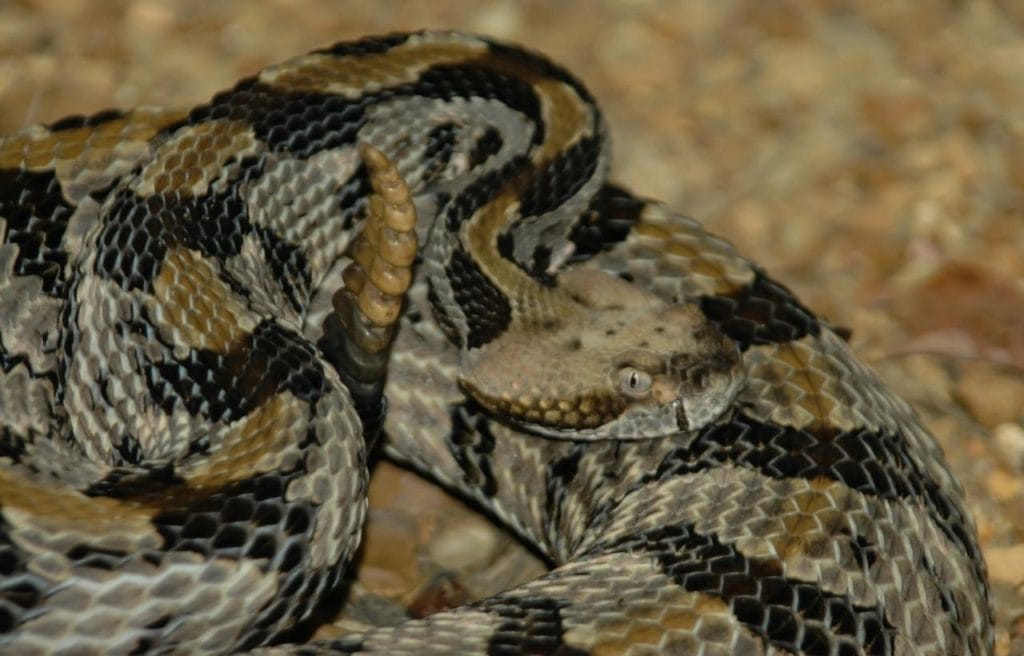
Timber Rattlesnake (Crotalus horridus) is the big forest rattlesnake of pine-hardwood slopes, bottomland edges, ridges, and quiet woodland openings. Adults are usually 2-5 feet, with enough mass to look very different from long, slim racers.
Dark chevrons or crossbands, a heavy body, and a dark tail leading to the rattle separate it from blotched nonvenomous snakes. The setting usually feels wooded or upland, not open marsh.
| Key detail | What to look for |
|---|---|
| Adult size | usually 2-5 feet |
| Fast ID cue | heavy forest rattlesnake with dark chevrons and a dark tail |
| Typical Louisiana habitat | pine-hardwood forest, wooded slopes, ridge edges, and bottomland margins |
| Louisiana range | forested uplands and bottomland edges across much of Louisiana |
| Bite / venom note | Venomous timber rattlesnake; heavy-bodied pit viper with serious bite risk |
6. Harlequin Coralsnake
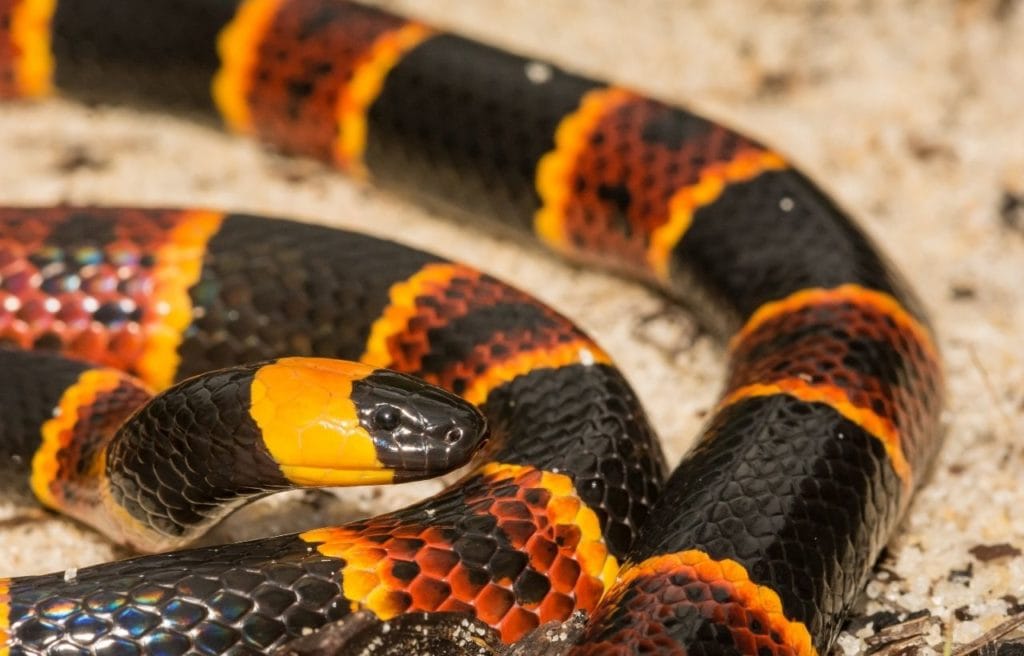
Harlequin Coralsnake (Micrurus fulvius) is a secretive coral snake of sandy pine woods, flatwoods, hammocks, and deep leaf litter. Adults usually run 20-30 inches and are more often glimpsed slipping under cover than basking in the open.
The small head and complete red, yellow or cream, and black rings give it a very different look from blotched kingsnakes. Use the full ring pattern, narrow build, and hidden ground-cover setting together instead of relying on a color rhyme.
| Key detail | What to look for |
|---|---|
| Adult size | usually 20-30 inches |
| Fast ID cue | small head, complete red-yellow-black rings, and secretive ground-cover behavior |
| Typical Louisiana habitat | sandy pine woods, pine flatwoods, hammocks, and deep leaf litter |
| Louisiana range | sandy pine and flatwoods records, mostly in coastal-plain parishes |
| Bite / venom note | Venomous coral snake; secretive, small-headed, and rarely seen |
7. Texas Coralsnake
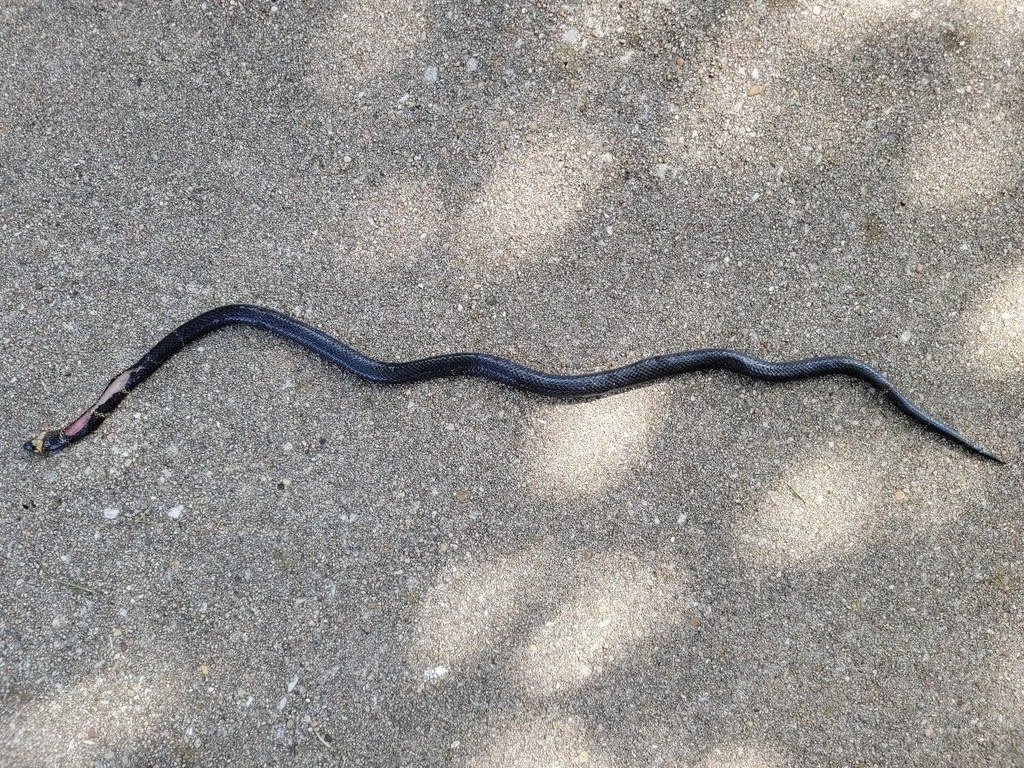
Texas Coralsnake (Micrurus tener) is the western counterpart to the harlequin coralsnake, with the same narrow body, small head, and bright ringed pattern. Adults usually run 20-30 inches and spend much of their time under pine straw, leaf litter, or loose ground cover.
A good ID starts with the complete red, yellow or cream, and black rings, then checks range and habitat. Scarlet kingsnakes and scarletsnakes can flash similar colors, but their bodies and patterns do not read like a small-headed coral snake.
| Key detail | What to look for |
|---|---|
| Adult size | usually 20-30 inches |
| Fast ID cue | small-headed coral snake with complete red-yellow-black rings |
| Typical Louisiana habitat | sandy pine woods, brushy hammocks, leaf litter, and loose ground cover |
| Louisiana range | western and central Louisiana records, especially sandy pine and brushy cover |
| Bite / venom note | Venomous coral snake; potent venom, secretive habits |
Nonvenomous snakes in Louisiana
Most Louisiana snakes are nonvenomous, especially the many watersnakes and swamp-edge species. Range, head posture, pattern, and behavior all matter around water.
Racers, kingsnakes, ratsnakes, and other large hunters
8. Central Ratsnake
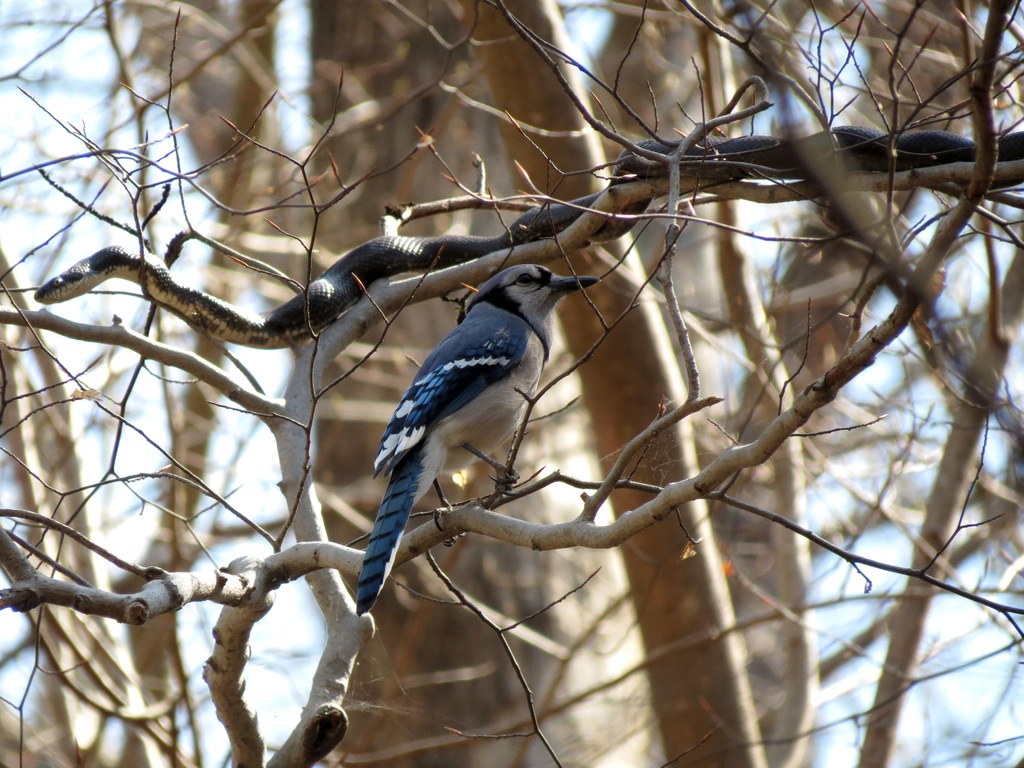
Central Ratsnake (Pantherophis alleghaniensis) is a long, nonvenomous climber of hardwoods, farm edges, barns, old buildings, and wooded creek corridors. Adults are often 3-7 feet, so a full-body view is more useful than a close crop of the head.
This snake often gives itself away by posture. It may be stretched along a trunk, rafters, fence line, or brush pile, with a slimmer climbing build than the heavy-bodied pit vipers people worry about around woodpiles.
| Key detail | What to look for |
|---|---|
| Adult size | often 3-7 feet |
| Fast ID cue | long climbing body, patterned or dark back, and frequent use of trees or buildings |
| Typical Louisiana habitat | hardwood corridors, farm edges, barns, old buildings, and wooded creek lines |
| Louisiana range | eastern and central wooded corridors and farm-edge records |
| Bite / venom note | Nonvenomous ratsnake; common climber around barns and trees |
9. Common Coachwhip
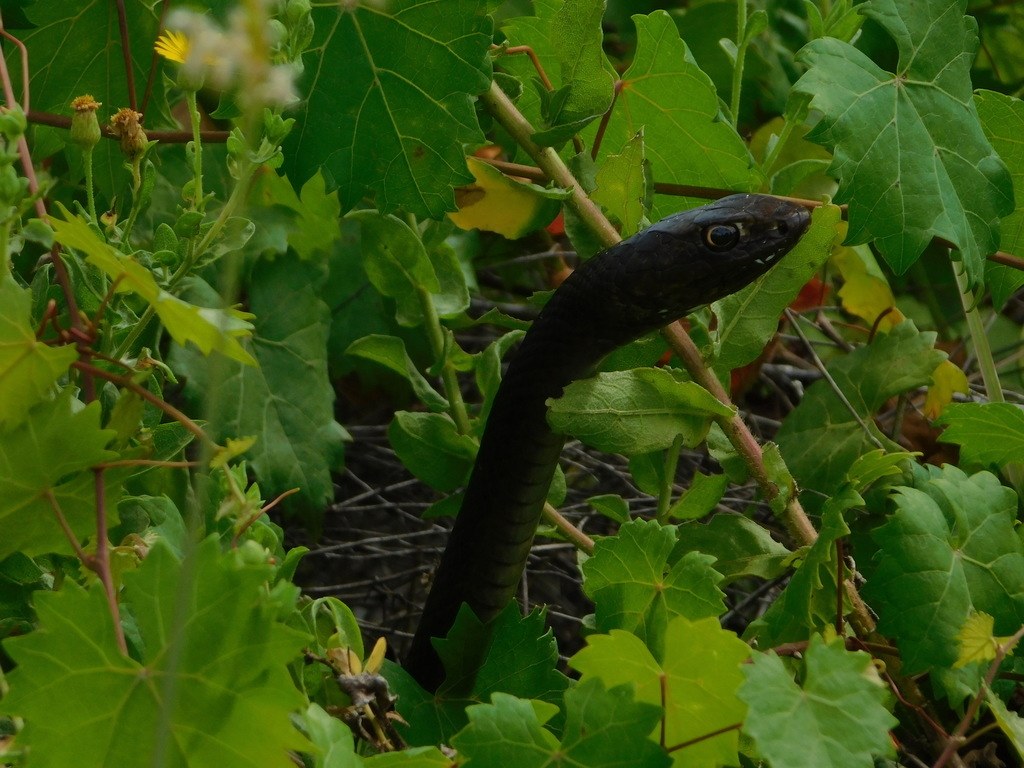
Common Coachwhip (Masticophis flagellum) is built for speed: slim body, large eyes, and a long tail that tapers like a whip. It favors open pine, dry grassland, sandy roadsides, scrub, and sunny field edges.
Adults are often 3-7 feet but rarely look heavy. A coachwhip seen by day usually appears stretched out, alert, and quick, unlike kingsnakes and ratsnakes that rely more on cover and climbing.
| Key detail | What to look for |
|---|---|
| Adult size | often 3-7 feet |
| Fast ID cue | long whip-like tail, large eyes, slim body, and fast daytime movement |
| Typical Louisiana habitat | open pine woods, dry grasslands, sandy roadsides, scrub, and sunny field edges |
| Louisiana range | dry open pine country, prairies, sandy roadsides, and field margins |
| Bite / venom note | Nonvenomous fast hunter; large eyes and whip-like tail stand out |
10. Common Scarletsnake
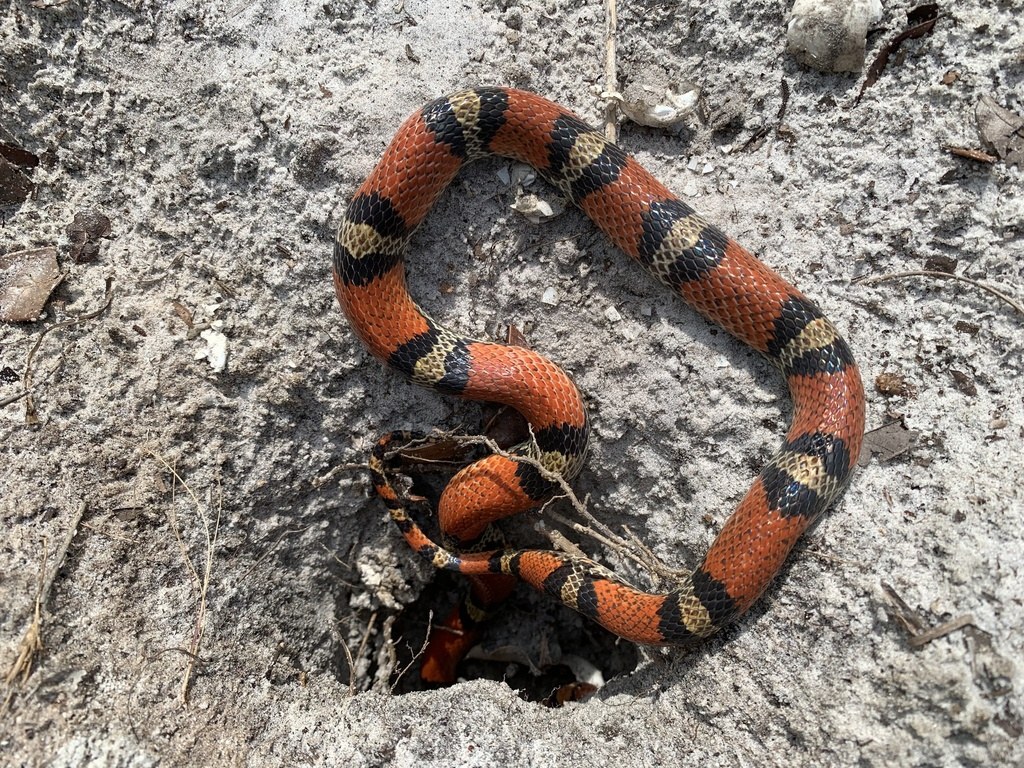
Common Scarletsnake (Cemophora coccinea) is a small glossy snake of sandy woods, pine-oak edges, loose soil, and hidden cover. Its red, black, and pale markings are blotches or saddles rather than the complete rings of a coral snake.
Use the whole animal: pointed snout, pale belly, red saddles, and a habit of staying under logs, bark, and sandy litter. That combination separates it from scarlet kingsnakes and coral snakes better than color alone.
| Key detail | What to look for |
|---|---|
| Adult size | often 1-4 feet |
| Fast ID cue | red saddles or blotches, glossy body, pointed snout, and pale belly |
| Typical Louisiana habitat | sandy pine-oak woods, loose soil, leaf litter, logs, and bark cover |
| Louisiana range | sandy woods and dry leaf-litter pockets, often patchy by parish |
| Bite / venom note | Nonvenomous small constrictor; tri-color pattern invites coral-snake confusion |
11. Eastern Black Kingsnake
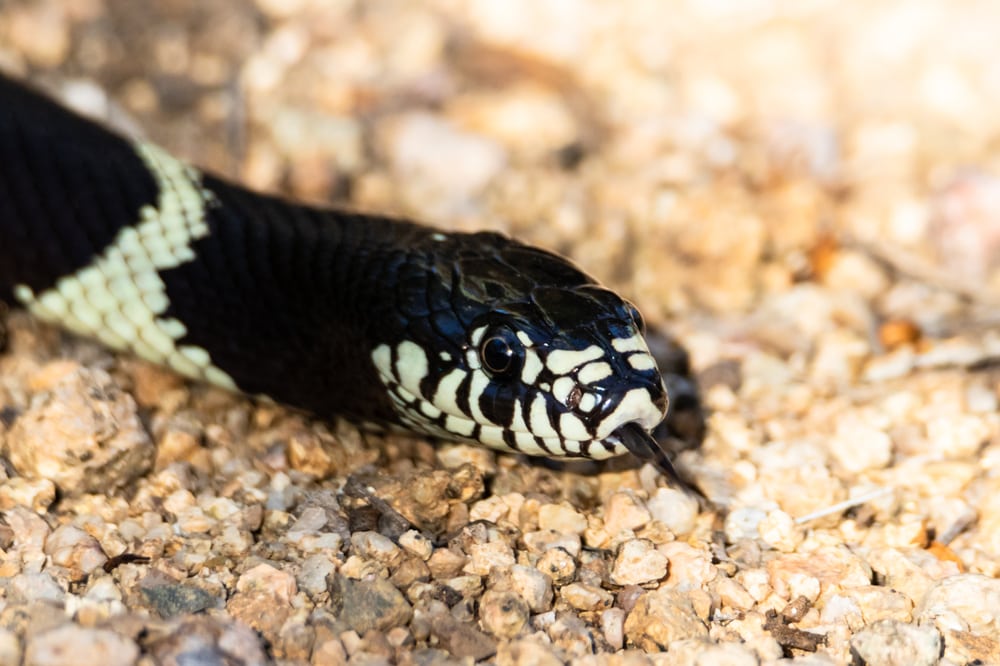
Eastern Black Kingsnake (Lampropeltis nigra) is a glossy, muscular kingsnake of wooded edges, farms, rocky margins, pine-oak forest, and old buildings near cover. Adults are often 1-4 feet, with a sturdy constrictor build.
The dark body may show pale speckles, broken bands, or muted chainlike marks. It looks smoother and stronger than a racer, and usually stays closer to cover than a coachwhip cruising open ground.
| Key detail | What to look for |
|---|---|
| Adult size | often 1-4 feet |
| Fast ID cue | dark glossy kingsnake with pale speckles or broken banding |
| Typical Louisiana habitat | wooded edges, farms, rocky margins, pine-oak forest, and covered outbuildings |
| Louisiana range | forested edges and farm country, especially in northern and eastern parishes |
| Bite / venom note | Nonvenomous kingsnake; strong constrictor with smooth glossy scales |
12. Eastern Milksnake
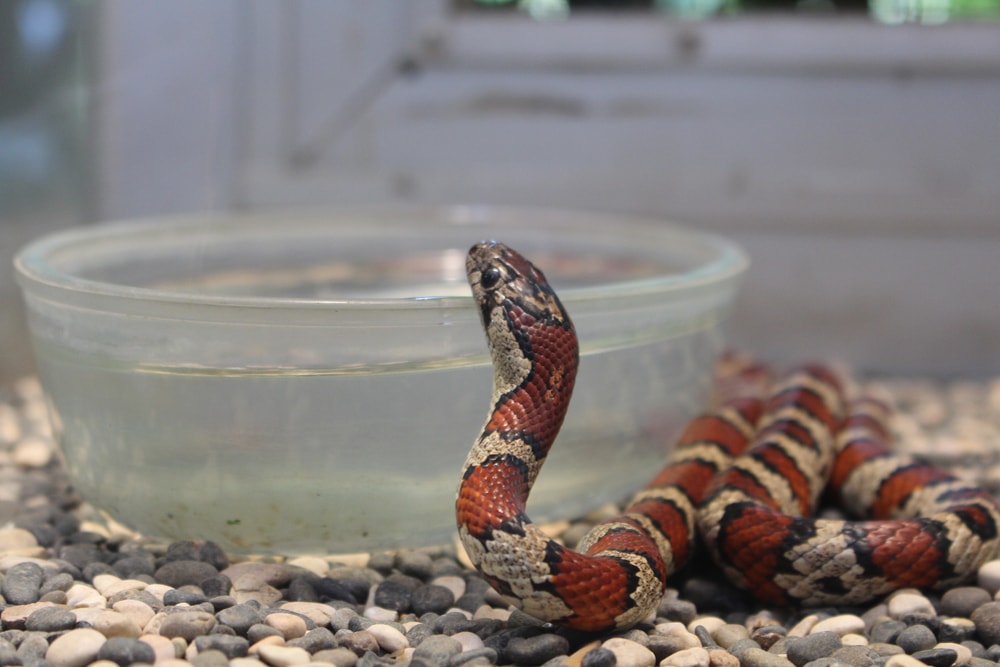
Eastern Milksnake (Lampropeltis triangulum) is a smooth-scaled constrictor of rocky woods, old fields, farm edges, and covered outbuildings. Adults are often 1-4 feet and usually stay close to logs, boards, stone piles, or brush.
Its blotches or bands can start a coral-snake comparison, but the head, body shape, and kingsnake build tell another story. A milksnake looks like a sturdy ground snake, not a narrow, small-headed coral snake.
| Key detail | What to look for |
|---|---|
| Adult size | often 1-4 feet |
| Fast ID cue | smooth kingsnake build with red-brown blotches or bands on a pale background |
| Typical Louisiana habitat | rocky woods, old fields, farm edges, brush piles, boards, and outbuildings |
| Louisiana range | local northern or eastern wooded parishes; check current maps for overlap |
| Bite / venom note | Nonvenomous milksnake; banded pattern can mimic more dramatic species |
13. Eastern Pinesnake
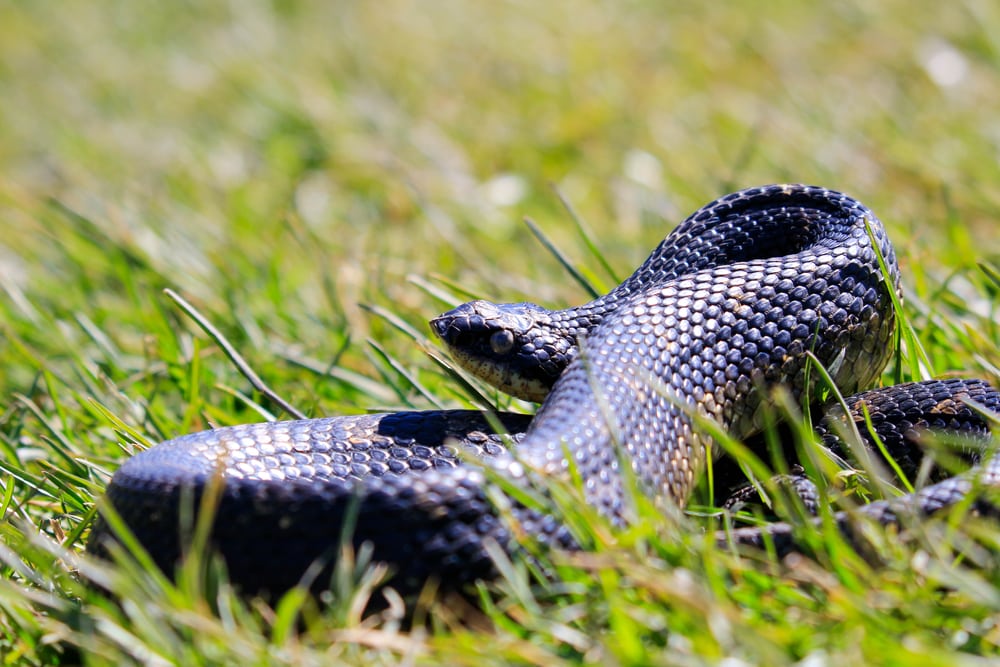
Eastern Pinesnake (Pituophis melanoleucus) is a large pale snake of sandy pine woods, dry uplands, and burrowed longleaf-style habitats. Adults are often 3-7 feet, with a strong body and dark blotches over a light background.
A pinesnake should put you in dry, sandy pine country, not cypress sloughs or barn rafters. The pointed head, pale blotched body, and burrow-focused setting separate it from ratsnakes, coachwhips, and wetland species.
| Key detail | What to look for |
|---|---|
| Adult size | often 3-7 feet |
| Fast ID cue | large pale pine snake with dark blotches and a burrow-centered life |
| Typical Louisiana habitat | sandy pine woods, open pine savannas, dry uplands, and rodent burrows |
| Louisiana range | longleaf pine sandhills and dry upland pine sites with burrow systems |
| Bite / venom note | Nonvenomous pinesnake; large, pale, and tied to sandy burrows |
14. Flat-headed Snake
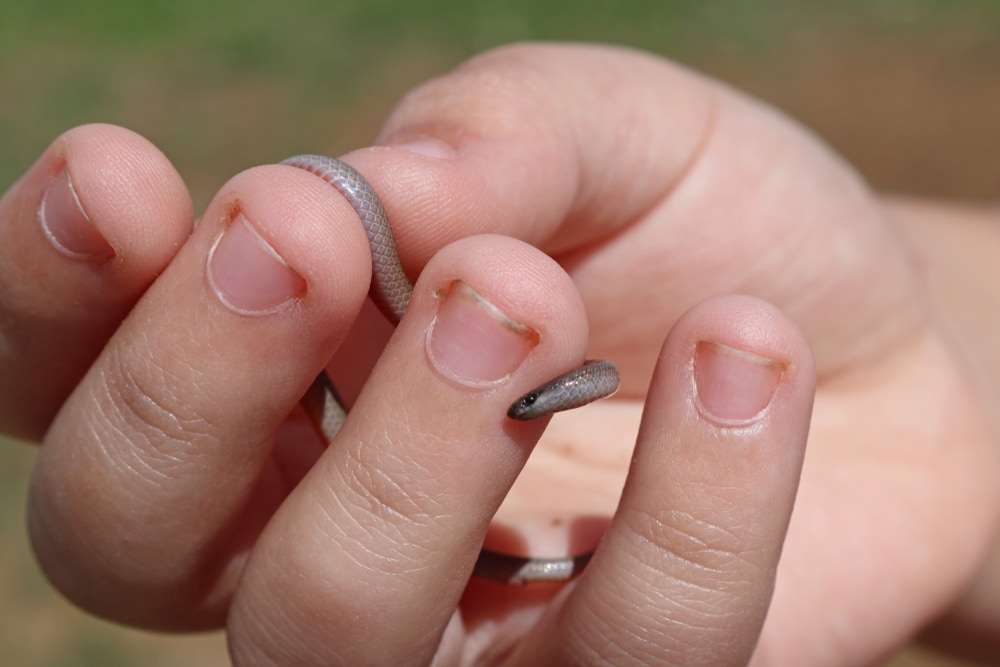
Flat-headed Snake (Tantilla gracilis) is a tiny under-cover snake, usually 7-16 inches, found beneath rocks, logs, and dry leaf litter. The body is thin and plain enough to be missed during a quick look.
The flattened head, small size, and hidden life are more useful than color. A tan snake uncovered in rocky or open woodland ground fits this profile better than a young watersnake or gartersnake in wet grass.
| Key detail | What to look for |
|---|---|
| Adult size | usually 7-16 inches |
| Fast ID cue | tiny tan snake with a flattened head, usually under rocks or logs |
| Typical Louisiana habitat | rocky or open woodland ground, dry leaf litter, logs, and flat stones |
| Louisiana range | scattered rocky or open woodland sites, mostly documented under cover |
| Bite / venom note | Nonvenomous tiny ground snake; head shape and cover object matter |
15. Louisiana Pinesnake
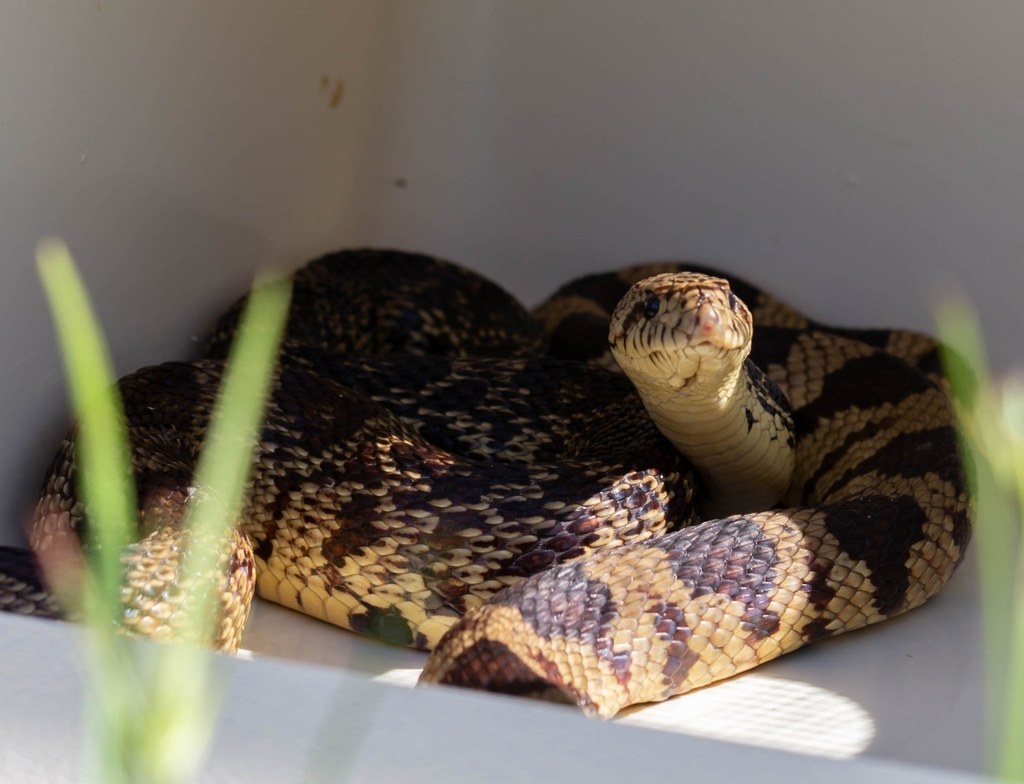
Louisiana Pinesnake (Pituophis ruthveni) is the state’s signature pine-sand specialist, tied to open longleaf pine, sandy soils, and Baird’s pocket gopher burrow systems. Adults are often 3-7 feet, with a pale body and darker saddle-like blotches.
The dry longleaf setting, burrow association, and heavy pinesnake build matter more than a quick impression of a big brown snake at a wooded edge, especially in west-central pine country.
| Key detail | What to look for |
|---|---|
| Adult size | often 3-7 feet |
| Fast ID cue | large pale pinesnake with dark saddles in longleaf pine and pocket-gopher habitat |
| Typical Louisiana habitat | open longleaf pine, sandy uplands, grassy savannas, and pocket-gopher burrows |
| Louisiana range | west-central longleaf pine and pocket-gopher country; highly localized |
| Bite / venom note | Nonvenomous pinesnake; rare, habitat-specialist constrictor |
16. North American Racer
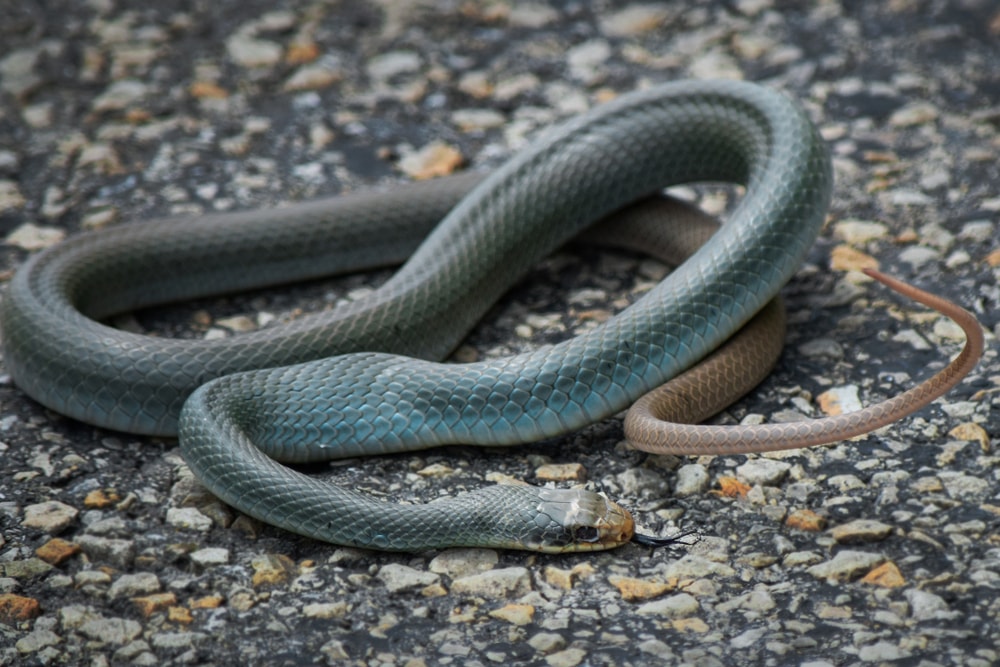
North American Racer (Coluber constrictor) is the long, alert daytime hunter of fields, open woods, roadsides, sandy edges, and brushy breaks. Adults are often 3-7 feet, but the body stays slim and athletic.
Large eyes, speed, and a long tapering tail are the giveaway traits. A racer usually looks like it is trying to leave the scene quickly, not coil heavily like a kingsnake or hold low beside water like a watersnake.
| Key detail | What to look for |
|---|---|
| Adult size | often 3-7 feet |
| Fast ID cue | large eyes, smooth slim body, fast daytime movement, and long tail |
| Typical Louisiana habitat | open fields, dry woods, roadsides, sandy edges, and brushy breaks |
| Louisiana range | open fields, roadsides, and woodland edges across much of the state |
| Bite / venom note | Nonvenomous fast hunter; speed and large eyes are strong clues |
17. Northern Mole Kingsnake
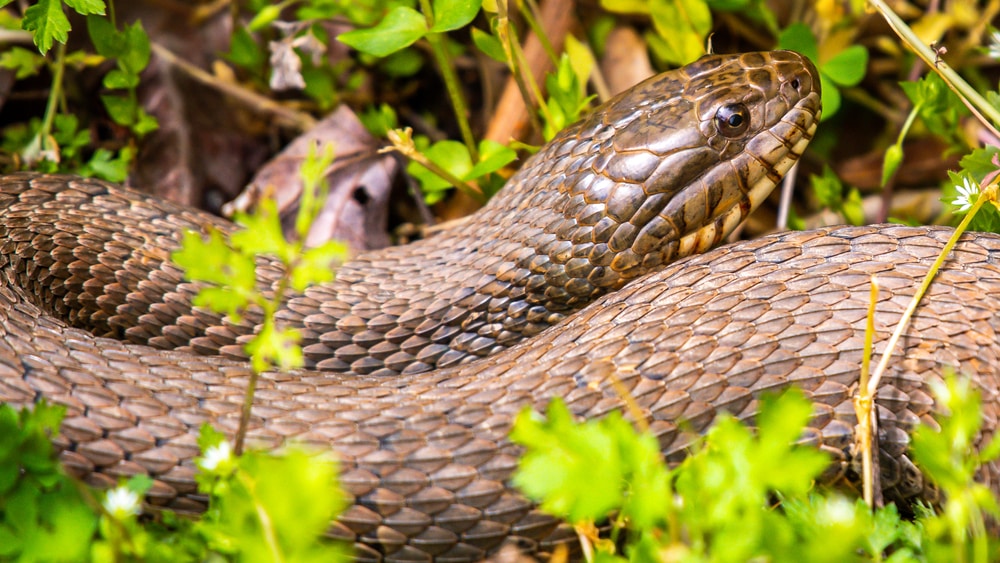
Northern Mole Kingsnake (Lampropeltis rhombomaculata) is a secretive kingsnake of fields, woodland edges, farm margins, and loose soil under cover. Adults are often 1-4 feet, with a smooth body and subdued blotching.
It often looks less showy than the name kingsnake suggests. A brown or grayish snake with reddish blotches, found under boards or in soft edge habitat, fits better than a glossy black kingsnake or quick open-country racer.
| Key detail | What to look for |
|---|---|
| Adult size | often 1-4 feet |
| Fast ID cue | smooth brownish kingsnake with muted reddish blotches and secretive habits |
| Typical Louisiana habitat | old fields, farm margins, woodland edges, loose soil, boards, and brush cover |
| Louisiana range | local fields, woodland edges, and loose-soil cover; often hidden |
| Bite / venom note | Nonvenomous kingsnake; secretive constrictor usually found under cover |
18. Northern Rough Greensnake
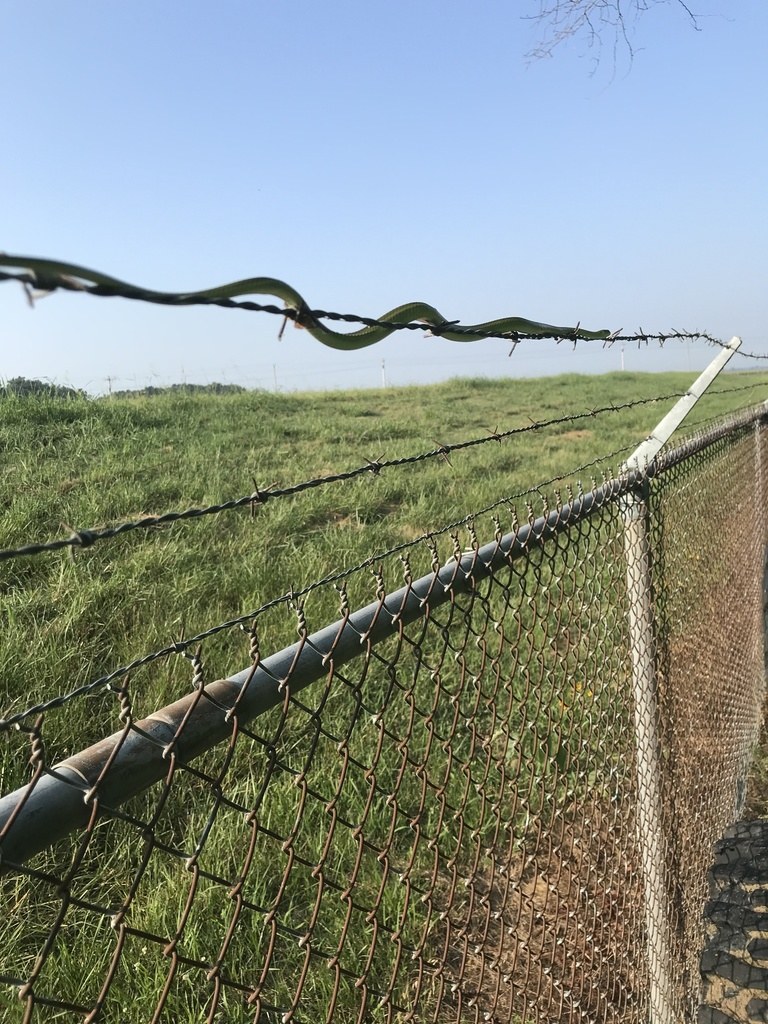
Northern Rough Greensnake (Opheodrys aestivus) is one of the easiest Louisiana snakes to place by color. The bright green body, pale belly, and habit of threading through vines, shrubs, streamside brush, and wet meadow edges are hard to mistake.
Adults are often 1-4 feet but look delicate. A rough greensnake usually reads like a living vine above the ground, not a brown ground snake crossing bare soil.
| Key detail | What to look for |
|---|---|
| Adult size | often 1-4 feet |
| Fast ID cue | bright green body, pale belly, and climbing behavior in vines or shrubs |
| Typical Louisiana habitat | vine tangles, shrubs, streamside brush, wet meadow edges, and low vegetation |
| Louisiana range | brushy wetlands, stream corridors, and viney edges across much of the state |
| Bite / venom note | Nonvenomous slender green snake; usually above ground in vegetation |
19. Prairie Kingsnake
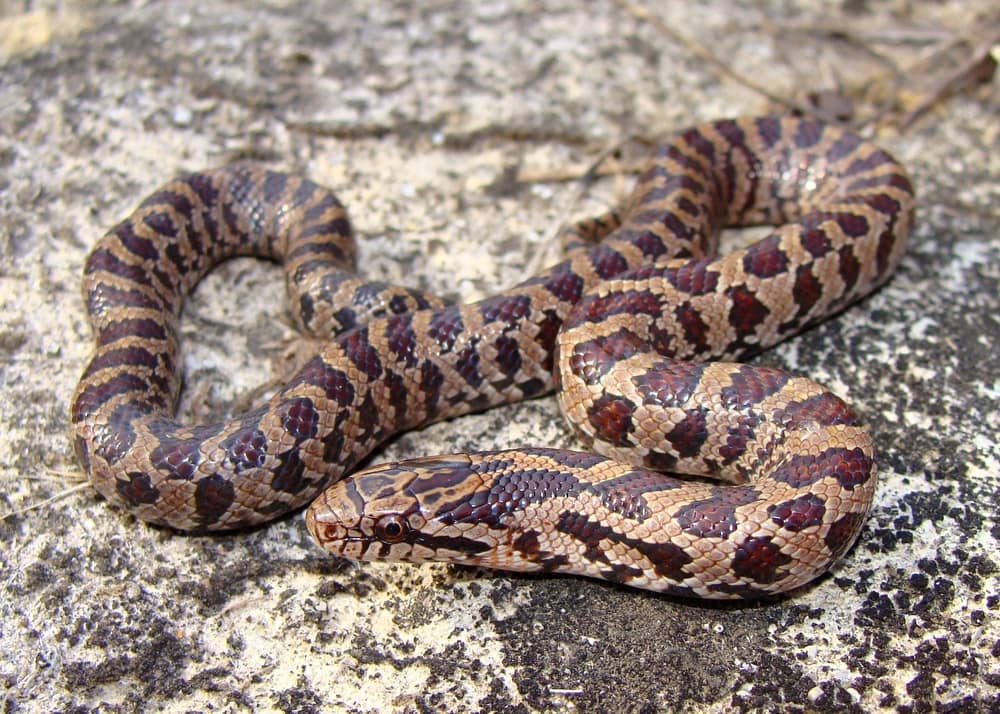
Prairie Kingsnake (Lampropeltis calligaster) is a brown or gray kingsnake of prairies, open woods, farm edges, and field borders. Adults are often 1-4 feet, with a sturdy constrictor body and darker blotches along the back.
The pattern can look muted, especially on older snakes. Habitat and build help separate it from milksnakes, ratsnakes, and racers using the same open-country edges.
| Key detail | What to look for |
|---|---|
| Adult size | often 1-4 feet |
| Fast ID cue | brown or gray kingsnake with darker back blotches and a sturdy build |
| Typical Louisiana habitat | prairies, open woods, farm edges, field borders, and brushy cover |
| Louisiana range | prairies, farm edges, and open woods, with records patchy by parish |
| Bite / venom note | Nonvenomous kingsnake; muted blotches can be easy to underrate |
20. Red Cornsnake
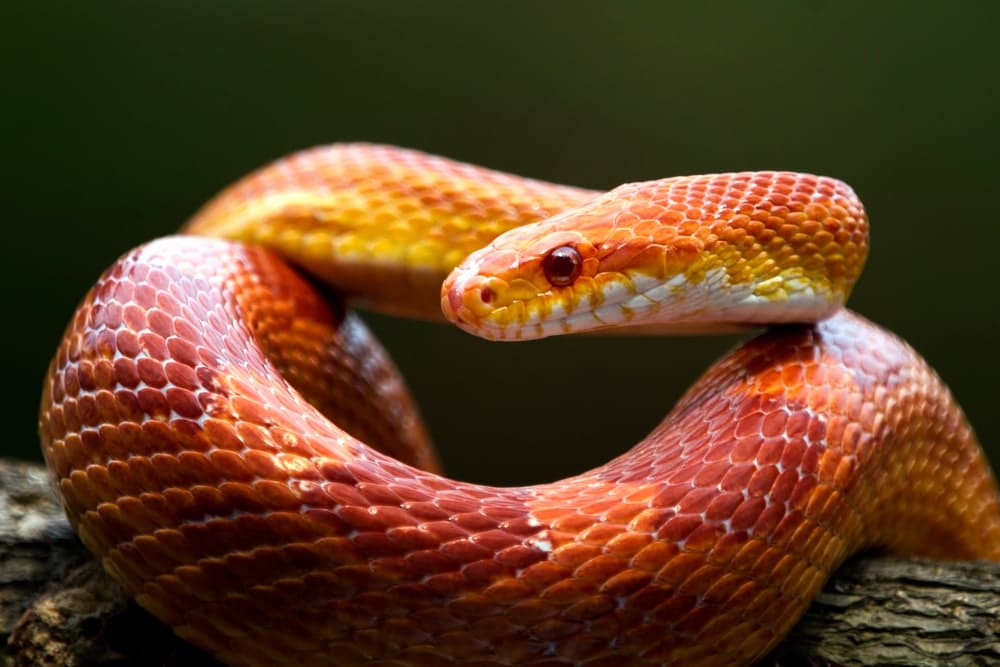
Red Cornsnake (Pantherophis guttatus) is a patterned climber around pine-hardwood edges, barns, old buildings, trees, and farm margins. Adults are often 1-4 feet, with a slimmer build than the kingsnakes in this section.
Orange to reddish saddles and a checkered belly are useful when visible. The climbing posture and edge habitat keep it with ratsnake relatives rather than coral snakes or heavy-bodied pit vipers.
| Key detail | What to look for |
|---|---|
| Adult size | often 1-4 feet |
| Fast ID cue | orange-red saddles, checkered belly, slim climbing body, and edge habitat |
| Typical Louisiana habitat | pine-hardwood edges, barns, old buildings, trees, farms, and brushy margins |
| Louisiana range | wooded edges and old buildings, often in southern and eastern pine-hardwood country |
| Bite / venom note | Nonvenomous climber; patterned ratsnake relative, not a coral snake |
21. Scarlet Kingsnake
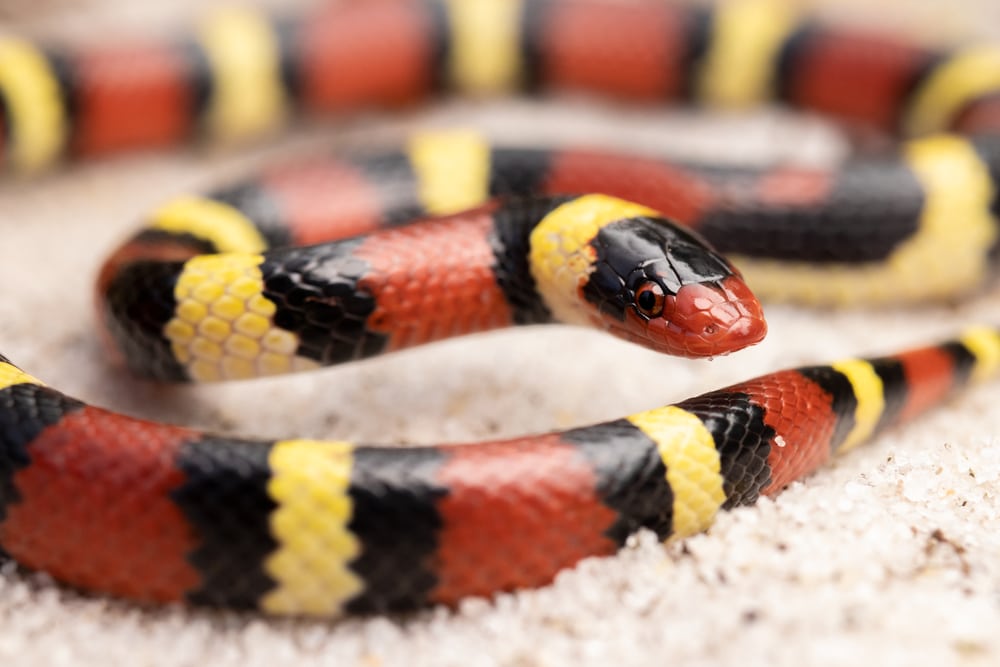
Scarlet Kingsnake (Lampropeltis elapsoides) is a small, glossy kingsnake with red, black, and pale banding. It favors pine woods, sandy hardwood edges, bark, logs, and other tight cover.
The colors invite comparisons with coral snakes and scarletsnakes, but the kingsnake build is the point. Look for smooth scales, a small constrictor body, and bands that fit a covered woodland snake rather than a narrow-headed coral snake.
| Key detail | What to look for |
|---|---|
| Adult size | often 1-4 feet |
| Fast ID cue | small glossy kingsnake with red, black, and pale bands |
| Typical Louisiana habitat | pine woods, sandy hardwood edges, bark slabs, logs, and hidden cover |
| Louisiana range | sandy pine and hardwood litter, often documented under bark or debris |
| Bite / venom note | Nonvenomous kingsnake; bright bands can suggest coral-snake lookalikes |
22. Slowinski’s Cornsnake
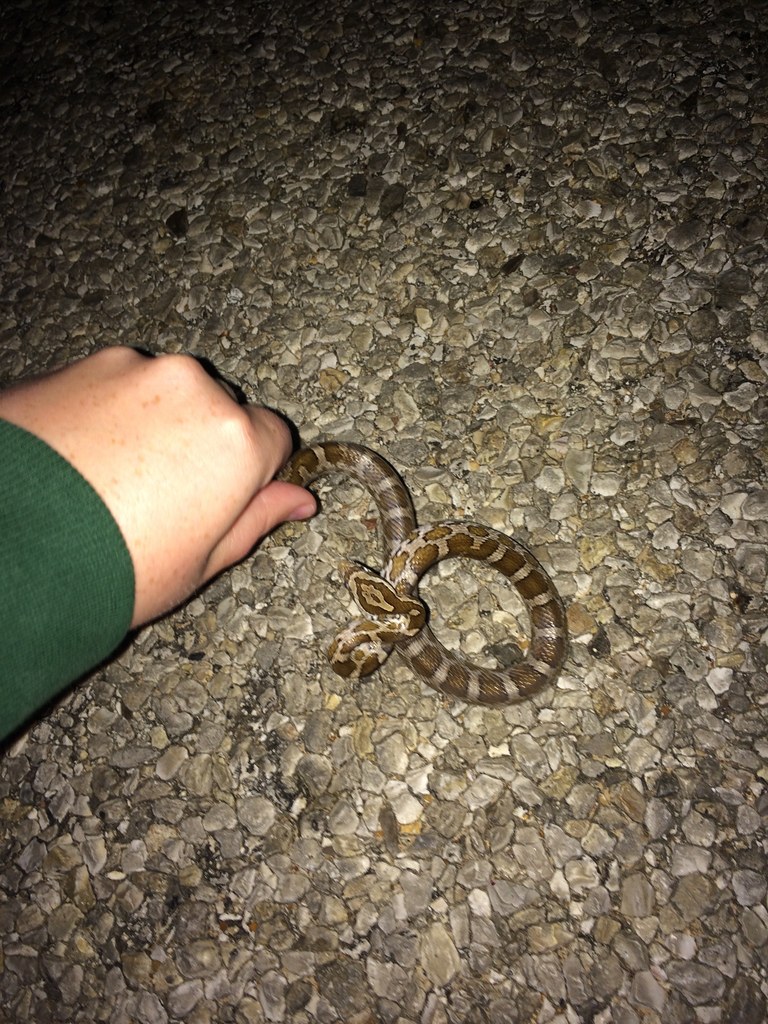
Slowinski’s Cornsnake (Pantherophis slowinskii) is a western Gulf Coast cornsnake of wooded edges, farms, brushy fencerows, and old buildings. Adults are often 1-4 feet and keep the slim, climbing look of Pantherophis snakes.
It can overlap in appearance with red cornsnakes and young ratsnakes. A full view of the back pattern, climbing build, and local range is more useful than one close photo of the head.
| Key detail | What to look for |
|---|---|
| Adult size | often 1-4 feet |
| Fast ID cue | slim cornsnake build with reddish blotches and climbing habits |
| Typical Louisiana habitat | wooded edges, farms, brushy fencerows, old buildings, and tree cover |
| Louisiana range | western and central forest edges, farms, and old-building records |
| Bite / venom note | Nonvenomous climber; compare with red cornsnake and young ratsnakes |
23. Southeastern Crowned Snake
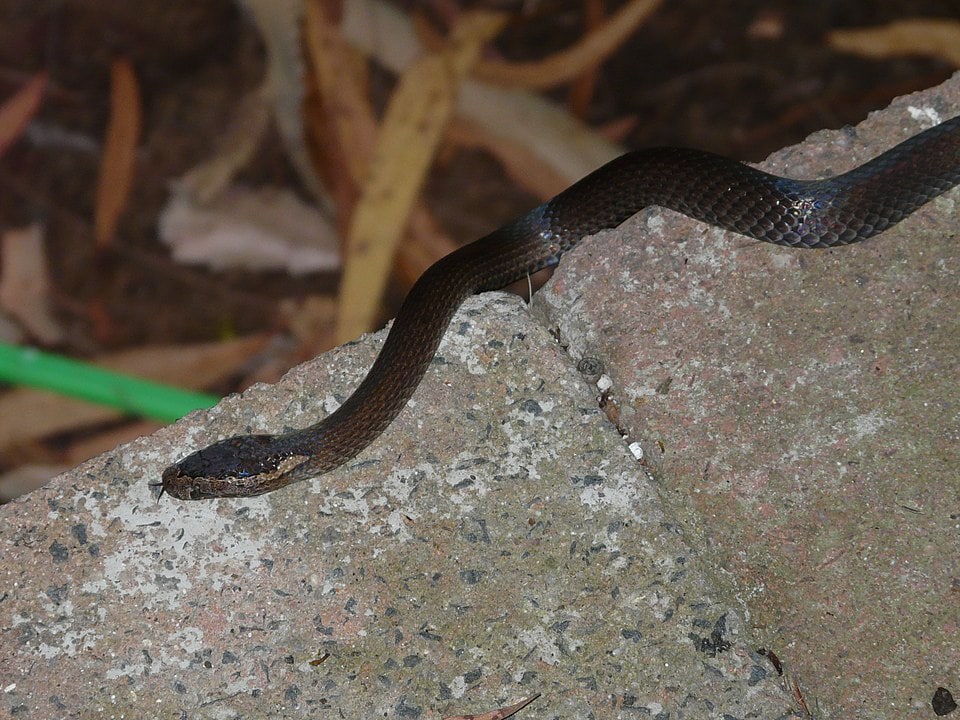
Southeastern Crowned Snake (Tantilla coronata) is a tiny snake of sandy pine litter, dry hardwood edges, loose soil, and rotting logs. Adults are usually 7-16 inches and are easy to miss without lifting cover.
The dark head cap and pale collar are the main visual cues. Most sightings are brief, so size, head pattern, and the dry leaf-litter setting count as much as body color.
| Key detail | What to look for |
|---|---|
| Adult size | usually 7-16 inches |
| Fast ID cue | tiny tan or gray snake with a dark head cap and pale collar |
| Typical Louisiana habitat | sandy pine litter, dry hardwood edges, loose soil, logs, and leaf litter |
| Louisiana range | sandy pine and dry hardwood litter in the coastal plain |
| Bite / venom note | Nonvenomous tiny snake; dark head cap is the quick clue |
24. Speckled Kingsnake
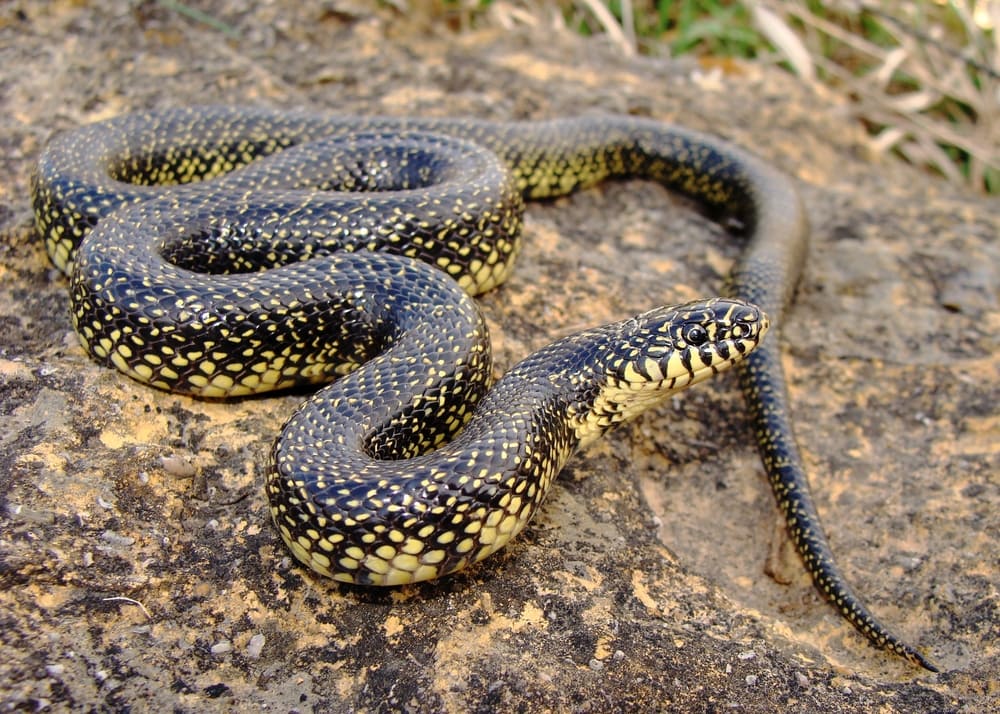
Speckled Kingsnake (Lampropeltis holbrooki) is a dark, glossy constrictor sprinkled with yellow or cream flecks. It uses wooded edges, floodplain margins, farms, brush piles, and old structures.
In good light, the speckled look is obvious. In shade, the smooth kingsnake body and steady use of cover help separate it from racers, ratsnakes, and dark watersnakes.
| Key detail | What to look for |
|---|---|
| Adult size | often 1-4 feet |
| Fast ID cue | dark glossy body with yellow or cream speckles on many scales |
| Typical Louisiana habitat | wooded edges, floodplain margins, farms, brush piles, and old structures |
| Louisiana range | wooded edges, farms, and floodplain margins across much of the state |
| Bite / venom note | Nonvenomous kingsnake; dark body with speckled scales |
25. Western Milksnake
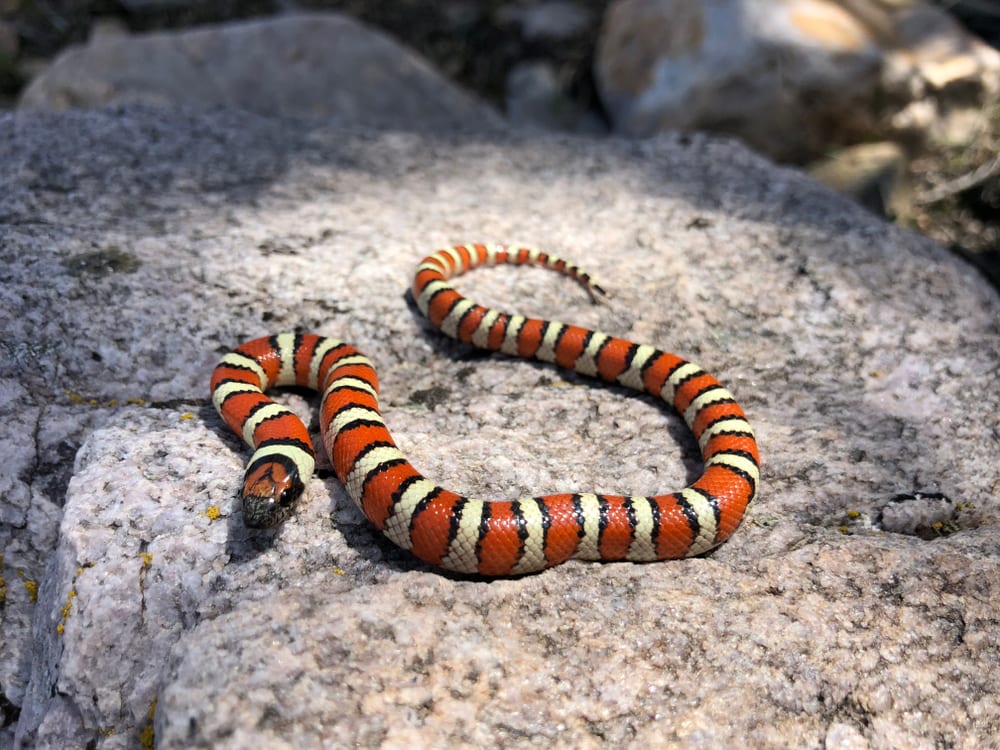
Western Milksnake (Lampropeltis gentilis) is a banded or blotched milksnake of rocky edges, open woods, prairie margins, and covered farm country. Adults are often 1-4 feet.
Its red, black, and pale pattern can look bold, but the body is still a smooth kingsnake-style constrictor. Range and habitat help separate it from eastern milksnakes, scarlet kingsnakes, and coral snakes.
| Key detail | What to look for |
|---|---|
| Adult size | often 1-4 feet |
| Fast ID cue | smooth milksnake with red, black, and pale bands or blotches |
| Typical Louisiana habitat | rocky edges, open woods, prairie margins, brush piles, and farm cover |
| Louisiana range | western and northwestern records; check overlap with eastern milksnakes |
| Bite / venom note | Nonvenomous milksnake; bright pattern can confuse quick IDs |
26. Western Ratsnake
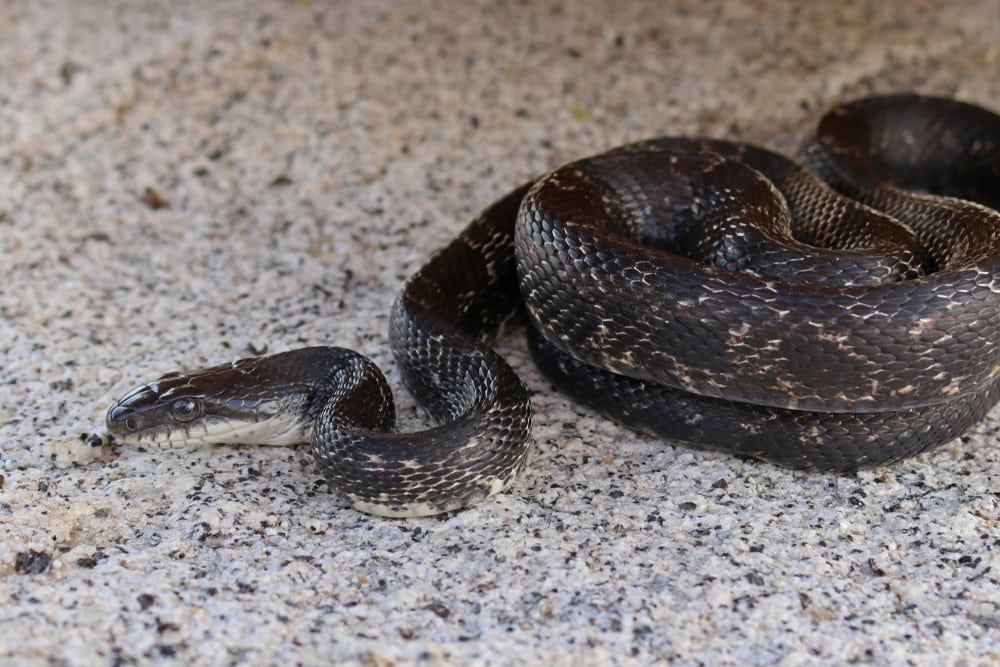
Western Ratsnake (Pantherophis obsoletus) is a long climber of barns, trees, farm edges, hardwood corridors, and rocky cover. Adults are often 3-7 feet and can look imposing because of their length.
Posture tells a lot. A western ratsnake may be stretched along rafters, climbing bark, or moving through a brush pile, with a slimmer body than a cottonmouth or rattlesnake of similar length.
| Key detail | What to look for |
|---|---|
| Adult size | often 3-7 feet |
| Fast ID cue | long dark climber around barns, trees, fences, and brush piles |
| Typical Louisiana habitat | barns, trees, farm edges, hardwood corridors, rocky cover, and old buildings |
| Louisiana range | western and northern wooded corridors, barns, and farm edges |
| Bite / venom note | Nonvenomous ratsnake; length and climbing posture stand out |
Small woodland snakes, hognoses, and secretive hunters
27. Common Wormsnake
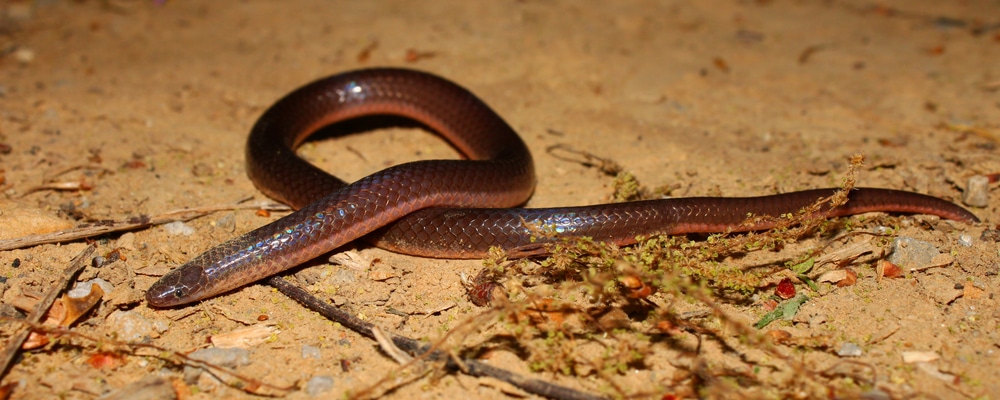
Common Wormsnake (Carphophis amoenus) is a small glossy snake of moist hardwood litter, loose soil, damp gardens, and rotting logs. Adults are usually 7-16 inches, with a wormlike body and a pinkish underside.
Most are found under cover rather than seen traveling in the open. The tiny snake head, smooth scales, and pointed tail separate it from an actual earthworm or a young brown snake.
| Key detail | What to look for |
|---|---|
| Adult size | usually 7-16 inches |
| Fast ID cue | small glossy brown wormlike snake with pink belly and pointed tail |
| Typical Louisiana habitat | moist hardwood litter, loose soil, damp gardens, rotting logs, and shaded cover |
| Louisiana range | moist hardwood litter and shaded gardens, often easiest to document under cover |
| Bite / venom note | Nonvenomous tiny snake; usually uncovered under logs or damp litter |
28. Eastern Hog-nosed Snake
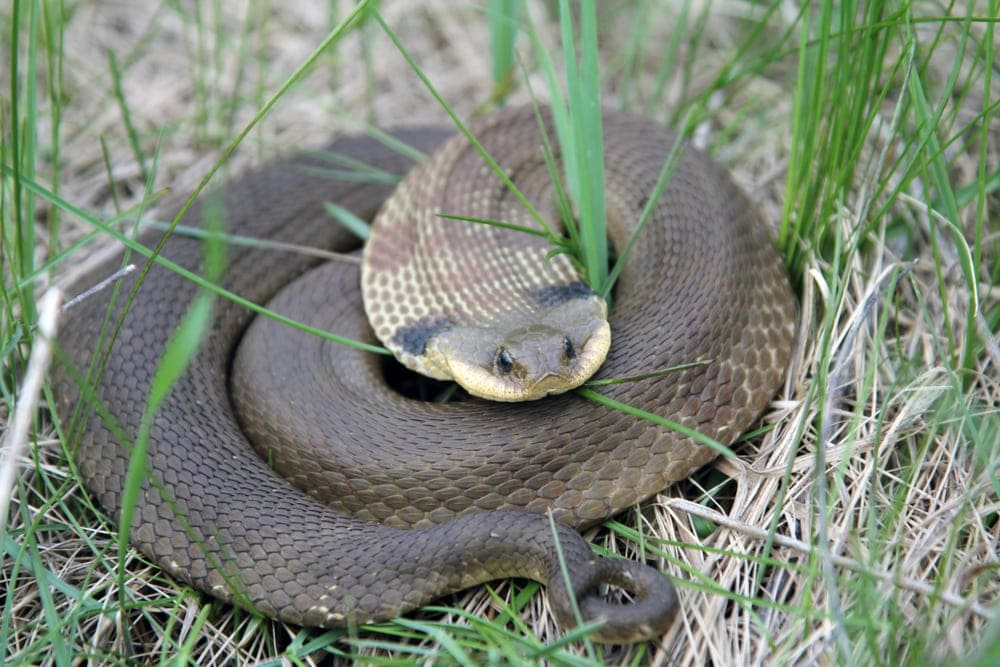
Eastern Hog-nosed Snake (Heterodon platirhinos) is the sandy-soil toad hunter with the upturned snout. It favors pine woods, open woodlands, fields, dry sandy edges, and places with plenty of toads.
Adults are often 1-4 feet. The flattened neck display can make the snake look dramatic, but the shovel-like nose, stout body, and dry habitat are cleaner ID clues.
| Key detail | What to look for |
|---|---|
| Adult size | often 1-4 feet |
| Fast ID cue | upturned snout, stout body, wide neck display, and sandy toad habitat |
| Typical Louisiana habitat | sandy soils, pine woods, open woodlands, fields, and toad-rich edges |
| Louisiana range | sandy pine and open woodland soils with abundant toads |
| Bite / venom note | Nonvenomous toad specialist; upturned snout is the key mark |
29. Pine Woods Littersnake
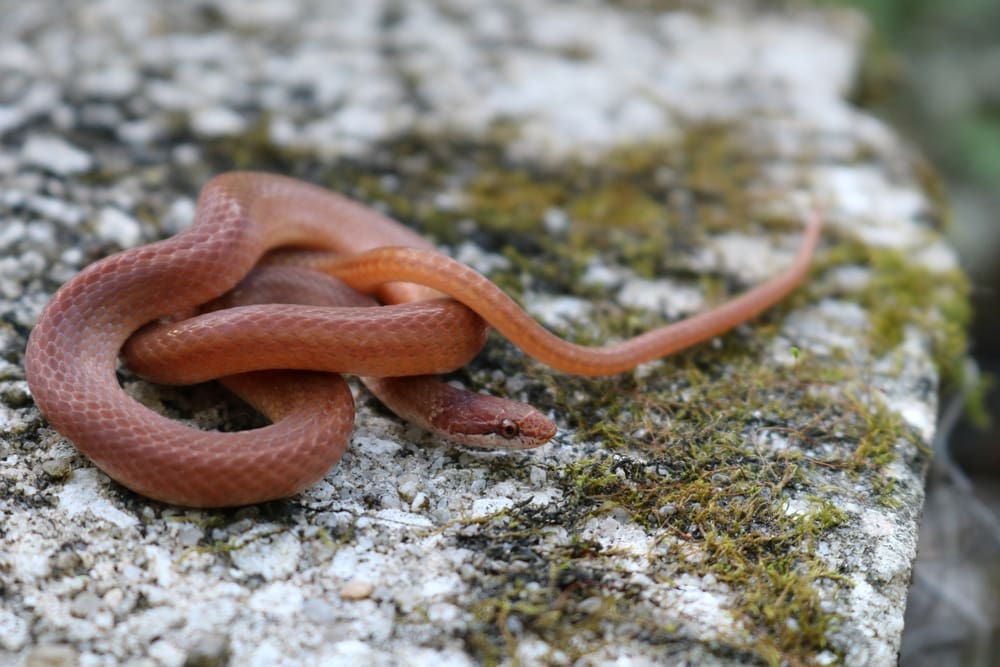
Pine Woods Littersnake (Rhadinaea flavilata) is a small, secretive snake of pine straw, loose leaf litter, and coastal-plain pine woods. It is a ground-cover species, not a large open-country hunter.
Look low for a slender tan or brown snake with a dark head or neck mark slipping through litter. A brief view under pine straw or bark is more typical than a long basking pose.
| Key detail | What to look for |
|---|---|
| Adult size | small, slender leaf-litter snake |
| Fast ID cue | small tan pine-litter snake with dark head or neck marking |
| Typical Louisiana habitat | pine straw, loose leaf litter, coastal-plain pine woods, and light cover |
| Louisiana range | coastal-plain pine woods and pine-straw litter, often very local |
| Bite / venom note | Nonvenomous litter snake; small and easy to overlook under pine straw |
30. Rainbow Snake
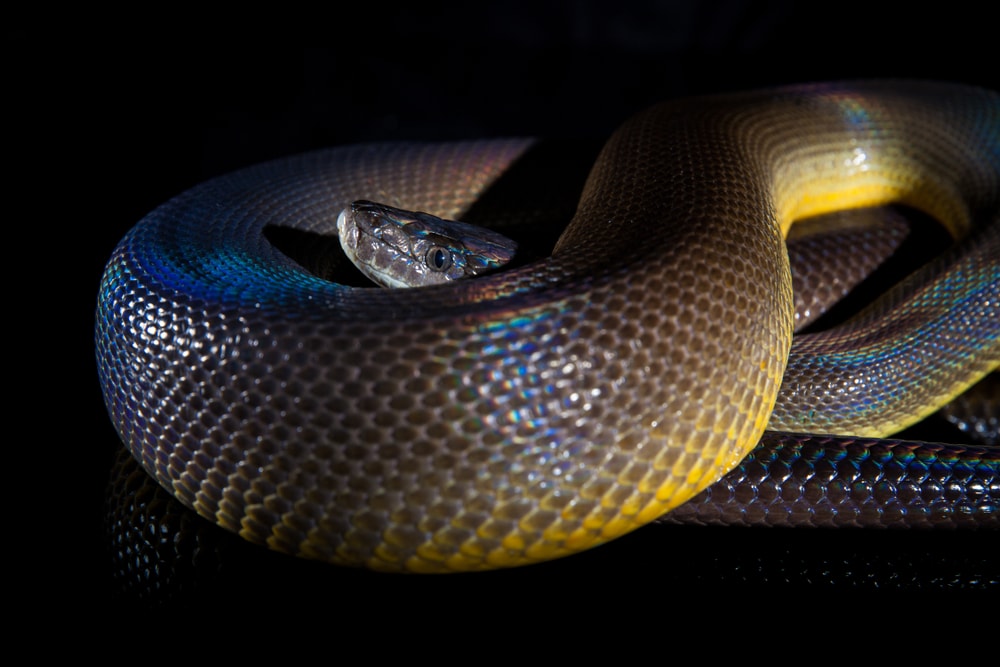
Rainbow Snake (Farancia erytrogramma) is a glossy aquatic snake of backwaters, cypress swamps, sluggish streams, and wetland edges. It has a dark back with red or pink striping and belly color that can flash when the snake turns.
Adults are often 1-4 feet, though large individuals can feel more substantial in hand or in a photo. The shine, wet habitat, and colorful underside separate it from plain brown watersnakes.
| Key detail | What to look for |
|---|---|
| Adult size | often 1-4 feet |
| Fast ID cue | glossy dark aquatic snake with red or pink stripes and bright belly color |
| Typical Louisiana habitat | backwaters, cypress swamps, sluggish streams, wetland edges, and soft mud |
| Louisiana range | backwaters, cypress swamps, and sluggish streams of the coastal plain |
| Bite / venom note | Nonvenomous aquatic snake; glossy body and red belly marks stand out |
31. Red-bellied Mudsnake
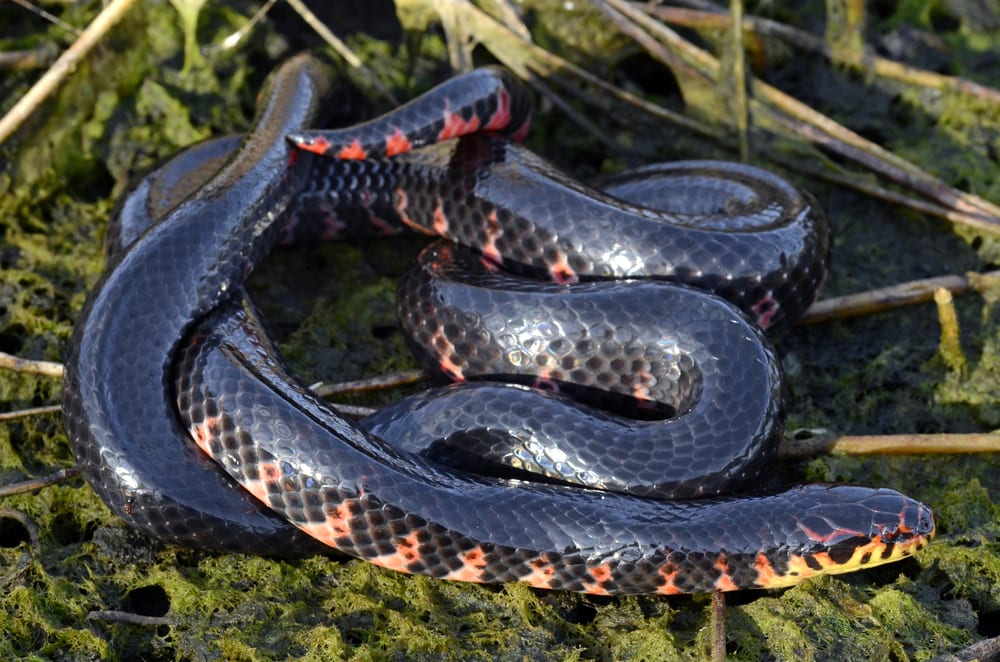
Red-bellied Mudsnake (Farancia abacura) is a glossy, heavy wetland snake of cypress swamps, bayous, marshes, and soft-bottom sloughs. The dark upper body and red or pink belly markings are its strongest visual cues.
This is not the tiny red-bellied leaf-litter snake later in the guide. Think mud, swamp edge, amphibian prey, and a smooth dark body with bright color flashing underneath.
| Key detail | What to look for |
|---|---|
| Adult size | often 3-5 feet |
| Fast ID cue | large glossy black swamp snake with red or pink belly markings |
| Typical Louisiana habitat | cypress swamps, bayous, marshes, soft-bottom sloughs, and wet ditches |
| Louisiana range | cypress swamps, bayous, and soft-bottom wetlands across lowland parishes |
| Bite / venom note | Nonvenomous mudsnake; large glossy swamp hunter with red belly marks |
32. Ring-necked Snake
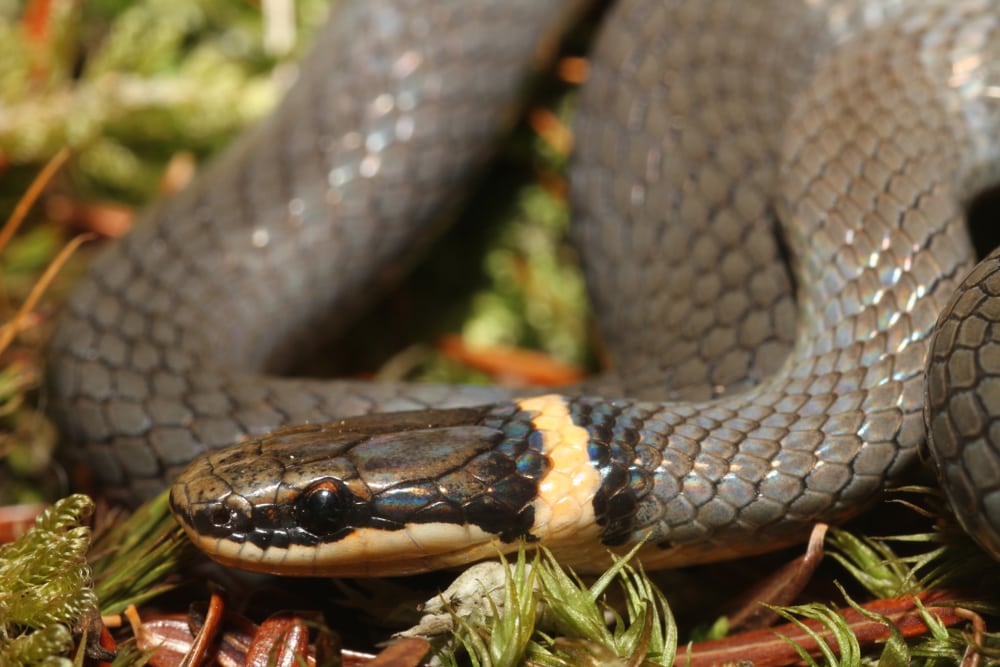
Ring-necked Snake (Diadophis punctatus) is a small dark-backed snake with a light neck ring and a bright yellow to orange belly. Adults are usually 10-24 inches and stay close to damp cover.
The neck ring helps, but the underside often clinches the ID when visible. Look under logs, bark, stones, and moist garden debris rather than in open water or full-sun grass.
| Key detail | What to look for |
|---|---|
| Adult size | usually 10-24 inches |
| Fast ID cue | dark back, light neck ring, and bright yellow to orange belly |
| Typical Louisiana habitat | moist woods, shaded gardens, bark, stones, logs, and damp leaf litter |
| Louisiana range | moist woods, shaded gardens, and rotting-log cover across much of the state |
| Bite / venom note | Nonvenomous small snake; belly color and neck ring are useful |
33. Western Wormsnake
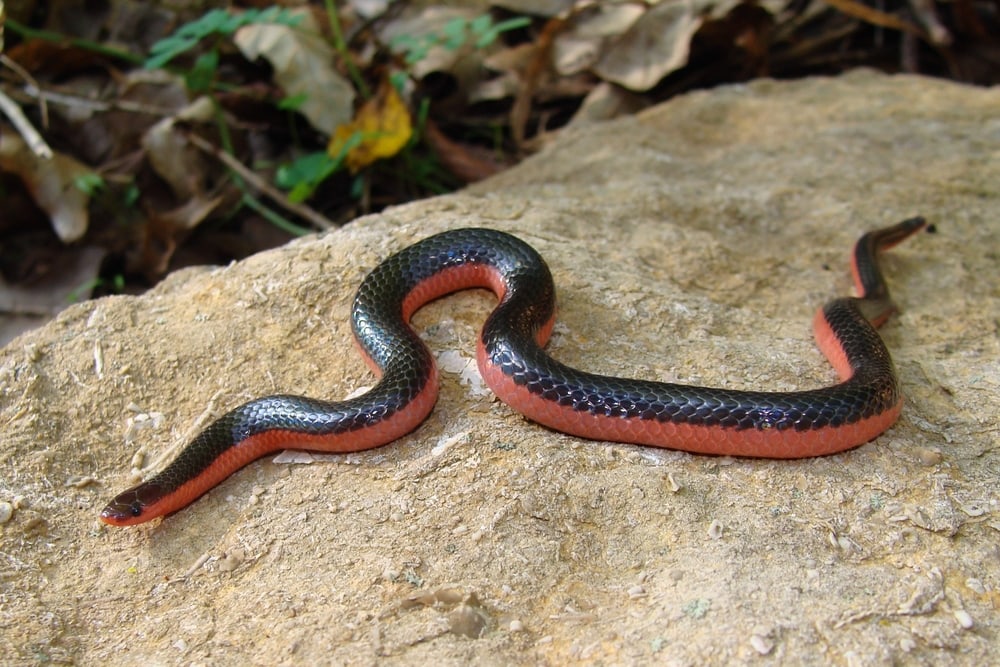
Western Wormsnake (Carphophis vermis) is another small soil-hugging snake, usually 7-16 inches, with a glossy brown back and pinkish underside. It favors moist soil, leaf litter, and logs in wooded cover.
The western species can look almost interchangeable with the common wormsnake at a glance. Location, range, and a careful look at the small head and tail matter more than body color alone.
| Key detail | What to look for |
|---|---|
| Adult size | usually 7-16 inches |
| Fast ID cue | small glossy wormlike snake with brown back, pink belly, and pointed tail |
| Typical Louisiana habitat | moist wooded soil, leaf litter, logs, shaded gardens, and damp cover |
| Louisiana range | western or northwestern wooded sites with moist soil and logs |
| Bite / venom note | Nonvenomous tiny snake; range helps separate it from common wormsnake |
Watersnakes, gartersnakes, ribbonsnakes, and wetland species
34. Common Gartersnake
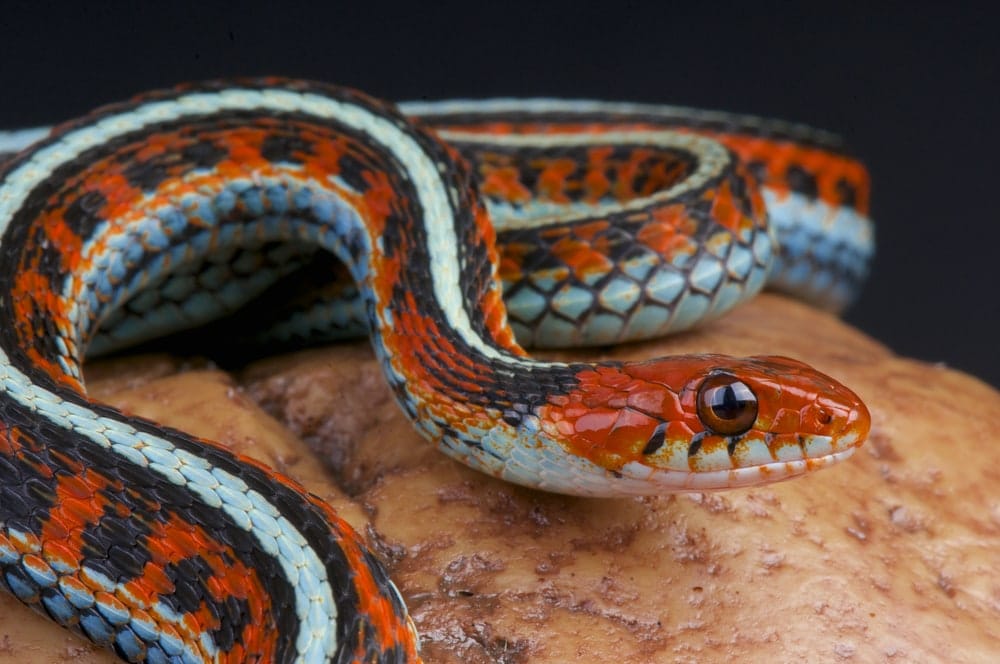
Common Gartersnake (Thamnophis sirtalis) is the familiar striped snake of wet meadows, ditch banks, pond margins, stream edges, and damp yards. Adults are usually 18-48 inches, with a slim body and lengthwise stripes.
The stripes separate it from watersnakes, while the body is stockier than the ribbon snakes below. It often hunts around wet grass and backyard edges where earthworms, frogs, and small prey are common.
| Key detail | What to look for |
|---|---|
| Adult size | usually 18-48 inches |
| Fast ID cue | striped body, moderate build, and wet-grass or yard-edge setting |
| Typical Louisiana habitat | wet meadows, ditch banks, pond margins, stream edges, and damp yards |
| Louisiana range | wet meadows, ditch banks, pond edges, and damp yards |
| Bite / venom note | Nonvenomous striped snake; often found around damp grass and gardens |
35. Common Watersnake
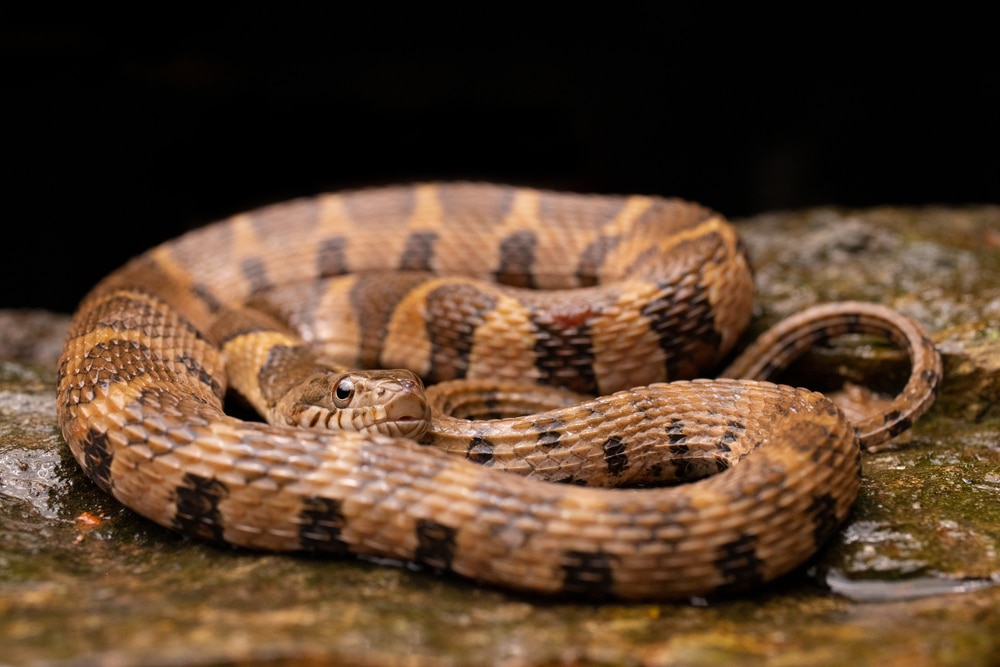
Common Watersnake (Nerodia sipedon) is a nonvenomous Nerodia of ponds, rivers, sloughs, and wetland margins in the parishes where it occurs. Adults are usually 18-48 inches and can look thick when coiled or basking.
The cottonmouth comparison comes up because both use water edges. Round pupils, no facial pit, a banded watersnake pattern, and behavior around logs or banks keep the ID pointed away from pit vipers.
| Key detail | What to look for |
|---|---|
| Adult size | usually 18-48 inches |
| Fast ID cue | banded watersnake near ponds or rivers, with round pupils and no facial pit |
| Typical Louisiana habitat | pond edges, rivers, sloughs, wetland margins, basking logs, and banks |
| Louisiana range | local wetland records; compare with other Nerodia in many parishes |
| Bite / venom note | Nonvenomous watersnake; often mistaken for cottonmouths around water |
36. Dekay’s Brownsnake
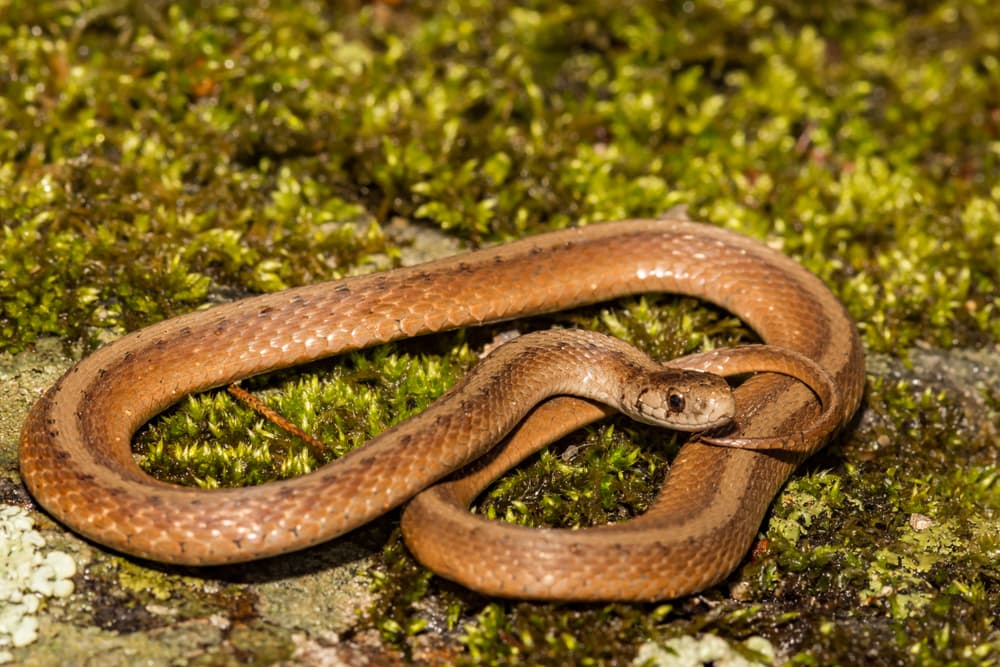
Dekay’s Brownsnake (Storeria dekayi) is a small brown snake of damp gardens, leaf litter, compost, rotting logs, and shaded woodland edges. Adults are usually 7-16 inches.
Look for a faint midback stripe bordered by small dark spots. It is a backyard and garden snake as much as a woods snake, especially where slugs, worms, and damp cover are available.
| Key detail | What to look for |
|---|---|
| Adult size | usually 7-16 inches |
| Fast ID cue | small brown snake with faint stripe, paired dark spots, and damp-cover habits |
| Typical Louisiana habitat | damp gardens, leaf litter, compost, rotting logs, and shaded woodland edges |
| Louisiana range | damp yards, gardens, and woodland edges across much of the state |
| Bite / venom note | Nonvenomous small snake; common around damp cover and garden edges |
37. Diamond-backed Watersnake
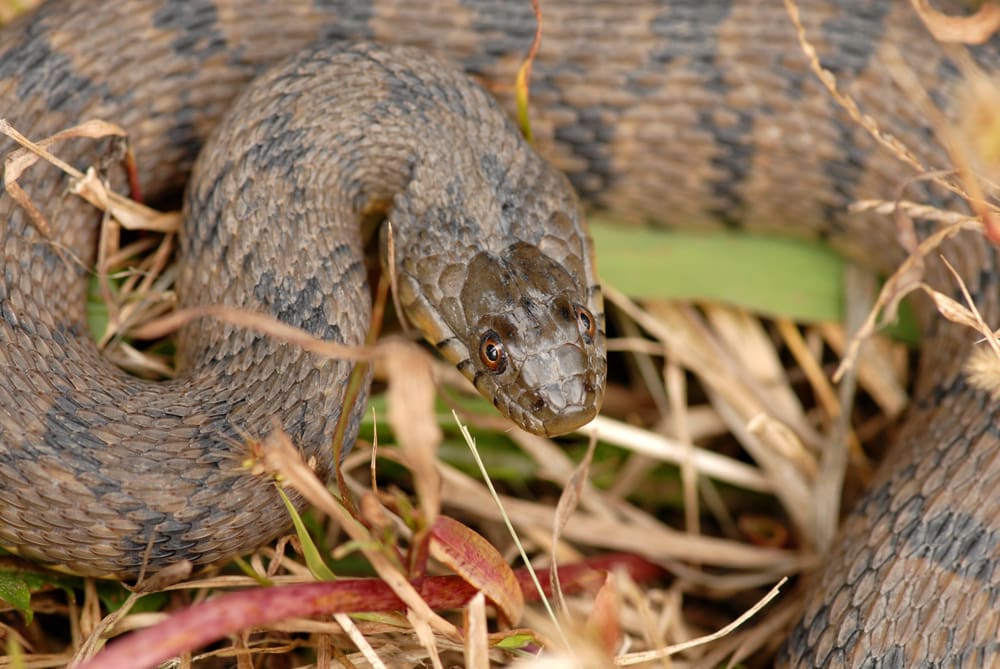
Diamond-backed Watersnake (Nerodia rhombifer) is a large, heavy Nerodia with a chainlike diamond pattern along the back. It is strongly tied to bayous, oxbows, cypress brakes, river edges, and basking limbs over water.
The pattern is the headline, but head details still matter near water. Round pupils, no facial pit, and a watersnake body separate it from cottonmouths using the same logs and banks.
| Key detail | What to look for |
|---|---|
| Adult size | usually 18-48 inches |
| Fast ID cue | heavy watersnake with chainlike diamond pattern and round pupils |
| Typical Louisiana habitat | bayous, oxbows, cypress brakes, river edges, basking limbs, and banks |
| Louisiana range | large rivers, bayous, oxbows, and cypress brakes across lowland Louisiana |
| Bite / venom note | Nonvenomous watersnake; heavy cottonmouth lookalike near logs and banks |
38. Eastern Ribbonsnake
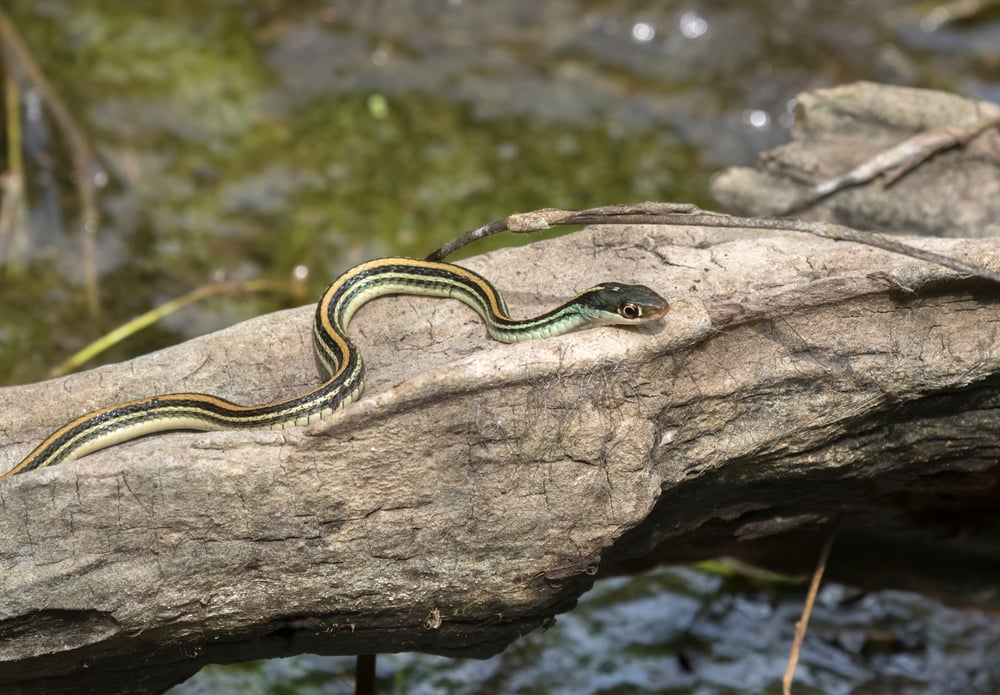
Eastern Ribbonsnake (Thamnophis saurita) is a slim, long-tailed snake of marsh grass, pond margins, wet meadows, and vegetated stream edges. Adults are usually 18-48 inches but look lighter than many gartersnakes.
Crisp lengthwise stripes and a very narrow body are the main cues. It stays close to water-edge vegetation, often looking more delicate and quicker than a stockier common gartersnake.
| Key detail | What to look for |
|---|---|
| Adult size | usually 18-48 inches |
| Fast ID cue | very slim striped body, long tail, and wet vegetation habitat |
| Typical Louisiana habitat | marsh grass, pond margins, wet meadows, and vegetated stream edges |
| Louisiana range | wet meadows, marsh edges, and vegetated stream margins |
| Bite / venom note | Nonvenomous ribbon snake; delicate build and long tail separate it |
39. Glossy Swampsnake
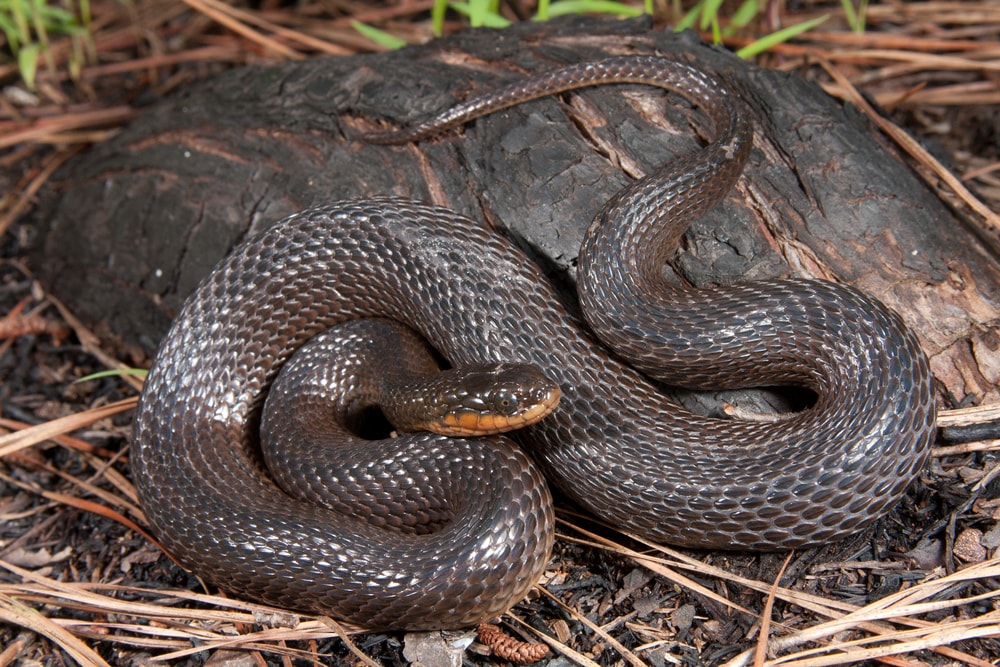
Glossy Swampsnake (Liodytes rigida) is a small to medium wetland snake with a smooth, glossy look and a strong tie to crayfish-rich shallows. Adults are usually 18-48 inches, though field impressions often center on shine and habitat.
Look for it in cypress swamps, marshy ditches, backwaters, and vegetated edges rather than dry uplands. The plain glossy body and swamp setting separate it from bolder banded watersnakes.
| Key detail | What to look for |
|---|---|
| Adult size | usually 18-48 inches |
| Fast ID cue | glossy brown wetland snake associated with crayfish-rich shallows |
| Typical Louisiana habitat | cypress swamps, marshy ditches, backwaters, crayfish shallows, and vegetation mats |
| Louisiana range | cypress swamps, marshes, and backwaters with crayfish-rich shallows |
| Bite / venom note | Nonvenomous swamp snake; crayfish habitat is a strong clue |
40. Graham’s Crawfish Snake
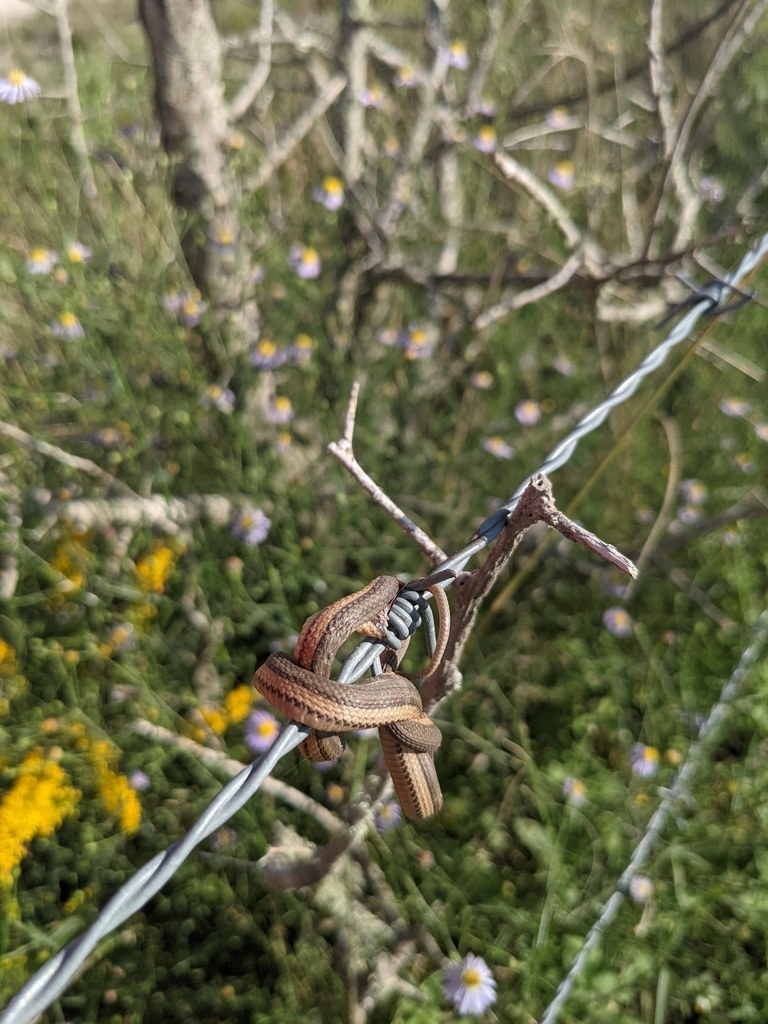
Graham’s Crawfish Snake (Regina grahamii) is a plain waterside snake associated with crawfish burrows, ditches, marshy edges, and muddy wetland margins. Adults are often 1-4 feet.
It is not flashy. A brown or olive body with light side striping, found beside crawfish-rich water or burrowed mud, is more useful than hunting for a single bright mark.
| Key detail | What to look for |
|---|---|
| Adult size | often 1-4 feet |
| Fast ID cue | plain brown or olive waterside snake tied to crawfish burrows |
| Typical Louisiana habitat | crawfish burrows, ditches, marshy grass, muddy wetland edges, and slow water |
| Louisiana range | ditches, marshy edges, and crawfish-burrow wetlands, often local |
| Bite / venom note | Nonvenomous crawfish specialist; plain body and muddy edge habitat |
41. Mississippi Green Watersnake
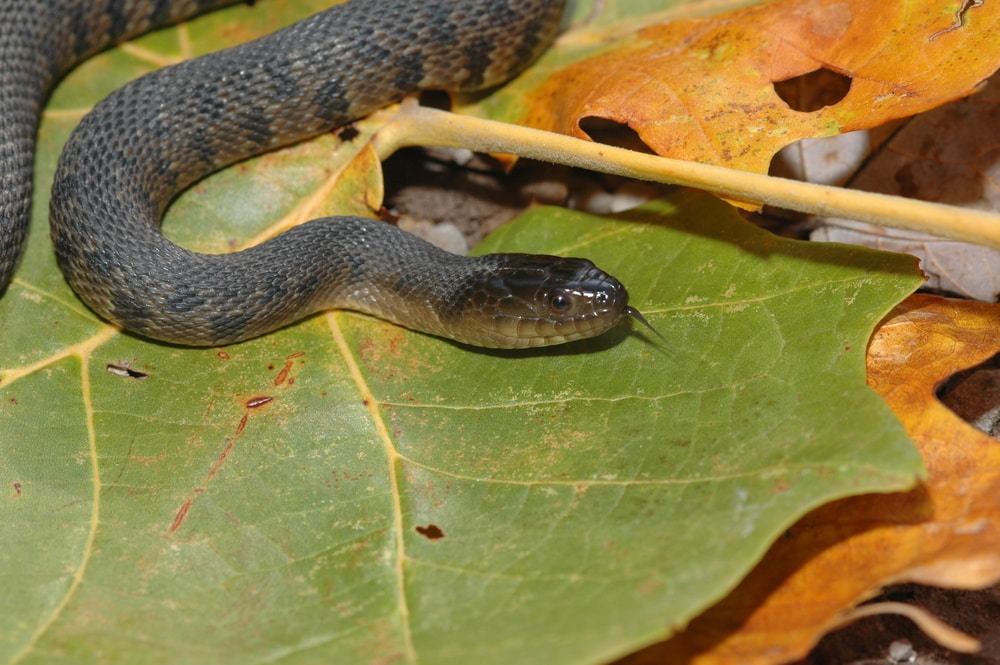
Mississippi Green Watersnake (Nerodia cyclopion) is a swampy Nerodia of cypress-tupelo water, oxbows, bayous, and sluggish lowland wetlands. Adults are usually 18-48 inches, with a greenish or olive cast that may be subtle.
Use the wetland setting with Nerodia traits: round pupils, no facial pit, keeled scales, and a watersnake build. It can be mistaken for a cottonmouth when seen coiled in shade near water.
| Key detail | What to look for |
|---|---|
| Adult size | usually 18-48 inches |
| Fast ID cue | greenish olive watersnake of cypress swamps, with round pupils and no facial pit |
| Typical Louisiana habitat | cypress-tupelo swamps, oxbows, bayous, sloughs, and sluggish wetlands |
| Louisiana range | cypress-tupelo swamps, oxbows, and slow bayous in lowland parishes |
| Bite / venom note | Nonvenomous watersnake; greenish swamp cottonmouth lookalike |
42. Plain-bellied Watersnake
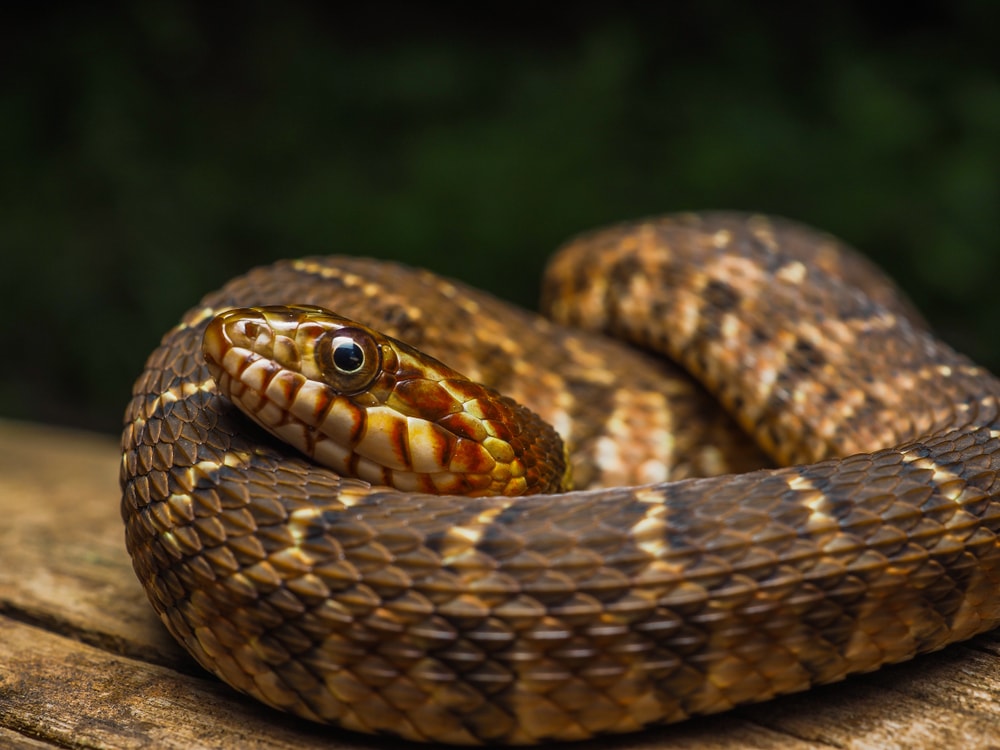
Plain-bellied Watersnake (Nerodia erythrogaster) is a nonvenomous watersnake of swamps, ponds, sloughs, river bottoms, and wet lowlands. Adults are usually 18-48 inches.
The plain yellow, orange, or reddish belly is helpful when visible, but many sightings begin with a dark watersnake sliding from a bank or log. Round pupils and no facial pit separate it from cottonmouths nearby.
| Key detail | What to look for |
|---|---|
| Adult size | usually 18-48 inches |
| Fast ID cue | dark watersnake with plain yellow, orange, or reddish belly |
| Typical Louisiana habitat | swamps, ponds, sloughs, river bottoms, wet lowlands, and basking banks |
| Louisiana range | swamps, ponds, sloughs, and river bottoms, sometimes away from deep water |
| Bite / venom note | Nonvenomous watersnake; plain belly helps with cottonmouth comparisons |
43. Red-bellied Snake
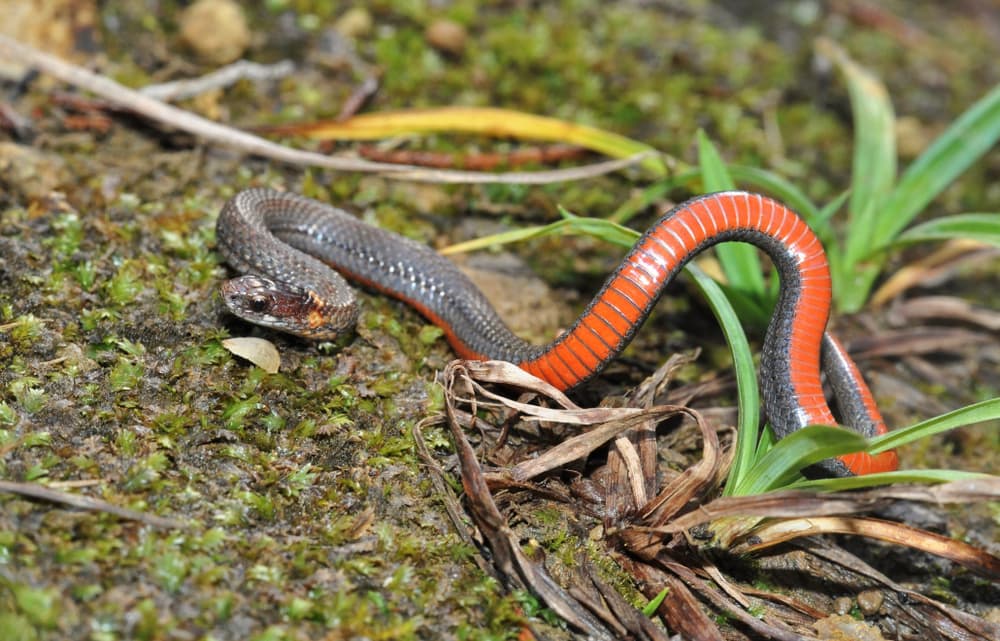
Red-bellied Snake (Storeria occipitomaculata) is a small leaf-litter snake, usually 7-16 inches, with a reddish belly under a plain brown or gray back. It uses cool damp woods, wet edges, and sheltered ground cover.
This is the tiny Storeria, not the large mudsnake above. Size, belly color, and damp litter are the pieces to put together, and the small pale neck spots can help when visible.
| Key detail | What to look for |
|---|---|
| Adult size | usually 7-16 inches |
| Fast ID cue | tiny brown or gray snake with red belly and small pale neck spots |
| Typical Louisiana habitat | cool damp woods, wet edges, leaf litter, mossy logs, and sheltered ground cover |
| Louisiana range | cool damp leaf litter in woods, wet edges, and shaded cover |
| Bite / venom note | Nonvenomous small snake; not the large red-bellied mudsnake |
44. Rough Earthsnake
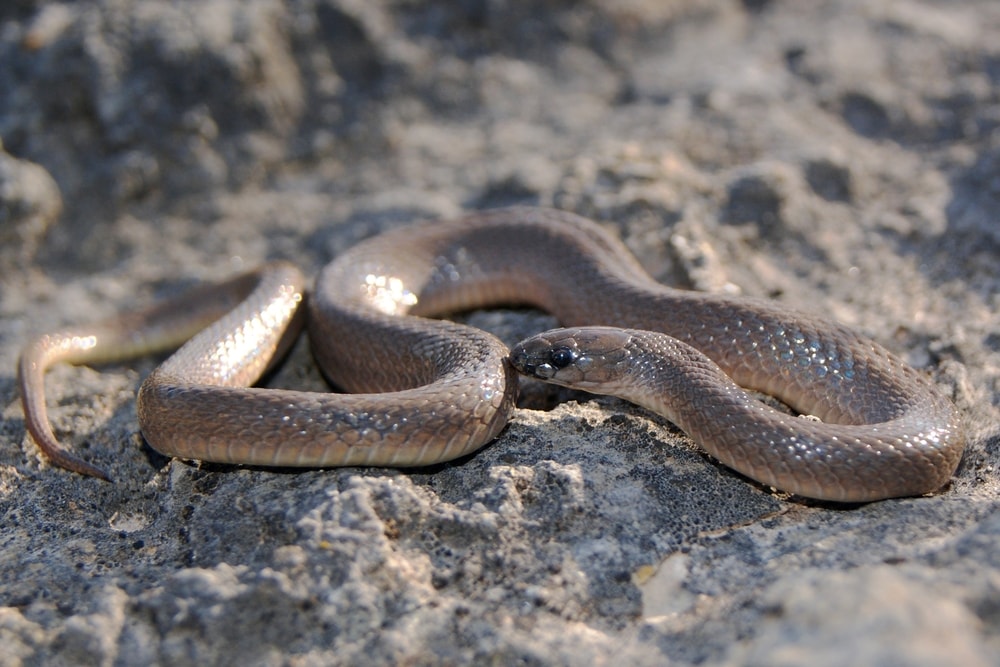
Rough Earthsnake (Virginia striatula) is a small soil-colored snake of damp leaf litter, gardens, rotting logs, and loose earth. Adults are usually 7-16 inches and often appear during yard work or after rain.
The rougher, keeled-looking scales and tiny head separate it from smooth earthsnakes and wormsnakes when you can see the body well. Habitat and small size are the first clues.
| Key detail | What to look for |
|---|---|
| Adult size | usually 7-16 inches |
| Fast ID cue | small gray-brown earthsnake with rougher scales and damp-soil habits |
| Typical Louisiana habitat | damp leaf litter, gardens, loose earth, rotting logs, and shaded edges |
| Louisiana range | damp soil, leaf litter, and gardens, mainly documented under cover |
| Bite / venom note | Nonvenomous tiny earthsnake; scale texture helps separate lookalikes |
45. Saltmarsh Snake
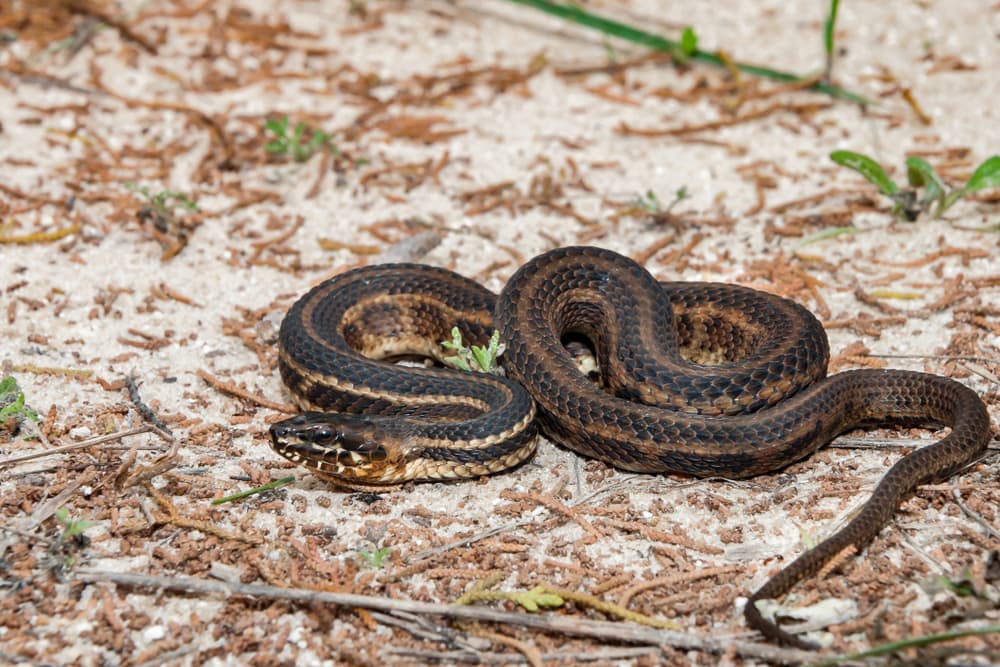
Saltmarsh Snake (Nerodia clarkii) is the coastal Nerodia of brackish marshes, tidal creeks, saltgrass edges, and shallow marsh pools. Adults are often 1-4 feet.
Habitat is the strongest clue. A watersnake in brackish grass or a tidal creek fits this species better than a freshwater Nerodia from a pond deep inland, even when stripes or dark patterning vary.
| Key detail | What to look for |
|---|---|
| Adult size | often 1-4 feet |
| Fast ID cue | brackish-marsh watersnake with stripes or dark patterning and coastal habitat |
| Typical Louisiana habitat | brackish marshes, tidal creeks, saltgrass edges, and coastal wetland margins |
| Louisiana range | coastal marshes, tidal creeks, and brackish grass flats |
| Bite / venom note | Nonvenomous coastal watersnake; brackish habitat is the main clue |
46. Smooth Earthsnake
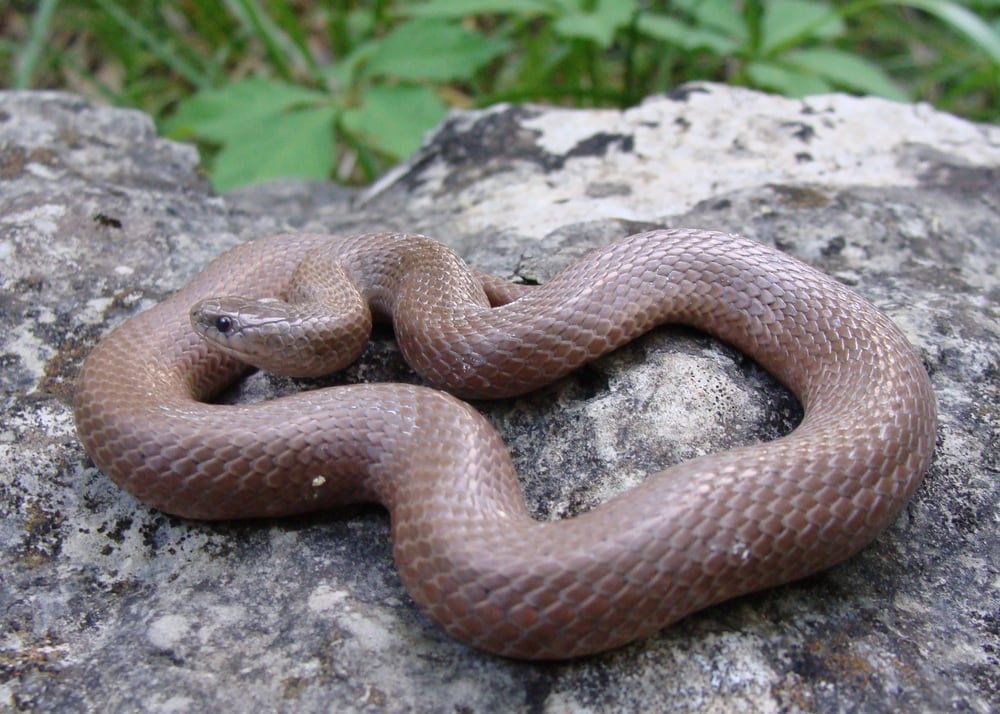
Smooth Earthsnake (Virginia valeriae) is a small, plain brown or gray snake of loose soil, leaf litter, damp gardens, and logs. Adults are usually 7-16 inches and are easiest to notice when cover is moved.
The smooth body and tiny ground-snake proportions separate it from rough earthsnakes when scale texture is visible. It belongs with the hidden soil snakes, not with gartersnakes or watersnakes in open wet grass.
| Key detail | What to look for |
|---|---|
| Adult size | usually 7-16 inches |
| Fast ID cue | small plain earthsnake with smooth scales and hidden soil habits |
| Typical Louisiana habitat | loose soil, leaf litter, damp gardens, rotting logs, and shaded woodland edges |
| Louisiana range | wooded slopes, damp gardens, and loose soil under rocks or logs |
| Bite / venom note | Nonvenomous tiny earthsnake; smooth scales and soil cover are clues |
47. Southern Watersnake
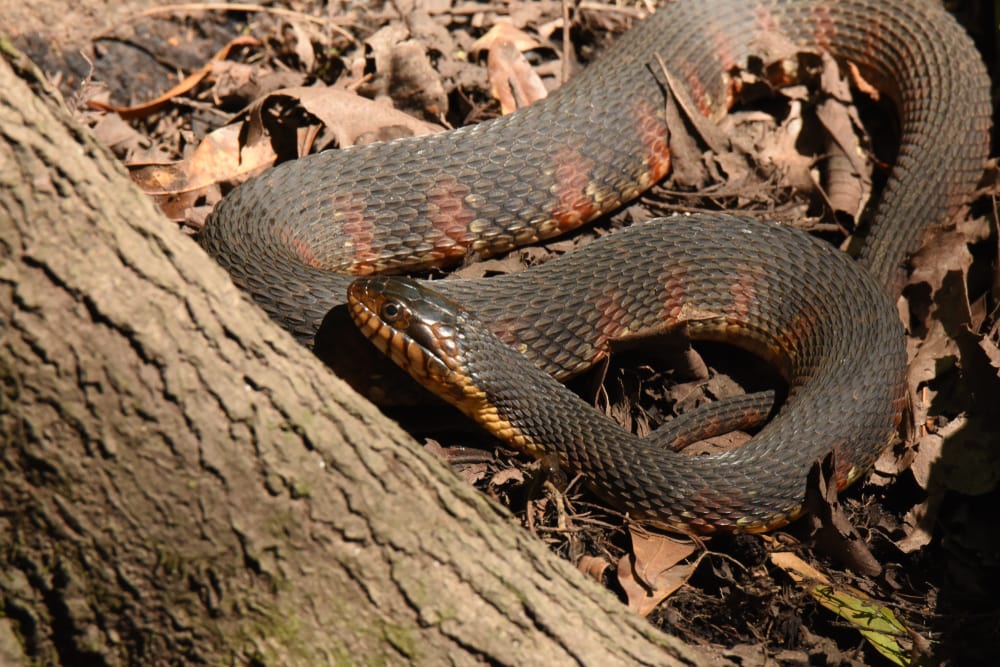
Southern Watersnake (Nerodia fasciata) is the banded watersnake of swamps, bayous, ponds, slow streams, and cypress edges. Adults are usually 18-48 inches.
The dark crossbands can be bold or muted, and the cottonmouth comparison is common near water. Round pupils, no facial pit, and a Nerodia body shape point toward a nonvenomous watersnake.
| Key detail | What to look for |
|---|---|
| Adult size | usually 18-48 inches |
| Fast ID cue | banded watersnake near slow water, with round pupils and no facial pit |
| Typical Louisiana habitat | swamps, bayous, ponds, slow streams, cypress edges, and wet banks |
| Louisiana range | coastal-plain swamps, bayous, ponds, and slow streams |
| Bite / venom note | Nonvenomous watersnake; banded cottonmouth lookalike near water |
48. Western Ribbonsnake
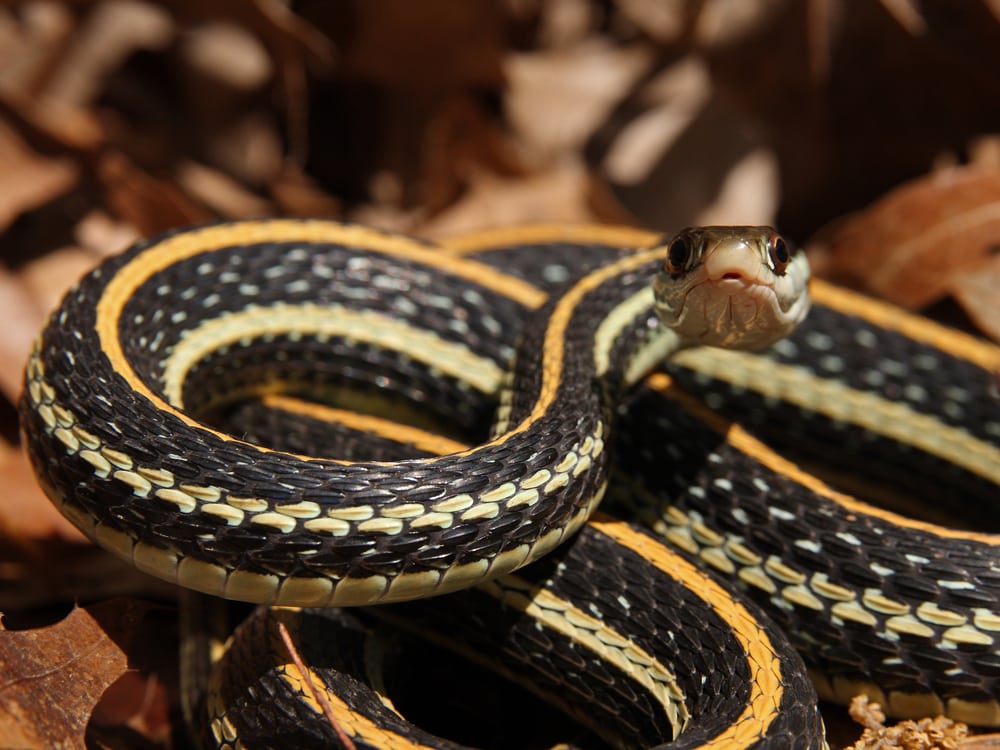
Western Ribbonsnake (Thamnophis proximus) is a striped, long-tailed snake of ditch banks, grassy ponds, wet prairies, and streamside vegetation. Adults are usually 18-48 inches but look very narrow.
The long tail and crisp stripes separate it from stockier gartersnakes and watersnakes. A full-body photo that shows stripe placement and tail length is especially useful.
| Key detail | What to look for |
|---|---|
| Adult size | usually 18-48 inches |
| Fast ID cue | long-tailed striped snake of ditch banks and wet grass |
| Typical Louisiana habitat | ditch banks, grassy ponds, wet prairies, streamside vegetation, and wet meadows |
| Louisiana range | western and central wet edges, ditch banks, and grassy ponds |
| Bite / venom note | Nonvenomous ribbon snake; long tail and stripes separate it |
Blind snakes and other tiny burrowers
49. Brahminy Blindsnake
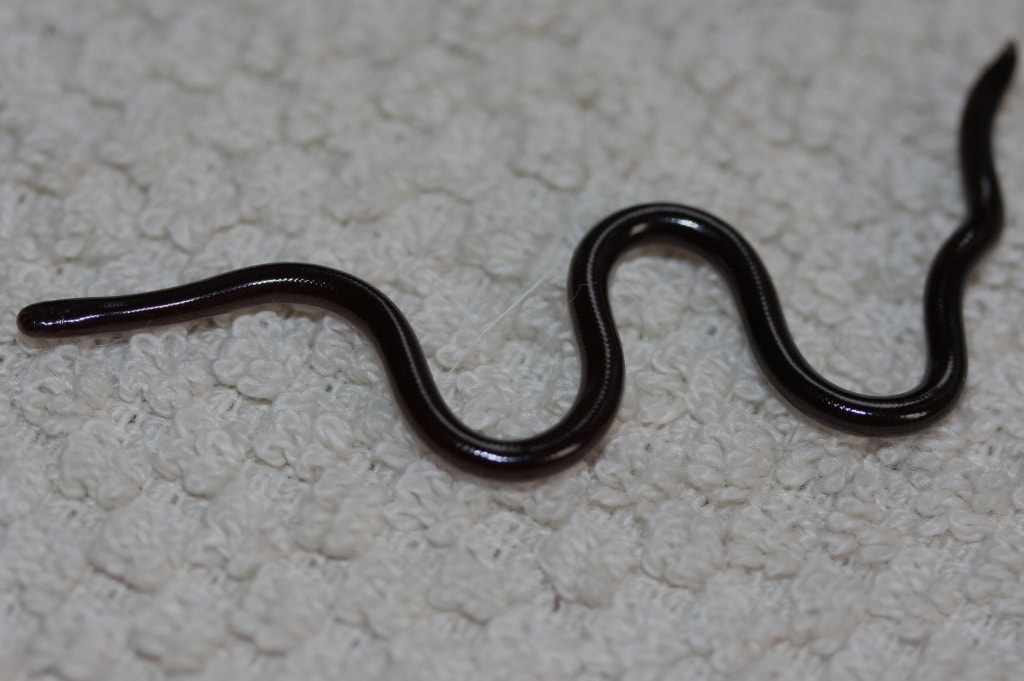
Brahminy Blindsnake (Indotyphlops braminus) is the tiny introduced burrower often called the flowerpot snake. It is usually 4-12 inches long, glossy, dark, and wormlike, with reduced eyes and a blunt head.
Most clues come from where it turns up: garden soil, compost, greenhouse pots, mulch, or damp landscaped beds. It is built for life below the surface, so texture and size matter more than pattern.
| Key detail | What to look for |
|---|---|
| Adult size | usually 4-12 inches |
| Fast ID cue | tiny glossy wormlike snake with reduced eyes, often in garden soil or pots |
| Typical Louisiana habitat | garden soil, compost, greenhouse pots, mulch, damp beds, and loose leaf litter |
| Louisiana range | introduced garden and greenhouse sites; often transported in potted plants |
| Bite / venom note | Nonvenomous blindsnake; tiny burrower often mistaken for a worm |
Quick identification tips
Water narrows a Louisiana snake ID, but it does not answer it by itself. Cottonmouths, watersnakes, mud snakes, crayfish snakes, and ribbonsnakes can all put a snake close to the same ditch or bayou.
Look at posture, body thickness, pattern, and where the snake goes when disturbed. Many nonvenomous snakes flee straight for cover or water when given room.
FAQ
How many snake types are in Louisiana?
This guide profiles 49 Louisiana snakes from current herpetology references. Agency pages and field guides may use different counts when they group subspecies, older names, or rare records differently.
Which Louisiana snakes are venomous?
The venomous species are listed first in this guide. They include Eastern Copperhead, Eastern Diamond-backed Rattlesnake, Northern Cottonmouth, Pygmy Rattlesnake, Timber Rattlesnake, Harlequin Coralsnake, Texas Coralsnake. Compare range, habitat, and field marks before choosing a species.
Are watersnakes in Louisiana cottonmouths?
No. Several harmless watersnakes live near the same wetlands as cottonmouths. Look at range, body shape, head posture, pattern, and behavior before deciding.
What should I do if I find a snake in my yard in Louisiana?
Most yard snakes are passing through for cover, water, or prey. If a snake is inside a building or cannot leave on its own, contact a local wildlife professional.
What details help identify a snake from a photo?
Useful details include county, habitat, body length, dorsal pattern, head shape, tail shape, stripes or bands, and whether the photo was taken near water, rocks, logs, or open ground.