
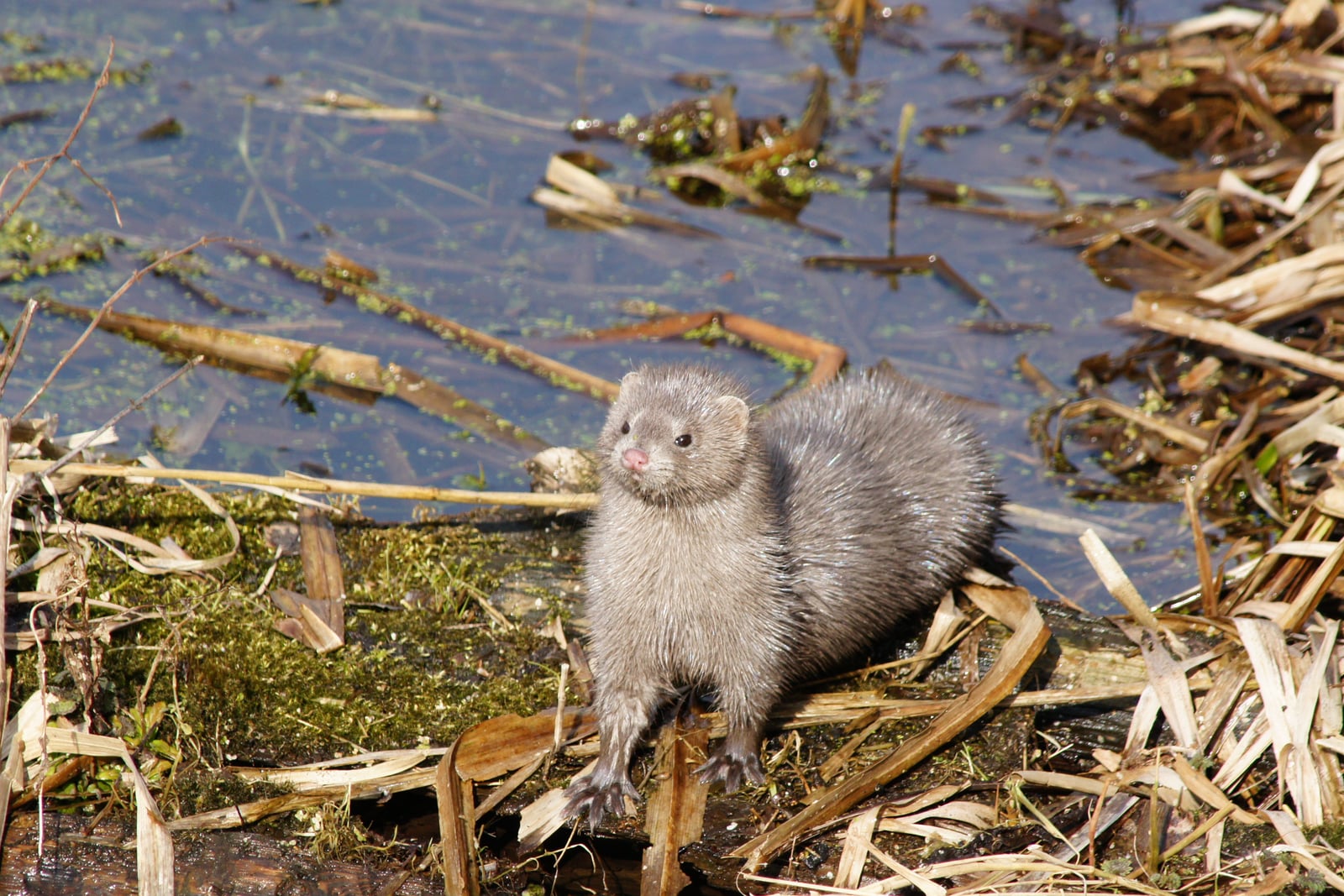
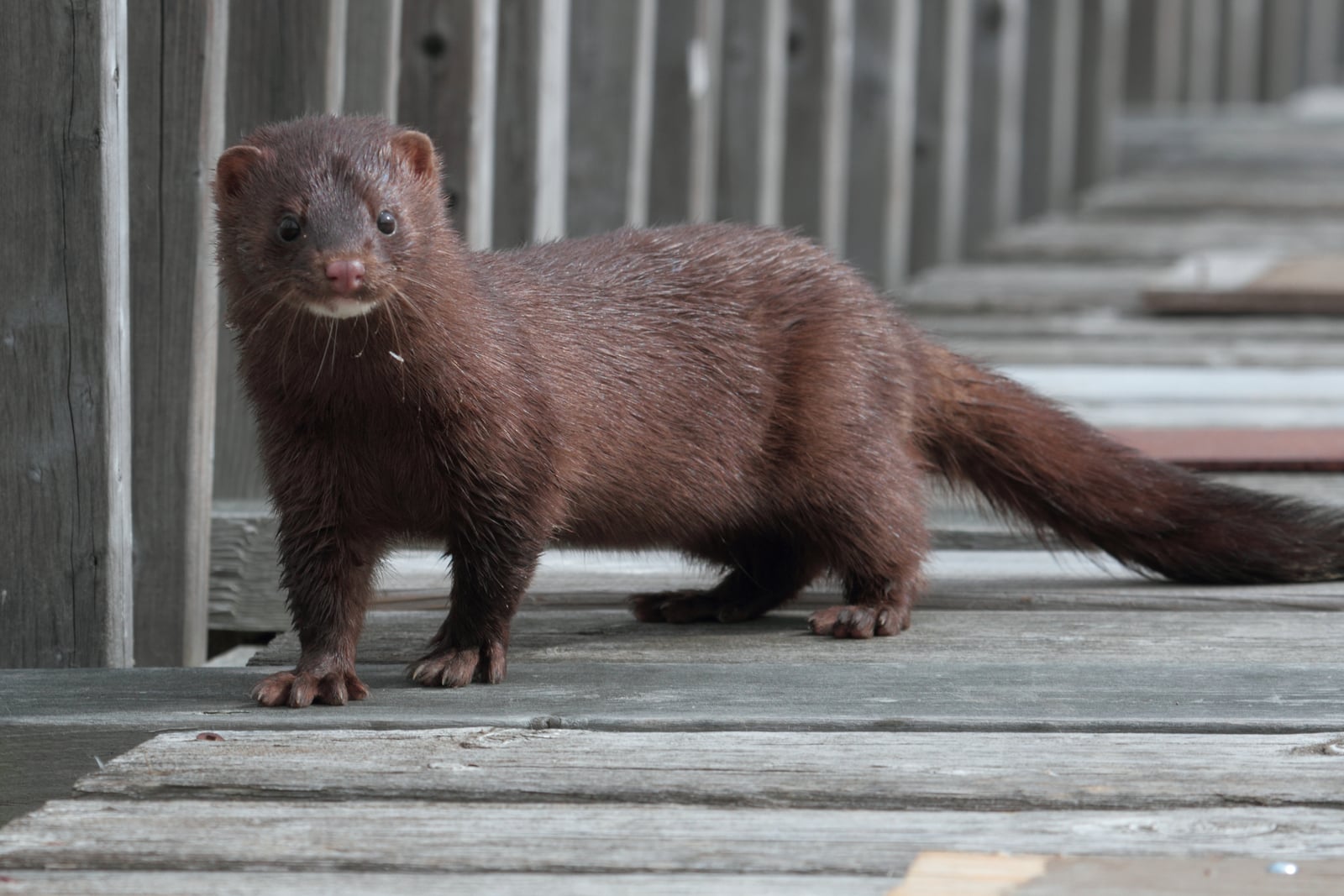
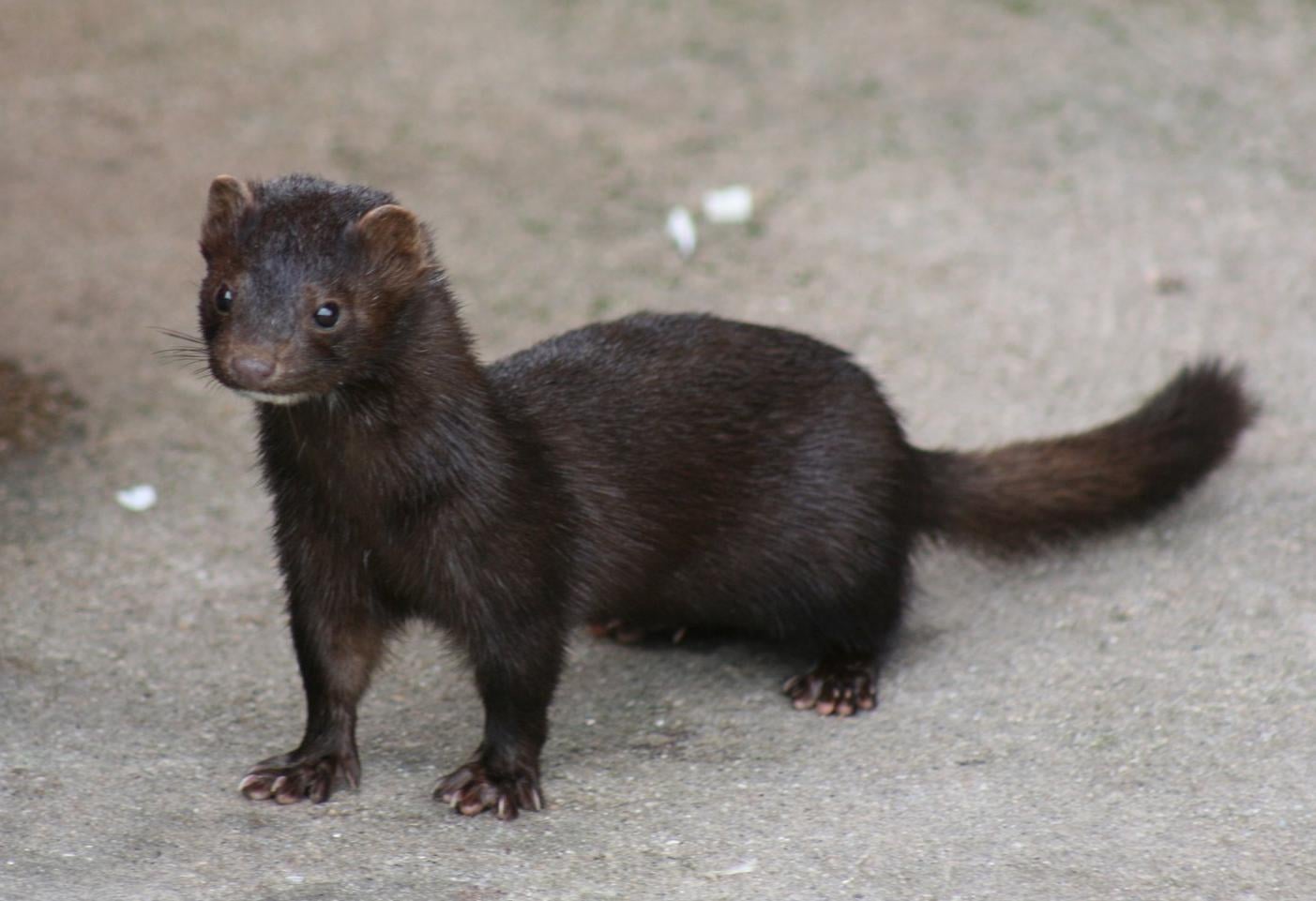
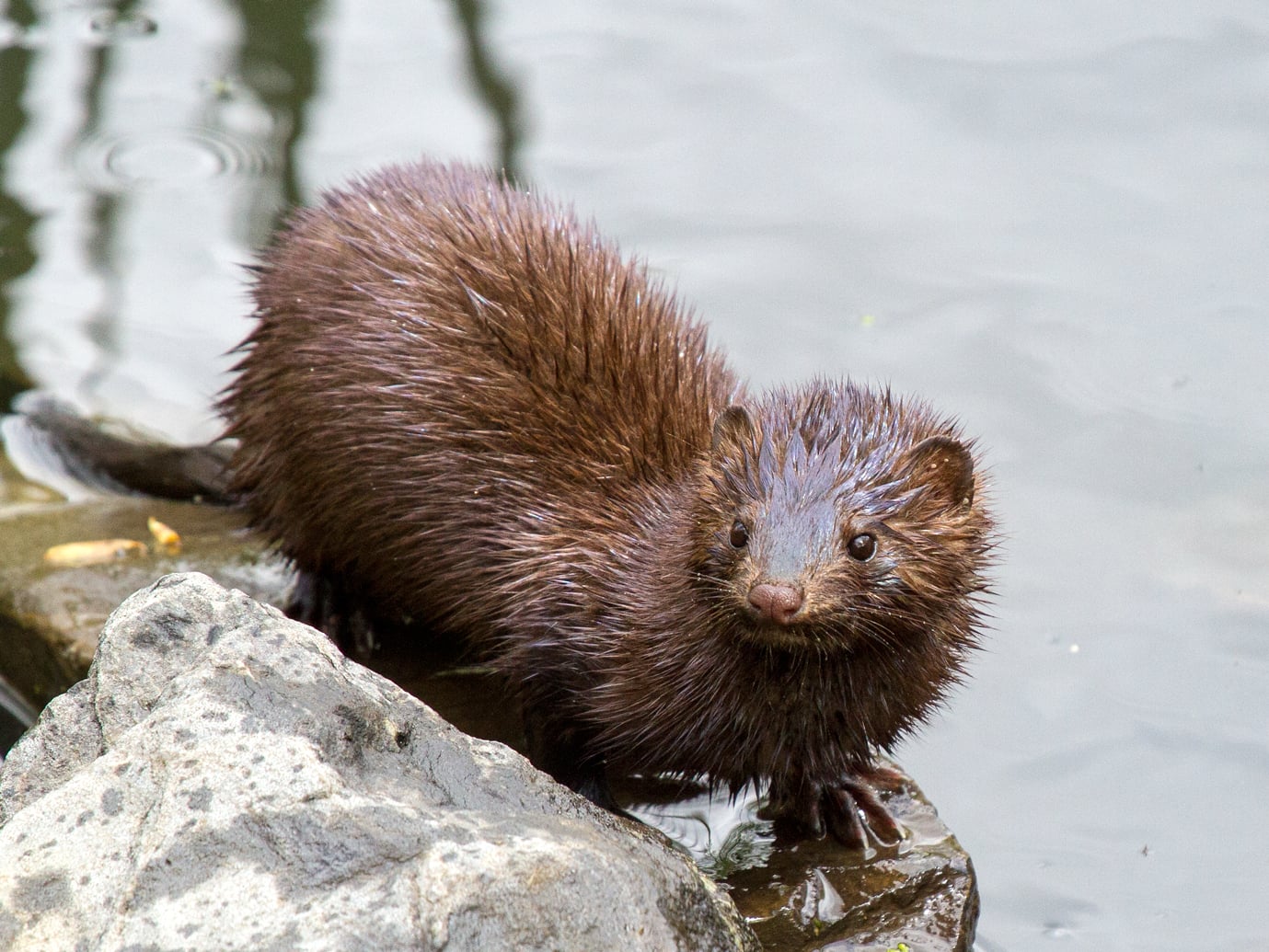
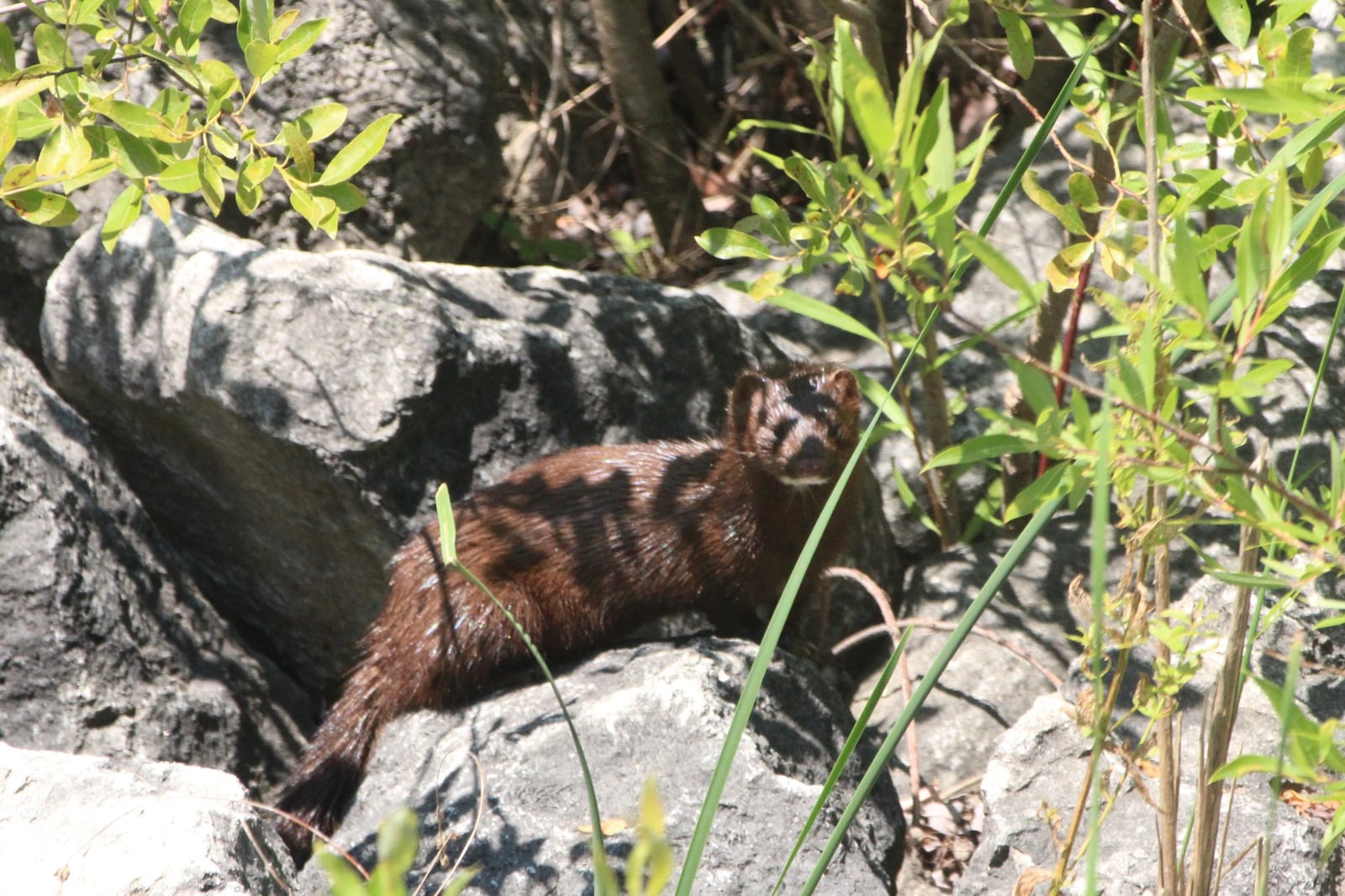
Connecticut’s open databases hold 131 records for the American mink, 125 of them logged through iNaturalist, and they cluster along the water rather than anywhere inland and dry.
A shoreline hunter, coast and inland alike
A mink never strays far from a bank, and Connecticut gives it two very different kinds to work. Along Long Island Sound, records follow the tidal marshes, coves, and rocky shoreline around parks like Hammonasset Beach State Park, while inland sightings track streams and beaver-pond edges through forests such as Natchaug State Forest in the state’s eastern highlands. Either way, the animal needs a bank with cover, root tangles, muskrat burrows, hollow logs, to den in and hunt from.
Fish in summer, fur and feathers when the water slows
A mink adjusts its diet with the seasons, leaning on fish, crayfish, and frogs when the water’s active and turning to muskrats, voles, and birds once colder weather thins out aquatic prey. Records peak sharply in March, a month when Connecticut’s minks are also breeding, then ease into a smaller midsummer bump before dropping off toward winter, tracking a hunter that stays active but harder to spot once ice and cold slow things down along the shoreline.
Status in Connecticut
NatureServe ranks the mink S5, secure, in Connecticut, and it’s native to the state’s rivers, marshes, and Long Island Sound shoreline alike.
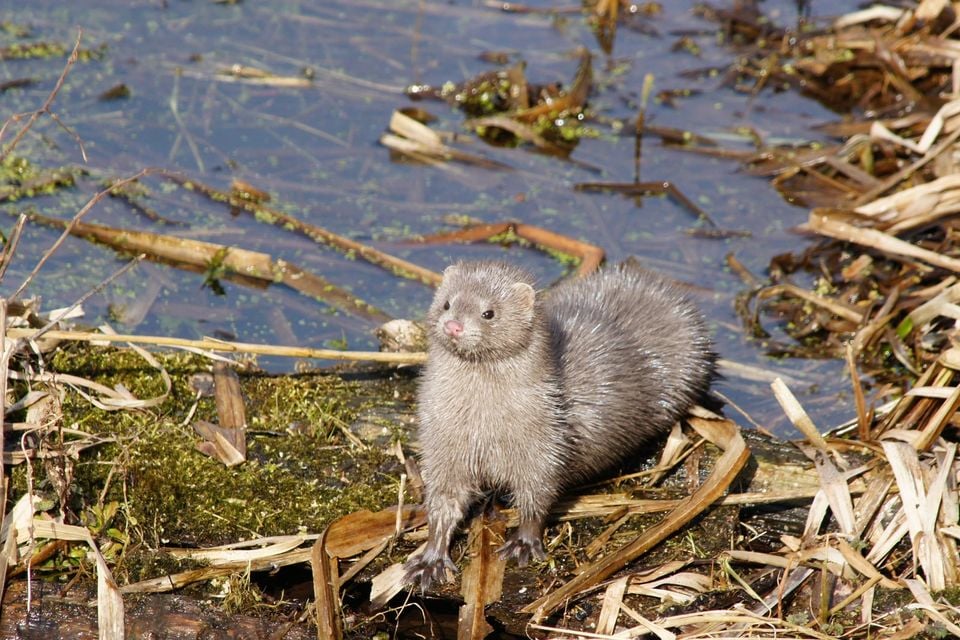
 Full species profile




