


Wisconsin records associate the American Pygmy Shrew with wetland margins and moist ground cover represented by Horicon, Necedah, and the Upper Mississippi refuge. The sharpest record pulses occur in June and August–September, a pattern likely shaped by small-mammal trapping schedules and field access as well as by shrew activity.
Only 3 of the 61 Wisconsin records are from iNaturalist; most are GBIF records, underscoring how rarely this tiny shrew is found casually. These are records of detection, not abundance: trap placement, specimen collections, and the difficulty of identifying small shrews determine where dots appear on the map.
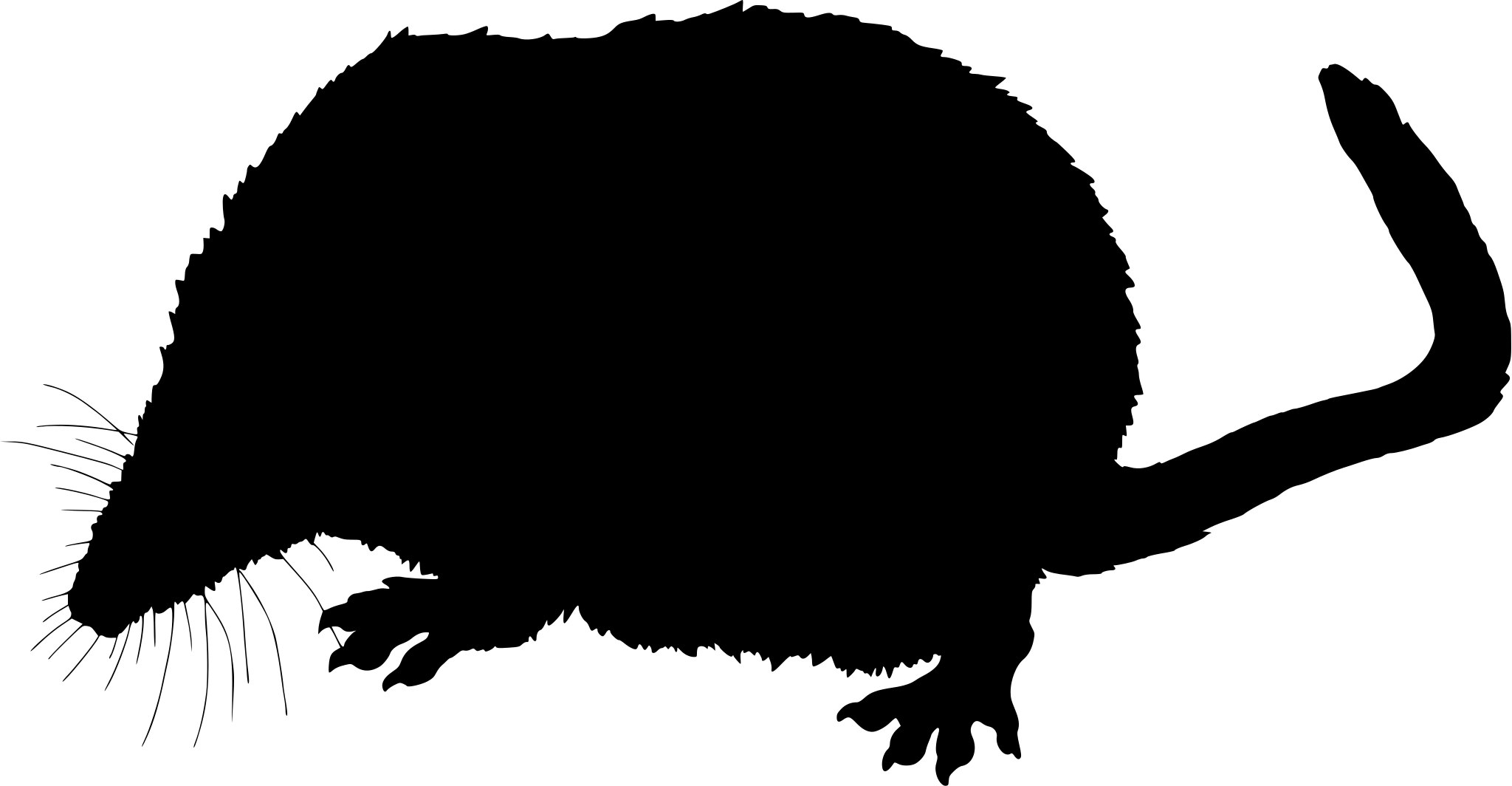 Full species profile




