


Tennessee’s coypu records sit in the far west, around Reelfoot Lake State Park, Hatchie National Wildlife Refuge, and Meeman-Shelby Forest State Park, where the Mississippi Alluvial Plain gives way to slow rivers and backwater marsh. That’s exactly the kind of shallow, marshy water this South American rodent needs, and it’s the closest match in Tennessee to the wetlands it has colonized elsewhere along the Gulf Coast.
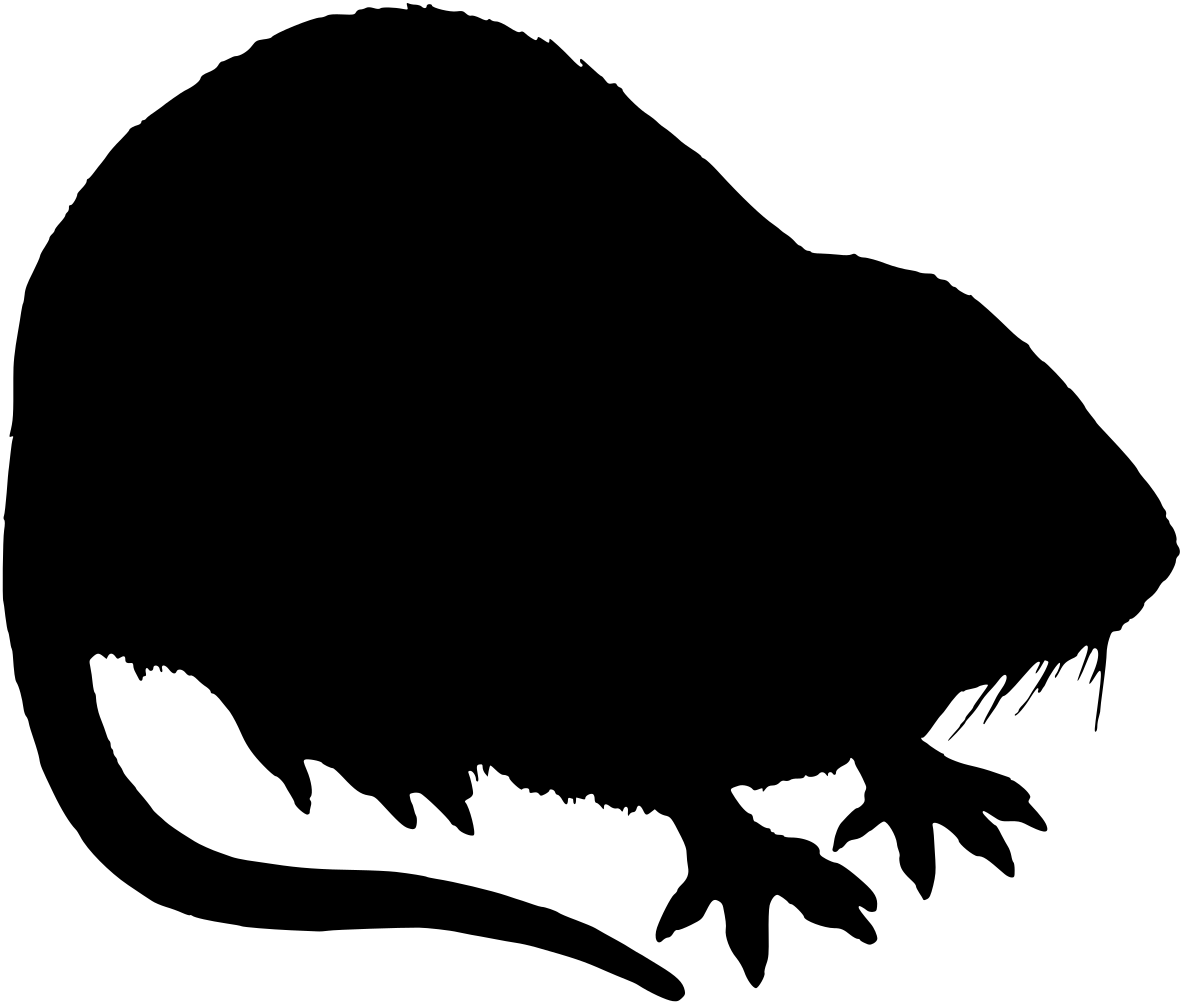
Coypu, also called nutria, were brought to the US for the fur trade in the 1930s and spread once fur farms closed and animals escaped or were released. They feed almost entirely on marsh plants, chewing through the roots and stems that hold wetland soil together, so heavy feeding can turn healthy marsh into open mud over time. They den in burrows dug into stream banks and breed quickly, with females able to raise more than two litters a year.
Tennessee’s record is thin and recent: just 19 occurrences, with no clear seasonal pattern yet. USGS NAS lists an established, nonindigenous population in the state, and this animal is not native here. It’s tracked as an invasive species rather than a protected one, the same status it holds across its expanded US range.
 Full species profile




