
Arizona mammals

Crawford's Gray Shrew in Arizona

Notiosorex crawfordi

Native to Arizona S3 Vulnerable in Arizona

Not listed as nonindigenous in Arizona by USGS NAS; native to its Arizona range.

IUCN Red List status

  1. LC
  2. NT
  3. VU
  4. EN
  5. CR
  6. EW
  7. EX

LC – Least Concern

Widespread and abundant; not at risk.

Crawford's Gray Shrew in Arizona, by the numbers

Occasional in Arizona 100th most recorded of 158 mammals logged in Arizona

434 occurrence records
12 with iNaturalist photos

434 total records count every Arizona occurrence from GBIF and iNaturalist; the map plots a georeferenced sample of 300; the monthly chart covers the 325 records with a full observation date.

When to look for the Crawford's Gray Shrew in Arizona

Most sightings fall in August.

325 Arizona occurrence records (iNaturalist and GBIF) by month of year. Shows when the species is recorded, not a guarantee of presence.

Monthly Arizona records (table)
MonthRecords
January8
February7
March4
April41
May52
June22
July16
August82
September25
October37
November27
December4

Monthly crawford's gray shrew occurrence records (iNaturalist and GBIF) in Arizona.

Seasonality

Year-round in Arizona, with recorded sightings peaking in August, with a smaller rise in May.

Occurrence map

Where Crawford's Gray Shrew has been recorded in Arizona

300 records mapped · zoom and drag to explore

300 Arizona records mapped

Notable places to look

Park, forest, or monumentiNaturalist records
Coconino National Forest 2
Petrified Forest National Park 1
State Trust Land 1
Grand Canyon-Parashant National Monument 1
Miller Peak Wilderness 1

Protected places with the most crawford's gray shrew sightings, from the USGS Protected Areas Database plus named mountain ranges, good spots to look, not a full breakdown, so they don't sum to the total.

Where it's recorded in Arizona

CountyRecords
Cochise County 270
Pima County 46
Santa Cruz County 44
Pinal County 23
Maricopa County 11
Navajo County 9
Apache County 8
Yavapai County 6
Gila County 6
Mohave County 4
La Paz County 2
Coconino County 2
2 other counties 3

The complete county distribution, spread across 14 Arizona counties. Every occurrence record falls in one county, so these sum to the total. Counties from GBIF and US Census boundaries.

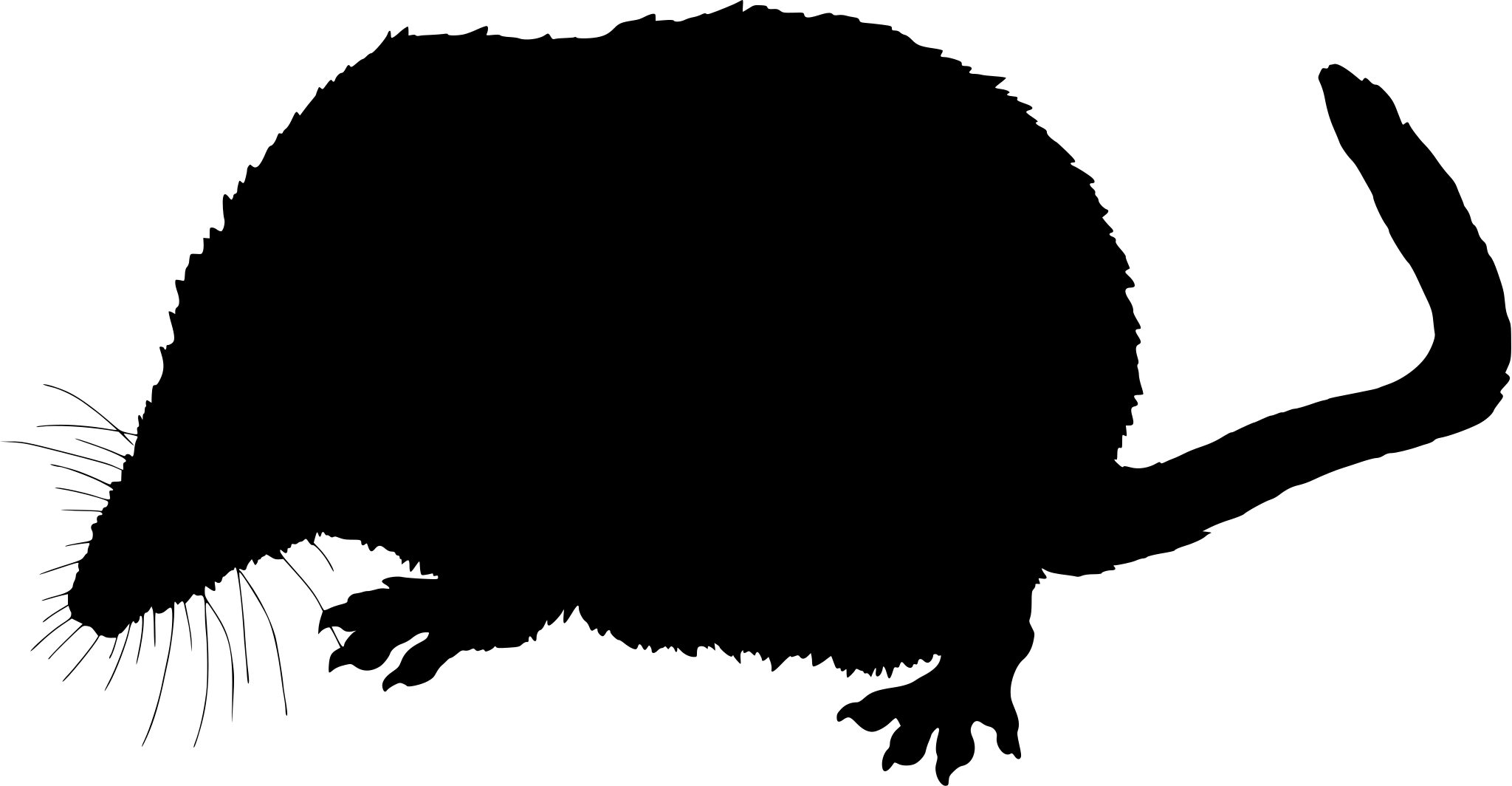
Crawford’s gray shrew, better known as the desert shrew, is one of Arizona’s most elusive small mammals, an insectivore so seldom encountered that open occurrence databases hold only 434 Arizona records for it, most of them from museum specimens and pitfall-trap surveys rather than photographs.

The shrew that lives without water

This is the most drought-hardy shrew in the country, and Arizona sits squarely in its element. It hunts insects, spiders, and other small prey through desert scrub, grassland, and the litter around agaves, cactus, and packrat middens, drawing nearly all the moisture it needs from that food rather than from standing water. The records lean heavily toward the southeastern corner of the state, with Cochise County far ahead of the rest and Pima and Santa Cruz counties following, tracing the desert basins and grassland valleys of the Sky Island country.

A year-round animal seen almost never

Like all shrews, the desert shrew never hibernates; its racing metabolism keeps it hunting in every season, mostly after dark. The uneven scatter of records through the year says more about when biologists set their traps than about the animal, which stays active under cover the whole year. At three to five grams, gray and blunt-nosed with tiny eyes and ears, it is easy to overlook even where it is common.

Status in Arizona

NatureServe ranks the desert shrew S3, vulnerable, in Arizona, and it is native here. Its sparse records show that it is hard to detect, but they don’t measure its abundance.
More mammals in Arizona in the atlas

Data & sources

The data and visualizations on this page draw on these open sources:

  • GBIFCC-BY 4.0occurrence records behind the range map, elevation, and record counts
  • iNaturalistCC0 / CC-BY / CC-BY-SAobservations, photos, and audio recordings
  • NatureServe ExplorerCC-BYthe state conservation rank
  • IUCN Red Listattributed factthe global conservation status
  • USGS NASpublic domainnative / introduced status
  • Natural Earthpublic domainthe relief basemap
  • USFSpublic domainnational-forest boundaries
  • USGS Protected Areas Databasepublic domainthe named parks, forests, and refuges behind "notable places to look"




