
Alaska mammals

Cuvier's beaked whale in Alaska

Ziphius cavirostris

Native to Alaska S3 Vulnerable in Alaska

Not listed as nonindigenous in Alaska by USGS NAS; native to its Alaska range.

IUCN Red List status

  1. LC
  2. NT
  3. VU
  4. EN
  5. CR
  6. EW
  7. EX

LC – Least Concern

Widespread and abundant; not at risk.

Cuvier's beaked whale in Alaska, by the numbers

Rare in Alaska 91st most recorded of 108 mammals logged in Alaska

40 occurrence records
1 with iNaturalist photos
Jul 27, 2022 Last seen in Alaska

Records from 2000–2026.

When to look for the Cuvier's beaked whale in Alaska

Most sightings fall in July.

40 Alaska occurrence records (iNaturalist and GBIF) by month of year, 2000–2026. Shows when the species is recorded, not a guarantee of presence.

Monthly Alaska records (table)
MonthRecords
January5
February1
March3
April5
May1
June7
July12
August4
September0
October0
November2
December0

Monthly cuvier's beaked whale occurrence records (iNaturalist and GBIF) in Alaska, 2000–2026.

Seasonality

Year-round in Alaska, with recorded sightings peaking in July.

Occurrence map

Where Cuvier's beaked whale has been recorded in Alaska

40 records mapped · zoom and drag to explore

36 Alaska records mapped

Where it's recorded in Alaska

CountyRecords
Yakutat County 4
Kenai Peninsula County 4
Aleutians East County 4
Valdez-Cordova County 3
Wrangell County 2
Kodiak Island County 2
Hoonah-Angoon County 1
Aleutians West County 1
Other localities 19

The complete county distribution, spread across 8 Alaska counties. Every occurrence record falls in one county, so these sum to the total. Counties from GBIF and US Census boundaries.

Alaska holds more recorded sightings of this deep-diving whale than any other US state, though the total remains small. Reports come mostly from offshore surveys in the Gulf of Alaska and the deep water off the Aleutian Island chain, where the continental shelf drops steeply, exactly the kind of deep-water habitat this species needs.

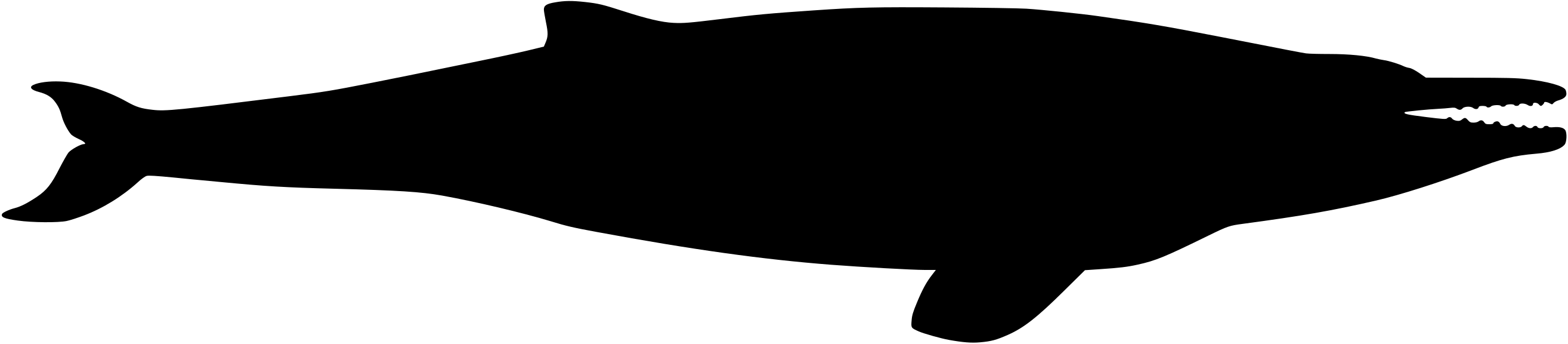
It has a small head, a short beak, and pale scarring that builds up on many adults over a lifetime. It hunts squid and deep-water fish using sound, diving far below the surface and staying down for exceptionally long stretches, which is part of why it’s rarely seen even where it’s genuinely present.

Alaska’s record for this species stays sparse enough that no clear seasonal pattern has emerged yet. That’s a reporting gap tied to how little offshore survey effort reaches Alaska’s remote waters, not evidence the whale keeps to a narrow season.
Occurrence data from iNaturalist and GBIF.

More mammals in Alaska in the atlas

Data & sources

The data and visualizations on this page draw on these open sources:

  • GBIFCC-BY 4.0occurrence records behind the range map, elevation, and record counts
  • iNaturalistCC0 / CC-BY / CC-BY-SAobservations, photos, and audio recordings
  • NatureServe ExplorerCC-BYthe state conservation rank
  • IUCN Red Listattributed factthe global conservation status
  • USGS NASpublic domainnative / introduced status
  • Natural Earthpublic domainthe relief basemap
  • USFSpublic domainnational-forest boundaries




