
Oregon mammals

Cuvier's beaked whale in Oregon

Ziphius cavirostris

Native to Oregon

Not listed as nonindigenous in Oregon by USGS NAS; native to its Oregon range.

IUCN Red List status

  1. LC
  2. NT
  3. VU
  4. EN
  5. CR
  6. EW
  7. EX

LC – Least Concern

Widespread and abundant; not at risk.

Cuvier's beaked whale in Oregon, by the numbers

Rare in Oregon 137th most recorded of 178 mammals logged in Oregon

16 occurrence records
4 with iNaturalist photos
Dec 15, 2024 Last seen in Oregon

Records from 2000–2026.

When to look for the Cuvier's beaked whale in Oregon

Most sightings fall in March to June.

16 Oregon occurrence records (iNaturalist and GBIF) by month of year, 2000–2026. Shows when the species is recorded, not a guarantee of presence. Based on a small number of dated records; the seasonal pattern may not be representative.

Monthly Oregon records (table)
MonthRecords
January1
February1
March3
April2
May3
June2
July0
August0
September1
October0
November0
December3

Monthly cuvier's beaked whale occurrence records (iNaturalist and GBIF) in Oregon, 2000–2026.

Seasonality

Year-round in Oregon, with recorded sightings peaking in March–June, with a smaller rise in December.

Occurrence map

Where Cuvier's beaked whale has been recorded in Oregon

16 records mapped · zoom and drag to explore

16 Oregon records mapped

Where it's recorded in Oregon

CountyRecords
Douglas County 3
Clatsop County 3
Coos County 3
Lincoln County 2
Tillamook County 2
Other localities 3

The complete county distribution, spread across 5 Oregon counties. Every occurrence record falls in one county, so these sum to the total. Counties from GBIF and US Census boundaries.

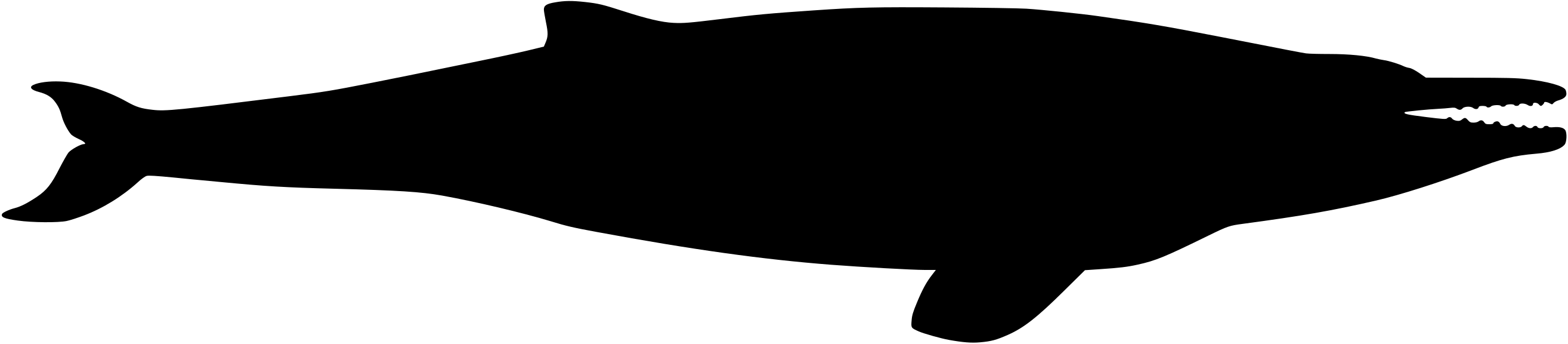
Cuvier’s beaked whales are among the deepest-diving mammals known, capable of descending well over a mile and staying submerged for more than two hours at a stretch, which makes them nearly impossible to spot at sea. Nearly all of Oregon’s 19 records almost certainly trace back to strandings along the coast rather than live offshore sightings.

Records cluster in February and March, with scattered singles in April and December, too few and too concentrated to describe a full seasonal pattern. NatureServe lists the species SNA, not applicable, in Oregon, and a whale built for deep, open ocean rather than nearshore water is always going to be rare in a coastal state’s record, no matter how carefully anyone looks.
Occurrence data from iNaturalist and GBIF.

More mammals in Oregon in the atlas

Data & sources

The data and visualizations on this page draw on these open sources:

  • GBIFCC-BY 4.0occurrence records behind the range map, elevation, and record counts
  • iNaturalistCC0 / CC-BY / CC-BY-SAobservations, photos, and audio recordings
  • NatureServe ExplorerCC-BYthe state conservation rank
  • IUCN Red Listattributed factthe global conservation status
  • USGS NASpublic domainnative / introduced status
  • Natural Earthpublic domainthe relief basemap
  • USFSpublic domainnational-forest boundaries




