


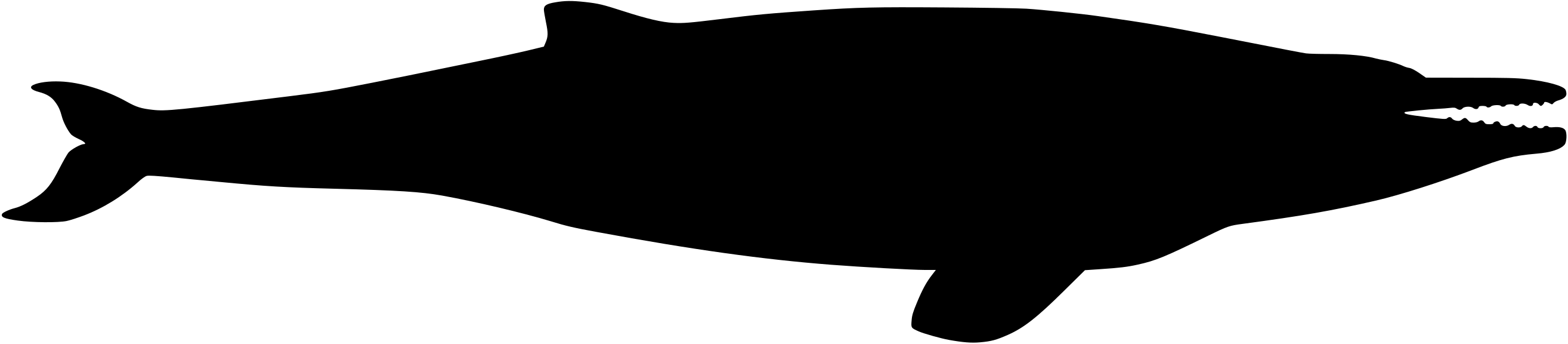
Cuvier’s beaked whales live far offshore, diving to extreme depths for squid, and they’re almost never seen well at sea. South Carolina’s 16 records since 2000 are the kind this species usually leaves behind: animals that stranded or washed ashore and were reported by people on the beach.
Nine of those records come from Horry County, the heavily visited Grand Strand around Myrtle Beach, and nine fall in January. Neither pattern should be read as where or when the whales actually live. A busy beach collects reports the way a quiet one can’t, and a winter stranding may reflect currents, storms, and who’s walking the sand more than anything about the animal. Records are a map of reporting, not of abundance.
What’s striking is how wide the coastal spread is, from Horry down through Georgetown, Charleston, and Beaufort counties. That fits a whale working deep water all along the Southeast shelf. NatureServe ranks it Apparently Secure (S4) in the state, a reminder that scarce records here mean elusive, not necessarily rare.
 Full species profile




