
Colorado mammals

Dwarf Shrew in Colorado

Sorex nanus

Native to Colorado S2 Imperiled in Colorado

Not listed as nonindigenous in Colorado by USGS NAS; native to its Colorado range.

IUCN Red List status

  1. LC
  2. NT
  3. VU
  4. EN
  5. CR
  6. EW
  7. EX

LC – Least Concern

Widespread and abundant; not at risk.

Dwarf Shrew in Colorado, by the numbers

Occasional in Colorado 74th most recorded of 154 mammals logged in Colorado

133 occurrence records

Records from 2000–2026.

When to look for the Dwarf Shrew in Colorado

Most sightings fall in August to September.

133 Colorado occurrence records (iNaturalist and GBIF) by month of year, 2000–2026. Shows when the species is recorded, not a guarantee of presence.

Monthly Colorado records (table)
MonthRecords
January3
February1
March0
April4
May4
June15
July17
August33
September36
October15
November3
December2

Monthly dwarf shrew occurrence records (iNaturalist and GBIF) in Colorado, 2000–2026.

Seasonality

Year-round in Colorado, with recorded sightings peaking in August–September.

Occurrence map

Where Dwarf Shrew has been recorded in Colorado

133 records mapped · zoom and drag to explore

133 Colorado records mapped

Notable places to look

Park, forest, or monumentiNaturalist records
Mesa Verde National Park 9
White River National Forest 1
Roosevelt National Forest 1
Piceance 1
town-range desc 1
Cache La Poudre Wilderness 1

Protected places with the most dwarf shrew sightings, from the USGS Protected Areas Database plus named mountain ranges, good spots to look, not a full breakdown, so they don't sum to the total.

Where it's recorded in Colorado

CountyRecords
Fremont County 46
Boulder County 23
Larimer County 10
Montezuma County 10
Clear Creek County 9
El Paso County 9
Dolores County 5
Gunnison County 4
Custer County 3
Summit County 2
Grand County 2
Chaffee County 2
8 other counties 8

The complete county distribution, spread across 20 Colorado counties. Every occurrence record falls in one county, so these sum to the total. Counties from GBIF and US Census boundaries.

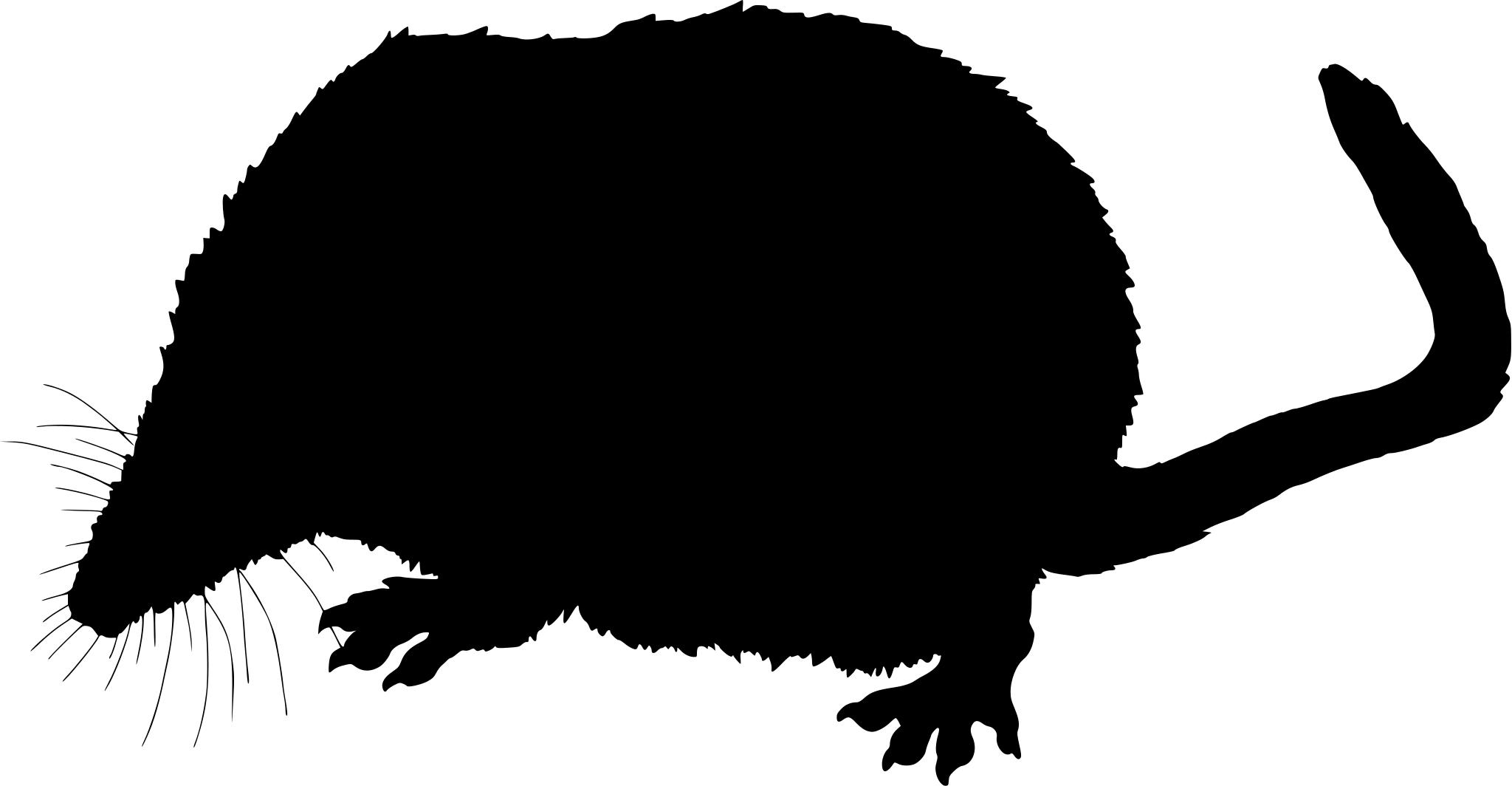
The dwarf shrew is one of the smallest mammals on Earth and among the least-recorded in Colorado. Open occurrence databases hold just 133 Colorado records for it, nearly all from museum specimens and survey trapping rather than field photographs.

A shrew of high rock

Weighing as little as two grams, less than a penny, the dwarf shrew lives among broken rock high in Colorado’s mountains, from montane forest up through subalpine talus and alpine tundra. It threads the gaps between stones after insects, spiders, and other small invertebrates. The scattered records reflect that hidden life: Fremont, Boulder, and Larimer counties lead, spanning the rocky slopes of the Front Range and the southern mountains where the right cold, stony ground exists.

Recorded mostly in summer, active all year

Colorado records cluster in late summer, but that is a trapping-season pattern, not a sign the animal disappears in winter. Shrews cannot hibernate, since their metabolism runs too hot, so the dwarf shrew stays active beneath the snow and rockfall through the cold months while the biologists who document it are away from the high country.

Status in Colorado

NatureServe ranks the dwarf shrew S2, imperiled, in Colorado, and it is native to the state. That ranking reflects both a genuinely patchy, high-elevation distribution and how rarely such a tiny animal is ever caught.
More mammals in Colorado in the atlas

Data & sources

The data and visualizations on this page draw on these open sources:

  • GBIFCC-BY 4.0occurrence records behind the range map, elevation, and record counts
  • iNaturalistCC0 / CC-BY / CC-BY-SAobservations, photos, and audio recordings
  • NatureServe ExplorerCC-BYthe state conservation rank
  • IUCN Red Listattributed factthe global conservation status
  • USGS NASpublic domainnative / introduced status
  • Natural Earthpublic domainthe relief basemap
  • USFSpublic domainnational-forest boundaries
  • USGS Protected Areas Databasepublic domainthe named parks, forests, and refuges behind "notable places to look"




