


Alaska’s confirmed records for this shrew sit at the far western edge of the state, where the boreal forest along the Yukon River valley and the country around Fairbanks and Denali gives way toward the Bering Strait. This is genuinely the eastern limit of an Old World species whose real range runs from Scandinavia through Siberia, spilling into North America only at the continent’s western hinge.
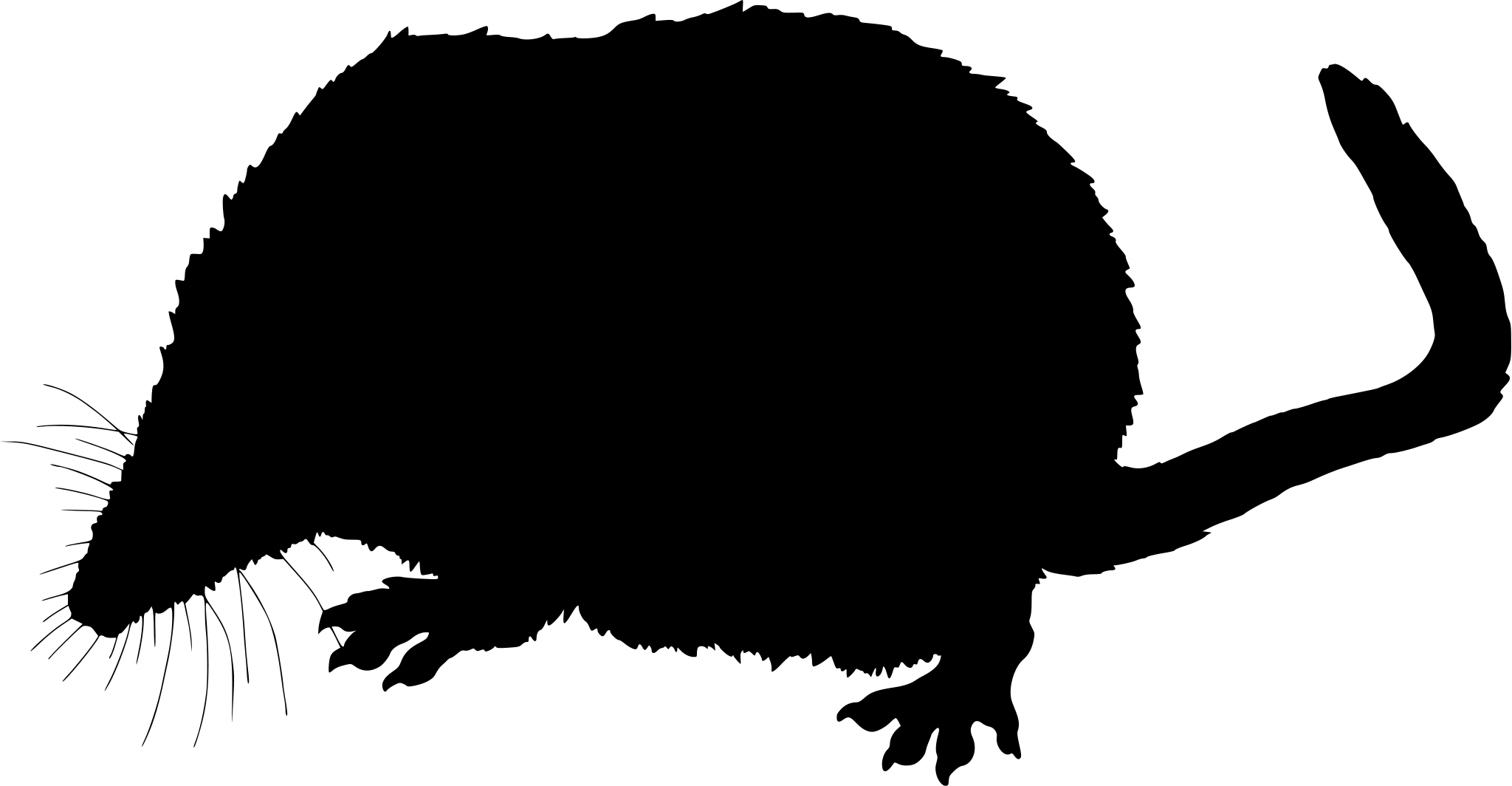
It’s tiny even by shrew standards, weighing barely more than a gram or two, and it lives in damp leaf litter, moss, and rotting wood in conifer and mixed deciduous forest, hunting the small invertebrates that make up most of its diet. A shrew this small has to eat almost constantly just to keep its heart and metabolism running.
Every record so far falls in July, August, or September, which lines up with the short window when Alaska’s field season overlaps with the shrew’s own active period. Given how few records exist, that pattern says as much about when researchers are out looking as it does about the shrew’s true seasonal activity.
 Full species profile




