
Alaska mammals

Fin Whale in Alaska

Balaenoptera physalus

Native to Alaska S3 Vulnerable in Alaska

Not listed as nonindigenous in Alaska by USGS NAS; native to its Alaska range.

IUCN Red List status

  1. LC
  2. NT
  3. VU
  4. EN
  5. CR
  6. EW
  7. EX

VU – Vulnerable

High risk of extinction in the wild.

Fin Whale in Alaska, by the numbers

Occasional in Alaska 61st most recorded of 108 mammals logged in Alaska

179 occurrence records
127 with iNaturalist photos
Jul 1, 2026 Last seen in Alaska

Records from 2000–2026.

When to look for the Fin Whale in Alaska

Most sightings fall in May to July.

179 Alaska occurrence records (iNaturalist and GBIF) by month of year, 2000–2026. Shows when the species is recorded, not a guarantee of presence.

Monthly Alaska records (table)
MonthRecords
January9
February7
March9
April3
May38
June37
July29
August19
September6
October1
November12
December9

Monthly fin whale occurrence records (iNaturalist and GBIF) in Alaska, 2000–2026.

Seasonality

Year-round in Alaska, with recorded sightings peaking in May–July.

Occurrence map

Where Fin Whale has been recorded in Alaska

179 records mapped · zoom and drag to explore

179 Alaska records mapped

Notable places to look

Park, forest, or monumentiNaturalist records
the North Slope 2

Protected places with the most fin whale sightings, from the USGS Protected Areas Database plus named mountain ranges, good spots to look, not a full breakdown, so they don't sum to the total.

Where it's recorded in Alaska

CountyRecords
Kenai Peninsula County 45
Matanuska-Susitna County 25
Anchorage County 24
Kodiak Island County 12
Aleutians West County 4
North Slope County 2
Sitka County 1
Nome County 1
Valdez-Cordova County 1
Juneau County 1
Other localities 63

The complete county distribution, spread across 10 Alaska counties. Every occurrence record falls in one county, so these sum to the total. Counties from GBIF and US Census boundaries.

Alaska’s fin whale reports concentrate in the productive waters off Kodiak National Wildlife Refuge, with smaller clusters near Kenai Fjords National Park, Katmai National Park, and out along the North Slope’s Arctic coast. Alaska sits close behind California and Massachusetts for the densest fin whale records anywhere in the country, tracking the cold, prey-rich water the species follows rather than any single coastline.

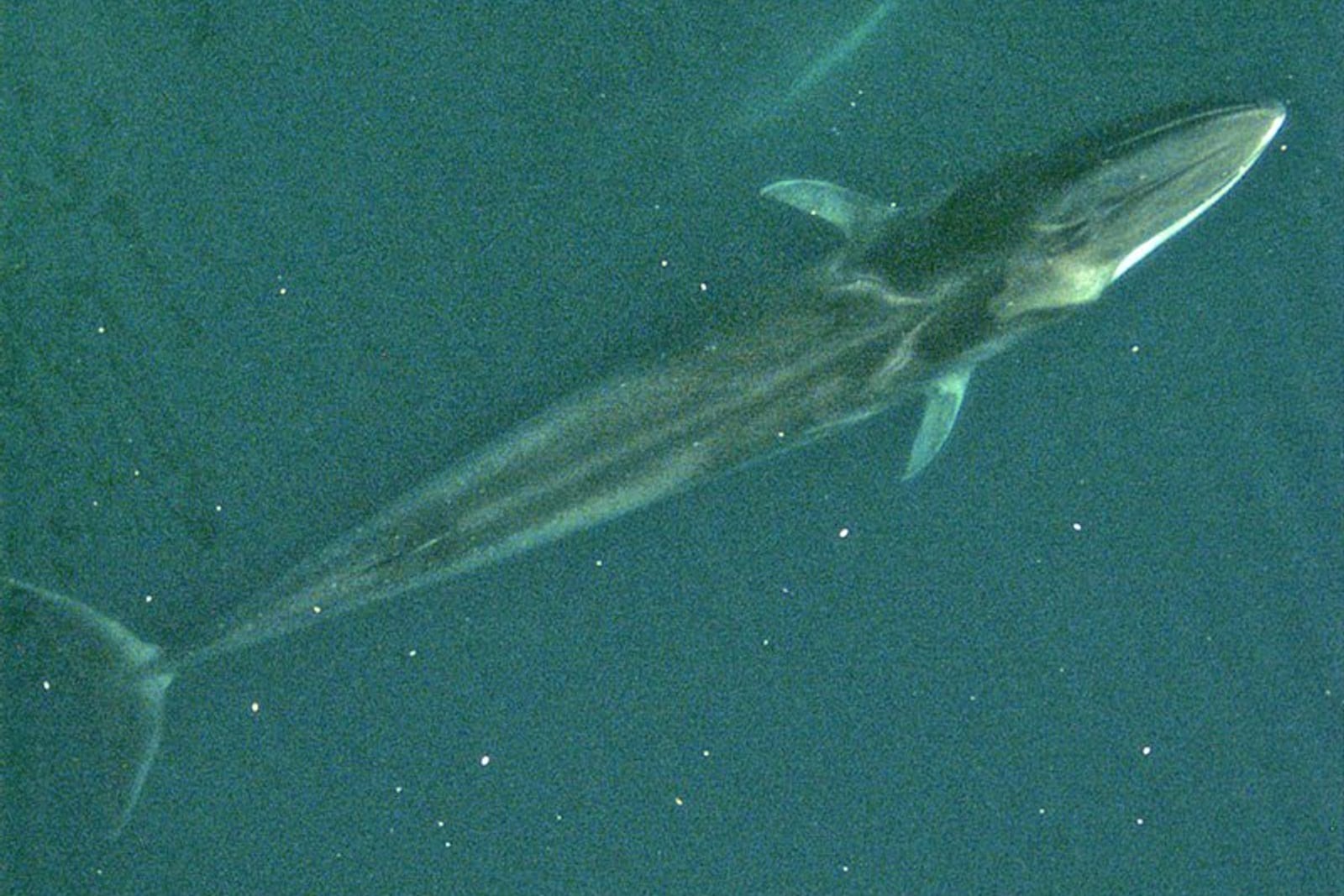
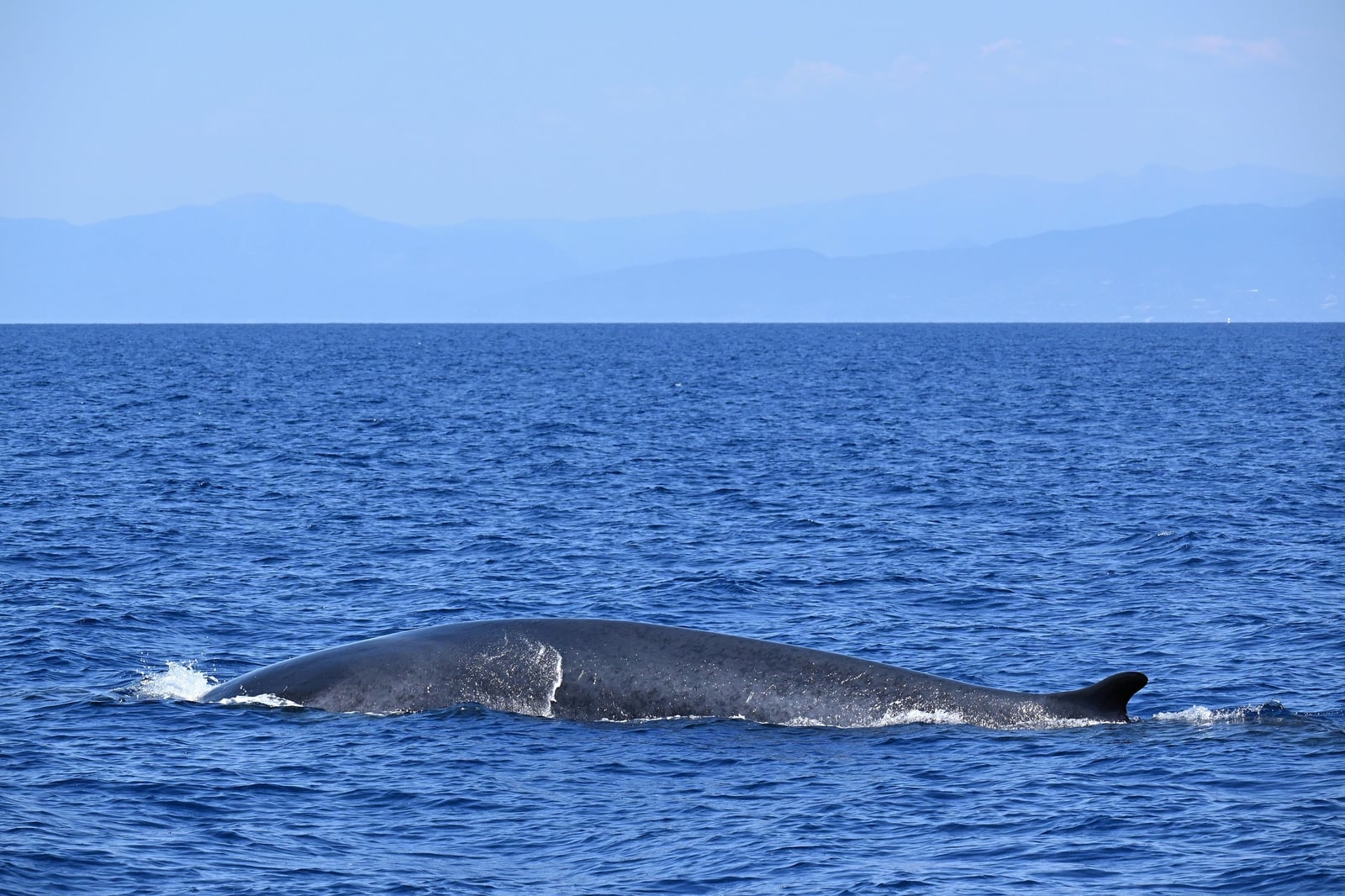
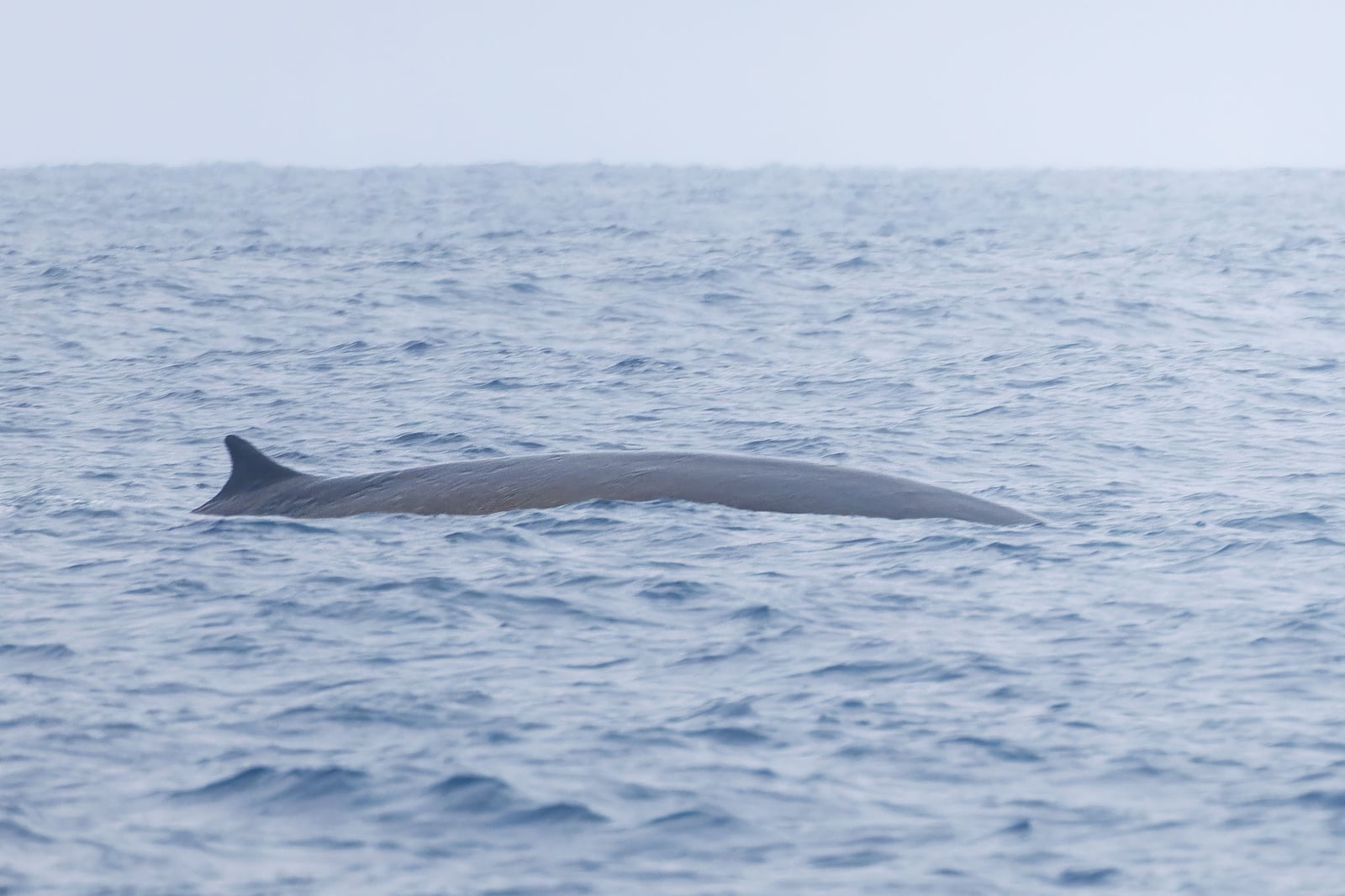
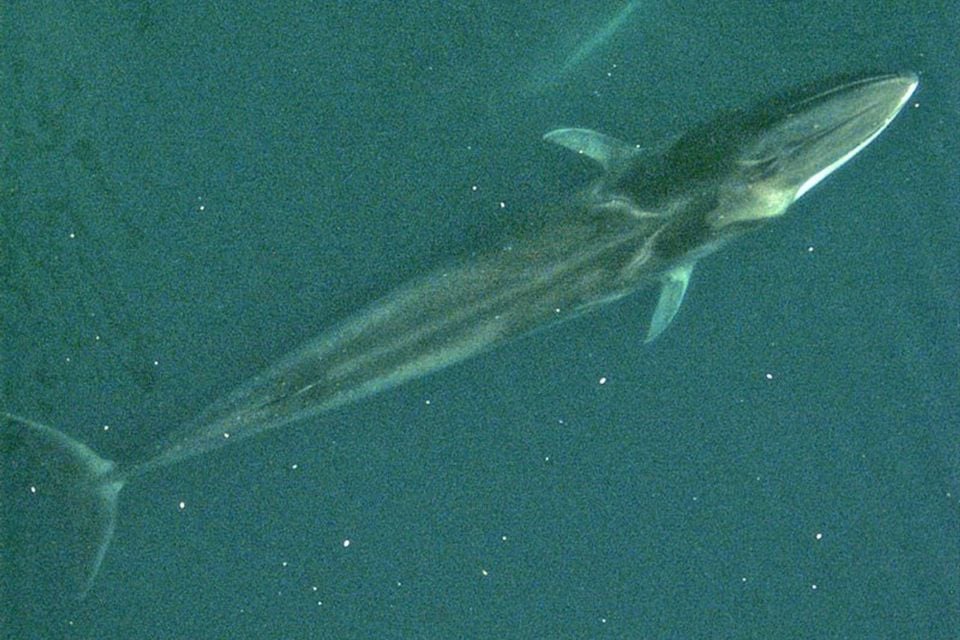
At 85 to 89 feet long, a fin whale trails only the blue whale as the largest animal alive, and the waters around Kodiak and Kenai Fjords give it plenty to eat. It lunges through swarms of krill and dense schools of herring and capelin, engulfing huge mouthfuls of water and straining prey through its baleen. The pale-and-dark asymmetry on its lower jaw is the surest way to confirm an identification when the animal surfaces.

Records climb through spring and peak in May, then taper off through the rest of the year, a pattern that likely reflects when observers and whale-watching boats are out searching more than any real shift in whale activity. A fin whale following cold water probably stays present through Alaska’s quieter months too.
Occurrence data from iNaturalist and GBIF.

More mammals in Alaska in the atlas

Data & sources

The data and visualizations on this page draw on these open sources:

  • GBIFCC-BY 4.0occurrence records behind the range map, elevation, and record counts
  • iNaturalistCC0 / CC-BY / CC-BY-SAobservations, photos, and audio recordings
  • NatureServe ExplorerCC-BYthe state conservation rank
  • IUCN Red Listattributed factthe global conservation status
  • USGS NASpublic domainnative / introduced status
  • Natural Earthpublic domainthe relief basemap
  • USFSpublic domainnational-forest boundaries
  • USGS Protected Areas Databasepublic domainthe named parks, forests, and refuges behind "notable places to look"




