
Wyoming mammals

Fringed Myotis in Wyoming

Myotis thysanodes

Native to Wyoming S2B Imperiled in Wyoming

Not listed as nonindigenous in Wyoming by USGS NAS; native to its Wyoming range.

IUCN Red List status

  1. LC
  2. NT
  3. VU
  4. EN
  5. CR
  6. EW
  7. EX

LC – Least Concern

Widespread and abundant; not at risk.

Fringed Myotis in Wyoming, by the numbers

Occasional in Wyoming 84th most recorded of 126 mammals logged in Wyoming

16 occurrence records

Records from 2000–2026.

When to look for the Fringed Myotis in Wyoming

Most sightings fall in June to August.

16 Wyoming occurrence records (iNaturalist and GBIF) by month of year, 2000–2026. Shows when the species is recorded, not a guarantee of presence. Based on a small number of dated records; the seasonal pattern may not be representative.

Monthly Wyoming records (table)
MonthRecords
January0
February0
March0
April1
May0
June4
July3
August4
September2
October1
November1
December0

Monthly fringed myotis occurrence records (iNaturalist and GBIF) in Wyoming, 2000–2026.

Seasonality

Year-round in Wyoming, with recorded sightings peaking in June–August.

Occurrence map

Where Fringed Myotis has been recorded in Wyoming

16 records mapped · zoom and drag to explore

16 Wyoming records mapped

Where it's recorded in Wyoming

CountyRecords
Weston County 5
Laramie County 4
Crook County 2
Sweetwater County 2
Albany County 1
Johnson County 1
Platte County 1

The complete county distribution, spread across 7 Wyoming counties. Every occurrence record falls in one county, so these sum to the total. Counties from GBIF and US Census boundaries.

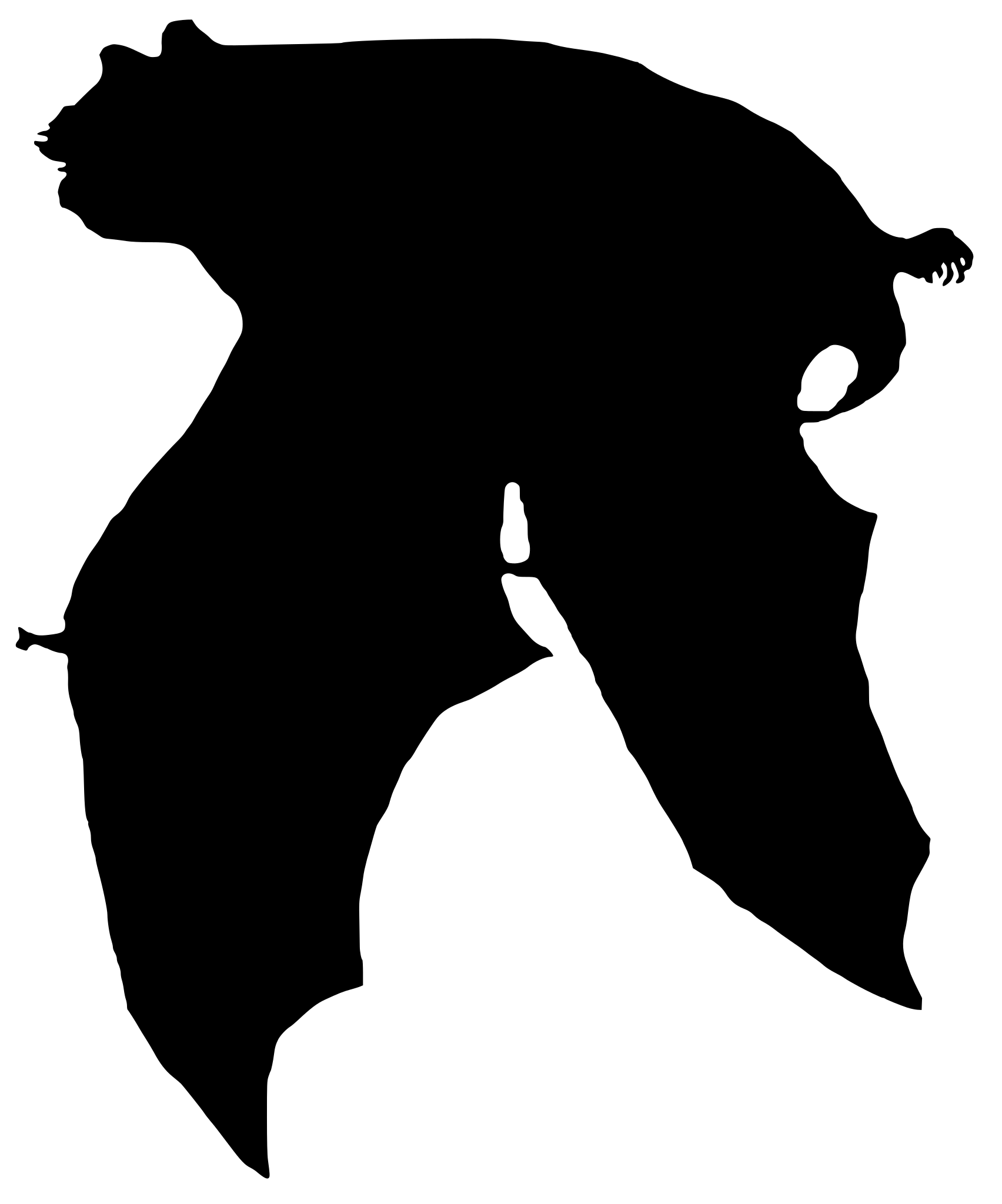
Wyoming’s fringed myotis records tilt east, which is the opposite of what the species’ range map might suggest. Weston, Crook, and Laramie counties, along the state’s eastern edge, hold most of the 16 records. Weston and Crook border the Black Hills of South Dakota, and the bat’s Wyoming presence reads as a western extension of that cave-and-ponderosa stronghold.

The rest of the state is mostly silence. A few records reach Sweetwater and Albany counties, but the Red Desert and Green River country, for all its rocky promise, has produced almost nothing. Whether that’s a real gap or an unsurveyed one is an open question. With a bat that roosts in crevices and hunts at night, records follow biologists with nets and detectors more than they follow the bats.

NatureServe’s state rank, S2B, grades the species Imperiled in the breeding season, and reports bunch from June through August, when maternity roosts are active and survey crews are out. Wyoming sits well within the species’ broader western range, yet its record is thin enough that a single new roost found in the eastern counties would measurably change the picture.
Occurrence data from GBIF.

More mammals in Wyoming in the atlas

Data & sources

The data and visualizations on this page draw on these open sources:

  • GBIFCC-BY 4.0occurrence records behind the range map, elevation, and record counts
  • iNaturalistCC0 / CC-BY / CC-BY-SAobservations, photos, and audio recordings
  • NatureServe ExplorerCC-BYthe state conservation rank
  • IUCN Red Listattributed factthe global conservation status
  • USGS NASpublic domainnative / introduced status
  • Natural Earthpublic domainthe relief basemap
  • USFSpublic domainnational-forest boundaries




