
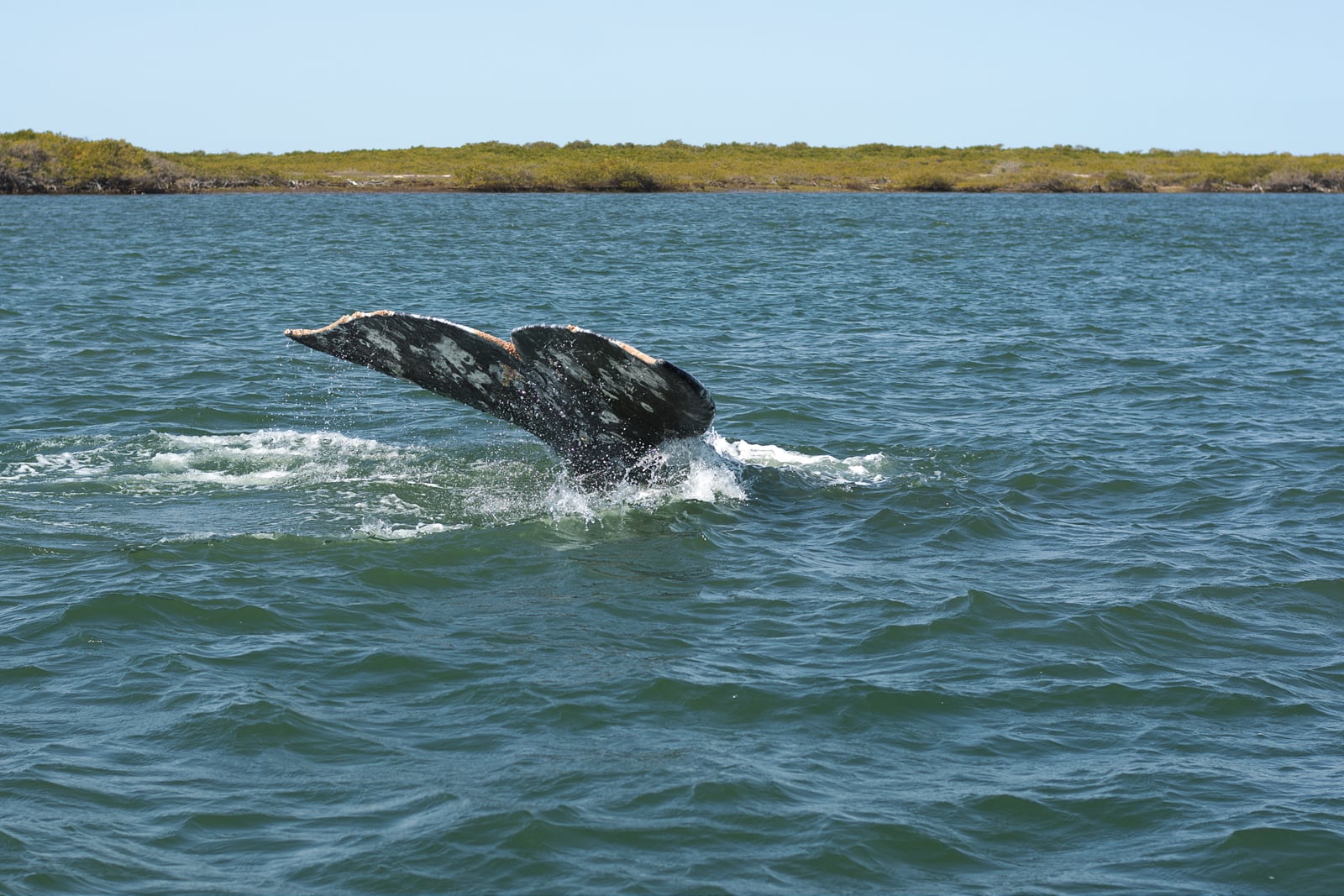
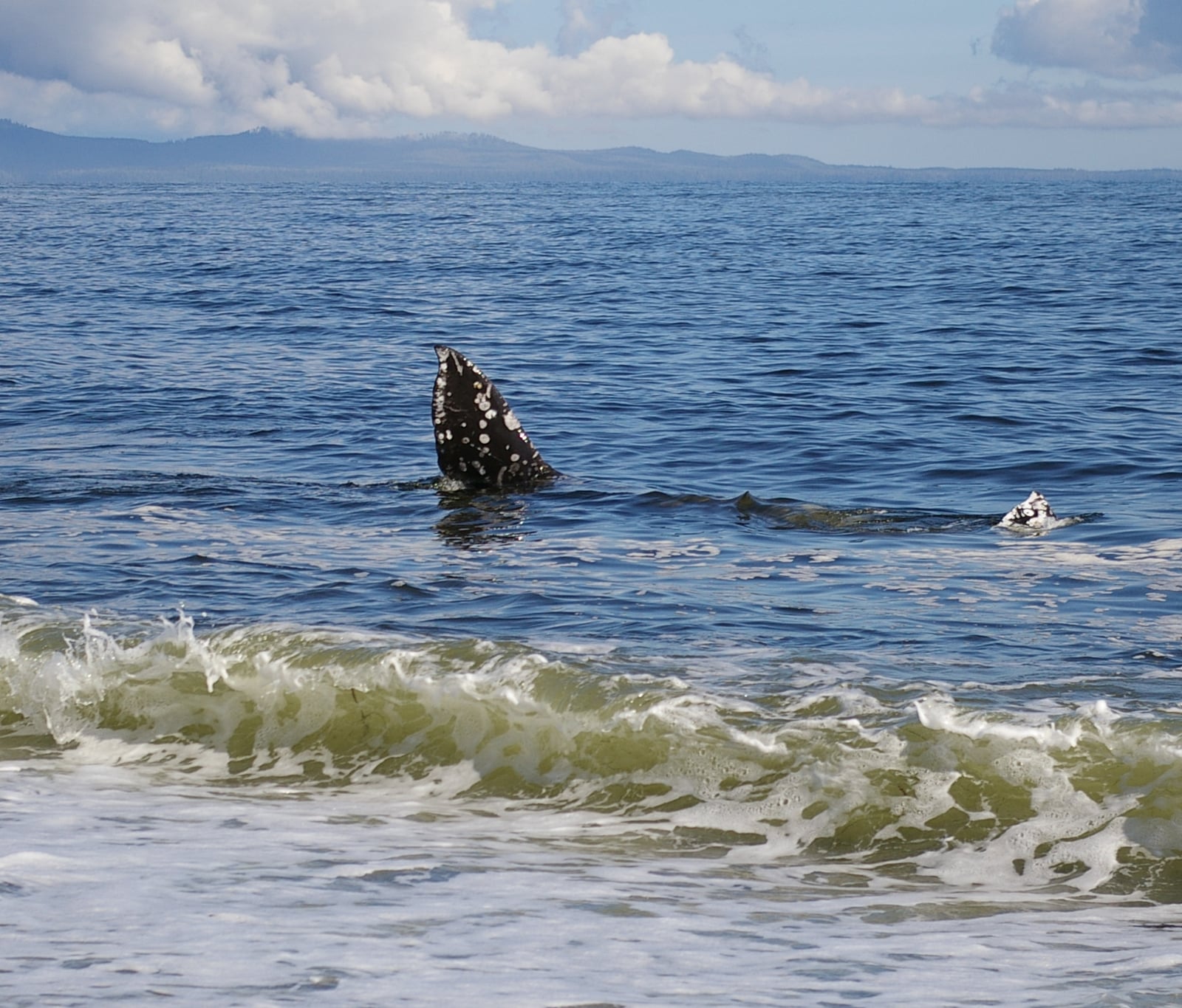
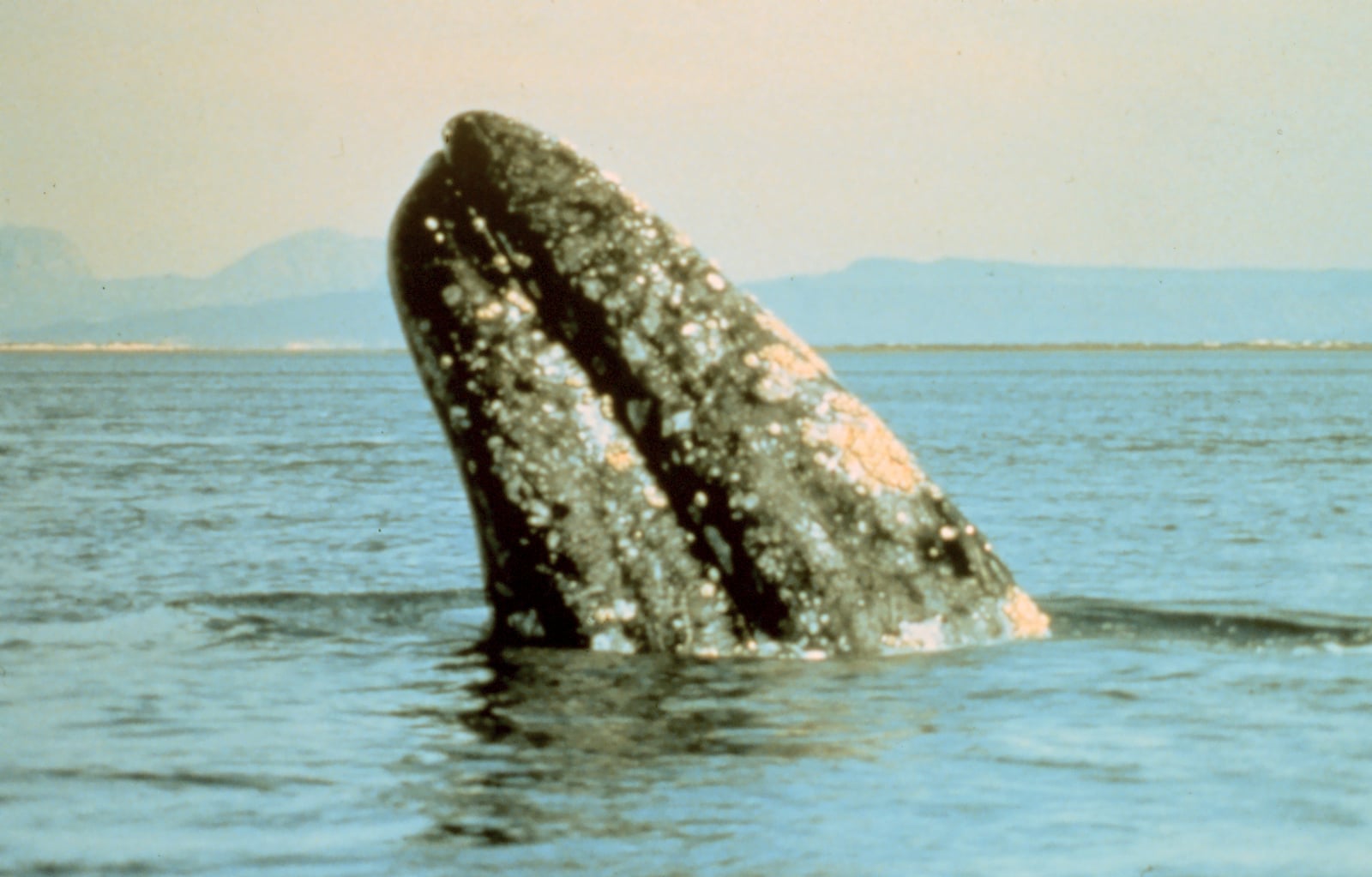
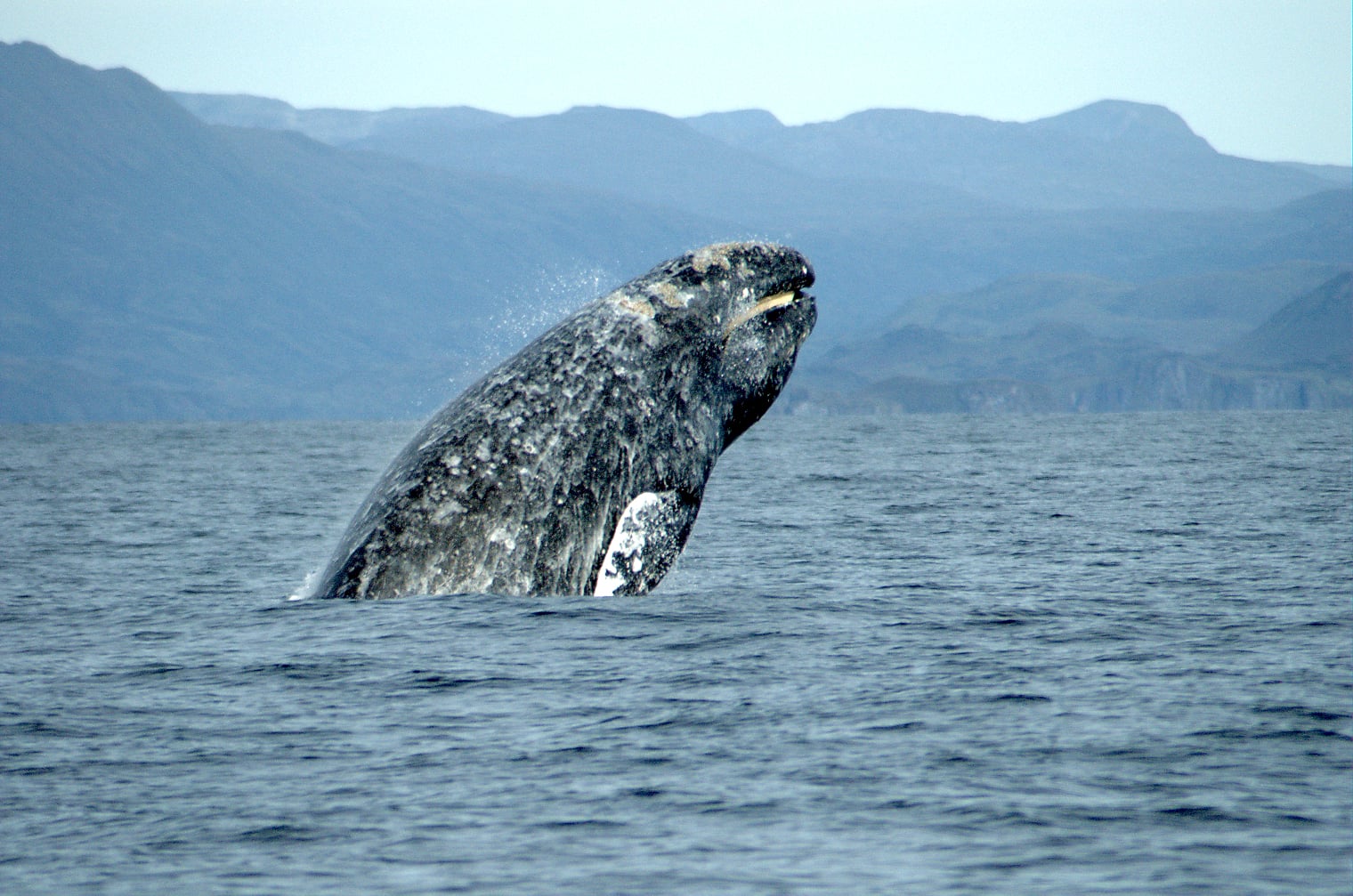
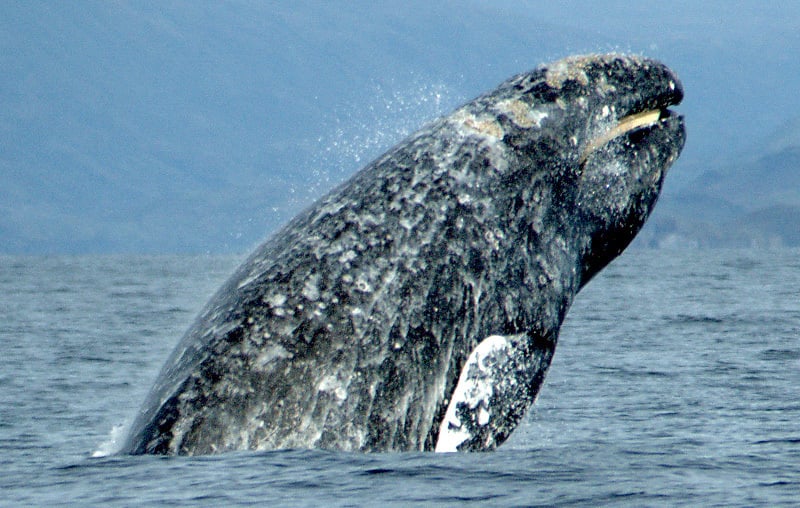
Gray whale records concentrate around Kodiak Island and the Bering Sea coast near Nome, with more from Anchorage, Sitka in the Southeast, and the Kenai Peninsula. Gray whales are coastal migrants, not open-ocean travelers, so Alaska sits at the northern end of a route that runs the length of the Pacific coast from Mexico’s calving lagoons to Arctic feeding grounds.
This is a bottom feeder among giants. Instead of filtering plankton from open water like most large whales, a gray whale rolls onto its side and stirs up sediment from the sea floor, straining out small invertebrates and fish. Its barnacle-crusted back and knuckled ridge, standing in for a true dorsal fin, are two of the easiest field marks once it surfaces.
Records climb sharply in spring and peak in June, unlike the January-to-March surge tied to the species’ southbound migration off California. That difference makes sense. Alaska’s records represent the summer leg of the journey, when gray whales are already back in the productive northern waters where they spend the season feeding.
 Full species profile




