




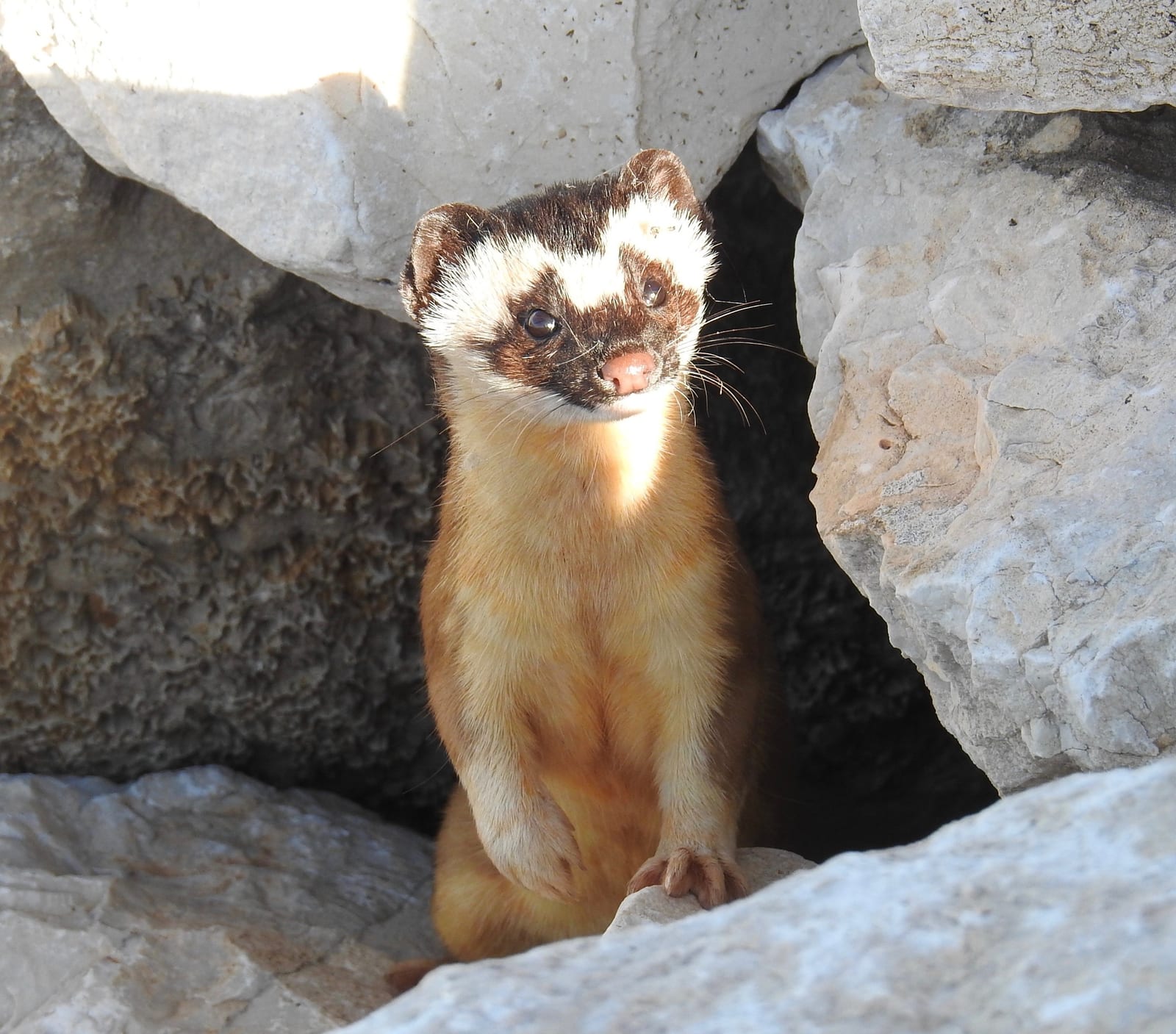
Nevada records for the long tailed weasel are anchored by Toiyabe National Forest, with 8, while Washoe and Elko counties hold the most records, 14 and 10. They show where people have reported it, not how many animals live there.
The Nevada records bridge the state’s southern desert country and its higher central or northern ranges. That broad spread matters more than any single hotspot. The strongest reporting falls in summer, when Nevada’s high country is easiest to reach but low deserts are hottest. That may shape where observers submit records.
Of the 48 Nevada records, iNaturalist supplies 41 research-grade observations and GBIF 36, and the two sources overlap. Those 48 records measure documented encounters, not Nevada’s population size. It’s native to Nevada. Nevada doesn’t specifically list it under the state’s conservation framework, and the IUCN lists it as Least Concern.

 Full species profile




