
Washington mammals

Masked Shrew in Washington

Sorex cinereus

Native to Washington S4 Apparently Secure in Washington

Not listed as nonindigenous in Washington by USGS NAS; native to its Washington range.

IUCN Red List status

  1. LC
  2. NT
  3. VU
  4. EN
  5. CR
  6. EW
  7. EX

LC – Least Concern

Widespread and abundant; not at risk.

Masked Shrew in Washington, by the numbers

Rare in Washington 117th most recorded of 145 mammals logged in Washington

2,777 occurrence records
6 with iNaturalist photos
May 4, 2026 Last seen in Washington

Records from 2000–2026.

2,777 total records count every Washington occurrence from GBIF and iNaturalist; the map plots a georeferenced sample of 300.

When to look for the Masked Shrew in Washington

Most sightings fall in June.

2,777 Washington occurrence records (iNaturalist and GBIF) by month of year, 2000–2026. Shows when the species is recorded, not a guarantee of presence.

Monthly Washington records (table)
MonthRecords
January82
February0
March1
April1
May487
June1,514
July561
August51
September48
October30
November1
December1

Monthly masked shrew occurrence records (iNaturalist and GBIF) in Washington, 2000–2026.

Seasonality

Year-round in Washington, with recorded sightings peaking in June.

Occurrence map

Where Masked Shrew has been recorded in Washington

300 records mapped · zoom and drag to explore

300 Washington records mapped

Notable places to look

Park, forest, or monumentiNaturalist records
Washington State Department of Natural Resources (WADNR) State Resource Management Area 398
Colville National Forest 281
Glacier Peak Wilderness 143
Kaniksu National Forest 21
North Cascades National Park 5
Lake Chelan National Recreation Area 2
Lake Roosevelt National Recreation Area 2
Pasayten Wilderness 1

Protected places with the most masked shrew sightings, from the USGS Protected Areas Database plus named mountain ranges, good spots to look, not a full breakdown, so they don't sum to the total.

Where it's recorded in Washington

CountyRecords
Stevens County 1,371
Pend Oreille County 1,221
Chelan County 148
Okanogan County 6
Kittitas County 5
Ferry County 5
Whatcom County 5
Clallam County 4
Pierce County 3
San Juan County 3
Jefferson County 1
King County 1
4 other counties 4

The complete county distribution, spread across 16 Washington counties. Every occurrence record falls in one county, so these sum to the total. Counties from GBIF and US Census boundaries.

Washington’s masked shrew record is heaviest in the state’s northeast corner: of 2,777 records, Stevens County holds 1,371 and Pend Oreille County 1,221, with the Colville National Forest alone contributing 866. Farther west the record thins toward the Cascades and the San Juan Islands, with Chelan County next in line at 148.

A few grams of nonstop appetite

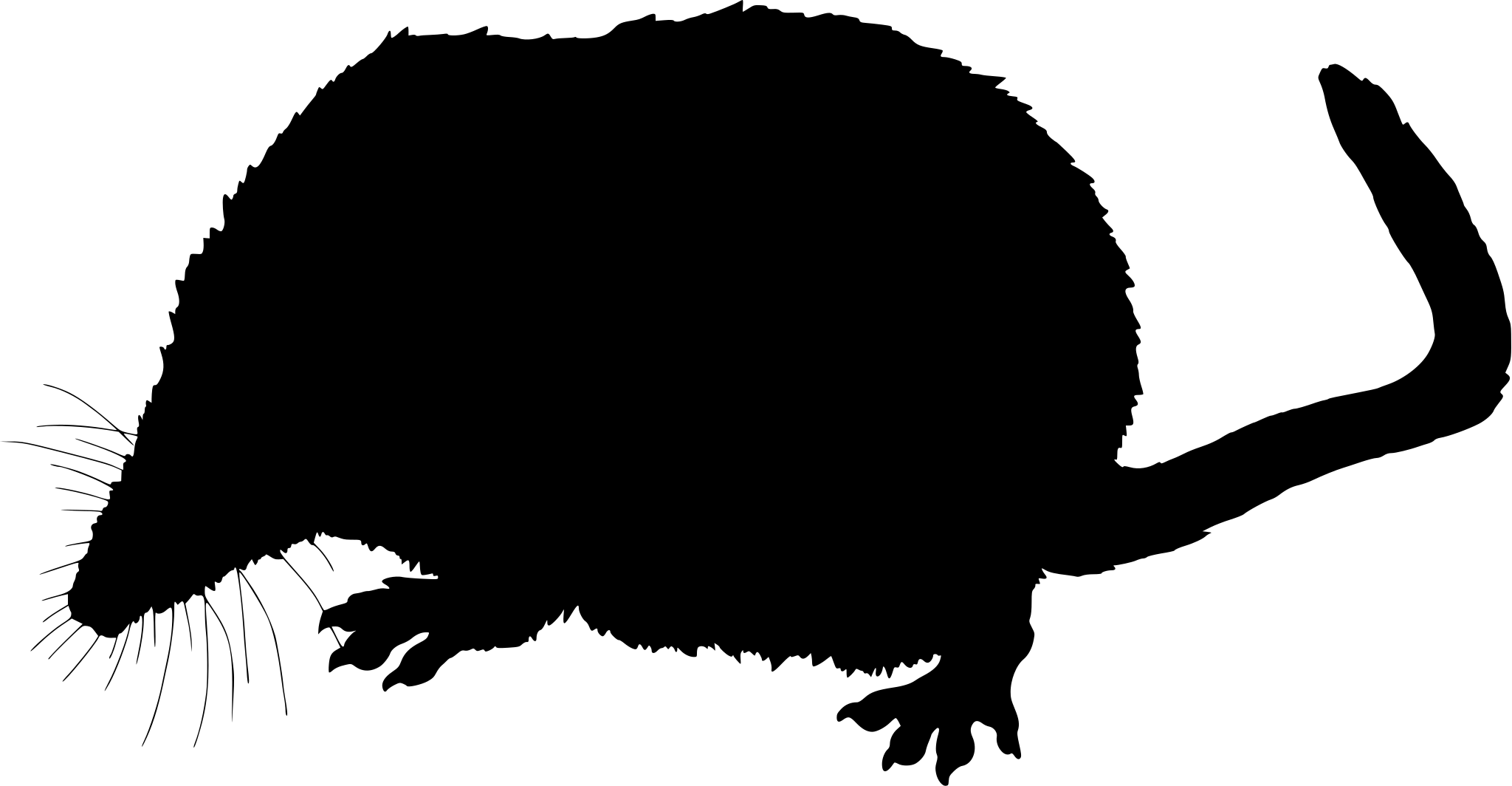
The masked shrew is the most widely distributed shrew in North America, a mouse-sized hunter that must eat nearly its own weight in insects, worms, and other small prey each day to keep its furnace running. It is active around the clock, resting in short bouts between hunts, and favors cool, moist ground under conifer and mixed forest, the kind of country running through the Kaniksu National Forest, the Glacier Peak Wilderness, and North Cascades National Park.

Busy all winter, seen in summer

Masked shrews do not hibernate. They hunt right through the coldest months under the snow, where the leaf-litter layer keeps working even in midwinter. Reports still pile up in May, June, and July, when breeding adults and a flood of new young make the little animals far easier to encounter.

Status in Washington

NatureServe ranks the masked shrew S4, Apparently Secure, in Washington, and the species is native to the state. USGS NAS does not list it as nonindigenous here.
Occurrence data from iNaturalist and GBIF.

More mammals in Washington in the atlas

Data & sources

The data and visualizations on this page draw on these open sources:

  • GBIFCC-BY 4.0occurrence records behind the range map, elevation, and record counts
  • iNaturalistCC0 / CC-BY / CC-BY-SAobservations, photos, and audio recordings
  • NatureServe ExplorerCC-BYthe state conservation rank
  • IUCN Red Listattributed factthe global conservation status
  • USGS NASpublic domainnative / introduced status
  • Natural Earthpublic domainthe relief basemap
  • USFSpublic domainnational-forest boundaries
  • USGS Protected Areas Databasepublic domainthe named parks, forests, and refuges behind "notable places to look"




