


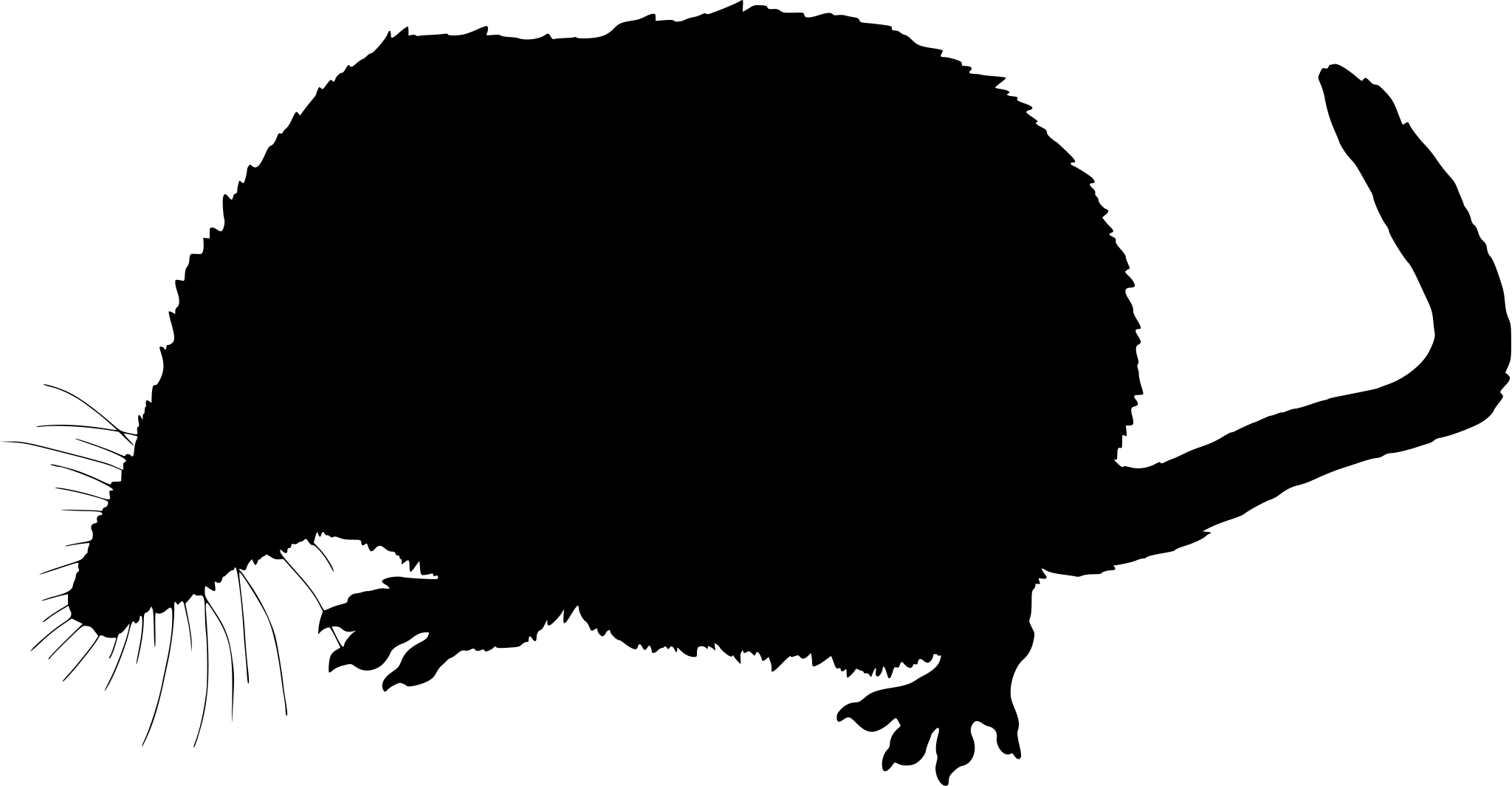
Merriam’s shrew is the dry-country exception among many Utah shrews, favoring sagebrush steppe, bunchgrass, and open pinyon–juniper rather than saturated stream margins. It hunts insects and other small invertebrates under litter and shrubs, where its tiny body and secretive movements keep it out of ordinary wildlife observations.
The 26 Utah records document captures, not abundance or a reliable statewide season. Small-mammal trapping effort, snow cover, and access can dominate the calendar. Its relatively pale coat and long tail suit an arid western species, while patches of ground cover remain important for prey and protection from heat and predators.
 Full species profile




