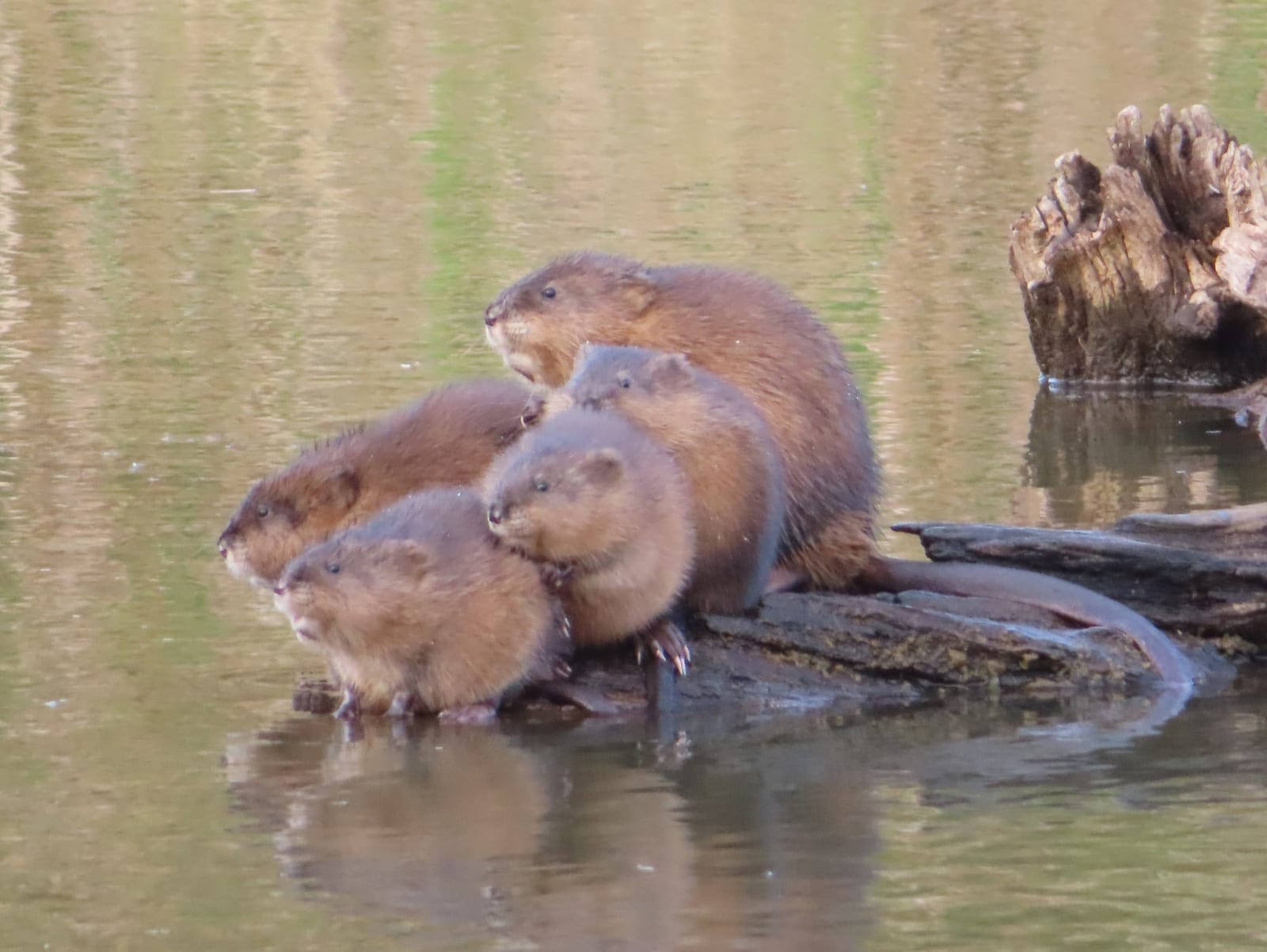
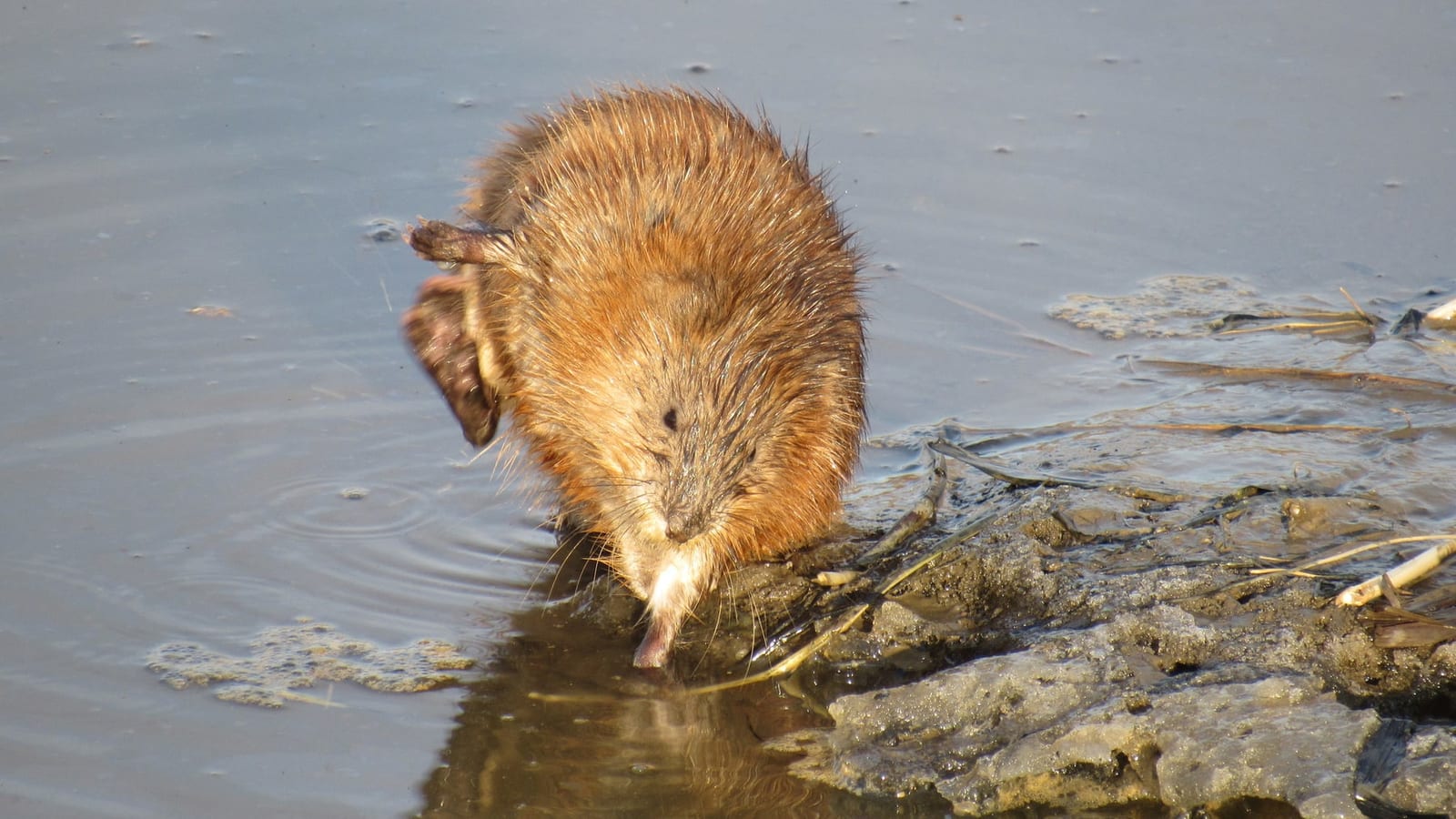
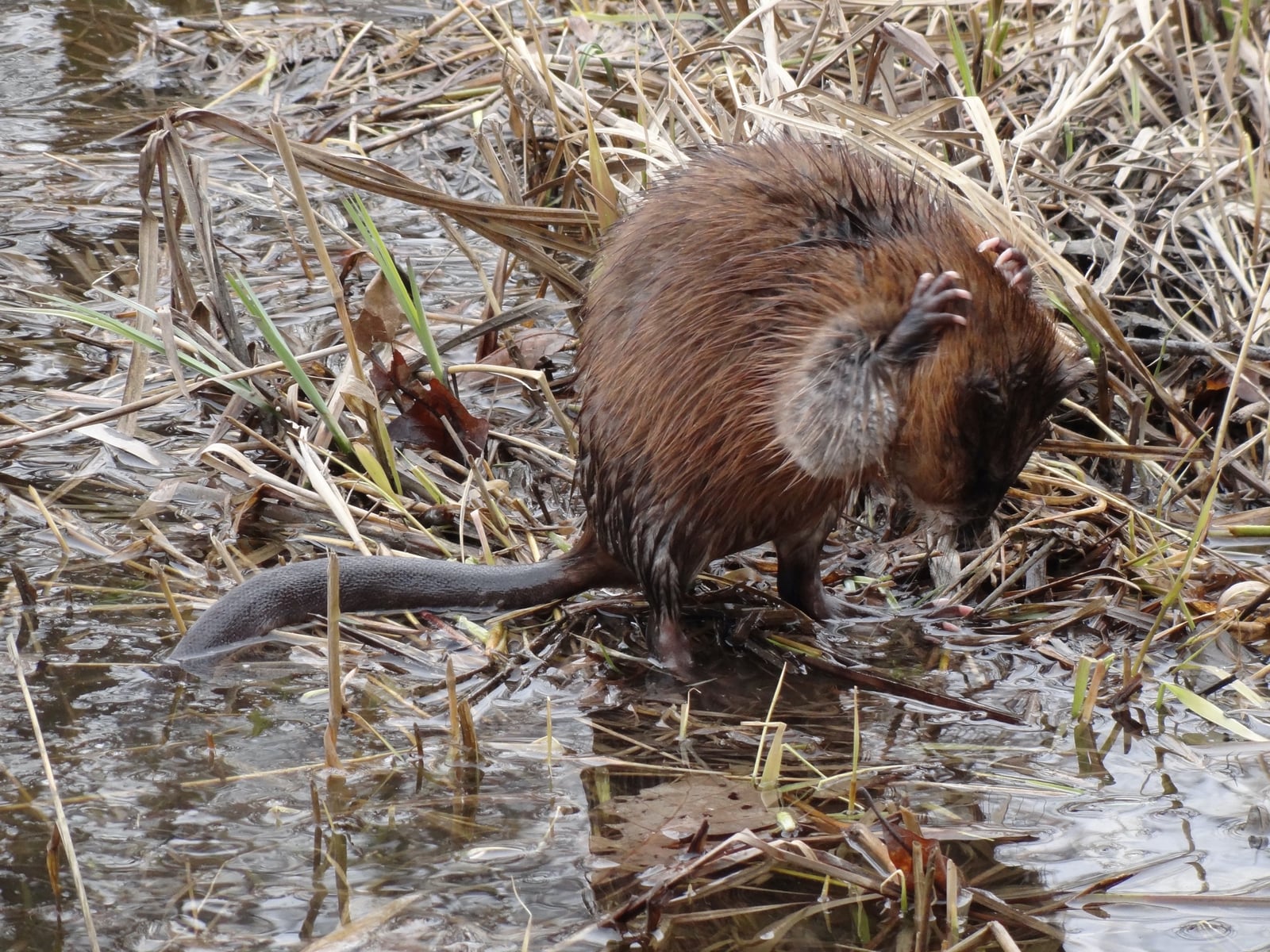
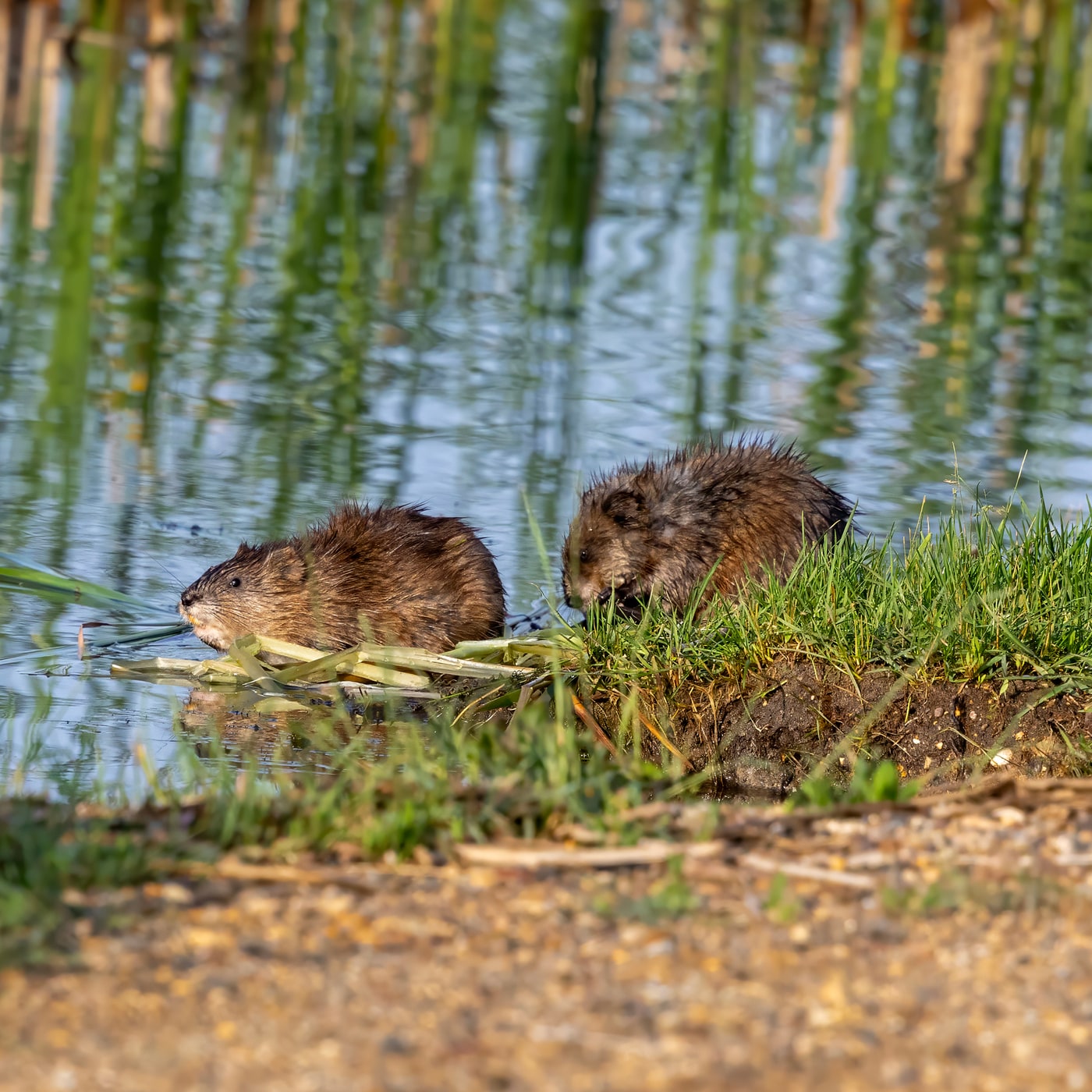
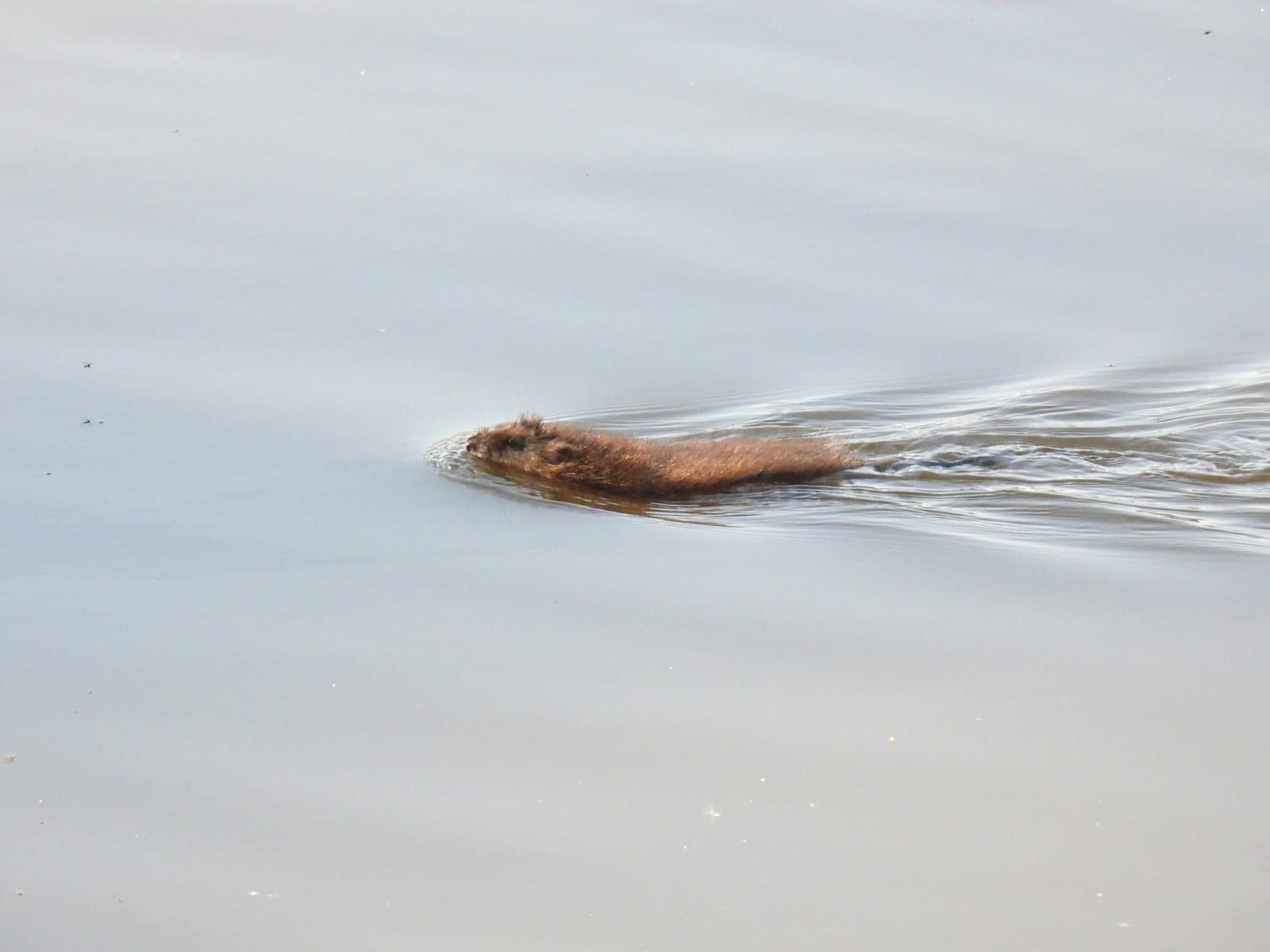
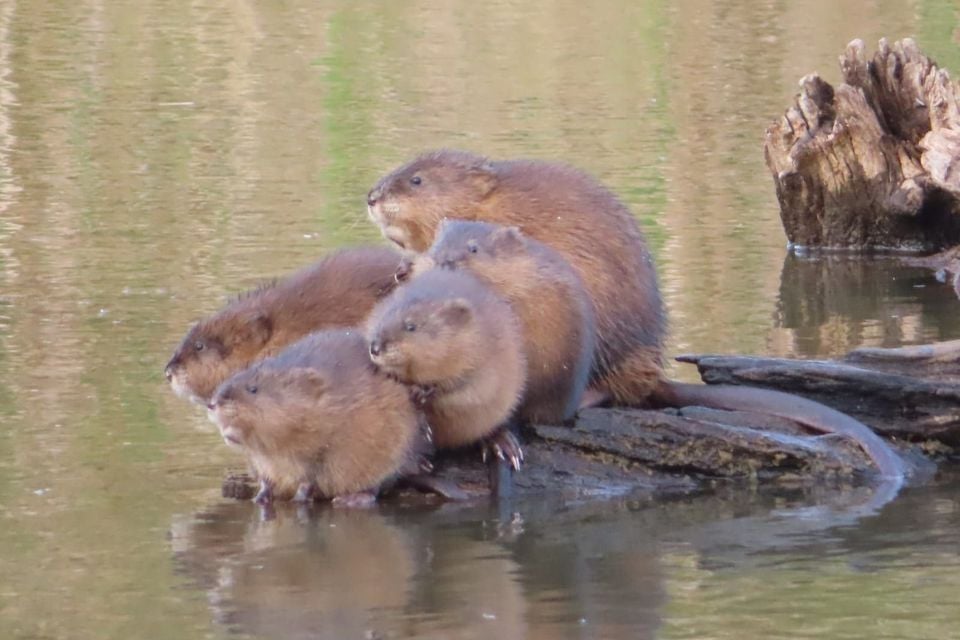
Most of Illinois’s muskrat records come from the Chicago region. Cook County alone has 592, and together with DuPage and Lake counties the northeastern corner accounts for just over half of the state’s 2,012. Suburban ponds, retention basins, and river backwaters give muskrats plenty of room, and give a dense population of iNaturalist users plenty of chances to photograph them.
Canal towpaths and lakeshore swales
The named places mirror that northeastern lean. The Illinois and Michigan Canal State Trail, a towpath beside an old shipping canal running southwest from Chicago, leads the list. Illinois Beach State Park adds marshy swales tucked between the Lake Michigan dunes, and Volo Bog and Moraine Hills add glacial bog and marsh northwest of the city. Downstate, Champaign County’s 93 records stand out in a landscape of drained, tiled farmland, and Larue-Pine Hills on the edge of the Mississippi bottoms in the far south shows up with a few.
Reports peak in April at 354, with March and May close behind, and they’re scarcest in January and October. Early spring is when ice clears and cattail shoots are still short, so a swimming muskrat is hard to miss. Status is simple here: native, and ranked S5, secure, by NatureServe.
 Full species profile