
Colorado mammals

North American Least Shrew in Colorado

Cryptotis parvus

Native to Colorado S5 Secure in Colorado

Not listed as nonindigenous in Colorado by USGS NAS; native to its Colorado range.

IUCN Red List status

  1. LC
  2. NT
  3. VU
  4. EN
  5. CR
  6. EW
  7. EX

LC – Least Concern

Widespread and abundant; not at risk.

North American Least Shrew in Colorado, by the numbers

Rare in Colorado 114th most recorded of 154 mammals logged in Colorado

85 occurrence records
13 with iNaturalist photos
Jan 5, 2026 Last seen in Colorado

Records from 2000–2026.

85 total records count every Colorado occurrence from GBIF and iNaturalist; the monthly chart covers the 84 records with a full observation date.

When to look for the North American Least Shrew in Colorado

Most sightings fall in October to November.

84 Colorado occurrence records (iNaturalist and GBIF) by month of year, 2000–2026. Shows when the species is recorded, not a guarantee of presence.

Monthly Colorado records (table)
MonthRecords
January3
February1
March1
April0
May2
June3
July7
August9
September7
October30
November18
December3

Monthly north american least shrew occurrence records (iNaturalist and GBIF) in Colorado, 2000–2026.

Seasonality

Year-round in Colorado, with recorded sightings peaking in October–November.

Occurrence map

Where North American Least Shrew has been recorded in Colorado

85 records mapped · zoom and drag to explore

85 Colorado records mapped

Notable places to look

Park, forest, or monumentiNaturalist records
Barr Lake 2
Tamarack Ranch 2
Rocky Mountain National Park 1
South Republican 1

Protected places with the most north american least shrew sightings, from the USGS Protected Areas Database plus named mountain ranges, good spots to look, not a full breakdown, so they don't sum to the total.

Where it's recorded in Colorado

CountyRecords
Larimer County 37
Boulder County 17
Yuma County 8
Adams County 3
Logan County 3
Weld County 2
Jefferson County 2
Arapahoe County 2
El Paso County 2
Pueblo County 2
Bent County 2
Morgan County 2
3 other counties 3

The complete county distribution, spread across 15 Colorado counties. Every occurrence record falls in one county, so these sum to the total. Counties from GBIF and US Census boundaries.

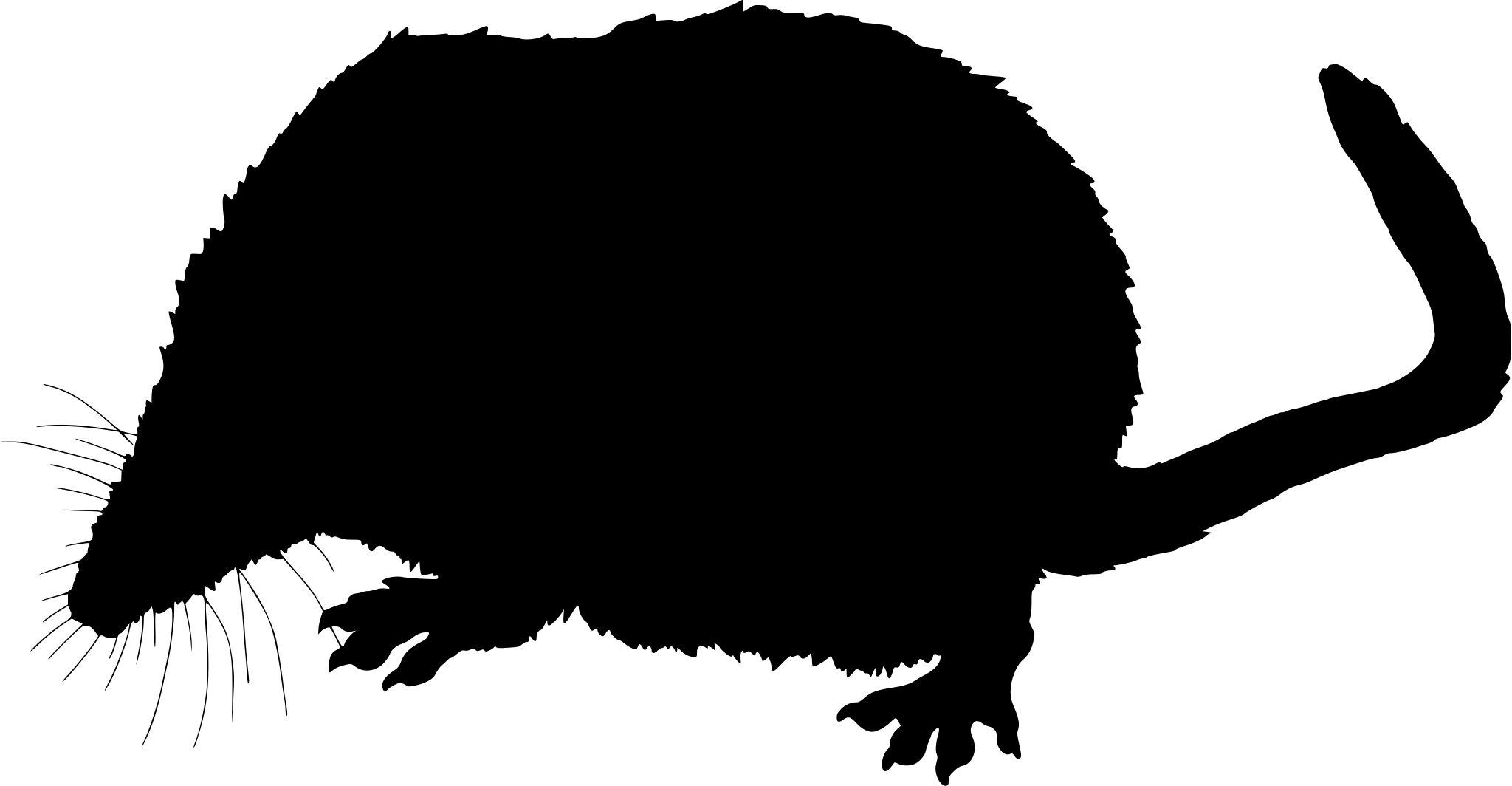
The North American least shrew is a species in Colorado. Open occurrence databases hold only 85 Colorado records, most of them museum specimens and trapping-survey entries rather than field photographs, which is exactly what you would expect for a five-gram insectivore living at the western edge of its range.

A plains animal at the edge of its range

The least shrew is fundamentally an eastern grassland mammal, and Colorado sits on the dry rim of that range. The scatter of records reflects survey and specimen effort, not the animal’s true abundance: it concentrates on the eastern plains and the moister Front Range grasslands, with Larimer and Boulder counties leading and a thin string of records out through Yuma, Logan, Morgan, and Bent counties toward the Kansas and Nebraska lines. West of the foothills it essentially drops out, because the shrew needs the tallgrass, weedy fields, and marsh edges of the plains rather than montane forest.

Why it is so rarely seen

This is a cryptic, mostly nocturnal insectivore that spends its life tunneling through grass thatch and leaf litter hunting insects, worms, and slugs. It almost never turns up in casual observation, so the record count says far more about how few people are pitfall-trapping shrews on the Colorado plains than about how many shrews are out there. Unusually for a shrew, least shrews are somewhat social and will share nests and even help tend young, though that behavior stays hidden underground.

Status in Colorado

The least shrew is native to Colorado and ranked S5 by NatureServe, secure despite its sparse record set, because the low numbers are a detection problem rather than a population one. Globally it is Least Concern. There is no reliable place to go and watch one. It is a species you confirm through survey traps and specimen records, not through a hike.
More mammals in Colorado in the atlas

Data & sources

The data and visualizations on this page draw on these open sources:

  • GBIFCC-BY 4.0occurrence records behind the range map, elevation, and record counts
  • iNaturalistCC0 / CC-BY / CC-BY-SAobservations, photos, and audio recordings
  • NatureServe ExplorerCC-BYthe state conservation rank
  • IUCN Red Listattributed factthe global conservation status
  • USGS NASpublic domainnative / introduced status
  • Natural Earthpublic domainthe relief basemap
  • USFSpublic domainnational-forest boundaries
  • USGS Protected Areas Databasepublic domainthe named parks, forests, and refuges behind "notable places to look"




