
Georgia mammals

North American Least Shrew in Georgia

Cryptotis parvus

Native to Georgia S5 Secure in Georgia

Not listed as nonindigenous in Georgia by USGS NAS; native to its Georgia range.

IUCN Red List status

  1. LC
  2. NT
  3. VU
  4. EN
  5. CR
  6. EW
  7. EX

LC – Least Concern

Widespread and abundant; not at risk.

North American Least Shrew in Georgia, by the numbers

Occasional in Georgia 46th most recorded of 109 mammals logged in Georgia

121 occurrence records
29 with iNaturalist photos

Records from 2000–2026.

121 total records count every Georgia occurrence from GBIF and iNaturalist; the monthly chart covers the 93 records with a full observation date.

When to look for the North American Least Shrew in Georgia

Most sightings fall in December to January.

93 Georgia occurrence records (iNaturalist and GBIF) by month of year, 2000–2026. Shows when the species is recorded, not a guarantee of presence.

Monthly Georgia records (table)
MonthRecords
January10
February1
March5
April7
May6
June10
July5
August7
September8
October9
November9
December16

Monthly north american least shrew occurrence records (iNaturalist and GBIF) in Georgia, 2000–2026.

Seasonality

Year-round in Georgia, with recorded sightings peaking in December–January, with a smaller rise in June.

Occurrence map

Where North American Least Shrew has been recorded in Georgia

121 records mapped · zoom and drag to explore

121 Georgia records mapped

Notable places to look

Park, forest, or monumentiNaturalist records
Okefenokee National Wildlife Refuge.Wilderness Area 3
Chickamauga and Chattanooga National Military Park 1

Protected places with the most north american least shrew sightings, from the USGS Protected Areas Database plus named mountain ranges, good spots to look, not a full breakdown, so they don't sum to the total.

Where it's recorded in Georgia

CountyRecords
Bulloch County 16
Grady County 15
Baker County 12
Chatham County 11
Thomas County 10
Baldwin County 8
Liberty County 8
Charlton County 6
Camden County 4
Carroll County 3
Clarke County 3
Henry County 2
18 other counties 23

The complete county distribution, spread across 30 Georgia counties. Every occurrence record falls in one county, so these sum to the total. Counties from GBIF and US Census boundaries.

Georgia’s least shrew records concentrate almost entirely along the coast, on barrier islands like Cumberland and Sapelo and around the marsh grasslands of Savannah National Wildlife Refuge. That fits the species well: it favors open grassy ground, and the dune meadows and maritime grasslands behind Georgia’s beaches give it exactly the dense, low cover it needs to move around unseen.

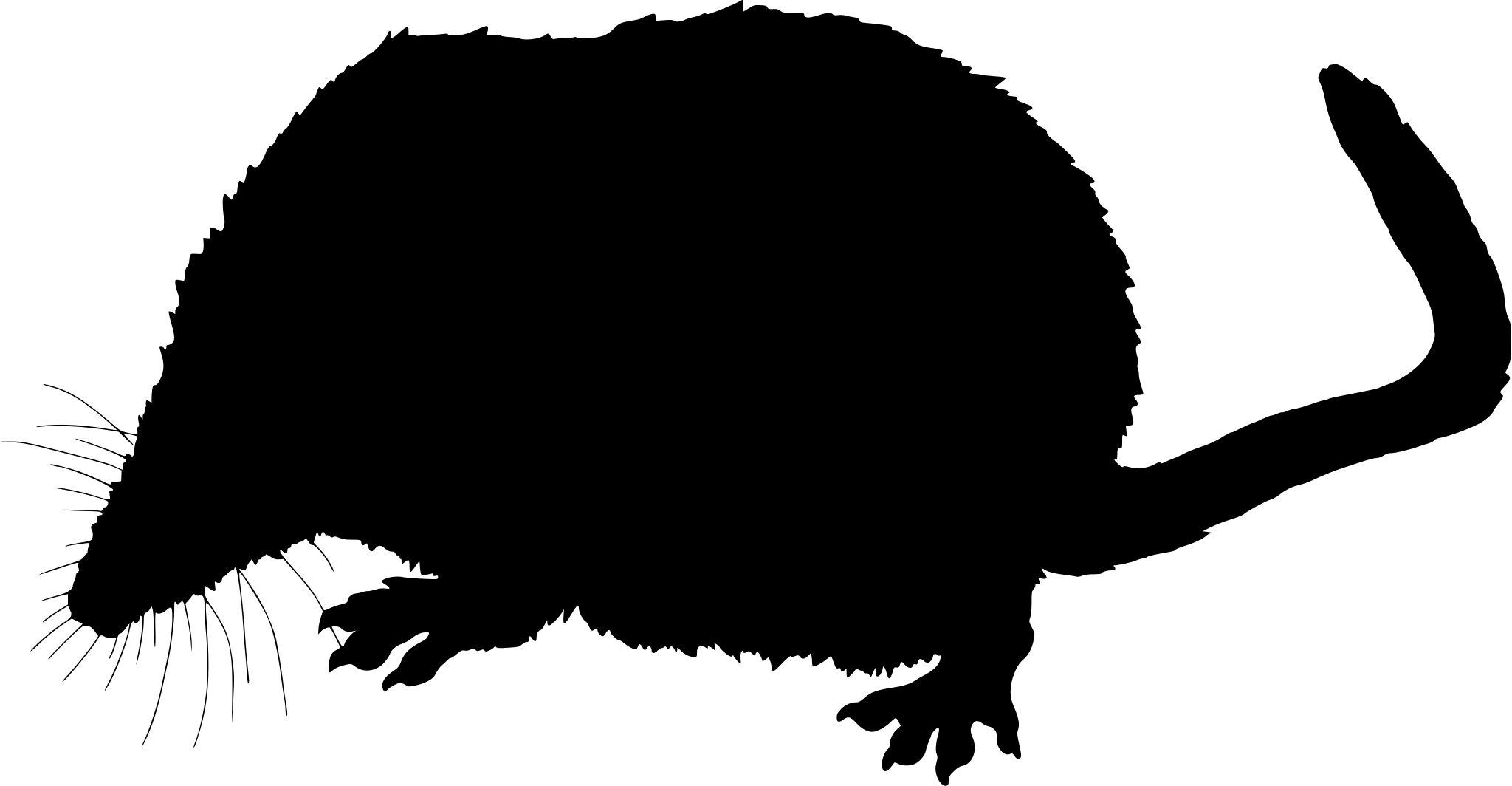
At barely a thumb’s length, this is one of the smallest mammals in the state, and it survives cold snaps in an unusual way for a shrew. Rather than going it alone the way most shrew species do, the least shrew often nests communally, huddling with several others through cold weather to conserve heat, and it’s even been found denning inside abandoned beehives, a habit that earned it the nickname bee shrew.

Georgia’s records run year-round with modest peaks in May and November, though with fewer than 150 total records the seasonal pattern here is thin. NatureServe ranks the species S5, Secure, in the state, consistent with a shrew that’s simply hard to detect rather than genuinely rare across its Coastal Plain and barrier-island range.
Occurrence data from iNaturalist and GBIF.

More mammals in Georgia in the atlas

Data & sources

The data and visualizations on this page draw on these open sources:

  • GBIFCC-BY 4.0occurrence records behind the range map, elevation, and record counts
  • iNaturalistCC0 / CC-BY / CC-BY-SAobservations, photos, and audio recordings
  • NatureServe ExplorerCC-BYthe state conservation rank
  • IUCN Red Listattributed factthe global conservation status
  • USGS NASpublic domainnative / introduced status
  • Natural Earthpublic domainthe relief basemap
  • USFSpublic domainnational-forest boundaries
  • USGS Protected Areas Databasepublic domainthe named parks, forests, and refuges behind "notable places to look"




