


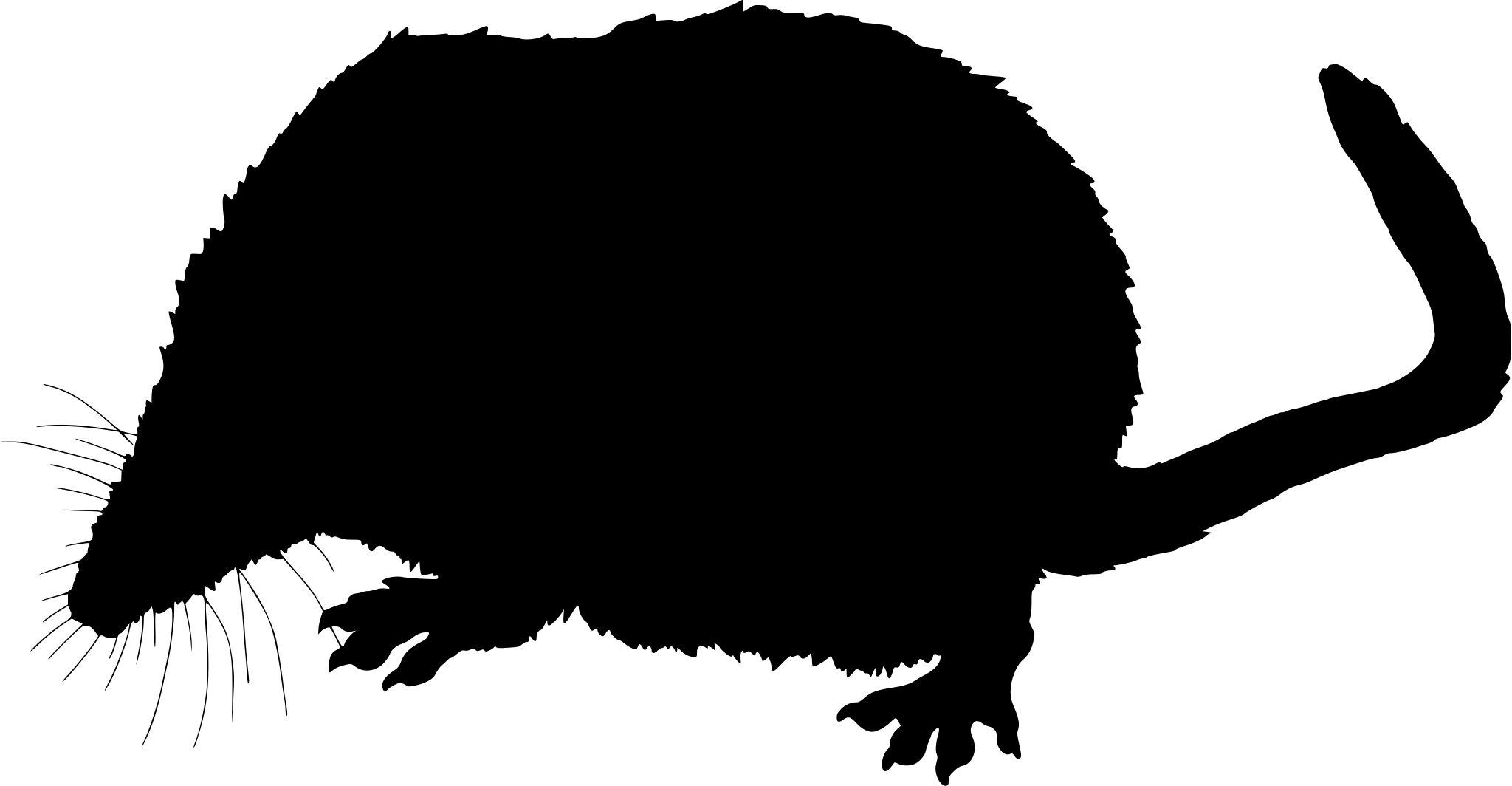
North Carolina’s least shrew reports cluster along the Coastal Plain and Tidewater, in the grassy dune edges of Cape Hatteras National Seashore, the marsh margins of Alligator River National Wildlife Refuge, and the pocosin and peat wetlands bordering the Great Dismal Swamp. That’s low, open, grassy ground close to sea level, exactly the kind of habitat this shrew needs rather than mountain or Piedmont forest.
Least shrews are unusually social for the family, often sharing nests and burrow systems with several others at once, which likely matters most in the region’s cold snaps, when clustering together helps conserve body heat. Roughly 40 percent of the diet is insects and other invertebrates, with vertebrate prey and scavenged carrion filling out the rest.
Records here run year-round but climb in April, May, and November, which probably reflects young shrews dispersing and turning up in new patches of grass rather than any single active season.
 Full species profile




