
Arizona mammals

Northern Grasshopper Mouse in Arizona

Onychomys leucogaster

Native to Arizona S5 Secure in Arizona

Not listed as nonindigenous in Arizona by USGS NAS; native to its Arizona range.

IUCN Red List status

  1. LC
  2. NT
  3. VU
  4. EN
  5. CR
  6. EW
  7. EX

LC – Least Concern

Widespread and abundant; not at risk.

Northern Grasshopper Mouse in Arizona, by the numbers

Occasional in Arizona 100th most recorded of 158 mammals logged in Arizona

885 occurrence records
4 with iNaturalist photos
Jun 28, 2023 Last seen in Arizona

Records from 2000–2026.

885 total records count every Arizona occurrence from GBIF and iNaturalist; the map plots a georeferenced sample of 300; the monthly chart covers the 872 records with a full observation date.

When to look for the Northern Grasshopper Mouse in Arizona

Most sightings fall in July to October.

872 Arizona occurrence records (iNaturalist and GBIF) by month of year, 2000–2026. Shows when the species is recorded, not a guarantee of presence.

Monthly Arizona records (table)
MonthRecords
January28
February19
March33
April135
May64
June68
July85
August140
September114
October111
November64
December11

Monthly northern grasshopper mouse occurrence records (iNaturalist and GBIF) in Arizona, 2000–2026.

Seasonality

Year-round in Arizona, with recorded sightings peaking in July–October, with a smaller rise in April.

Occurrence map

Where Northern Grasshopper Mouse has been recorded in Arizona

300 records mapped · zoom and drag to explore

300 Arizona records mapped

Notable places to look

Park, forest, or monumentiNaturalist records
State Trust Land 57
Grand Canyon-Parashant National Monument 19
Wupatki National Monument 7
Grand Canyon National Park 7
Paria Canyon - Vermilion Cliffs Wilderness Area 7
Petrified Forest National Park 6
Vermilion Cliffs National Monument 2
Glen Canyon National Recreation Area 1

Protected places with the most northern grasshopper mouse sightings, from the USGS Protected Areas Database plus named mountain ranges, good spots to look, not a full breakdown, so they don't sum to the total.

Where it's recorded in Arizona

CountyRecords
Coconino County 295
Cochise County 203
Navajo County 92
Mohave County 87
Yavapai County 73
Apache County 39
Graham County 38
Pima County 26
Maricopa County 12
Gila County 7
Pinal County 4
Santa Cruz County 1
Greenlee County 1
Other localities 7

The complete county distribution, spread across 13 Arizona counties. Every occurrence record falls in one county, so these sum to the total. Counties from GBIF and US Census boundaries.

Arizona’s occurrence databases hold 885 records of the northern grasshopper mouse, and Coconino County alone accounts for close to a third of them. The next-heaviest clusters sit in Cochise and Navajo counties, hundreds of miles apart, which says less about where the mouse is scarce and more about where surveyors have gone looking on open ground.

Grassland gaps, not desert scrub

This is a species built for bare, open ground rather than dense cover, and Arizona’s records show that split loyalty clearly. To the north, reports trace the high grassland flats and pinyon-juniper edges of the Colorado Plateau, running from Coconino and Navajo counties out toward Mohave County’s Arizona Strip near the Grand Canyon. In the southeast, in Cochise and Graham counties, the mouse turns up in the semi-desert grassland valleys that separate the Sky Island ranges, not on the forested slopes themselves. Records thin out fast toward the saguaro-studded Sonoran Desert basins around Tucson and Phoenix, where dense ground cover works against an animal that hunts by sightline.

A hunter that howls

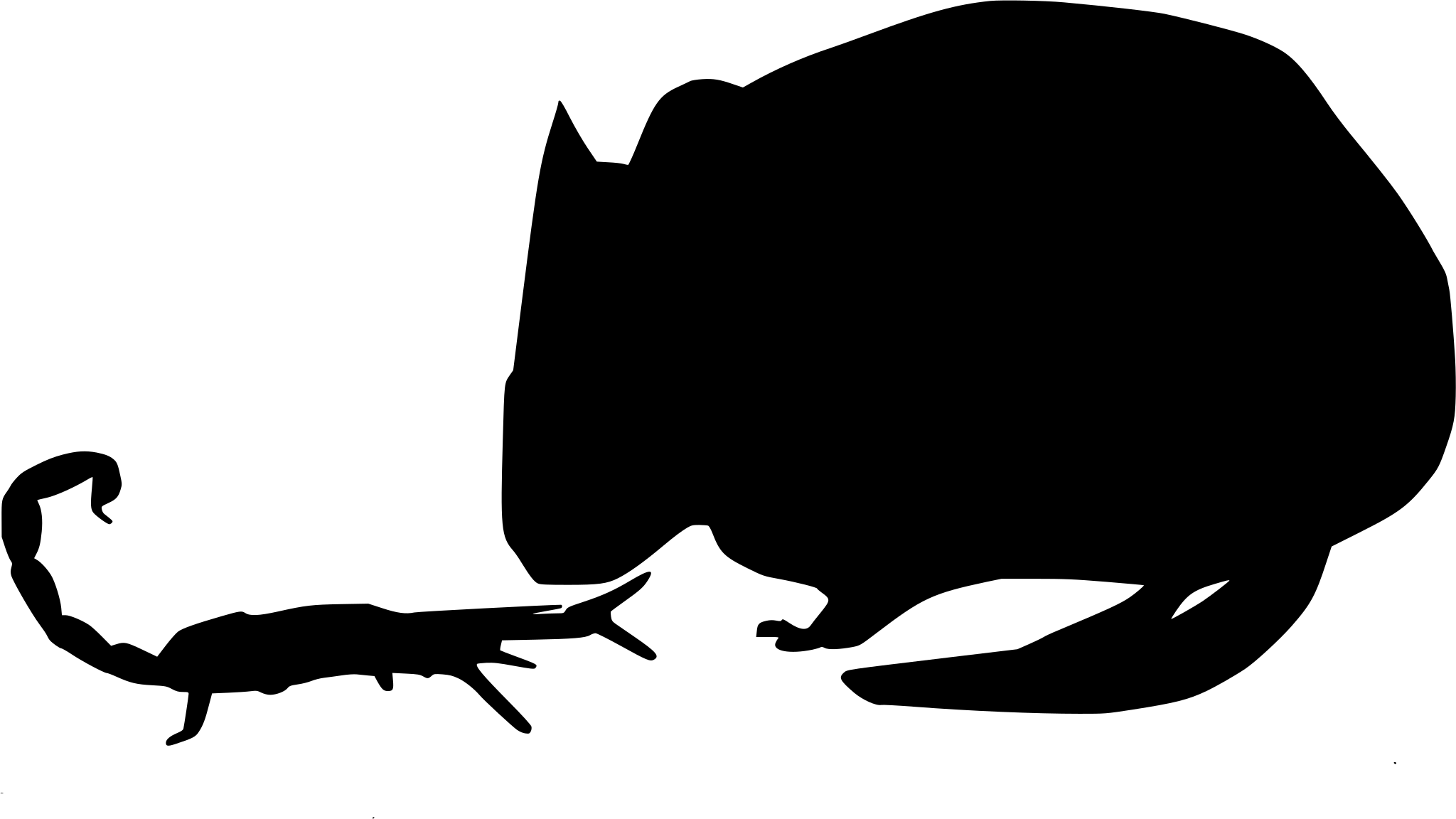
Unlike most mice, this one eats meat. Arizona’s grasshopper mice go after grasshoppers, beetles, and scorpions, occasionally even smaller rodents, and they can shrug off stings from scorpion species that would deter a lot of other predators. At night, an adult rears back and gives a thin, carrying call that researchers have likened to a miniature howl, a way of marking territory across open ground where there’s nowhere to hide a burrow’s exact location. Records peak from April through June and again in October, which likely tracks when surveyors are out looking rather than any real gap in the colder months.

Status in Arizona

NatureServe ranks the northern grasshopper mouse S5, secure, and it’s native to Arizona. It isn’t listed as nonindigenous by USGS NAS, and its wide but patchy spread across the state’s open country fits a habitat specialist that follows bare ground wherever it occurs.
More mammals in Arizona in the atlas

Data & sources

The data and visualizations on this page draw on these open sources:

  • GBIFCC-BY 4.0occurrence records behind the range map, elevation, and record counts
  • iNaturalistCC0 / CC-BY / CC-BY-SAobservations, photos, and audio recordings
  • NatureServe ExplorerCC-BYthe state conservation rank
  • IUCN Red Listattributed factthe global conservation status
  • USGS NASpublic domainnative / introduced status
  • Natural Earthpublic domainthe relief basemap
  • USFSpublic domainnational-forest boundaries
  • USGS Protected Areas Databasepublic domainthe named parks, forests, and refuges behind "notable places to look"




