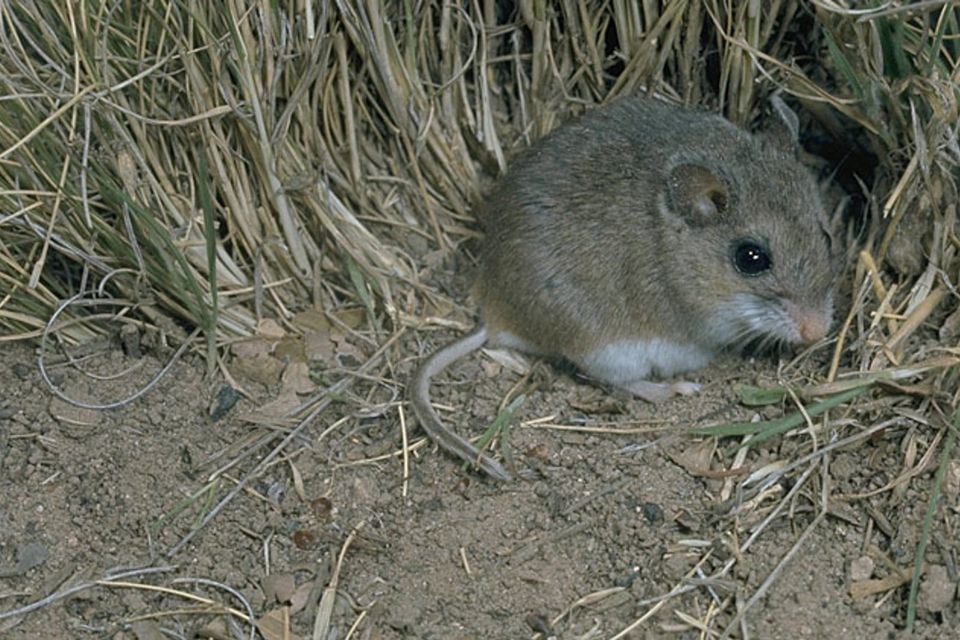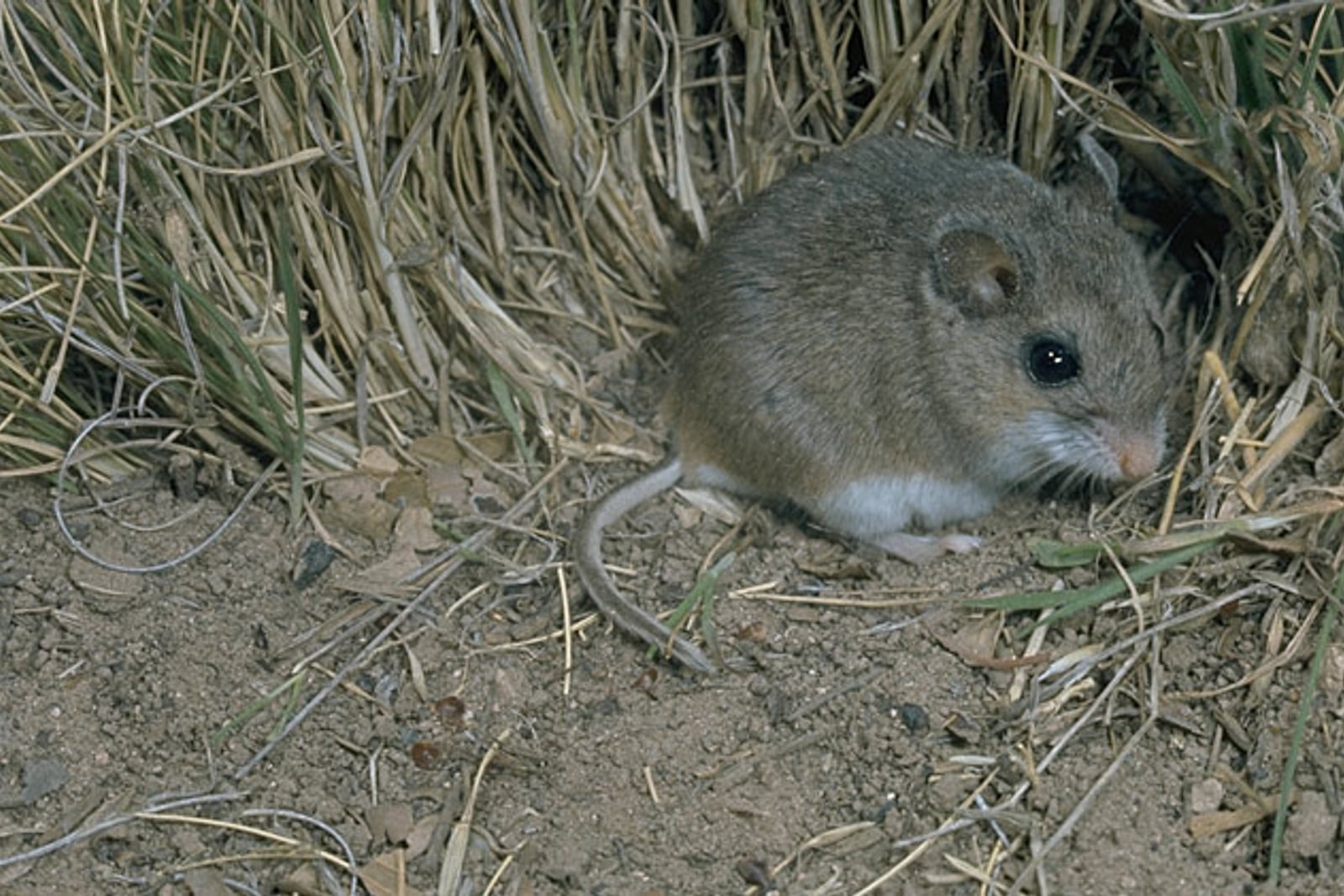
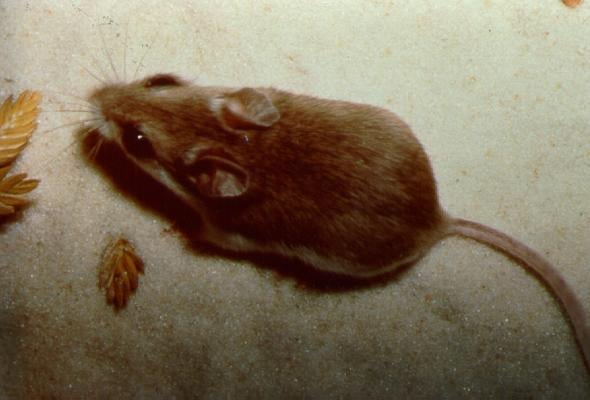
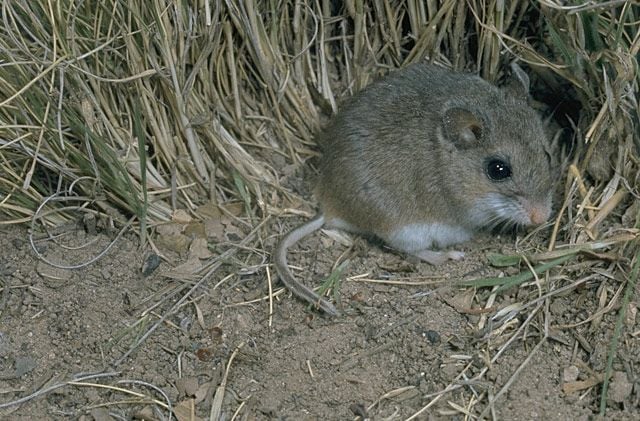
Alabama’s oldfield mouse records come from inland sandy ground, not the coast: Bankhead National Forest’s sandstone plateau in the northwest, and the sandy soils around Talladega National Forest and Oak Mountain State Park in the Piedmont. That’s worth noting, because this species also includes several pale, dune-dwelling beach mouse subspecies along Alabama’s Gulf shoreline, and the records mapped here reflect the inland form living well away from that coastal population.
Sandy soil, branching burrows
The oldfield mouse needs loose, well-drained sand to dig its burrow system, a branching tunnel with separate chambers for nesting and escape, usually dug into old fields, sandhills, or open pine woodland with sparse ground cover. It forages mostly for seeds and insects close to the burrow entrance, staying near cover it can duck into quickly.
An inland form, distinct from the coastal beach mice
Alabama’s barrier-island beach mice, some of them federally protected, are pale-coated relatives of this same species adapted to life on open dunes. The inland form recorded at Bankhead, Talladega, and Oak Mountain occupies a completely different setting, sandy uplands well north of the coast, and the two shouldn’t be confused even though they share a scientific name.
Status in Alabama
NatureServe ranks the oldfield mouse S5, secure, and it’s native to its Alabama range. The IUCN lists it as globally Least Concern, though that broad rating covers ecological forms with very different pressures, from stable inland sand habitat to the coastal beach mice under real habitat pressure.