
Palmer's Chipmunk

Neotamias palmeri

ENEndangered

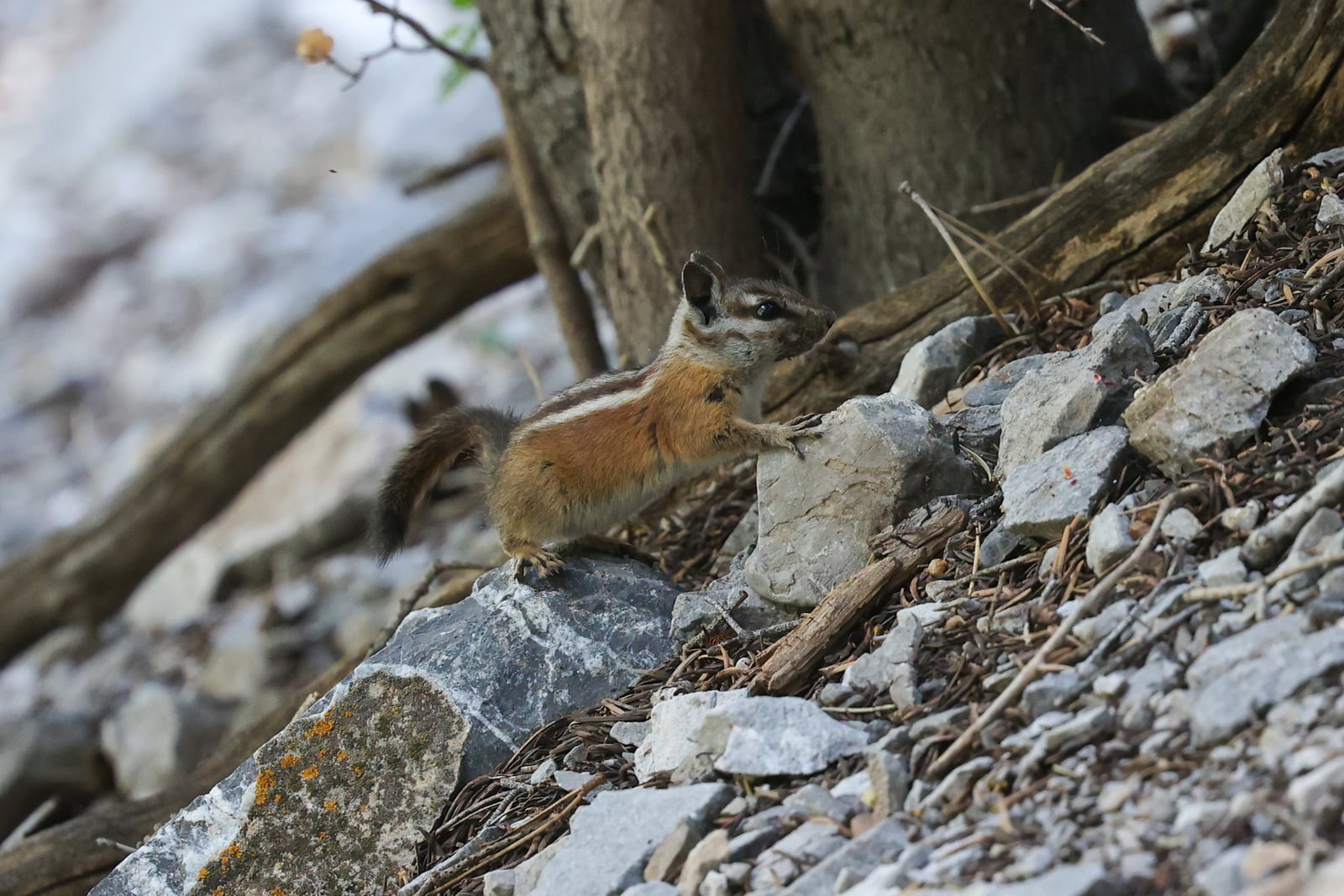
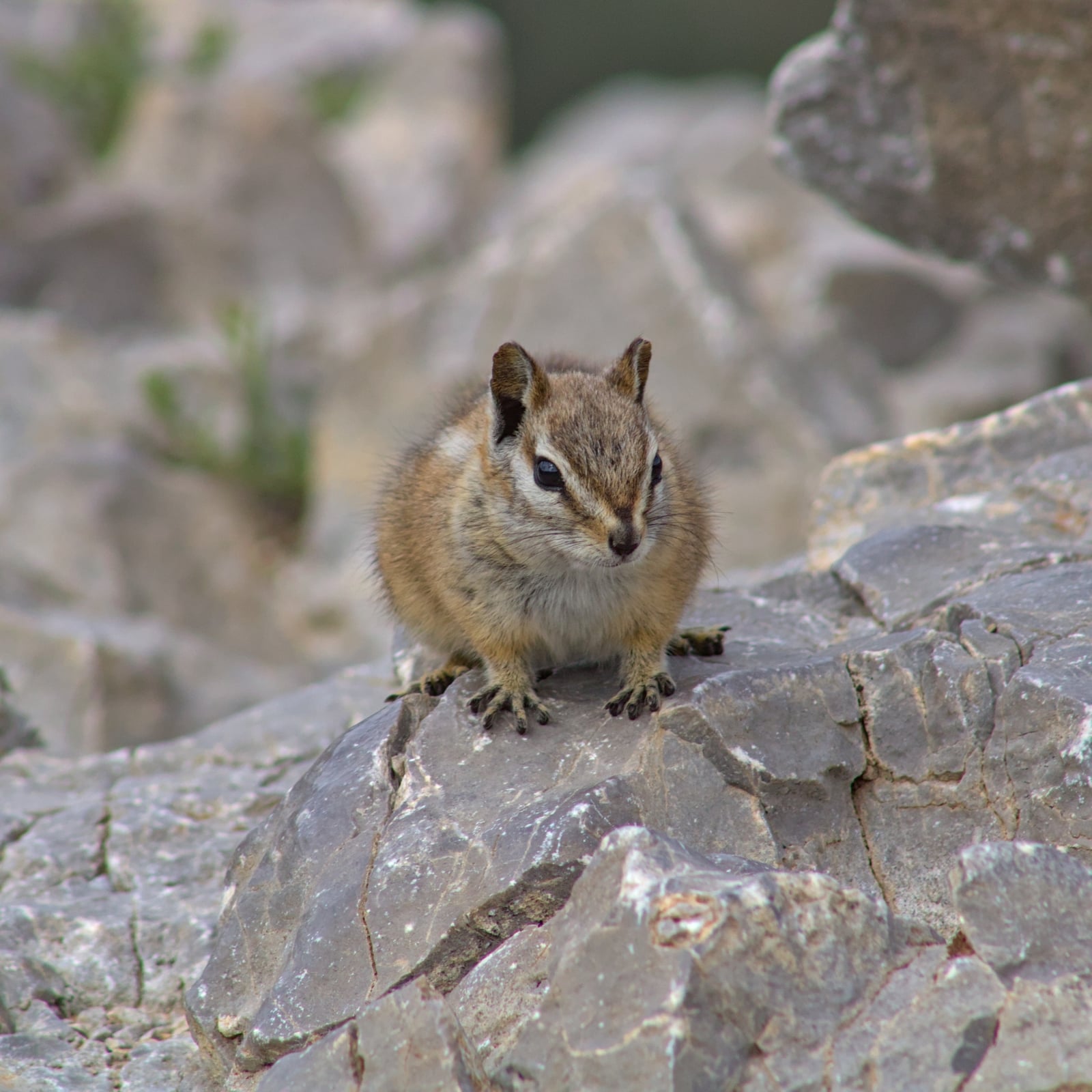
Palmer's chipmunk lives nowhere outside a small mountain island in southern Nevada, making it one of the state's most geographically restricted mammals. Bold facial stripes identify it as a chipmunk, but its real story is isolation in the Spring Mountains. Records outline that single high-elevation refuge and the limited forest and rocky cover available within it.

Range through the year

Where Palmer's Chipmunk is seen

Palmer's Chipmunk is recorded in 1 US state from 183 occurrence records, most heavily in Nevada (183 records).

Current range183 records · 1 states
AlabamaArizonaArkansasCaliforniaColoradoConnecticutDelawareDistrict of ColumbiaFloridaGeorgiaIdahoIllinoisIndianaIowaKansasKentuckyLouisianaMaineMarylandMassachusettsMichiganMinnesotaMississippiMissouriMontanaNebraskaNevada · 183 records · view state pageNew HampshireNew JerseyNew MexicoNew YorkNorth CarolinaNorth DakotaOhioOklahomaOregonPennsylvaniaRhode IslandSouth CarolinaSouth DakotaTennesseeTexasUtahVermontVirginiaWashingtonWest VirginiaWisconsinWyomingAlaskaAKHawaiiHIPuerto RicoPR
Occurrence data by state and month
Palmer's Chipmunk – occurrence records by US state and month (183 total across 1 states)
StateJanFebMarAprMayJunJulAugSepOctNovDecYear
Nevada···116474239289·1183

Based on 254 georeferenced US records, 2000-2026. Shading is observation density (where people record sightings), not true abundance. Alaska, Hawaii & Puerto Rico shown as insets.

Explore by state

Palmer's Chipmunk across 1 state

Occurrence records, conservation status, and the places it turns up, state by state. Open a state for detail, or visit its full page.

  • NevadaNativeCommon254 records

    State rankImperiled

    Notable placesMt. Charleston Wilderness · Spring Mountains

    Countiesrecorded in 1

    Year-round in Nevada, with recorded sightings peaking in May–August.

IUCN Red List status

  1. LC
  2. NT
  3. VU
  4. EN
  5. CR
  6. EW
  7. EX

EN – Endangered

Very high risk of extinction in the wild.

SizePalmer's Chipmunk beside a 1.8 m adult, drawn to scale
Created by potrace 1.16, written by Peter Selinger 2001-2019 Created by potrace 1.16, written by Peter Selinger 2001-2019
Body length
21–22 cm8 in–9 in
Weight
50–69 g1.8–2.4 oz

Silhouettes drawn to scale against a 1.8 m5 ft 11 in adult.

Elevation

From 200 georeferenced records, the Palmer's Chipmunk is recorded from 1,410 m4,626 ft to 3,315 m10,876 ft, with half of sightings below 2,568 m8,425 ft.

Each band shows the share of georeferenced sightings that fall within it. Records cluster where people live and hike, so low, populated elevations are over-represented. Read this as observation density, not true abundance.

Observation peakJune129 records

Seasonality from research-grade observation dates across the US (129 records, all years). Reflects when the species is recorded, not a guarantee of presence.

Daily activity clockCathemeral– active in irregular bursts, day and night

200 palmer's chipmunk observations logged by hour of day. Activity is cathemeral (active in irregular bursts, day and night), peaking around 8 AM.

12 AM: 0 observations1 AM: 0 observations2 AM: 0 observations3 AM: 1 observations4 AM: 1 observations5 AM: 0 observations6 AM: 6 observations7 AM: 18 observations8 AM: 40 observations9 AM: 38 observations10 AM: 21 observations11 AM: 16 observations12 PM: 7 observations1 PM: 15 observations2 PM: 13 observations3 PM: 7 observations4 PM: 2 observations5 PM: 9 observations6 PM: 2 observations7 PM: 3 observations8 PM: 1 observations9 PM: 0 observations10 PM: 0 observations11 PM: 0 observations12 AM6 AM12 PM6 PM

Based on 200 records (all years). Reflects when people record sightings, not only when the animal is active.

Hourly observation counts: 12 AM 0, 1 AM 0, 2 AM 0, 3 AM 1, 4 AM 1, 5 AM 0, 6 AM 6, 7 AM 18, 8 AM 40, 9 AM 38, 10 AM 21, 11 AM 16, 12 PM 7, 1 PM 15, 2 PM 13, 3 PM 7, 4 PM 2, 5 PM 9, 6 PM 2, 7 PM 3, 8 PM 1, 9 PM 0, 10 PM 0, 11 PM 0.

Best encounter

Where and when to see a Palmer's Chipmunk

Your best chance: Nevada, in June, around dawn.

Where
NevadaNV
When
June
Time
Around dawncathemeral

Life history

The Palmer's Chipmunk (50–69 g1.8–2.4 oz) is a herbivore that carries a 33-day gestation, and bears about 3.9 young per litter.

Reproduction

Gestation
33days
Litter size
3.9youngaverage
Litters / year
1litter

Diet composition

Herbivore

By foraging composition: 50% seeds & grain, 50% fruit.

  • Seeds & grain50%
  • Fruit50%

Most active during the day.

Typical values for the species, not local measurements.

Commonly confused with

Animals people sometimes mistake for the palmer's chipmunk, and how to tell them apart.

Nevada’s mountain-island chipmunk

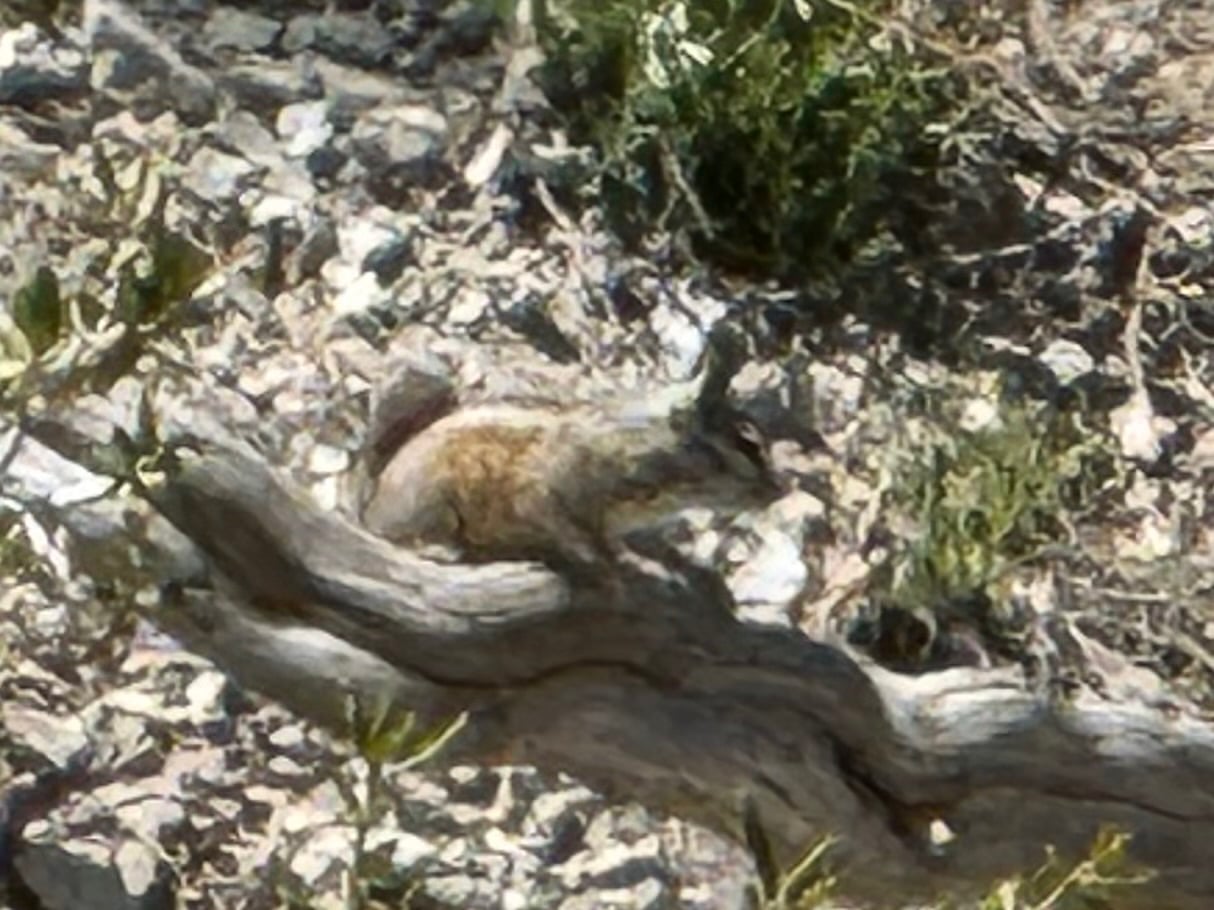
The entire natural range centers on the Spring Mountains west of Las Vegas. Cooler conifer woods, brush, boulders, and fallen logs provide cover far above the surrounding Mojave Desert. Palmer’s chipmunks feed on seeds, fruits, fungi, and other small foods. They carry items in cheek pouches, and their gathering can move seeds around the forest floor.

How it finds food and avoids danger

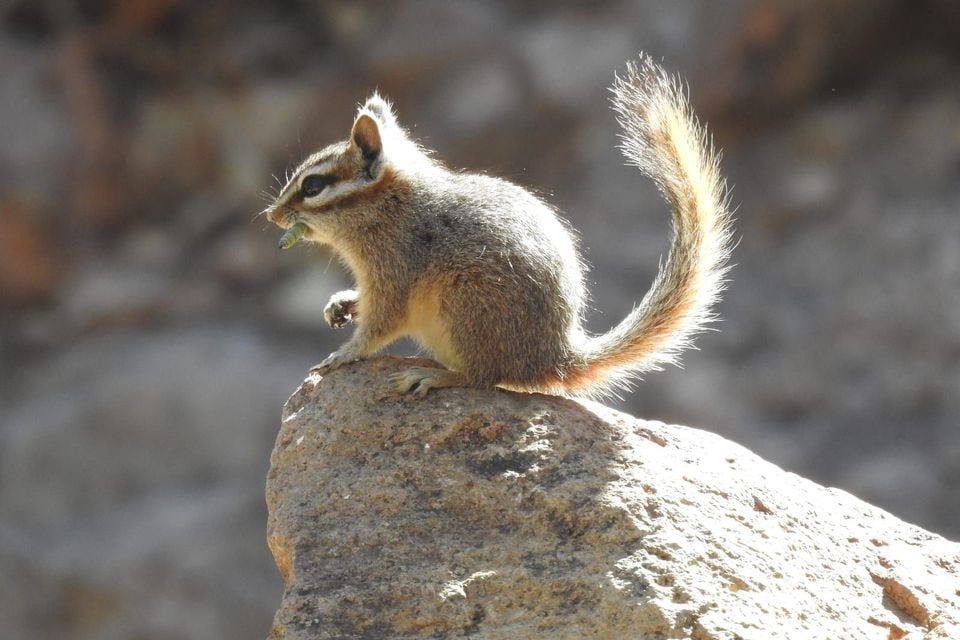
Palmer’s chipmunks feed on seeds, fruits, fungi, and other small foods. They carry items in cheek pouches, and their gathering can move seeds around the forest floor. It doesn’t depend on open exposure when cover is available. Short movements between shelter and food reduce risk, especially where owls, snakes, foxes, or other hunters patrol.
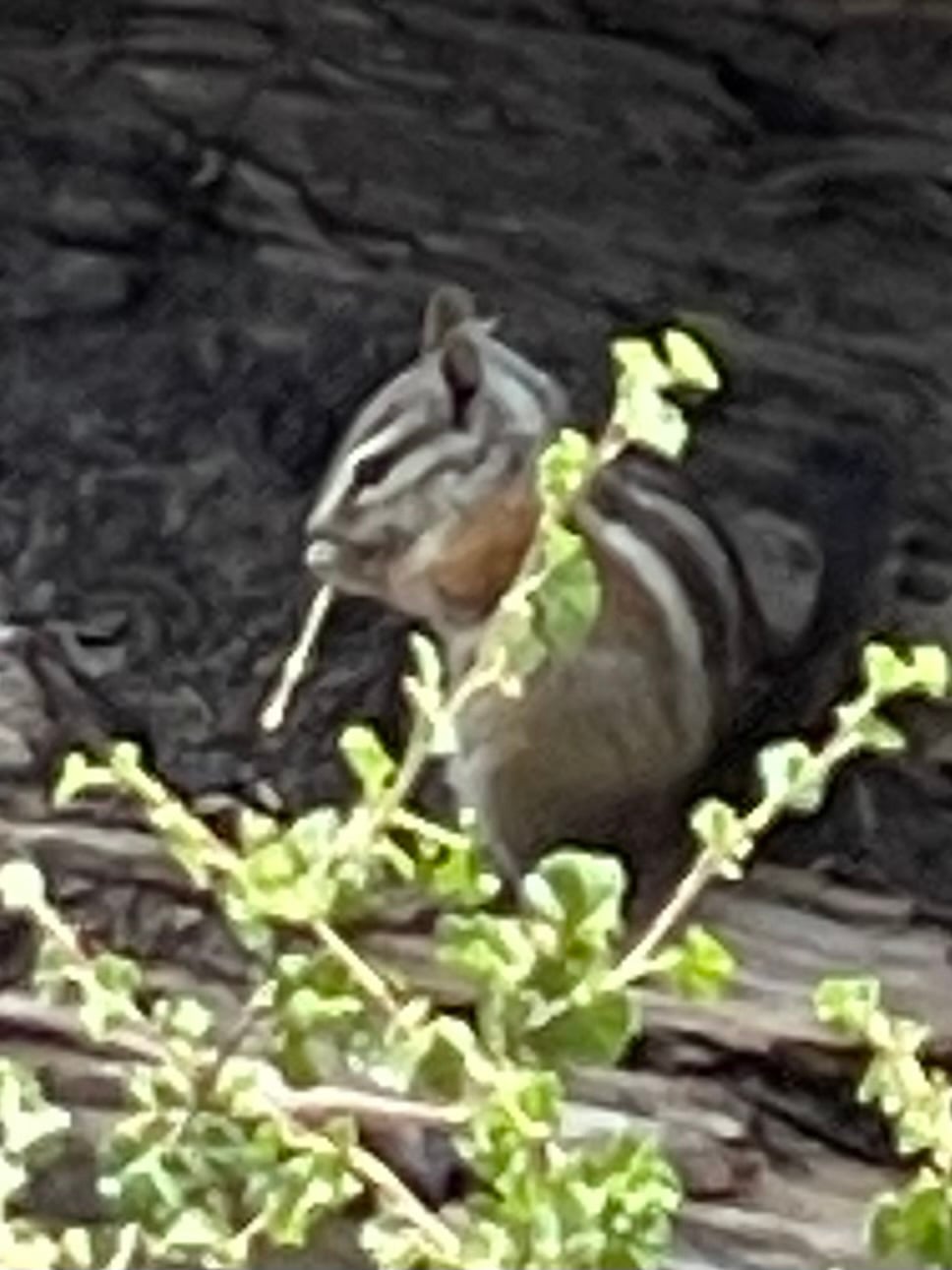
Palmer's chipmunk nibbling a twig on a fallen log
A Palmer’s chipmunk feeding among leafy shoots on a downed log. Photo: B Jaeger-Stanley, CC BY 4.0.

Reading the record pattern

A range this small leaves little room for habitat to shift. Fire, drought, warming, and changes to forest cover can affect a large share of available habitat even when the disturbance looks local on a regional map. Seasonal and geographic reports show where people have documented the species. They don’t measure abundance, and a blank area may reflect access, survey methods, or identification difficulty.

Breeding and the next generation

Young are born in protected nests or burrows, depending on the species’ way of life. Timing is tied to local food and weather, so it can shift across elevation and latitude. Parents don’t raise young in exposed ground when a sheltered chamber or nest is available.

Conservation in a changing West

The most useful conservation question isn’t just how many dots appear in a database. It’s whether connected habitat still supplies food, shelter, workable ground, and safe movement. Drought, severe fire, development, and altered water can matter differently across the range. Protecting the habitat features this species actually uses gives local populations more room to persist.


Data & sources

The data and visualizations on this page draw on these open sources:

  • GBIFCC-BY 4.0occurrence records behind the range map, elevation, and record counts
  • iNaturalistCC0 / CC-BY / CC-BY-SAobservations, photos, and audio recordings
  • PhyloPicCC0 / CC-BY per itemthe to-scale silhouettesJoseph Smit (Sciuridae) · Andrew A. Farke (human silhouette, CC-BY 3.0)
  • AnAge (HAGR)CC-BY 3.0longevity, maturity, and gestation figures
  • IUCN Red Listattributed factthe global conservation status
  • Amniote Life-History DatabaseCC0 · public domainreproduction figures
  • EltonTraitsCC0 · public domaindiet and foraging-activity data


