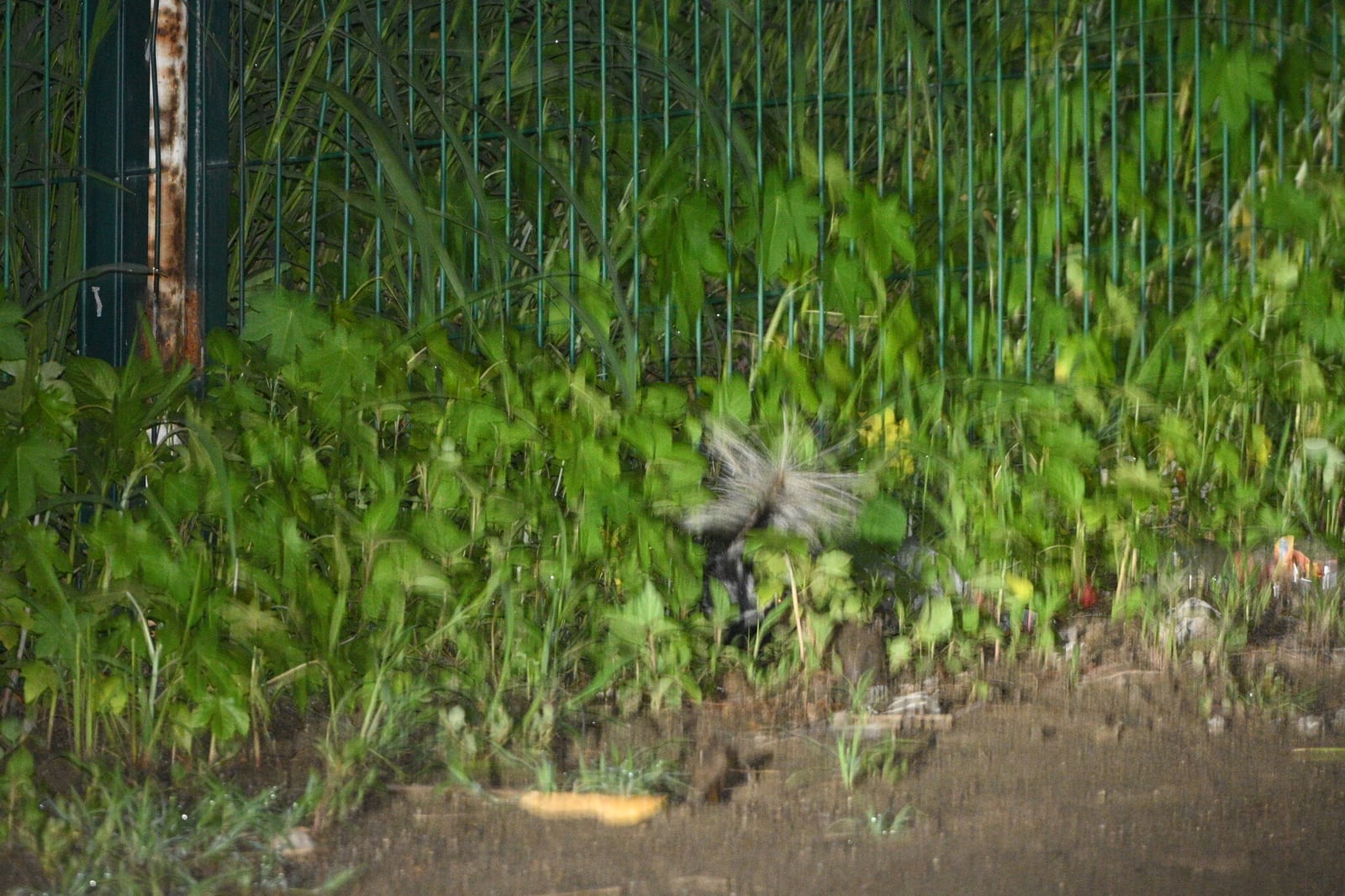
The plains spotted skunk is a small, secretive carnivore that clings to the margins of Colorado’s eastern plains. Open occurrence databases hold no Colorado records for it from 2000 to 2026, so what is known of it here rests on older museum specimens.
A patterned skunk of the farm country
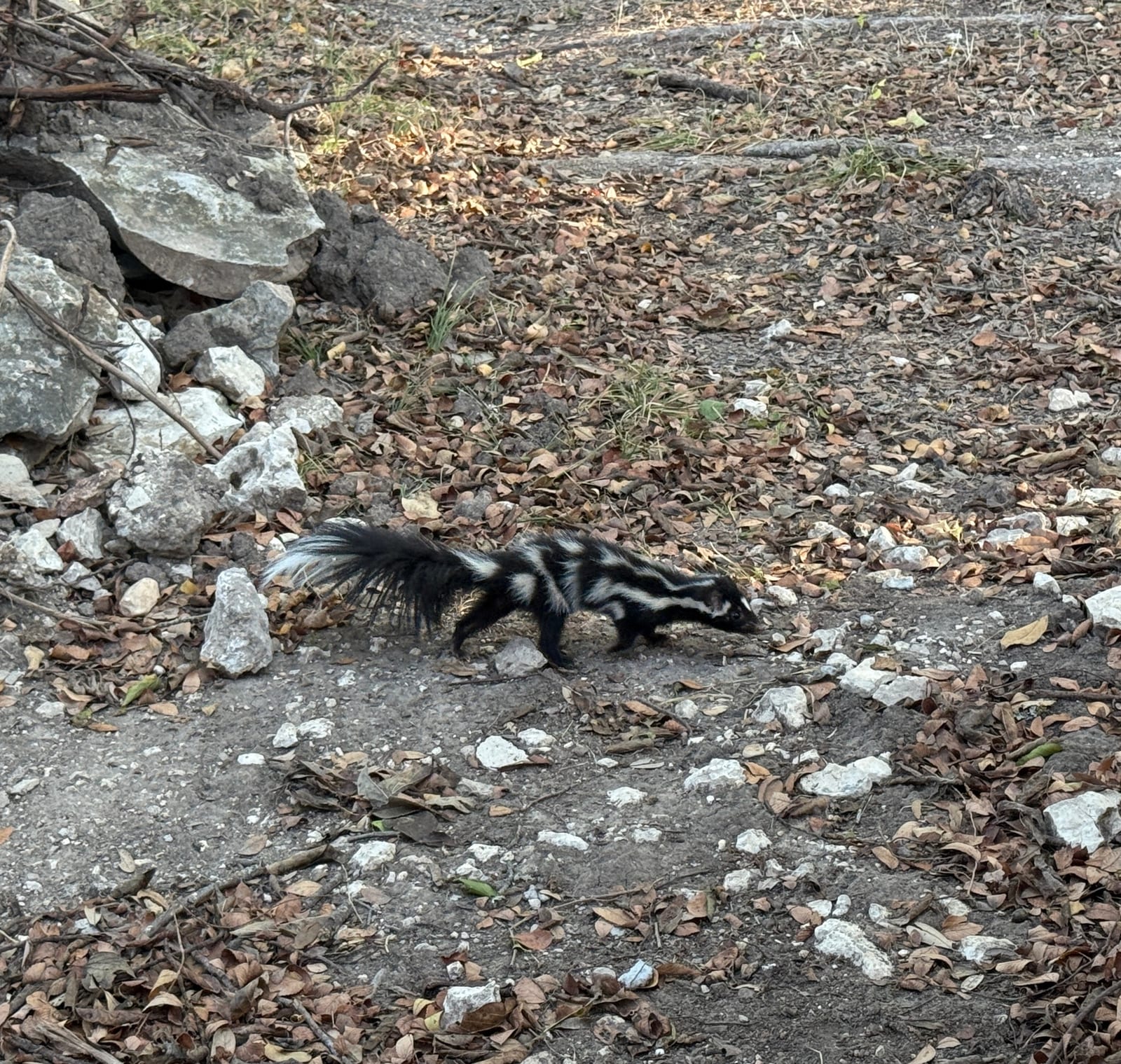
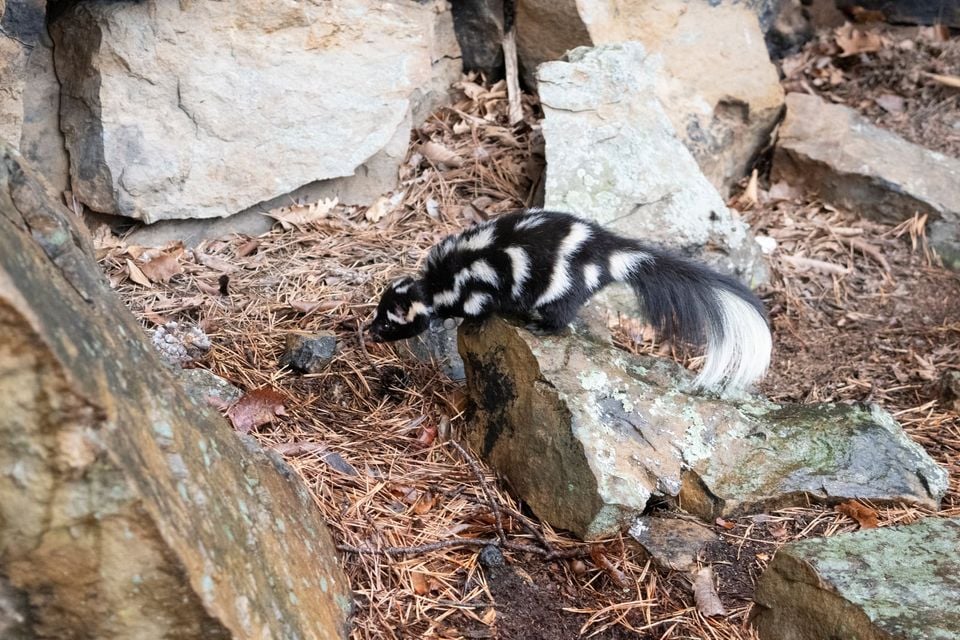
Barely larger than a big tree squirrel, it is boldly marked with broken white stripes and spots that break up its outline in the dark, quite unlike the two clean stripes of a striped skunk. It lives in grassland, brushy draws, rocky outcrops, and the edges of farmland, and Colorado’s older specimens come almost entirely from Yuma County on the northeastern plains, with a lone one from farther south.
Vanishing and hard to find
With no recent records there is no seasonal pattern to read; this is a nocturnal, den-using animal that hunts rodents and insects under cover and almost never crosses paths with people. Across the Great Plains the plains spotted skunk has declined sharply over the past century, and NatureServe ranks it S2, imperiled, in Colorado, so even confirming its continued presence in a county is a small event.
Common questions
Is this the skunk that does a handstand? Yes. Spotted skunks famously balance on their front feet and raise their hindquarters as a warning before spraying.
Where does it live in Colorado? The eastern plains and farmland edges, especially the northeastern corner.
 Full species profile