


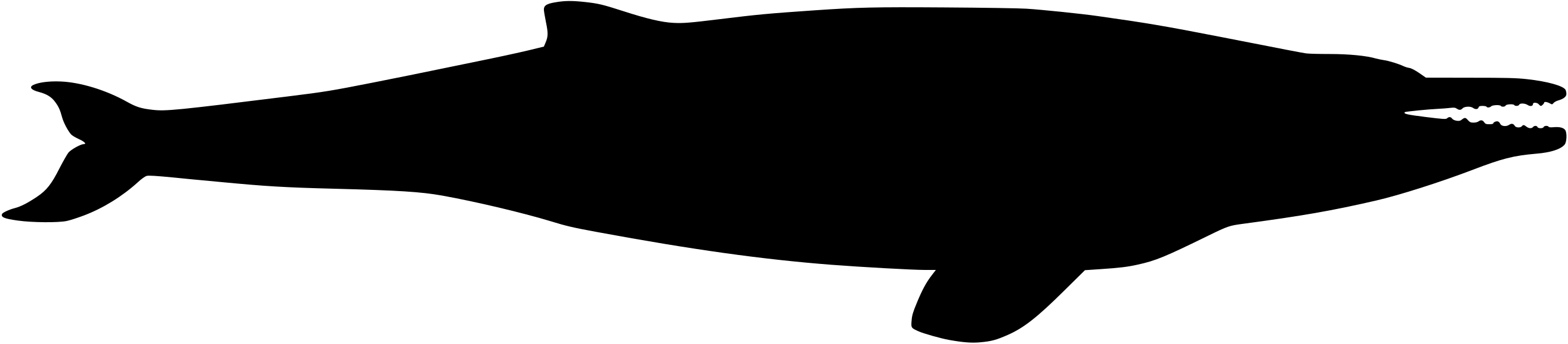
Georgia’s more than 100 GBIF records for this whale come almost entirely from the coast, not the state’s interior swamps or refuges. This is a deep-diving species that spends nearly all its life far offshore over the continental shelf, so the only time it typically reaches a place people can record it is when a stranded animal washes up on the beach, most often along Georgia’s barrier islands like Cumberland, St. Simons, and Jekyll.
Because it dives deep and surfaces briefly with little of the visible spout or breaching that draws attention to larger whales, live sightings from Georgia’s coast are rare even though the species likely passes through Atlantic waters off the state regularly. Nearly everything known about it locally comes from strandings rather than at-sea encounters.
Records are scattered across the year without a strong pattern, which fits a species whose Georgia presence is documented mostly by chance rather than by season.
 Full species profile




