


North Carolina’s 90 records for Risso’s dolphin hug the edge of the continental shelf off the Outer Banks, where deep, warm water comes closer to shore than anywhere else on the Atlantic seaboard. Carteret County anchors the map around Cape Lookout National Seashore, and the record runs north through Dare and Currituck counties along the barrier islands.
A squid hunter of the shelf break
Risso’s dolphins dive deep for squid, and that diet keeps them over steep slopes and offshore depths rather than the shallow sounds behind the barrier islands. Off Cape Hatteras the Gulf Stream swings unusually close to land, carrying warm, squid-rich water within reach of the coast, which makes this one of the more dependable stretches of the East Coast for meeting a species that otherwise lives far out at sea.
Scars earned in deep water
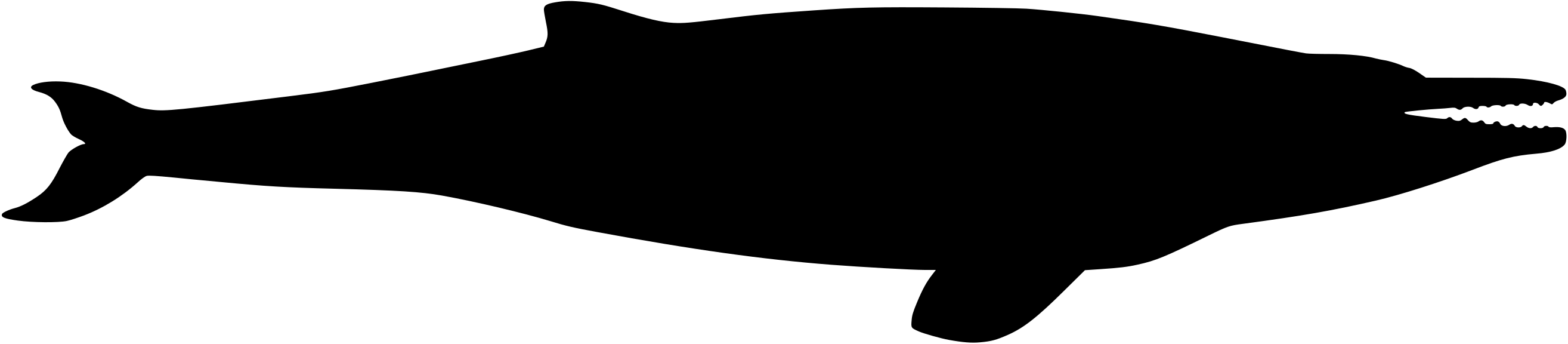
Adults accumulate pale scars from the teeth of other Risso’s dolphins and from struggling squid, and old animals can look almost white. They travel in tight, cohesive groups and often surface slowly and quietly, behavior that suits an animal built for long dives. Records appear in most months, climbing through spring to a September crest; this is a year-round animal of warm temperate seas, and the Gulf Stream keeps suitable water off North Carolina in every season.
Status in North Carolina
NatureServe marks Risso’s dolphin SNA, Not Applicable, a rank used where a state listing does not fit a wide-ranging marine species, and lists it as G5 globally. It is native to North Carolina’s offshore waters, and USGS NAS does not list it as nonindigenous.
 Full species profile




