


Wyoming’s 84 Sand Hills pocket gopher records run in a tight band along the state’s eastern edge, from Laramie County on the Colorado line north through Niobrara to Weston. That’s no accident: this gopher is an animal of deep sand, and Wyoming’s share of Sandhills-type grassland spills across the border from Nebraska exactly there.
An underground neighbor you meet by its mounds
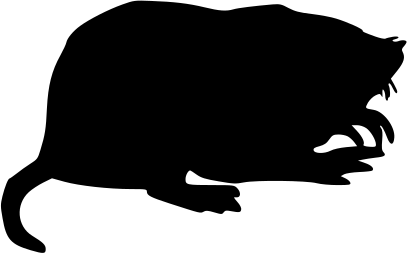
You’ll almost never see the gopher itself. What you see are the fresh, fan-shaped soil mounds it pushes up while digging, easiest to spot in sandy pasture and along stream corridors. Pocket gophers live nearly their whole lives below ground, alone in their own tunnel systems, surfacing mainly to feed within reach of a burrow mouth or to disperse to new ground. They can close their lips behind their front teeth, letting them loosen soil with their incisors without taking in a mouthful of dirt.
A June and July mound season
All but 2 of Wyoming’s records landed in June and July, which tracks when gophers push the most new mounds and when ranch country gets its closest looks. The gophers themselves are active all year below ground, even under snow, so the calendar measures mound-building and observer effort more than presence.
Status in Wyoming
NatureServe ranks the species S2, imperiled, in Wyoming, and globally it carries no rank at all, a sign of how recently it was recognized as a species distinct from the plains pocket gopher. It’s native here, and Thunder Basin National Grassland holds the kind of deep sandy range it needs. With records this concentrated, any verified report beyond the state’s eastern tier would genuinely extend the known map.
 Full species profile




