
Hawaii mammals

Short-finned Pilot Whale in Hawaii

Globicephala macrorhynchus

Native to Hawaii

Not listed as nonindigenous in Hawaii by USGS NAS; treated as native to its mapped Hawaii range.

IUCN Red List status

  1. LC
  2. NT
  3. VU
  4. EN
  5. CR
  6. EW
  7. EX

LC – Least Concern

Widespread and abundant; not at risk.

Short-finned Pilot Whale in Hawaii, by the numbers

Common in Hawaii 12th most recorded of 34 mammals logged in Hawaii

47 occurrence records
44 with iNaturalist photos
Jul 1, 2026 Last seen in Hawaii

Records from 2000–2026.

When to look for the Short-finned Pilot Whale in Hawaii

Most sightings fall in February.

47 Hawaii occurrence records (iNaturalist and GBIF) by month of year, 2000–2026. Shows when the species is recorded, not a guarantee of presence.

Monthly Hawaii records (table)
MonthRecords
January4
February11
March2
April8
May3
June1
July7
August5
September2
October3
November0
December1

Monthly short-finned pilot whale occurrence records (iNaturalist and GBIF) in Hawaii, 2000–2026.

Seasonality

Year-round in Hawaii, with recorded sightings peaking in February, with a smaller rise in April and July.

Occurrence map

Where Short-finned Pilot Whale has been recorded in Hawaii

47 records mapped · zoom and drag to explore

44 Hawaii records mapped

Where it's recorded in Hawaii

CountyRecords
Hawaii County 5
Maui County 1
Kauai County 1
Other localities 40

The complete county distribution, spread across 3 Hawaii counties. Every occurrence record falls in one county, so these sum to the total. Counties from GBIF and US Census boundaries.

Short-finned pilot whale records in Hawaii concentrate off the Kona coast of the Big Island, where the ocean floor drops away fast into deep water within a few miles of shore. That’s the kind of steep, current-swept channel this species favors, and it’s part of why pilot whales are one of the more dependable sightings on Kona boat trips even outside the winter humpback season.

Despite the name, this is a large dolphin, not a true whale, traveling in tight matriarchal pods whose members stay together for life. It hunts squid on long nighttime dives, which helps explain why males don’t fully mature until their mid-teens, one of the slowest paths to adulthood of any dolphin. That same tight social bond is part of why the species is prone to mass strandings when one animal in a pod runs into trouble near shore.

Hawaii’s records hold up across most of the year, with reported sightings peaking in January through February, April, and again in July through August. The most recent confirmed sighting came in July 2026, and nationally, sightings cluster hardest off North Carolina’s Outer Banks, a well-known stranding hotspot, while Hawaii holds a smaller but steady share of US records.
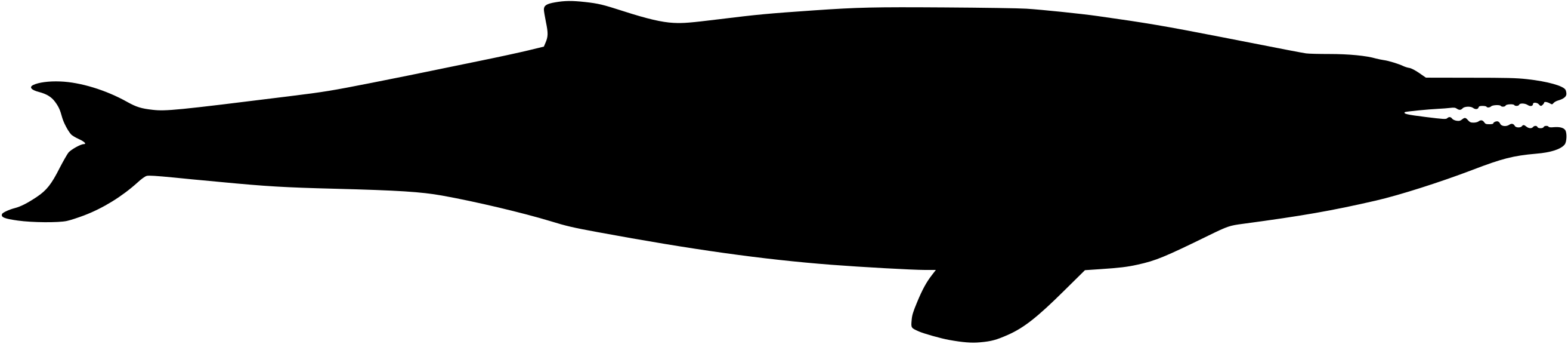
Occurrence data from iNaturalist and GBIF.

More mammals in Hawaii in the atlas

Data & sources

The data and visualizations on this page draw on these open sources:

  • GBIFCC-BY 4.0occurrence records behind the range map, elevation, and record counts
  • iNaturalistCC0 / CC-BY / CC-BY-SAobservations, photos, and audio recordings
  • IUCN Red Listattributed factthe global conservation status
  • USGS NASpublic domainnative / introduced status
  • Natural Earthpublic domainthe relief basemap




