


South Carolina’s 75 short-finned pilot whale records are strikingly lopsided: 73 come from Charleston County, and 70 of the 75 were logged in October. Numbers that concentrated don’t describe a migration. They describe an event, most likely a stranding response or an intensive survey working the same stretch of water, and they warn against reading this state’s total as proof the whales favor Charleston.
Shelf-edge water off the Lowcountry
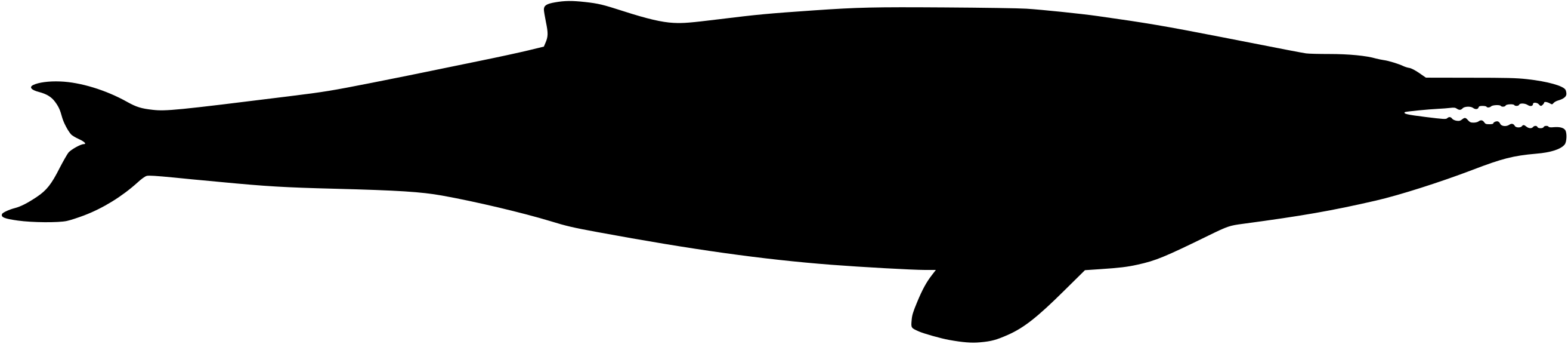
Short-finned pilot whales are deep-water squid hunters, most at home along the continental shelf edge and in warm offshore currents. Off South Carolina that’s water well beyond the beaches, which is why the suggested coastal refuges, ACE Basin, Cape Romain, Hunting Island, are better understood as shoreline where a distressed animal might come ashore than as viewing spots. The Lowcountry’s stranding responders and research crews are simply the people most likely to document this species here.
Pod loyalty with a cost
Pilot whales travel in tight, stable family pods, and their social bonds run strong enough that healthy animals will follow a sick one onto the beach. It’s the reason pilot whales account for so many mass strandings worldwide, and the reason one bad day on a single South Carolina beach can outweigh years of ordinary sightings in the record.
Status in South Carolina
NatureServe ranks the species S4, apparently secure, in South Carolina, and the IUCN lists it as Least Concern globally. It’s a native offshore resident, not a stray. The honest reading of the state’s file is modest: pilot whales are documented here, most visibly through Charleston County, and what happens farther along the coast is mostly unrecorded rather than absent.
 Full species profile




