
Nevada mammals

Southern Grasshopper Mouse in Nevada

Onychomys torridus

Native to Nevada S5 Secure in Nevada

Not listed as nonindigenous in Nevada by USGS NAS; native to its Nevada range.

IUCN Red List status

  1. LC
  2. NT
  3. VU
  4. EN
  5. CR
  6. EW
  7. EX

LC – Least Concern

Widespread and abundant; not at risk.

Southern Grasshopper Mouse in Nevada, by the numbers

Occasional in Nevada 50th most recorded of 142 mammals logged in Nevada

570 occurrence records
7 with iNaturalist photos

Records from 2000–2026.

570 total records count every Nevada occurrence from GBIF and iNaturalist; the map plots a georeferenced sample of 300.

When to look for the Southern Grasshopper Mouse in Nevada

Most sightings fall in May to July.

570 Nevada occurrence records (iNaturalist and GBIF) by month of year, 2000–2026. Shows when the species is recorded, not a guarantee of presence.

Monthly Nevada records (table)
MonthRecords
January11
February18
March45
April41
May93
June122
July79
August53
September58
October45
November5
December0

Monthly southern grasshopper mouse occurrence records (iNaturalist and GBIF) in Nevada, 2000–2026.

Seasonality

Year-round in Nevada, with recorded sightings peaking in May–July.

Occurrence map

Where Southern Grasshopper Mouse has been recorded in Nevada

300 records mapped · zoom and drag to explore

300 Nevada records mapped

Notable places to look

Park, forest, or monumentiNaturalist records
Death Valley National Park 17
Gold Butte National Monument 15
Wee Thump Joshua Tree Wilderness Area 7
Big Rocks Wilderness Area 4
Tule Springs Fossil Beds National Monument 4
Lake Mead National Recreation Area 2
Key-Pittman Wildlife Management Area 1

Protected places with the most southern grasshopper mouse sightings, from the USGS Protected Areas Database plus named mountain ranges, good spots to look, not a full breakdown, so they don't sum to the total.

Where it's recorded in Nevada

CountyRecords
Nye County 193
Clark County 112
Lincoln County 107
Esmeralda County 69
Churchill County 27
Mineral County 18
Pershing County 17
Lyon County 17
Washoe County 7
Humboldt County 2
Storey County 1

The complete county distribution, spread across 11 Nevada counties. Every occurrence record falls in one county, so these sum to the total. Counties from GBIF and US Census boundaries.

Nevada records for the southern grasshopper mouse have a limited set of named hotspots, led by Gold Butte National Monument. That gap may reflect where people look and report, so it doesn’t prove absence elsewhere.

These sites place the Nevada record pattern firmly in the state’s southern desert country. The protected lands also span springs, canyons, and open basin terrain. The strongest reporting falls in summer, when Nevada’s high country is easiest to reach but low deserts are hottest. That may shape where observers submit records.

The file combines 7 research-grade iNaturalist records and 567 GBIF records. Those 574 records measure documented encounters, not Nevada’s population size. It’s native to Nevada. Nevada doesn’t specifically list it under the state’s conservation framework, and the IUCN lists it as Least Concern.
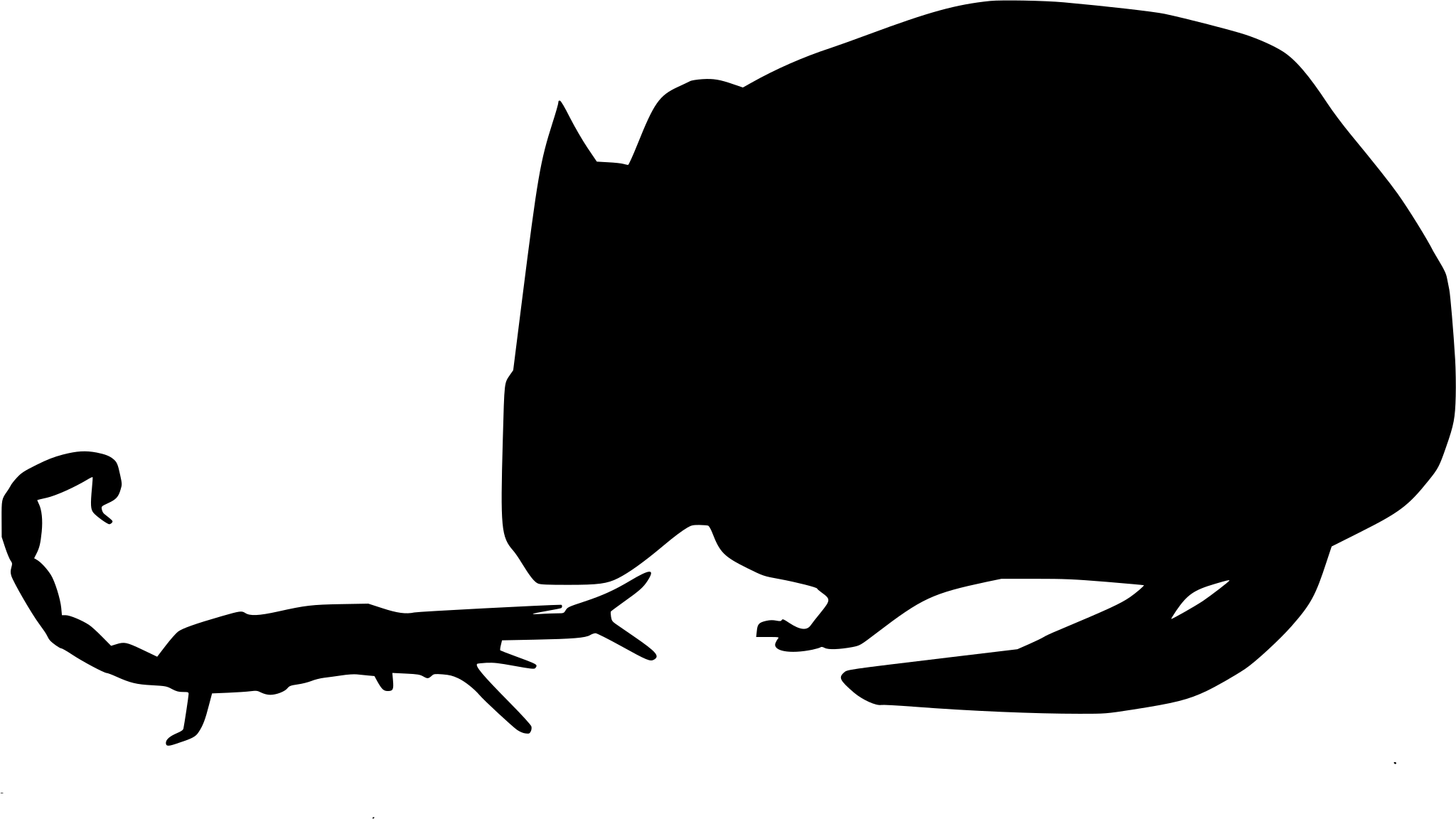
Occurrence data from iNaturalist and GBIF.

More mammals in Nevada in the atlas

Data & sources

The data and visualizations on this page draw on these open sources:

  • GBIFCC-BY 4.0occurrence records behind the range map, elevation, and record counts
  • iNaturalistCC0 / CC-BY / CC-BY-SAobservations, photos, and audio recordings
  • NatureServe ExplorerCC-BYthe state conservation rank
  • IUCN Red Listattributed factthe global conservation status
  • USGS NASpublic domainnative / introduced status
  • Natural Earthpublic domainthe relief basemap
  • USFSpublic domainnational-forest boundaries
  • USGS Protected Areas Databasepublic domainthe named parks, forests, and refuges behind "notable places to look"




