
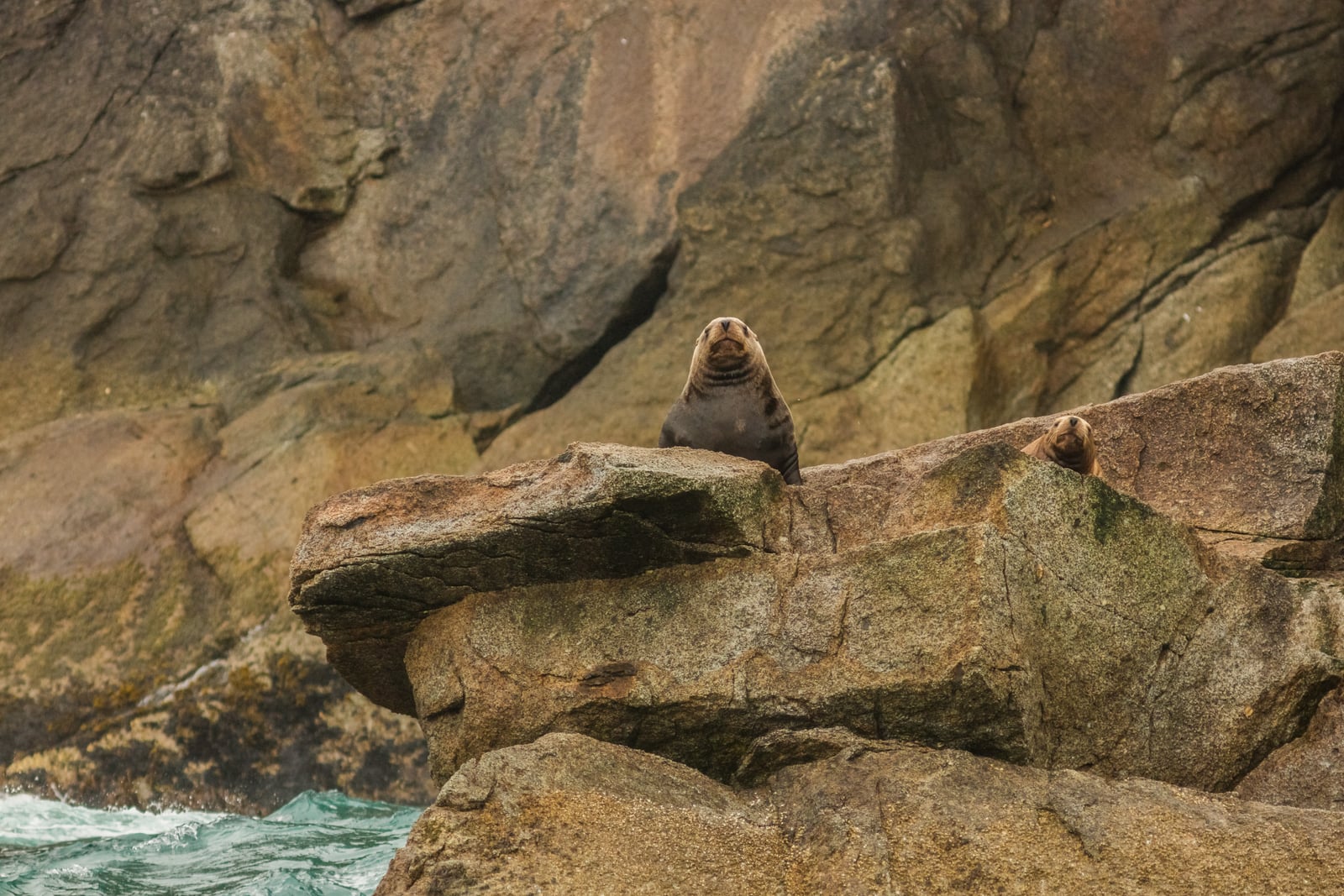
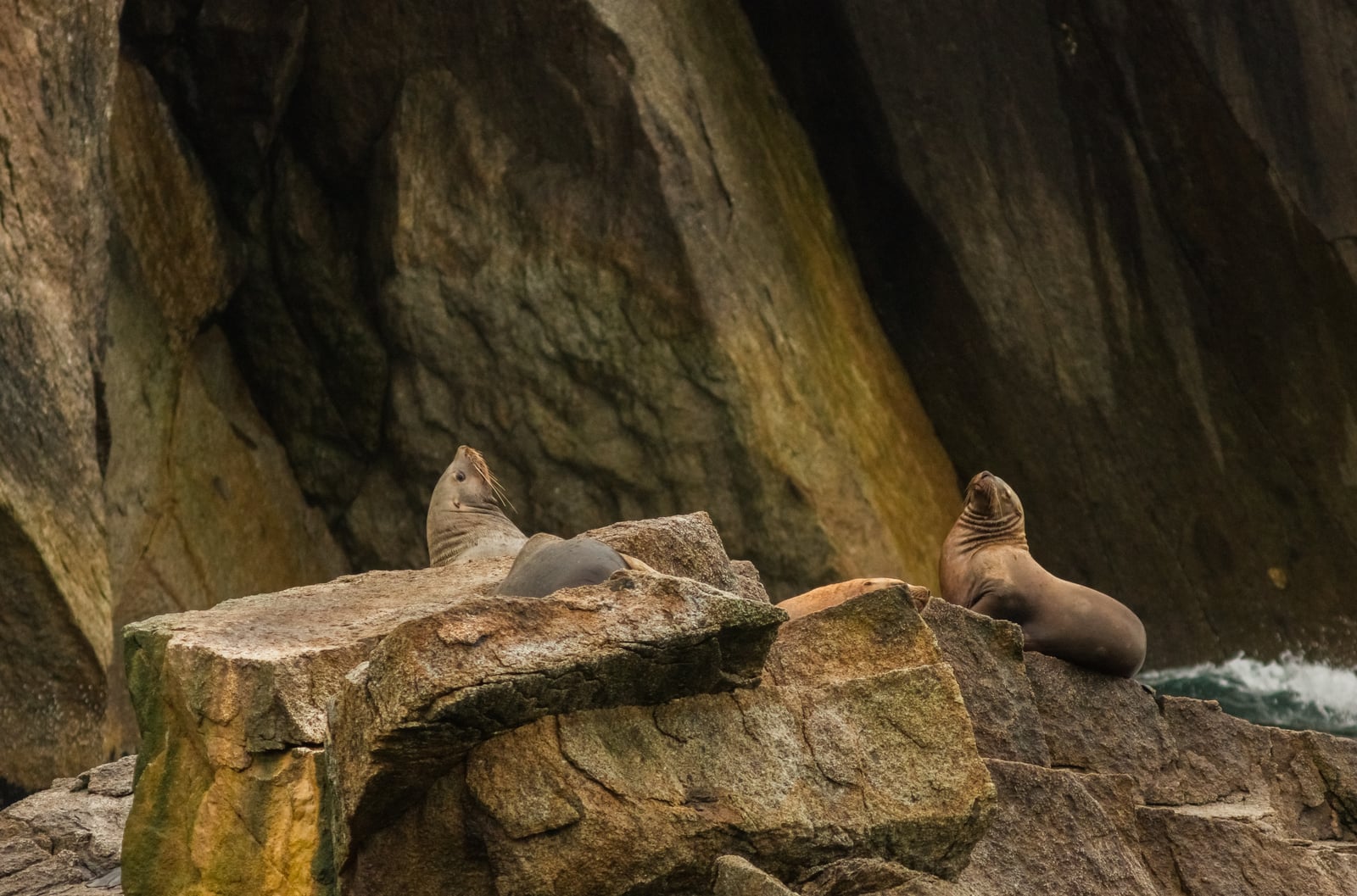
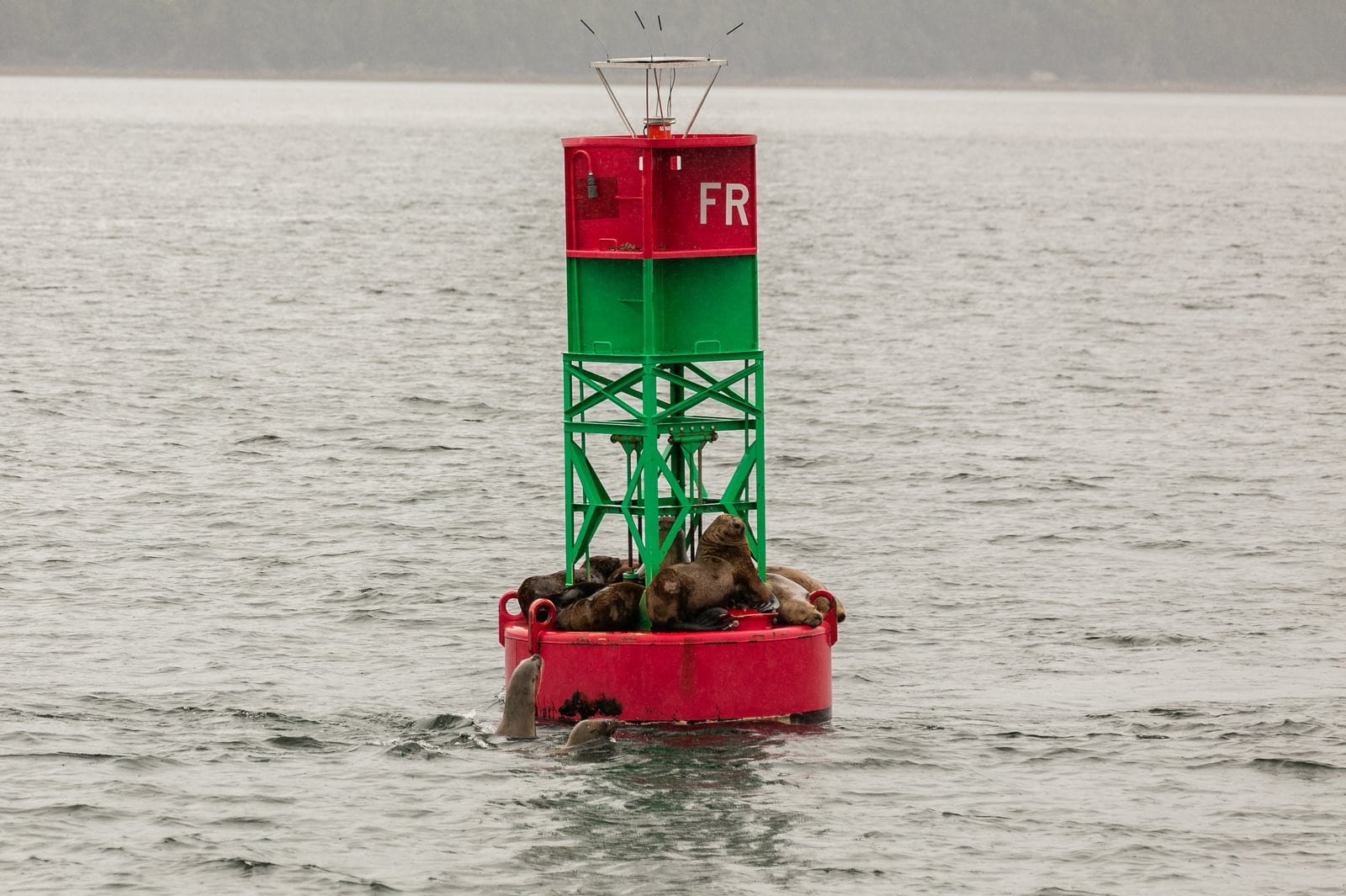
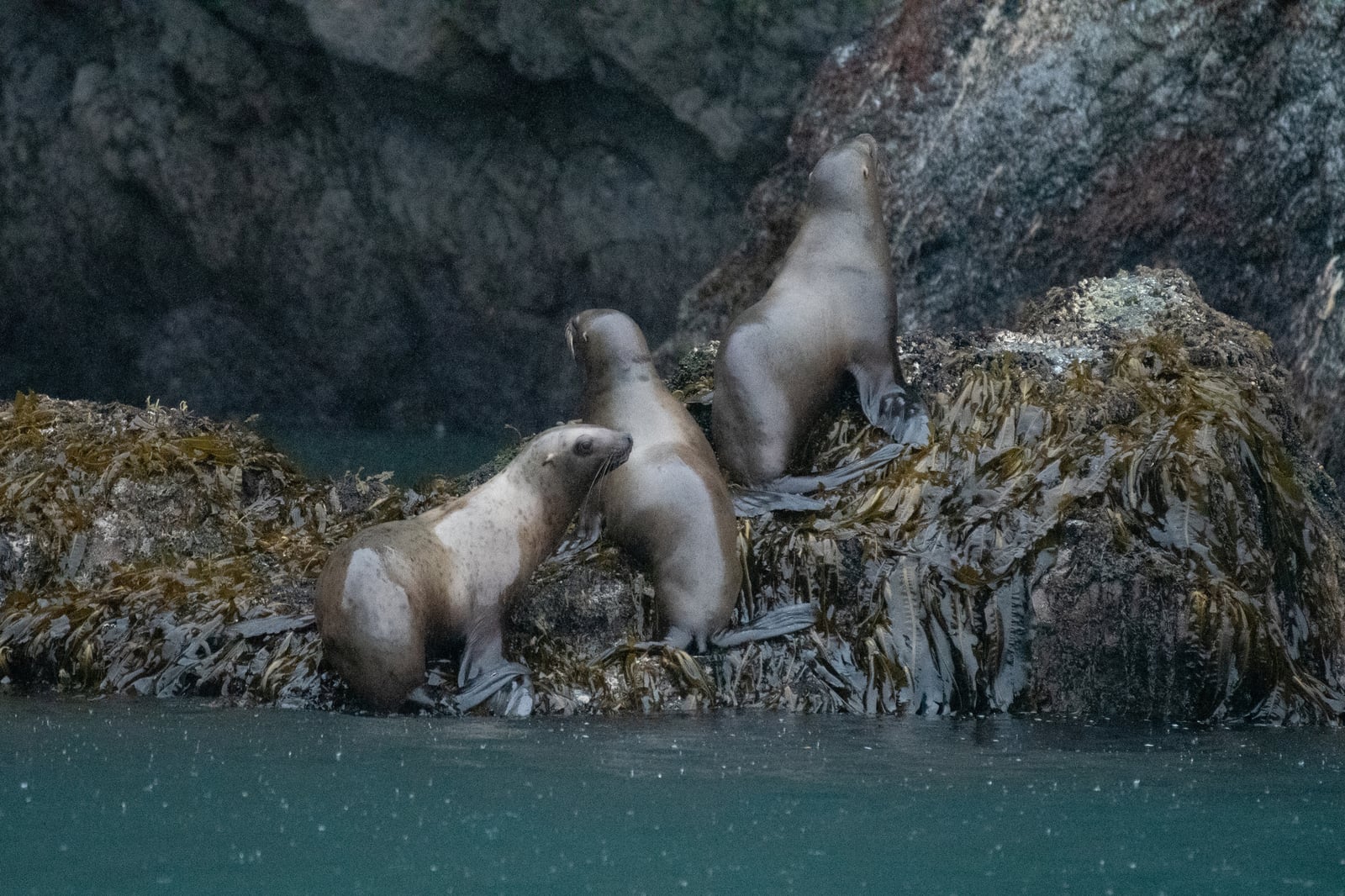
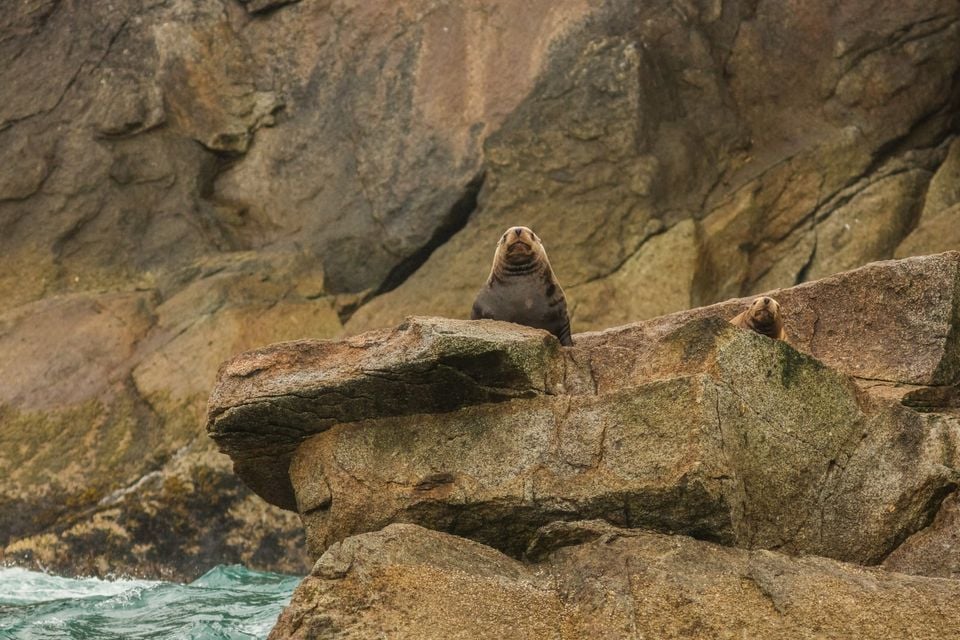
Alaska records concentrate around Glacier Bay National Park and Preserve, the waters off Juneau and Admiralty Island, Prince William Sound, and Kenai Fjords National Park, the rocky islands and headlands where Steller sea lions haul out and breed across Southcentral and Southeast Alaska.
Bulls grow to dwarf females and develop a thick mane of coarse fur around the neck and shoulders, and a bull can hold a stretch of rookery beach against rivals for weeks at a stretch, roaring to sort out mates and challengers in a crowded colony. The species hunts mostly Pacific cod, herring, pollock, and salmon, and is itself hunted by orcas and great white sharks.
Records climb sharply from June through August as animals gather at traditional rookeries to breed and pup, then thin out through the rest of the year. Western Alaska’s population fell sharply in the late twentieth century for reasons still debated among researchers, while populations further east have stayed stable or grown, part of why the species carries an overall Near Threatened status rather than a fully recovered one.
 Full species profile




