
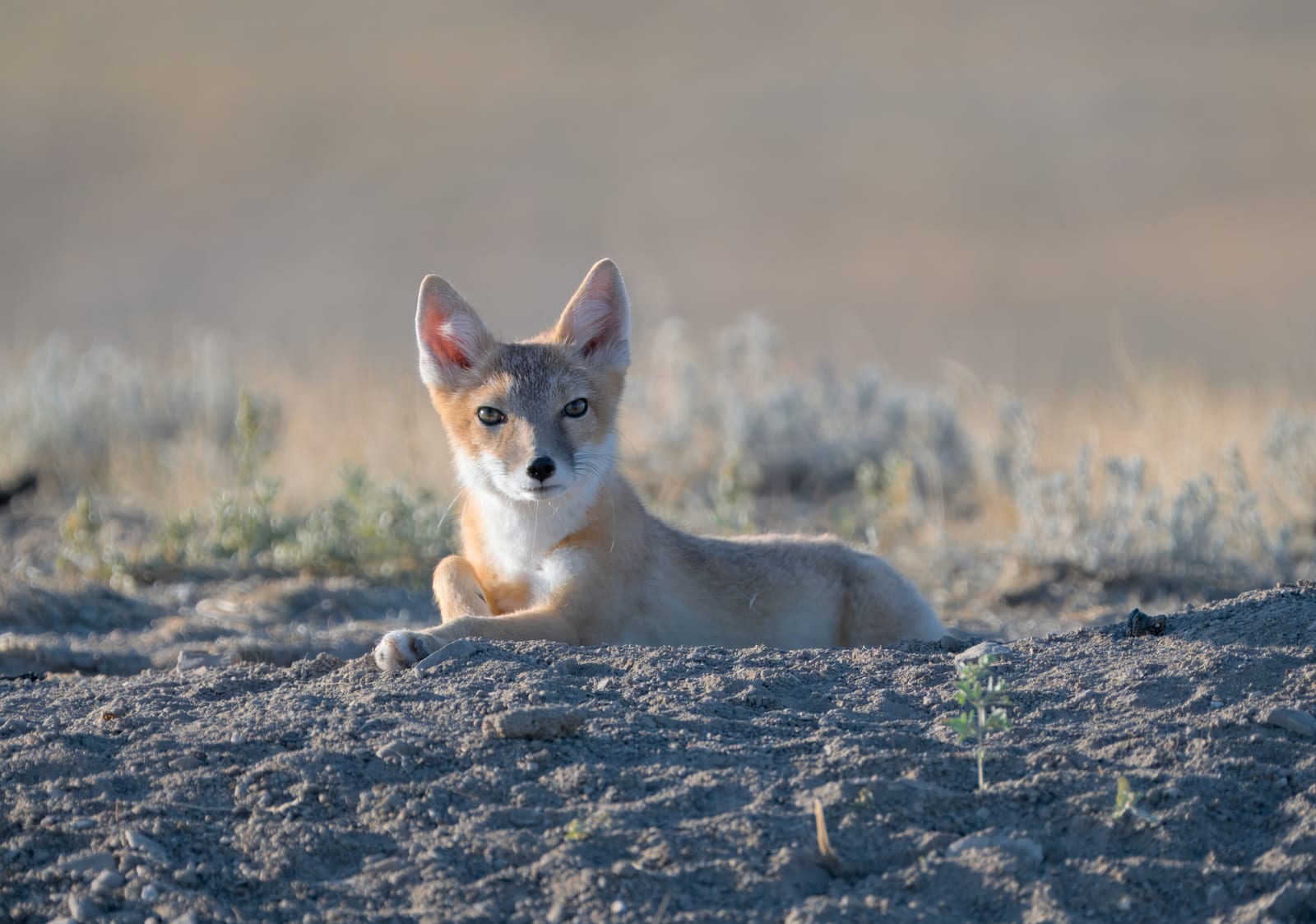
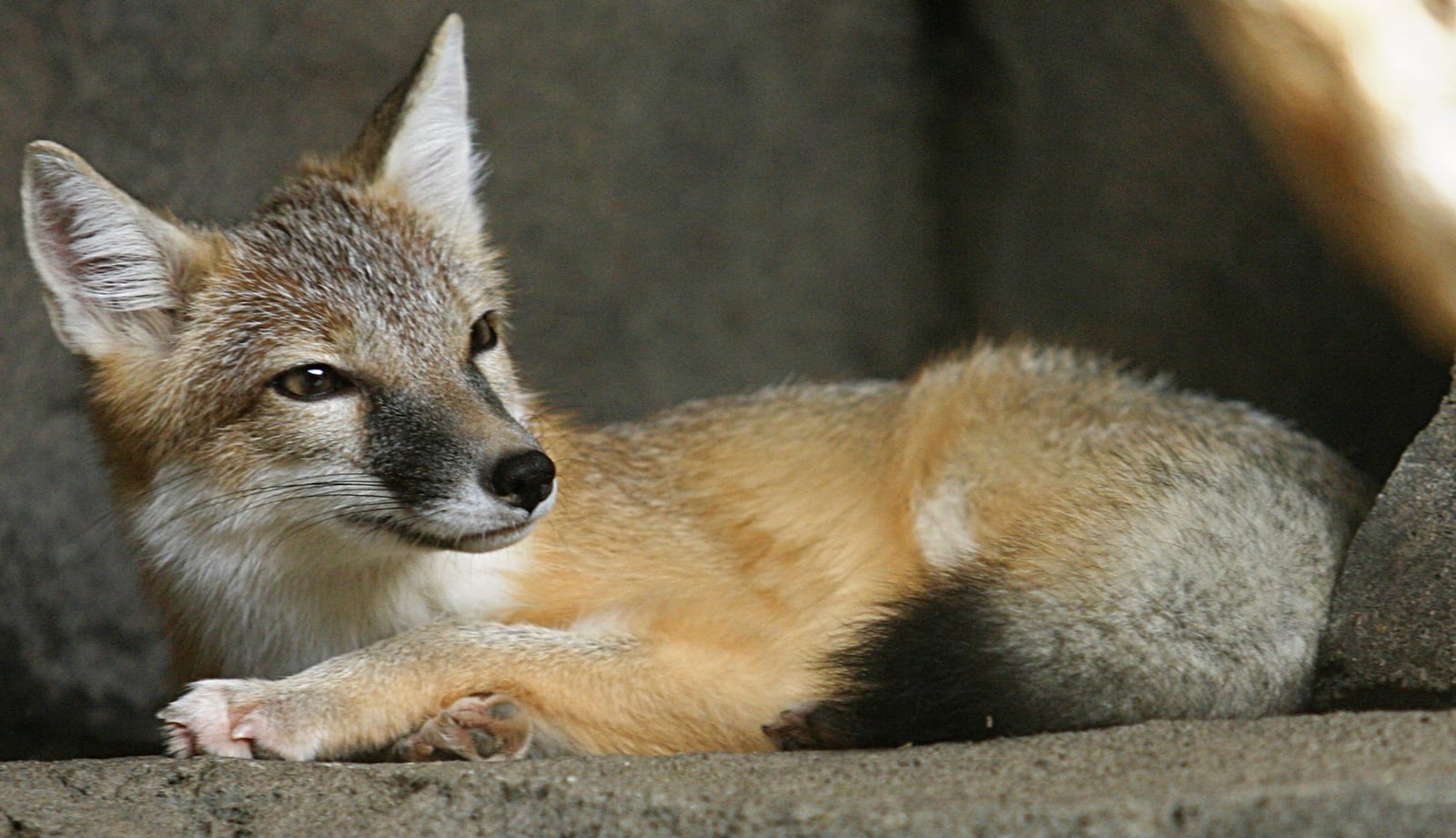
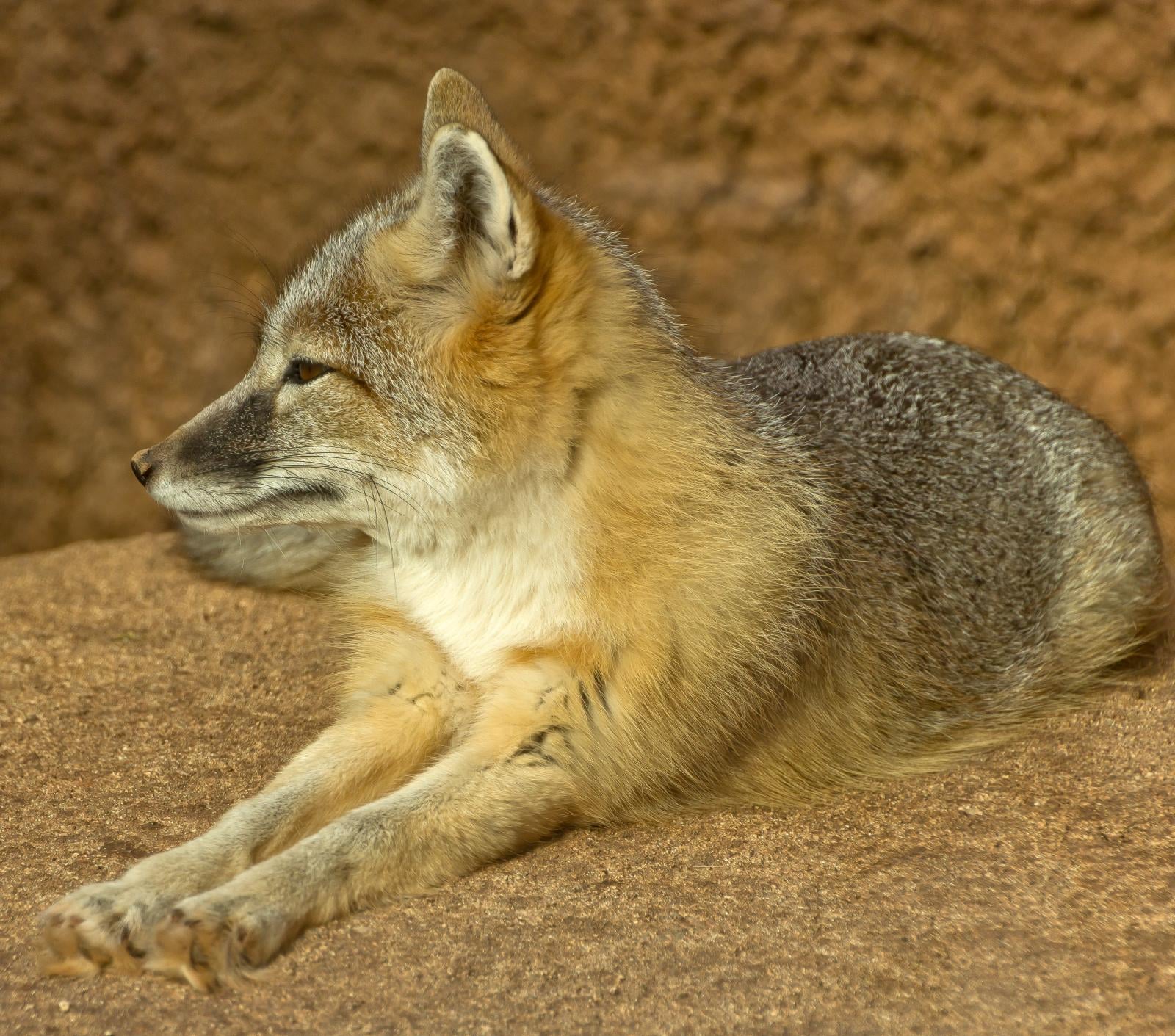
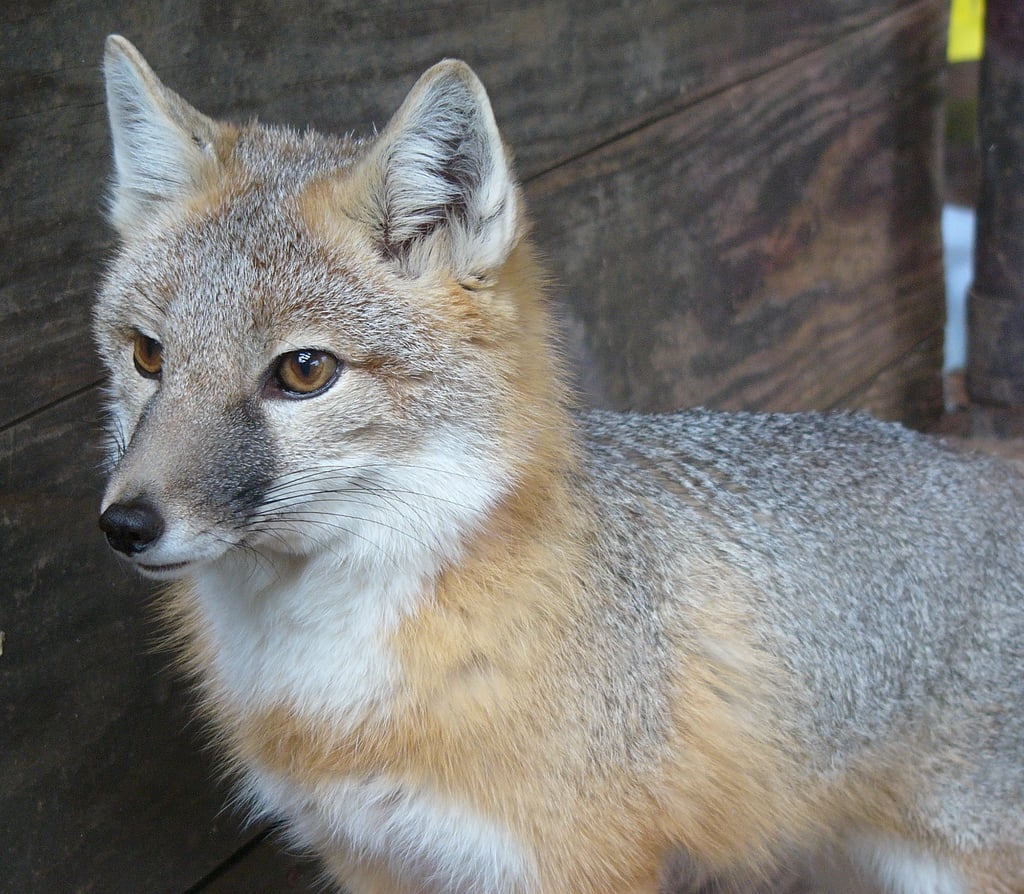
The swift fox is an occasional prairie specialist on Colorado’s eastern plains. Open occurrence databases hold 177 records for it, 172 of them iNaturalist photos. For an animal that weighs less than a housecat and keeps a low profile in tall grass, that is a respectable trail.
A fox of the shortgrass plains
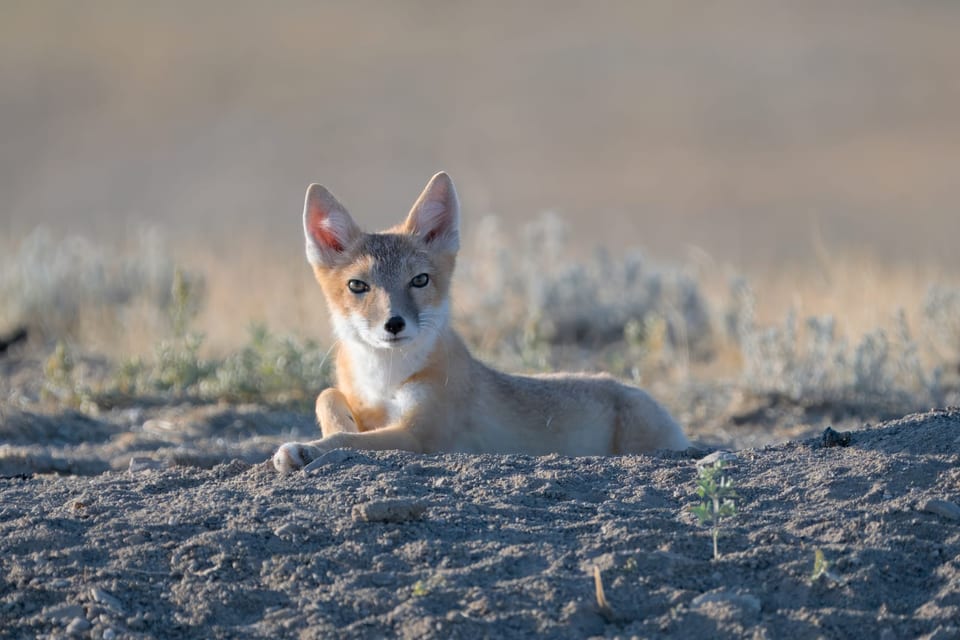
Everything about the swift fox points east, away from the mountains that define most of Colorado’s wildlife. It is a creature of open, treeless shortgrass prairie, and its records follow that country: Weld County and the South Platte lowlands in the north, the Arkansas valley and the far southeastern counties, with the state’s two national grasslands anchoring the pattern. Unlike almost every other Colorado member of the dog family, it lives underground year round, keeping a rotating set of a dozen or more burrows across its territory as refuge from summer heat, winter cold, coyotes, and golden eagles.
Active all year, seen at the edges of the day
Swift foxes do not hibernate, so they turn up in every month, most often at dawn and dusk when a pair moves between dens. The modest lift in warm-season records tracks the breeding calendar and the observers out to catch it: kits are born in spring, and by summer families are working the grass around prairie dog towns, where the closely grazed ground gives a hunting fox a clear line of sight.
A conservation comeback, still unfinished
The swift fox carries a Colorado rank of S3, vulnerable, and the number reflects a hard history. Poisoning campaigns aimed at wolves and coyotes in the early twentieth century nearly erased the species from the Plains, and decades of careful reintroduction have returned it to only a fraction of its former range. Coyotes remain the leading cause of adult death, so the fox’s fortunes on any stretch of prairie still rise and fall with how coyote-heavy that ground is.
 Full species profile




