
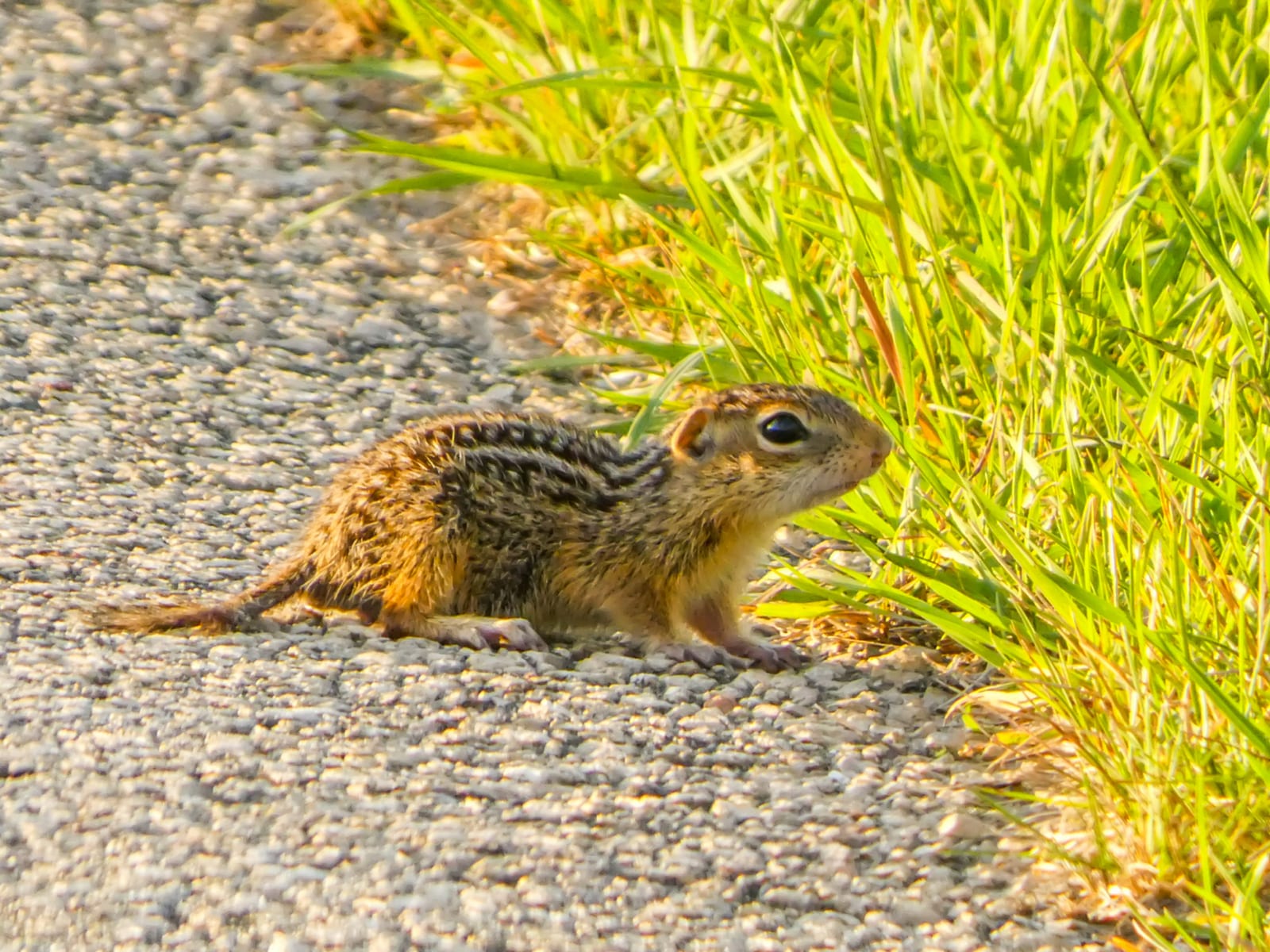
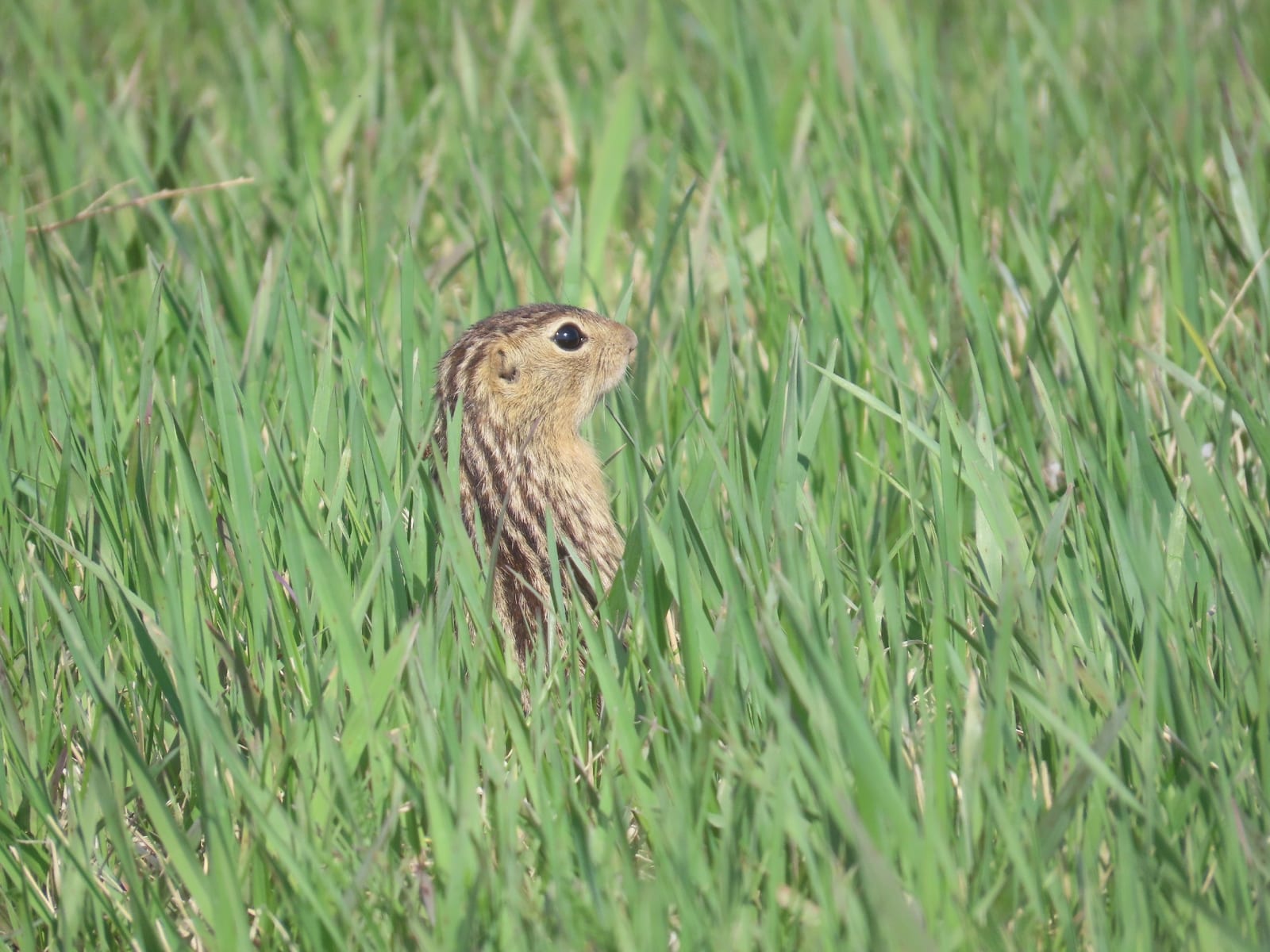
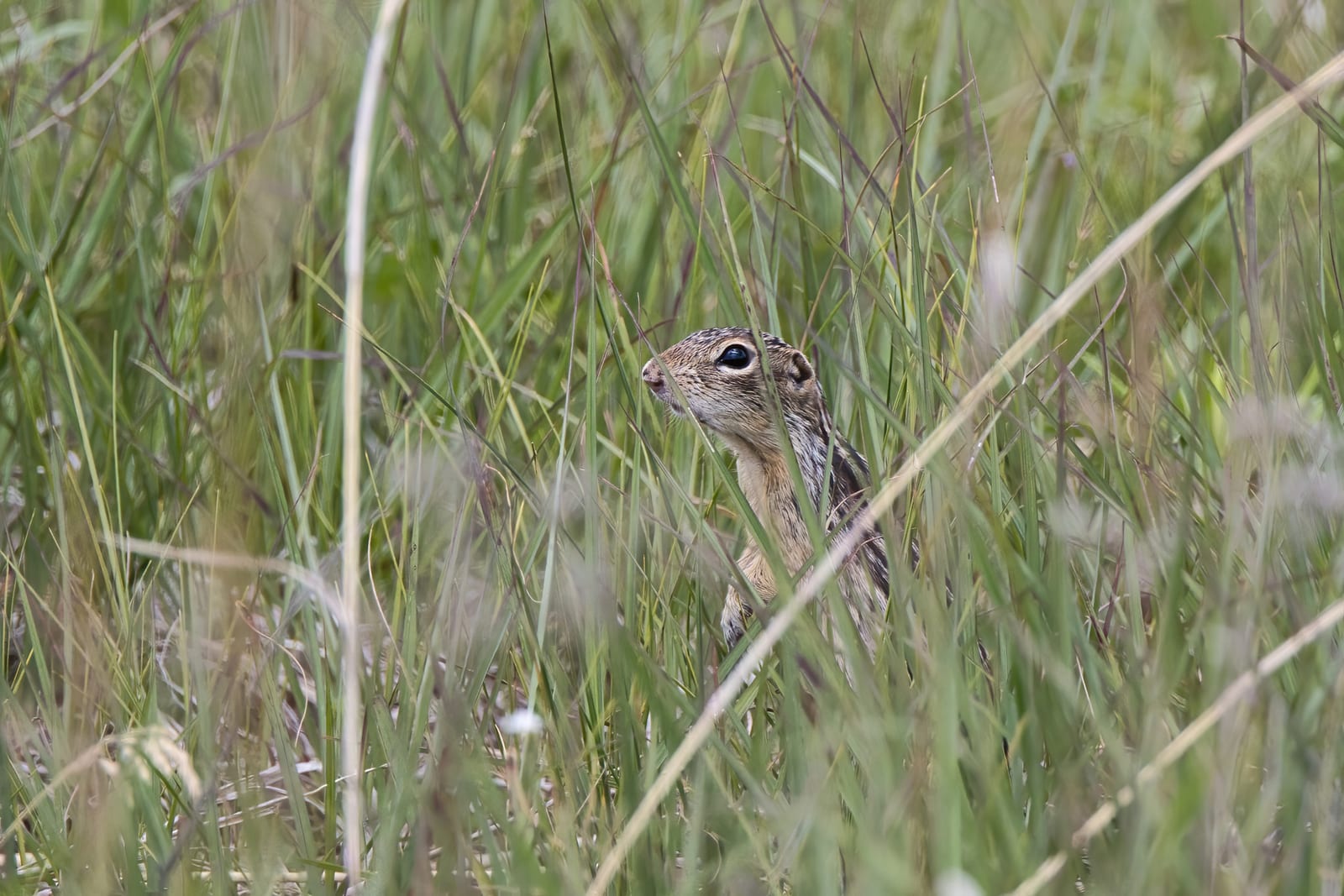
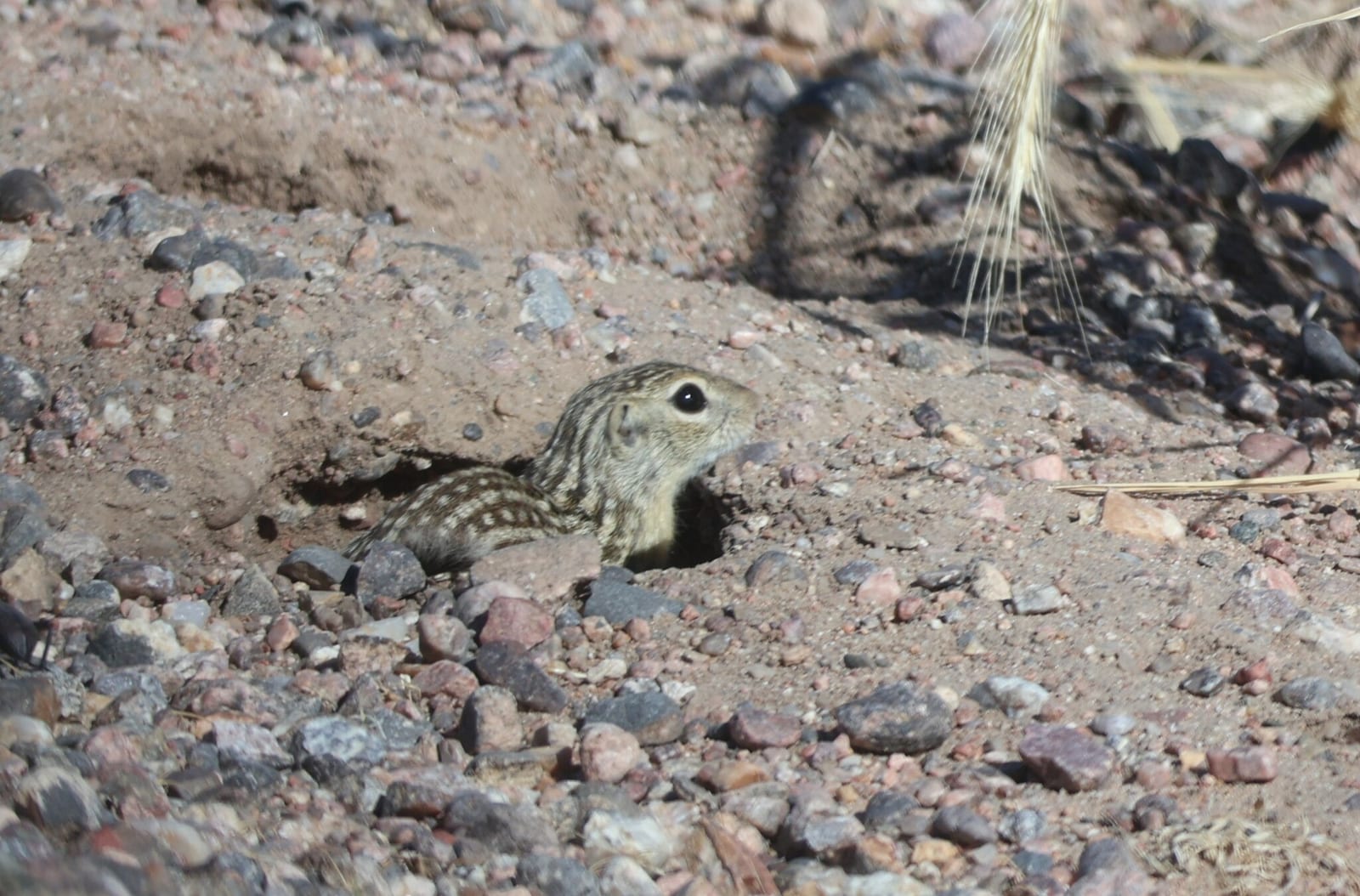
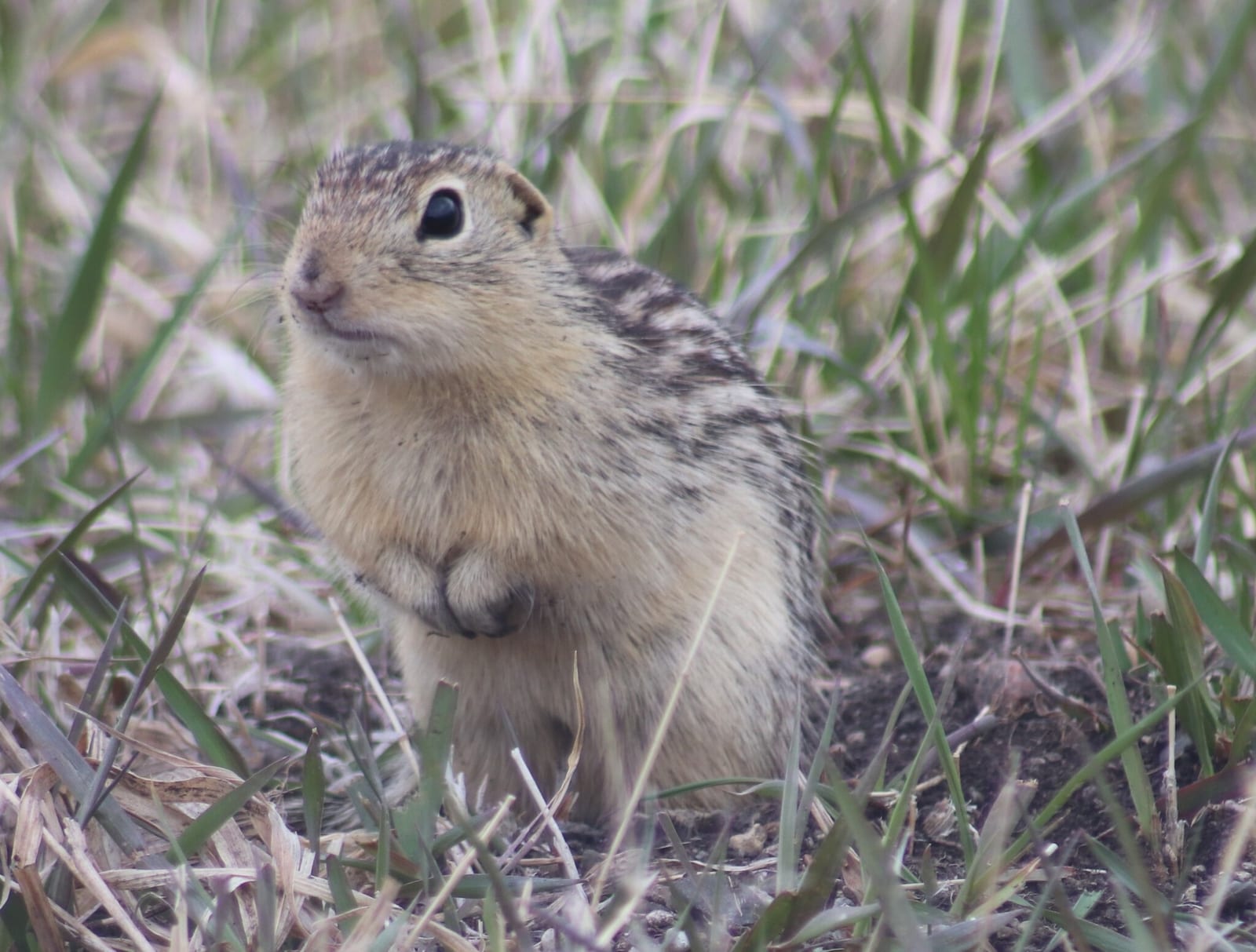
The thirteen-lined ground squirrel is a sight across Colorado’s eastern plains. Open occurrence databases hold 543 records for it in Colorado, but only 262 are iNaturalist photos; the rest come from museum and survey collections, a reminder that this small striped rodent is easier to trap than to photograph.
Where it turns up in Colorado
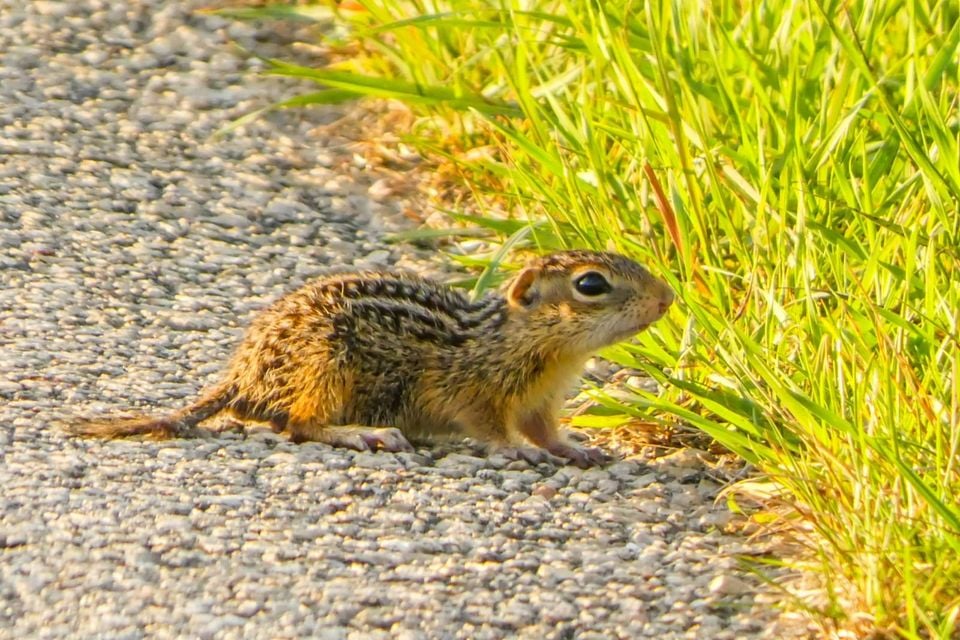
This is a plains animal. It wants short, well-drained grassland and the mowed edges that mimic it: pasture, roadside, cemetery, golf course. Records concentrate in the northeastern counties of Logan, Weld, and Kit Carson, with a strong population out on the shortgrass of Pawnee National Grassland and a second cluster down in the San Luis Valley around Alamosa. The stripes and rows of pale dots running down its back are camouflage against sun-dappled grass, and a squirrel standing picket-pin straight at its burrow mouth is the classic first sighting.
Why winter brings few reports
Watch the calendar and the animal disappears. It is one of North America’s deep hibernators, curling underground by early autumn and dropping its heart rate and body temperature to survive months without food. Reports fall to nearly none through the cold months and increase only as the ground warms and the squirrels emerge to breed. The long blank stretch on the record is not absence, it is a colony asleep below the frost line.
Status in Colorado
The thirteen-lined ground squirrel is native and secure here, ranked S5 by NatureServe and least concern by the IUCN. It thrives on exactly the kind of open, disturbed ground people create, so it is one of the plains rodents most likely to be seen by a casual visitor rather than a specialist.
 Full species profile




