Washington mammals

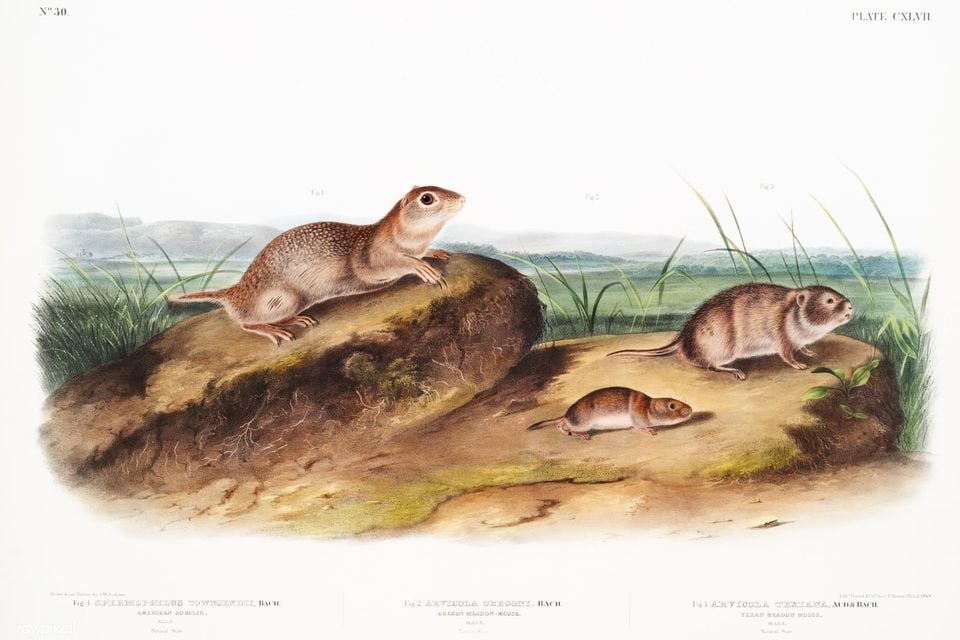
Townsend's Ground Squirrel in Washington

Urocitellus townsendii

Native to Washington S3 Vulnerable in Washington

Not listed as nonindigenous in Washington by USGS NAS; native to its Washington range.

IUCN Red List status

  1. LC
  2. NT
  3. VU
  4. EN
  5. CR
  6. EW
  7. EX

VU – Vulnerable

High risk of extinction in the wild.

Townsend's Ground Squirrel in Washington, by the numbers

Occasional in Washington 81st most recorded of 145 mammals logged in Washington

52 occurrence records
51 with iNaturalist photos
Apr 6, 2026 Last seen in Washington

Records from 2000–2026.

52 total records count every Washington occurrence from GBIF and iNaturalist; the map plots a georeferenced sample of 43; the monthly chart covers the 43 records with a full observation date.

When to look for the Townsend's Ground Squirrel in Washington

Most sightings fall in May.

43 Washington occurrence records (iNaturalist and GBIF) by month of year, 2000–2026. Shows when the species is recorded, not a guarantee of presence.

Monthly Washington records (table)
MonthRecords
January0
February1
March4
April13
May23
June2
July0
August0
September0
October0
November0
December0

Monthly townsend's ground squirrel occurrence records (iNaturalist and GBIF) in Washington, 2000–2026.

Seasonality

Year-round in Washington, with recorded sightings peaking in May.

Occurrence map

Where Townsend's Ground Squirrel has been recorded in Washington

43 records mapped · zoom and drag to explore

43 Washington records mapped

Where it's recorded in Washington

CountyRecords
Kittitas County 27
Yakima County 11
Benton County 4
Grant County 1
Other localities 9

The complete county distribution, spread across 4 Washington counties. Every occurrence record falls in one county, so these sum to the total. Counties from GBIF and US Census boundaries.

Townsend’s ground squirrel is a shrub-steppe animal, and Washington’s record shows it in the cleanest possible way. Of 52 state reports, 27 come from Kittitas County and 11 from Yakima, with Benton adding 4. All of it sits in the dry country of the Kittitas and Yakima valleys and the Columbia Basin, and the record west of the Cascade crest is essentially blank, because the habitat is.

The seasonal window is short and telling. Reports begin in late winter, surge to a May crest of 23, and end almost entirely by June, because these squirrels retreat underground to escape the summer drought and don’t reappear until the following spring. Read in that light, the May peak is genuine biology rather than a visitation artifact. The IUCN lists the species as Vulnerable and NatureServe calls it vulnerable in the state, and the record fits the concern: a narrow, dry-country range concentrated in a handful of counties east of the mountains.

Occurrence data from iNaturalist and GBIF.

More mammals in Washington in the atlas

Data & sources

The data and visualizations on this page draw on these open sources:

  • GBIFCC-BY 4.0occurrence records behind the range map, elevation, and record counts
  • iNaturalistCC0 / CC-BY / CC-BY-SAobservations, photos, and audio recordings
  • NatureServe ExplorerCC-BYthe state conservation rank
  • IUCN Red Listattributed factthe global conservation status
  • USGS NASpublic domainnative / introduced status
  • Natural Earthpublic domainthe relief basemap
  • USFSpublic domainnational-forest boundaries