Alabama mammals

Virginia Opossum in Alabama

Didelphis virginiana

Native to Alabama S5 Secure in Alabama

Not listed as nonindigenous in Alabama by USGS NAS; native to its Alabama range.

IUCN Red List status

  1. LC
  2. NT
  3. VU
  4. EN
  5. CR
  6. EW
  7. EX

LC – Least Concern

Widespread and abundant; not at risk.

Virginia Opossum in Alabama, by the numbers

Common in Alabama 7th most recorded of 78 mammals logged in Alabama

952 occurrence records
952 with iNaturalist photos
Jul 5, 2026 Last seen in Alabama

Records from 2000–2026.

952 total records count every Alabama occurrence from GBIF and iNaturalist; the map plots a georeferenced sample of 300; the monthly chart covers the 933 records with a full observation date.

When to look for the Virginia Opossum in Alabama

Most sightings fall in January to April.

933 Alabama occurrence records (iNaturalist and GBIF) by month of year, 2000–2026. Shows when the species is recorded, not a guarantee of presence.

Monthly Alabama records (table)
MonthRecords
January84
February115
March130
April118
May69
June41
July56
August39
September96
October82
November63
December40

Monthly virginia opossum occurrence records (iNaturalist and GBIF) in Alabama, 2000–2026.

Seasonality

Year-round in Alabama, with recorded sightings peaking in January–April, with a smaller rise in September–October.

Occurrence map

Where Virginia Opossum has been recorded in Alabama

300 records mapped · zoom and drag to explore

300 Alabama records mapped

Notable places to look

Park, forest, or monumentiNaturalist records
Conecuh National Forest 5
Wehle Nature Preserve 2
Wehle Nature Center 2
Old Cahawba Prairie Tract 1
Turkey Creek Nature Preserve 1
Mallard-Fox Creek Wildlife Management Area 1
William B. Bankhead National Forest 1
Talladega National Forest 1

Protected places with the most virginia opossum sightings, from the USGS Protected Areas Database plus named mountain ranges, good spots to look, not a full breakdown, so they don't sum to the total.

Where it's recorded in Alabama

CountyRecords
Jefferson County 138
Madison County 73
Tuscaloosa County 61
Lee County 61
Pike County 60
Blount County 47
Shelby County 35
Montgomery County 35
Mobile County 31
Macon County 29
Baldwin County 28
Cullman County 24
48 other counties 330

The complete county distribution, spread across 60 Alabama counties. Every occurrence record falls in one county, so these sum to the total. Counties from GBIF and US Census boundaries.

Alabama’s Virginia opossum record, 952 occurrences across 60 counties, reaches from Jefferson, Madison, and Tuscaloosa down to Baldwin and Mobile, taking in Conecuh National Forest’s pinelands, Black Belt farm edges, and the ridges of Bankhead and Talladega national forests on the way.

North America’s only marsupial

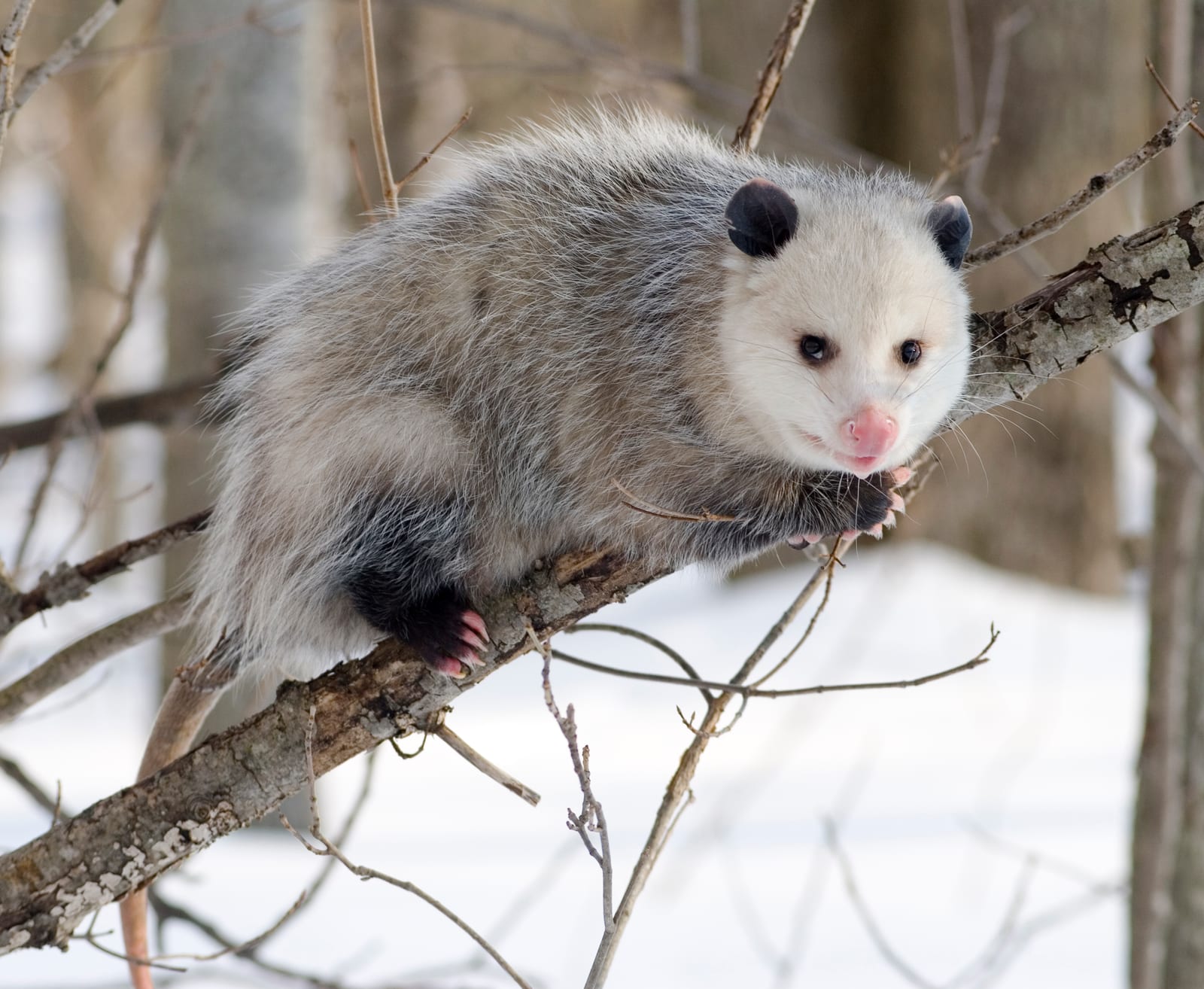
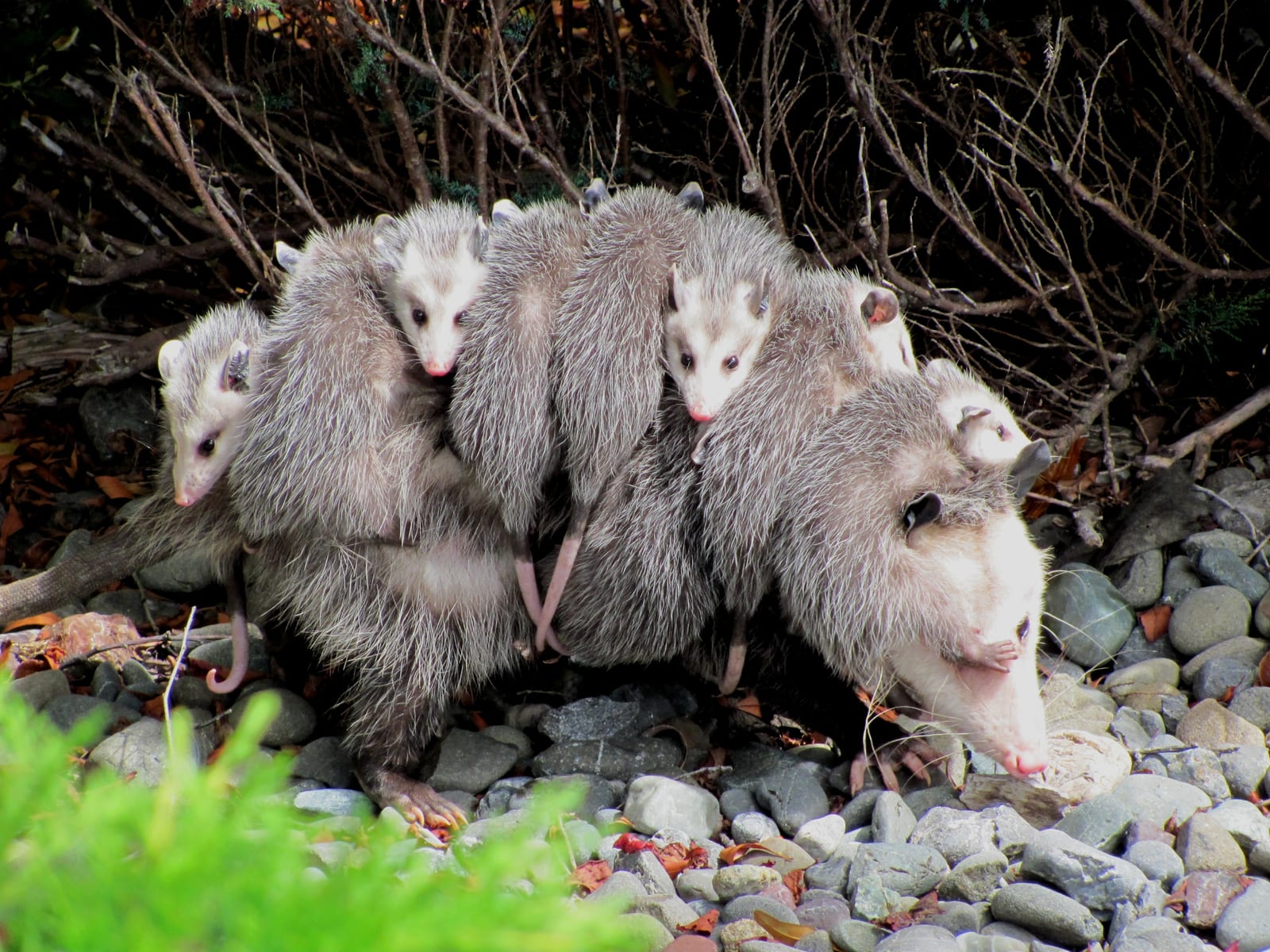
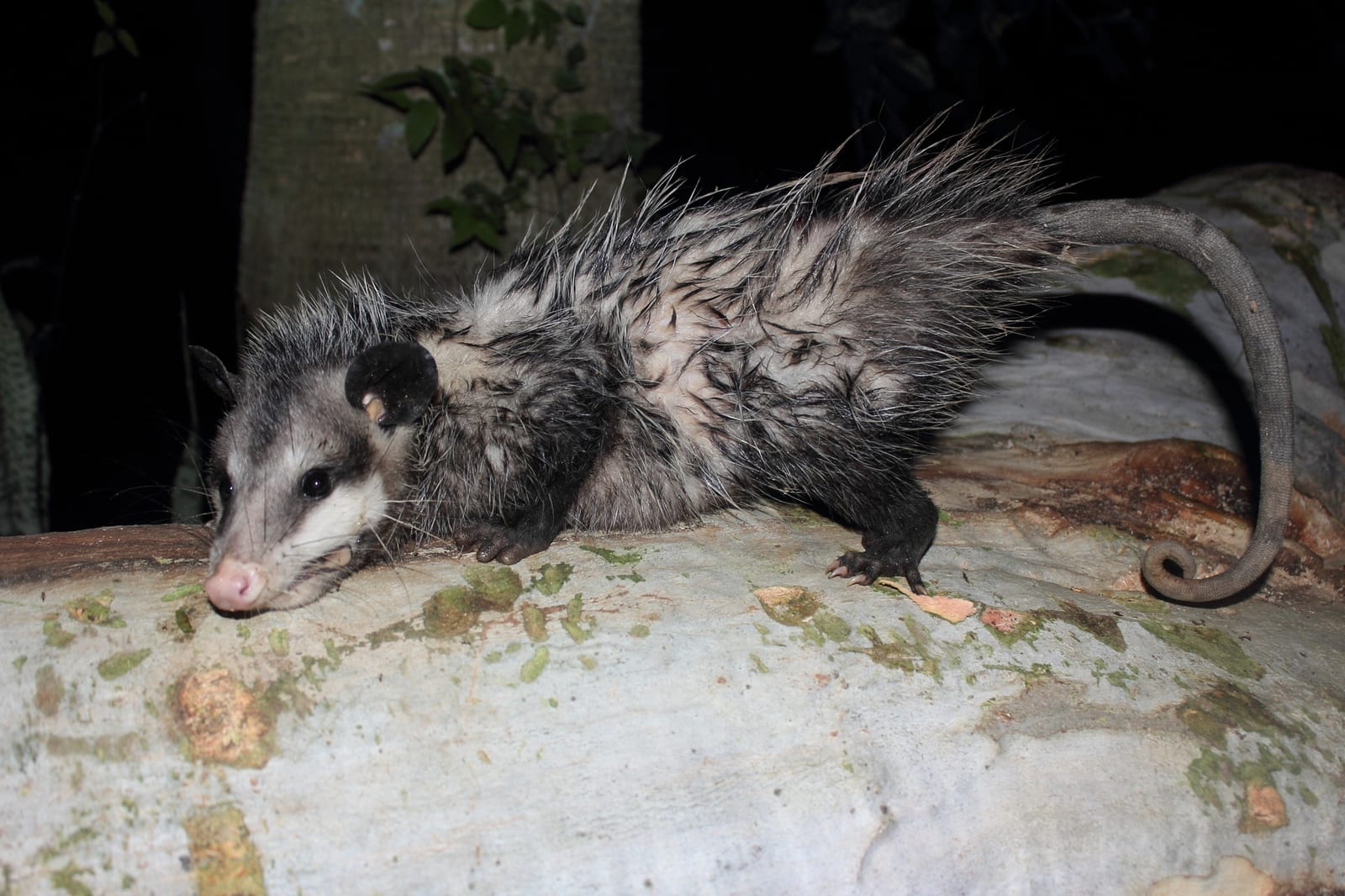
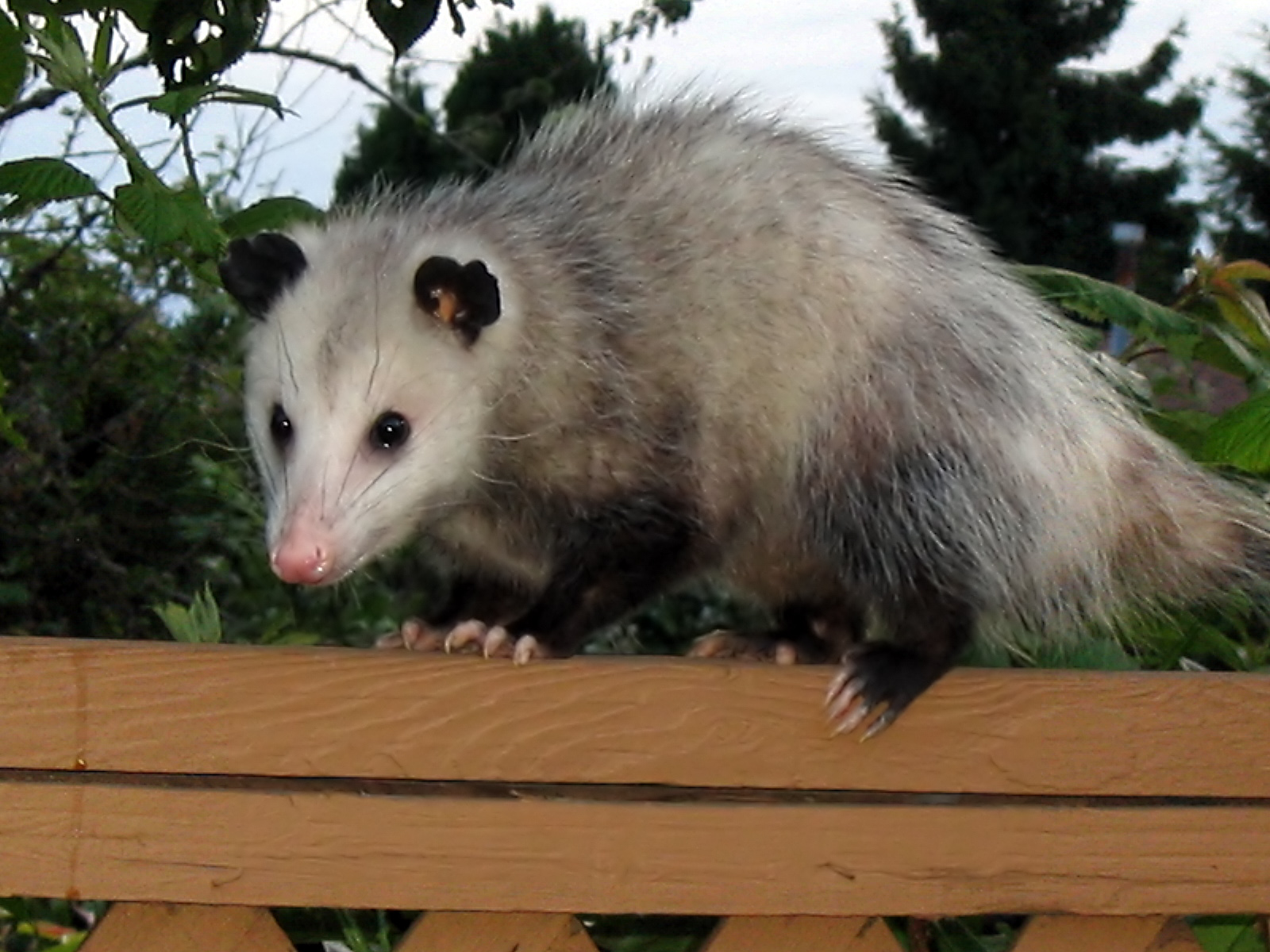
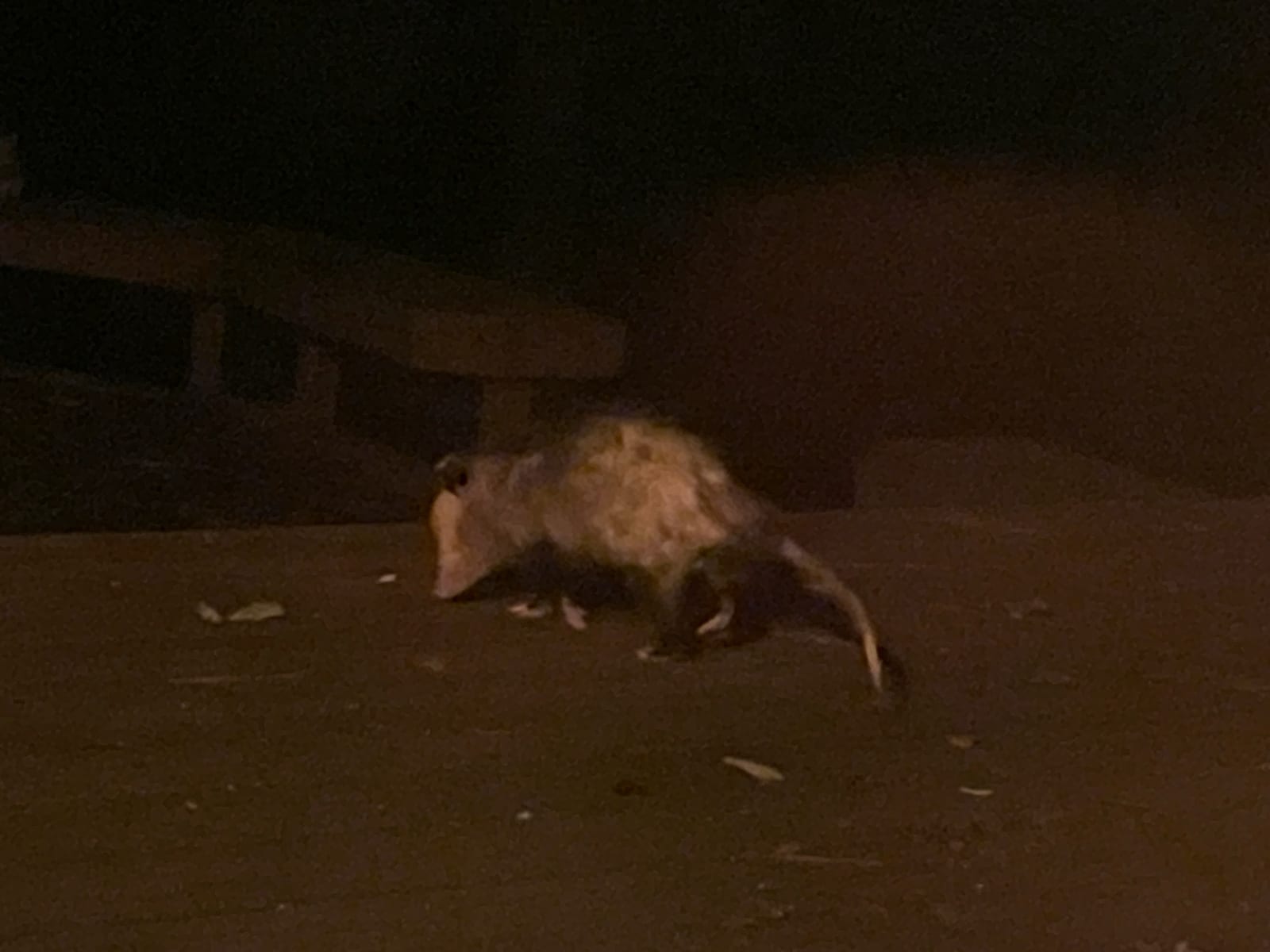
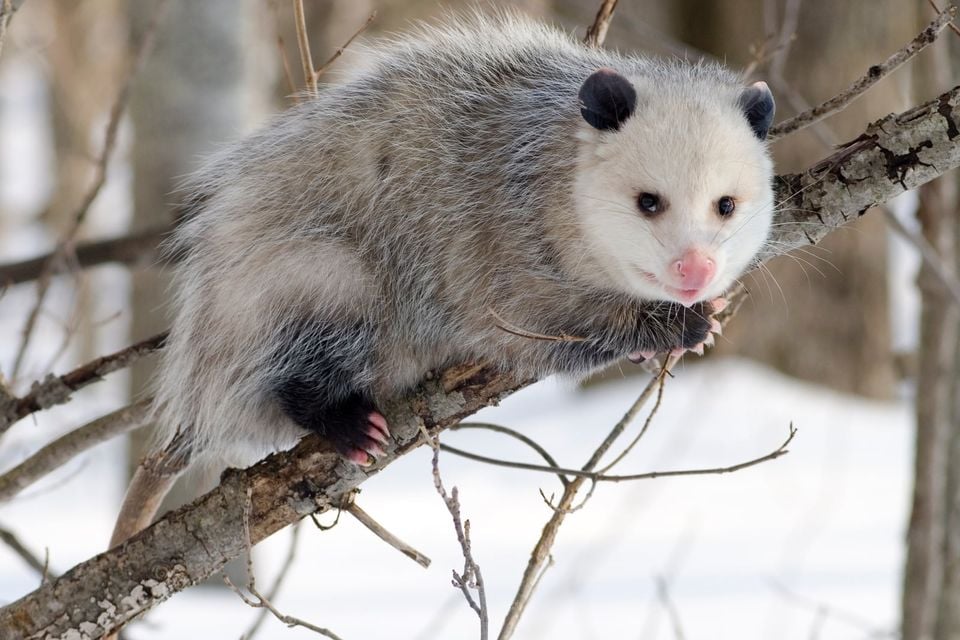
An opossum carries its young in a pouch, and once they outgrow it they ride on her back, a sight few other Alabama mammals can match. Beyond that trick it is a generalist built for edges: a prehensile tail and grasping hind feet for climbing, a nose for fallen fruit, insects, carrion, and eggs, and a habit of sheltering in brush piles, hollow logs, and spaces under buildings. Its last line of defense is the famous faint, collapsing limp with mouth open until the danger loses interest, an involuntary response rather than an act.

Early spring on the move

Counts crest from February through April, when the year’s first litters are growing and females carrying pouch young travel and forage more heavily. Opossums do not hibernate; they hole up through the coldest nights, but Alabama’s winters rarely hold them for long, and the calendar keeps records coming in every month.

Status in Alabama

NatureServe ranks the Virginia opossum S5, Secure, in Alabama, and the species is native to the state. USGS NAS does not list it as nonindigenous here.
Occurrence data from iNaturalist and GBIF.

Virginia Opossum in other states

Virginia Opossum range map (all states)

More mammals in Alabama in the atlas

Data & sources

The data and visualizations on this page draw on these open sources:

  • GBIFCC-BY 4.0occurrence records behind the range map, elevation, and record counts
  • iNaturalistCC0 / CC-BY / CC-BY-SAobservations, photos, and audio recordings
  • NatureServe ExplorerCC-BYthe state conservation rank
  • IUCN Red Listattributed factthe global conservation status
  • USGS NASpublic domainnative / introduced status
  • Natural Earthpublic domainthe relief basemap
  • USFSpublic domainnational-forest boundaries
  • USGS Protected Areas Databasepublic domainthe named parks, forests, and refuges behind "notable places to look"




