


The Virginia opossum is recorded across West Virginia from end to end, 269 records spanning 42 counties, led by Monongalia, Preston, and Hampshire. Monongahela National Forest and New River Gorge National Park and Preserve top the named places, though most opossums live closer to farms, creek bottoms, and town edges than to high country.
North America’s only marsupial
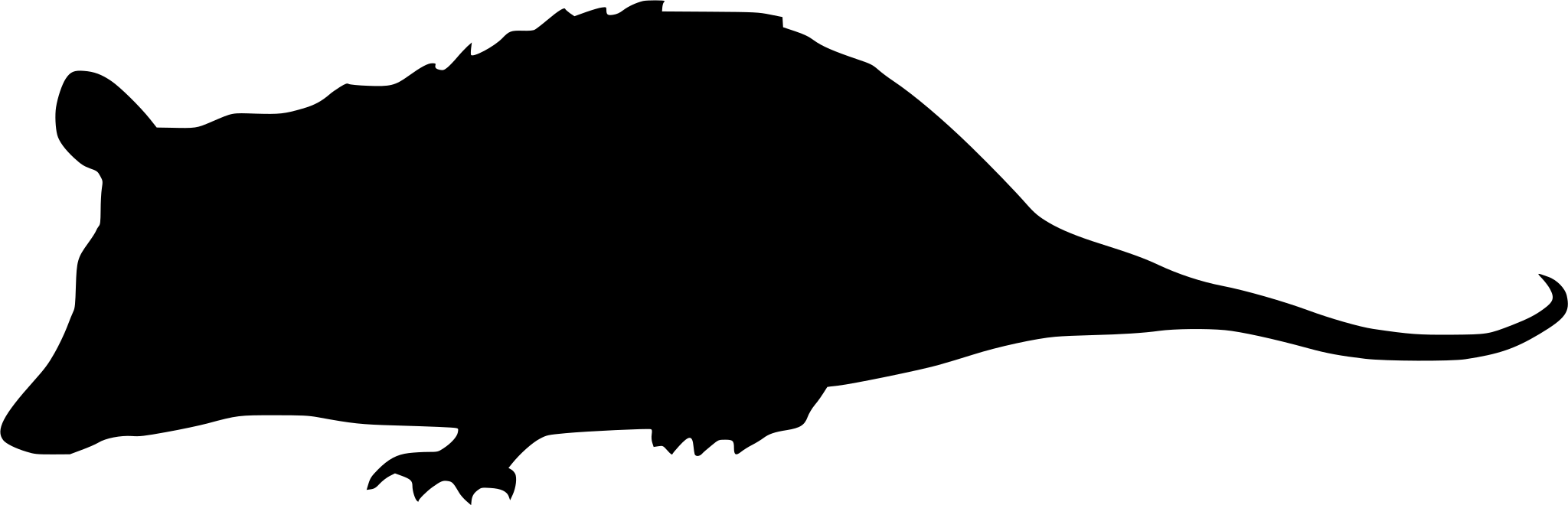
An opossum raises its young in a fur-lined pouch, and it carries a toolkit found in no other West Virginia mammal: a grasping tail, a thumb-like toe on each hind foot, and more teeth than any other land mammal on the continent, fifty in all. Its famous collapse into a limp, unresponsive faint when cornered is involuntary, an uncontrolled shutdown rather than acting, and it can last for hours.
A southern animal meeting a mountain winter
The opossum does not hibernate and owns no real winter coat; its thinly furred ears and tail are prone to frostbite, and many adults carry the scars. It survives West Virginia’s cold by denning in brush piles, hollow logs, and burrows dug by other animals, emerging on milder nights to scavenge. Reports crest in February, when breeding-season wanderers cover ground, and again in April and May, when females travel with pouches full of young.
Status in West Virginia
NatureServe ranks the Virginia opossum S5, Secure, in West Virginia, and the species is native to the state. USGS NAS does not list it as nonindigenous here.
 Full species profile




