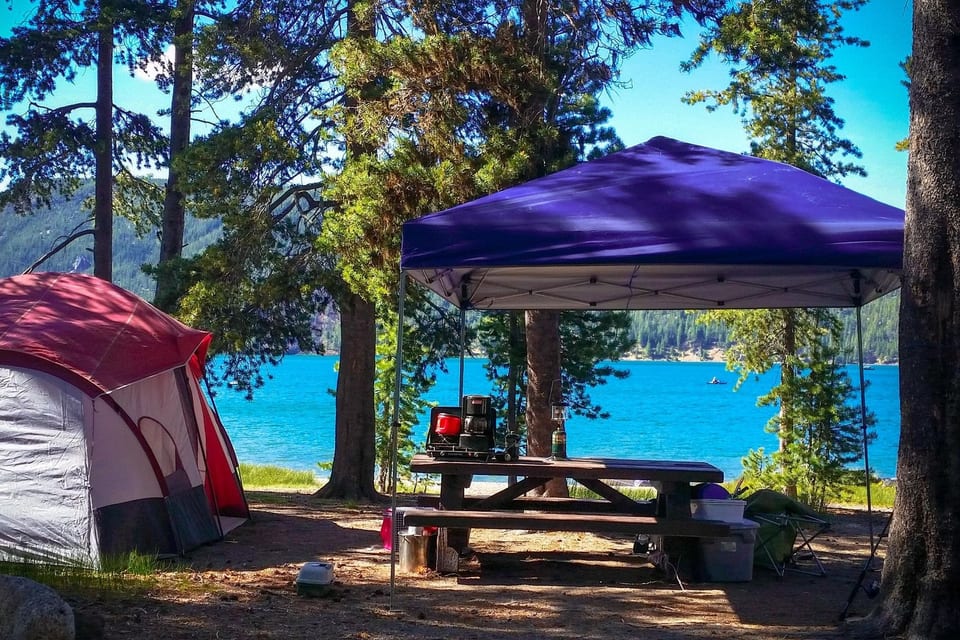
A camping checklist is only useful if it survives the messy reality of trip prep: shifting weather, last-minute additions, the realization at the trailhead that you forgot the stove fuel. This is the list we wish we had on our first trip. Every category you actually need, with optional gear clearly marked so beginners pack the essentials first.
The interactive checklist below saves your progress in your browser and works without an account or signup. Tap any item to mark it packed; your browser remembers each check across visits.
The full checklist
Packing System
0 / 5Right bag, dry contents. Pack-cover or liner is non-optional. Sort the bag first, fill it next.
Sub-50L forces you to leave warm layers behind on shoulder-season trips. Over 70L tempts overpacking and chews up shoulders by mile six.
Pack covers shed sideways rain but soak through from sweat and seam wicking. A trash compactor bag inside the pack keeps your sleeping bag bone dry for two dollars.
Campsite & Shelter
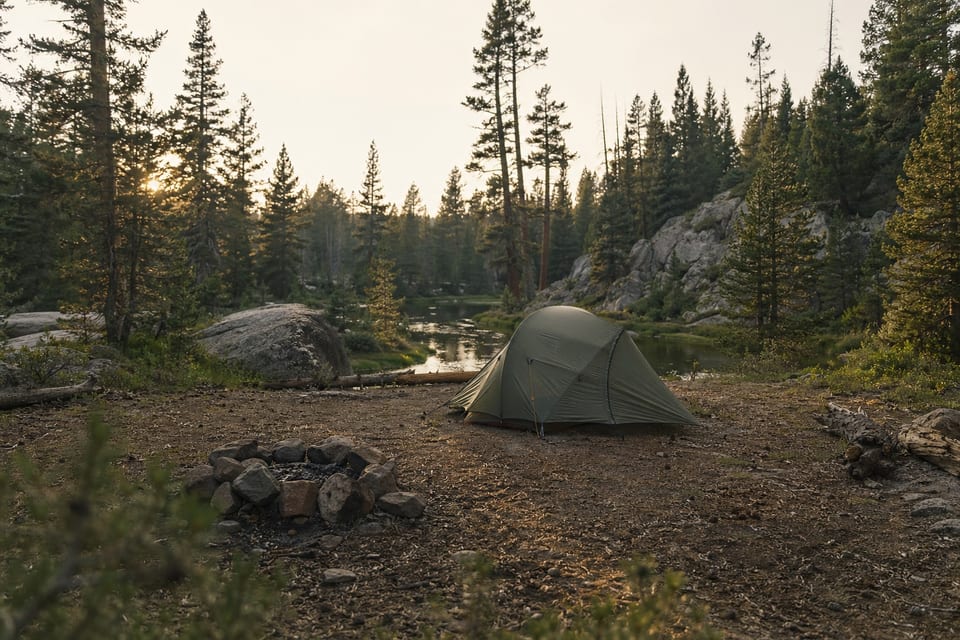
0 / 9Your home for the trip. Pitch site first, sort everything else after.
Pitch it once at home before the trip. Missing a single pole segment or finding a snapped stake at a windy site at dusk is the most common avoidable disaster.
A footprint cut to your tent floor adds years to the floor fabric and blocks ground moisture. A generic tarp larger than the footprint funnels rain under the tent and soaks you out. Read the guide
Stake counts assume the tent uses every loop. Add 4-6 spares for guylines and replacements. Y-stakes hold in soft ground; sand stakes for beach or snow.
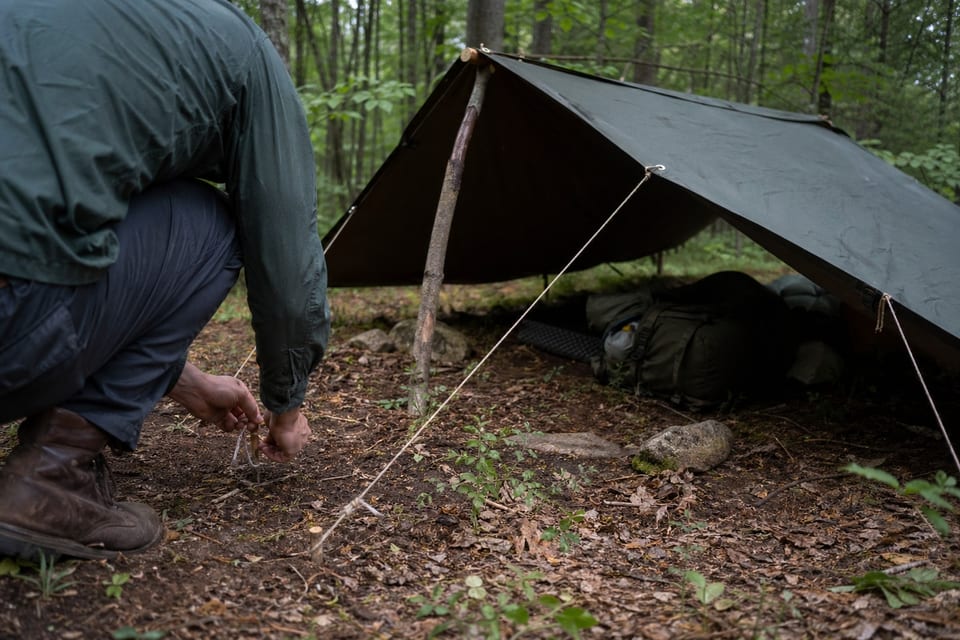
Untensioned guylines cost you 30 percent of the tent's wind rating. Pre-attach reflective cord with linelocs at home so you can pitch fast in fading light.
Direct desert or beach sun cooks tent interiors past 110°F by 10am. A shade tarp pitched over the tent drops interior temp 20-30°F and lets you actually sleep in.
Sleep System
0 / 7Pad R-value matters as much as bag temp rating. Don't sleep cold.
Manufacturer ratings are survival numbers, not comfort. Pick a bag rated 10-15°F warmer than the coldest expected night, or you will spend the trip wearing every layer you packed. Read the guide
The ground steals heat faster than the air. R-value 2 covers summer; below freezing you need R-value 5 or higher, and a thin pad will cost you sleep regardless of bag rating.
A silk or merino liner adds roughly 10°F to a bag and keeps it clean across the season, which matters for down bags that lose loft when oils accumulate.
Camp Kitchen
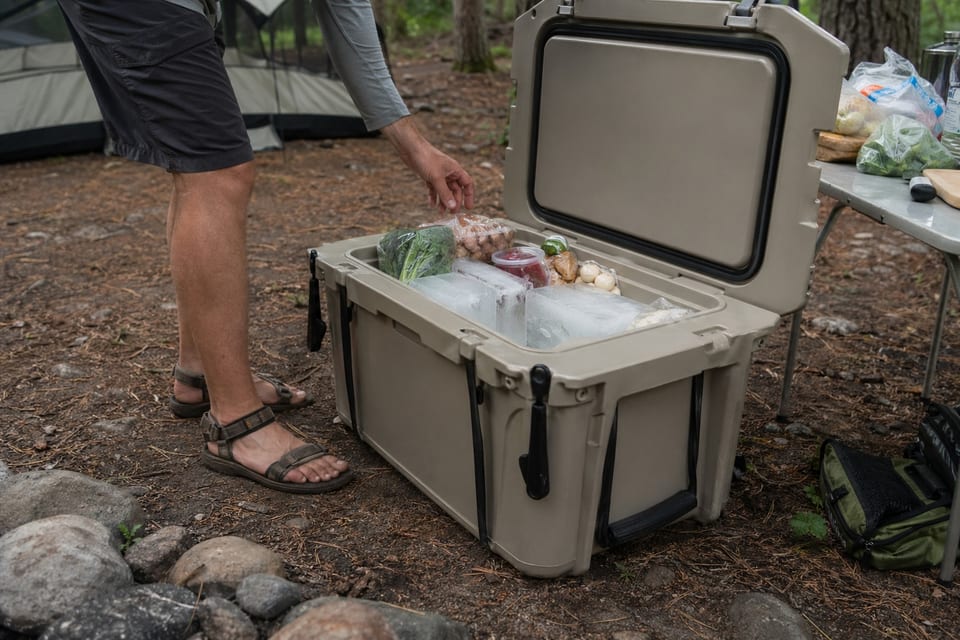
0 / 16Stove, fuel, water, and a bear-safe place to store food.
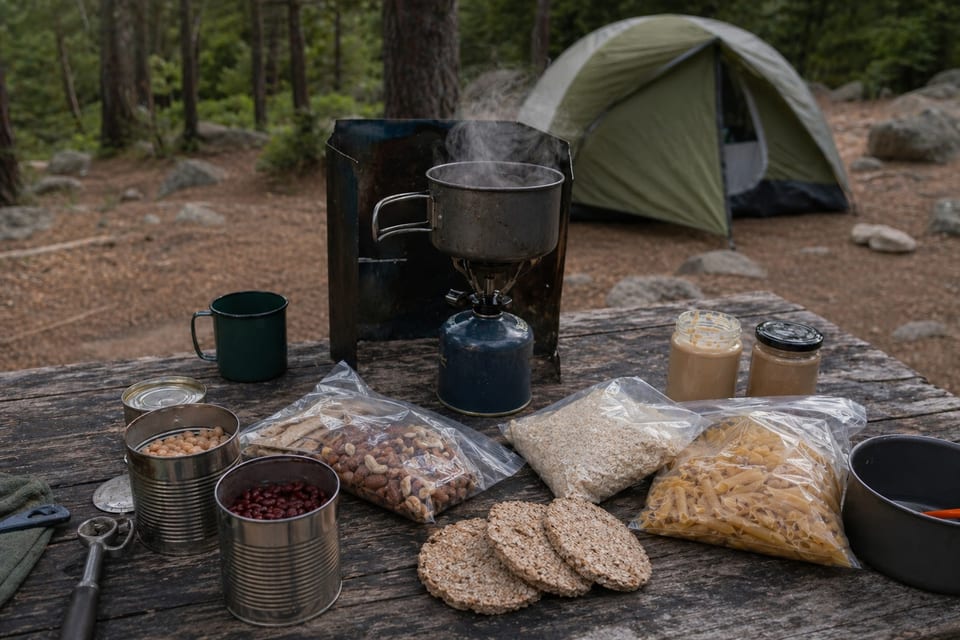
Canister stoves are lighter and idiot-proof in summer but lose pressure below 20°F. Liquid-fuel stoves field-strip and run in winter or at altitude. Pick by the coldest night, not the typical one.
Half-empty canisters lie about their weight. Bring a spare for any trip over two nights, and remember most airlines and ferries refuse fuel canisters as carry-on or checked baggage.
Bic lighters fail at altitude and in cold. Carry two ignition sources stored separately, and waterproof matches as the third. Cheap insurance against a wet pocket.
Many parks legally require a hard-sided canister, not a bag, and rangers do check at trailheads. A bear can smell food from over a mile away, so storage rules apply to toothpaste and sunscreen too. Read the guide
Eating & Drinking
0 / 7Backpacking: a mug, bowl, spoon. Car camping: bring the real plates.
Filters remove protozoa and bacteria but not viruses; tablets and UV cover viruses but not sediment. For most North American backcountry water, a Sawyer Squeeze is enough. Carry tablets as backup if the filter freezes or clogs. Read the guide
Clothing & Footwear
0 / 19Pack for the coldest hour of the trip, not the average. Avoid cotton.
New boots on a multi-day trip will hand you blisters by lunch on day one. Walk at least 30 miles in them at home, including hills, before any trip longer than a day hike. Read the guide
Cotton holds sweat against skin, which is how blisters and macerated feet start. Merino or synthetic only, and rotate pairs daily so one is always drying on the back of your pack.
Baselayers move sweat off your skin so the insulation above stays dry. Merino resists odor for multi-day trips; synthetics dry faster and cost less. Cotton kills. Read the guide
The mid-layer traps body heat and keeps insulating when damp, which is what fails about a wet down jacket. Fleece weighs more than down for the warmth but shrugs off sweat and rain. Read the guide
Camp puffy goes on the second you stop moving, before you cool down. Down packs smaller and weighs less; synthetic insulates wet. In rainy climates, pick synthetic. Read the guide
A real waterproof shell with taped seams beats a water-resistant softshell every time it actually rains. Look for pit zips for ventilation, or you sweat out faster than you stay dry. Read the guide
You lose meaningful body heat from an uncovered head, especially while sleeping. Wool or fleece beanie weighs almost nothing and bumps your bag rating by 5°F worth of comfort.
In peak mosquito or blackfly season at any latitude above 45°N, a headnet is the difference between a trip and a march. Weighs under an ounce, lives in the lid pocket.
First Aid & Safety
0 / 18Knowing how to use the kit matters as much as carrying it.
A pre-built kit is a starting point, not the whole answer. Open it before the trip, swap in your prescriptions, and take a Wilderness First Aid course if you camp solo or far from a road.
Tape any hot spot the second you feel it, not at the next break. A blister that pops at mile two will end the trip; moleskin applied at mile one will not.
Lyme transmission rises sharply after 24-36 hours of attachment. Do a full body check the night you get home, save any tick you remove in a sealed bag, and note the date for your doctor.
Bear spray stops a charge faster and at safer distance than any firearm carried by a non-expert. Keep it on a hip holster, not in the pack, and practice the safety-off draw at home. Read the guide
Tools & Repair
0 / 8Ten dollars of tape and cordage prevents a ruined trip.
A small Leatherman or Swiss Army knife with pliers and scissors handles 90 percent of camp repairs. Skip the gas-station survival knife with a hollow handle; the mass is wasted and the steel is soft.
Duct tape patches torn tent floors, splinted poles, ripped pack straps, and emergency moleskin. Wrap a few feet around a trekking pole or pencil instead of carrying the whole roll.
Real 550 paracord, not the bracelet-grade stuff. Used for bear hangs, clotheslines, replacement tent guylines, and gear lashing. Twenty-five feet is enough for most weekend trips. Read the guide
Hygiene & Toiletries
0 / 13Pack out everything you pack in. Yes, including toilet paper.
Dig a 6-8 inch cathole at least 200 feet (70 adult paces) from water, trails, and campsites. A real trowel beats a stick or a tent stake on hard ground, where shallow digs are how giardia spreads.
UV exposure climbs 4 percent per 1,000 feet of elevation, and snow or water reflects another 80 percent. Reapply every two hours, and pick mineral (zinc oxide) for reef-safe and sensitive skin.
DEET 30 percent works longest but melts plastics and synthetic fabrics. Picaridin 20 percent matches it for protection, plays nicer with gear, and does not stink.
Campfire (where allowed)
0 / 5Always check fire restrictions. Buy firewood locally.
Even cedar splits damp from morning dew take five minutes to catch on a match alone. A few Vaseline-soaked cotton balls or two esbit cubes mean a fire on the first attempt, every time.
Most US states and Canadian provinces ban firewood transport across county or park lines because of emerald ash borer and other invasives. Buy at the campground or a vendor within 50 miles, and burn what you buy. Read the guide
Comfort & Fun
0 / 8Optional. Bring whatever makes the campsite feel like yours.
How to adapt this checklist to your trip
The same list packs differently for a weekend at a developed campground than for a four-day backcountry loop. Four prompts to tailor it:
- Where are you camping? A developed campground with running water and bear lockers is a different problem than a backcountry site eight miles in.
- How are you getting there? Car camping forgives heavy gear. Backpacking does not.
- What’s the coldest hour? Pack your sleep system and insulation for the lowest expected temperature, not the daytime average. A sleeping bag rated 10 to 15°F warmer than the coldest expected night and a sleeping pad with R-value 5+ for sub-freezing are the two highest-leverage choices.
- How experienced are you? New campers tend to over-pack. After two or three trips, start trimming.
What you don’t need to buy
If you’re new to camping, the cost of buying everything on this list at once will feel out of proportion to the trip. It is. The good news: you don’t need most of it new.
- Rent the major items first. REI, OutdoorsGeek, Arrive Outdoors, and most outdoor co-ops rent tents, sleeping bags, and pads by the week. Spend a season figuring out what you actually use before buying.
- Borrow what you’ll use once. A bear canister for one Sierra trip, snowshoes for one winter weekend. Ask friends, neighborhood Buy Nothing groups, or local outdoor clubs.
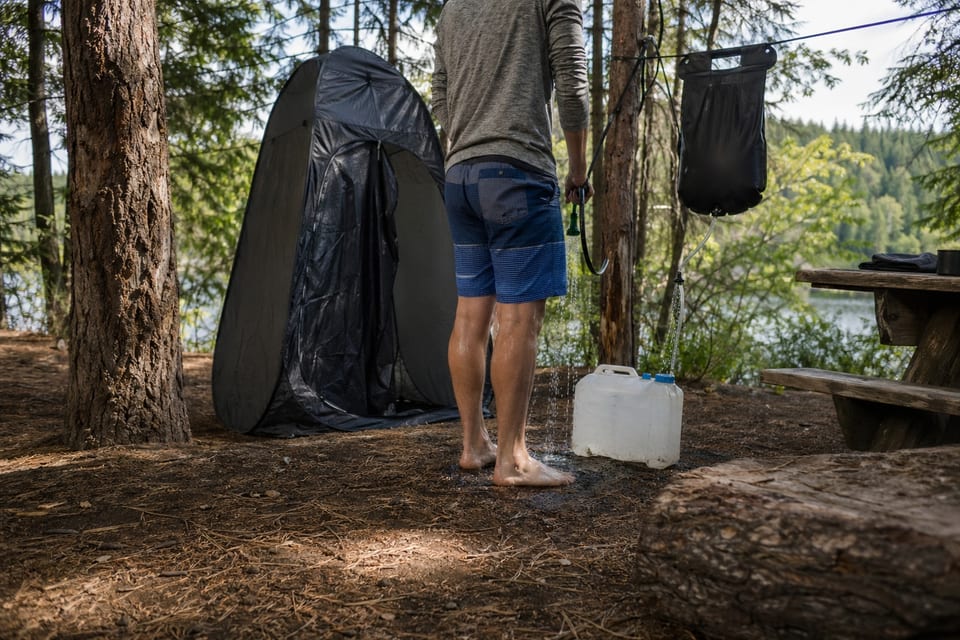
- Skip the gimmicks. Solar showers, fold-up coffee makers, branded survival bracelets. Almost none of them earn their pack weight on a first trip.
- Wait on the puffy. A fleece or wool sweater plus a borrowed rain jacket covers most three-season conditions. The puffy is the upgrade after trip three.
The point of the optional tags on the checklist above is to make this concrete. Pack the essentials first; add the optional gear once you know what you actually use.
Common camping packing questions
What should be on a camping checklist?
A complete camping checklist covers twelve categories: packing system, shelter, sleep system, kitchen, eating and drinking, clothing and footwear, navigation and lighting, first aid, tools and repair, hygiene, fire (where allowed), and comfort items. The exact counts depend on trip length, terrain, and weather, but the table below shows a defensible minimum:
| Category | Minimum | Examples |
|---|---|---|
| Packing | 2 | backpack or duffel, pack liner |
| Shelter | 4 | tent, footprint, stakes, guylines |
| Sleep | 3 | sleeping bag, pad, pillow |
| Kitchen | 7 | stove, fuel, lighter, pot, utensils, knife, soap |
| Eating | 4 | bowl, spork, mug, water bottle |
| Clothing | 8 | boots, socks, base + mid + shell layers, beanie |
| Navigation | 4 | headlamp, map, compass, phone |
| First aid | 3 | kit, blister pads, prescriptions |
| Tools | 2 | knife, repair tape |
| Hygiene | 5 | toothbrush, TP, sunscreen, bug spray, towel |
| Fire | 2 | matches, fire starter |
| Total | 44 | core list (full version above expands to ~124) |
The longer 124-item list above includes optional items that handle specific conditions: sub-freezing nights, bear country, beach camping, multi-day trips.
Do I need a bear canister?
Hard-sided bear canisters are required in many wilderness areas in California, Oregon, parts of Washington, the Adirondacks, Olympic backcountry, and most national parks above frontcountry. Always check the unit’s specific rules: they are enforced at trailheads. Backcountry sites without provided lockers should default to a canister or a PCT-method bear hang at least 200 feet from camp, per the Leave No Trace 7 Principles.
What’s the minimum camping gear for a beginner?
Tent, sleeping bag, sleeping pad, headlamp, water filter or treatment, stove, fuel, pot, lighter, food, water bottle, first-aid kit, weather-appropriate clothing, rain shell, and a knife. About 25 items total. Start there; add optional items from the full list above after your first two trips, once you know what you actually use. A weekend Wilderness First Aid course (NOLS, SOLO, Red Cross) does more for backcountry safety than any amount of additional gear.
Camping outside the US?
Most of this list assumes a US car-camping or backpacking context. A few cross-cultural notes:
- Scandinavia. Wild camping is legal under Allemansrätten / Allemannsretten. Bring a stove and water filter, and skip the firewood entry (gathering deadwood is fine, but always check fire bans).
- UK and Ireland. Nights are wet. Pack rain pants and a real waterproof shell, not a softshell. The UK Camping & Caravanning Club keeps a useful regional checklist.
- Alps. Hut-to-hut hiking in Austria, Italy, and Switzerland replaces tent + bag with a sheet-style sleeping bag liner and a hut reservation. Half-board meals at Hütten and rifugi mean you carry less kitchen kit, more rope or via ferrata gear.
- Mediterranean coast. Shade tarp + sand stakes are non-negotiable in summer. Skip the puffy and most cold-weather layers; double up on sunscreen, headnet, and water capacity.
Bear canister rules are mostly US-specific (parts of Slovakia and Slovenia have brown-bear protocols; Japan has its own). Read the local park’s site before you go.
Why these items? How we built this checklist
This checklist comes from years of field experience across hundreds of nights in tents, hammocks, and the back of a car, fact-checked against the National Park Service’s camping guidance, the Leave No Trace 7 Principles, and the ASTM F3340 sleeping-pad R-value standard. Every optional item is tagged so first-time campers can pack the essentials first.
Reviewed by Carl J. Borg, Founder & Outdoor Editor. The first-aid section is reviewed by Jennifer Schultz, Certified International Mountain Leader.
Final thoughts
Bookmark this page; your checked items stay saved between trips, so the second visit takes a fraction of the time.
If you want to keep going, our guides on staying clean while camping, the most comfortable way to sleep in a tent, and our layering guide cover the three subjects new campers most often get wrong.