Fly Fishing vs. Normal Fishing
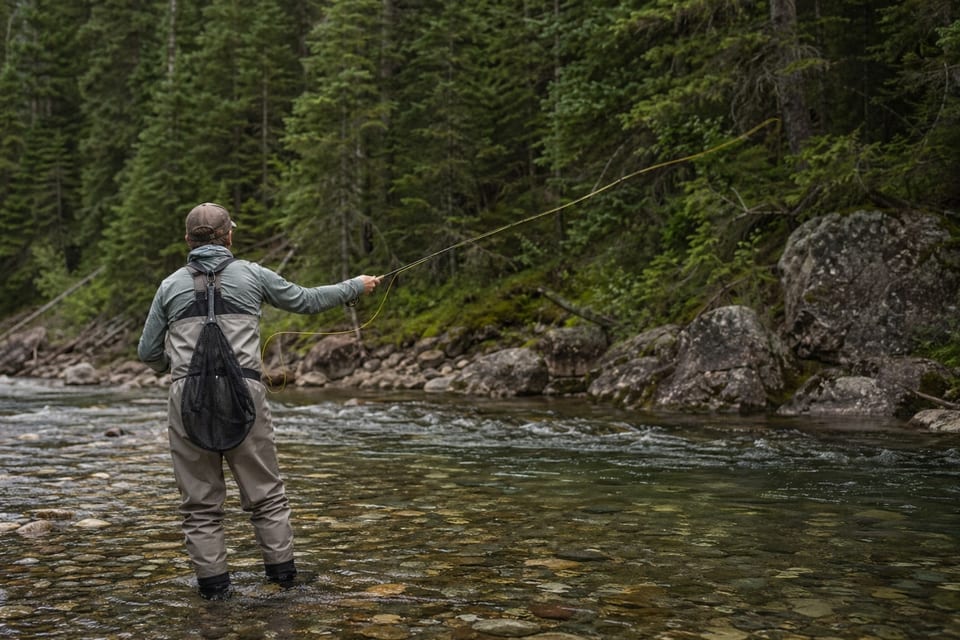
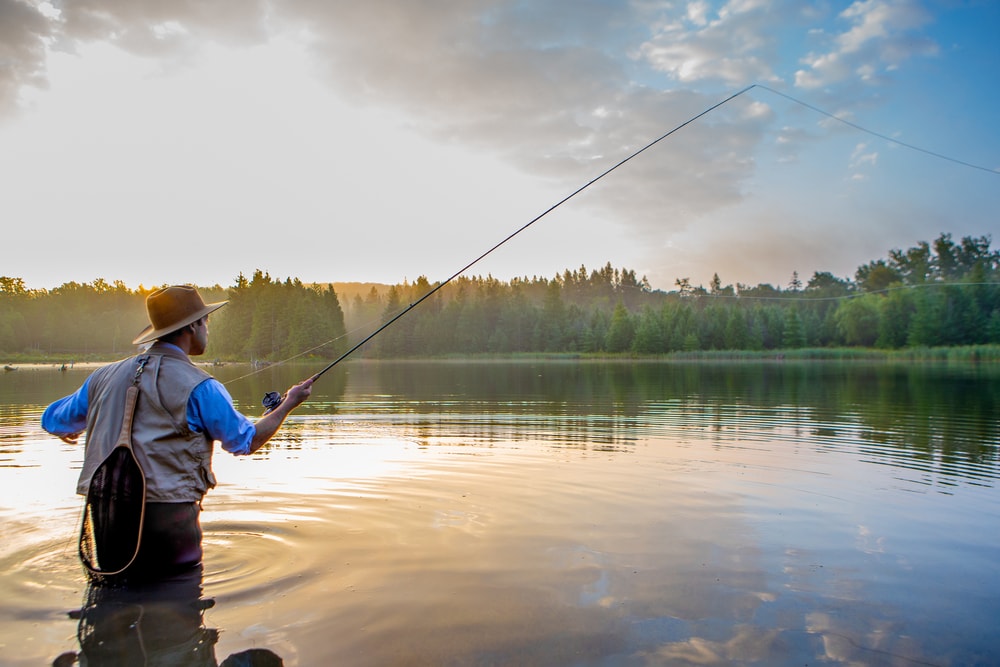
There are many types of fishing. Fly fishing is both a sport and an art form. Normally, angling is practiced by submerging natural bait or in order to entice fish to bite. Fly fishing techniques are used to present artificial lures, called flies, on the surface of the water. So- how does fly fishing work?
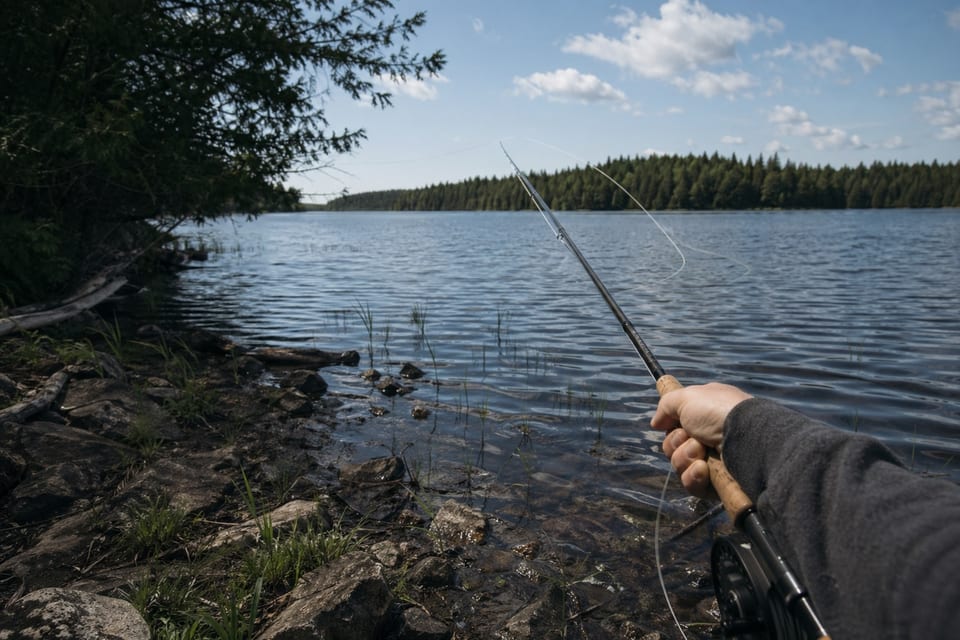
In fly fishing, the mechanically simple reel is built to efficiently hold and guide the fly line. The angler strips the line in order to give the fly fishing bait natural movement and initially hook the fish. Further, fly casting requires just as much skill as reeling in the catch.
Regular fishing lures are heavy, and made from lead, iron, or steel. Fly lures are made with natural, lightweight fibers. Feathers, cotton thread, and deer hair (bucktail) are all commonly used to make flies. Flies are constructed in a way to mimic insects and larvae floating on the surface. The hooks are unbarbed and much smaller than regular J or circle hooks.
Normal fishing reels fall under two categories- conventional or spinning. These reels are designed to winch fish up to the surface. Fly fishing reels are their own category.
You May Also Like: 20 Most Important Fish In Lake Michigan: Native And Introduced
Fishing Terms
Fly Fishing Rod
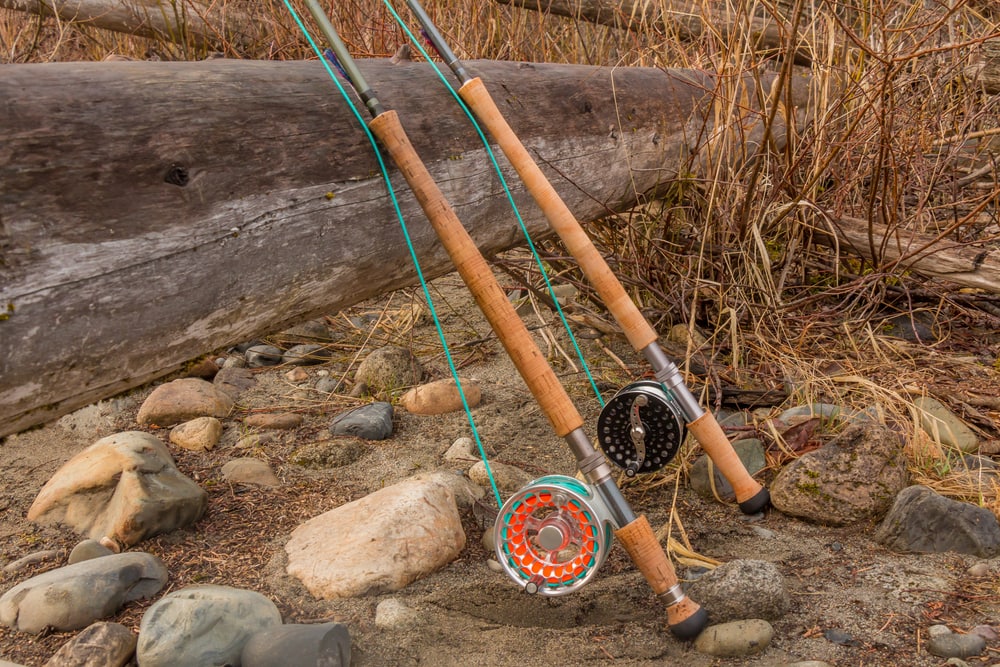
A specially made fishing rod, about 6-9 feet long, that is very flexible and lightweight. There are different weight classes, up to 10wt, depending on the type of fishing and body of water.
Fly Reel
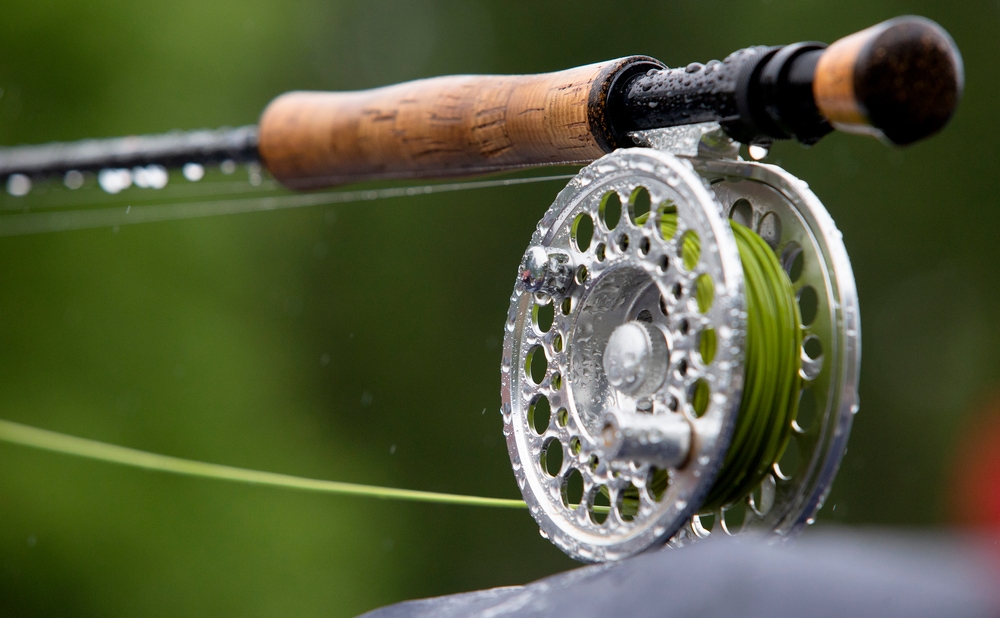
A fishing reel crafted to hold fly lines much thicker in diameter than regular fishing line. The fly reel has simpler mechanics than conventional or spinning reels.
Fly Line
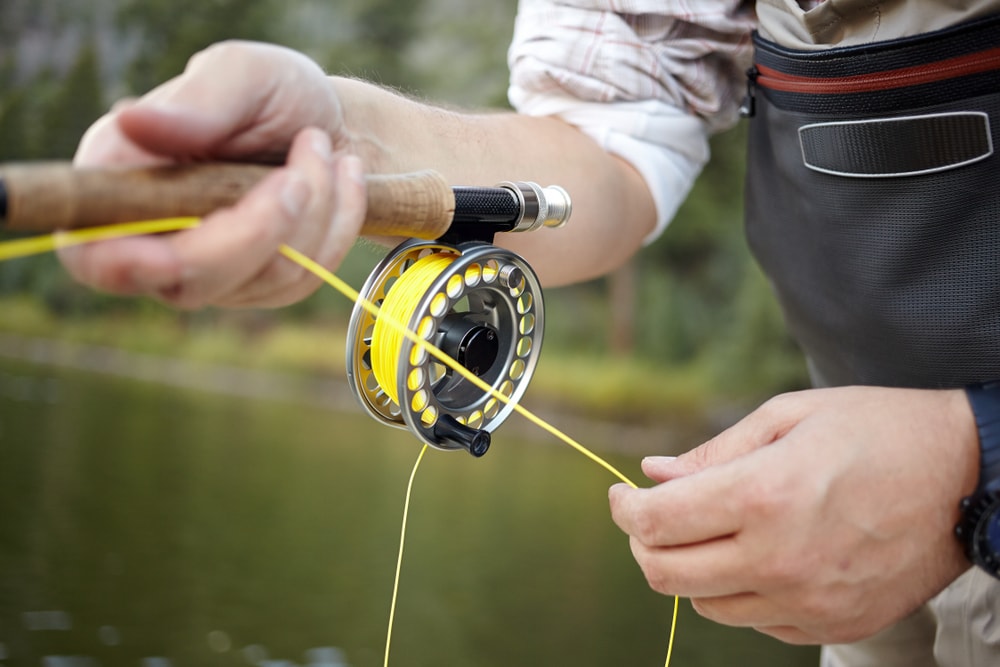
Fly lines are an amazing innovation in fishing technology. They are made in order to float on the surface and keep the lure delicately resting while allowing natural movement. Some fly line manufacturers have found a way to mix tiny bubbles into their fly line coating. The core of the fly line is what the tensile strength ratings are based off of.
Tippet
The conventional fishing equivalent to a leader. Tippet is fine diameter fly line that is attached to the fly line and a fly lure is attached at the end.
Cast
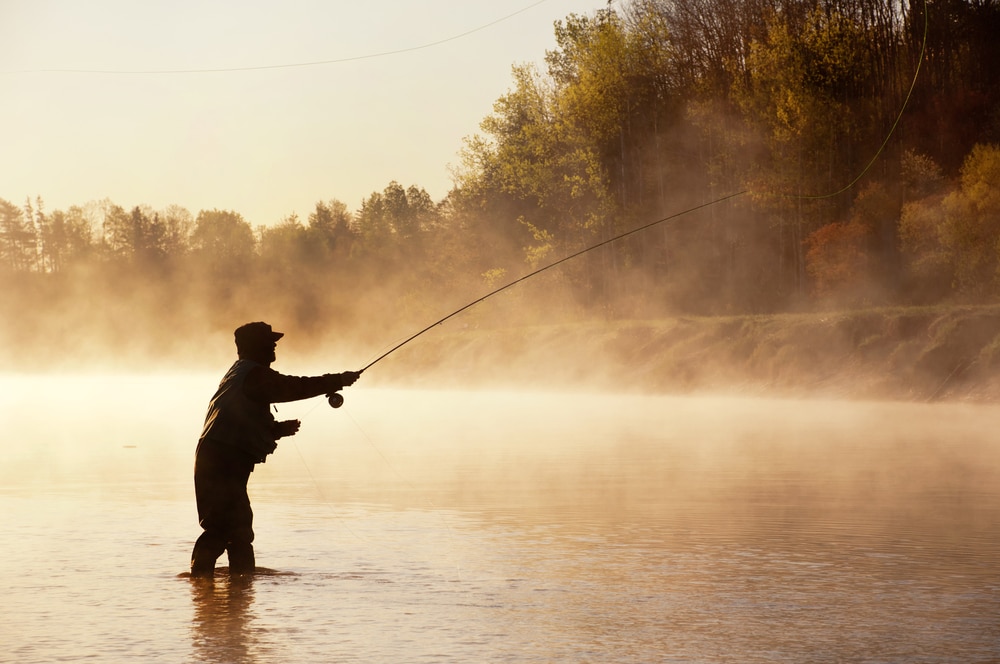
The act of delicately and accurately tossing the lured end of the fly line in order to present it to hungry fish. There are many different kinds of casting techniques to learn and master.
Creel
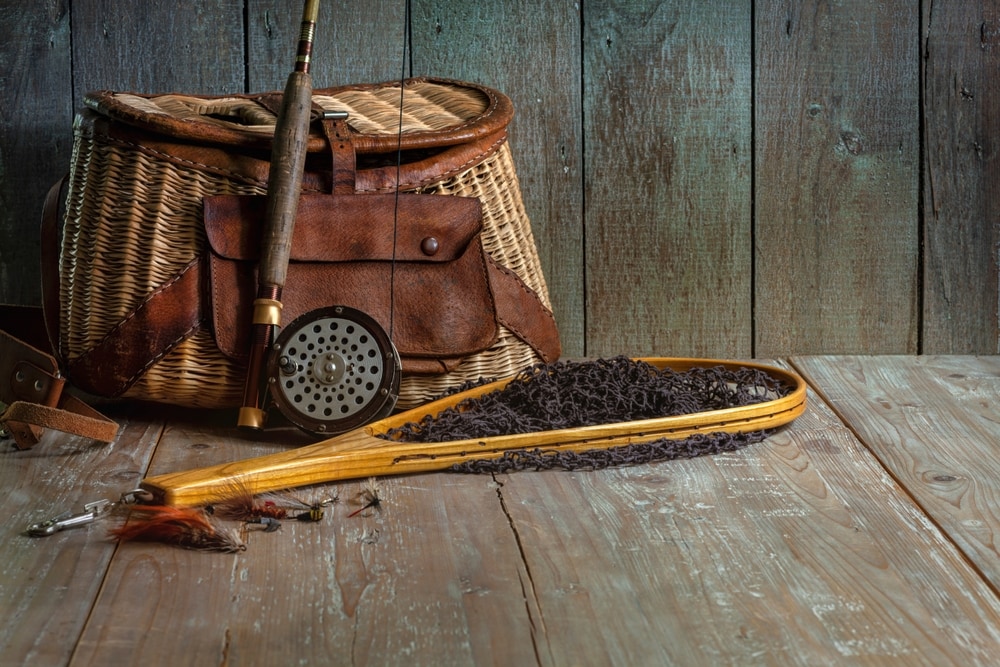
A bag or basket secured to the angler that allows them to collect and preserve their catch while continuing to fish. My father always told me to never come home with an empty creel, either fill it with fish or trash. Always leave the fishing spot better than you found it.
Waders
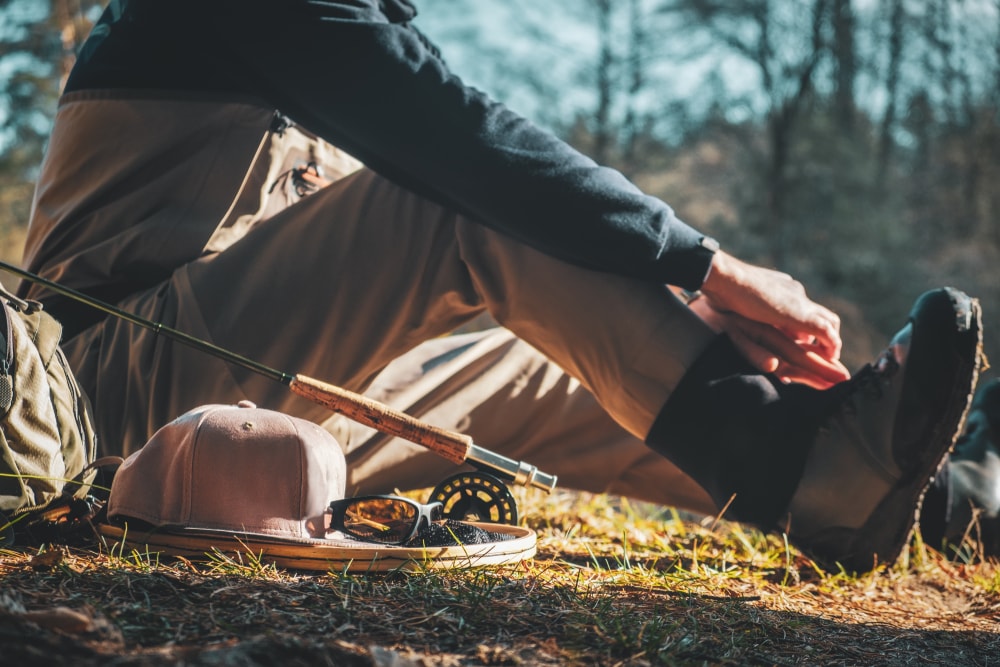
Outerwear that keeps fishermen warm and dry while fishing in water chest deep or shallower. Waders come in bibs that come all the way to the chest or pant waders for shallow fishing. I prefer neoprene waders.
Strip
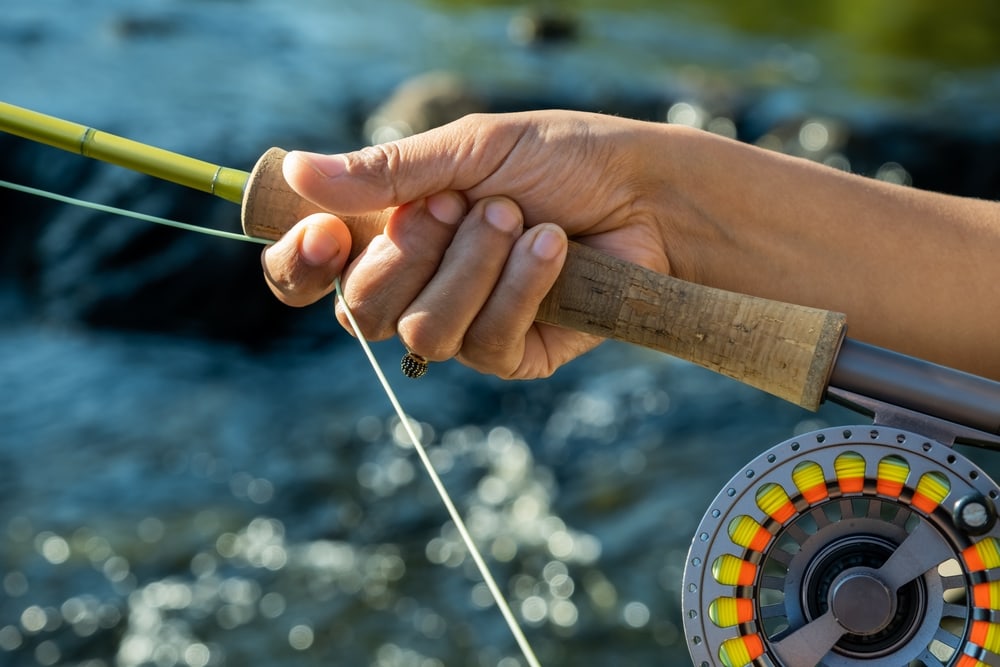
The act of pulling the fly line through your fingers in order to give the lure action instead of reeling the line in. This motion is used when either setting the hook or moving the bait.
Line Mending
You will notice that when you strip the line, it starts to tangle at your feet (or on the water if you’re wading). In order to keep the line organized and untangled, you must mend it by carefully separating the line after it is off the reel.
Riser
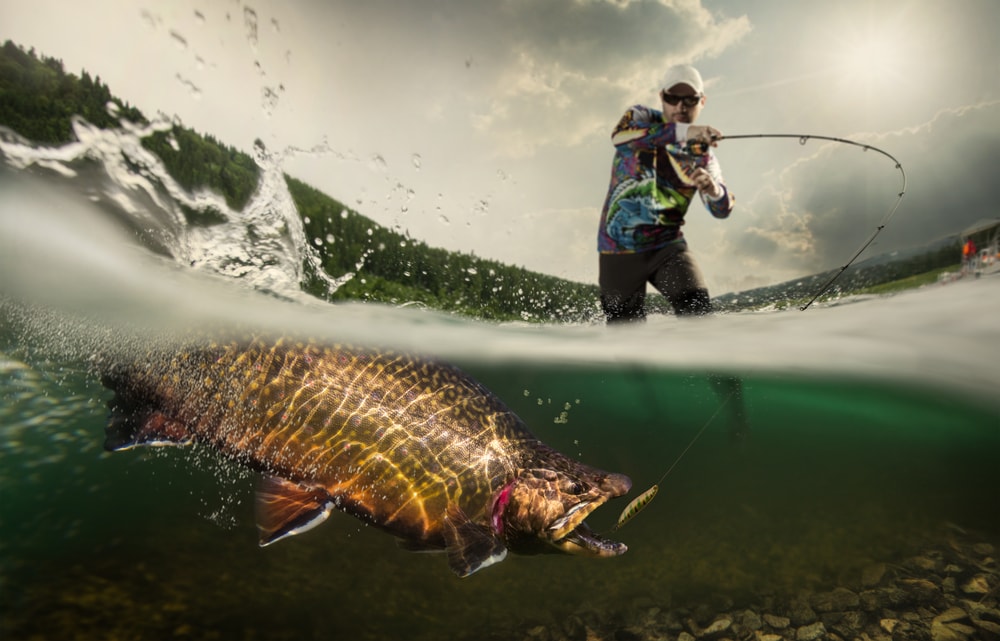
A telltale sign the fish are hungry. They rise to the surface, mouth open, ready to strike. You may see a small wake radiating from the rising fish.
History
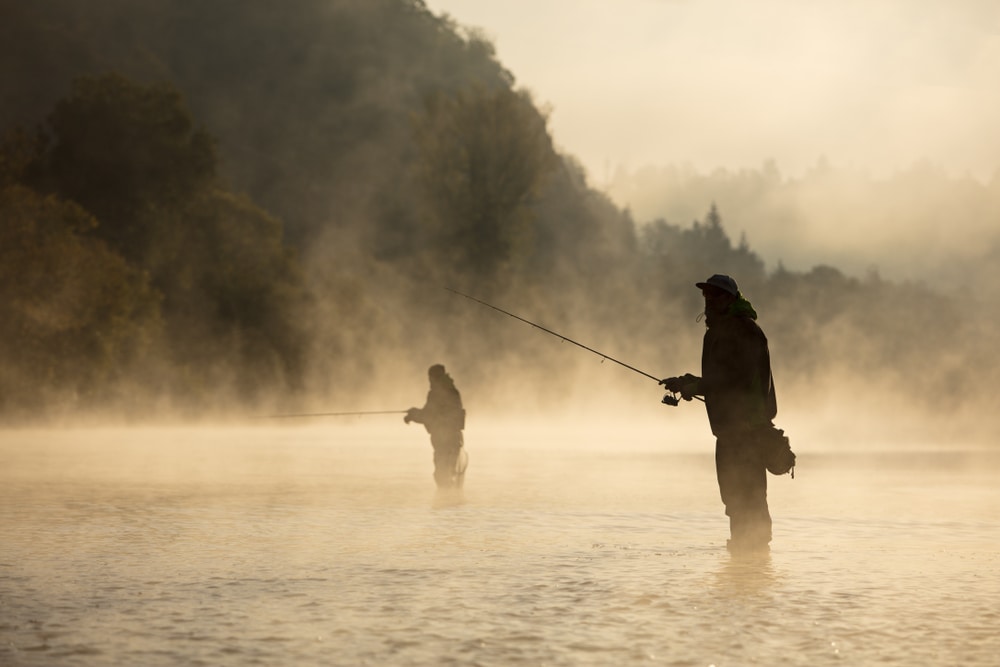
2nd Century Romans were believed to be the first fly fisherman on record. Fly fishing origins in the morden sense date back to the 1500’s in the British Isles. Settlers migrating to America brought the tradition over to the New World. Some records indicate Native Americans learned to fly fish during this period.
In the early 1800’s fly fishing began to take hold of the angling world after being introduced by european settlers 200 years prior.
As Americans began to explore the west and settle, they looked to fly fishing in order to source food from the rivers they were following. Fur trappers were known to carry fly fishing gear along side their trapping eqiupment.
In 1846, the first bamboo fly fishing rod was built and thus a fishing revolution was born. After that, silk fly lines were tested out and became a popular combination. By the late 1800’s, fly fishing had become an esteemed past time for wealthy east coast anglers.
By 1920, fiberglass fly fishing rods and synthetic fly lines were widely available. Famous naturalists like John Muir, Theodore Roosevelt, and Ernest Heminway took up fly fishing.
Within the 20th century, movies like “A River Runs Through It” and social media have catapulted fly fishing into the mainstream.
You May Also Like: 15 Florida Freshwater Fish: Photos And Facts
Gear
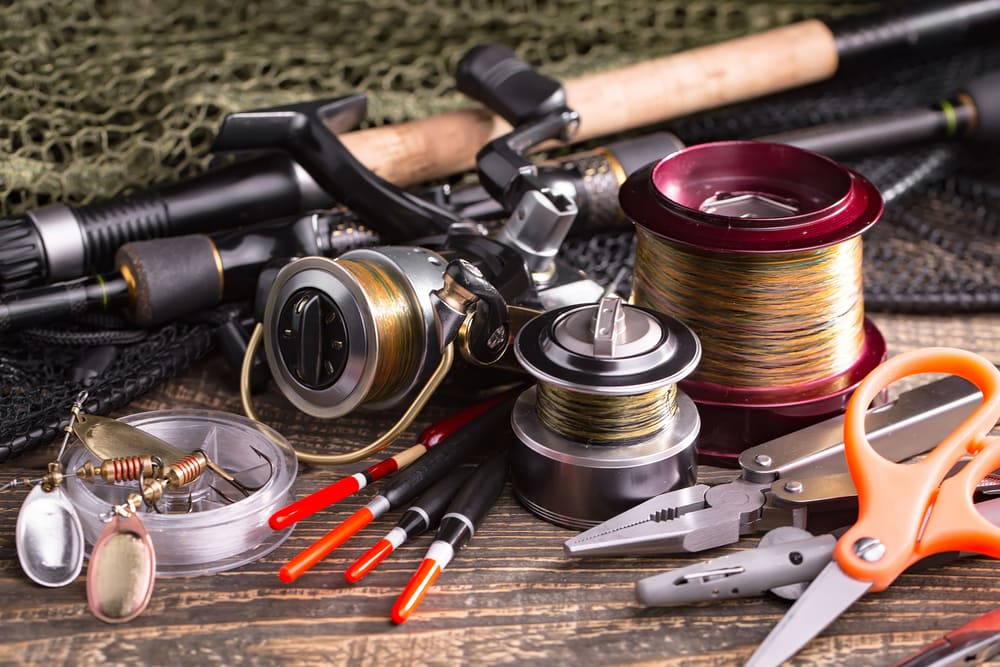
There are three basic tools you need to fly fish- rods, reels, and flies. After that, you can begin to master your casting and fishing techniques.
Rods
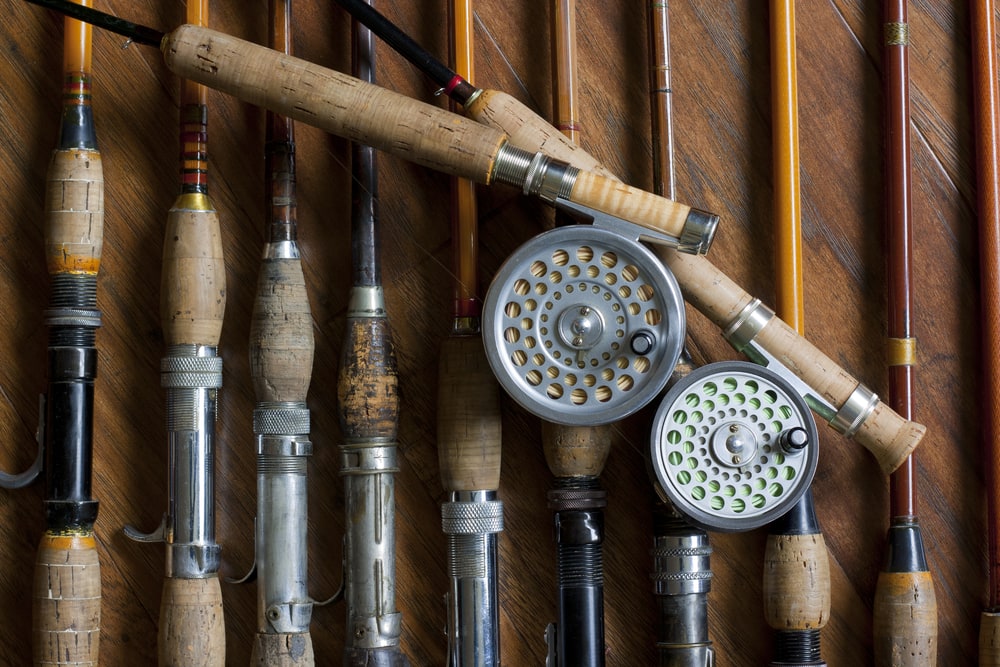
Fly fishing rods come in many different lengths and weights. Different sized rods are used for different fish. For trout and salmon fishing, the most common fly fishing rod is a 3#-7# and 6-9 feet long.
Reels
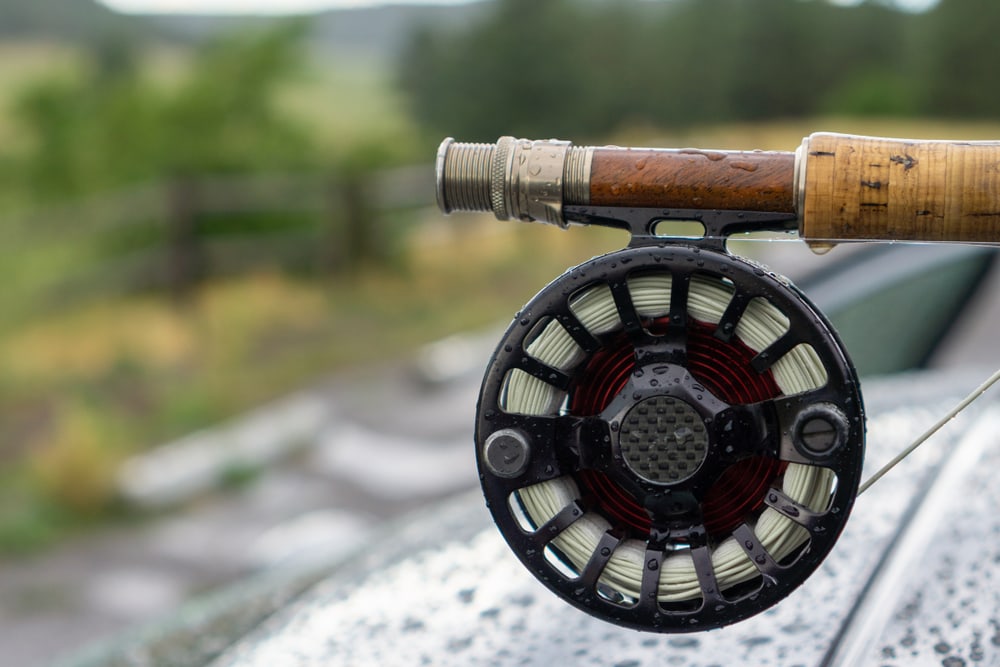
Reels for fly fishing are specific to the method. The fly reel is made not only to gather the fly line, or backing, but also provides balance. Fly reels are circular and do not have a large handle. Fly fishing reels should be chosen based on the weight of the rod.
Flies
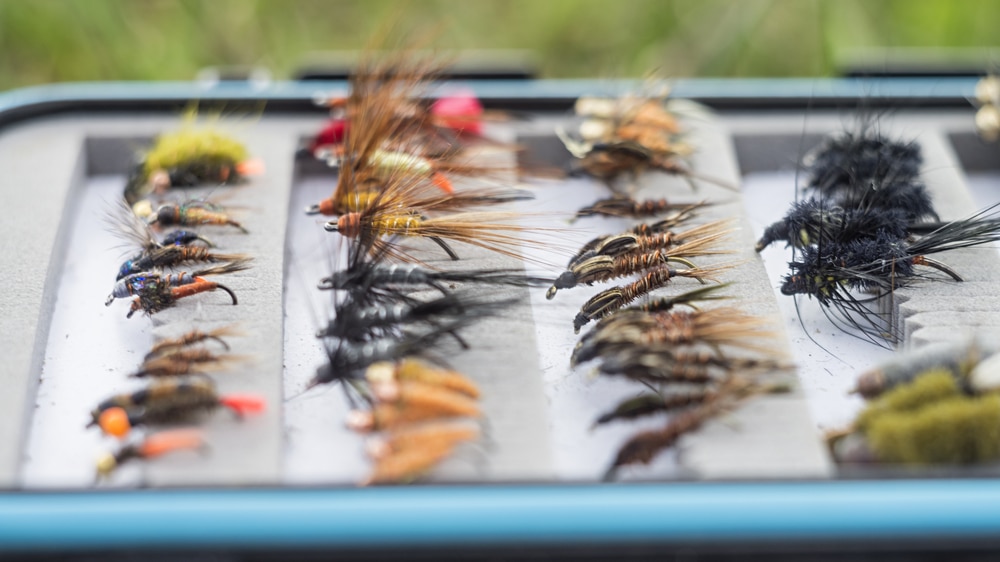
Flies for fly fishing come in an almost infinite array of sizes, colors, weights, and materials. Flies mimic insects or larvae. Anglers strive to match their fly choice with the hatching insects of the season. There are three sizes of flies-midges,dry flies and streamers. Wet flies and streamers are heavier and absorb more water, looking bigger.
Hairs, feathers. Fur, and fibers are all wound together around the delicate hook. They’re tied and bound in ways that look like wings, legs, and insect offspring. Fly tying is considered an artform in and of itself.
Casting and Technique
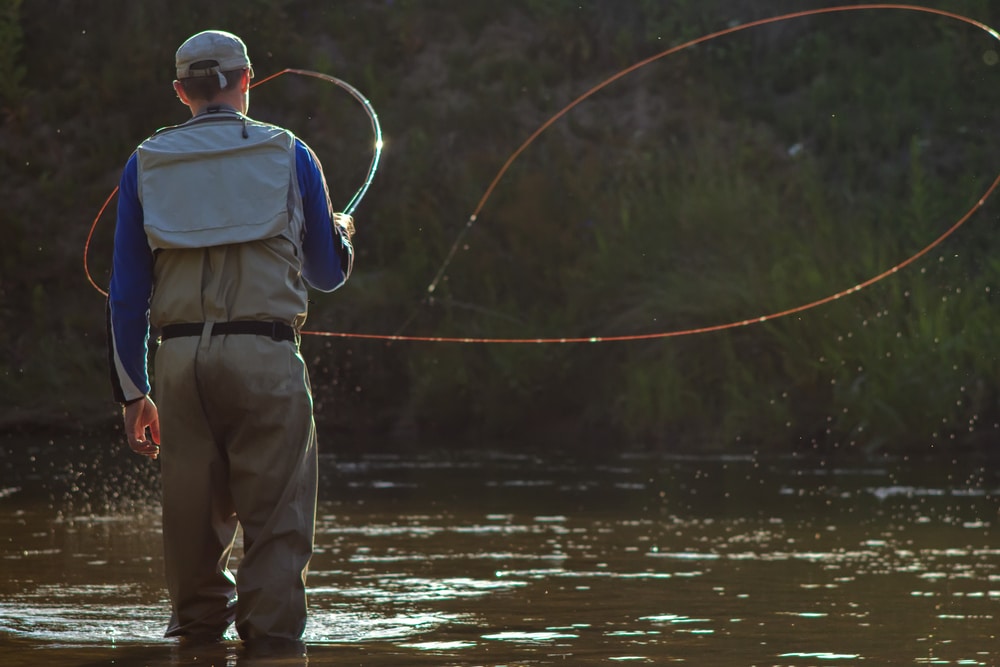
Learning how to fly fish requires a lot of practice. There are countless ways of casting but the most important is the one that you’re most comfortable with. The easiest way to start to learn to cast a fly is to learn the basic motions.
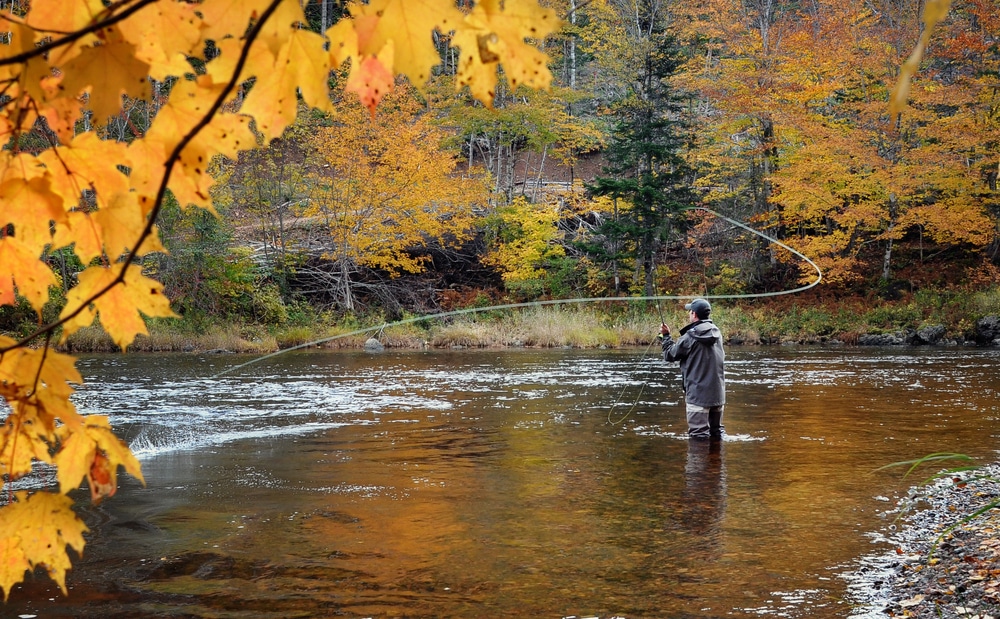
Hold your fly rod in your dominant hand. Hold it so the reel is facing down and the tip faces up. Keeping your elbow still at your side. Hold the fly line between your fingers with your other hand to keep the line from falling off the reel. Pivot your forearm at a 45 degree angle. Always strip away 4-5 pulls of line from the reel before casting. If your rod were a clock, the tip would be facing 12 o’clock. Flick your wrist so the tip flicks back and forth between 12 and 2’ o’clock. It is also helpful to imagine you’re arm is an opening and closing door. Keep your wrists straight.
If you do this successfully, the line will glide through the rod tip, back behind you, and then back in front. After a few casts, you will learn to gently lay the fly on the water.
Beginners should practice in waters that are free of overhanging limbs and debris in order to avoid excessive frustration and/or loss of gear.
You May Also Like: Top 20 Must-See Spectacular Waterfalls In Tennessee + Chart With Pics
What is Fly Fishing FAQ
What is angling?
Angling is the action or sport of fishing with hook and line.
What kinds of fish can you catch?
Trout, catfish, salmon and even billfish can be caught on fly.
How do I get into fly fishing?
Whether you live near salt or freshwater, there are sure to be experienced fly anglers. Look for local clubs. Local tackle shops and fishing piers also provide a significant amount of resources. There are also specialized fly fishing shops with all the gear you need in one place.
Do I have to keep my catch?
No, you can always catch and release. This is a great way to preserve precious natural resources for everyone to enjoy for many years to come. However, harvesting fish within your local fishing regulations is a sustainable and healthy way to procure a tasty meal.
Where do people fly fish?
Everywhere there is water with hungry fish, anglers can cast a fly. Lakes, rivers, and streams are the most popular freshwater fly fishing destinations.