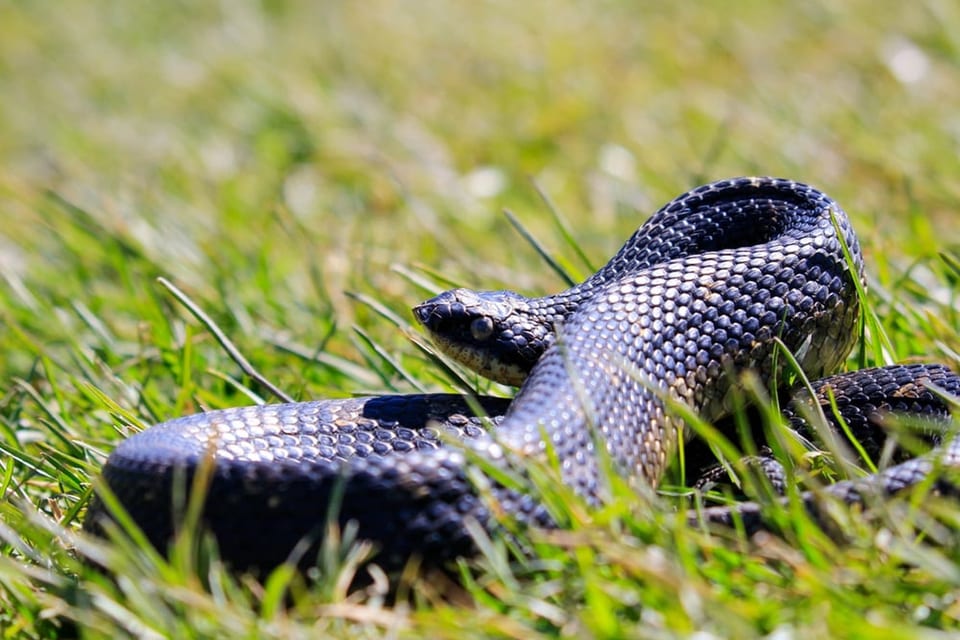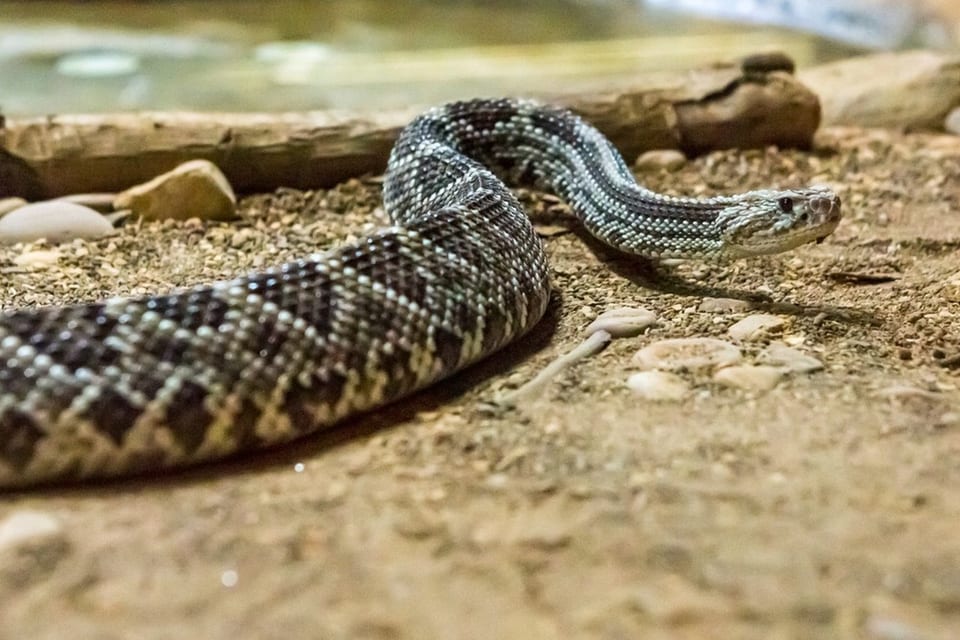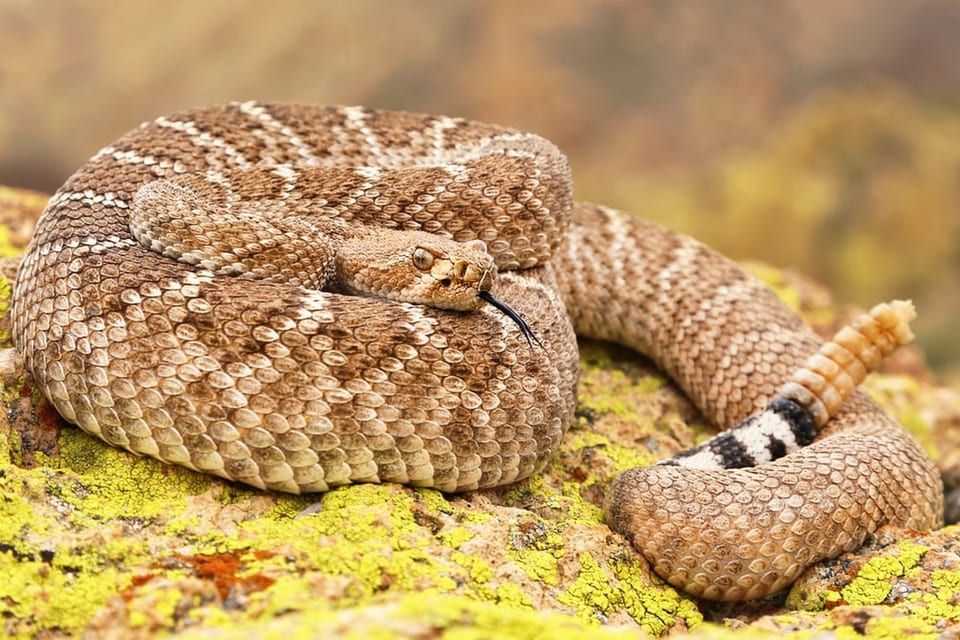
Texas has one of the broadest snake rosters in the country because it is several habitats stitched together: Piney Woods, Gulf marsh, Hill Country limestone, South Texas brush, Panhandle grassland, and Trans-Pecos desert mountains.
Eastern Texas brings copperheads, cottonmouths, timber rattlesnakes, watersnakes, mud snakes, and rough greensnakes. Central, western, and southern Texas add diamondbacks, rock rattlesnakes, coachwhips, patch-nosed snakes, lyresnakes, indigos, and desert specialists.
The result is a list that runs from tiny threadsnakes and black-headed snakes to giant racers, ratsnakes, kingsnakes, coral snakes, massasaugas, and some of North America’s most recognizable rattlesnakes.
Venomous snakes in Texas
Texas has several venomous snake groups, and they do not share one simple pattern. Use region, habitat, body build, and tail details before you decide whether you are looking at a copperhead, cottonmouth, coral snake, massasauga, or rattlesnake.
1. Black-tailed Rattlesnake
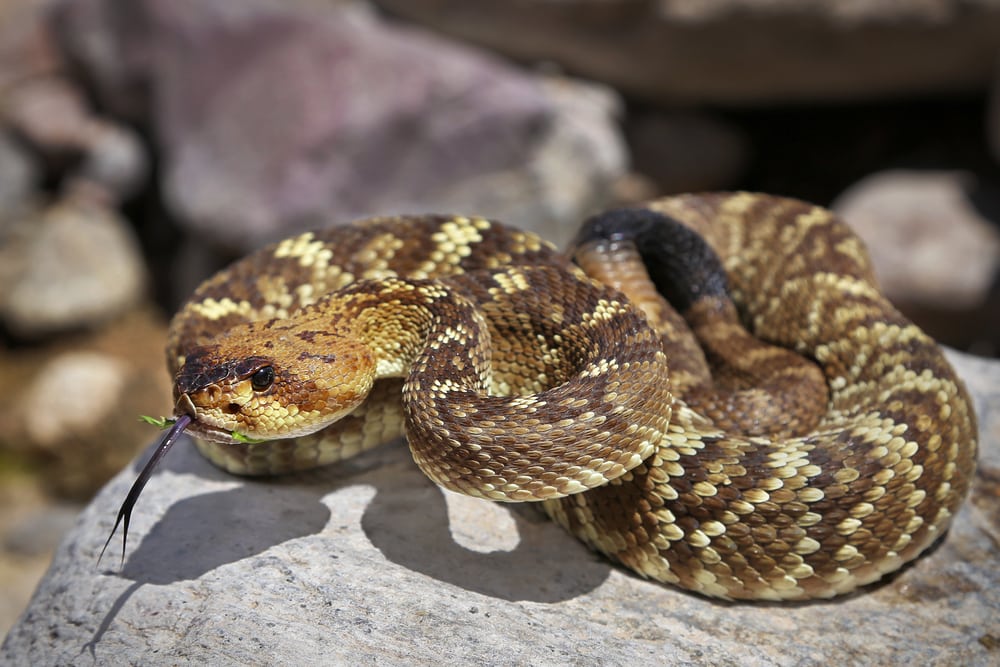
Black-tailed Rattlesnake (Crotalus molossus) is a rocky-country rattlesnake with a dark tail, rough keeled scales, a heavy head, and the usual pit-viper heat-sensing pit. Most adults are about 2-5 feet, and the setting is usually dry, broken cover in western canyons, slopes, grassland, or open woodland.
The tail is helpful when it is visible, but the cleaner field call is the whole package: stout rattlesnake build, dark tail, and rugged western habitat. Other rattlesnakes share the same basic head shape, so range and terrain do real ID work here.
| Key detail | What to look for |
|---|---|
| Adult size | usually about 2-5 feet |
| Fast ID cue | keeled scales, heat-sensing pit, heavy head, and a rattle or button on the tail |
| Typical Texas habitat | desert flats, rocky slopes, grasslands, brush country, canyon edges, and open woodland |
| Texas range | western Texas and Trans-Pecos rock country; compare with other dark-tailed rattlesnakes |
| Bite / venom note | Venomous dark-tailed rattlesnake; heavy body and serious bite risk |
2. Broad-banded Copperhead
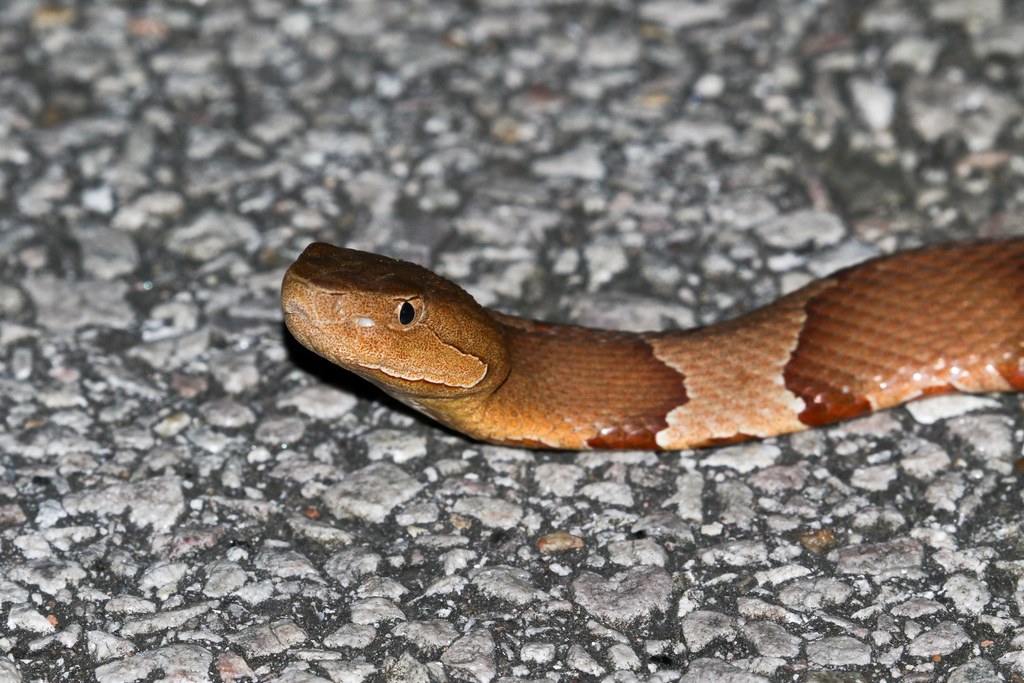
Broad-banded Copperhead (Agkistrodon laticinctus) has the classic copperhead build: a coppery head, a thick 24-36 inch body, and hourglass bands that pinch along the spine. Its range falls mostly in the east, along the Gulf Coast, and around wetter river systems.
Leaf litter is where this snake disappears. Hardwood forests, wooded ravines, rocky slopes, and brushy field edges can make those bands hard to see until the snake shifts position.
| Key detail | What to look for |
|---|---|
| Adult size | usually 24-36 inches |
| Fast ID cue | coppery head, heavy body, and hourglass crossbands that narrow along the spine |
| Typical Texas habitat | leaf-littered hardwood forests, rocky slopes, wooded ravines, and brushy field edges |
| Texas range | mainly eastern Texas, the Gulf Coast, and wetter river systems |
| Bite / venom note | Venomous pit viper; camouflaged leaf-litter snake, serious bite risk |
3. Eastern Black-tailed Rattlesnake
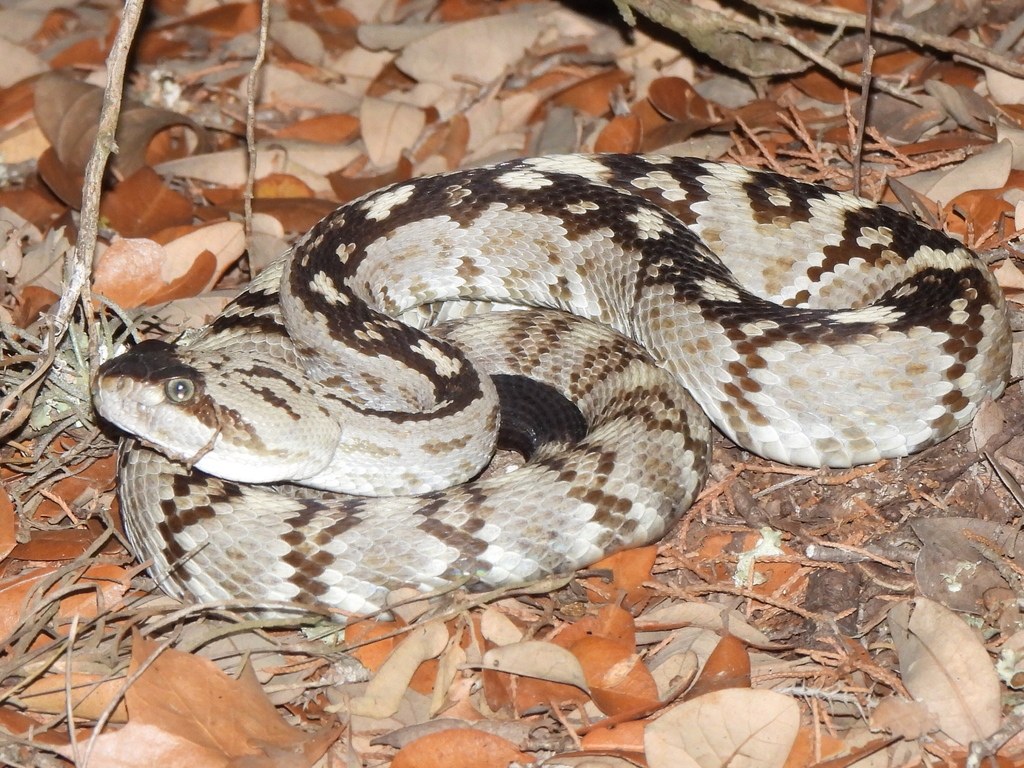
Eastern Black-tailed Rattlesnake (Crotalus ornatus) is another dark-tailed western rattlesnake, usually about 2-5 feet, with keeled scales, a broad head, a facial pit, and a rattle or button. It fits rocky slopes, canyon edges, brush country, grasslands, desert flats, and open woodland.
Start with the rattlesnake features, then narrow the ID by range and terrain. A dark tail in broken, rocky country is more useful than any single body color.
| Key detail | What to look for |
|---|---|
| Adult size | usually about 2-5 feet |
| Fast ID cue | keeled scales, heat-sensing pit, heavy head, and a rattle or button on the tail |
| Typical Texas habitat | desert flats, rocky slopes, grasslands, brush country, canyon edges, and open woodland |
| Texas range | central and western Texas where rocky slopes, brush, and canyon country fit |
| Bite / venom note | Venomous dark-tailed rattlesnake; heavy body and serious bite risk |
4. Eastern Copperhead
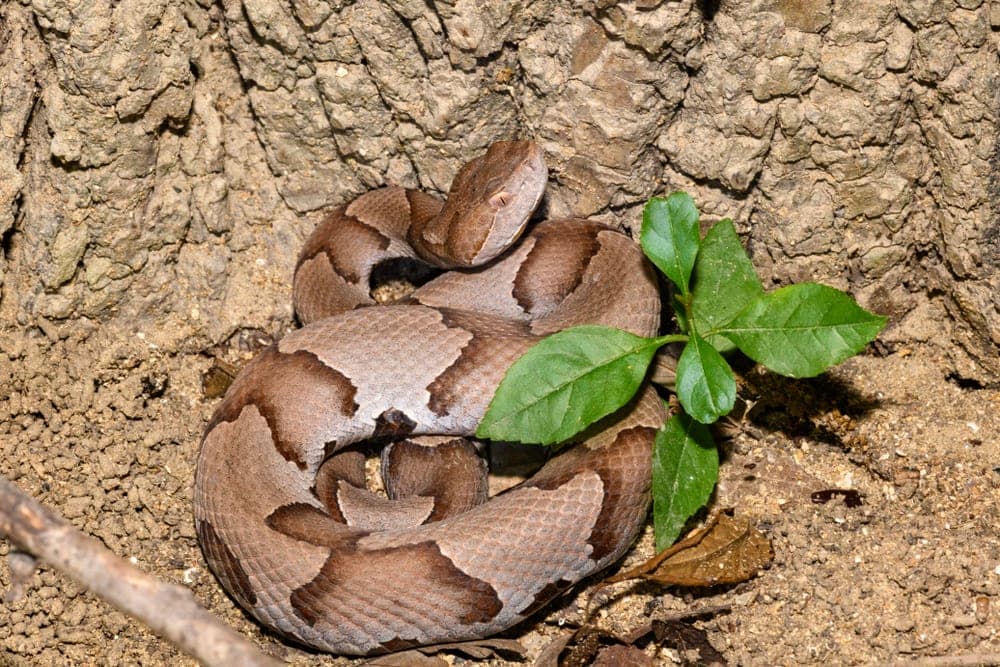
Eastern Copperhead (Agkistrodon contortrix) is the copperhead to expect around eastern and Gulf Coast river country. Adults are usually 24-36 inches, with a coppery head and hourglass crossbands that narrow along the back.
The setting matters as much as the bands. Leaf-littered hardwoods, rocky slopes, wooded ravines, and brushy edges give this snake the kind of cover that makes it easy to overlook.
| Key detail | What to look for |
|---|---|
| Adult size | usually 24-36 inches |
| Fast ID cue | coppery head, heavy body, and hourglass crossbands that narrow along the spine |
| Typical Texas habitat | leaf-littered hardwood forests, rocky slopes, wooded ravines, and brushy field edges |
| Texas range | mainly eastern Texas, the Gulf Coast, and wetter river systems |
| Bite / venom note | Venomous pit viper; camouflaged leaf-litter snake, serious bite risk |
5. Mohave Rattlesnake
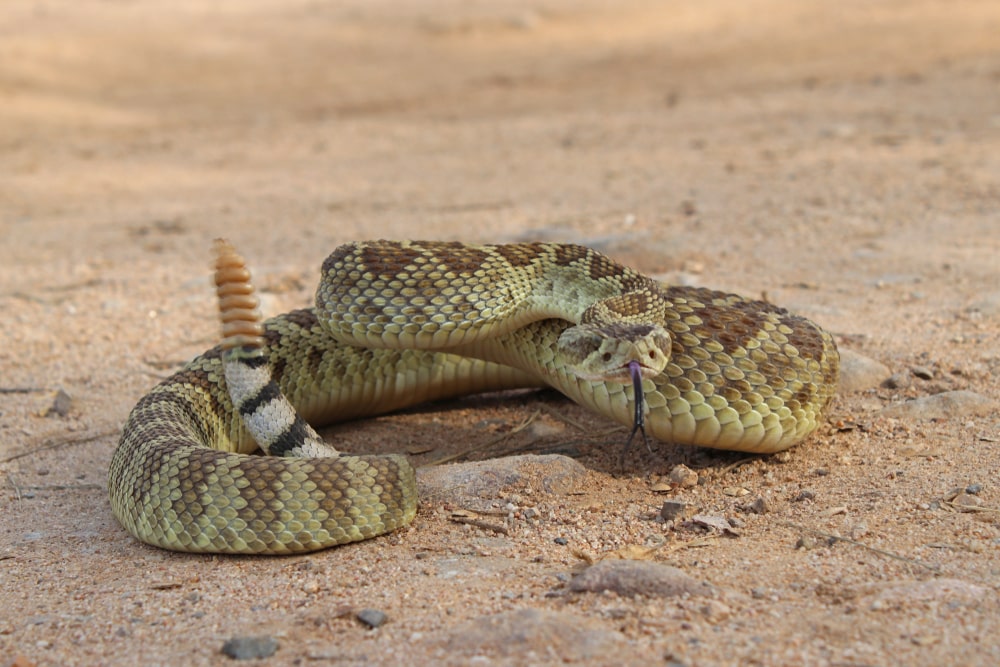
Mohave Rattlesnake (Crotalus scutulatus) belongs on the Trans-Pecos shortlist, especially around rocky desert habitat in western Texas. It is a 2-5 foot rattlesnake with keeled scales, a heat-sensing pit, a heavy head, and a rattle or tail button.
Dry open country is the backdrop to keep in mind: desert flats, rocky slopes, brush country, canyon edges, grassland, and open woodland. In that setting, range helps separate it from other rattlesnakes with similar pit-viper features.
| Key detail | What to look for |
|---|---|
| Adult size | usually about 2-5 feet |
| Fast ID cue | keeled scales, heat-sensing pit, heavy head, and a rattle or button on the tail |
| Typical Texas habitat | desert flats, rocky slopes, grasslands, brush country, canyon edges, and open woodland |
| Texas range | western Texas and Trans-Pecos rocky desert or canyon country |
| Bite / venom note | Venomous Trans-Pecos rattlesnake; serious bite risk |
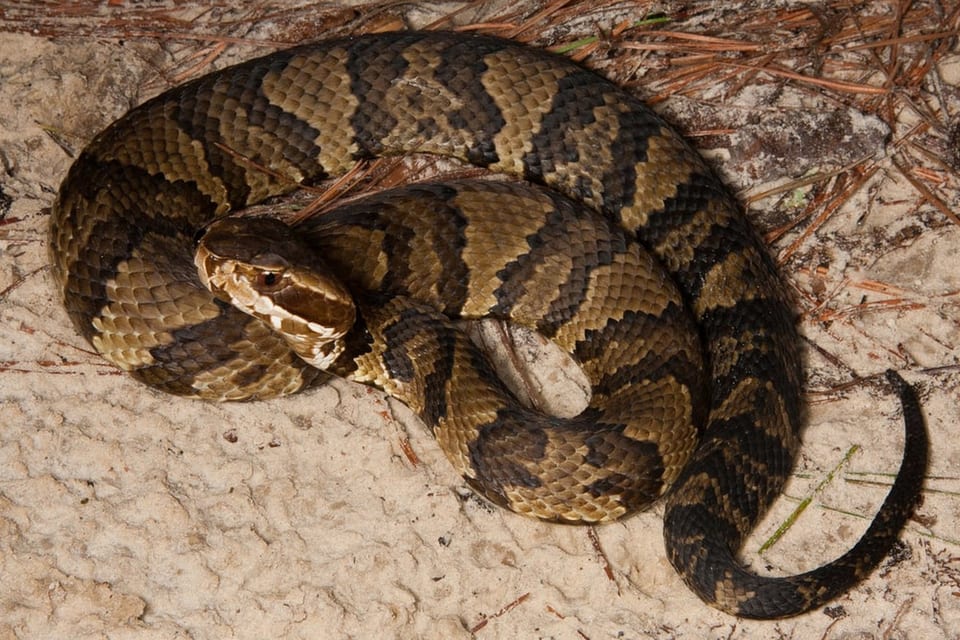
6. Northern Cottonmouth
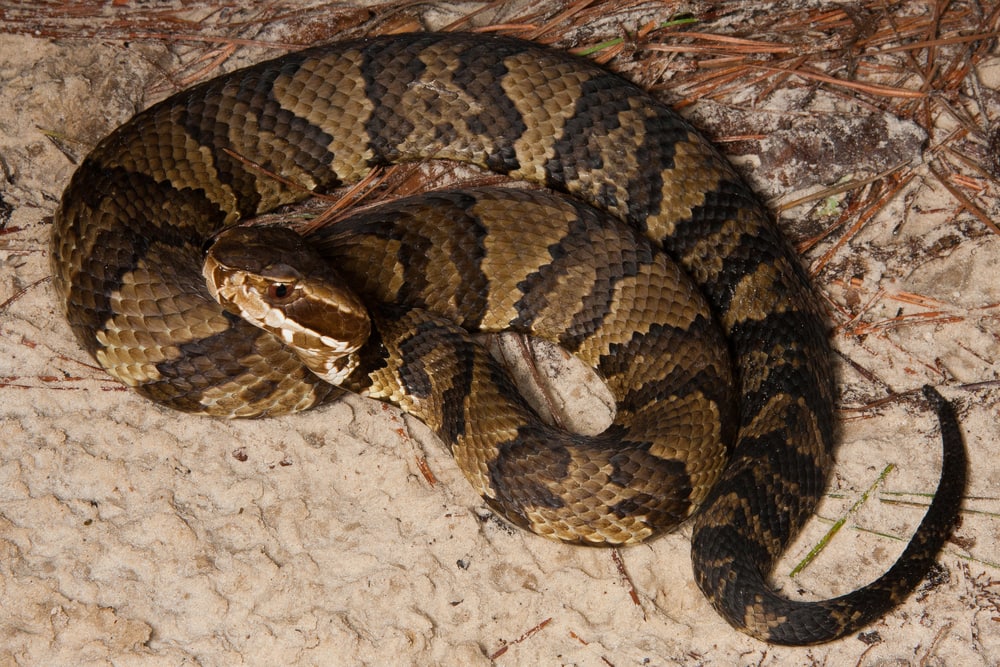
Northern Cottonmouth (Agkistrodon piscivorus) is the wet-country pit viper in this guide, tied mostly to eastern Texas, the Gulf Coast, and wetter river systems. Adults are usually 30-48 inches, with a heavy dark body, a blocky head, and the well-known white mouth display when defensive.
Habitat is the first clue before any drama starts. Swamps, marshes, ponds, cypress sloughs, river edges, and other wet cover fit this snake far better than dry uplands do.
| Key detail | What to look for |
|---|---|
| Adult size | usually 30-48 inches |
| Fast ID cue | heavy dark body near water, blocky head, and white mouth display when defensive |
| Typical Texas habitat | swamps, marshes, ponds, cypress sloughs, river edges, and other wet habitats |
| Texas range | mainly eastern Texas, the Gulf Coast, and wetter river systems |
| Bite / venom note | Venomous wetland pit viper; heavy body, serious bite risk |
7. Prairie Rattlesnake
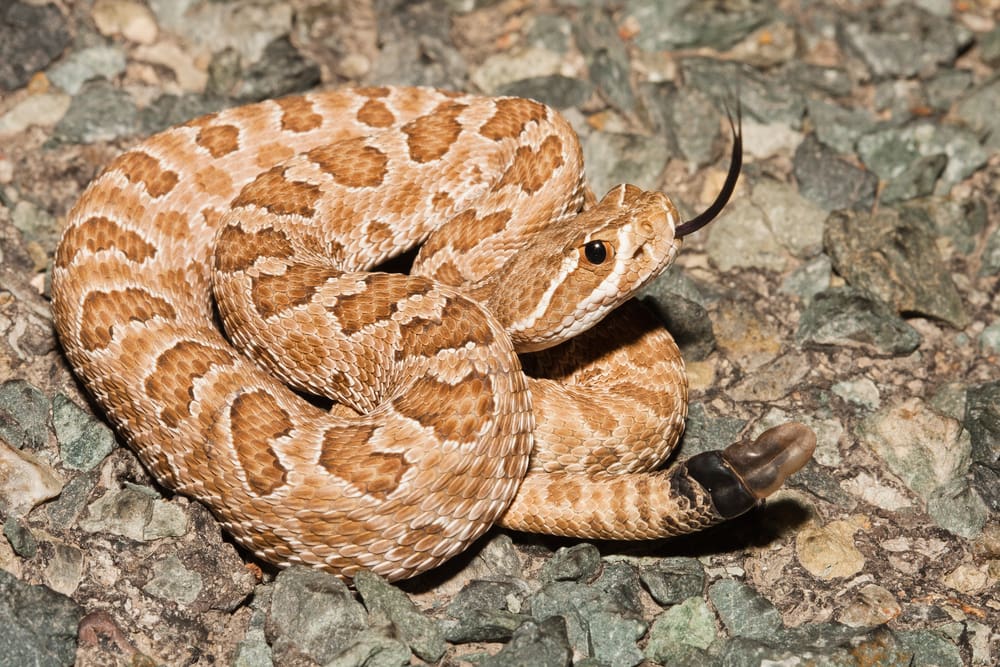
Prairie Rattlesnake (Crotalus viridis) points toward open prairie country: the Panhandle, rolling plains, and counties where grassland still dominates. It is a 2-5 foot rattlesnake with keeled scales, a heat-sensing pit, a heavy head, and a rattle or button on the tail.
The name is a helpful nudge, but the field mark is the whole package. Look for a stout pit viper in open grassland, prairie edges, brush country, or rocky openings rather than a slim, fast-moving snake.
| Key detail | What to look for |
|---|---|
| Adult size | usually about 2-5 feet |
| Fast ID cue | keeled scales, heat-sensing pit, heavy head, and a rattle or button on the tail |
| Typical Texas habitat | desert flats, rocky slopes, grasslands, brush country, canyon edges, and open woodland |
| Texas range | the Panhandle, rolling plains, or prairie counties where open grassland habitat remains |
| Bite / venom note | Venomous prairie rattlesnake; serious bite risk |
8. Pygmy Rattlesnake
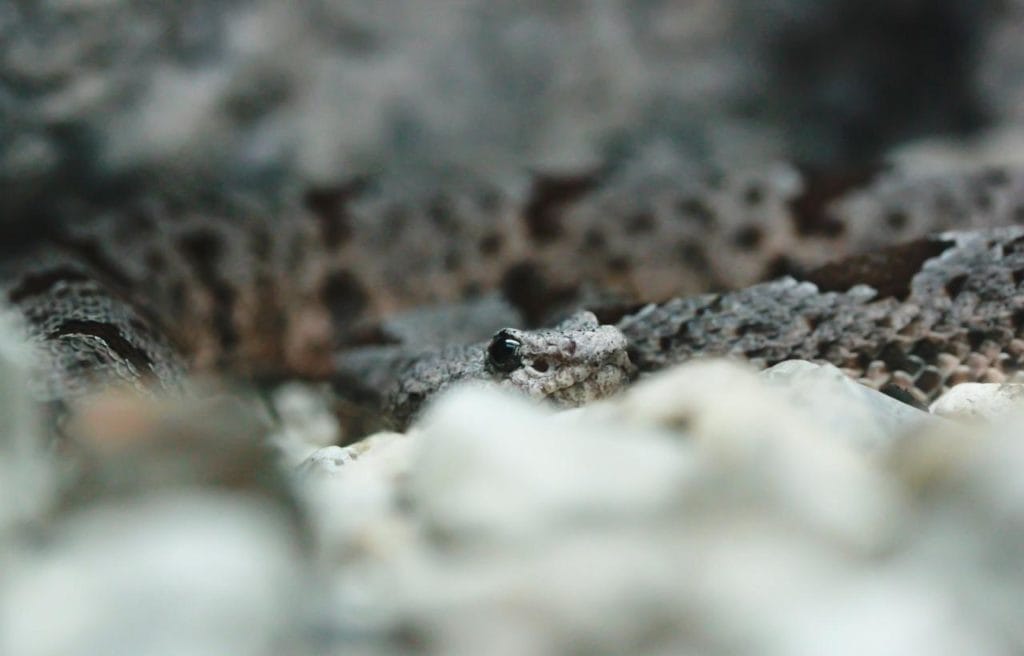
Pygmy Rattlesnake (Sistrurus miliarius) is the small rattlesnake on the venomous list, usually only 15-30 inches, with dark dorsal spots and a tiny rattle. Its range leans east, Gulf Coast, and wetter river systems.
Do not expect the tail to sound like a big western diamondback. The size, spot pattern, and small rattle are the useful clues, especially in grassy or brushy wet-edge habitat.
| Key detail | What to look for |
|---|---|
| Adult size | usually 15-30 inches |
| Fast ID cue | small rattlesnake with dark dorsal spots and a tiny rattle |
| Typical Texas habitat | desert flats, rocky slopes, grasslands, brush country, canyon edges, and open woodland |
| Texas range | mainly eastern Texas, the Gulf Coast, and wetter river systems |
| Bite / venom note | Venomous small rattlesnake; tiny rattle, serious bite risk |
9. Rock Rattlesnake
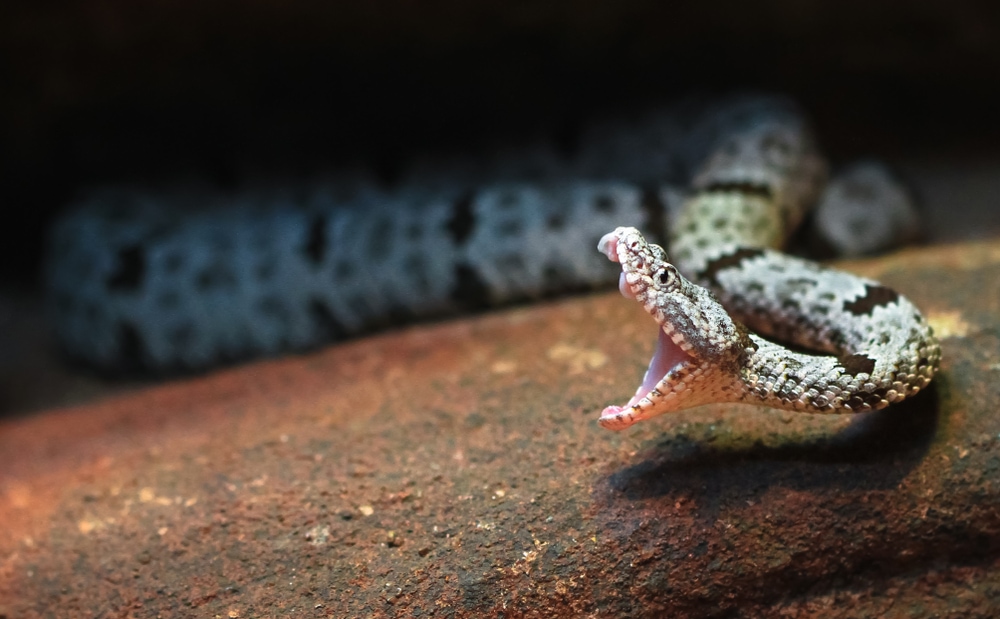
Rock Rattlesnake (Crotalus lepidus) starts with the habitat in its common name: rocky desert country, especially the Trans-Pecos and western Texas. Adults are usually about 2-5 feet, with the keeled scales, facial pit, heavy head, and rattle expected on a pit viper.
A rock-colored body can blend into canyon edges and broken slopes. Range and terrain matter here, because several rattlesnakes share the same basic head and tail equipment.
| Key detail | What to look for |
|---|---|
| Adult size | usually about 2-5 feet |
| Fast ID cue | keeled scales, heat-sensing pit, heavy head, and a rattle or button on the tail |
| Typical Texas habitat | desert flats, rocky slopes, grasslands, brush country, canyon edges, and open woodland |
| Texas range | western Texas and Trans-Pecos rocky desert or canyon country |
| Bite / venom note | Venomous rock-country rattlesnake; serious bite risk |
10. Timber Rattlesnake
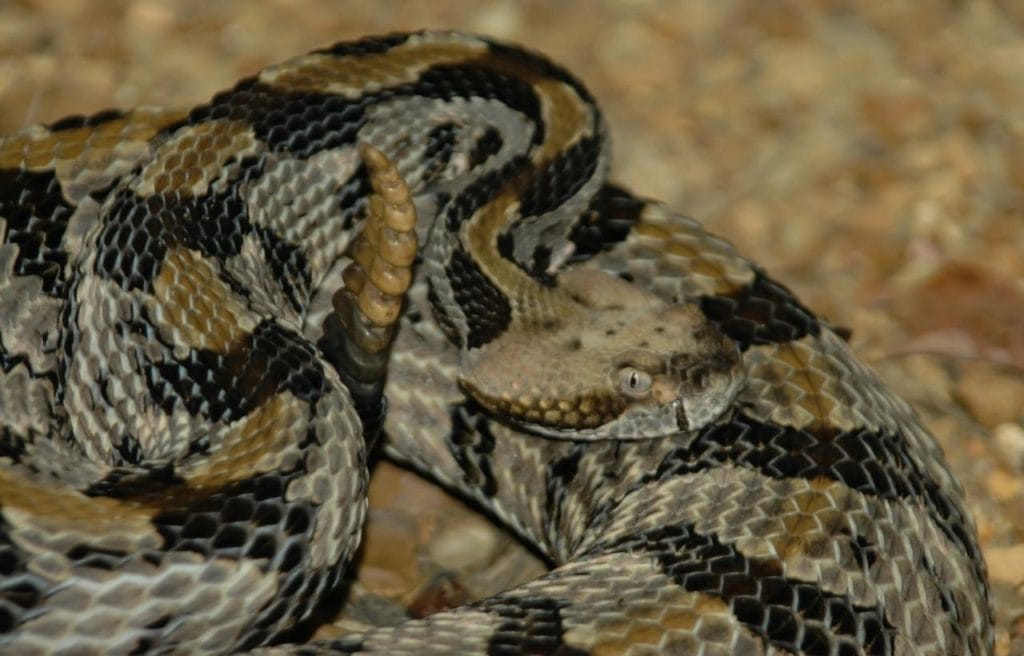
Timber Rattlesnake (Crotalus horridus) is the big, heavy eastern rattlesnake with dark chevrons or crossbands and a dark tail. Its range points mainly to eastern, Gulf Coast, and wetter river-system country.
Use the dark tail and heavy body before leaning on a single habitat phrase. This is a rattlesnake ID where build, tail color, and regional range carry the most weight.
| Key detail | What to look for |
|---|---|
| Adult size | usually about 2-5 feet |
| Fast ID cue | heavy body, dark chevrons or crossbands, and a dark tail |
| Typical Texas habitat | desert flats, rocky slopes, grasslands, brush country, canyon edges, and open woodland |
| Texas range | mainly eastern Texas, the Gulf Coast, and wetter river systems |
| Bite / venom note | Venomous timber rattlesnake; heavy-bodied pit viper, serious bite risk |
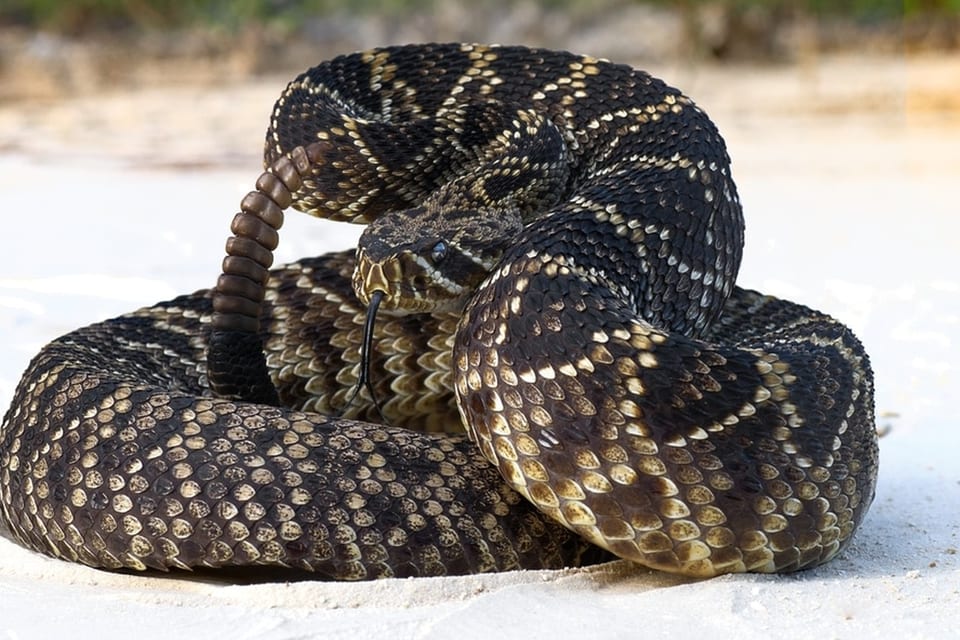
11. Western Diamond-backed Rattlesnake
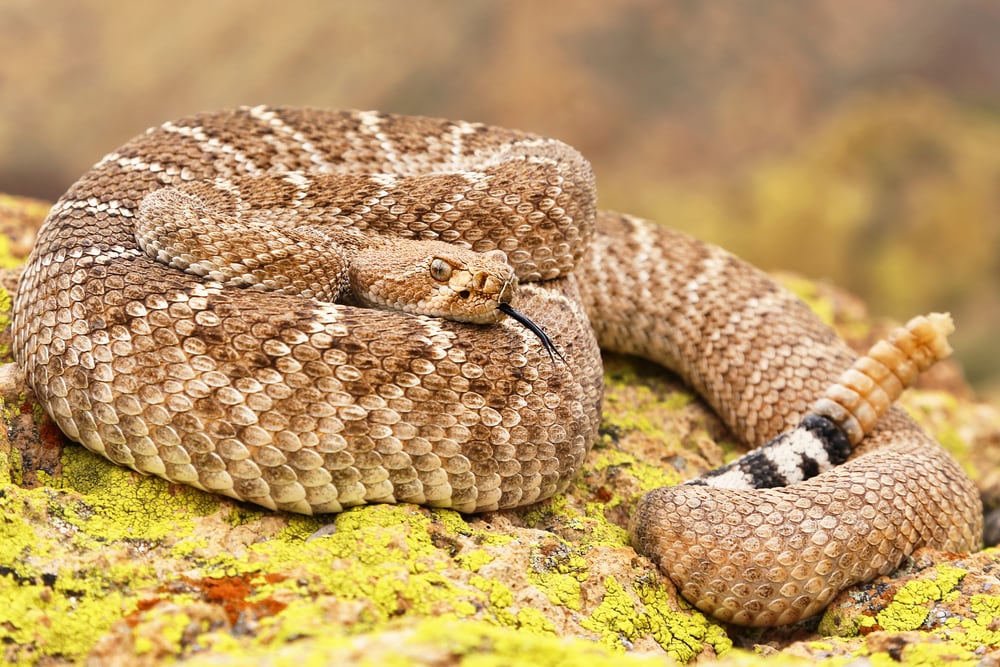
Western Diamond-backed Rattlesnake (Crotalus atrox) is the rattlesnake most people picture first: large-bodied, diamond-backed, and finished with bold black-and-white tail bands before the rattle. Adults are usually about 2-5 feet, though big individuals can look much more imposing in the field.
The tail bands are the giveaway when they are visible. In mixed desert flats, grasslands, brush country, rocky slopes, canyon edges, and open woodland, that banded tail helps separate it from other stout rattlesnakes.
| Key detail | What to look for |
|---|---|
| Adult size | usually about 2-5 feet |
| Fast ID cue | diamond-shaped back blotches and bold black-and-white tail bands before the rattle |
| Typical Texas habitat | desert flats, rocky slopes, grasslands, brush country, canyon edges, and open woodland |
| Texas range | widespread through western, central, and southern Texas; scarcer in the wettest east |
| Bite / venom note | Venomous diamondback; large-bodied rattlesnake, serious bite risk |
12. Western Massasauga
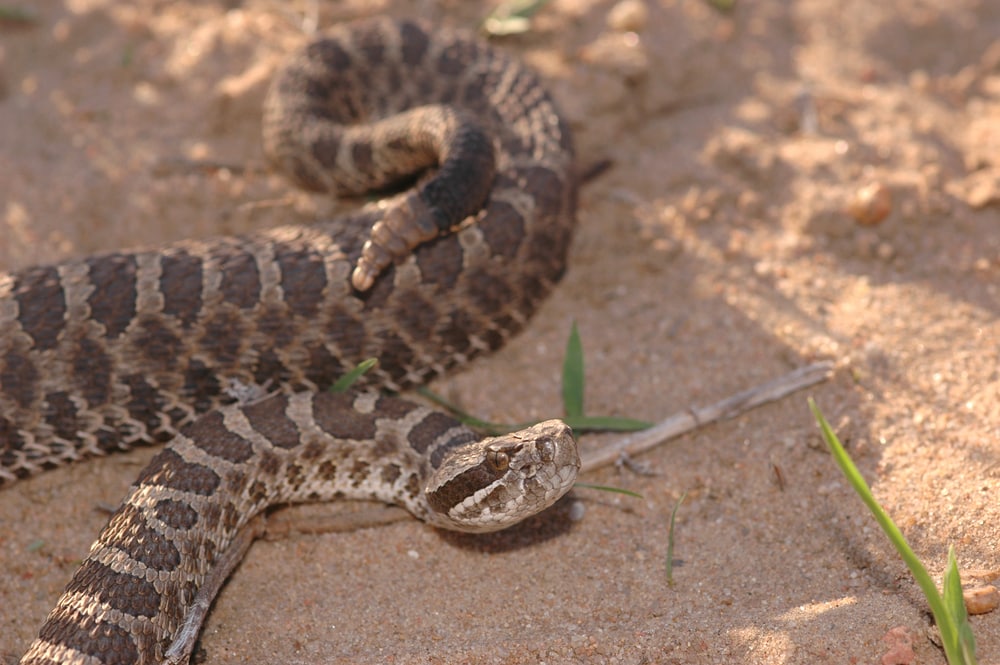
Western Massasauga (Sistrurus tergeminus) is a smaller rattlesnake, usually 15-30 inches, associated here with Panhandle, rolling plains, and prairie-country records. Its cue is a compact body with dark blotches, keeled scales, and grassland or wet-meadow habitat.
This one can be easy to underestimate because of its size. A small, blotched rattlesnake in open prairie, damp meadow edges, or grassland cover deserves a closer range check.
| Key detail | What to look for |
|---|---|
| Adult size | usually 15-30 inches |
| Fast ID cue | small rattlesnake with dark blotches, keeled scales, and grassland or wet meadow habitat |
| Typical Texas habitat | desert flats, rocky slopes, grasslands, brush country, canyon edges, and open woodland |
| Texas range | the Panhandle, rolling plains, or prairie counties where open grassland habitat remains |
| Bite / venom note | Venomous small rattlesnake; prairie or wet-meadow species, serious bite risk |
13. Texas Coralsnake
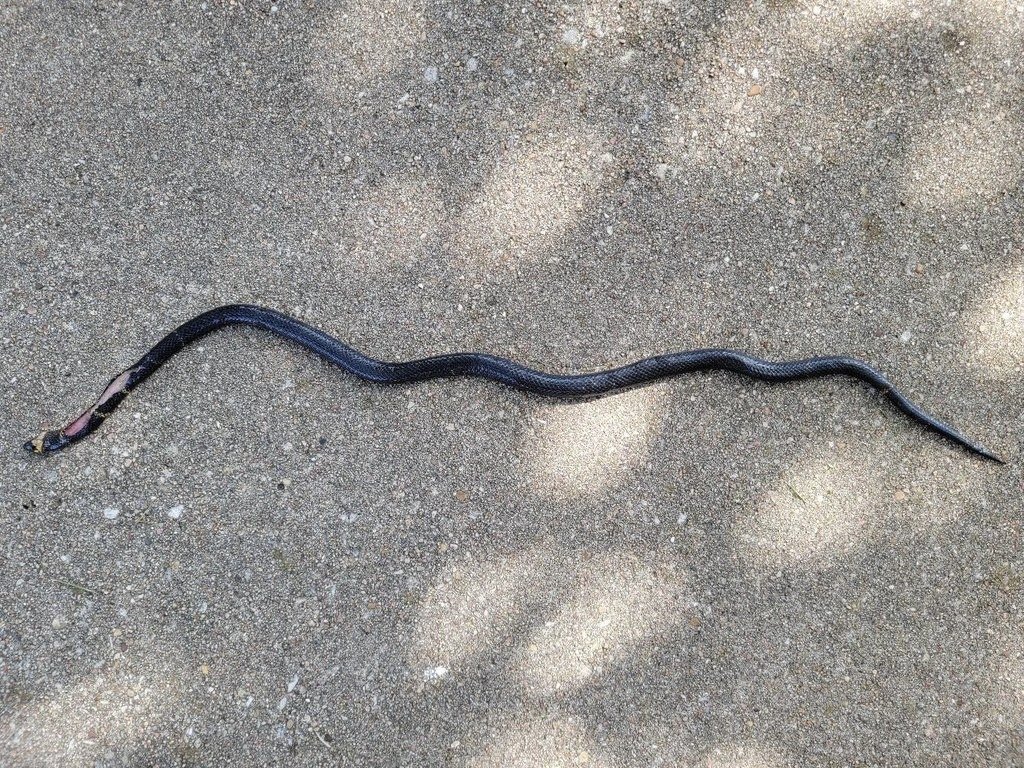
Texas Coralsnake (Micrurus tener) is a slender, secretive coral snake with red, yellow or cream, and black rings and a small head. Adults are usually 20-30 inches, with records from central, southern, or western Texas depending on soils and cover.
The rings are the field mark people notice, but the behavior is just as important. Pine flatwoods, sandy woods, brushy hammocks, and hidden leaf litter fit a snake that is often out of sight.
| Key detail | What to look for |
|---|---|
| Adult size | usually 20-30 inches |
| Fast ID cue | red, yellow or cream, and black rings plus a small head and secretive behavior |
| Typical Texas habitat | pine flatwoods, sandy woods, brushy hammocks, and hidden leaf-litter cover |
| Texas range | central, southern, or western Texas depending on local soils and cover |
| Bite / venom note | Venomous coral snake; potent venom, secretive and rarely seen |
Nonvenomous snakes in Texas
Most Texas snakes are nonvenomous, and the state has enough species that shortcuts fail quickly. Compare the region, habitat, scale texture, tail, and pattern before choosing a name.
Racers, kingsnakes, ratsnakes, and other large hunters
14. Baird’s Ratsnake
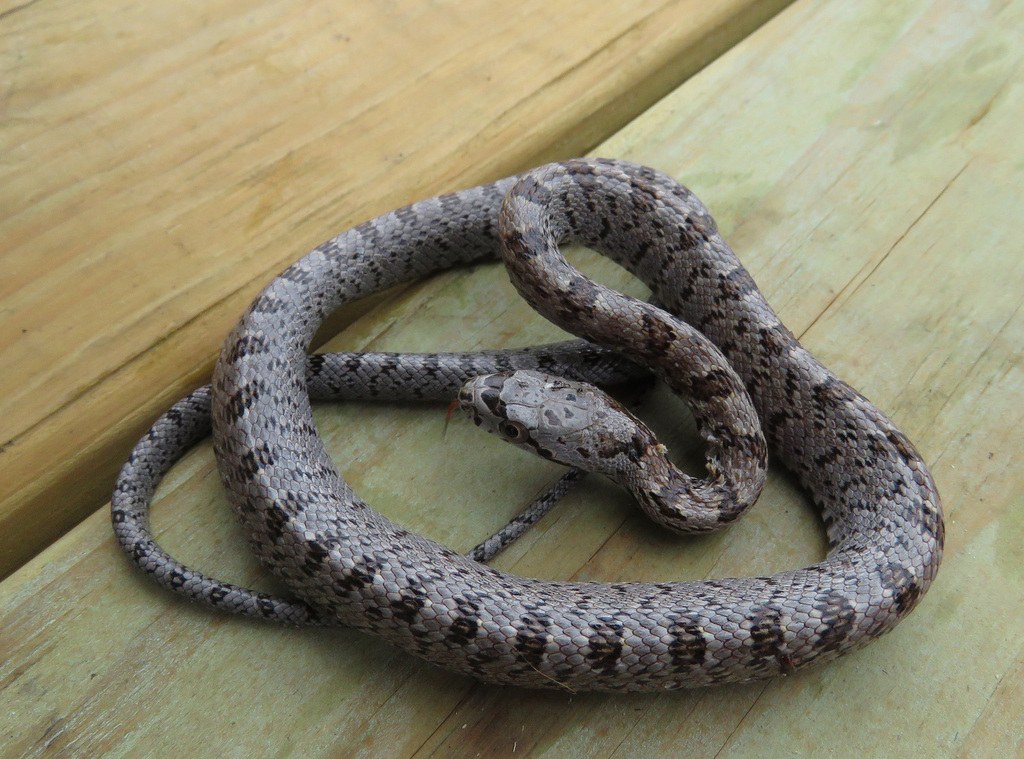
Baird’s Ratsnake (Pantherophis bairdi) is a 3-7 foot climber of rocky western country, barns, trees, and brushy edges. Records point to western Texas and the Trans-Pecos, with woodlands, farms, rocky edges, pine-oak forest, field borders, and old buildings as likely cover.
Look for a slender ratsnake shape rather than a heavy pit-viper build. A patterned back and a habit of using trees, rafters, and edge cover are better clues than one exact color shade.
| Key detail | What to look for |
|---|---|
| Adult size | often 3-7 feet |
| Fast ID cue | slender climbing body, patterned back, and frequent use of barns, trees, and edges |
| Typical Texas habitat | woodlands, farms, rocky edges, pine-oak forests, field borders, and old buildings near cover |
| Texas range | western Texas and Trans-Pecos rocky desert or canyon country |
| Bite / venom note | Nonvenomous climber; common around trees, barns, and edges |
15. Central American Indigo Snake
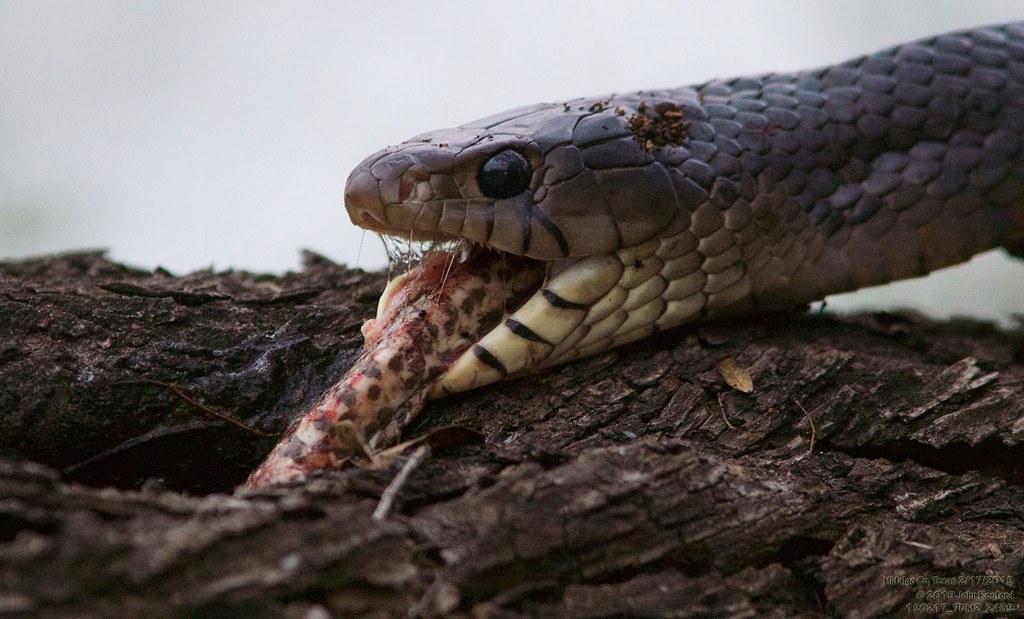
Central American Indigo Snake (Drymarchon melanurus) is a long, powerful, glossy snake of South Texas brush country, riparian edges, and coastal plain cover. Adults can be 3-7 feet, with a smooth, dark body that looks more like an active hunter than a heavy ambush snake.
A big dark snake moving through thornscrub, field margins, or brushy drainage cover should be checked against coachwhips and other large racers. Build, sheen, and lower Rio Grande locality matter more than a single color label.
| Key detail | What to look for |
|---|---|
| Adult size | often 3-7 feet |
| Fast ID cue | large glossy dark body, strong active movement, and South Texas brush-country locality |
| Typical Texas habitat | South Texas thornscrub, riparian brush, coastal prairie edges, field margins, and drainage cover |
| Texas range | South Texas and the lower Rio Grande region; county maps narrow local records |
| Bite / venom note | Nonvenomous large active hunter; compare with coachwhips and racers |
16. Chihuahuan Hook-nosed Snake
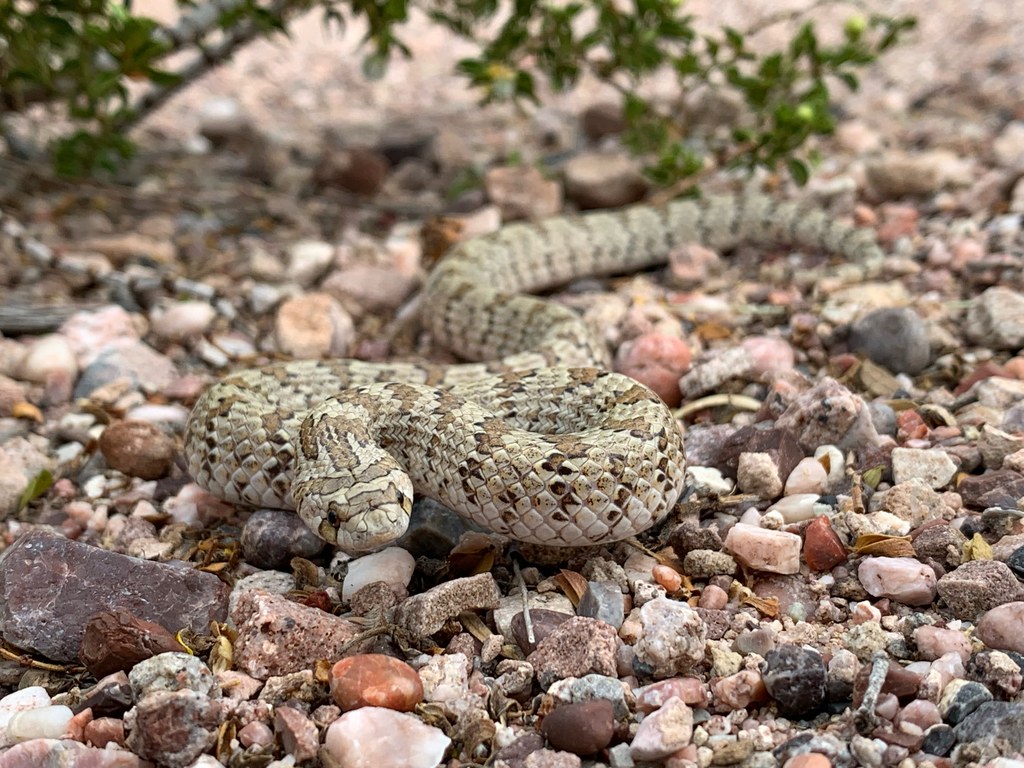
Chihuahuan Hook-nosed Snake (Gyalopion canum) is a small desert snake with an upturned, hook-like snout. It belongs with Chihuahuan Desert flats, rocky washes, grassland edges, and loose sandy or gravelly soils in the west.
The nose is the first thing to check, but it is not the only thing. Pair the blunt head and compact body with dry western cover before separating it from other small desert snakes.
| Key detail | What to look for |
|---|---|
| Adult size | often 1-4 feet |
| Fast ID cue | small desert snake with an upturned hook-like snout and blunt head |
| Typical Texas habitat | Chihuahuan Desert flats, rocky washes, grassland edges, and loose sandy or gravelly soils |
| Texas range | western Texas and Trans-Pecos rocky desert or canyon country |
| Bite / venom note | Nonvenomous small desert snake; nose shape and locality matter |
17. Common Coachwhip
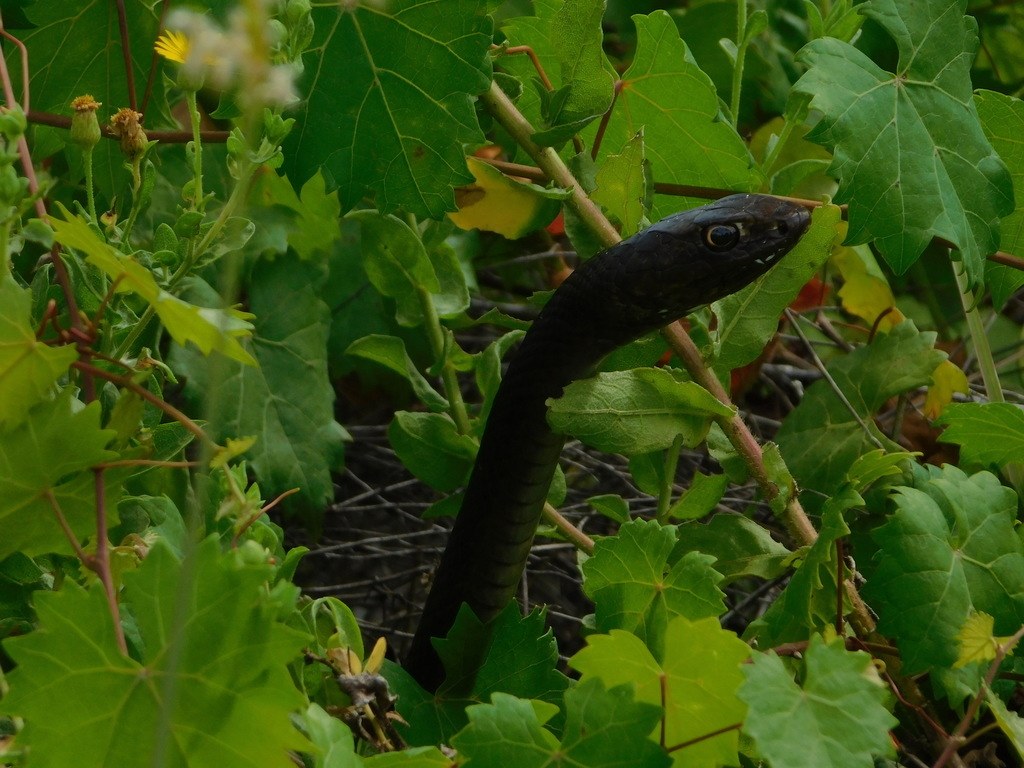
Common Coachwhip (Masticophis flagellum) is built for daylight speed: slim body, large eyes, long tapering tail, and a habit of crossing open ground fast. Adults are often 3-7 feet, with habitat around open scrub, grasslands, dry woods, sandy washes, roadsides, and sunny field edges.
This is not a heavy ambush snake. The long whip-like tail and alert, fast-moving posture are the details that make a coachwhip look different from ratsnakes or kingsnakes at a glance.
| Key detail | What to look for |
|---|---|
| Adult size | often 3-7 feet |
| Fast ID cue | large eyes, slim body, fast daytime movement, and a long tapering tail |
| Typical Texas habitat | open scrub, grasslands, dry woods, sandy washes, roadsides, and sunny field edges |
| Texas range | widespread across much of Texas in open, sunny habitat |
| Bite / venom note | Nonvenomous fast hunter; long tail and large eyes |
18. Common Glossy Snake
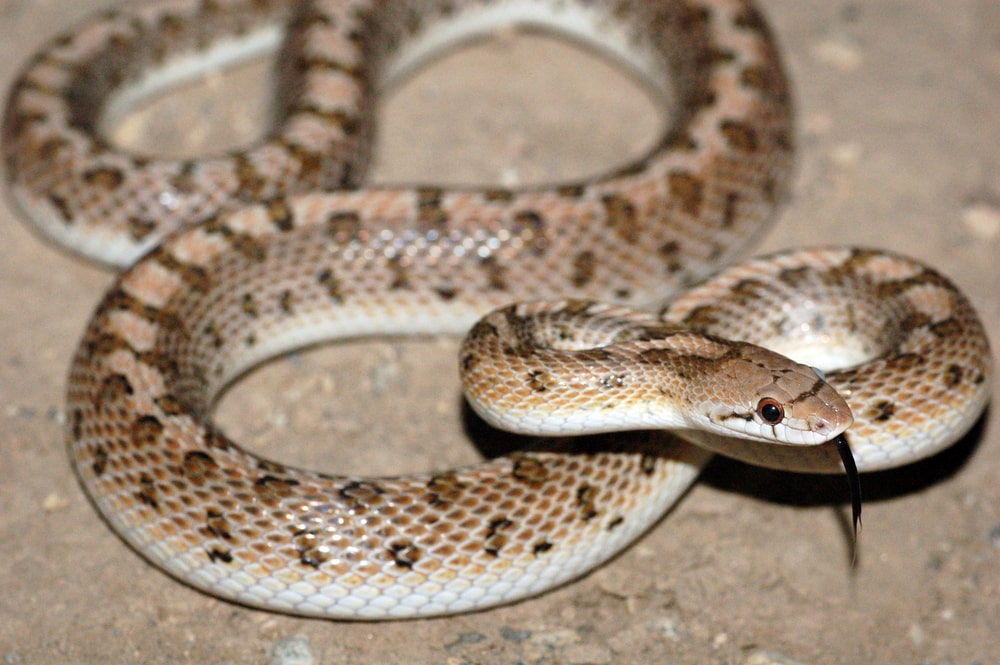
Common Glossy Snake (Arizona elegans) is a smooth, pale snake of sandy open ground, desert scrub, grassland edges, and washes. Adults are often 1-4 feet, with glossy scales and faint blotches that can fade into the background.
This is a snake where texture helps. The polished look, narrow head, and dry loose-soil setting separate it from rougher, heavier snakes that may share similar blotches.
| Key detail | What to look for |
|---|---|
| Adult size | often 1-4 feet |
| Fast ID cue | smooth glossy pale body, faint blotches, narrow head, and loose sandy soil |
| Typical Texas habitat | sandy flats, desert scrub, grassland edges, washes, and other loose-soil cover |
| Texas range | western, central, and southern Texas in sandy or dry open habitat |
| Bite / venom note | Nonvenomous glossy burrower; often confused with other pale blotched snakes |
19. Common Scarletsnake
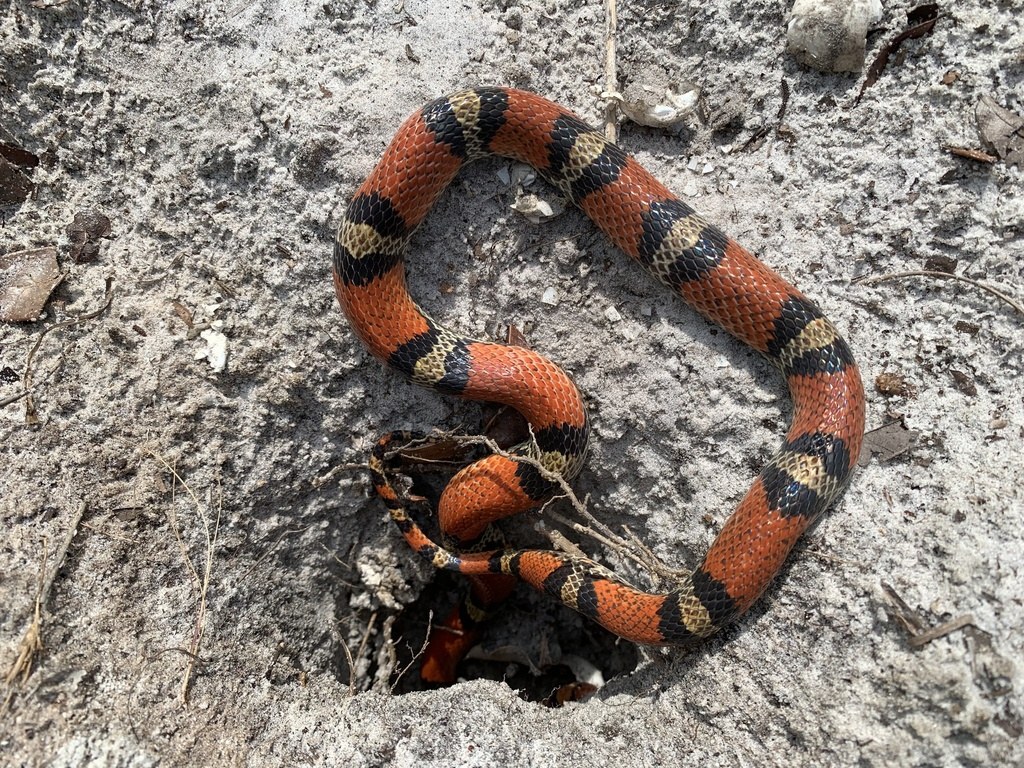
Common Scarletsnake (Cemophora coccinea) is a small banded or blotched constrictor, often 1-4 feet, with a look that can overlap confusingly with other bold-patterned snakes. Start with wooded or rocky edge cover, then compare the banding carefully.
The important move is to study the pattern and body build, then match it to place. It is nonvenomous, but its bright markings are exactly why people double-check the ID.
| Key detail | What to look for |
|---|---|
| Adult size | often 1-4 feet |
| Fast ID cue | red or orange blotches bordered by dark pigment on a small smooth body |
| Typical Texas habitat | woodlands, farms, rocky edges, pine-oak forests, field borders, and old buildings near cover |
| Texas range | mainly eastern Texas; compare with Texas Scarletsnake farther south and west |
| Bite / venom note | Nonvenomous constrictor; bold bands or blotches can confuse IDs |
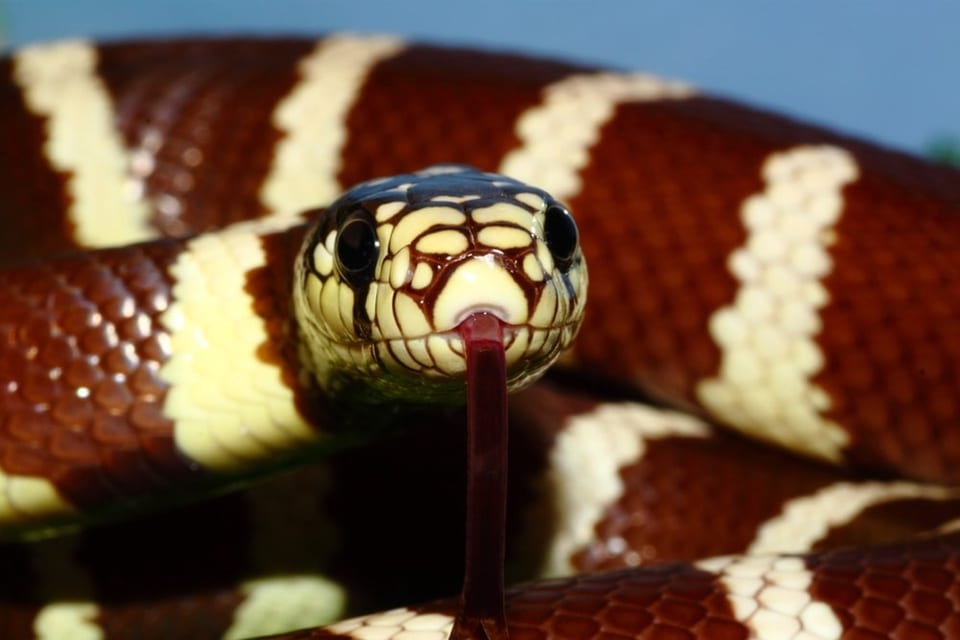
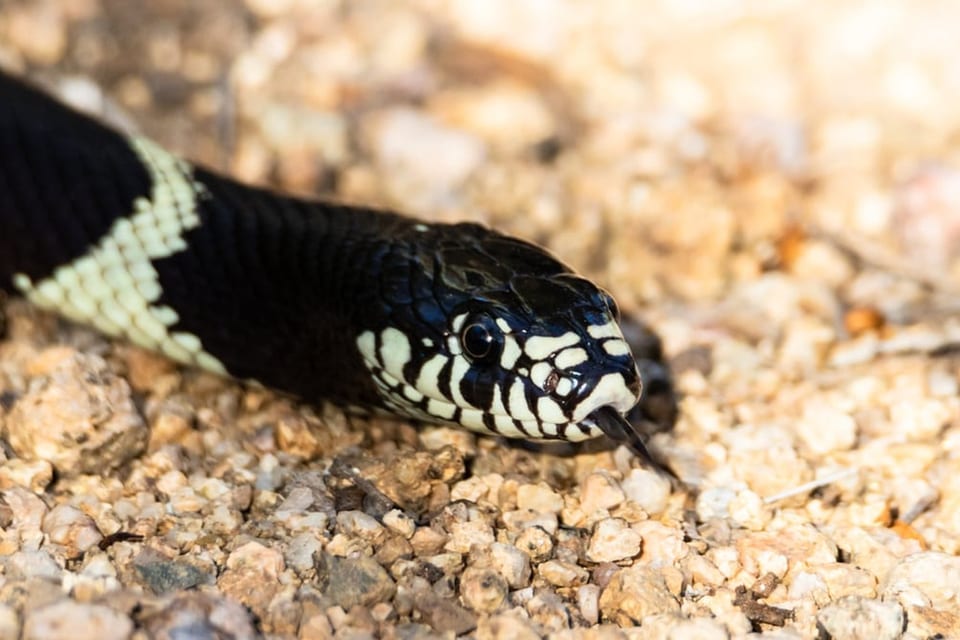
20. Desert Kingsnake
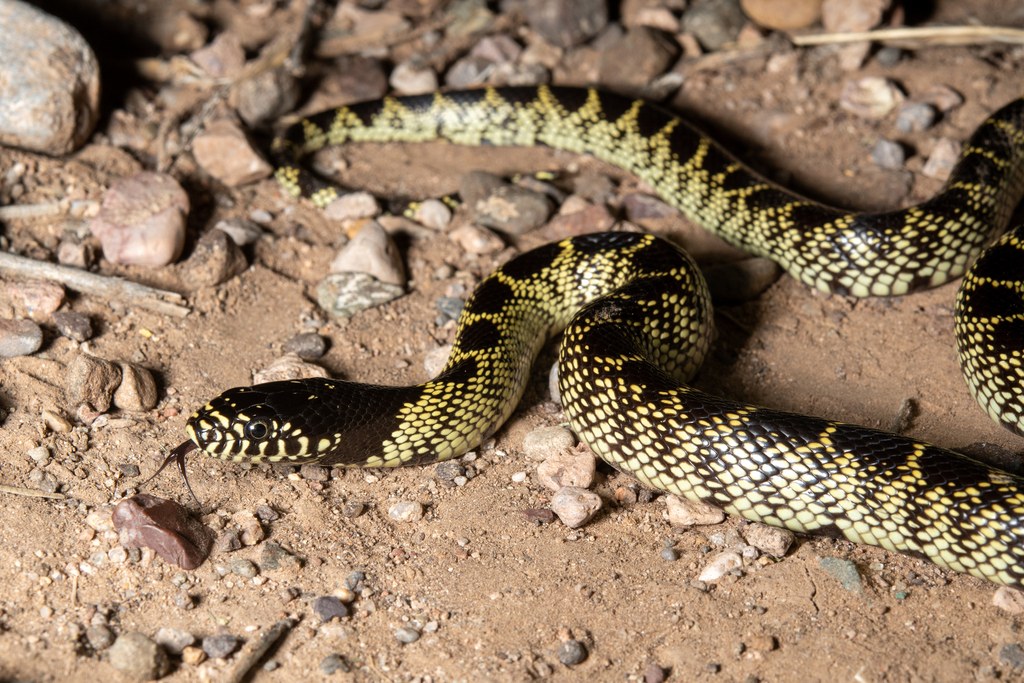
Desert Kingsnake (Lampropeltis splendida) is a glossy, strong-bodied kingsnake, usually 1-4 feet, with bold bands or blotches. Dry lowlands, brushy grasslands, rocky edges, field borders, and old buildings all fit its Texas habitat picture.
The smooth shine and constrictor build separate it from rougher-scaled, heavier pit vipers. A full-body view helps, because young kingsnakes and other banded snakes can look more alike in cropped photos.
| Key detail | What to look for |
|---|---|
| Adult size | often 1-4 feet |
| Fast ID cue | smooth glossy scales, bold bands or blotches, and a strong constrictor build |
| Typical Texas habitat | woodlands, farms, rocky edges, pine-oak forests, field borders, and old buildings near cover |
| Texas range | western, central, and southern Texas in dry lowlands, grasslands, and brushy edges |
| Bite / venom note | Nonvenomous constrictor; bold bands or blotches can confuse IDs |
21. Flat-headed Snake
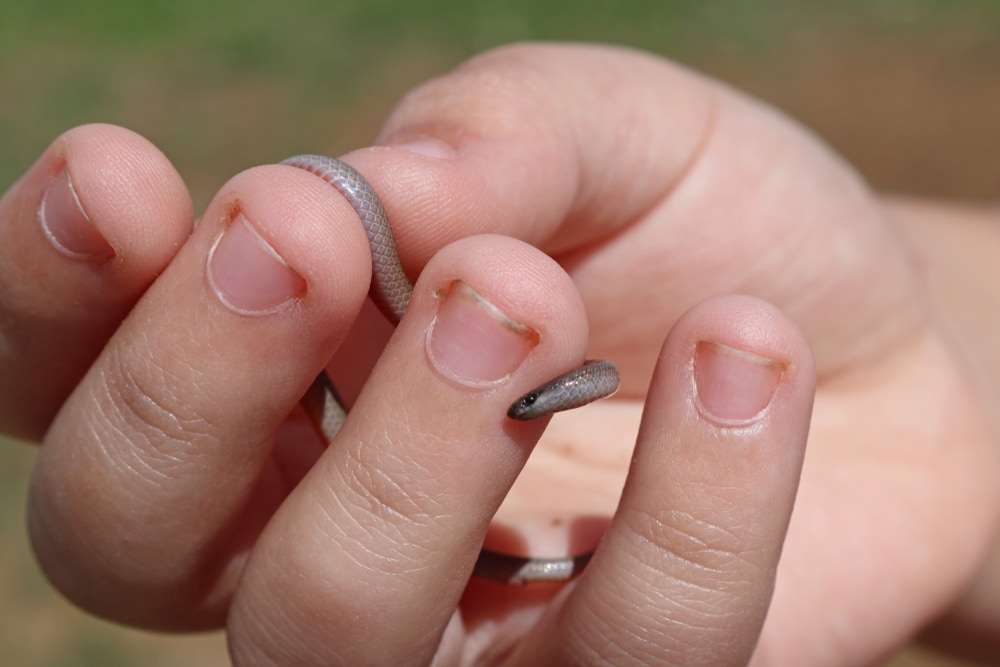
Flat-headed Snake (Tantilla gracilis) is a tiny under-cover snake, usually only 7-16 inches. Look for it in rocky prairie, open woodland, limestone slopes, leaf litter, and loose soil under flat stones or logs.
Its plain body can make it look forgettable in a photo. Size, a flattened head, and the under-rock setting are the clues that separate it from young earthsnakes and other small brown snakes.
| Key detail | What to look for |
|---|---|
| Adult size | usually 7-16 inches |
| Fast ID cue | tiny tan body, flattened head, and under-rock or leaf-litter habits |
| Typical Texas habitat | rocky prairies, limestone slopes, open woods, leaf litter, and loose soil under stones or logs |
| Texas range | central and north-central Texas, with local prairie and rocky-soil records |
| Bite / venom note | Nonvenomous tiny snake; most often found under cover |
22. Gophersnake
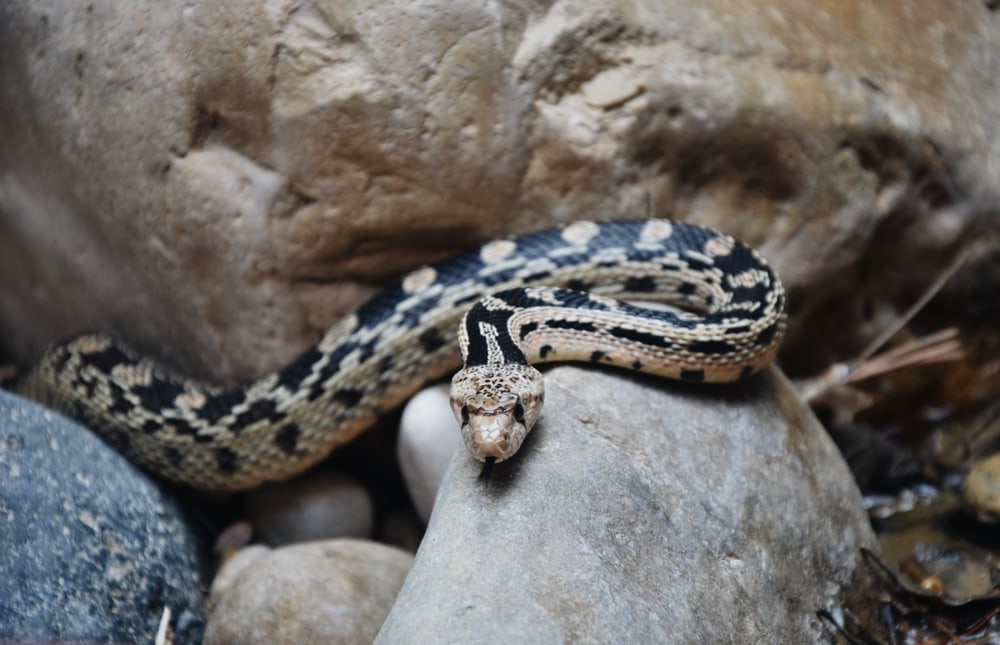
Gophersnake (Pituophis catenifer) is one of the big nonvenomous snakes here, often 3-7 feet. It favors open prairie, desert grassland, sandy flats, ranchland, and rodent-burrow country in the Panhandle and far west.
A gophersnake can look rattlesnake-like when it coils, hisses, or vibrates its tail. The narrower head, lack of facial pits, and missing rattle are the useful counterpoints to its large blotched body.
| Key detail | What to look for |
|---|---|
| Adult size | often 3-7 feet |
| Fast ID cue | large blotched body, narrow head, loud hiss, and no facial pit or rattle |
| Typical Texas habitat | open prairie, desert grassland, sandy flats, ranchland, and rodent-burrow country |
| Texas range | Panhandle and far western Texas in open prairie or desert-edge habitat |
| Bite / venom note | Nonvenomous large constrictor; common rattlesnake lookalike |
23. Gray-banded Kingsnake
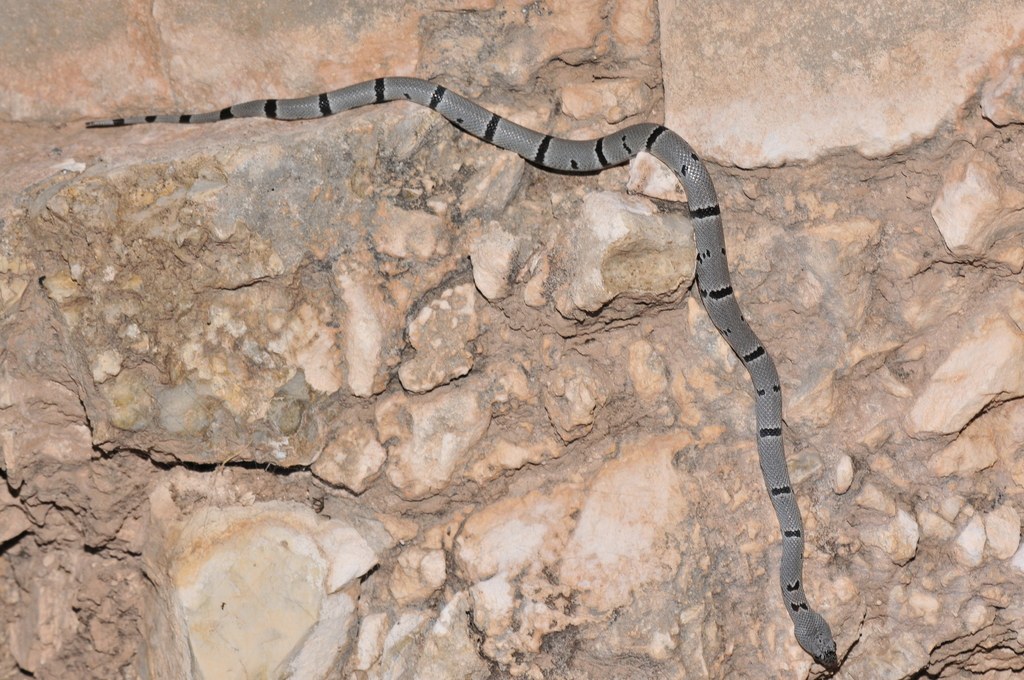
Gray-banded Kingsnake (Lampropeltis alterna) is a Trans-Pecos and western-country kingsnake, usually 1-4 feet, with smooth glossy scales and bold bands or blotches. Rocky desert habitat is the range clue that matters most here.
The pattern is striking, but the body feel is still kingsnake: clean scales, strong constrictor build, and no pit-viper head. Woodlands, rocky edges, pine-oak forest, and field borders are the places to compare.
| Key detail | What to look for |
|---|---|
| Adult size | often 1-4 feet |
| Fast ID cue | smooth glossy scales, bold bands or blotches, and a strong constrictor build |
| Typical Texas habitat | woodlands, farms, rocky edges, pine-oak forests, field borders, and old buildings near cover |
| Texas range | western Texas and Trans-Pecos rocky desert or canyon country |
| Bite / venom note | Nonvenomous constrictor; bold bands or blotches can confuse IDs |
24. Great Plains Groundsnake
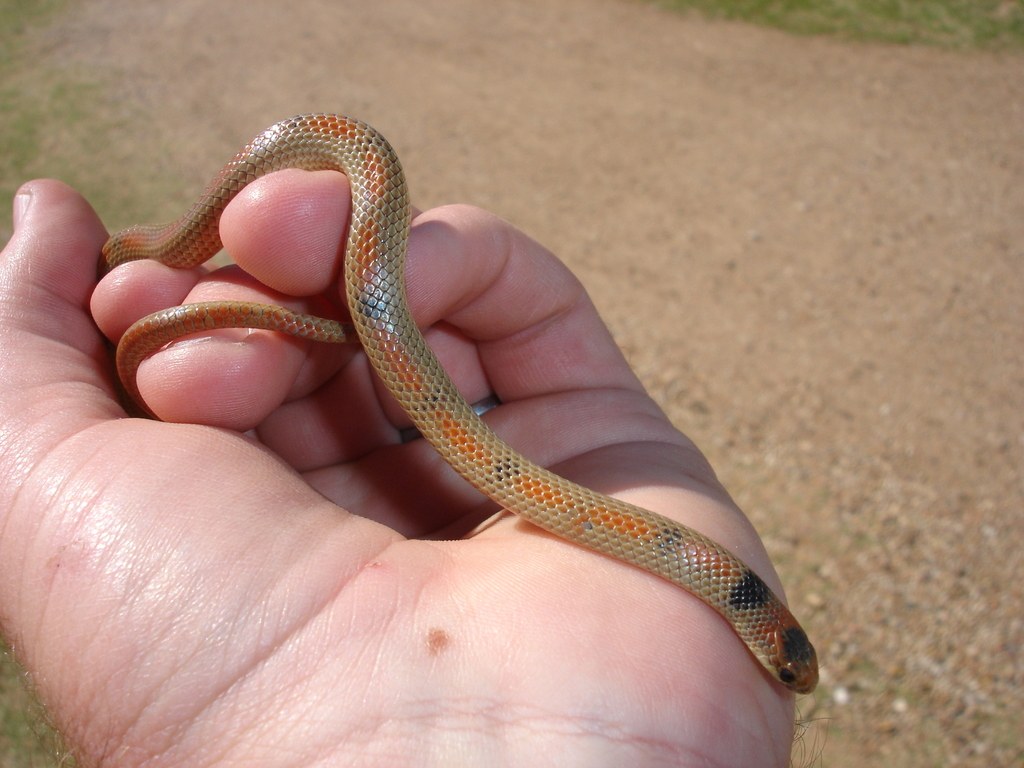
Great Plains Groundsnake (Sonora episcopa) is tied here to Panhandle, rolling plains, and prairie-country records. Adults are often 1-4 feet, with habitat around open scrub, grasslands, dry woods, sandy washes, roadsides, and sunny field edges.
Groundsnakes do not give you one flashy mark to lean on. Body shape, pattern, county, and the dry open setting all have to line up.
| Key detail | What to look for |
|---|---|
| Adult size | often 1-4 feet |
| Fast ID cue | small smooth groundsnake with variable bands or stripes in dry open cover |
| Typical Texas habitat | open scrub, grasslands, dry woods, sandy washes, roadsides, and sunny field edges |
| Texas range | the Panhandle, rolling plains, or prairie counties where open grassland habitat remains |
| Bite / venom note | Nonvenomous groundsnake; small size and dry prairie setting are key |
25. Great Plains Ratsnake
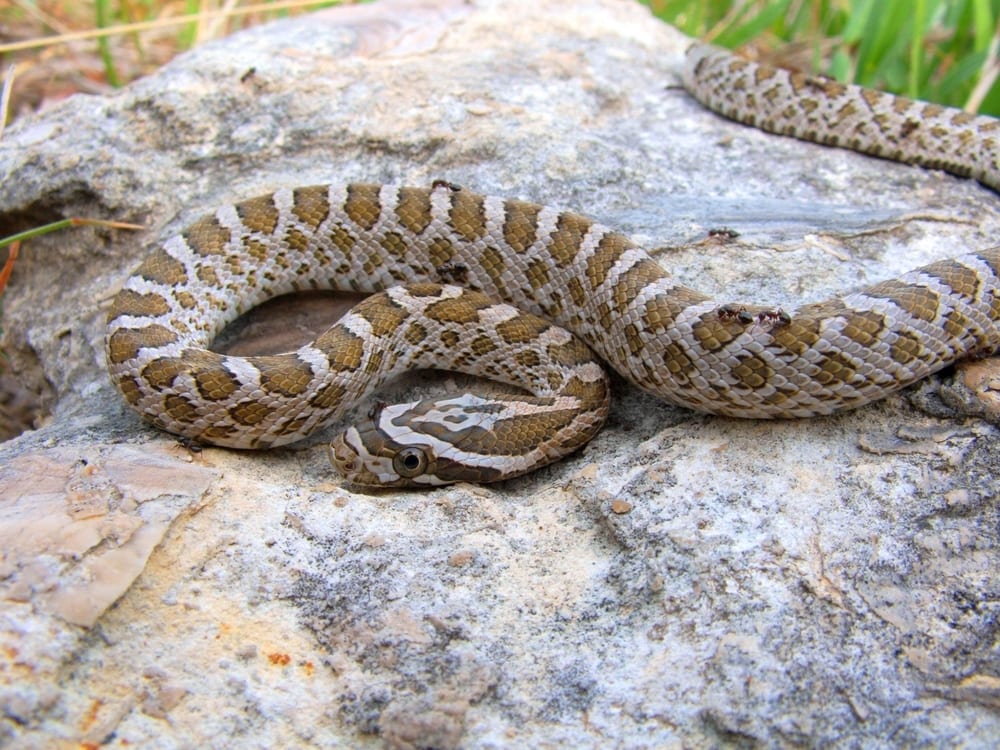
Great Plains Ratsnake (Pantherophis emoryi) is a 3-7 foot climber of prairie and edge country, especially Panhandle, rolling-plains, and grassland counties. The fast cue is a slender body, patterned back, and frequent use of barns, trees, and edges.
This ratsnake can turn up around farms, rocky edges, pine-oak woods, field borders, and old buildings near cover. The climbing build is the best contrast with a thick-bodied pit viper.
| Key detail | What to look for |
|---|---|
| Adult size | often 3-7 feet |
| Fast ID cue | slender climbing body, patterned back, and frequent use of barns, trees, and edges |
| Typical Texas habitat | woodlands, farms, rocky edges, pine-oak forests, field borders, and old buildings near cover |
| Texas range | the Panhandle, rolling plains, or prairie counties where open grassland habitat remains |
| Bite / venom note | Nonvenomous climber; common around trees, barns, and edges |
26. Long-nosed Snake
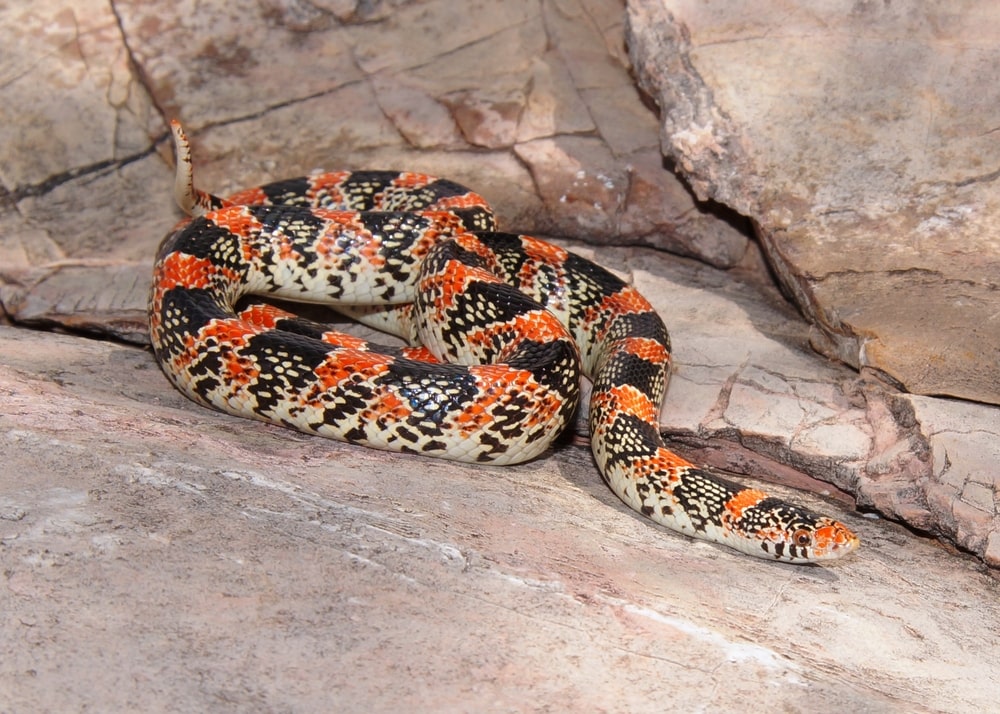
Long-nosed Snake (Rhinocheilus lecontei) is a slender dry-country snake with a pale snout and red, black, and cream markings. Adults are often 1-4 feet, and Texas records fit sandy flats, desert grassland, rocky washes, thornscrub, and roadsides at night.
The pattern can push people toward milksnakes or coralsnakes, but the snout and dry open setting help. Use a full-body view if you have one, since cropped photos exaggerate the red and black bands.
| Key detail | What to look for |
|---|---|
| Adult size | often 1-4 feet |
| Fast ID cue | pale snout with red, black, and cream saddles on a slender body |
| Typical Texas habitat | desert grassland, sandy flats, rocky washes, thornscrub, and roadsides at night |
| Texas range | western and southern Texas, especially dry open country |
| Bite / venom note | Nonvenomous; bright pattern can invite coral or milksnake confusion |
27. Louisiana Pinesnake
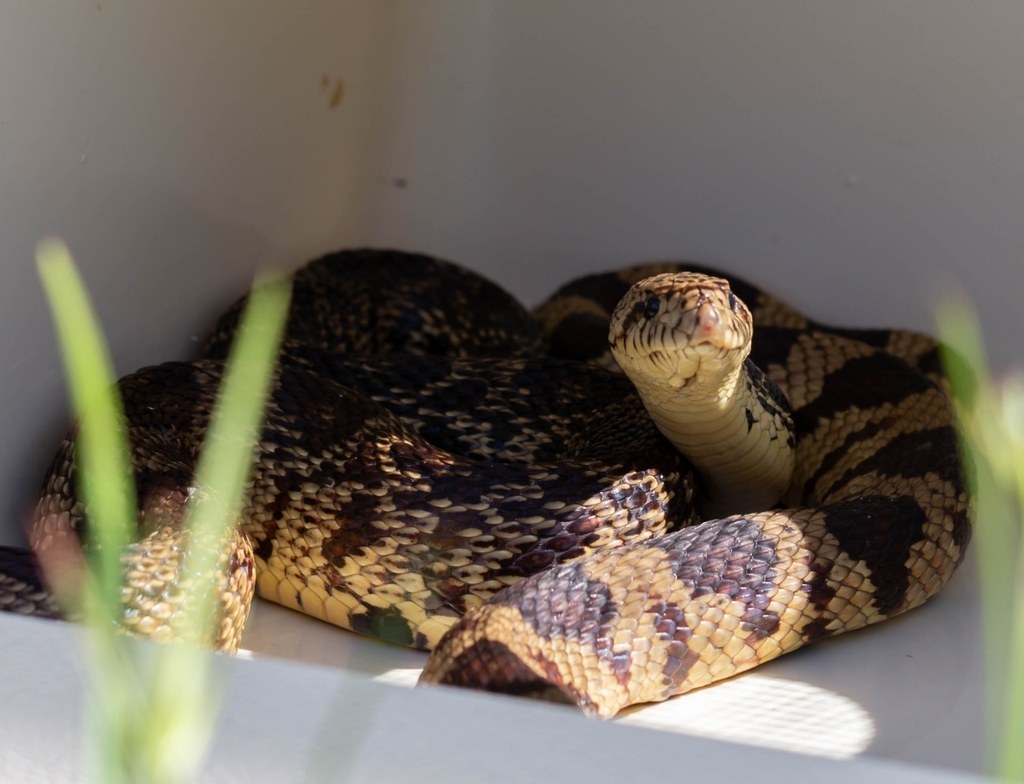
Louisiana Pinesnake (Pituophis ruthveni) is a large, pale, blotched snake of East Texas pine sandhills. Adults are often 3-7 feet and are closely tied to sandy longleaf-pine uplands, open pine savannas, and pocket-gopher burrow systems.
Habitat carries much of this ID. A big Pituophis-type snake in open sandy pine country is a different clue set from a large ratsnake around barns or hardwood edges.
| Key detail | What to look for |
|---|---|
| Adult size | often 3-7 feet |
| Fast ID cue | large pale blotched body, sandy pine habitat, and pocket-gopher burrow association |
| Typical Texas habitat | sandy pine woods, open pine savannas, dry uplands, and old pocket-gopher or rodent burrows |
| Texas range | limited East Texas pine sandhills; county-level range maps are important |
| Bite / venom note | Nonvenomous pine specialist; rare and habitat-tied |
28. Mexican Black-headed Snake
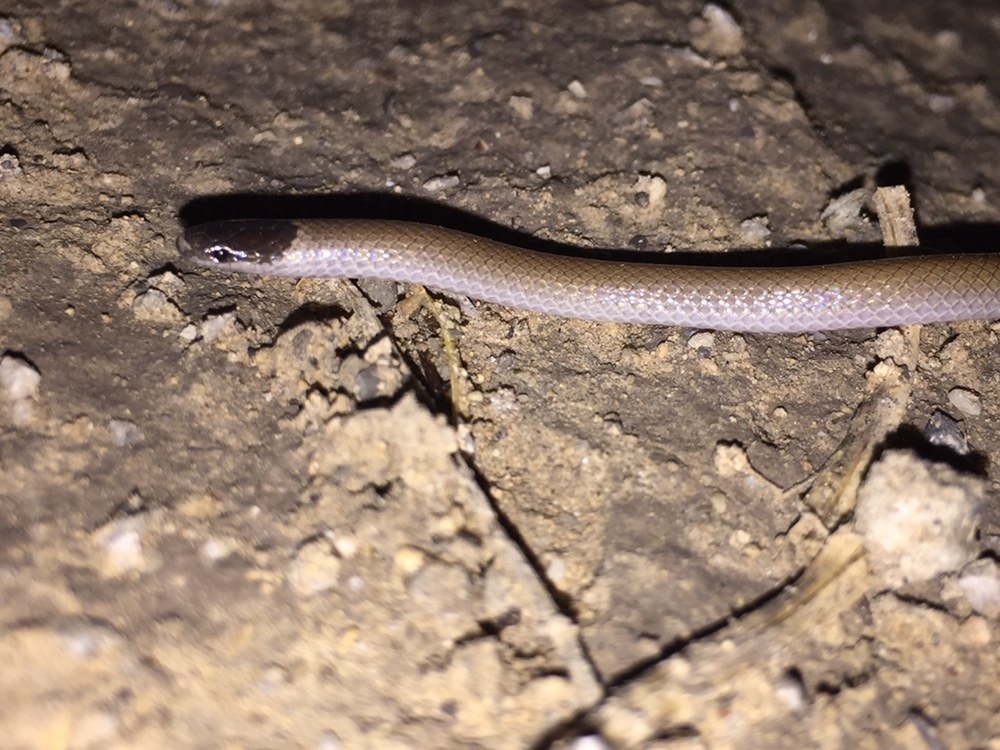
Mexican Black-headed Snake (Tantilla atriceps) is a small black-headed snake, usually 10-24 inches, from loose soil, leaf litter, rotting logs, compost, damp gardens, and shaded woodland edges. Records place it in central, southern, or western Texas depending on local soils and cover.
Expect a low, hidden snake rather than one basking in the open. For tiny Tantilla-type snakes, the head color, scale of the animal, and exact county matter.
| Key detail | What to look for |
|---|---|
| Adult size | usually 10-24 inches |
| Fast ID cue | small tan body with a dark head cap, usually found under cover |
| Typical Texas habitat | loose soil, leaf litter, rotting logs, compost, damp gardens, and shaded woodland edges |
| Texas range | central, southern, or western Texas depending on local soils and cover |
| Bite / venom note | Nonvenomous tiny snake; usually under soil, logs, or leaf litter |
29. Mountain Patch-nosed Snake
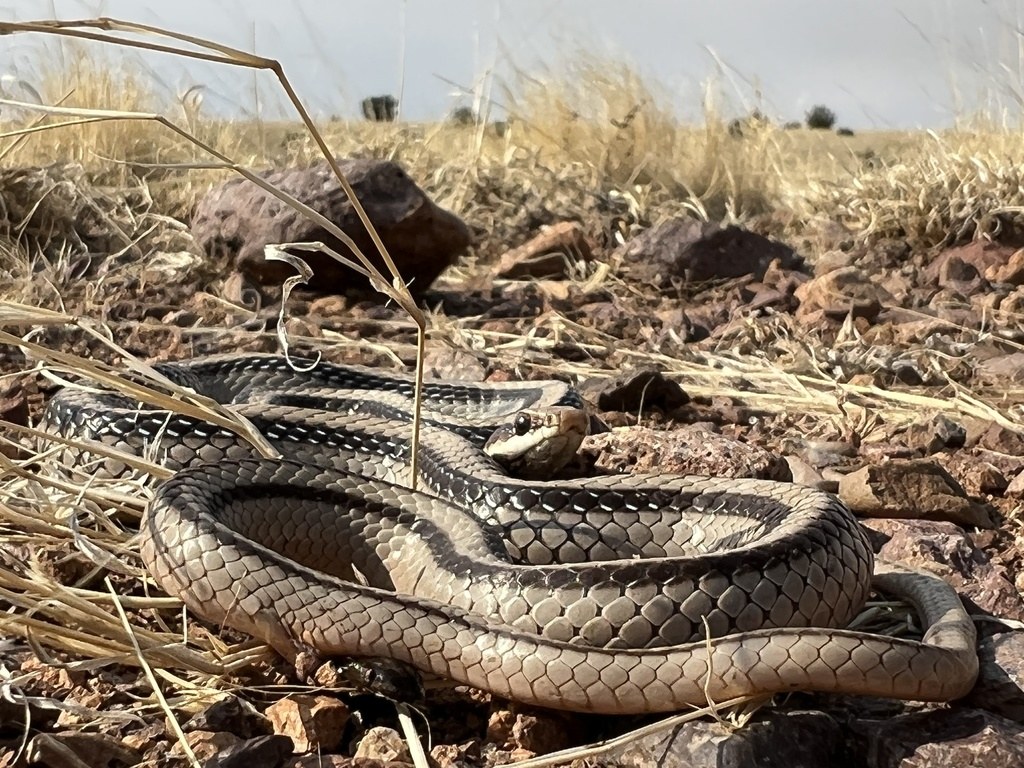
Mountain Patch-nosed Snake (Salvadora grahamiae) is a dry-country snake with an enlarged scale on the snout and an active, racer-like build. Adults are often 1-4 feet, with Texas records tied to western slopes, canyon mouths, rocky grassland, and sunny scrub.
Patch-nosed snakes are best approached as a shape-and-habitat call. A long, alert snake moving through open western cover should be compared with whipsnakes, racers, and the other Salvadora species before settling on this one.
| Key detail | What to look for |
|---|---|
| Adult size | often 1-4 feet |
| Fast ID cue | enlarged patch-like snout scale, long active body, and sunny western cover |
| Typical Texas habitat | open scrub, grasslands, dry woods, sandy washes, roadsides, and sunny field edges |
| Texas range | Trans-Pecos and western hill or desert-slope country |
| Bite / venom note | Nonvenomous active forager; compare with racers and whipsnakes |
30. North American Racer
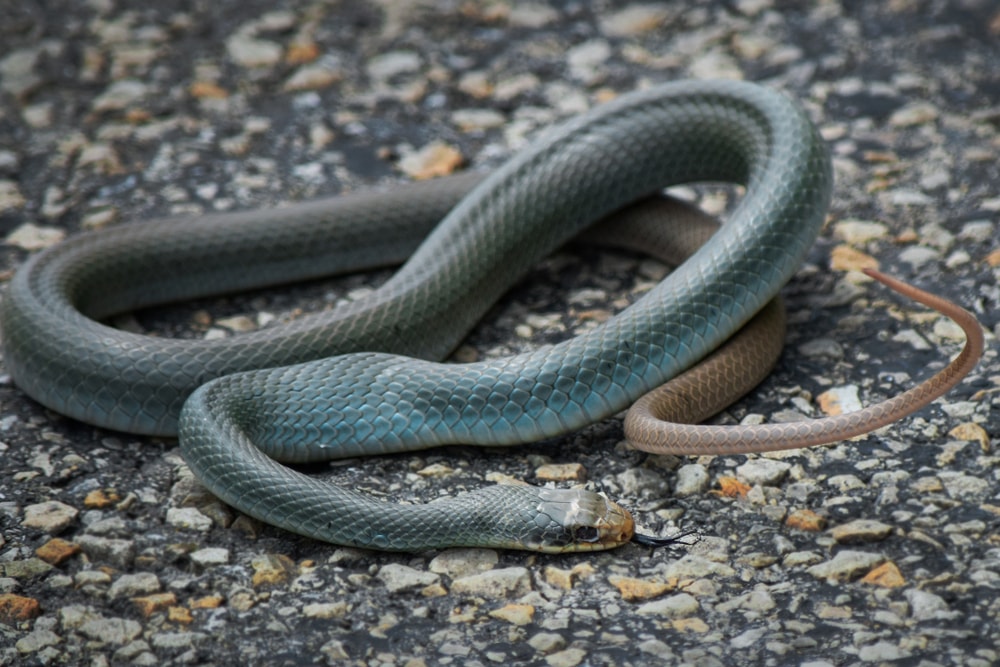
North American Racer (Coluber constrictor) is the long, quick daytime snake in this part of the list, often 3-7 feet. Large eyes, a slim build, fast movement, and a long tapering tail are the clues to start with.
Open scrub, grasslands, dry woods, sandy washes, roadsides, and sunny field edges all fit an active hunter. The exact county and the snake’s build help sort racers from coachwhips and other long, fast snakes.
| Key detail | What to look for |
|---|---|
| Adult size | often 3-7 feet |
| Fast ID cue | large eyes, slim body, fast daytime movement, and a long tapering tail |
| Typical Texas habitat | open scrub, grasslands, dry woods, sandy washes, roadsides, and sunny field edges |
| Texas range | widespread in Texas where open or edge habitat supports fast daytime hunters |
| Bite / venom note | Nonvenomous fast hunter; long tail and large eyes |
31. Northern Rough Greensnake
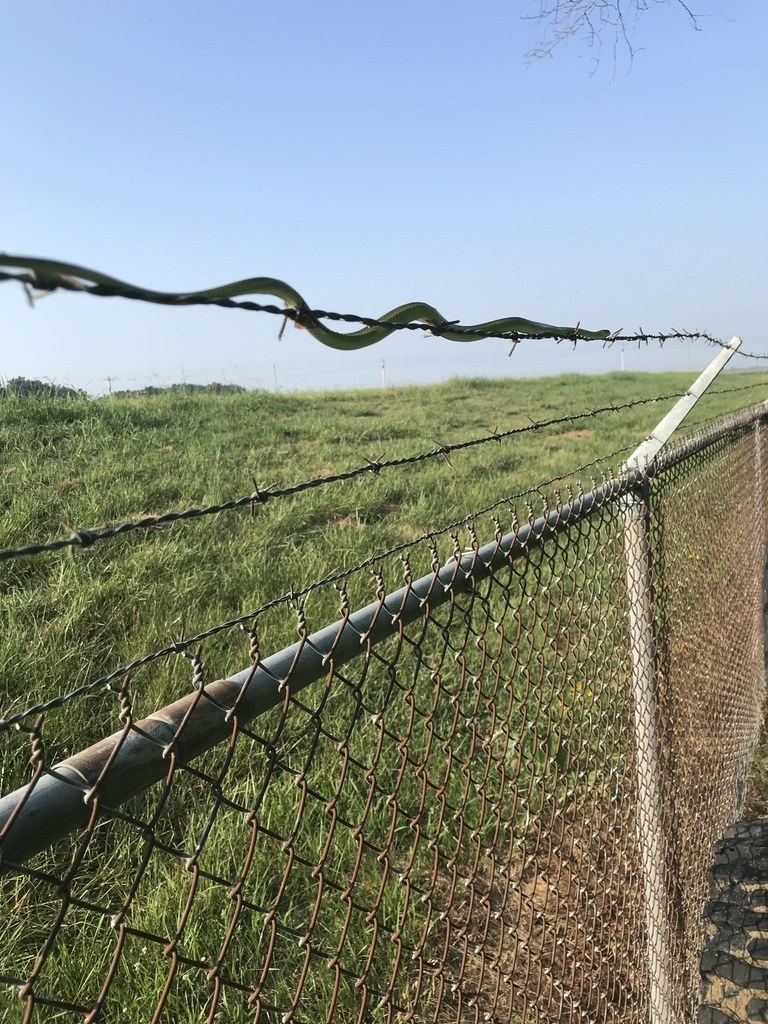
Northern Rough Greensnake (Opheodrys aestivus) is the bright green climber of shrubs, vines, brushy stream edges, wet meadows, and low vegetation. Adults are often 1-4 feet, with a white or pale belly under that leaf-green body.
Its range points mostly east, Gulf Coast, and wetter river systems. A slender green snake above ground in low vegetation has a very different look from a ground-hugging racer or gartersnake.
| Key detail | What to look for |
|---|---|
| Adult size | often 1-4 feet |
| Fast ID cue | bright green body, white or pale belly, and climbing behavior in low vegetation |
| Typical Texas habitat | shrubs, vines, brushy stream edges, wet meadows, and low vegetation |
| Texas range | mainly eastern Texas, the Gulf Coast, and wetter river systems |
| Bite / venom note | Nonvenomous slender green snake; usually in shrubs or vines |
32. Plains Black-headed Snake
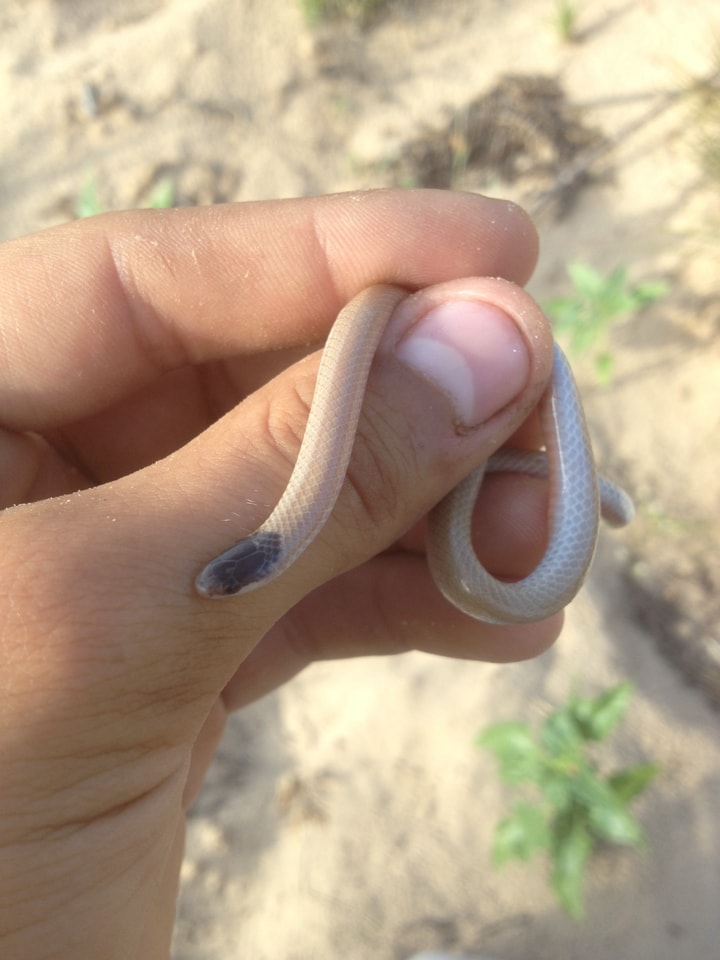
Plains Black-headed Snake (Tantilla nigriceps) is a small, soil-and-litter snake, usually 10-24 inches, associated here with Panhandle, rolling-plains, and prairie-country records. Likely habitat includes loose soil, leaf litter, rotting logs, compost, damp gardens, and shaded woodland edges.
The black head is only part of the ID. Size, county, and the under-cover setting are what separate it from other small brown or black-headed snakes.
| Key detail | What to look for |
|---|---|
| Adult size | usually 10-24 inches |
| Fast ID cue | tiny pale body with a black head cap, usually under prairie cover |
| Typical Texas habitat | loose soil, leaf litter, rotting logs, compost, damp gardens, and shaded woodland edges |
| Texas range | the Panhandle, rolling plains, or prairie counties where open grassland habitat remains |
| Bite / venom note | Nonvenomous tiny snake; usually under soil, logs, or leaf litter |
33. Prairie Kingsnake
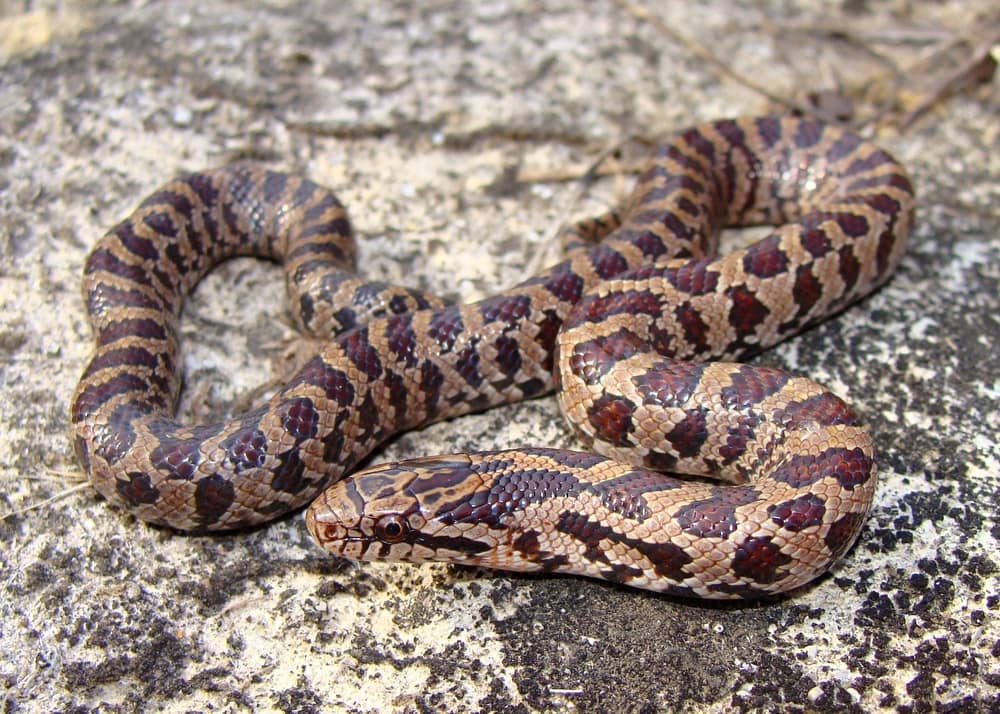
Prairie Kingsnake (Lampropeltis calligaster) is a nonvenomous constrictor, often 1-4 feet, from prairie and rolling-plains country. Smooth glossy scales, bold bands or blotches, and a strong body are the main cues.
Prairie edges, old outbuildings, rocky margins, and open woodland all fit its habitat picture. The glossy kingsnake look helps keep it separate from rougher, heavier snakes.
| Key detail | What to look for |
|---|---|
| Adult size | often 1-4 feet |
| Fast ID cue | smooth glossy scales, bold bands or blotches, and a strong constrictor build |
| Typical Texas habitat | woodlands, farms, rocky edges, pine-oak forests, field borders, and old buildings near cover |
| Texas range | the Panhandle, rolling plains, or prairie counties where open grassland habitat remains |
| Bite / venom note | Nonvenomous constrictor; bold bands or blotches can confuse IDs |
34. Schott’s Whipsnake
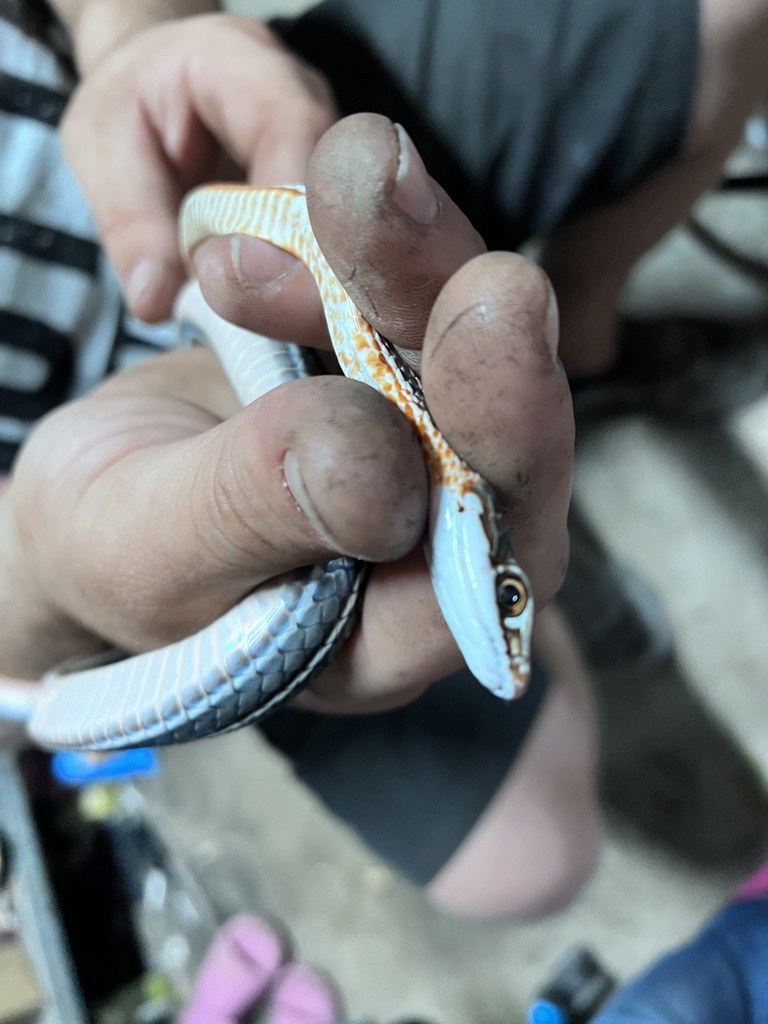
Schott’s Whipsnake (Masticophis schotti) is a slim, fast whipsnake of South Texas brush country and lower Rio Grande cover. Adults are often 1-4 feet, with large eyes, a long tapering tail, and a habit of moving quickly across open ground.
Think movement and posture, not just color. A quick, alert snake stretched across sunny thornscrub, sandy wash, roadside, or grass edge fits this whipsnake better than a thick-bodied snake tucked under cover.
| Key detail | What to look for |
|---|---|
| Adult size | often 1-4 feet |
| Fast ID cue | large eyes, slim body, fast daytime movement, and a long tapering tail |
| Typical Texas habitat | open scrub, grasslands, dry woods, sandy washes, roadsides, and sunny field edges |
| Texas range | South Texas brush country and the lower Rio Grande region |
| Bite / venom note | Nonvenomous fast hunter; long tail and large eyes |
35. Slowinski’s Cornsnake
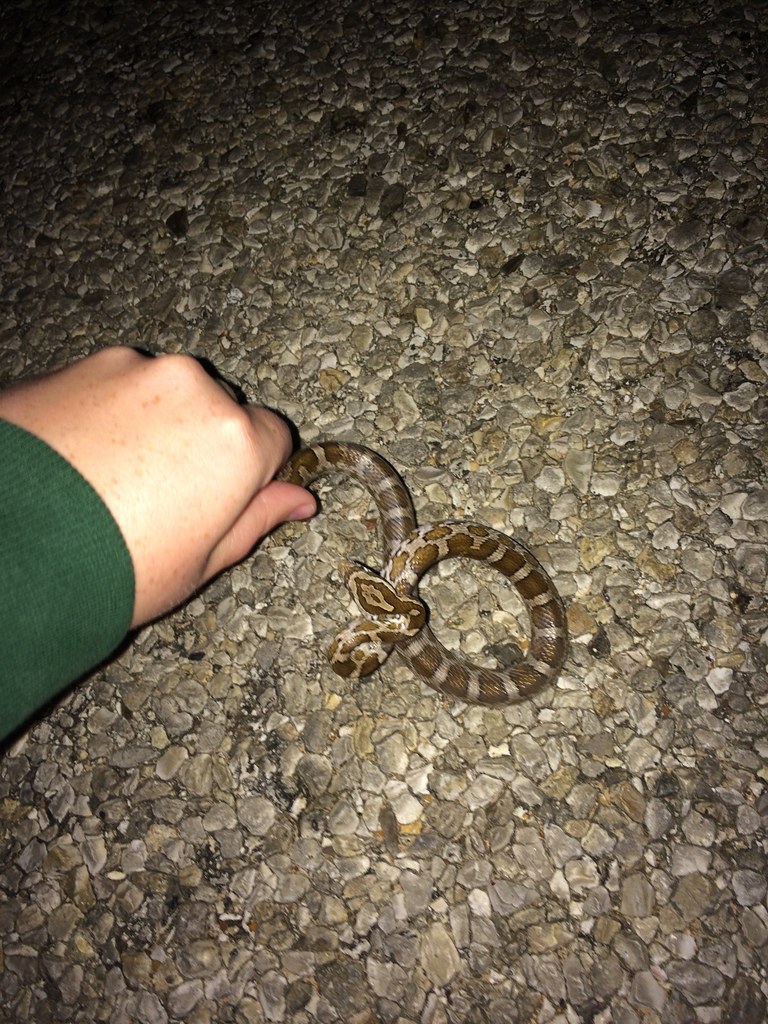
Slowinski’s Cornsnake (Pantherophis slowinskii) is a patterned climber of East Texas woods, farms, field borders, and old buildings near cover. Adults are often 1-4 feet, with the slender ratsnake shape and blotched back that make cornsnakes stand out.
Treat it like a ratsnake-style ID: body shape, pattern, and a willingness to use trees, barns, and edge cover. Those details matter more than any single shade of orange, gray, or brown.
| Key detail | What to look for |
|---|---|
| Adult size | often 1-4 feet |
| Fast ID cue | slender climbing body, patterned back, and frequent use of barns, trees, and edges |
| Typical Texas habitat | woodlands, farms, rocky edges, pine-oak forests, field borders, and old buildings near cover |
| Texas range | eastern Texas woodlands, pine edges, farms, and old-building cover |
| Bite / venom note | Nonvenomous climber; common around trees, barns, and edges |
36. Smooth Greensnake
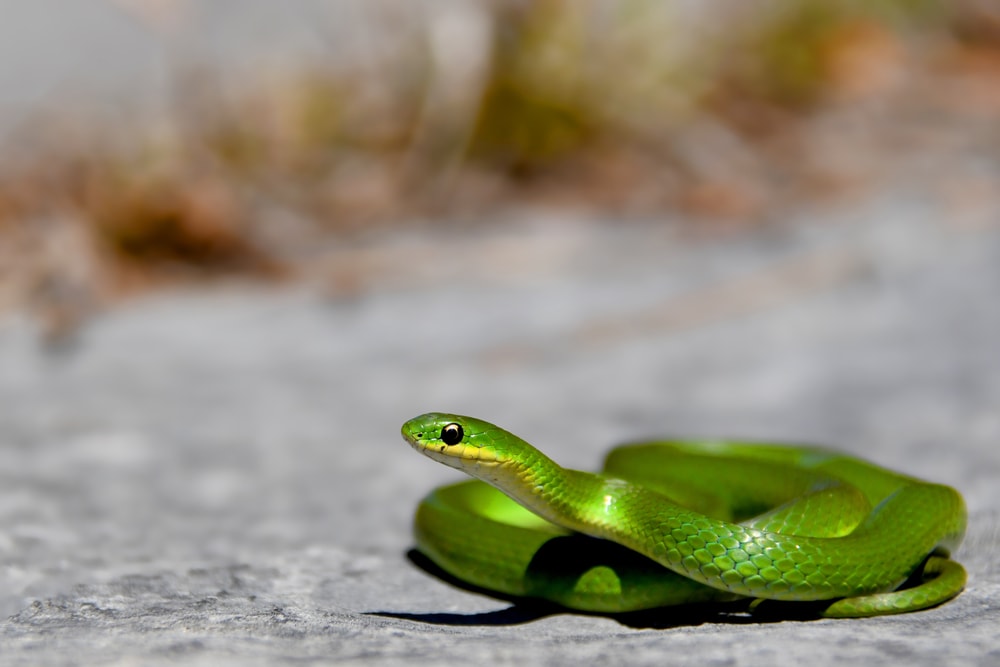
Smooth Greensnake (Opheodrys vernalis) is another slender green snake, often 1-4 feet, with a bright green body, pale belly, and low-vegetation habits. Its range points mainly to eastern, Gulf Coast, and wetter river-system settings.
Shrubs, vines, brushy stream edges, wet meadows, and low vegetation are the places to picture it. A green snake on vegetation is a very different clue set from a greenish snake crossing bare ground.
| Key detail | What to look for |
|---|---|
| Adult size | often 1-4 feet |
| Fast ID cue | bright green body, white or pale belly, and climbing behavior in low vegetation |
| Typical Texas habitat | shrubs, vines, brushy stream edges, wet meadows, and low vegetation |
| Texas range | mainly eastern Texas, the Gulf Coast, and wetter river systems |
| Bite / venom note | Nonvenomous slender green snake; usually in shrubs or vines |
37. South Texas Groundsnake
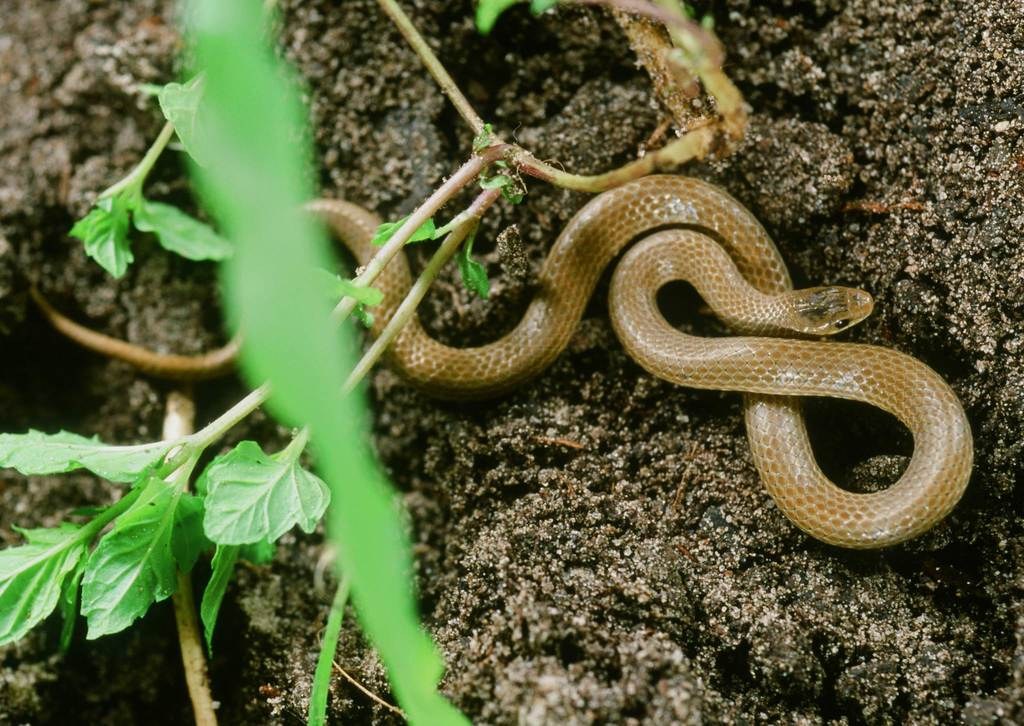
South Texas Groundsnake (Sonora taylori) is a small dry-country groundsnake of South Texas thornscrub, grassland edges, sandy washes, and open brush. Adults are often 1-4 feet, though many groundsnakes look smaller in the hand or in photos.
This is a quiet locality-driven ID. Small size, smooth scales, dry open cover, and the right county should line up before separating it from other Sonora groundsnakes.
| Key detail | What to look for |
|---|---|
| Adult size | often 1-4 feet |
| Fast ID cue | small smooth groundsnake of dry South Texas brush and sandy washes |
| Typical Texas habitat | open scrub, grasslands, dry woods, sandy washes, roadsides, and sunny field edges |
| Texas range | central, southern, or western Texas depending on local soils and cover |
| Bite / venom note | Nonvenomous groundsnake; locality separates it from similar Sonora species |
38. Southwestern Black-headed Snake
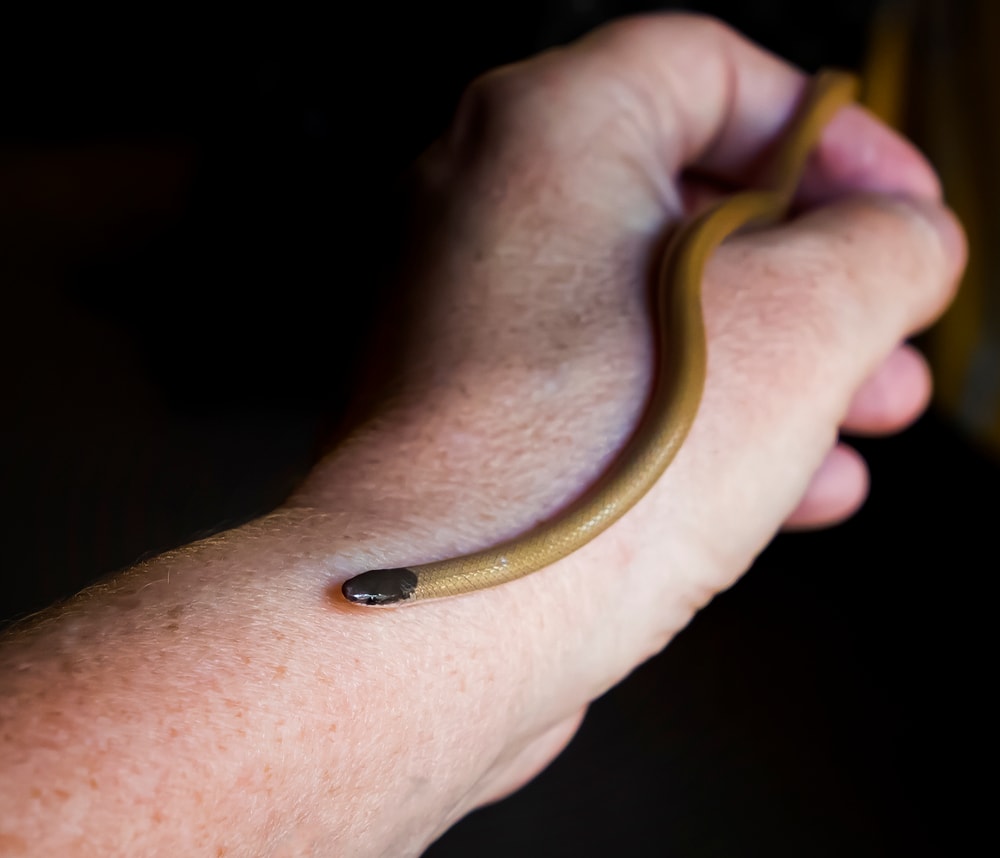
Southwestern Black-headed Snake (Tantilla hobartsmithi) is a small black-headed snake, usually 10-24 inches, from loose soil, leaf litter, rotting logs, compost, damp gardens, and shaded woodland edges. The range puts it in central, southern, or western Texas depending on soils and cover.
Because several small snakes share the same hidden lifestyle, scale matters. A close look at head color, body proportions, and the exact county is more useful than a quick color label.
| Key detail | What to look for |
|---|---|
| Adult size | usually 10-24 inches |
| Fast ID cue | small tan body with a black head cap in rocky western or southern cover |
| Typical Texas habitat | loose soil, leaf litter, rotting logs, compost, damp gardens, and shaded woodland edges |
| Texas range | central, southern, or western Texas depending on local soils and cover |
| Bite / venom note | Nonvenomous tiny snake; usually under soil, logs, or leaf litter |
39. Speckled Kingsnake
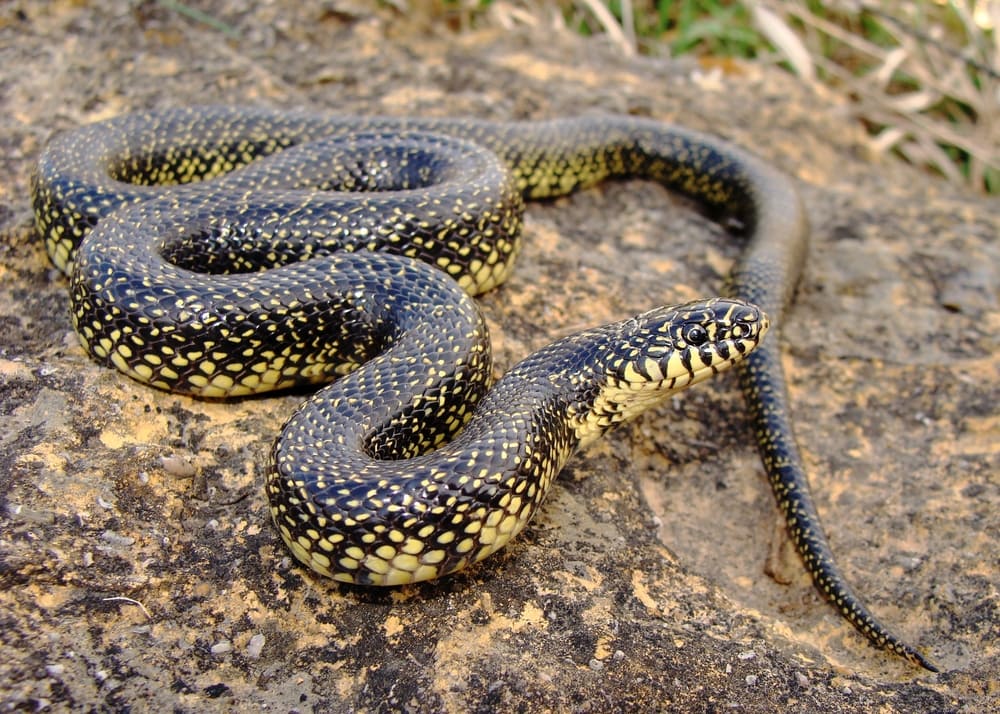
Speckled Kingsnake (Lampropeltis holbrooki) is a glossy kingsnake of eastern and central Texas, often 1-4 feet, with light speckling scattered across a darker body. It uses woodland edges, farms, prairie margins, rocky cover, and old buildings near prey.
The speckles can be obvious, but keep the whole snake in view. Smooth scales and a sturdy constrictor build are the cues that keep it apart from heavier pit vipers and other blotched snakes.
| Key detail | What to look for |
|---|---|
| Adult size | often 1-4 feet |
| Fast ID cue | smooth glossy scales, bold bands or blotches, and a strong constrictor build |
| Typical Texas habitat | woodlands, farms, rocky edges, pine-oak forests, field borders, and old buildings near cover |
| Texas range | eastern and central Texas, especially woodland edges, farms, and prairie margins |
| Bite / venom note | Nonvenomous constrictor; bold bands or blotches can confuse IDs |
40. Speckled Racer
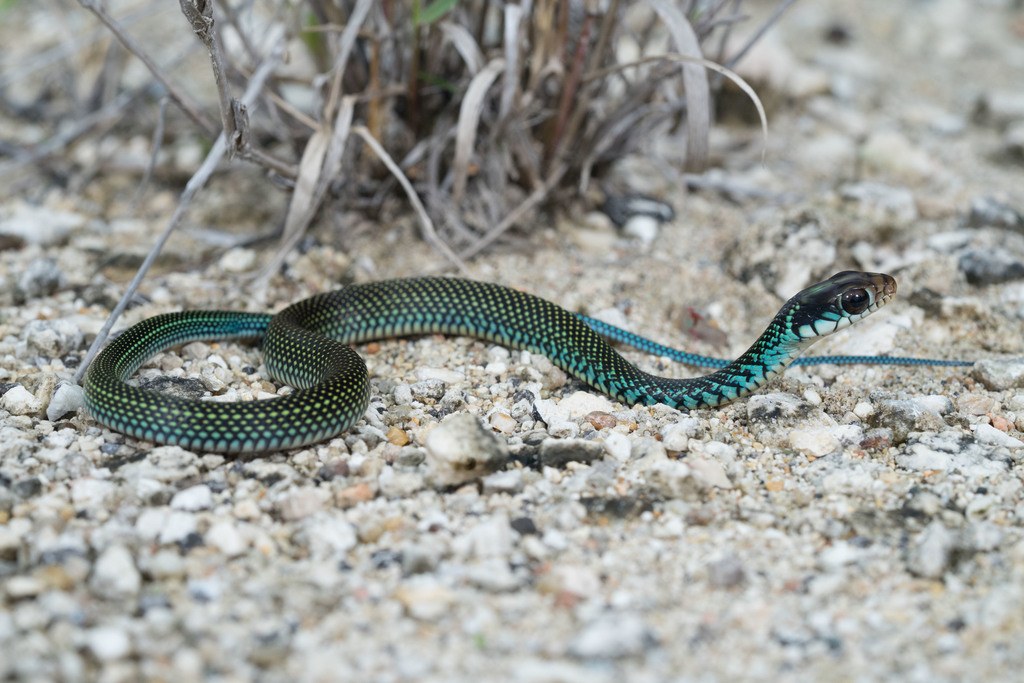
Speckled Racer (Drymobius margaritiferus) is a fast, tropical-looking racer of South Texas and lower Rio Grande brush. Adults are often 3-7 feet, with big eyes, a slim body, a long tail, and fine pale speckling that can flash greenish in good light.
Open scrub, riparian edges, grassland openings, roadsides, and sunny field borders fit an active daytime hunter. Speed and slender build are the field picture to remember.
| Key detail | What to look for |
|---|---|
| Adult size | often 3-7 feet |
| Fast ID cue | large eyes, slim body, fast daytime movement, and a long tapering tail |
| Typical Texas habitat | open scrub, grasslands, dry woods, sandy washes, roadsides, and sunny field edges |
| Texas range | South Texas and lower Rio Grande brush, riparian edges, and sunny openings |
| Bite / venom note | Nonvenomous fast hunter; long tail and large eyes |
41. Striped Whipsnake
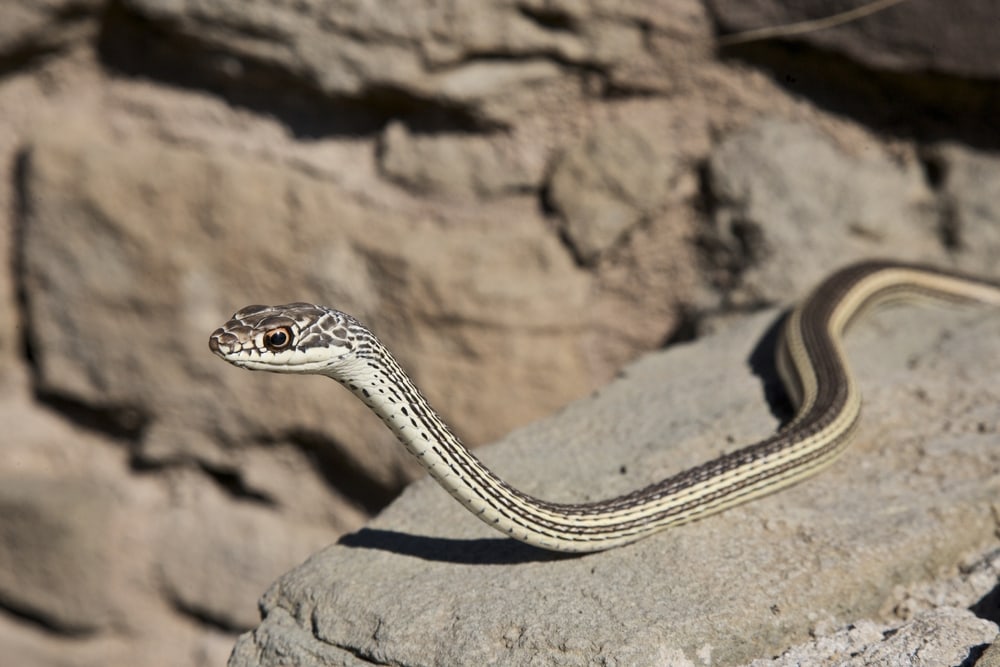
Striped Whipsnake (Masticophis taeniatus) is a slim whipsnake, often 1-4 feet, keyed here by large eyes, fast daytime movement, and a long tapering tail. The habitat leans open: scrub, grasslands, dry woods, sandy washes, roadsides, and sunny field edges.
A stripe can catch your eye, but movement and shape do more work. In a quick field view, a long, alert snake in sunny open cover is the better starting point.
| Key detail | What to look for |
|---|---|
| Adult size | often 1-4 feet |
| Fast ID cue | large eyes, slim body, fast daytime movement, and a long tapering tail |
| Typical Texas habitat | open scrub, grasslands, dry woods, sandy washes, roadsides, and sunny field edges |
| Texas range | far western Texas and Trans-Pecos slopes, canyons, and open scrub |
| Bite / venom note | Nonvenomous fast hunter; long tail and large eyes |
42. Tamaulipan Hook-nosed Snake
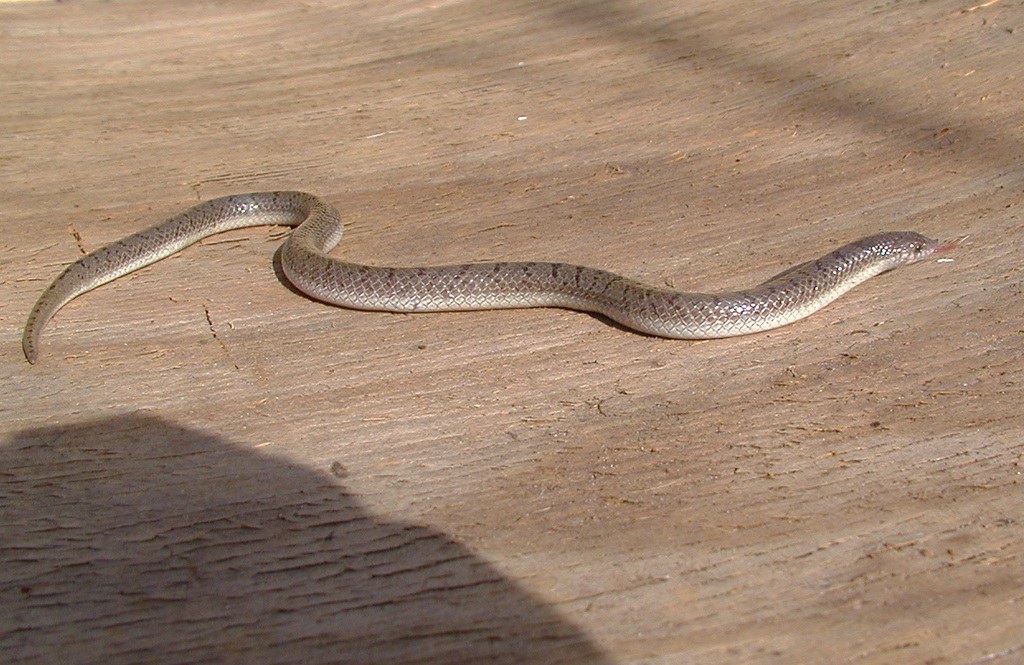
Tamaulipan Hook-nosed Snake (Ficimia streckeri) is a South Texas hook-nosed snake with a small body and a blunt, upturned snout. Adults are often 1-4 feet, and the best habitat picture is thornscrub, mesquite flats, grassland edges, and loose sandy or loamy soils.
The common name gives you the first thing to inspect, but locality finishes the ID. Compare the nose, body proportions, and thornscrub setting together rather than leaning on color alone.
| Key detail | What to look for |
|---|---|
| Adult size | often 1-4 feet |
| Fast ID cue | upturned snout, small sturdy body, and South Texas thornscrub locality |
| Typical Texas habitat | South Texas thornscrub, mesquite flats, grassland edges, and loose sandy or loamy soils |
| Texas range | South Texas and lower Rio Grande brush country |
| Bite / venom note | Nonvenomous hook-nosed snake; use snout shape and locality |
43. Texas Lyresnake
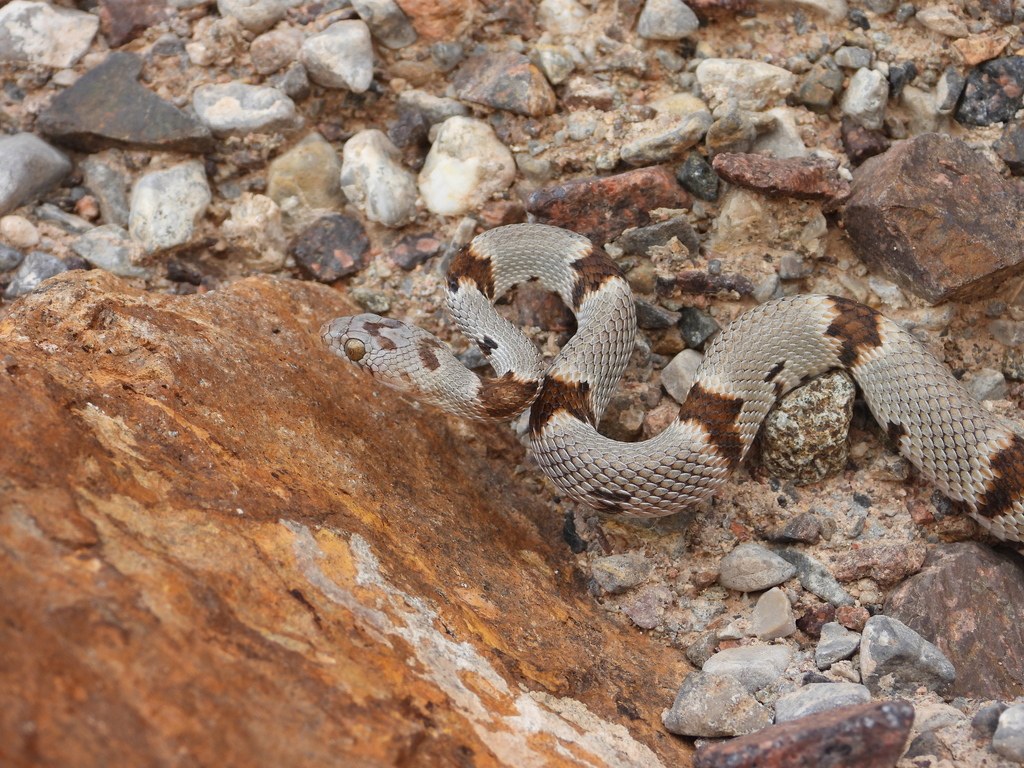
Texas Lyresnake (Trimorphodon vilkinsonii) is a Trans-Pecos and western rocky-desert snake, often 1-4 feet. Look for a slender nocturnal snake with blotches, vertical pupils, and a lyre-shaped mark on the head.
Rocky cover is the setting to keep in mind: canyon walls, cliffs, desert scrub, limestone outcrops, and ledges. A lyresnake ID should come from the whole scene, not from one mark in a cropped photo.
| Key detail | What to look for |
|---|---|
| Adult size | often 1-4 feet |
| Fast ID cue | lyre-shaped head mark, vertical pupils, blotched body, and rocky nighttime habitat |
| Typical Texas habitat | rocky canyons, cliffs, desert scrub, limestone outcrops, ledges, and canyon walls |
| Texas range | western Texas and Trans-Pecos rocky desert or canyon country |
| Bite / venom note | Nonvenomous in this guide; not a rattlesnake or copperhead |
44. Texas Scarletsnake
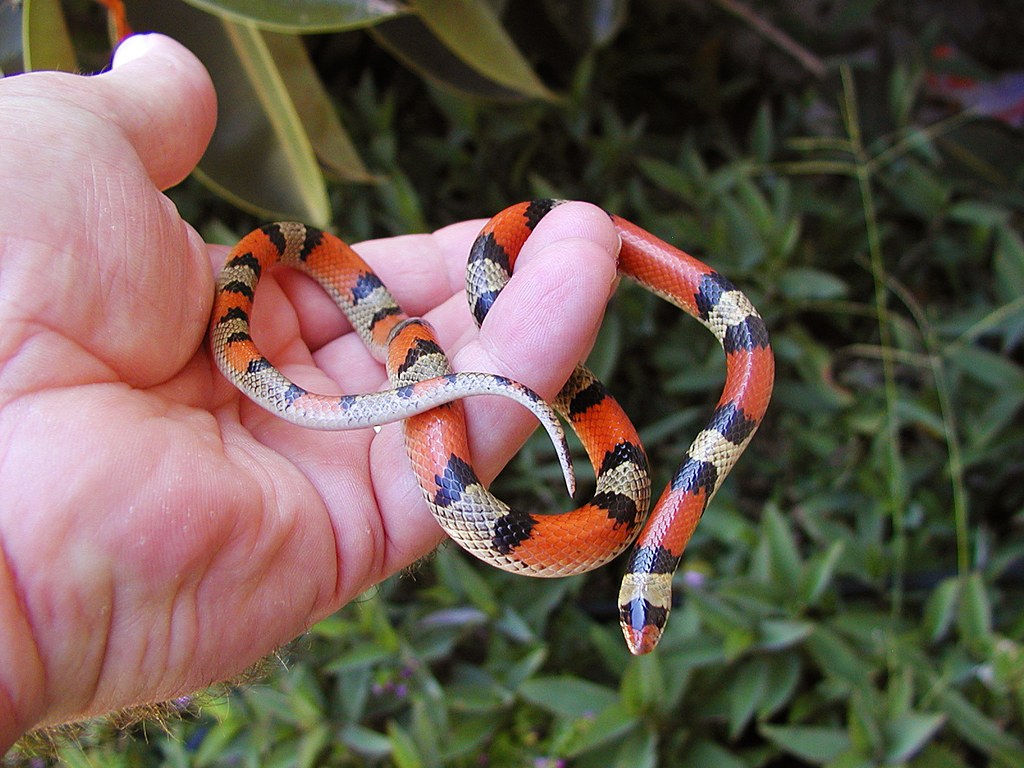
Texas Scarletsnake (Cemophora lineri) is a boldly marked scarletsnake, often 1-4 feet, placed in central, southern, or western Texas depending on soils and cover. Wooded edges, rocky margins, field borders, and old structures are all plausible cover here.
Bright bands or blotches can send people down the coral-snake path, but this is a nonvenomous constrictor. Body build, pattern layout, and range are the checks that matter.
| Key detail | What to look for |
|---|---|
| Adult size | often 1-4 feet |
| Fast ID cue | bold red, black, and pale blotches on a small constrictor body |
| Typical Texas habitat | woodlands, farms, rocky edges, pine-oak forests, field borders, and old buildings near cover |
| Texas range | central, southern, or western Texas depending on local soils and cover |
| Bite / venom note | Nonvenomous constrictor; bold bands or blotches can confuse IDs |
45. Trans-Pecos Black-headed Snake
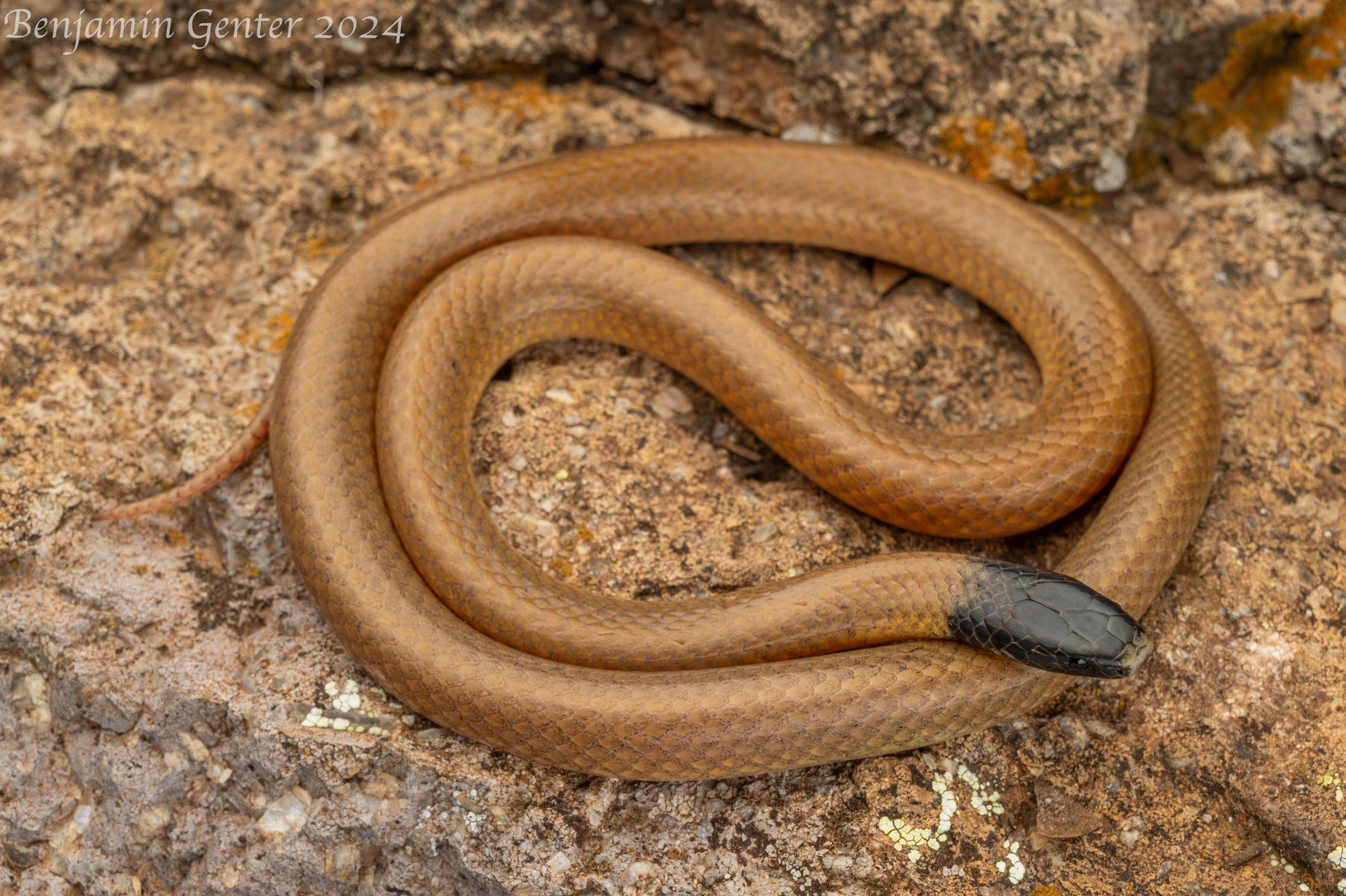
Trans-Pecos Black-headed Snake (Tantilla cucullata) is a small black-headed snake of western Texas and the Trans-Pecos, usually 10-24 inches. Loose soil, leaf litter, rotting logs, compost, damp gardens, and shaded woodland edges are the habitat clues.
This is another under-cover ID where the animal’s size changes everything. Head color, body proportions, and county records matter more than a quick glance at a plain body.
| Key detail | What to look for |
|---|---|
| Adult size | usually 10-24 inches |
| Fast ID cue | small pale body, black head cap, and Trans-Pecos rocky cover |
| Typical Texas habitat | loose soil, leaf litter, rotting logs, compost, damp gardens, and shaded woodland edges |
| Texas range | western Texas and Trans-Pecos rocky desert or canyon country |
| Bite / venom note | Nonvenomous tiny snake; usually under soil, logs, or leaf litter |
46. Trans-Pecos Ratsnake
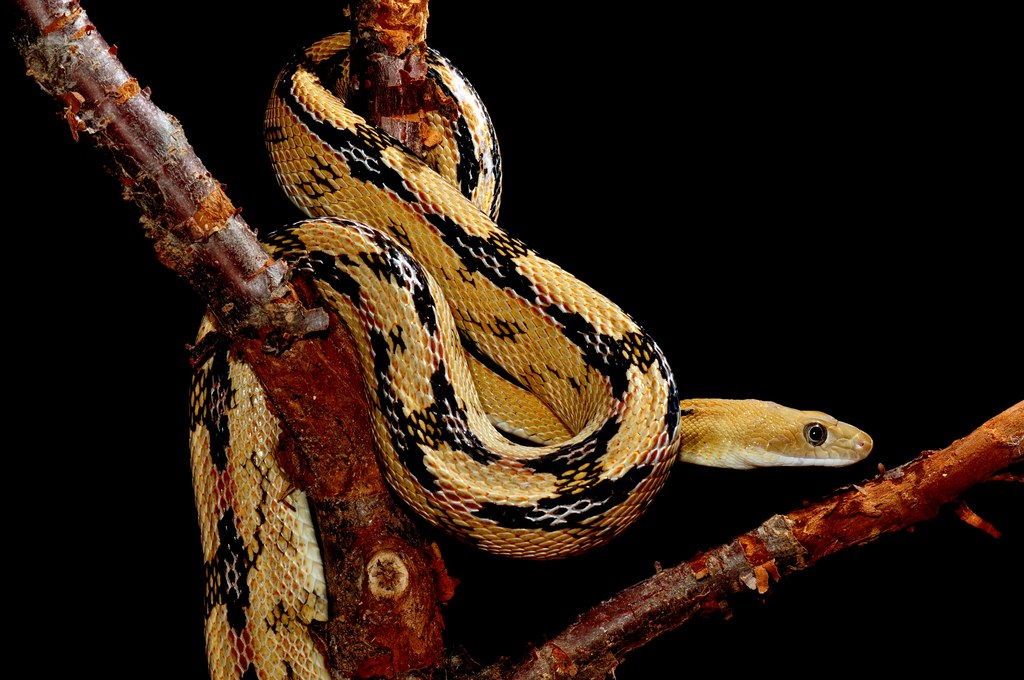
Trans-Pecos Ratsnake (Bogertophis subocularis) is a 3-7 foot western ratsnake tied here to the Trans-Pecos and rocky desert country. The fast cue is a slender climbing body, patterned back, and use of barns, trees, and edges.
Rocky edges, pine-oak woods, farm borders, and old buildings are the settings to keep in mind. The climbing shape helps separate it from heavier ground-hugging snakes.
| Key detail | What to look for |
|---|---|
| Adult size | often 3-7 feet |
| Fast ID cue | slender climbing body, patterned back, and frequent use of barns, trees, and edges |
| Typical Texas habitat | woodlands, farms, rocky edges, pine-oak forests, field borders, and old buildings near cover |
| Texas range | western Texas and Trans-Pecos rocky desert or canyon country |
| Bite / venom note | Nonvenomous climber; common around trees, barns, and edges |
47. Western Groundsnake
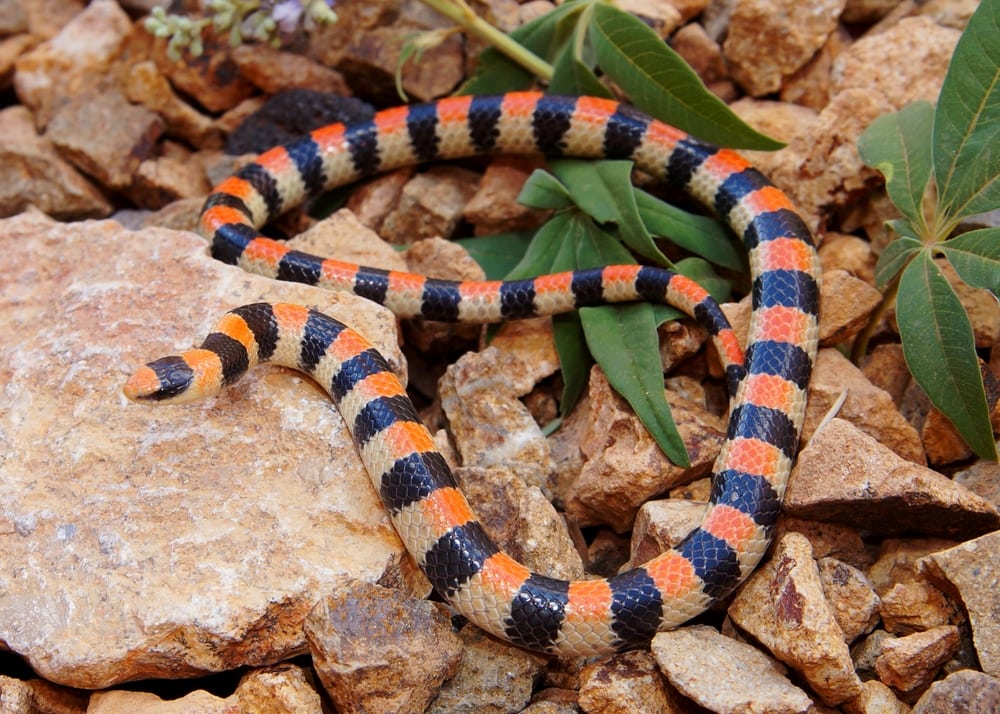
Western Groundsnake (Sonora semiannulata) is an open-cover groundsnake, often 1-4 feet, placed in central, southern, or western Texas depending on soils and cover. Dry woods, scrubby openings, sandy washes, and roadside edges all fit better than closed wet forest.
There is no magic mark, and that is fair. Groundsnakes often need the full combination: small body, pattern, dry setting, and exact locality.
| Key detail | What to look for |
|---|---|
| Adult size | often 1-4 feet |
| Fast ID cue | small smooth groundsnake with variable bands in dry rocky or sandy cover |
| Typical Texas habitat | open scrub, grasslands, dry woods, sandy washes, roadsides, and sunny field edges |
| Texas range | central, southern, or western Texas depending on local soils and cover |
| Bite / venom note | Nonvenomous groundsnake; small size and dry locality matter |
48. Western Milksnake
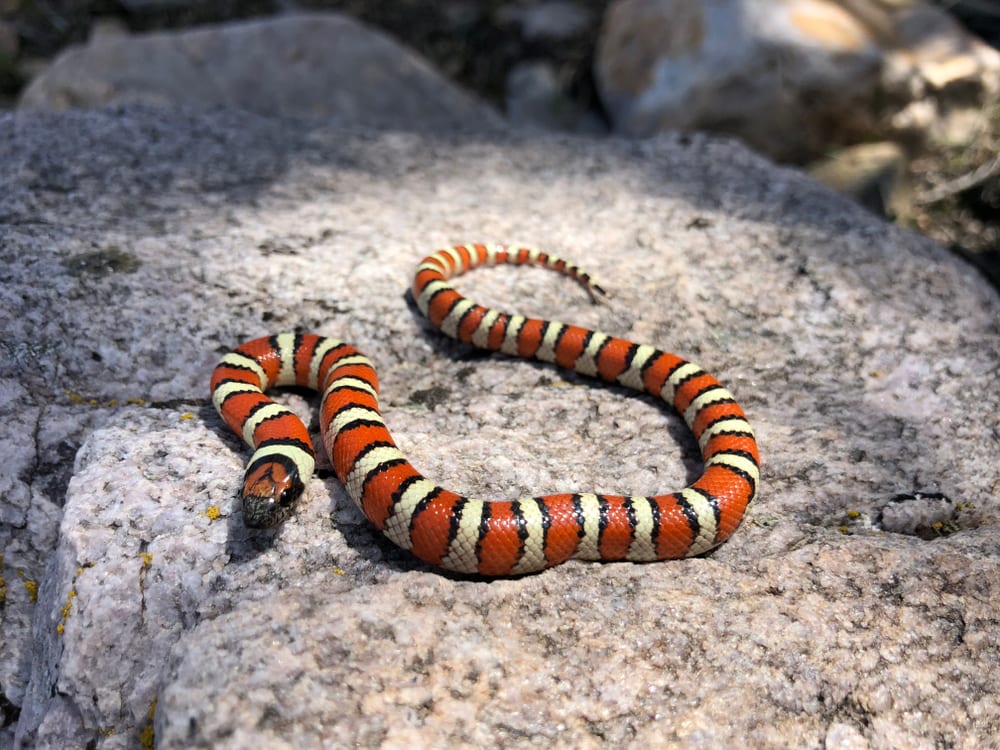
Western Milksnake (Lampropeltis gentilis) is a smooth, banded or blotched milksnake of prairie, open woodland, rocky margins, and farm edges. Adults are often 1-4 feet, with a glossy constrictor build.
Bright bands can invite coralsnake comparisons, but milksnakes have a different body feel and pattern layout. Use the whole body, habitat, and county before assuming every red-and-black snake is the same species.
| Key detail | What to look for |
|---|---|
| Adult size | often 1-4 feet |
| Fast ID cue | smooth glossy scales, bold bands or blotches, and a strong constrictor build |
| Typical Texas habitat | woodlands, farms, rocky edges, pine-oak forests, field borders, and old buildings near cover |
| Texas range | Panhandle, north Texas, and western prairie or open-woodland records |
| Bite / venom note | Nonvenomous constrictor; bold bands or blotches can confuse IDs |
49. Western Patch-nosed Snake
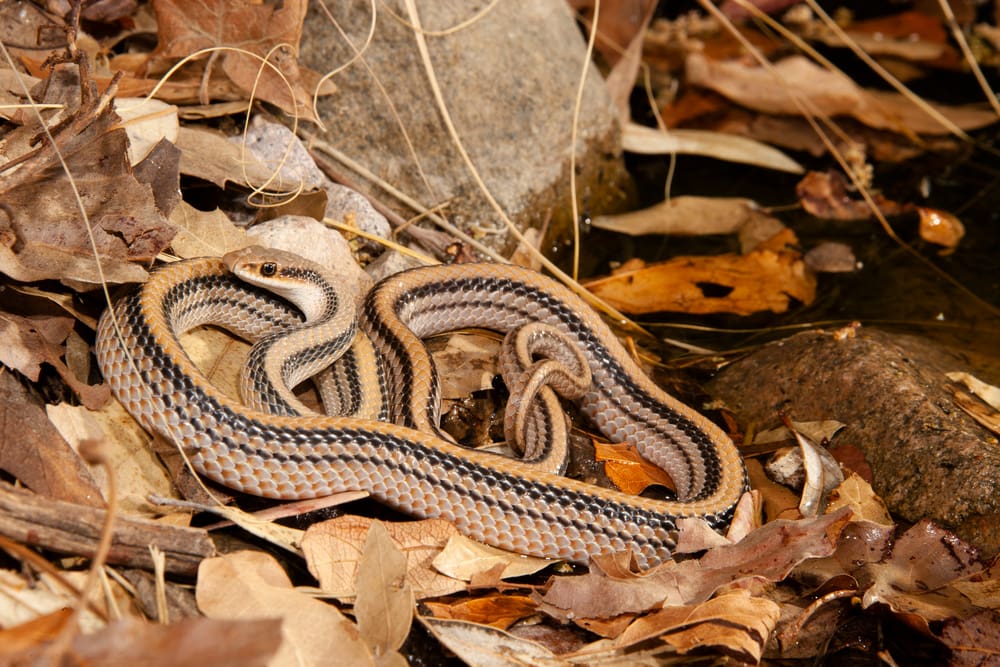
Western Patch-nosed Snake (Salvadora hexalepis) is an active dry-country snake with an enlarged patch-like scale on the snout. Adults are often 1-4 feet and use open scrub, desert grassland, sandy washes, roadsides, and sunny field edges.
Patch-nosed snake IDs are rarely won by color alone. The long body, active daytime movement, nose scale, and open-country setting need to agree before the name feels solid.
| Key detail | What to look for |
|---|---|
| Adult size | often 1-4 feet |
| Fast ID cue | enlarged snout scale, long active body, and open dry-country movement |
| Typical Texas habitat | open scrub, grasslands, dry woods, sandy washes, roadsides, and sunny field edges |
| Texas range | western, central, and southern Texas in dry open habitats |
| Bite / venom note | Nonvenomous active forager; compare with racers and whipsnakes |
50. Western Ratsnake
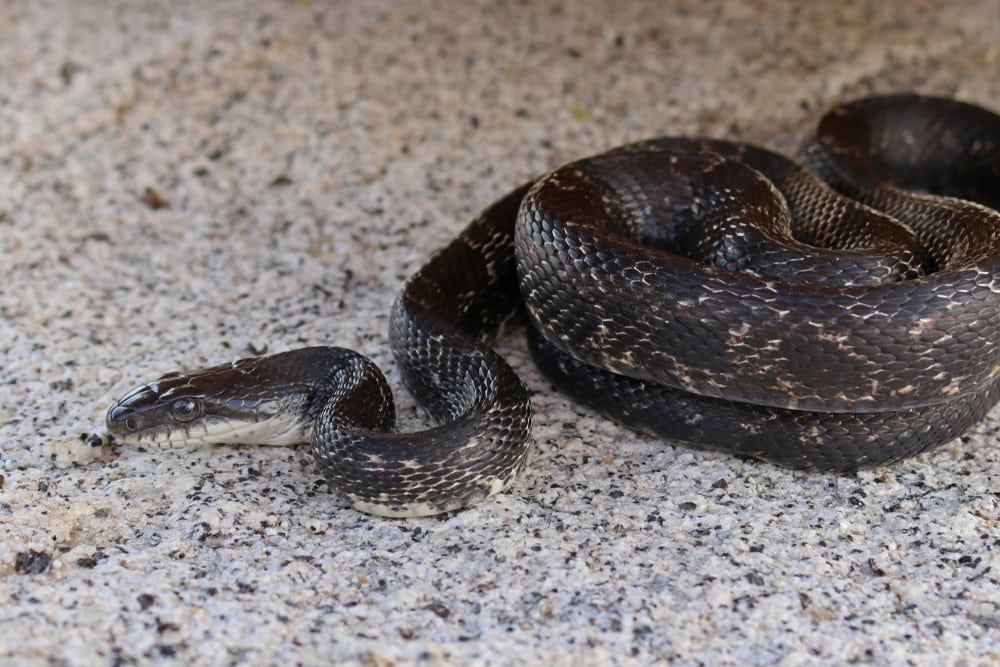
Western Ratsnake (Pantherophis obsoletus) is a large, familiar climber, often 3-7 feet, with a slender body, patterned back, and a habit of using trees, barns, rafters, and edge cover. It is one of the big snakes people notice around farms and wooded neighborhoods.
Around woodlands, rocky edges, pine-oak forests, field borders, and old buildings, size alone can make this snake look imposing. The lack of a rattle or facial pit is part of the ID.
| Key detail | What to look for |
|---|---|
| Adult size | often 3-7 feet |
| Fast ID cue | slender climbing body, patterned back, and frequent use of barns, trees, and edges |
| Typical Texas habitat | woodlands, farms, rocky edges, pine-oak forests, field borders, and old buildings near cover |
| Texas range | eastern and central Texas around woods, farms, barns, and edge habitat |
| Bite / venom note | Nonvenomous climber; common around trees, barns, and edges |
Small woodland snakes, hognoses, and secretive hunters
51. Chihuahuan Nightsnake
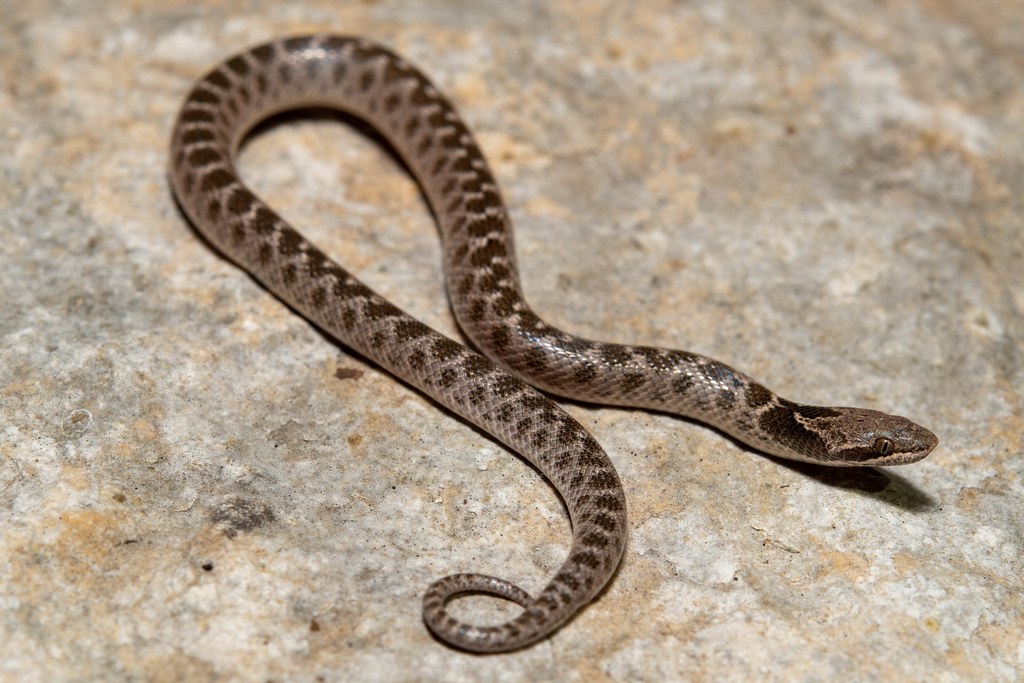
Chihuahuan Nightsnake (Hypsiglena jani) is a small night-active snake of western Texas and Trans-Pecos rocky desert habitat. Adults are usually 10-24 inches, with a slim body, blotched pattern, and a secretive habit of moving after dark.
Avoid making this ID from a single color mark. Shape, pattern, rocky cover, nighttime behavior, and exact county are the safer combination.
| Key detail | What to look for |
|---|---|
| Adult size | usually 10-24 inches |
| Fast ID cue | small nocturnal snake with blotches, slim body, and rocky desert locality |
| Typical Texas habitat | rocky desert slopes, canyon bottoms, thornscrub, arroyos, and loose cover |
| Texas range | western Texas and Trans-Pecos rocky desert or canyon country |
| Bite / venom note | Nonvenomous small night snake; rocky western locality matters |
52. Eastern Hog-nosed Snake
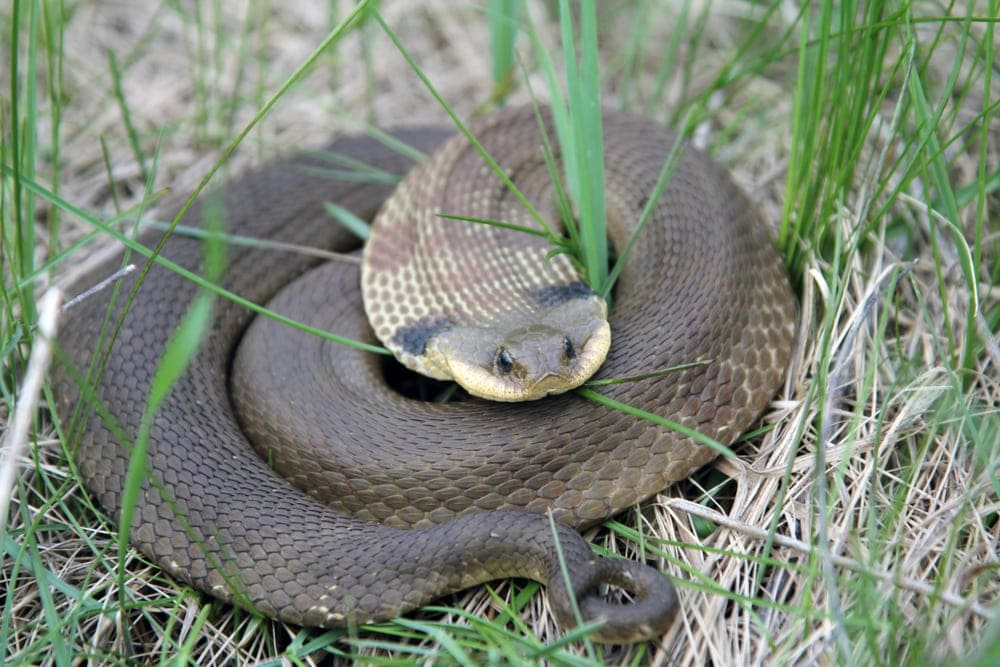
Eastern Hog-nosed Snake (Heterodon platirhinos) is the upturned-snout snake of sandy pine woods, open woodland, fields, and toad-rich edges. Adults are often 1-4 feet, with a broad head and a famous flattened-neck defensive display.
The nose and display usually settle the first pass. Sandy eastern habitat and locality help separate it from the western and Mexican hognose entries.
| Key detail | What to look for |
|---|---|
| Adult size | often 1-4 feet |
| Fast ID cue | upturned snout, wide defensive neck display, and sandy habitat |
| Typical Texas habitat | sandy soils, pine woods, open woodlands, fields, and toad-rich edges |
| Texas range | mainly eastern Texas in sandy pine, open woodland, and field-edge habitat |
| Bite / venom note | Nonvenomous toad hunter; upturned snout and defensive display |
53. Mexican Hog-nosed Snake
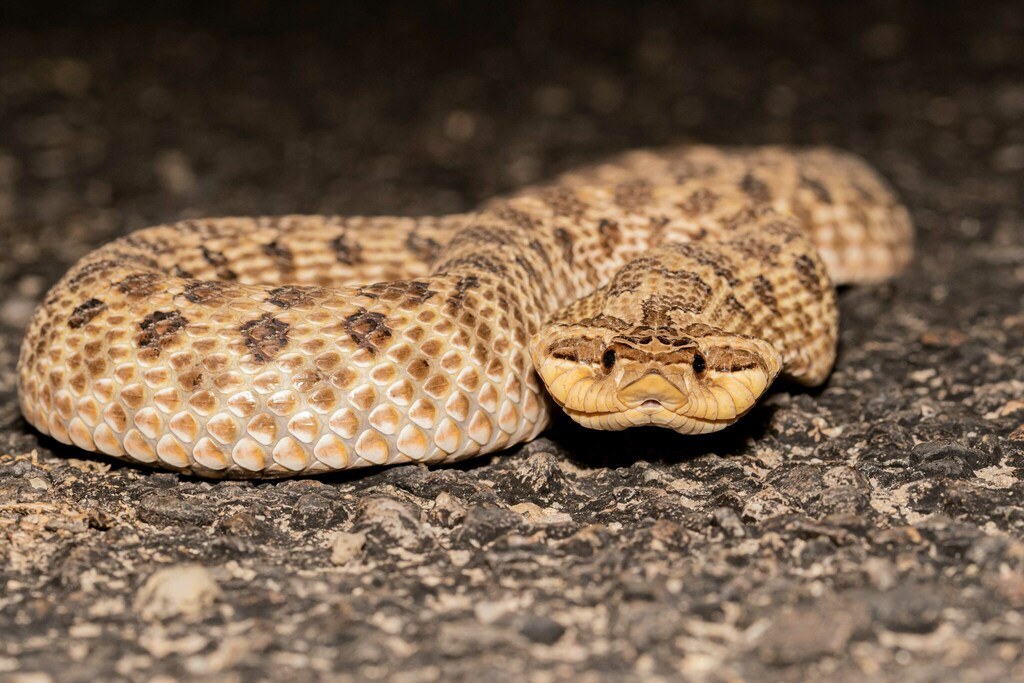
Mexican Hog-nosed Snake (Heterodon kennerlyi) is a dry-country hognose, often 1-4 feet, with an upturned snout, stout body, and wide defensive neck display. It fits sandy soils, open grassland, desert scrub, fields, and toad-rich edges.
The hognose shape is distinctive, but the species-level call still needs range. Compare the county and habitat with the other hognose entries before naming a sandy-habitat snake from a photo.
| Key detail | What to look for |
|---|---|
| Adult size | often 1-4 feet |
| Fast ID cue | upturned snout, wide defensive neck display, and sandy habitat |
| Typical Texas habitat | sandy soils, pine woods, open woodlands, fields, and toad-rich edges |
| Texas range | southern and western Texas where sandy open country fits hognose habitat |
| Bite / venom note | Nonvenomous toad hunter; upturned snout and defensive display |
54. Northern Cat-eyed Snake
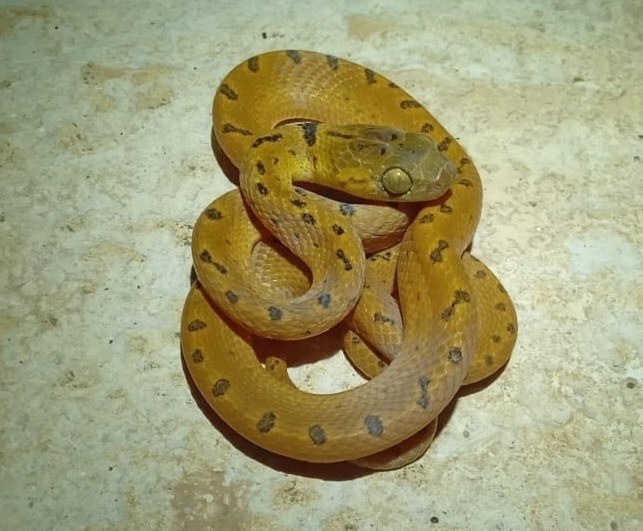
Northern Cat-eyed Snake (Leptodeira septentrionalis) is a slender, blotched South Texas snake with vertical pupils and a mostly nocturnal rhythm. Adults are often 1-4 feet, and records fit brushy lowlands, riparian thickets, rocky edges, and humid cover.
The name points to the eyes, but the whole animal still matters. With cat-eyed snakes, a cropped head photo is not as useful as a clear body view plus location.
| Key detail | What to look for |
|---|---|
| Adult size | often 1-4 feet |
| Fast ID cue | vertical pupils, slender blotched body, nocturnal habits, and South Texas locality |
| Typical Texas habitat | South Texas brush, riparian thickets, rocky edges, humid lowland cover, and woodland margins |
| Texas range | South Texas and the lower Rio Grande region |
| Bite / venom note | Nonvenomous in this guide; slender nocturnal snake, not a pit viper |
55. Red-bellied Mudsnake
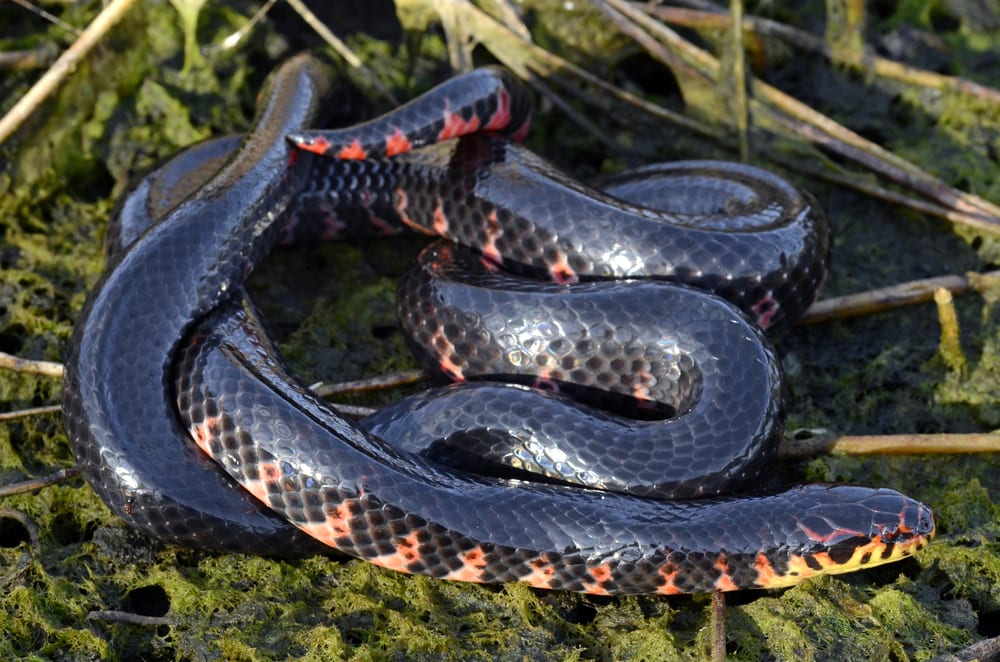
Red-bellied Mudsnake (Farancia abacura) is a glossy wetland snake with a dark body and red or pink belly markings. Its range points mainly to eastern Texas, the Gulf Coast, and wetter river systems, where swamps and sloughs give it cover.
Swamps, marshes, ponds, cypress sloughs, and river edges are the right scene. The red belly marks and wet habitat give this snake a very different look from small upland litter snakes.
| Key detail | What to look for |
|---|---|
| Adult size | often 3-5 feet |
| Fast ID cue | shiny dark body with red or pink belly markings near swampy water |
| Typical Texas habitat | swamps, marshes, ponds, cypress sloughs, river edges, and other wet habitats |
| Texas range | mainly eastern Texas, the Gulf Coast, and wetter river systems |
| Bite / venom note | Nonvenomous swamp hunter; glossy body and red belly marks |
56. Regal Black-striped Snake
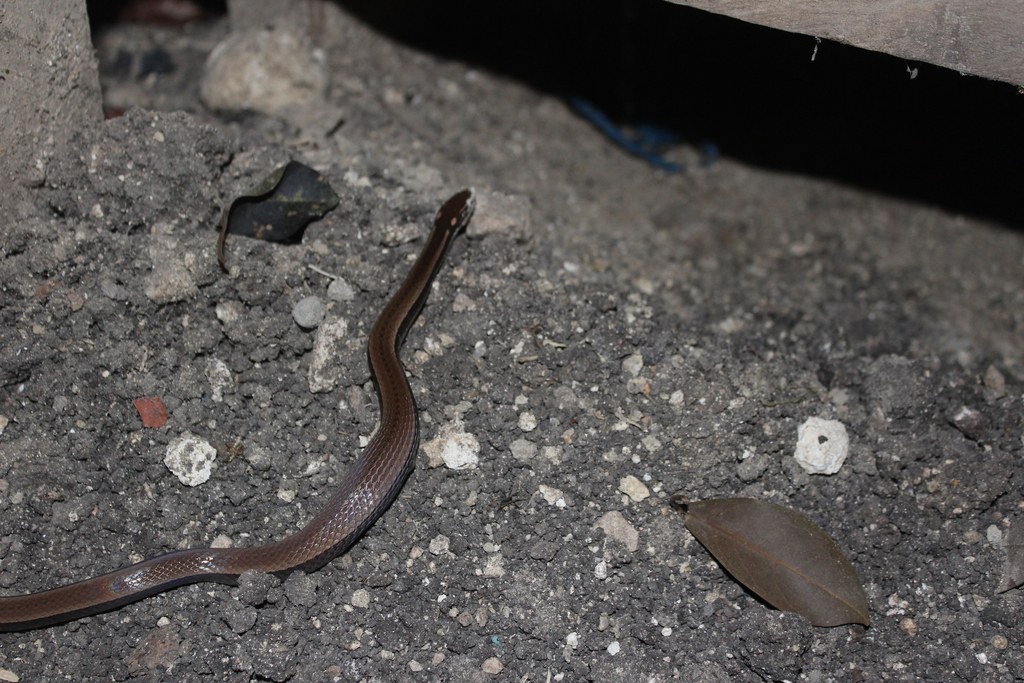
Regal Black-striped Snake (Coniophanes imperialis) is a South Texas snake with dark lengthwise striping on a tan to brown body. Adults are often 1-4 feet, and the habitat picture is brush, shaded grass, riparian edges, and moist leaf litter.
Use the stripes, slim body, and lower Rio Grande locality together. It is not a species to force from a single dark line in a cropped photo.
| Key detail | What to look for |
|---|---|
| Adult size | often 1-4 feet |
| Fast ID cue | dark lengthwise stripes on a slim tan or brown body |
| Typical Texas habitat | South Texas brush, shaded grass, moist leaf litter, riparian edges, and low cover |
| Texas range | South Texas and lower Rio Grande brush country |
| Bite / venom note | Nonvenomous striped snake; locality and stripe layout matter |
57. Ring-necked Snake
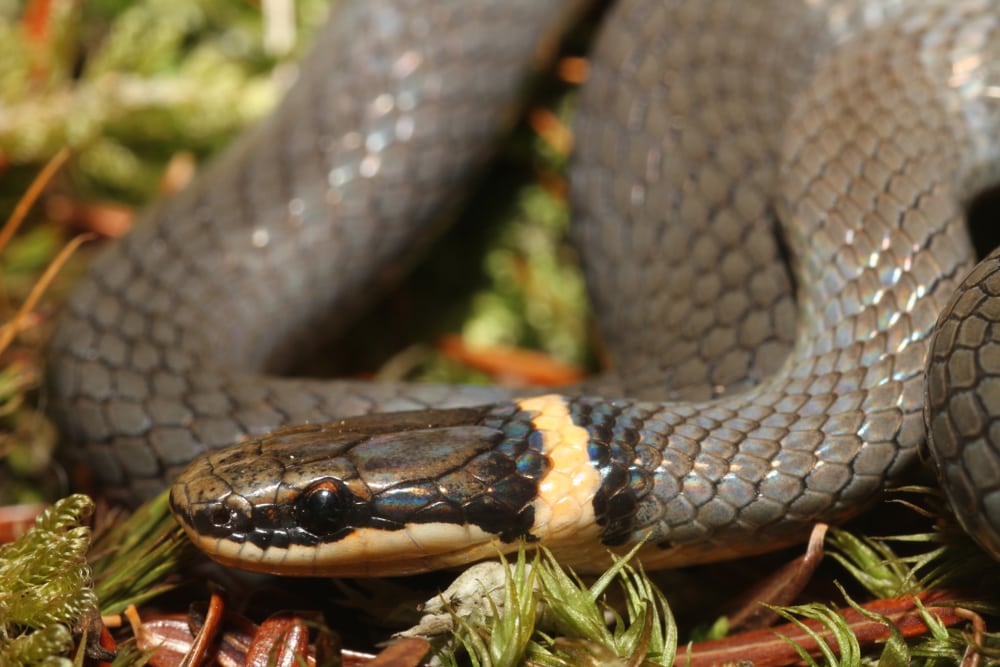
Ring-necked Snake (Diadophis punctatus) is a small snake, usually 10-24 inches, with a dark back, pale neck ring, and bright yellow to orange belly. It favors damp leaf litter, rotting logs, loose soil, shaded gardens, and woodland margins.
Think low and damp. The belly color is often the detail people miss until the snake curls, while the pale neck ring is the quick field cue from above.
| Key detail | What to look for |
|---|---|
| Adult size | usually 10-24 inches |
| Fast ID cue | dark back, light neck ring, and bright yellow to orange belly |
| Typical Texas habitat | loose soil, leaf litter, rotting logs, compost, damp gardens, and shaded woodland edges |
| Texas range | eastern and central Texas where damp woodland or garden cover persists |
| Bite / venom note | Nonvenomous small snake; neck ring and bright belly are the clues |
58. Western Hog-nosed Snake
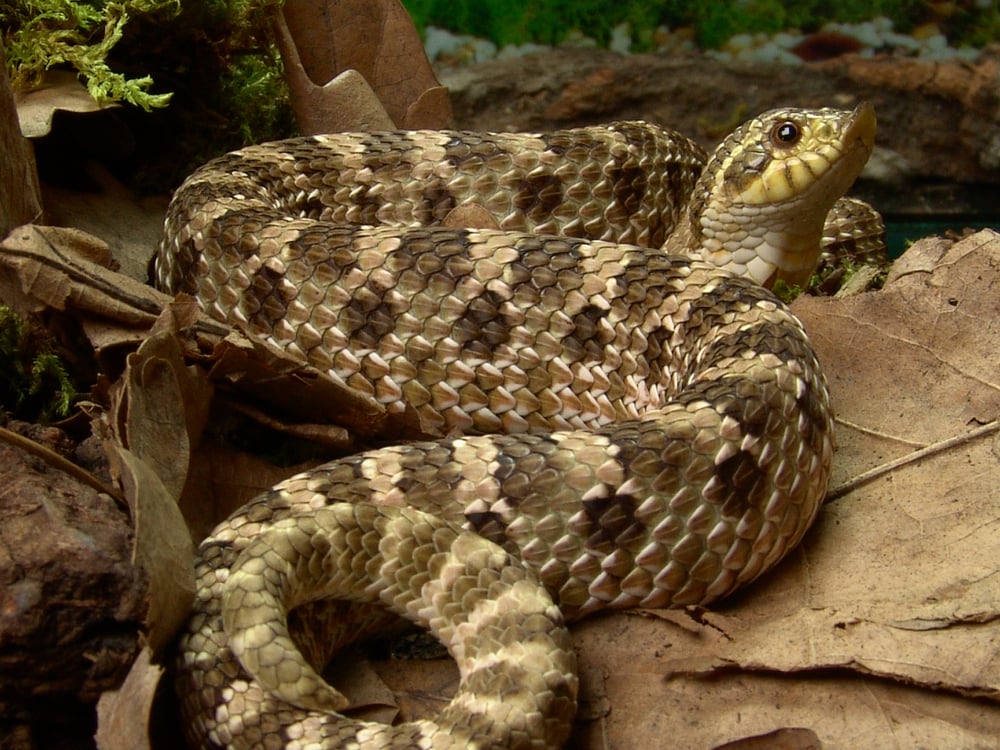
Western Hog-nosed Snake (Heterodon nasicus) is a plains and desert-edge hognose of sandy soils, open grassland, fields, and toad-rich edges. Adults are often 1-4 feet, with an upturned snout and a wide defensive neck display.
Do not stop at the nose. Compare locality with the other hognose entries before naming a sandy-habitat snake from a photo.
| Key detail | What to look for |
|---|---|
| Adult size | often 1-4 feet |
| Fast ID cue | upturned snout, wide defensive neck display, and sandy habitat |
| Typical Texas habitat | sandy soils, pine woods, open woodlands, fields, and toad-rich edges |
| Texas range | Panhandle, western, and central Texas prairies, sandy soils, and open grasslands |
| Bite / venom note | Nonvenomous toad hunter; upturned snout and defensive display |
59. Western Wormsnake
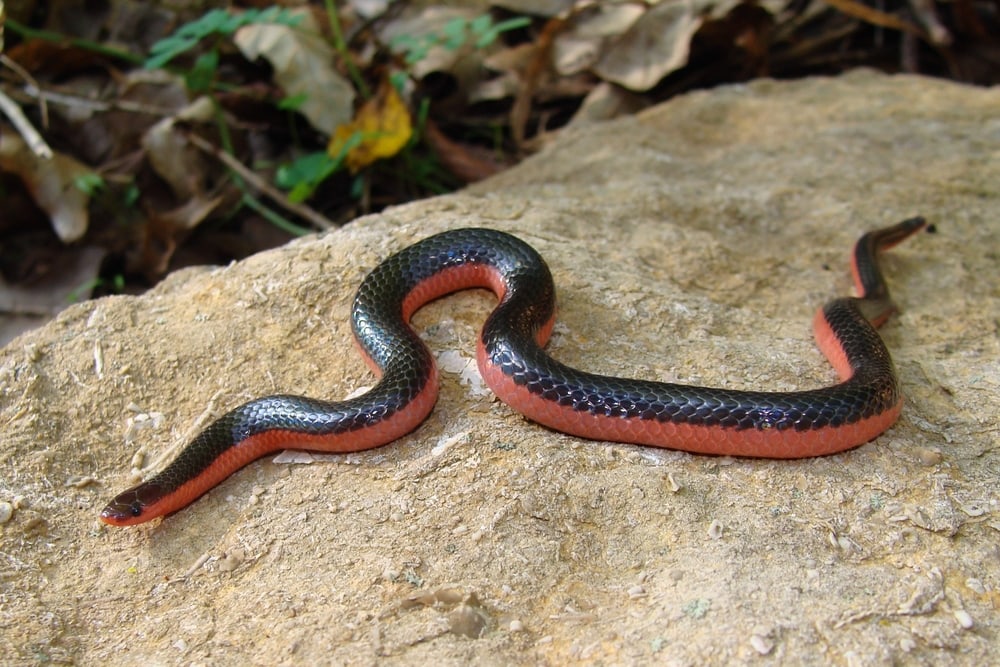
Western Wormsnake (Carphophis vermis) is a small, wormlike snake, usually 7-16 inches, with smooth glossy scales and a life mostly under soil, logs, or leaf litter. Texas records fit damp wooded soils and shaded eastern or north-central cover.
This is not a snake you identify by dramatic pattern. Size, smooth body texture, and the hidden loose-soil or leaf-litter setting are the details to hold onto.
| Key detail | What to look for |
|---|---|
| Adult size | usually 7-16 inches |
| Fast ID cue | small wormlike body, hidden life under soil or logs, and smooth glossy scales |
| Typical Texas habitat | loose soil, leaf litter, rotting logs, compost, damp gardens, and shaded woodland edges |
| Texas range | eastern and north-central Texas in damp wooded soils and shaded cover |
| Bite / venom note | Nonvenomous tiny snake; usually under soil, logs, or leaf litter |
Watersnakes, gartersnakes, ribbonsnakes, and wetland species
60. Black-necked Gartersnake
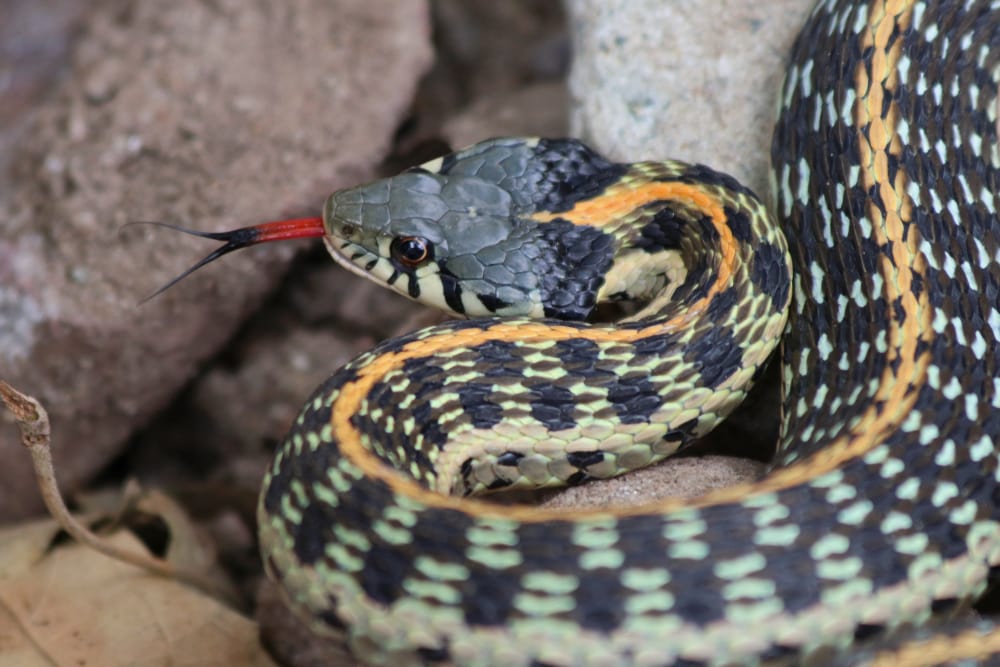
Black-necked Gartersnake (Thamnophis cyrtopsis) is a striped wet-edge snake with a slim build, usually about 18-48 inches. Look for dark neck markings, long stripes, and a habit of using stream edges, wet meadows, pond margins, and grassy cover near water.
Keep the head and stripe pattern in context. A gartersnake in wet grass or along a creek edge should be compared by stripe layout, body shape, and county.
| Key detail | What to look for |
|---|---|
| Adult size | usually about 18-48 inches |
| Fast ID cue | long stripes, slim build, and frequent use of wet grass or stream edges |
| Typical Texas habitat | wet meadows, pond margins, stream edges, grasslands, and backyard edges near cover |
| Texas range | central and western Texas, especially streamside grass and wet canyon edges |
| Bite / venom note | Nonvenomous striped snake; often near wet grass or streams |
61. Brazos Watersnake
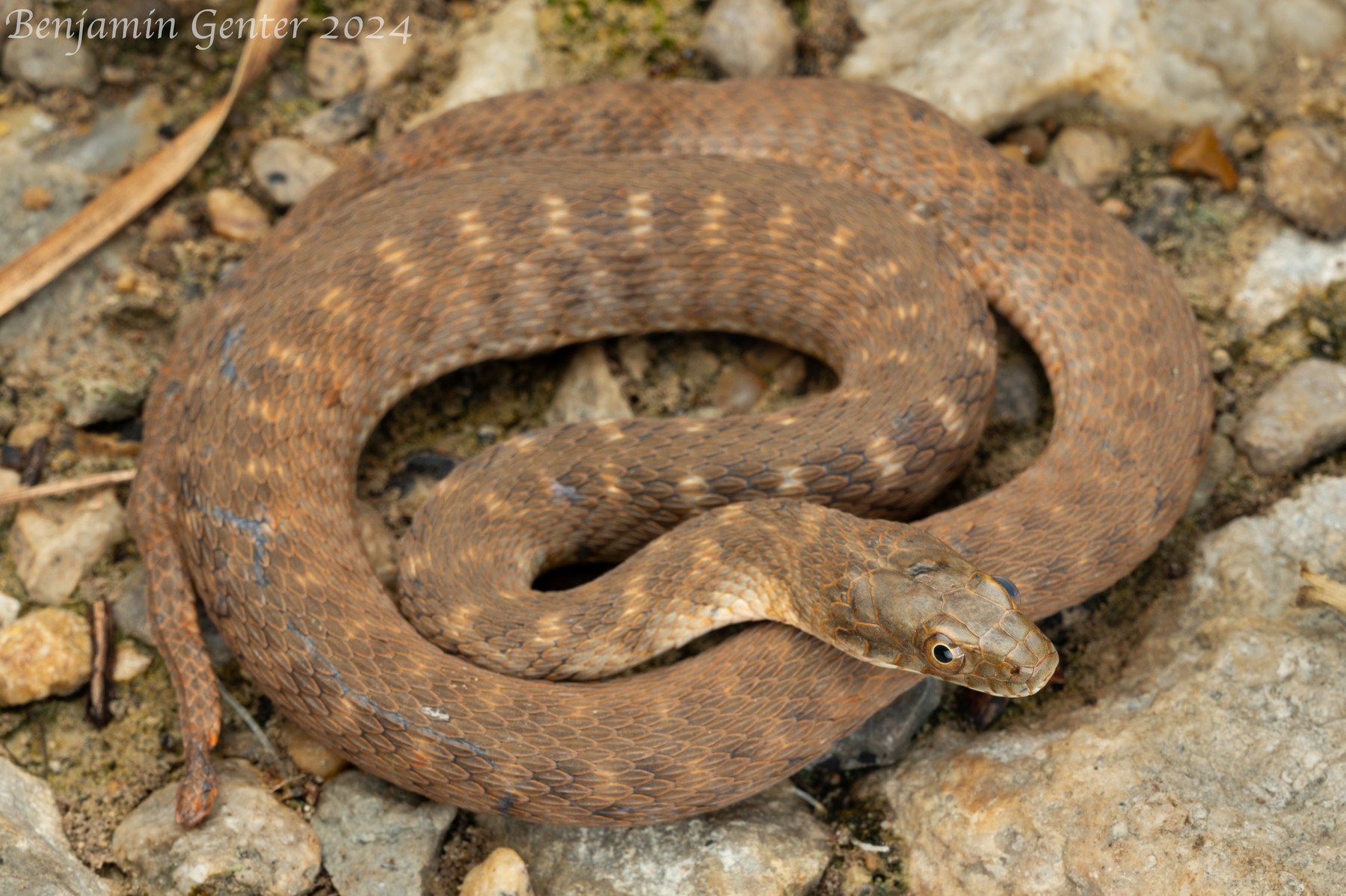
Brazos Watersnake (Nerodia harteri) is a river-country watersnake, usually about 18-48 inches, with round pupils and no rattle or facial pit. The name matters: think Brazos drainage, rocky river edges, and nearby central Texas water.
Water is the first clue. A heavy Nerodia close to rivers or rocky water edges can be mistaken for a cottonmouth, so pupils, head shape, and the missing pit-viper features matter.
| Key detail | What to look for |
|---|---|
| Adult size | usually about 18-48 inches |
| Fast ID cue | body found close to water, round pupils, and no rattle or facial pit |
| Typical Texas habitat | swamps, marshes, ponds, cypress sloughs, river edges, and other wet habitats |
| Texas range | Brazos River drainage and nearby central Texas rivers, reservoirs, and tributaries |
| Bite / venom note | Nonvenomous watersnake; common cottonmouth lookalike near water |
62. Checkered Gartersnake
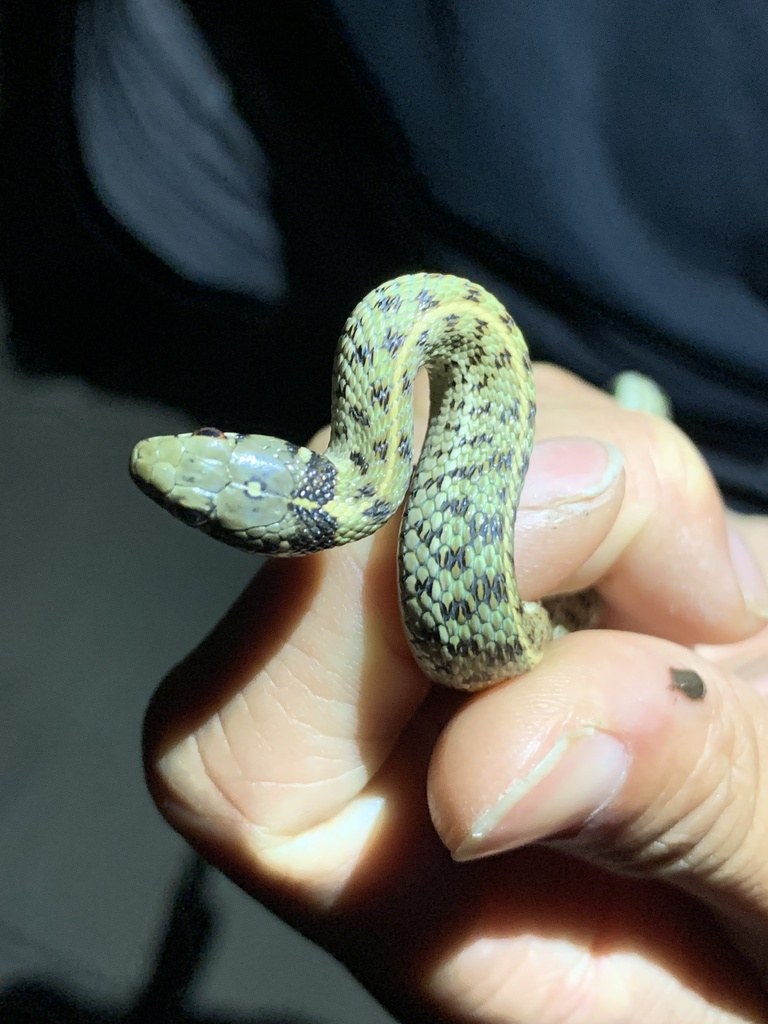
Checkered Gartersnake (Thamnophis marcianus) is a gartersnake with the striped build you expect plus a checkered pattern that gives the common name away. Adults are usually about 18-48 inches and use wet grass, pond margins, stream edges, irrigated yards, and open fields.
The checkering is useful, but the slim gartersnake shape and wet-edge setting complete the ID. This is one of the easier striped snakes to recognize when the body is fully visible.
| Key detail | What to look for |
|---|---|
| Adult size | usually about 18-48 inches |
| Fast ID cue | long stripes, slim build, and frequent use of wet grass or stream edges |
| Typical Texas habitat | wet meadows, pond margins, stream edges, grasslands, and backyard edges near cover |
| Texas range | widespread across Texas around wet grass, yards, fields, and stream edges |
| Bite / venom note | Nonvenomous striped snake; often near wet grass or streams |
63. Common Gartersnake
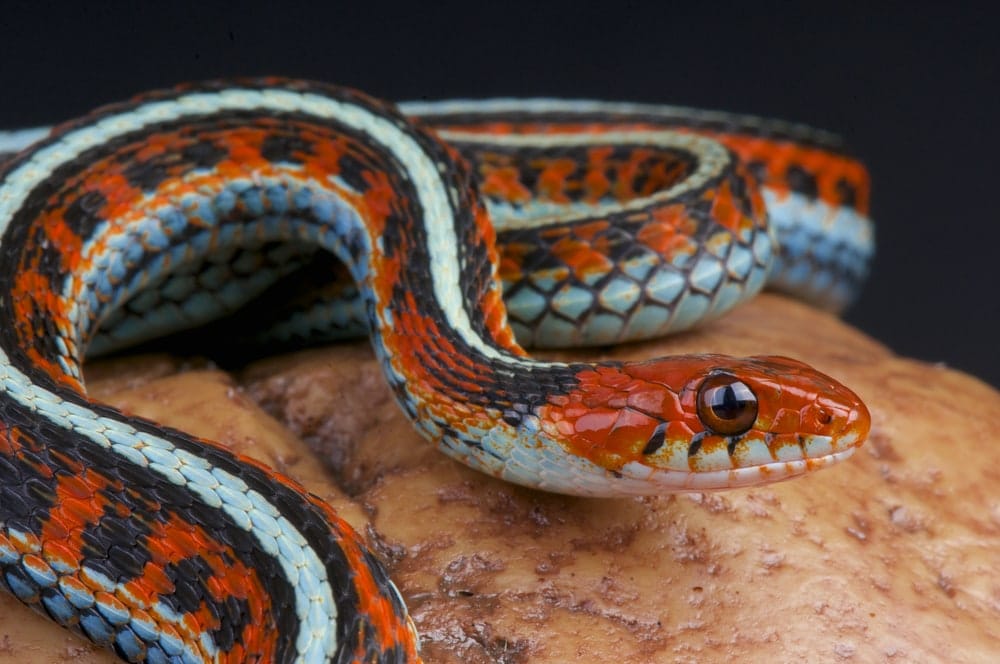
Common Gartersnake (Thamnophis sirtalis) is the familiar striped gartersnake shape: slim, long-lined, and usually about 18-48 inches. Texas records are patchy enough that the exact county and stripe layout matter.
Expect it around wet meadows, pond margins, stream edges, grasslands, and backyard edges near cover. In this group, habitat and stripe pattern are more useful than size alone.
| Key detail | What to look for |
|---|---|
| Adult size | usually about 18-48 inches |
| Fast ID cue | long stripes, slim build, and frequent use of wet grass or stream edges |
| Typical Texas habitat | wet meadows, pond margins, stream edges, grasslands, and backyard edges near cover |
| Texas range | patchy in eastern, northern, and central Texas near wet meadows and streams |
| Bite / venom note | Nonvenomous striped snake; often near wet grass or streams |
64. Common Watersnake
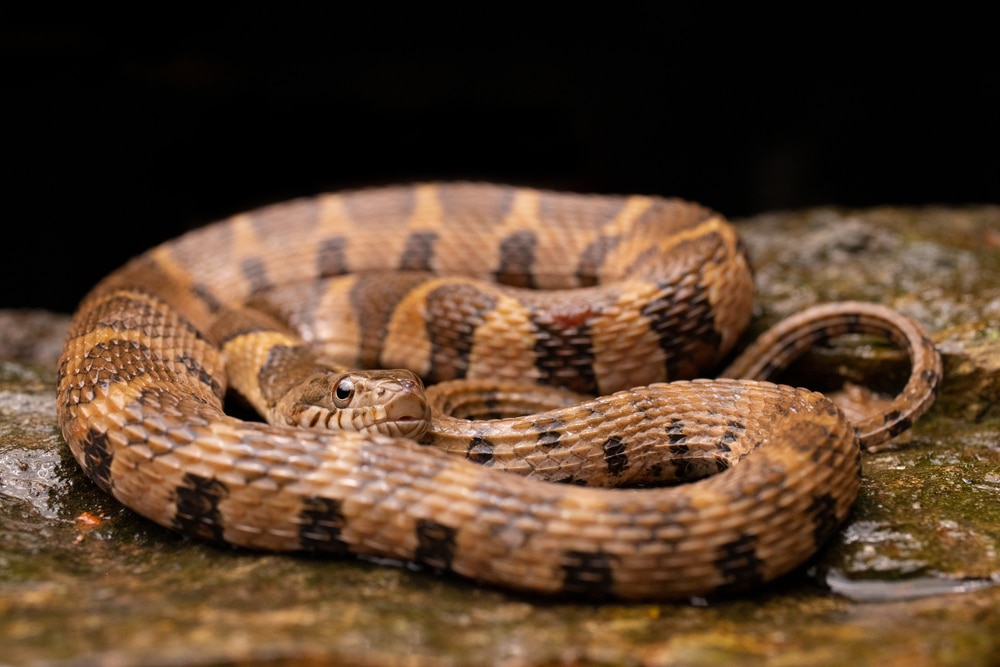
Common Watersnake (Nerodia sipedon) is a nonvenomous watersnake, usually about 18-48 inches, found close to water with round pupils and no rattle or facial pit. Texas records lean east and northeast, so locality matters before naming a Nerodia from a photo.
Swamps, marshes, ponds, cypress sloughs, river edges, and other wet habitats are the right places to compare. Many watersnakes look stocky in water, which is why the pit-viper features matter.
| Key detail | What to look for |
|---|---|
| Adult size | usually about 18-48 inches |
| Fast ID cue | body found close to water, round pupils, and no rattle or facial pit |
| Typical Texas habitat | swamps, marshes, ponds, cypress sloughs, river edges, and other wet habitats |
| Texas range | northeastern and eastern Texas where permanent water supports local records |
| Bite / venom note | Nonvenomous watersnake; common cottonmouth lookalike near water |
65. Concho Watersnake
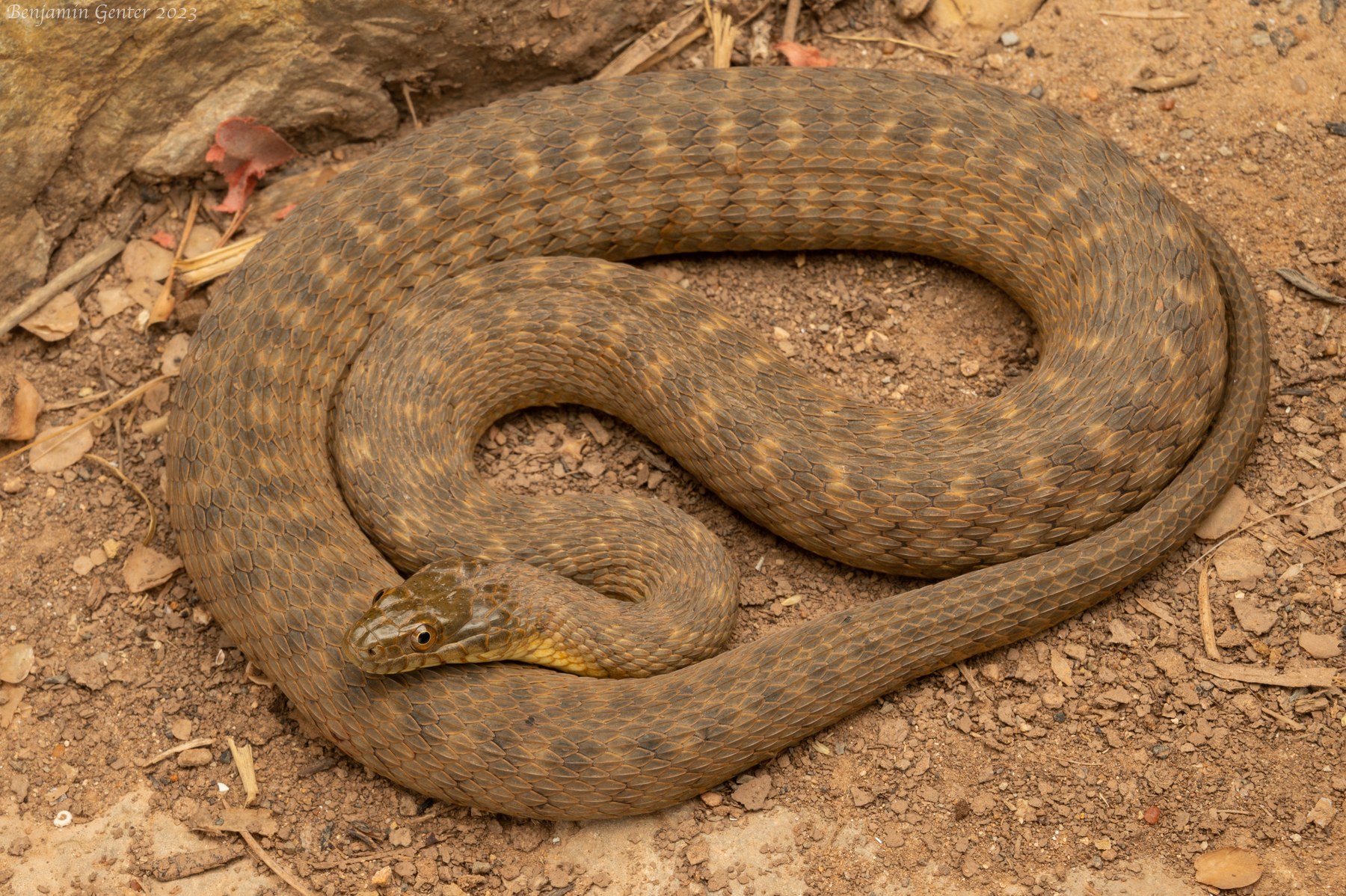
Concho Watersnake (Nerodia paucimaculata) is a central Texas river specialist, usually about 18-48 inches, with the Nerodia look: close to water, round pupils, and no rattle or facial pit. Drainage matters here, especially around the Concho and Colorado river systems.
Use wet habitat first, then pattern and locality. Rocky river edges, reservoirs, and connected tributaries can hold several watersnake lookalikes, and this one needs a place-based check.
| Key detail | What to look for |
|---|---|
| Adult size | usually about 18-48 inches |
| Fast ID cue | body found close to water, round pupils, and no rattle or facial pit |
| Typical Texas habitat | swamps, marshes, ponds, cypress sloughs, river edges, and other wet habitats |
| Texas range | central Texas, especially Concho and Colorado river drainages |
| Bite / venom note | Nonvenomous watersnake; common cottonmouth lookalike near water |
66. Dekay’s Brownsnake
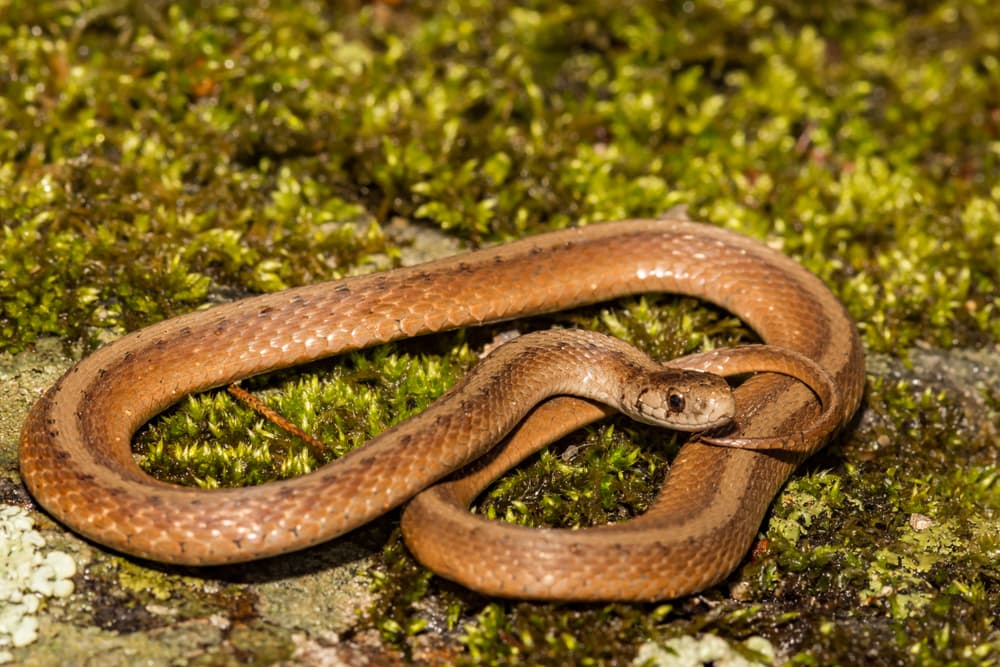
Dekay’s Brownsnake (Storeria dekayi) is a small under-cover snake, usually 7-16 inches, with a brown body and often a faint pale stripe bordered by small dark spots. It is a backyard, garden, and woodland-edge species where leaf litter and damp cover hold slugs and worms.
This is not a big open-trail snake. Scale, plain brownish body shape, and the damp cover where it was found are the useful clues.
| Key detail | What to look for |
|---|---|
| Adult size | usually 7-16 inches |
| Fast ID cue | small brown body, faint pale stripe, tiny dark spots, and damp cover |
| Typical Texas habitat | loose soil, leaf litter, rotting logs, compost, damp gardens, and shaded woodland edges |
| Texas range | eastern and central Texas, including many yards, gardens, and wooded edges |
| Bite / venom note | Nonvenomous tiny snake; usually under soil, logs, or leaf litter |
67. Diamond-backed Watersnake
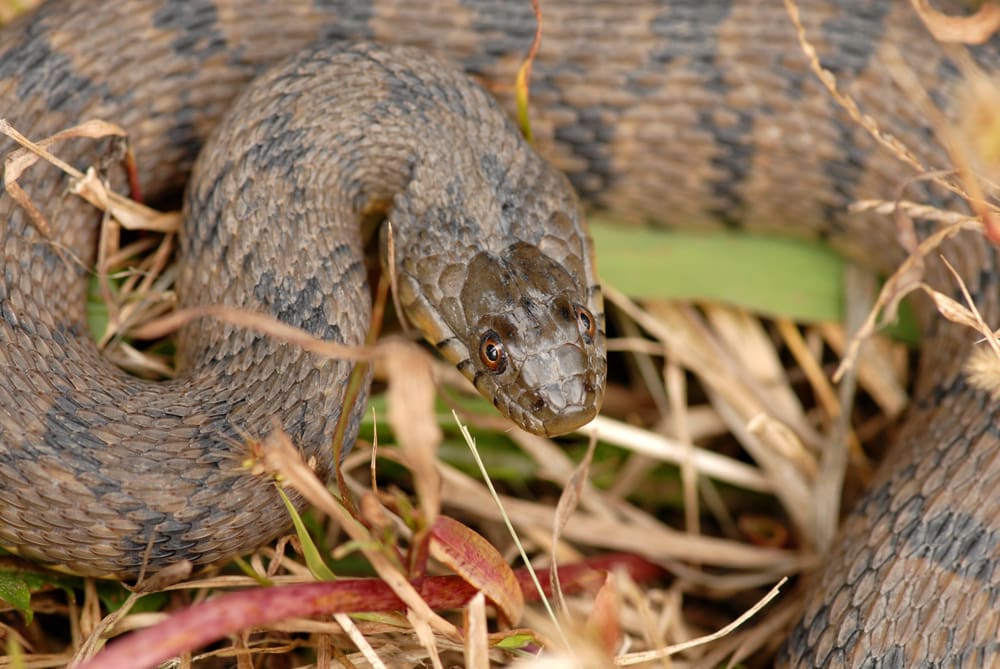
Diamond-backed Watersnake (Nerodia rhombifer) is a stout nonvenomous watersnake, usually about 18-48 inches, with a netted or diamond-backed pattern. It stays close to ponds, lakes, marshes, sloughs, and slow river edges.
The diamond-backed pattern is helpful when visible, but water setting and head details matter too. It is one of the common cottonmouth lookalikes people wrestle with near shorelines.
| Key detail | What to look for |
|---|---|
| Adult size | usually about 18-48 inches |
| Fast ID cue | body found close to water, round pupils, and no rattle or facial pit |
| Typical Texas habitat | swamps, marshes, ponds, cypress sloughs, river edges, and other wet habitats |
| Texas range | eastern and central Texas along ponds, lakes, marshes, and slow rivers |
| Bite / venom note | Nonvenomous watersnake; common cottonmouth lookalike near water |
68. Glossy Swampsnake
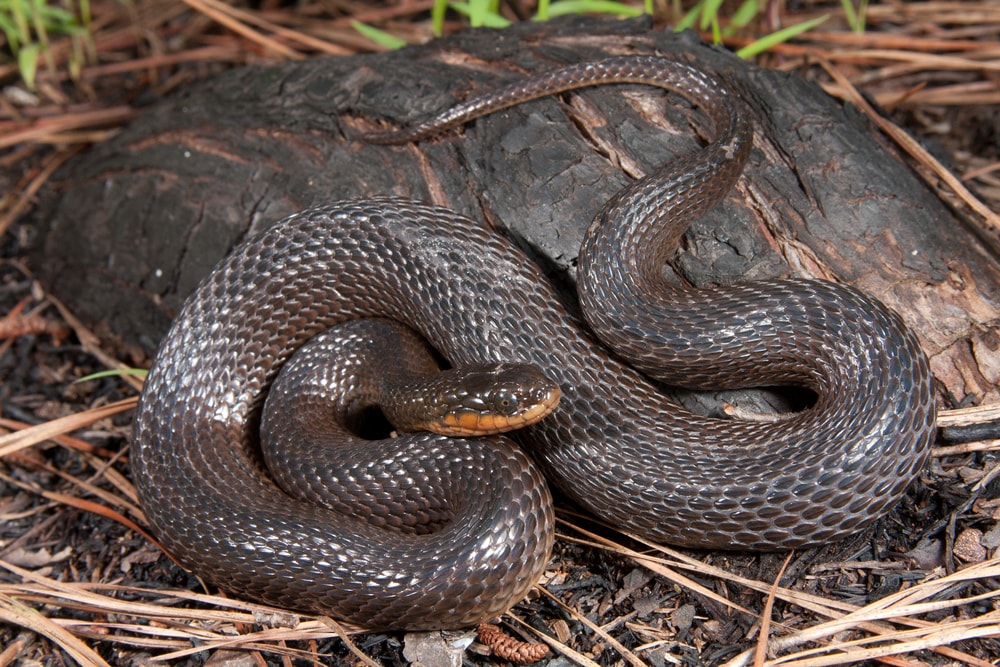
Glossy Swampsnake (Liodytes rigida) is a wetland snake tied to eastern Texas, the Gulf Coast, and wetter river systems. Adults are listed at about 18-48 inches, with round pupils and no rattle or facial pit.
Think swamp edge, marsh, pond, cypress slough, or river margin. The glossy look and wet habitat separate it from small upland litter snakes, while the missing pit-viper traits separate it from cottonmouths.
| Key detail | What to look for |
|---|---|
| Adult size | usually about 18-48 inches |
| Fast ID cue | body found close to water, round pupils, and no rattle or facial pit |
| Typical Texas habitat | swamps, marshes, ponds, cypress sloughs, river edges, and other wet habitats |
| Texas range | mainly eastern Texas, the Gulf Coast, and wetter river systems |
| Bite / venom note | Nonvenomous watersnake; common cottonmouth lookalike near water |
69. Graham’s Crawfish Snake
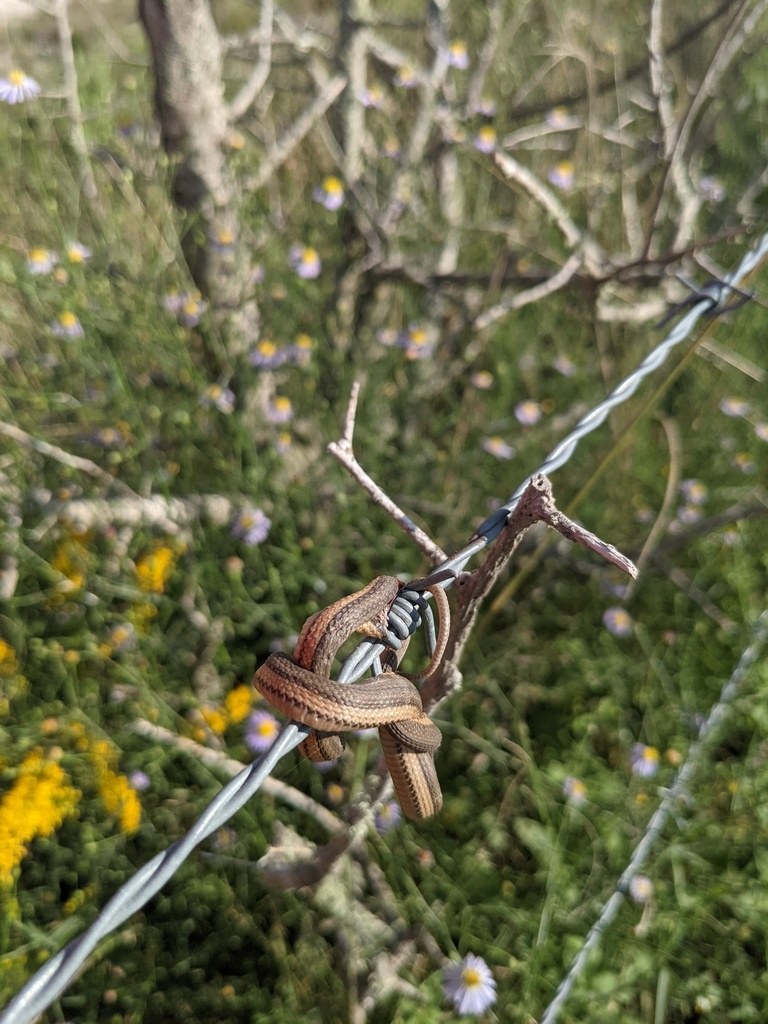
Graham’s Crawfish Snake (Regina grahamii) is a waterside nonvenomous snake, often 1-4 feet, tied to marshy ditches, pond edges, slow streams, and crawfish burrows. It is usually brownish with pale side striping rather than boldly banded.
A crawfish-snake ID should start with wet, muddy habitat and prey context. Do not rest the call on a single brown stripe in a cropped photo.
| Key detail | What to look for |
|---|---|
| Adult size | often 1-4 feet |
| Fast ID cue | brown waterside snake with pale side stripes near crawfish burrows or muddy edges |
| Typical Texas habitat | marshy ditches, pond margins, slow streams, crawfish burrows, and wet grassy banks |
| Texas range | north and east Texas wetlands, ditches, and slow-water edges |
| Bite / venom note | Nonvenomous waterside snake; tied to crawfish habitat |
70. Lined Snake
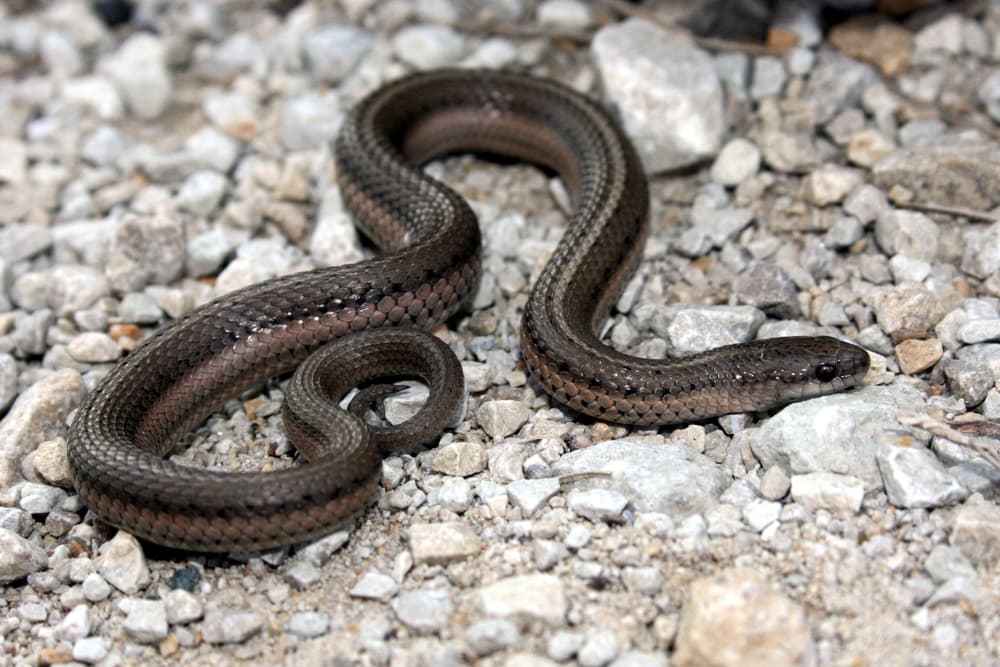
Lined Snake (Tropidoclonion lineatum) is a small striped snake of prairies, grassy yards, vacant lots, and moist soil under boards or rocks. Adults are often 1-4 feet, though many look much smaller at first glance.
The name hints at the back stripes, but the belly can help too, with dark half-moon marks on many individuals. Compare it with gartersnakes by size, body shape, and where it was found.
| Key detail | What to look for |
|---|---|
| Adult size | often 1-4 feet |
| Fast ID cue | three pale stripes and small dark half-moon marks on the belly |
| Typical Texas habitat | prairies, grassy yards, vacant lots, moist soil under boards, and rock edges |
| Texas range | northern and central Texas prairie and urban-edge records |
| Bite / venom note | Nonvenomous small striped snake; often found under cover |
71. Mississippi Green Watersnake
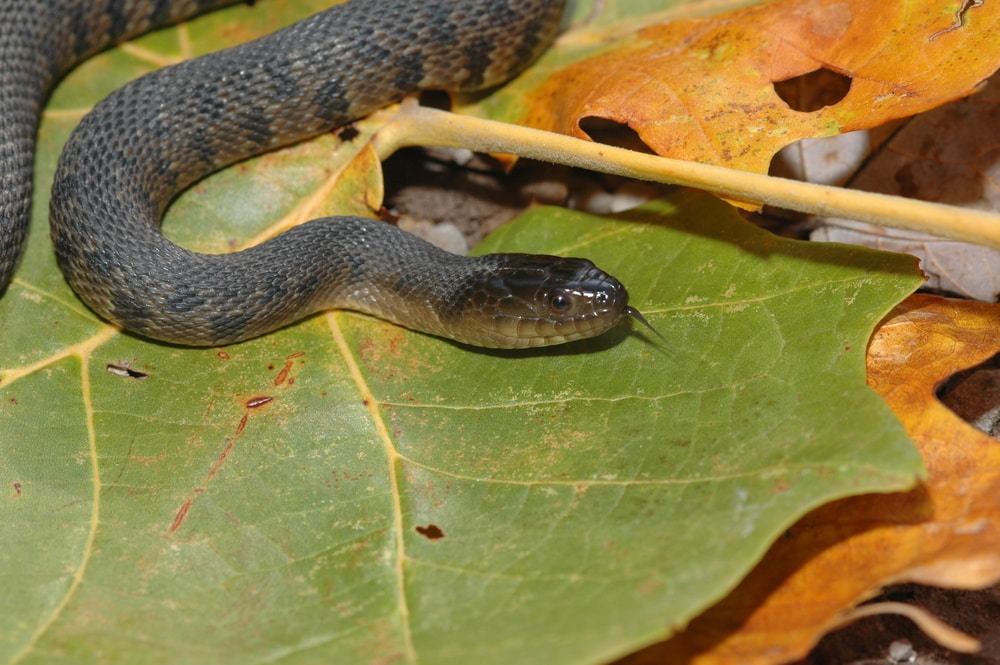
Mississippi Green Watersnake (Nerodia cyclopion) is a wetland Nerodia, usually about 18-48 inches, tied mainly to eastern Texas, the Gulf Coast, and wetter river systems. The cue is a watersnake body close to water, round pupils, and no rattle or facial pit.
Swamps, marshes, ponds, cypress sloughs, and river edges are the right setting. Greenish watersnakes can still look dark and heavy, so use the missing pit-viper traits before jumping to cottonmouth.
| Key detail | What to look for |
|---|---|
| Adult size | usually about 18-48 inches |
| Fast ID cue | body found close to water, round pupils, and no rattle or facial pit |
| Typical Texas habitat | swamps, marshes, ponds, cypress sloughs, river edges, and other wet habitats |
| Texas range | mainly eastern Texas, the Gulf Coast, and wetter river systems |
| Bite / venom note | Nonvenomous watersnake; common cottonmouth lookalike near water |
72. Plain-bellied Watersnake
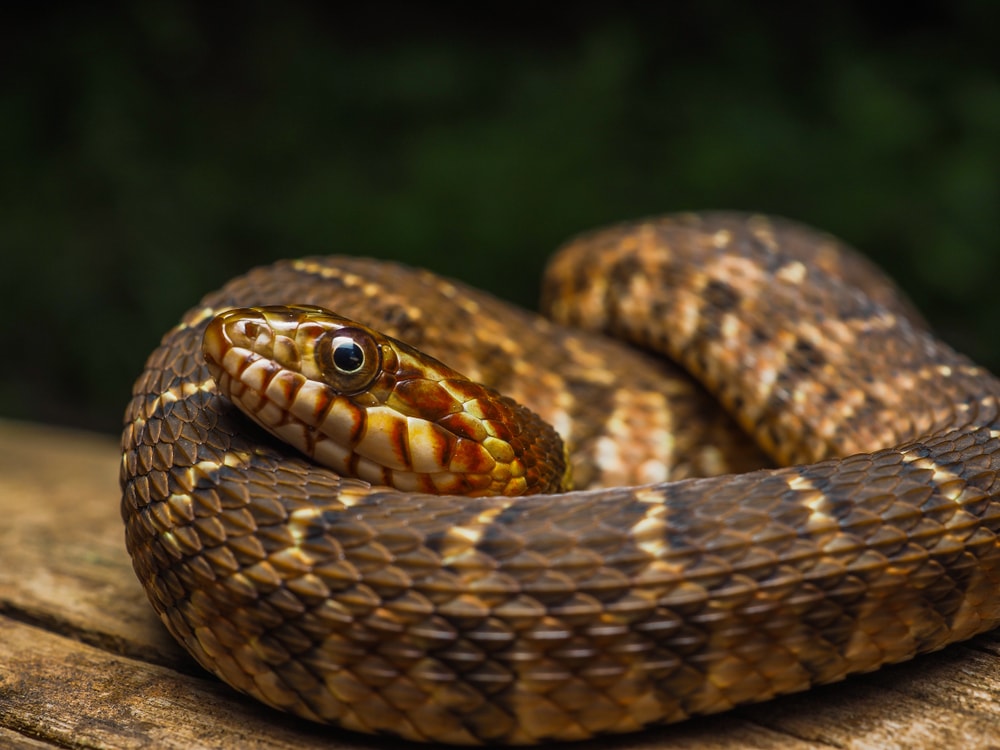
Plain-bellied Watersnake (Nerodia erythrogaster) is a nonvenomous watersnake, usually about 18-48 inches, with the clue in its name: a plainer underside than many patterned Nerodia. It uses ponds, marshes, cypress sloughs, river edges, and wet lowlands.
A plain belly can be useful when visible, but most field views start with water, body shape, and head details. Round pupils and no facial pit separate it from cottonmouths.
| Key detail | What to look for |
|---|---|
| Adult size | usually about 18-48 inches |
| Fast ID cue | body found close to water, round pupils, and no rattle or facial pit |
| Typical Texas habitat | swamps, marshes, ponds, cypress sloughs, river edges, and other wet habitats |
| Texas range | eastern and central Texas, including Gulf Coast wetlands and river lowlands |
| Bite / venom note | Nonvenomous watersnake; common cottonmouth lookalike near water |
73. Plains Gartersnake
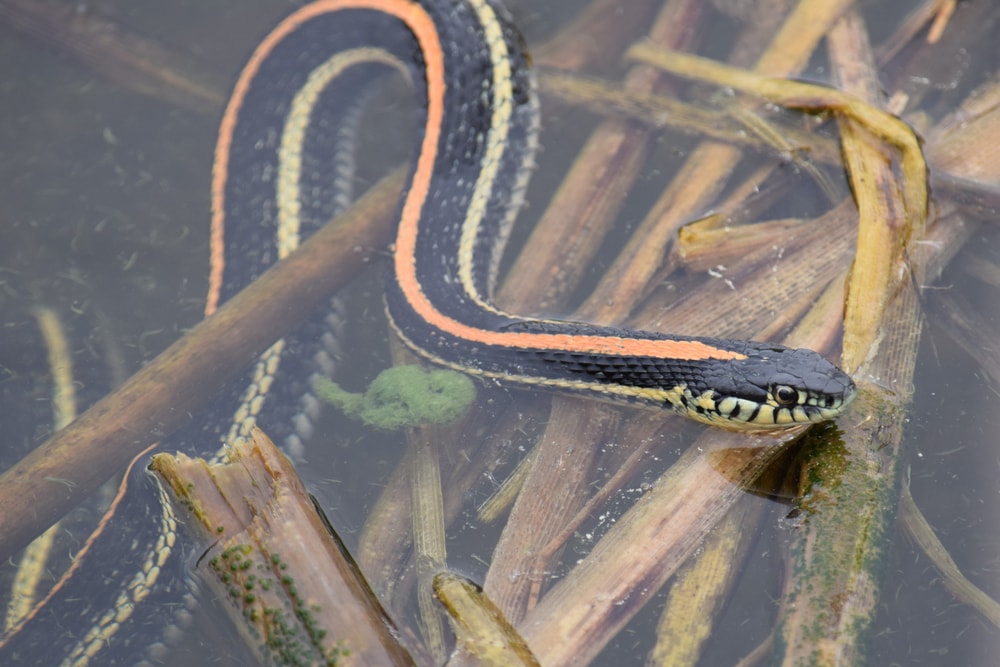
Plains Gartersnake (Thamnophis radix) is a striped gartersnake of prairie and wet-meadow country, usually about 18-48 inches. The range points to the Panhandle, rolling plains, and prairie counties where grassland remains.
Wet meadows, pond margins, stream edges, grasslands, and backyard edges near cover are the habitats to check. Long stripes and a slim build separate it from stockier watersnakes nearby.
| Key detail | What to look for |
|---|---|
| Adult size | usually about 18-48 inches |
| Fast ID cue | long stripes, slim build, and frequent use of wet grass or stream edges |
| Typical Texas habitat | wet meadows, pond margins, stream edges, grasslands, and backyard edges near cover |
| Texas range | the Panhandle, rolling plains, or prairie counties where open grassland habitat remains |
| Bite / venom note | Nonvenomous striped snake; often near wet grass or streams |
74. Red-bellied Snake
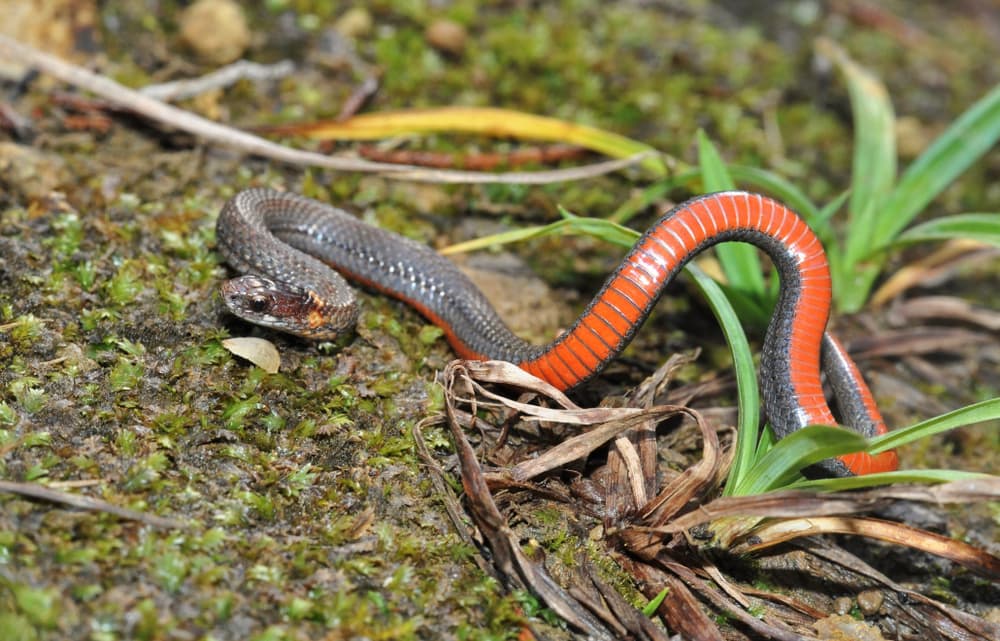
Red-bellied Snake (Storeria occipitomaculata) is a tiny damp-woods snake, usually 7-16 inches, with a brown or gray back and a red to orange belly. It belongs under leaf litter, mossy logs, shaded gardens, and cool woodland edges.
The name points to the belly, but many sightings will be brief and close to the ground. Size, damp setting, and a clear underside view make the ID much stronger.
| Key detail | What to look for |
|---|---|
| Adult size | usually 7-16 inches |
| Fast ID cue | tiny brown or gray snake with a red to orange belly |
| Typical Texas habitat | cool damp woodland leaf litter, mossy logs, shaded gardens, and moist forest edges |
| Texas range | eastern Texas in damp forest litter and shaded woodland cover |
| Bite / venom note | Nonvenomous tiny litter snake; underside color helps |
75. Rough Earthsnake
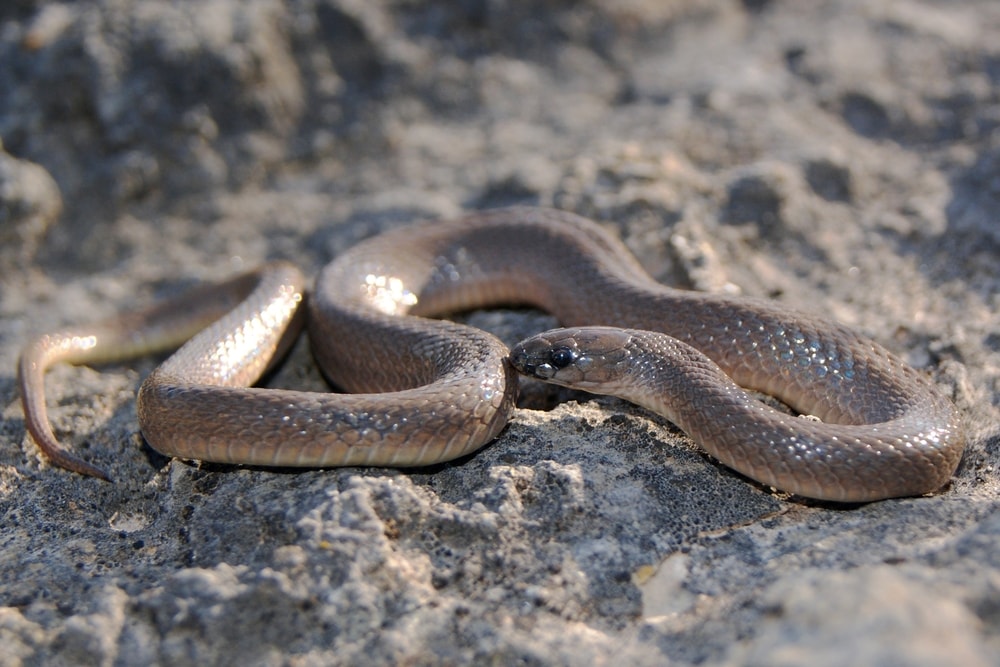
Rough Earthsnake (Virginia striatula) is a small earthsnake, usually 7-16 inches, with a plain brownish body and a life spent under soil, logs, or leaf litter. It fits damp, shaded soils in eastern and southeastern Texas.
The right setting is close to the ground: damp litter, loose soil, compost, rotting logs, and shaded edges. The rough-versus-smooth earthsnake distinction is not a casual glance from several feet away.
| Key detail | What to look for |
|---|---|
| Adult size | usually 7-16 inches |
| Fast ID cue | small wormlike body, hidden life under soil or logs, and smooth glossy scales |
| Typical Texas habitat | loose soil, leaf litter, rotting logs, compost, damp gardens, and shaded woodland edges |
| Texas range | eastern and southeastern Texas in damp soils, logs, and shaded litter |
| Bite / venom note | Nonvenomous tiny snake; usually under soil, logs, or leaf litter |
76. Saltmarsh Snake
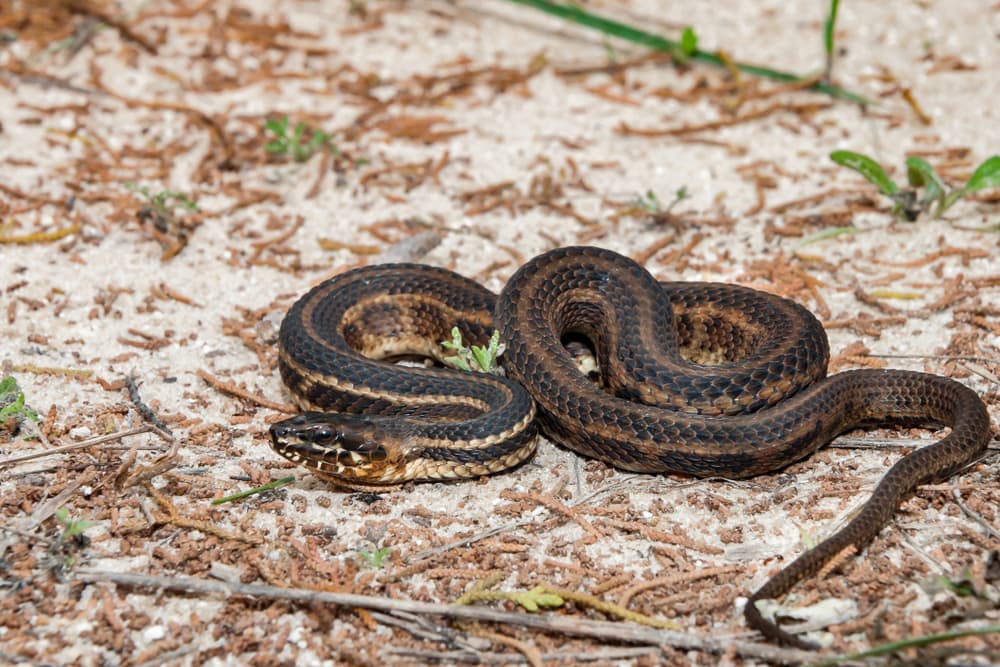
Saltmarsh Snake (Nerodia clarkii) is the coastal-marsh entry here, often 1-4 feet, with a Nerodia body built for brackish marsh edges, tidal creeks, and Gulf Coast wetlands. Locality and salinity matter more than a generic watersnake label.
Do not force it into a broad watersnake bucket from pattern alone. Marsh setting, body shape, and county sharpen this ID.
| Key detail | What to look for |
|---|---|
| Adult size | often 1-4 feet |
| Fast ID cue | Nerodia body in brackish marsh or tidal-creek habitat |
| Typical Texas habitat | brackish marsh edges, tidal creeks, and coastal wetlands |
| Texas range | Texas Gulf Coast salt marshes, tidal creeks, and brackish wetlands |
| Bite / venom note | Nonvenomous coastal watersnake; habitat salinity is a major clue |
77. Smooth Earthsnake
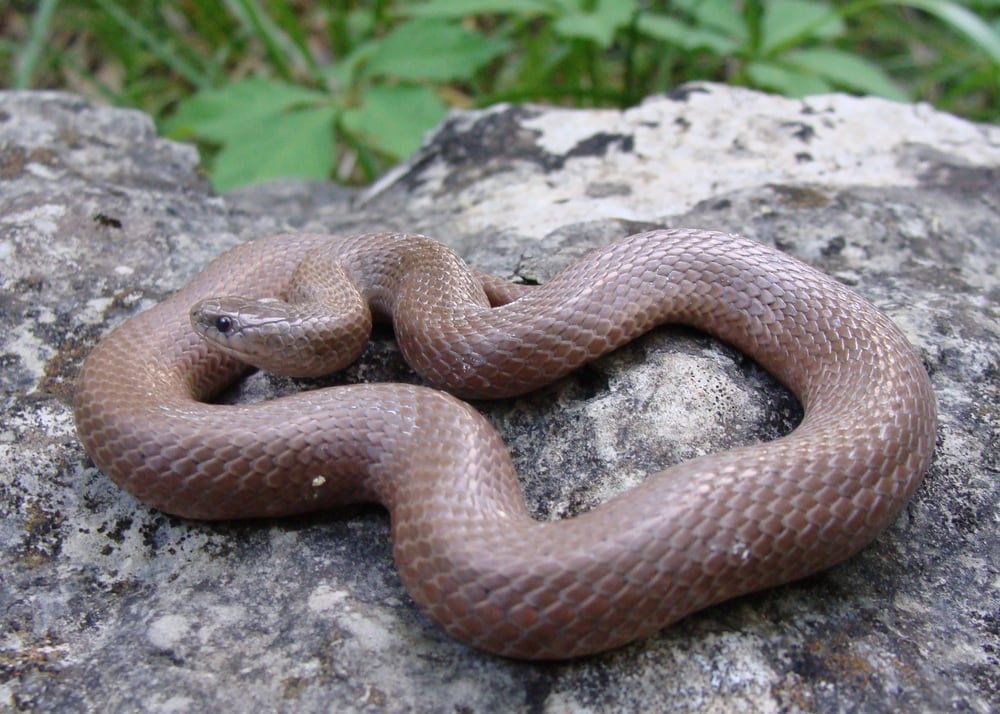
Smooth Earthsnake (Virginia valeriae) is a small, plain earthsnake, usually 7-16 inches, with smooth glossy scales and a hidden life under soil, logs, or leaf litter. Texas records fit eastern wooded soils and shaded cover.
Look in loose soil, leaf litter, rotting logs, compost, damp gardens, and woodland edges. It is the kind of snake where size and texture matter more than a dramatic pattern.
| Key detail | What to look for |
|---|---|
| Adult size | usually 7-16 inches |
| Fast ID cue | small wormlike body, hidden life under soil or logs, and smooth glossy scales |
| Typical Texas habitat | loose soil, leaf litter, rotting logs, compost, damp gardens, and shaded woodland edges |
| Texas range | eastern Texas wooded soils, shaded yards, and damp leaf-litter cover |
| Bite / venom note | Nonvenomous tiny snake; usually under soil, logs, or leaf litter |
78. Southern Watersnake
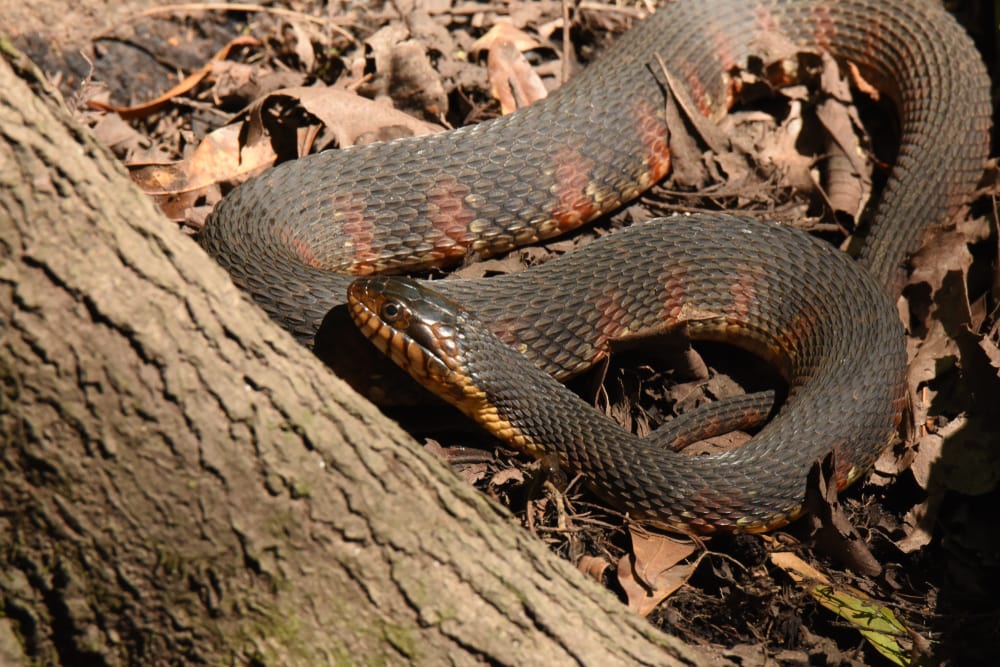
Southern Watersnake (Nerodia fasciata) is a banded, nonvenomous watersnake, usually about 18-48 inches, with round pupils and no rattle or facial pit. It fits East Texas and Gulf Coast swamps, marshes, ponds, sloughs, and river edges.
The banded look can make people nervous near water, but the ID should stay practical: water setting, body shape, pupils, and lack of pit-viper features. Several Nerodia species can overlap in the same mental bucket.
| Key detail | What to look for |
|---|---|
| Adult size | usually about 18-48 inches |
| Fast ID cue | body found close to water, round pupils, and no rattle or facial pit |
| Typical Texas habitat | swamps, marshes, ponds, cypress sloughs, river edges, and other wet habitats |
| Texas range | East Texas and Gulf Coast wetlands, ponds, swamps, and slow river edges |
| Bite / venom note | Nonvenomous watersnake; common cottonmouth lookalike near water |
79. Western Ribbonsnake
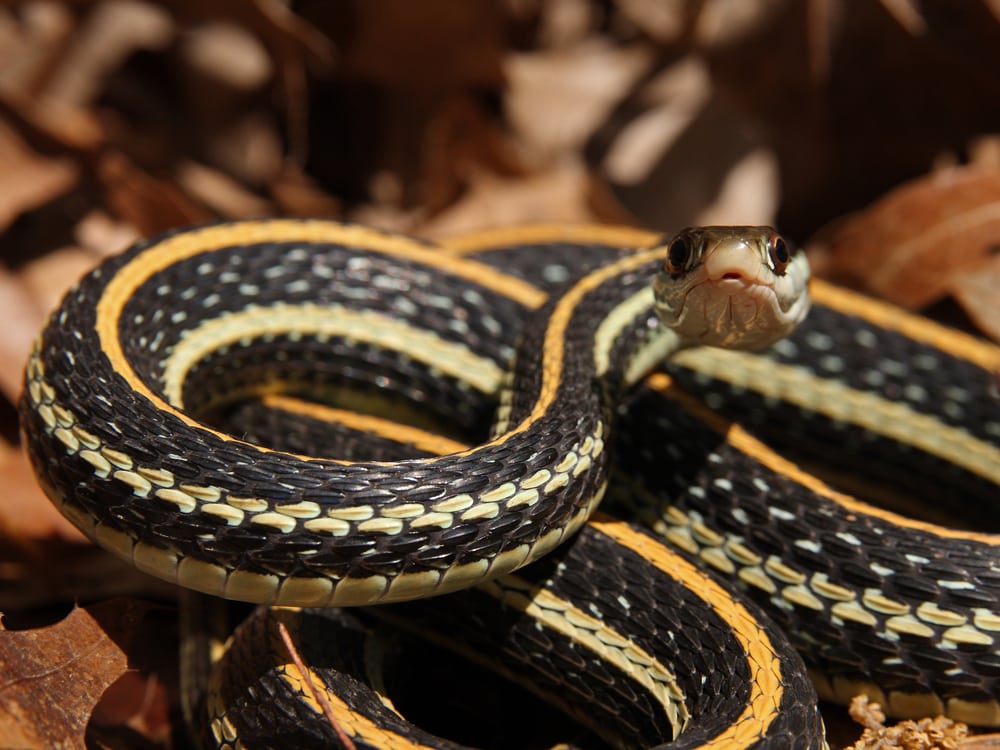
Western Ribbonsnake (Thamnophis proximus) is a slim striped snake, usually about 18-48 inches, tied mainly to eastern Texas, the Gulf Coast, and wetter river systems. The cue is long stripes, a slim build, and frequent use of wet grass or stream edges.
A ribbonsnake should look lighter and more stretched-out than a stocky watersnake. Pond margins, stream edges, wet meadows, grasslands, and backyard edges near cover are the places to compare.
| Key detail | What to look for |
|---|---|
| Adult size | usually about 18-48 inches |
| Fast ID cue | long stripes, slim build, and frequent use of wet grass or stream edges |
| Typical Texas habitat | wet meadows, pond margins, stream edges, grasslands, and backyard edges near cover |
| Texas range | mainly eastern Texas, the Gulf Coast, and wetter river systems |
| Bite / venom note | Nonvenomous striped snake; often near wet grass or streams |
Threadsnakes and other tiny burrowers
80. Texas Threadsnake
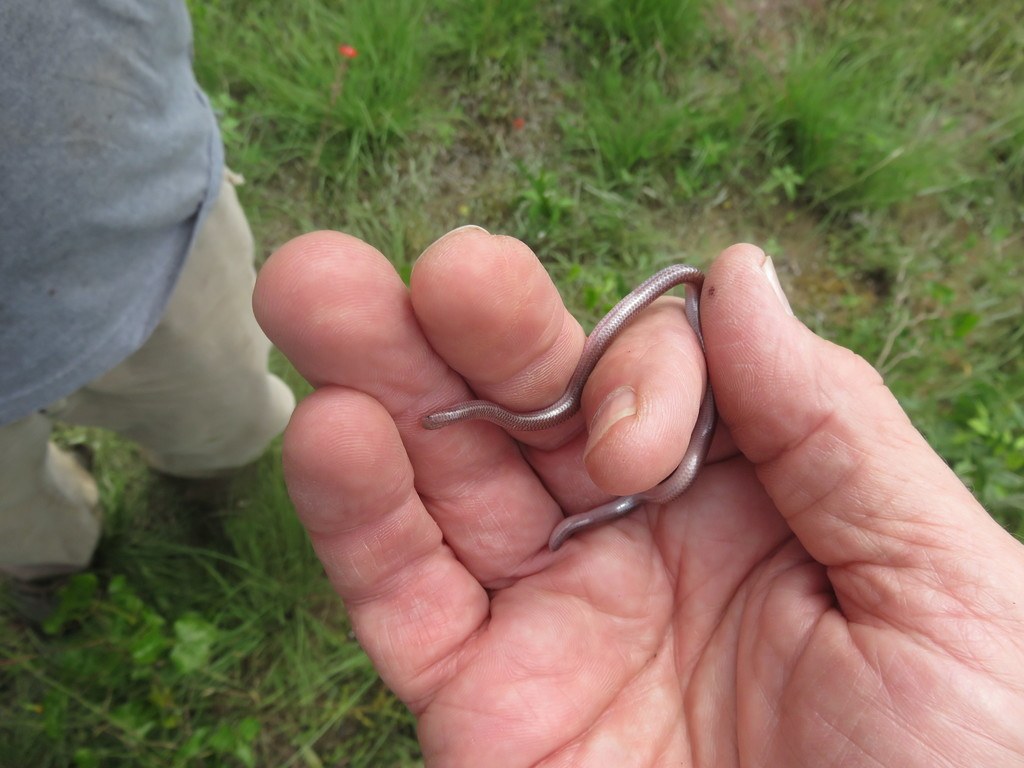
Texas Threadsnake (Rena dulcis) is one of the tiniest snakes in the guide, usually 4-12 inches, with a wormlike body and smooth glossy scales. Its range places it in central, southern, or western Texas depending on soils and cover.
Loose soil, leaf litter, rotting logs, compost, damp gardens, and shaded woodland edges are its world. It can look more like an earthworm than a snake until you notice the tiny, polished body.
| Key detail | What to look for |
|---|---|
| Adult size | usually 4-12 inches |
| Fast ID cue | small wormlike body, hidden life under soil or logs, and smooth glossy scales |
| Typical Texas habitat | loose soil, leaf litter, rotting logs, compost, damp gardens, and shaded woodland edges |
| Texas range | central, southern, or western Texas depending on local soils and cover |
| Bite / venom note | Nonvenomous tiny snake; usually under soil, logs, or leaf litter |
81. Western Threadsnake
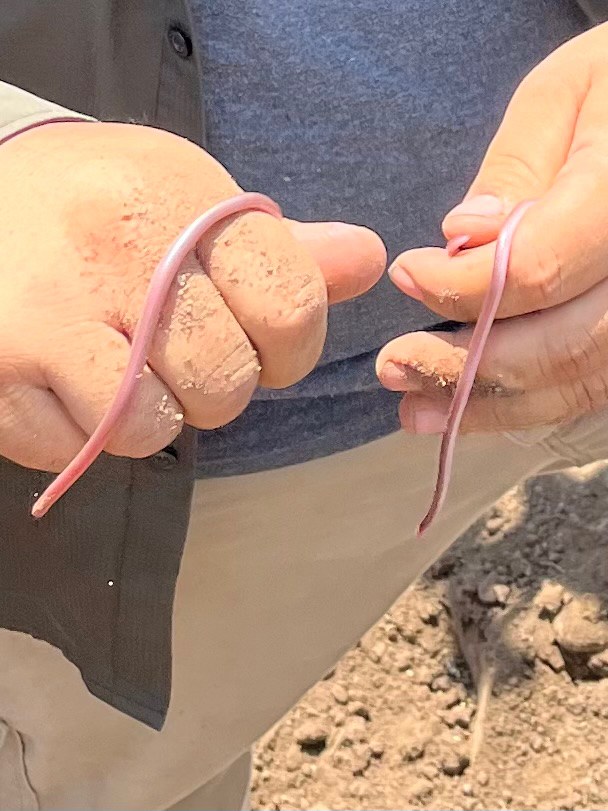
Western Threadsnake (Rena humilis) is another threadsnake, usually 4-12 inches, with a tiny polished body and an earthworm-like shape. Think western desert soils, loose cover, and Trans-Pecos or adjacent dry-country records.
Look for it in loose soil, leaf litter, rotting logs, compost, damp gardens, and shaded edges. For a snake this small, scale is the field mark people underestimate.
| Key detail | What to look for |
|---|---|
| Adult size | usually 4-12 inches |
| Fast ID cue | small wormlike body, hidden life under soil or logs, and smooth glossy scales |
| Typical Texas habitat | loose soil, leaf litter, rotting logs, compost, damp gardens, and shaded woodland edges |
| Texas range | western Texas and Trans-Pecos desert soils, with local dry-country records |
| Bite / venom note | Nonvenomous tiny snake; usually under soil, logs, or leaf litter |
Quick identification tips
Region is the first filter in Texas. A desert mountain snake, a Piney Woods snake, and a Gulf marsh snake may share colors without sharing range.
Use the habitat and tail before trusting a quick color match. Several Texas snakes are variable, and young snakes can look sharper or more contrasty than adults.
FAQ
How many snake types are in Texas?
This guide profiles 81 Texas snakes from current herpetology references. Agency pages and field guides may use different counts when they group subspecies, older names, or rare records differently.
Which Texas snakes are venomous?
The venomous species are listed first in this guide. They include Black-tailed Rattlesnake, Broad- banded Copperhead, Eastern Black-tailed Rattlesnake, Eastern Copperhead, Mohave Rattlesnake, Northern Cottonmouth, Prairie Rattlesnake, Pygmy Rattlesnake and others. Compare range, habitat, and field marks before choosing a species.
Are watersnakes in Texas cottonmouths?
No. Several harmless watersnakes live near the same wetlands as cottonmouths. Look at range, body shape, head posture, pattern, and behavior before deciding.
What should I do if I find a snake in my yard in Texas?
Most yard snakes are passing through for cover, water, or prey. If a snake is inside a building or cannot leave on its own, contact a local wildlife professional.
What details help identify a snake from a photo?
Useful details include county, habitat, body length, dorsal pattern, head shape, tail shape, stripes or bands, and whether the photo was taken near water, rocks, logs, or open ground.