
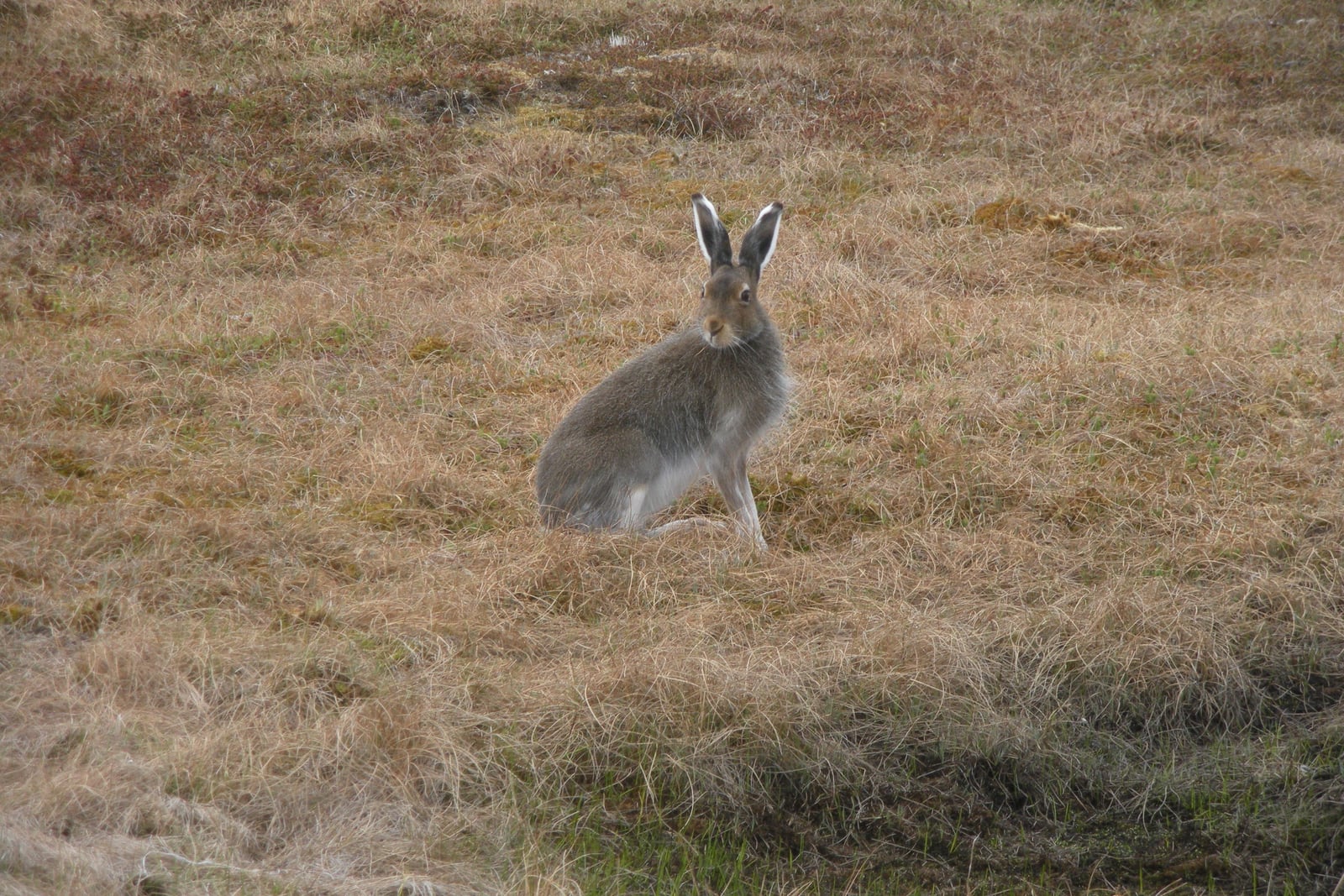
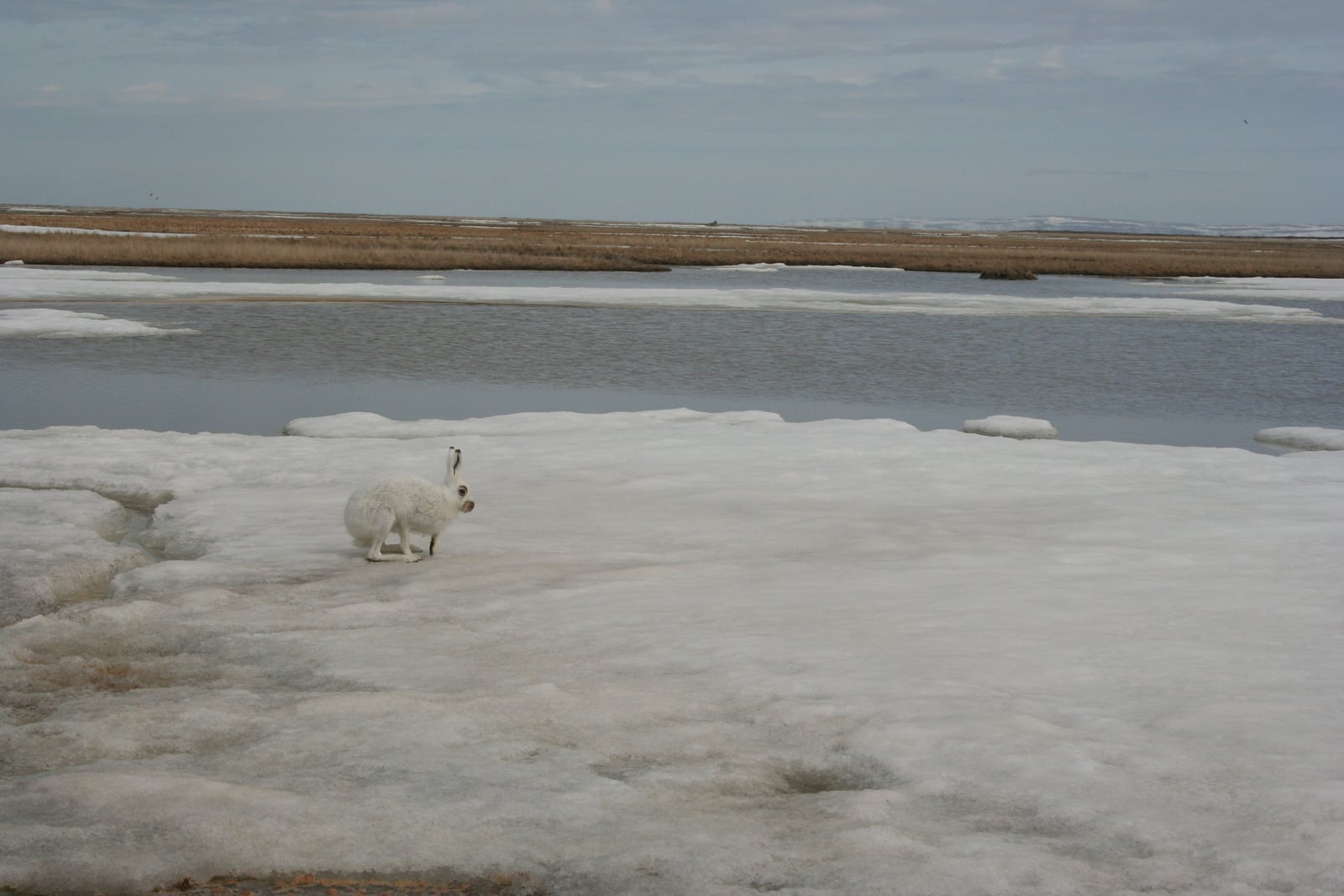
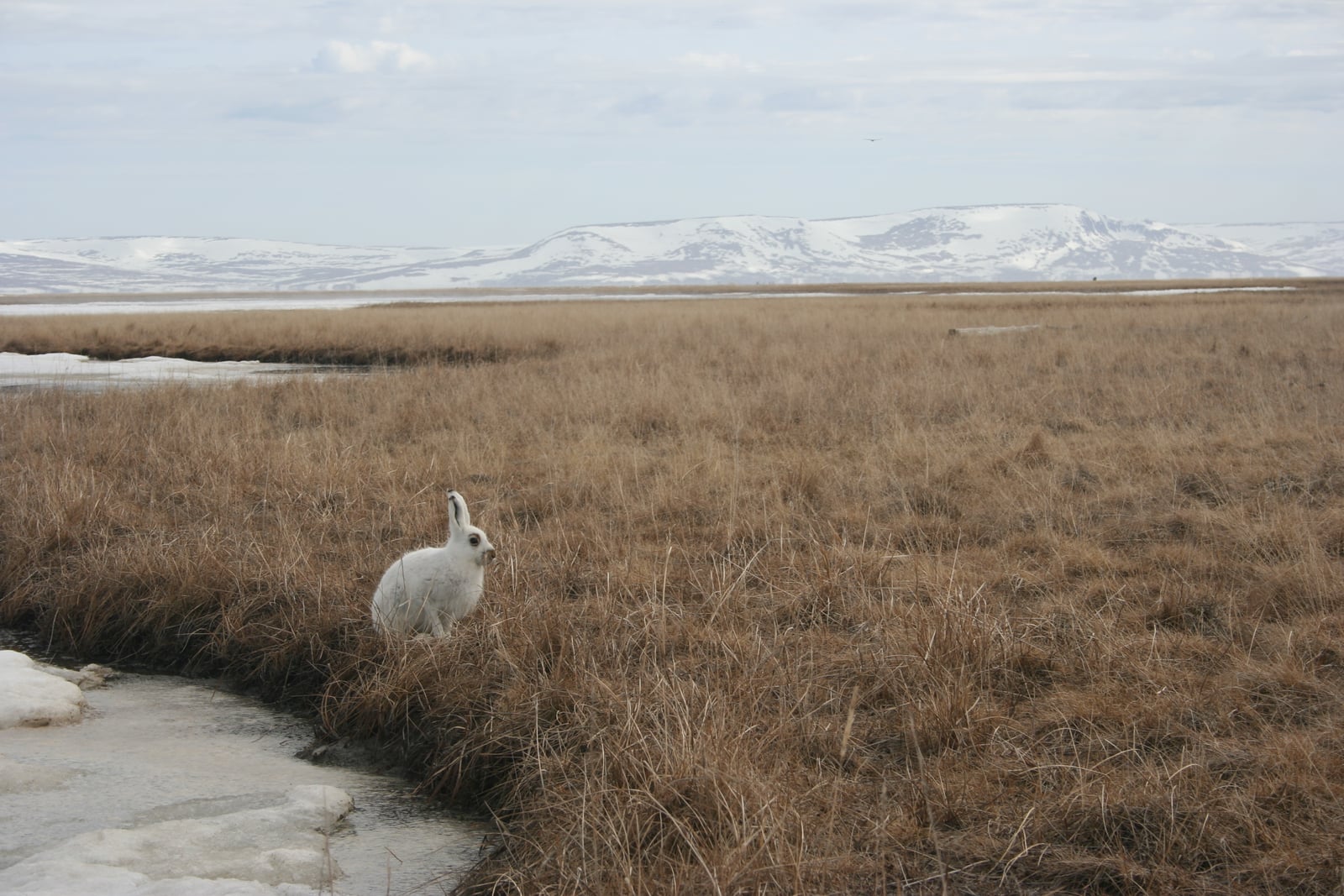
Reports concentrate in the Nome region of the Seward Peninsula, 65 of the state’s 123, with more from Bethel, Aleutians East, and Wade Hampton, the open, treeless tundra of western Alaska that makes up this hare’s entire US range. It’s the biggest hare in North America, and it needs exactly this kind of bare, unbroken ground to live the way it does.
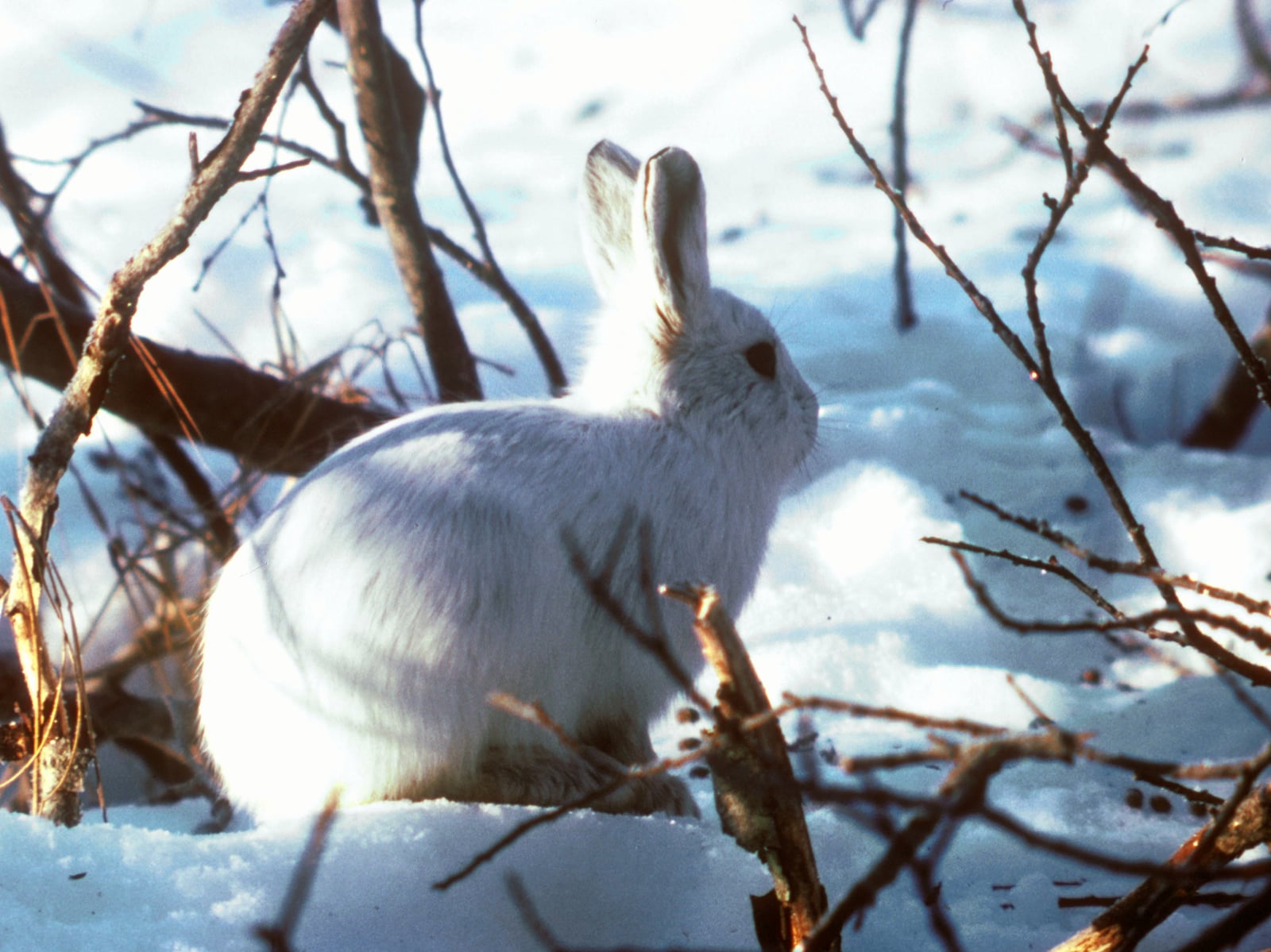
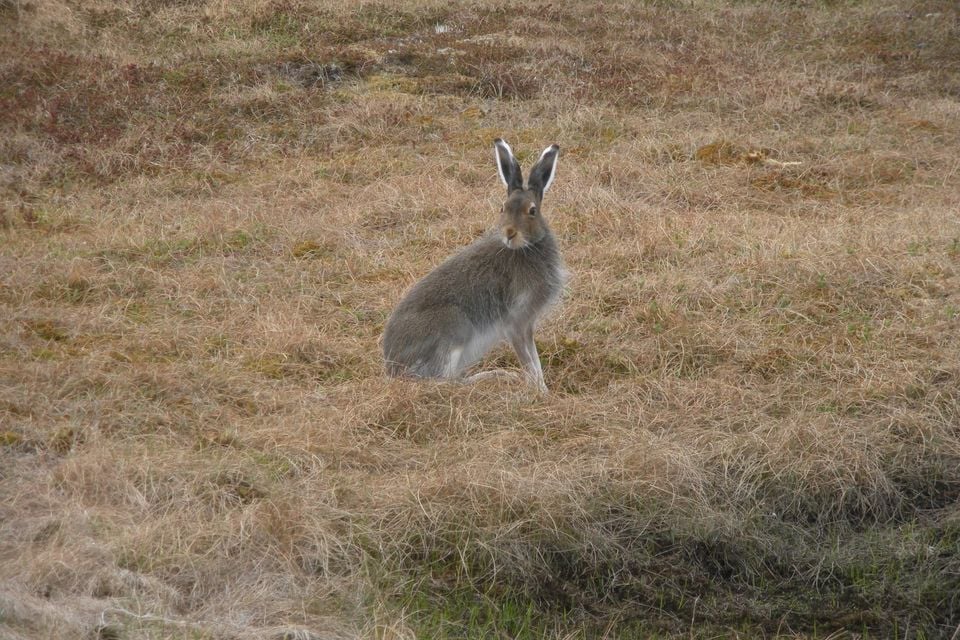
Unlike a snowshoe hare or a cottontail, an Alaskan hare never digs a burrow. It scratches out a shallow scrape, sometimes tucked against a tussock for a windbreak, and relies on its seasonal coat, mottled brown and gray in summer, pure white in winter, rather than shelter to stay hidden. It doesn’t hibernate either, staying active right through the polar night and switching from tundra sedges to willow bark and twigs once snow buries the softer plants.
Records turn up in every month, since this hare stays active year-round, but reports run heaviest in March, May, and June. That’s more a function of daylight and field access than of the hare itself changing its habits.
 Full species profile




