


Nevada’s occurrence records for the American water shrew are few and cluster tightly in early summer, a pattern that fits an animal almost nobody sees outside a handful of remote mountain streams.
Confined to the coldest water in the state
A water shrew needs a stream cold enough and fast enough to carry real oxygen, and Nevada offers surprisingly little of that. The state’s records sit in the same high-elevation cluster as neighboring Utah and Wyoming, where most sightings come from well above 6,500 feet. In Nevada that points squarely at the Ruby Mountains and East Humboldt Range, whose snowmelt-fed creeks stay cold and clean through summer while the sagebrush valleys below bake dry. Ruby Lake National Wildlife Refuge sits at the foot of that range, fed by the same kind of spring and stream water this shrew depends on. The broad basins between Nevada’s mountain ranges, warm and slow for most of the year, simply don’t hold the species no matter how close they sit to a mapped range line.
A short window when anyone can find one
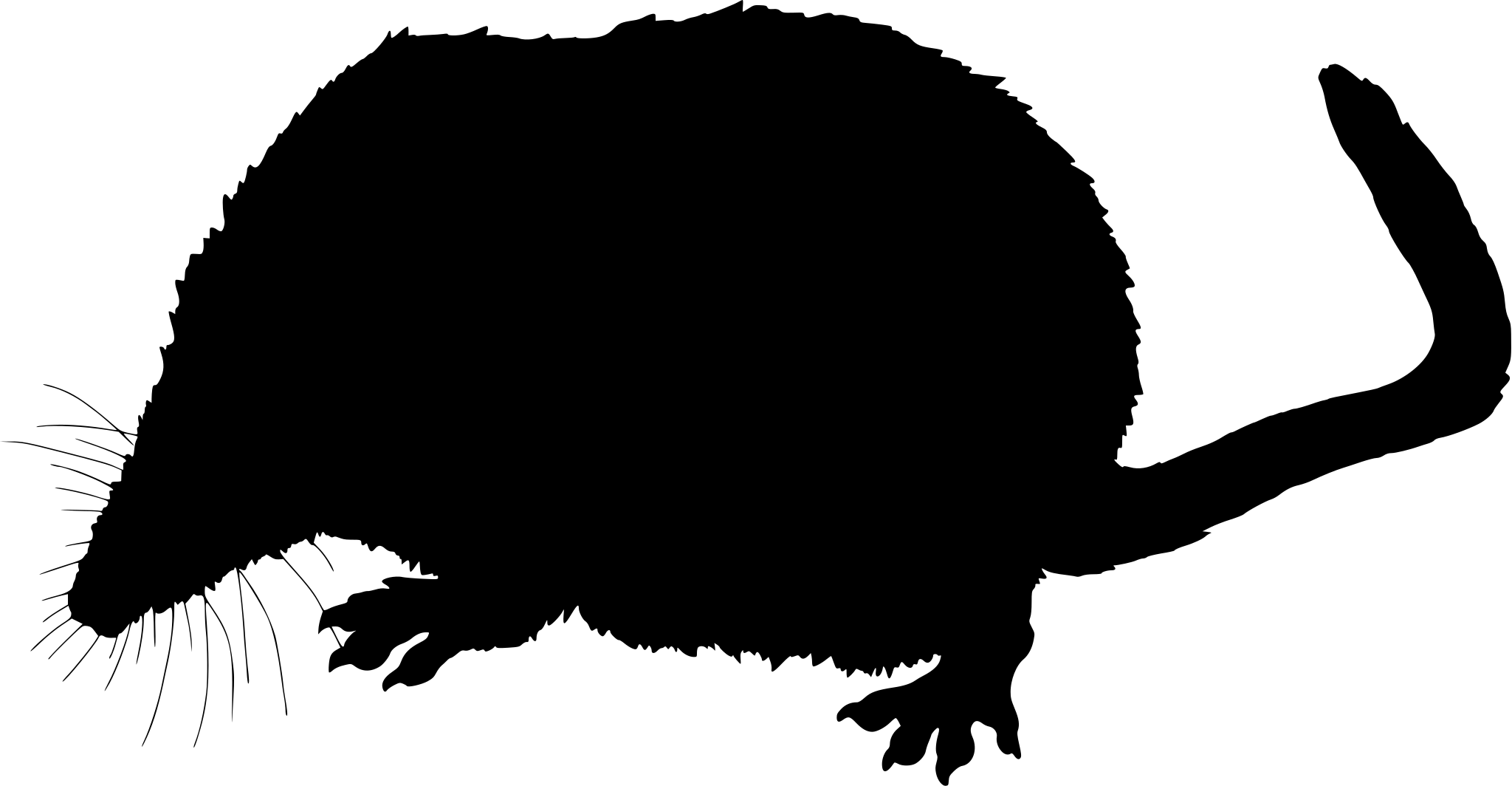
Nearly every Nevada record falls between June and August, with July alone accounting for more than half of them. That’s less the shrew’s whole active season than the state’s own: high mountain trails and streams stay snowbound into early summer, and the animal itself dives for its food rather than sitting out in the open. Whiskers do the hunting underwater, sweeping the streambed for caddisfly and stonefly larvae while trapped air turns the shrew’s fur a shimmering silver. It has to eat roughly every ten minutes to keep up with a metabolism that burns through nearly its own body weight in food each day, which is part of why a stream has to stay productive, not just cold, to hold one.
Status in Nevada
Nevada lists the American water shrew as native to its mapped range, though NatureServe hasn’t assigned the state a distinct subnational rank here. Globally the IUCN rates it Least Concern, but in Nevada its story is one of a few isolated mountain streams rather than a statewide presence.
 Full species profile




