
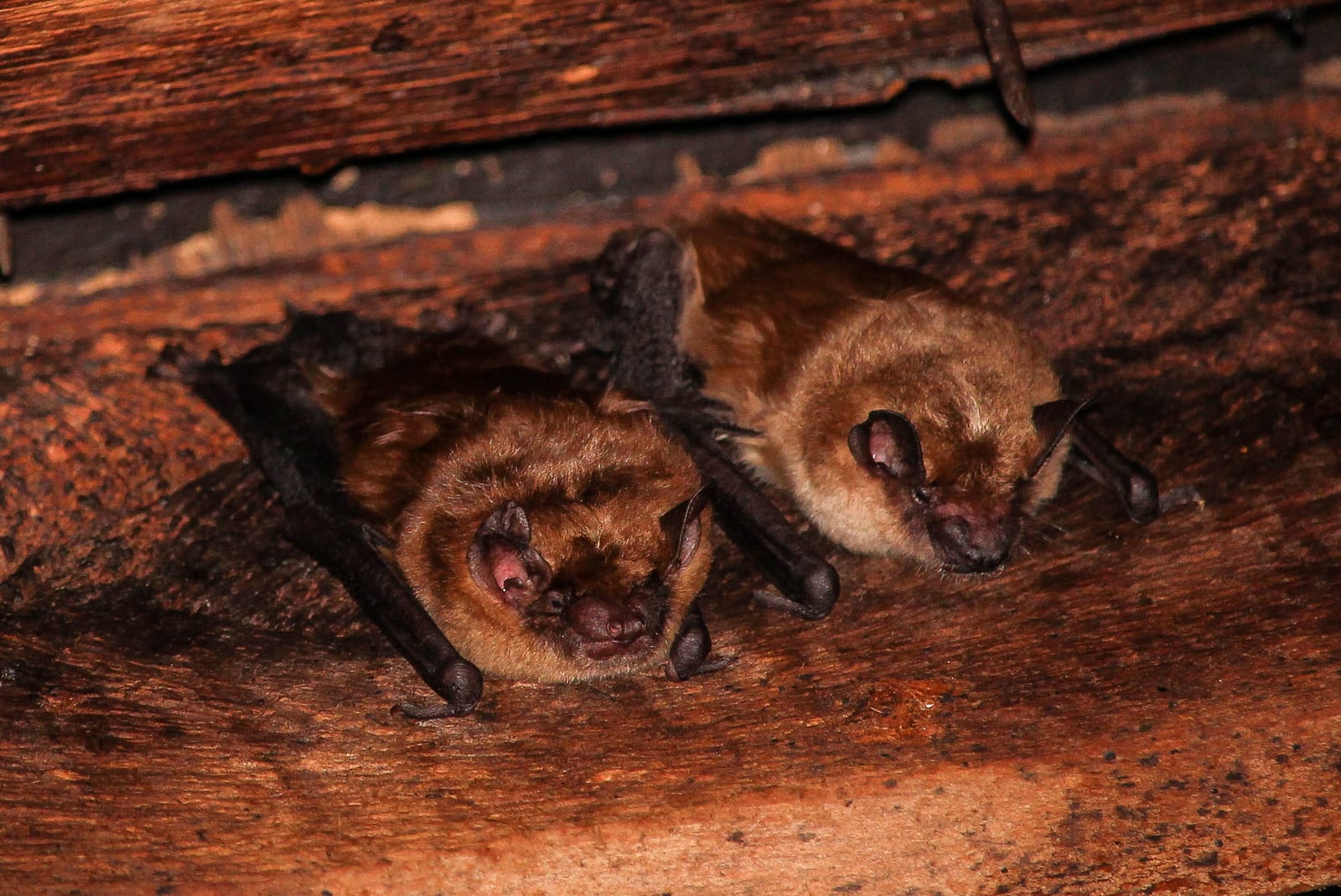
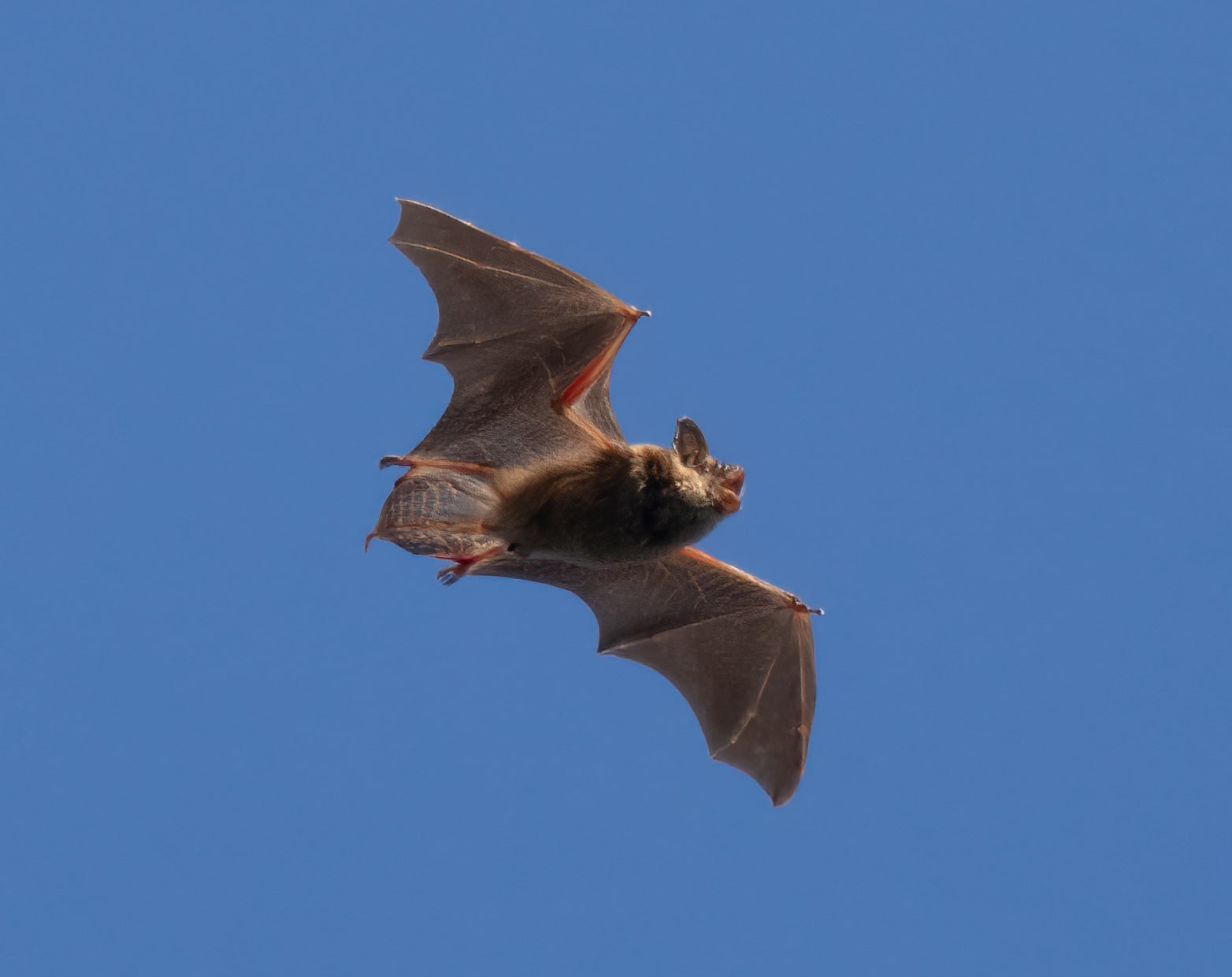
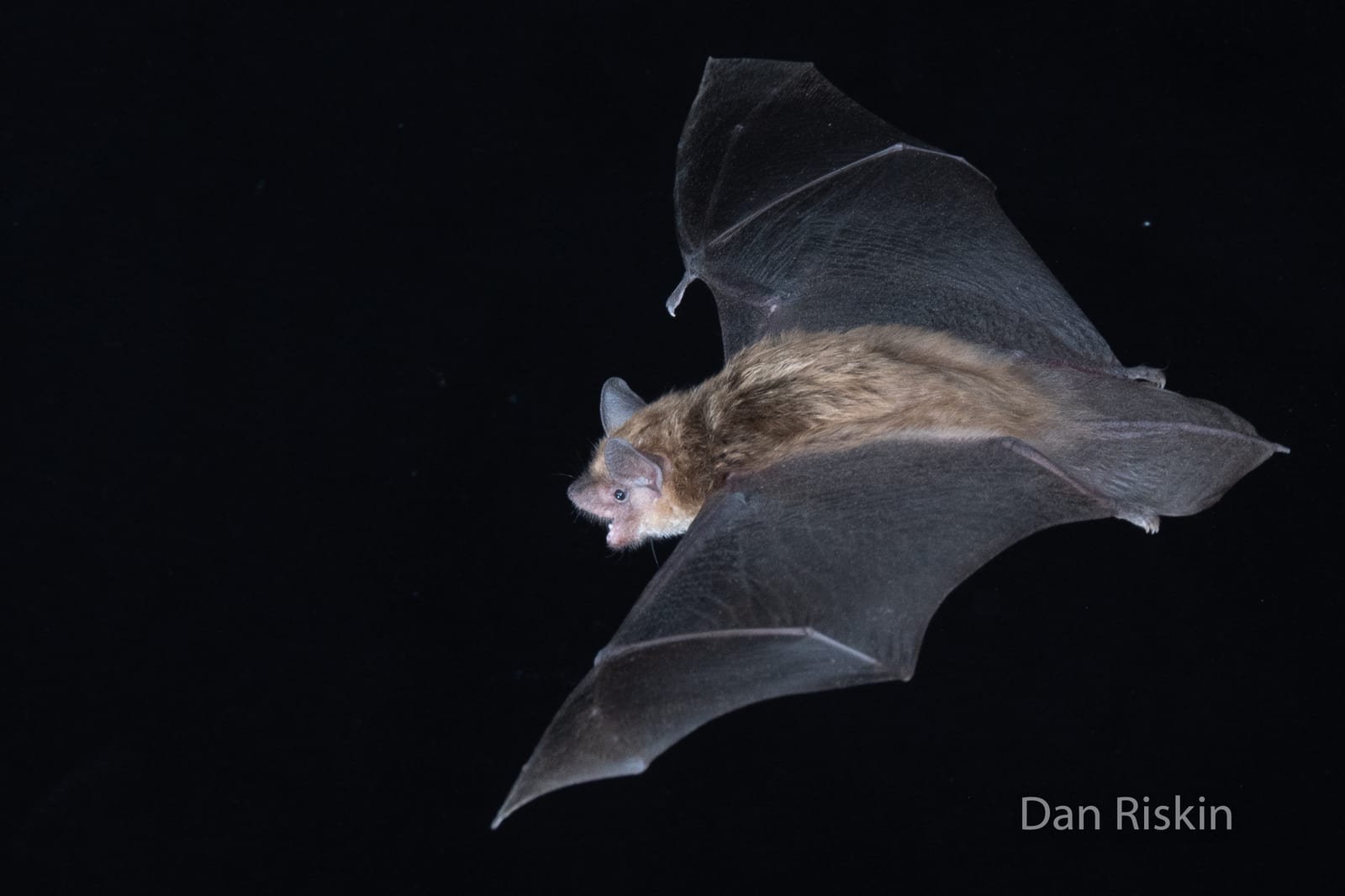
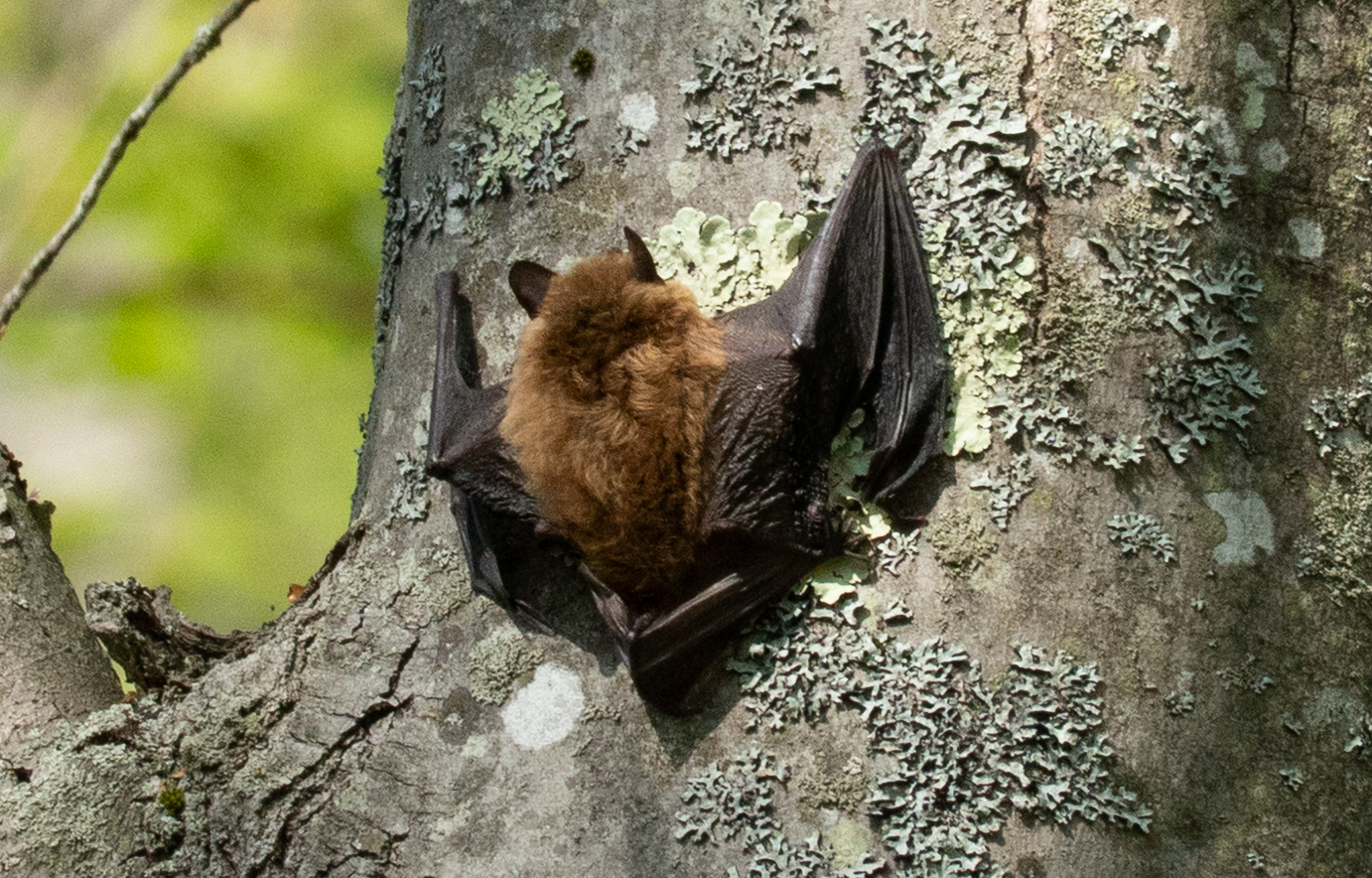
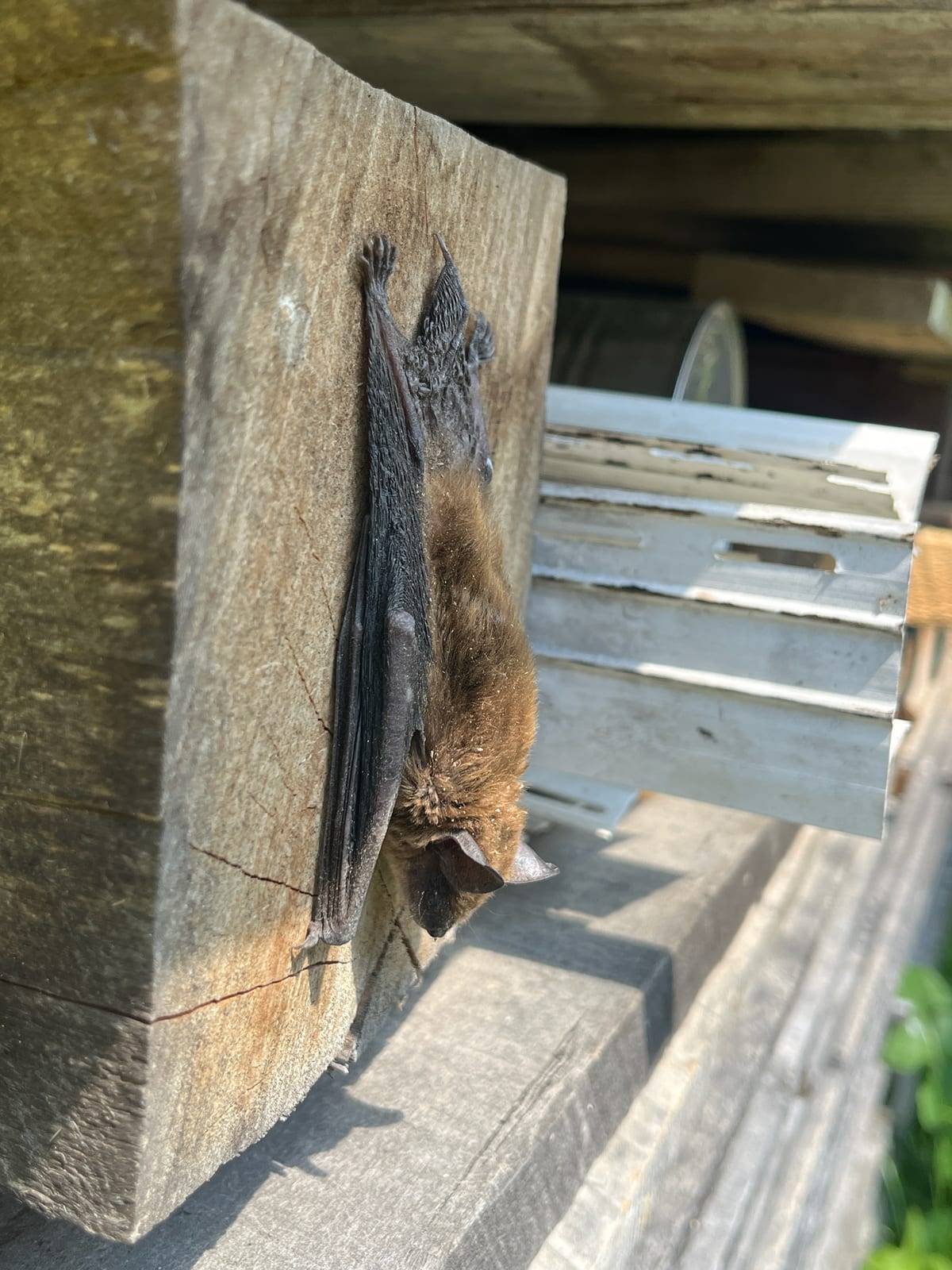
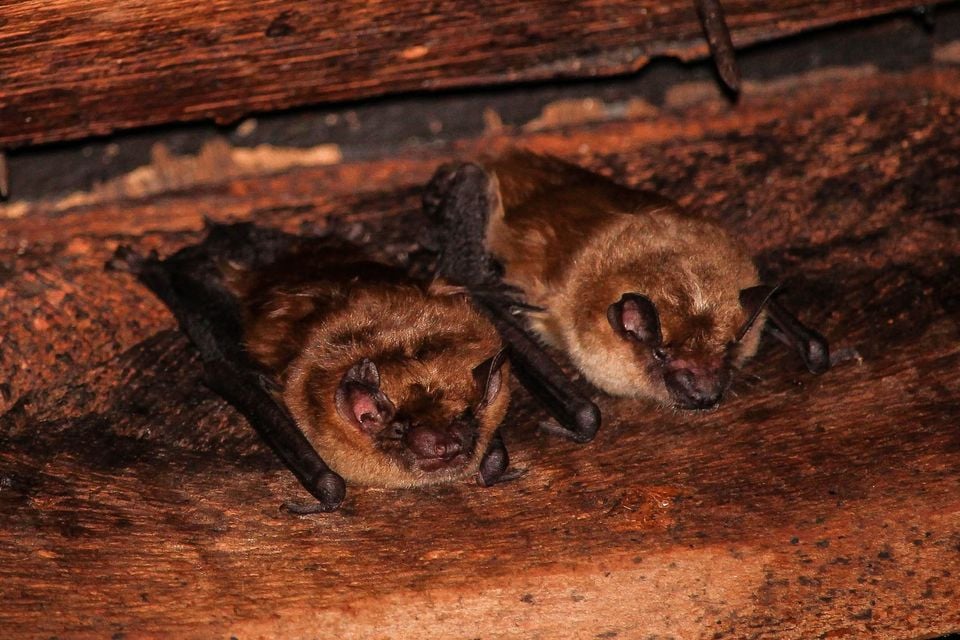
Big brown bat records in Texas concentrate in the Panhandle, around Palo Duro Canyon State Park, Caprock Canyons State Park, and Muleshoe National Wildlife Refuge, canyon country that offers both natural rock roosts and the barns, bridges, and buildings this adaptable bat readily accepts as substitutes. It’s one of the most flexible roosters among North American bats, equally at home in a tree hollow or an attic.
Texas reports peak sharply in July and August, when maternity colonies are most active and warm nights bring both bats and observers outdoors, a detection pattern rather than proof the population swells in midsummer. With 263 records, the species sits in the common tier among Texas mammals, and NatureServe lists it secure (S5) statewide, matching its status as one of the more common, adaptable bats across the country. Its stout body and short rounded ears set it apart from paler, larger-eared Trans-Pecos bats like the pallid bat.
 Full species profile




