
Washington mammals

California Myotis in Washington

Myotis californicus

Native to Washington S4 Apparently Secure in Washington

Not listed as nonindigenous in Washington by USGS NAS; native to its Washington range.

IUCN Red List status

  1. LC
  2. NT
  3. VU
  4. EN
  5. CR
  6. EW
  7. EX

LC – Least Concern

Widespread and abundant; not at risk.

California Myotis in Washington, by the numbers

Occasional in Washington 67th most recorded of 145 mammals logged in Washington

211 occurrence records
17 with iNaturalist photos
Jul 8, 2026 Last seen in Washington

Records from 2000–2026.

211 total records count every Washington occurrence from GBIF and iNaturalist; the map plots a georeferenced sample of 210; the monthly chart covers the 208 records with a full observation date.

When to look for the California Myotis in Washington

Most sightings fall in July to September.

208 Washington occurrence records (iNaturalist and GBIF) by month of year, 2000–2026. Shows when the species is recorded, not a guarantee of presence.

Monthly Washington records (table)
MonthRecords
January4
February10
March8
April6
May18
June7
July39
August45
September51
October13
November4
December3

Monthly california myotis occurrence records (iNaturalist and GBIF) in Washington, 2000–2026.

Seasonality

Year-round in Washington, with recorded sightings peaking in July–September.

Occurrence map

Where California Myotis has been recorded in Washington

210 records mapped · zoom and drag to explore

209 Washington records mapped

Notable places to look

Park, forest, or monumentiNaturalist records
San Juan Islands National Monument 8
Ebey's Landing National Historical Reserve 5
Gifford Pinchot National Forest 2
Clearwater Wilderness 1

Protected places with the most california myotis sightings, from the USGS Protected Areas Database plus named mountain ranges, good spots to look, not a full breakdown, so they don't sum to the total.

Where it's recorded in Washington

CountyRecords
King County 31
Kitsap County 21
Thurston County 19
Pierce County 17
Whatcom County 16
Lewis County 14
Mason County 12
San Juan County 10
Island County 9
Snohomish County 6
Cowlitz County 5
Clallam County 4
16 other counties 47

The complete county distribution, spread across 28 Washington counties. Every occurrence record falls in one county, so these sum to the total. Counties from GBIF and US Census boundaries.

Washington’s 211 California myotis records gather around Puget Sound, with King, Kitsap, Thurston, and Pierce counties leading and San Juan Islands National Monument holding more records than any other named site. For a bat this small, the map points to sheltered inland waters, wooded shorelines, and the forest edges of places like Ebey’s Landing National Historical Reserve.

One of the West’s smallest bats

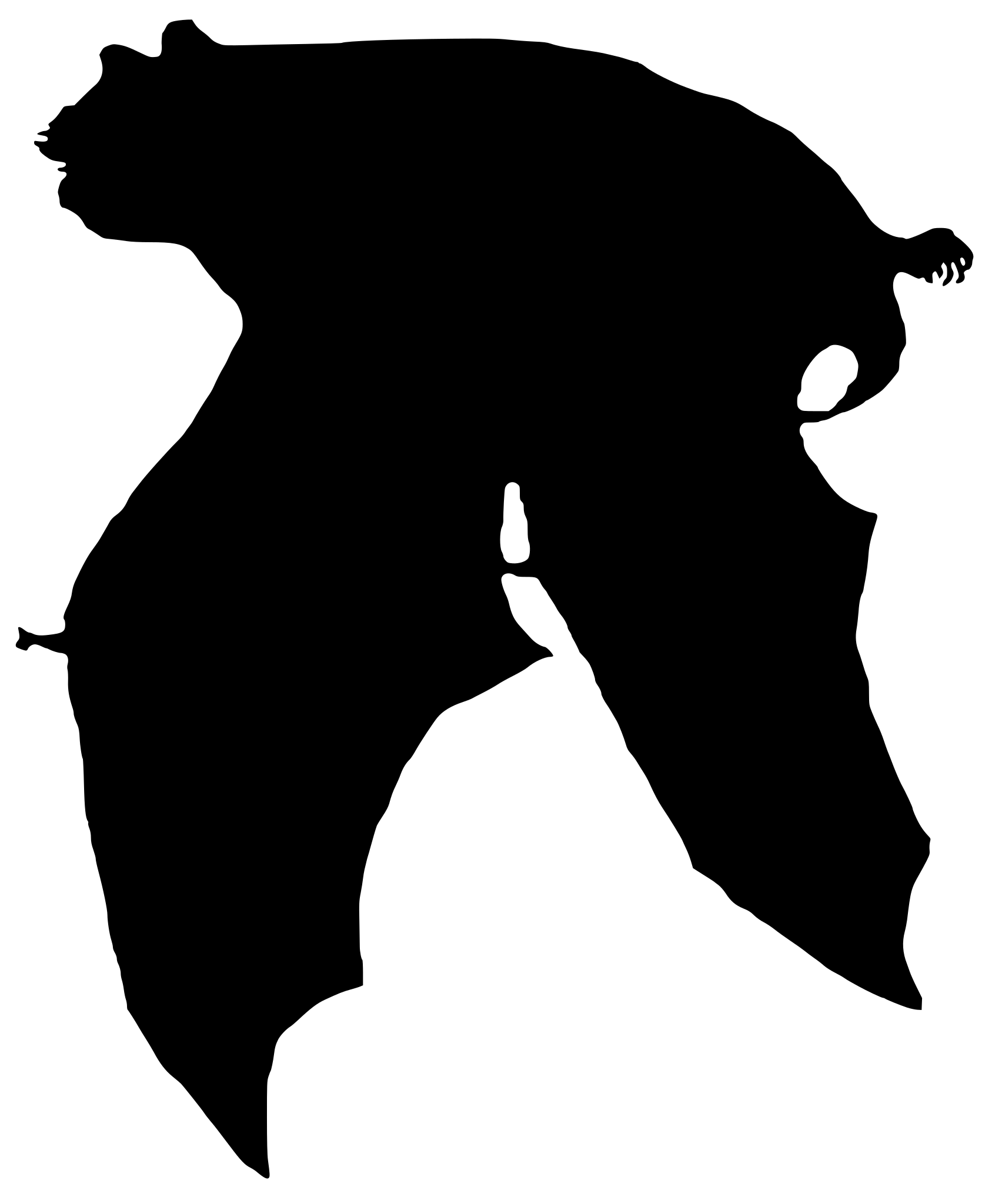
The California myotis weighs about as much as a nickel. It flies low and slow over water and forest clearings, picking moths, flies, and other soft-bodied insects out of the air with delicate, maneuverable wingbeats that larger bats cannot match. By day it tucks into crevices under loose bark, in rock cracks, and in buildings, roosting alone or in small groups rather than the great colonies of its bigger relatives.

A summer-weighted record

Washington sightings build through summer and crest in September, when young bats are on the wing and feeding hard before the cold sets in. Winter counts fall close to zero because the species hibernates in sheltered crevices and goes unseen, not because it leaves the state.

Status in Washington

NatureServe ranks the California myotis S4, Apparently Secure, in Washington, and the species is native to the state. USGS NAS does not list it as nonindigenous here.
Occurrence data from iNaturalist and GBIF.

More mammals in Washington in the atlas

Data & sources

The data and visualizations on this page draw on these open sources:

  • GBIFCC-BY 4.0occurrence records behind the range map, elevation, and record counts
  • iNaturalistCC0 / CC-BY / CC-BY-SAobservations, photos, and audio recordings
  • NatureServe ExplorerCC-BYthe state conservation rank
  • IUCN Red Listattributed factthe global conservation status
  • USGS NASpublic domainnative / introduced status
  • Natural Earthpublic domainthe relief basemap
  • USFSpublic domainnational-forest boundaries
  • USGS Protected Areas Databasepublic domainthe named parks, forests, and refuges behind "notable places to look"




