
California mammals

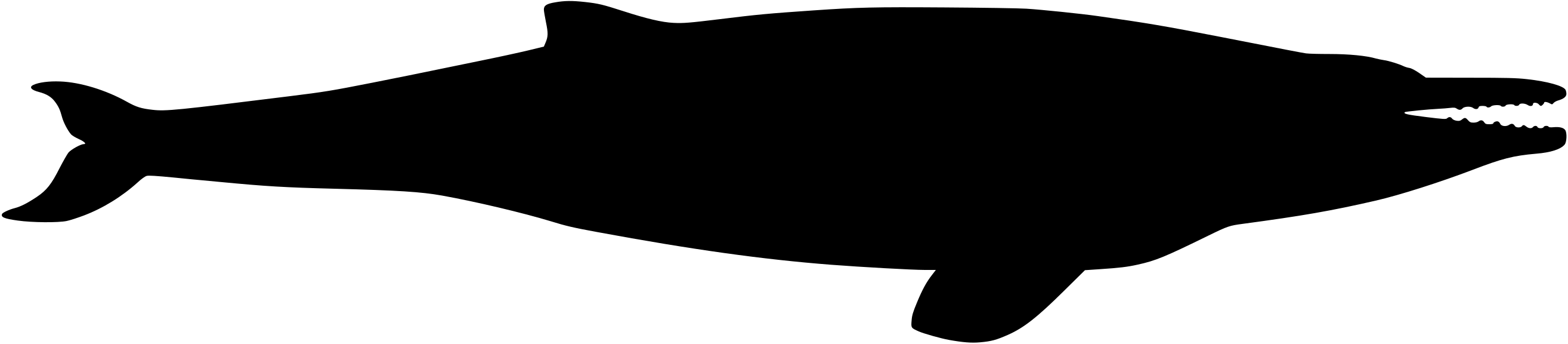
Cuvier's beaked whale in California

Ziphius cavirostris

Native to California

Not listed as nonindigenous in California by USGS NAS; treated as native to its mapped California range.

IUCN Red List status

  1. LC
  2. NT
  3. VU
  4. EN
  5. CR
  6. EW
  7. EX

LC – Least Concern

Widespread and abundant; not at risk.

Cuvier's beaked whale in California, by the numbers

Rare in California 206th most recorded of 241 mammals logged in California

51 occurrence records
5 with iNaturalist photos

51 total records count every California occurrence from GBIF and iNaturalist; the monthly chart covers the 49 records with a full observation date.

When to look for the Cuvier's beaked whale in California

Most sightings fall in June to August.

49 California occurrence records (iNaturalist and GBIF) by month of year. Shows when the species is recorded, not a guarantee of presence.

Monthly California records (table)
MonthRecords
January4
February3
March4
April3
May3
June7
July7
August8
September3
October2
November5
December0

Monthly cuvier's beaked whale occurrence records (iNaturalist and GBIF) in California.

Seasonality

Year-round in California, with recorded sightings peaking in June–August, with a smaller rise in November.

Occurrence map

Where Cuvier's beaked whale has been recorded in California

51 records mapped · zoom and drag to explore

51 California records mapped

Notable places to look

Park, forest, or monumentiNaturalist records
Hearst San Simeon State Park 2
Golden Gate National Recreation Area 2
Phillip Burton Wilderness Area 2
Point Reyes National Seashore 1
Channel Islands National Park 1

Protected places with the most cuvier's beaked whale sightings, from the USGS Protected Areas Database plus named mountain ranges, good spots to look, not a full breakdown, so they don't sum to the total.

Where it's recorded in California

CountyRecords
San Diego County 8
Los Angeles County 5
Ventura County 5
Marin County 4
San Luis Obispo County 3
Humboldt County 3
Santa Barbara County 2
San Mateo County 2
Orange County 1
Monterey County 1
Santa Cruz County 1
Other localities 16

The complete county distribution, spread across 11 California counties. Every occurrence record falls in one county, so these sum to the total. Counties from GBIF and US Census boundaries.

California holds 51 records of Cuvier’s beaked whale, a respectable count for a species that almost never stays at the surface long enough to be seen and identified easily.

One of the best-studied deep divers, tracked off Southern California

The deep water and steep drop-offs of the Southern California Bight, off islands like San Clemente and San Nicolas, have made this stretch of coast one of the most closely studied Cuvier’s beaked whale areas anywhere. Researchers have tagged and tracked whales here for years, partly out of concern over how naval sonar in the area might affect a species that already pushes the limits of mammal diving, descending far deeper and staying down longer than almost anything else that breathes air. That research history is a direct product of California’s offshore geography, where submarine canyons carry deep water close enough to shore for research vessels to reach it.

Present across the whole year, not just one season

Unlike species with a single sharp peak, California’s Cuvier’s beaked whale records show up in every month but December, with a modest rise through June, July, and August. That spread across the calendar fits a species that doesn’t migrate through the state so much as live in its deep offshore water on a fairly steady basis, showing up whenever conditions let researchers and observers find it.

Status in California

Cuvier’s beaked whale isn’t currently ranked by NatureServe in California. It’s classified as native to state waters, consistent with a species documented here across every season rather than one passing through only occasionally.
Occurrence data from iNaturalist and GBIF.

More mammals in California in the atlas

Data & sources

The data and visualizations on this page draw on these open sources:

  • GBIFCC-BY 4.0occurrence records behind the range map, elevation, and record counts
  • iNaturalistCC0 / CC-BY / CC-BY-SAobservations, photos, and audio recordings
  • IUCN Red Listattributed factthe global conservation status
  • USGS NASpublic domainnative / introduced status
  • Natural Earthpublic domainthe relief basemap
  • USFSpublic domainnational-forest boundaries
  • USGS Protected Areas Databasepublic domainthe named parks, forests, and refuges behind "notable places to look"




