
Florida mammals

Dwarf Sperm Whale in Florida

Kogia sima

Native to Florida SNR Unranked in Florida

Not listed as nonindigenous in Florida by USGS NAS; native to its Florida range.

IUCN Red List status

  1. LC
  2. NT
  3. VU
  4. EN
  5. CR
  6. EW
  7. EX

LC – Least Concern

Widespread and abundant; not at risk.

Dwarf Sperm Whale in Florida, by the numbers

Occasional in Florida 50th most recorded of 116 mammals logged in Florida

77 occurrence records
1 with iNaturalist photos

When to look for the Dwarf Sperm Whale in Florida

Most sightings fall in July.

77 Florida occurrence records (iNaturalist and GBIF) by month of year. Shows when the species is recorded, not a guarantee of presence.

Monthly Florida records (table)
MonthRecords
January10
February6
March8
April1
May3
June6
July12
August6
September5
October12
November4
December4

Monthly dwarf sperm whale occurrence records (iNaturalist and GBIF) in Florida.

Seasonality

Year-round in Florida, with recorded sightings peaking in July, with a smaller rise in October and January.

Occurrence map

Where Dwarf Sperm Whale has been recorded in Florida

77 records mapped · zoom and drag to explore

73 Florida records mapped

Where it's recorded in Florida

CountyRecords
Volusia County 6
Brevard County 6
Pinellas County 6
St. Lucie County 3
Broward County 3
Martin County 3
Lee County 2
Flagler County 2
Palm Beach County 2
Duval County 2
Bay County 1
Orange County 1
2 other counties 40

The complete county distribution, spread across 14 Florida counties. Every occurrence record falls in one county, so these sum to the total. Counties from GBIF and US Census boundaries.

Only 77 dwarf sperm whale records exist for Florida, and given how deep this whale dives and how rarely it surfaces near boats, that number almost certainly reflects strandings and chance sightings rather than a count of animals offshore. It’s native to Florida’s waters, and NatureServe hasn’t assigned the state a numeric rank (SNR).

Reports are thin and scattered across the year, with July and October each producing 12 records, the closest thing to a peak in an otherwise low, uneven pattern. Given how few sightings exist overall, that’s better read as noise from an offshore, hard-to-detect species than as a genuine seasonal signal.
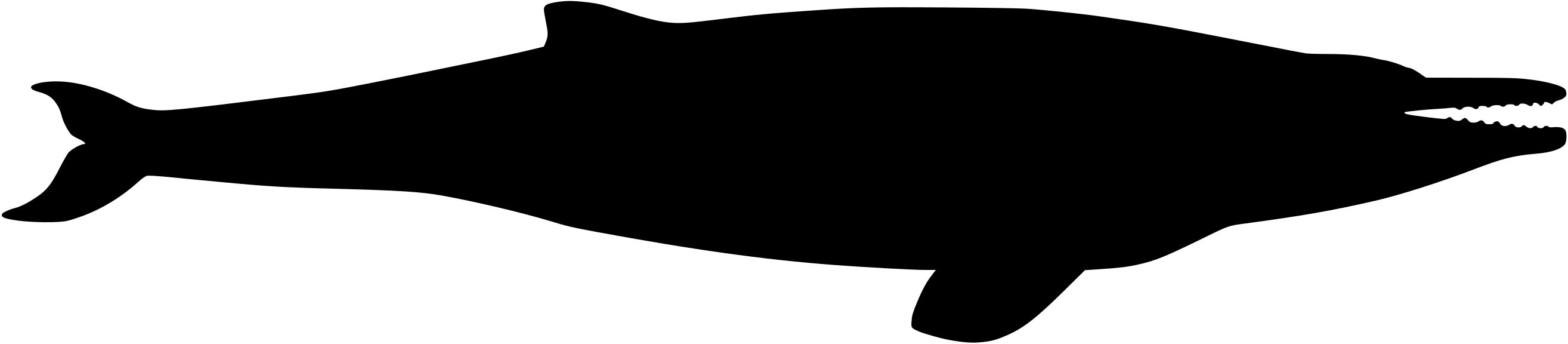
Occurrence data from iNaturalist and GBIF.

More mammals in Florida in the atlas

Data & sources

The data and visualizations on this page draw on these open sources:

  • GBIFCC-BY 4.0occurrence records behind the range map, elevation, and record counts
  • iNaturalistCC0 / CC-BY / CC-BY-SAobservations, photos, and audio recordings
  • NatureServe ExplorerCC-BYthe state conservation rank
  • IUCN Red Listattributed factthe global conservation status
  • USGS NASpublic domainnative / introduced status
  • Natural Earthpublic domainthe relief basemap




