
Oregon mammals

Fin Whale in Oregon

Balaenoptera physalus

Native to Oregon

Not listed as nonindigenous in Oregon by USGS NAS; native to its Oregon range.

IUCN Red List status

  1. LC
  2. NT
  3. VU
  4. EN
  5. CR
  6. EW
  7. EX

VU – Vulnerable

High risk of extinction in the wild.

Fin Whale in Oregon, by the numbers

Occasional in Oregon 113th most recorded of 178 mammals logged in Oregon

24 occurrence records
24 with iNaturalist photos
Apr 2, 2026 Last seen in Oregon

Records from 2000–2026.

When to look for the Fin Whale in Oregon

Most sightings fall in February.

24 Oregon occurrence records (iNaturalist and GBIF) by month of year, 2000–2026. Shows when the species is recorded, not a guarantee of presence. Based on a small number of dated records; the seasonal pattern may not be representative.

Monthly Oregon records (table)
MonthRecords
January0
February21
March2
April1
May0
June0
July0
August0
September0
October0
November0
December0

Monthly fin whale occurrence records (iNaturalist and GBIF) in Oregon, 2000–2026.

Seasonality

Year-round in Oregon, with recorded sightings peaking in February.

Occurrence map

Where Fin Whale has been recorded in Oregon

24 records mapped · zoom and drag to explore

24 Oregon records mapped

Where it's recorded in Oregon

CountyRecords
Clatsop County 13
Other localities 11

The complete county distribution, spread across 1 Oregon counties. Every occurrence record falls in one county, so these sum to the total. Counties from GBIF and US Census boundaries.

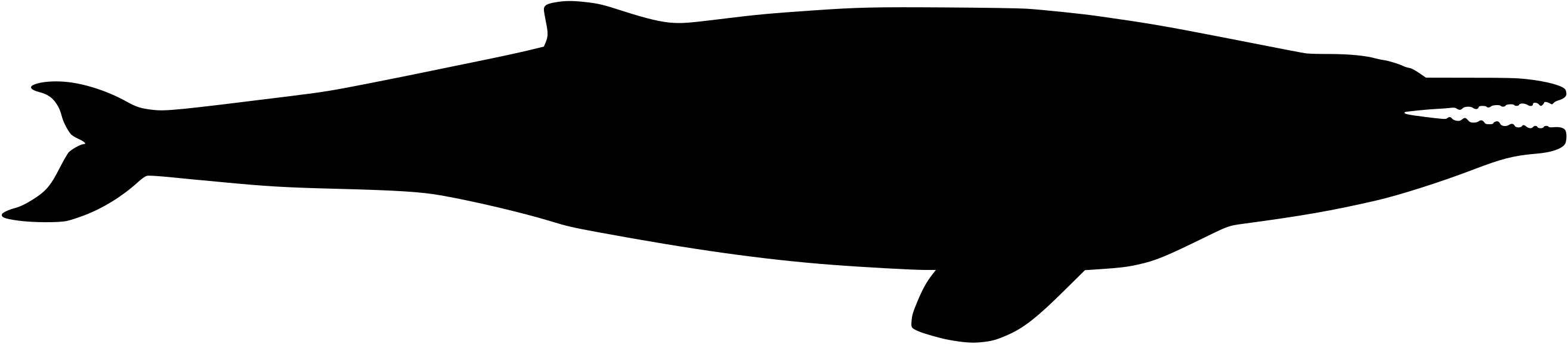
Fin whales are the second-largest animal on Earth after the blue whale, and the IUCN lists the species Vulnerable globally, a legacy of the intensive commercial whaling that targeted fin whales across the Pacific well into the 20th century. Records cluster along the coast near Cape Perpetua Scenic Area, a rocky headland that juts far enough into the ocean to give land-based observers a clear view of deep water close to shore.

Nearly all of Oregon’s records fall in February, a sharp, single-month concentration rather than a spread across winter, which likely reflects one especially productive observation period along the coast more than a true narrow migration window. NatureServe lists the species SNA, not applicable, in Oregon, reflecting its status as an offshore migrant rather than a resident with a formal state rank.
Occurrence data from iNaturalist and GBIF.

More mammals in Oregon in the atlas

Data & sources

The data and visualizations on this page draw on these open sources:

  • GBIFCC-BY 4.0occurrence records behind the range map, elevation, and record counts
  • iNaturalistCC0 / CC-BY / CC-BY-SAobservations, photos, and audio recordings
  • NatureServe ExplorerCC-BYthe state conservation rank
  • IUCN Red Listattributed factthe global conservation status
  • USGS NASpublic domainnative / introduced status
  • Natural Earthpublic domainthe relief basemap
  • USFSpublic domainnational-forest boundaries




